
10 Home Dog Grooming Salon Ideas on a Budget: Transform Your Space Without Breaking the Bank

Setting up a home dog grooming salon doesn’t have to drain your wallet. With some smart planning and creativity, you can create a functional grooming space that works just as well as expensive professional setups.

You can transform a corner of your bathroom, laundry room, or garage into a complete dog grooming station for under $200 by using multi-purpose tools, DIY storage solutions, and affordable alternatives to high-end equipment. The key is focusing on what you actually need rather than buying every fancy gadget on the market.
Whether you’re starting a small home grooming business or just want to save money on professional grooming fees, these budget-friendly tips will help you create a space that’s comfortable for both you and your pup.
Key Takeaways
- You can set up a complete home grooming station using basic tools and repurposed household items.
- Simple DIY modifications to your existing space eliminate the need for expensive renovations.
- Regular at-home maintenance between professional visits saves hundreds of dollars annually.
Budget-Friendly Grooming Tools and Supplies

Setting up a home grooming space doesn’t require expensive professional equipment. Smart shopping for basic tools, homemade grooming products, and clever storage solutions can keep costs low while still getting great results.
Essential Low-Cost Grooming Tools
Start with a few key items that cover most grooming needs. A quality slicker brush costs between $8-15 and works for most coat types.
Metal combs run about $5-10 and help detangle problem areas. For nail care, basic guillotine-style clippers cost around $7-12 and are easy to control when you’re learning.
A simple pair of grooming scissors for $10-15 handles trimming around paws and faces. Budget-friendly grooming tools work just as well as premium versions for home use.
Basic Tool Kit Cost Breakdown:
- Slicker brush: $8-15
- Metal comb: $5-10
- Nail clippers: $7-12
- Grooming scissors: $10-15
- Total: $30-52
DIY Alternatives to Commercial Products
Make your own dry shampoo by mixing 1 cup of cornstarch with 1 tablespoon of baking soda. It works great between baths and costs less than $1 per batch.
For ear cleaning, mix equal parts white vinegar and water in a spray bottle—about 50 cents for a bottle that lasts months. Regular human conditioner diluted with water (1 part conditioner to 3 parts water) makes a great detangling spray for about $2.
Baby wipes are a budget-friendly substitute for expensive grooming wipes. For homemade paw balm, melt 2 tablespoons coconut oil with 1 tablespoon shea butter and let it cool in a small container.
Organizing Grooming Supplies Efficiently
A plastic shower caddy ($8-12) keeps all your tools in one portable spot. Wall-mounted hooks hold brushes and scissors within reach, and a pack of adhesive hooks costs about $5.
An over-the-door shoe organizer ($10-15) creates storage for grooming supplies in clear pockets so you can see everything. Repurpose mason jars for cotton balls, treats, and small items—labeling them with a marker keeps things organized.
A fold-up step stool ($15-20) stores flat against the wall when not in use.
Setting Up Your At-Home Grooming Space

Picking the right spot and organizing it well makes grooming so much easier for both you and your dog. Good lighting, easy cleanup, and smart use of your available space are what matter most.
Creating a Comfortable Grooming Station
Choose a location with good lighting and ventilation. Natural light from a window is perfect, but a bright lamp works for cloudy days or evenings.
A dedicated grooming area helps your dog get comfortable with the routine. When your pup recognizes the same spot every time, they’ll stay much calmer during brushing and nail trims.
Keep all your tools in one place using simple storage solutions. A small rolling cart or hanging organizer is perfect for brushes, combs, shampoo, and nail clippers.
Non-slip mats are essential for safety. Place one on the floor and another on your grooming surface so your dog feels secure.
A sturdy table at a comfortable height will save your back during longer sessions.
Making Use of Small Spaces
You don’t need a huge area to groom your dog effectively. Even small homes can have a designated grooming space that works well.
Bathrooms are great because tile floors are easy to clean and there’s a tub for bathing. Set up a folding table when needed and store it away when you’re done.
For vertical storage, try wall-mounted hooks for leashes and towels, hanging shoe organizers for smaller grooming tools, and shelves above the grooming area for supplies.
A corner of the laundry room or garage can also work—just make sure it’s comfortable for your dog year-round.
Keeping Your Salon Clean and Safe
Keep cleaning supplies within reach. A handheld vacuum, pet-safe disinfectant spray, and paper towels make post-grooming cleanup a breeze.
Lay down old towels or a washable mat to catch loose fur before it spreads everywhere. Sanitize your tools after each use with pet-safe cleaning products.
Brushes get hair removed and washed, and clippers get wiped down and oiled. Store sharp tools like scissors and clippers in a locked drawer or on a high shelf.
Keep shampoos and other products in sealed containers to prevent spills.
Affordable Grooming Techniques
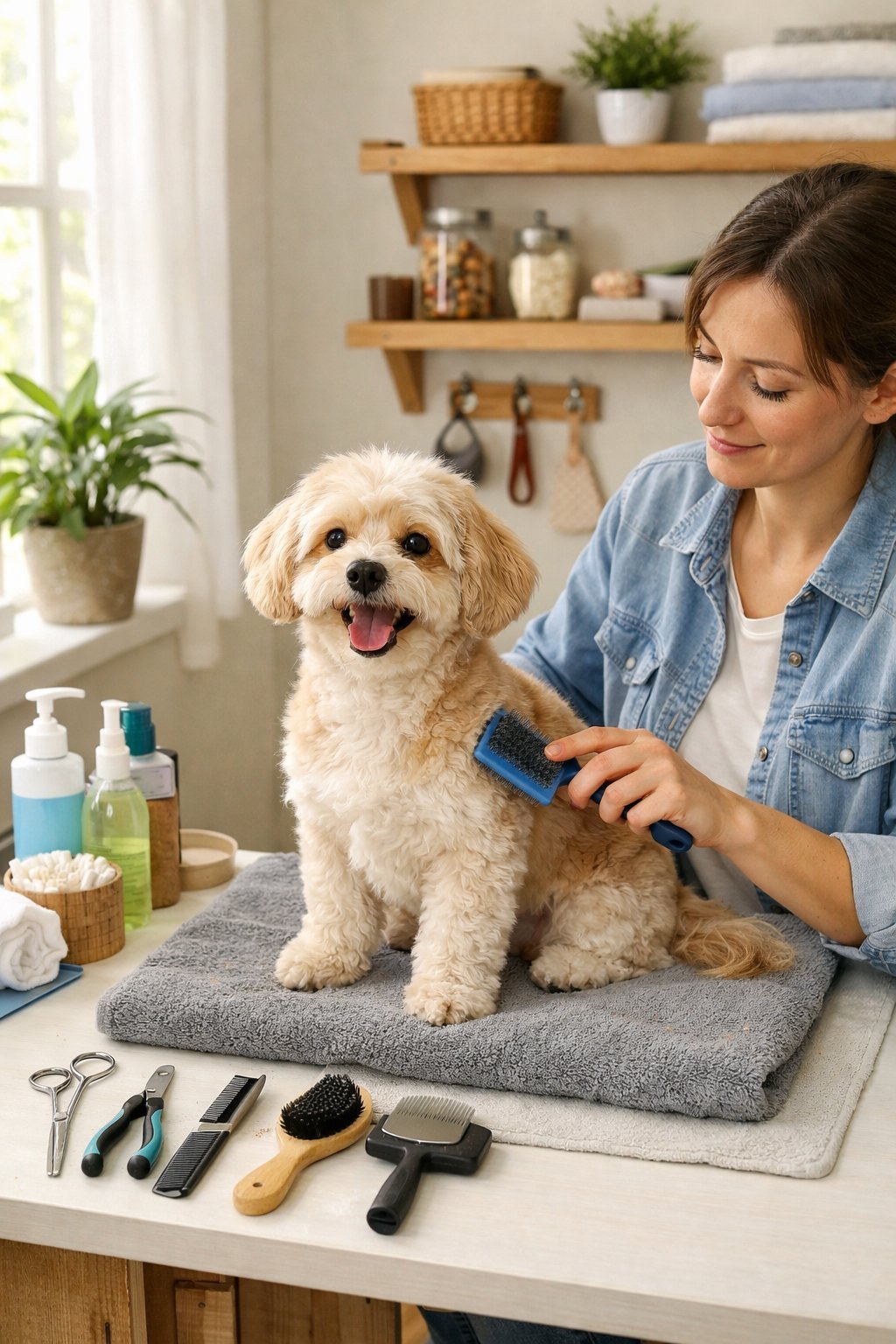
Keeping your dog clean and well-groomed doesn’t require expensive salon visits. Mastering a few basic techniques at home can save you a ton while keeping your pup looking their best.
Bathing Your Dog at Home
Gather your supplies before bringing your dog to the bath area. You’ll need dog shampoo, towels, a cup or spray nozzle, and cotton balls for their ears.
Use lukewarm water and thoroughly wet your dog’s coat before applying shampoo. Work the shampoo into a lather from neck to tail, avoiding the face and ears at first.
Rinse thoroughly until the water runs clear. For the face, use a damp washcloth with a tiny bit of shampoo to gently clean around the eyes and muzzle.
After the bath, towel dry your dog as much as possible and let them shake off excess water in a contained area.
Brushing and Detangling Made Easy
Regular brushing prevents mats and reduces shedding between baths. Brush your dog at least twice a week; long-haired breeds may need daily attention.
Start with a slicker brush for general coat maintenance and work through small sections at a time. When you hit tangles, hold the hair near the skin to avoid pulling and gently work through the mat with your fingers or a detangling comb.
For stubborn mats, try using cornstarch or detangling spray to loosen knots. Sprinkle a small amount on the mat and work it through with your fingers before combing.
Trimming Nails Safely on a Budget
Trim your dog’s nails every 3-4 weeks to prevent overgrowth and discomfort. A basic nail clipper or grinder costs under $15 and lasts for years.
Before cutting, identify the quick—the pink area inside the nail containing blood vessels. On dark nails, trim small amounts at a time to avoid hitting it.
Hold your dog’s paw firmly but gently and cut at a slight angle below the quick. If you accidentally cut too short and bleeding occurs, apply styptic powder or cornstarch to stop it quickly.
Always reward your dog with treats during nail trimming to create positive associations.
Creative DIY Spa Experiences for Dogs

Making your own grooming products and accessories saves money and lets you control what touches your dog’s skin. Simple relaxation techniques can turn a basic bath into a calming spa session for you and your pup.
Homemade Dog Shampoos and Conditioners
Making your own dog shampoo is super affordable. Try mixing 1 cup of gentle dish soap, 1 cup of white vinegar, and 1 quart of warm water for a basic recipe.
For dogs with dry skin, add 1/3 cup of glycerin to the mix. The glycerin moisturizes, and the vinegar helps balance pH levels.
Always mix fresh batches to avoid bacteria growth. If your dog has itchy skin, swap the dish soap for castile soap and add a few drops of lavender oil.
Basic Oatmeal Conditioner:
- 1 cup ground oatmeal
- 2 cups warm water
- 1 tablespoon coconut oil
Blend until smooth and apply after shampooing. The oatmeal soothes irritated skin, and the coconut oil adds shine to the coat. Let it sit for 3-5 minutes before rinsing thoroughly with warm water.
Crafting Fun Accessories and Bandanas
I like making bandanas from old cotton t-shirts or fabric scraps I have at home. All it takes is a pair of scissors and a piece of fabric about 20 inches square for medium dogs.
I cut the fabric into triangles, then either tie them or add velcro strips for easy on-and-off. For special occasions, I use fabric paint or stamps to add patterns during grooming sessions.
My dog enjoys the extra attention, and the custom bandanas make adorable photo props. I also turn old towels into spa robes by cutting arm holes and adding ribbon ties.
These robes keep my dog warm between bath and blow-dry time. Fleece works even better since it dries quickly and doesn’t fray at the edges.
Quick DIY Bow Tie:
- Cut a 6×4 inch rectangle from fabric.
- Fold lengthwise and sew the edges.
- Pinch the center and wrap with a thin fabric strip.
- Attach to the collar with hot glue or velcro.
Relaxation Tips for Nervous Pups
I always start spa sessions with a short walk or playtime to help my dog burn off energy. Most dogs are calmer during grooming if they’ve had some exercise.
Playing soft music or white noise helps mask scary sounds like running water or clippers. I keep the room warm since wet dogs can get chilly easily.
A non-slip mat in the tub prevents slipping and helps reduce anxiety. I give treats throughout the process to create positive associations with each step.
For really nervous dogs, I break the spa day into shorter sessions over several days. Gentle massage while applying shampoo helps my dog relax, and I use slow, circular motions while speaking in a calm voice.
If my dog shows signs of stress like panting or pulling away, I pause and try again later.
Money-Saving Maintenance Tips

Keeping grooming tools clean and sticking to a schedule really helps cut down on replacement costs. These habits are key for affordable dog grooming at home.
Establishing a Regular Grooming Routine
I’ve found that following a grooming schedule keeps small issues from turning into expensive problems. Brushing my dog every few days helps prevent mats, so I don’t have to pay for de-matting later.
Weekly grooming tasks include:
-
Brushing 2-3 times per week
-
Checking ears for dirt or odor
-
Wiping paws after walks
-
Inspecting skin for bumps or irritation
Monthly tasks cover:
-
Nail trimming
-
Bath time
-
Teeth brushing (ideally weekly)
-
Sanitary area trimming
I put these tasks on my calendar so I don’t forget. Regular maintenance means I can save a lot compared to frequent professional visits.
Extending the Life of Grooming Tools
Quality grooming tools can be pricey, so I make sure to clean them after each use. I always remove hair from brushes and combs right away.
Once a week, I wash brushes and combs with warm soapy water. For clippers and trimmers, I apply blade oil after every grooming session.
This helps keep them sharp and prevents rust. I store all my tools in a dry spot, away from moisture.
Tool maintenance checklist:
- Brushes: Remove hair, wash weekly, air dry completely
- Clippers: Oil blades, clean housing, check for loose screws
- Scissors: Wipe down, store in protective case
- Nail clippers: Sanitize with rubbing alcohol, sharpen yearly
I sharpen my scissors and clipper blades once a year instead of replacing them. This has saved me a lot of money over time.
