
Dog Stroller: Your Complete Guide to Choosing the Perfect One for Your Furry Friend

A dog stroller might seem like an unusual purchase at first, but it can make a huge difference for pet owners who want to keep their dogs active and safe. Whether you have a senior dog with joint problems, a small puppy that tires easily, or a pup recovering from surgery, a stroller helps you bring your furry friend along on walks and errands. I’ve found that dog strollers come in many designs, from lightweight foldable models to heavy-duty options that handle rough terrain.

Dog strollers give mobility-challenged dogs the freedom to enjoy the outdoors while staying comfortable and protected. They’re also helpful for navigating crowded places like farmers markets or busy city streets where your dog might get stepped on or overwhelmed. Many top-rated strollers include features like mesh windows for airflow, storage pockets, and safety brakes.
Picking the right stroller depends on your dog’s size, your lifestyle, and where you plan to use it. I’ll walk you through everything you need to know about choosing, using, and maintaining a dog stroller so you can make the best decision for your pet.
Key Takeaways
- Dog strollers help senior, injured, or small dogs stay active and enjoy outings safely
- The right stroller depends on your dog’s weight, your terrain needs, and desired features like storage or jogging capability
- Regular cleaning and proper safety checks keep your dog stroller working well for years
What Is a Dog Stroller and Why Use One?
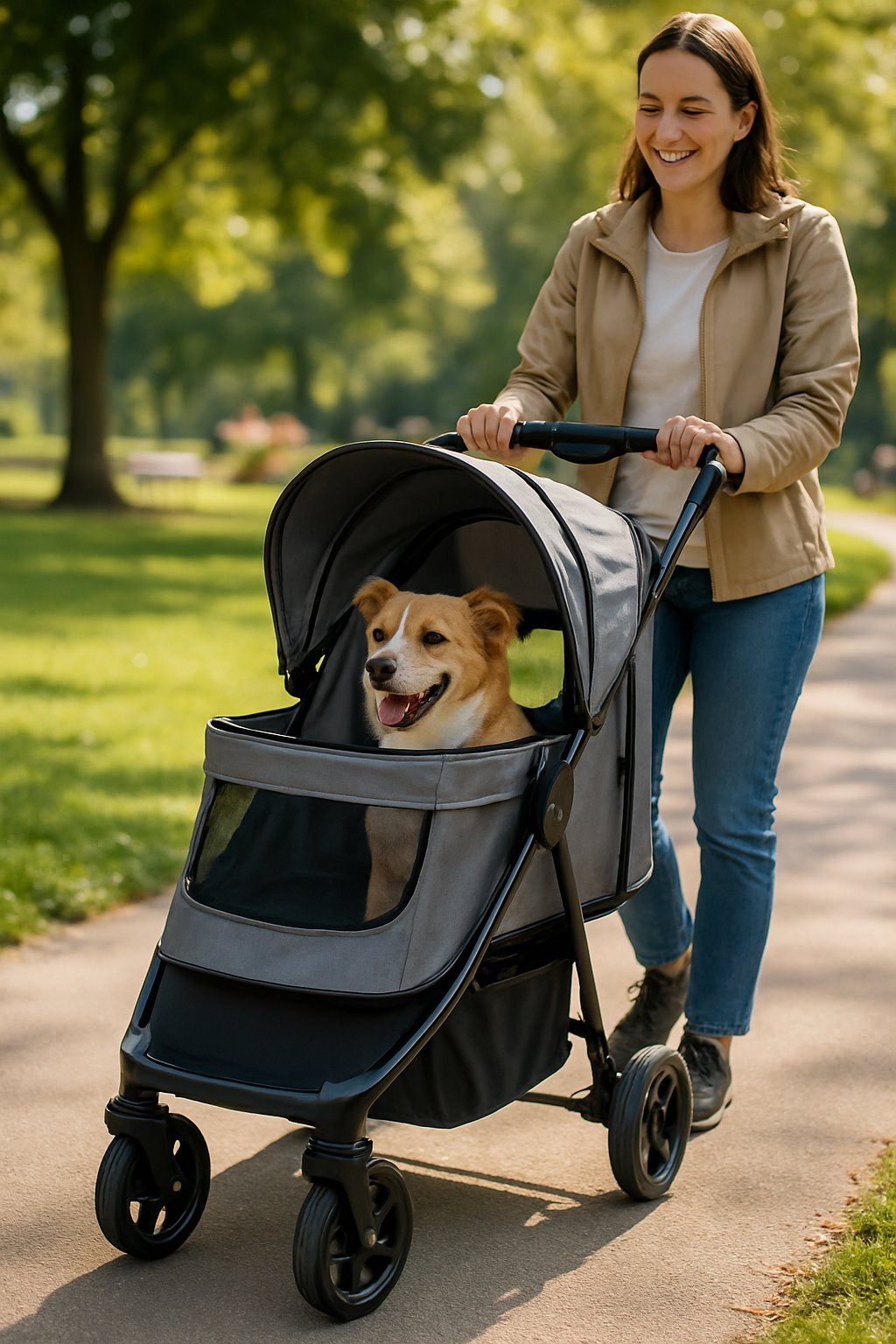
A dog stroller is a wheeled transport device designed to safely carry dogs while you walk, jog, or navigate different environments. These tools help dogs with mobility issues stay active and allow owners to bring their pets to places where walking might be difficult.
Benefits for Dogs and Owners
Dog strollers enhance the bond between owner and pet while providing practical solutions for everyday situations. For my senior dogs, a stroller means they can still join me on longer walks without overexertion. Their aging joints get a break while they enjoy fresh air and new sights.
I find that strollers also protect smaller dogs from larger animals and busy sidewalks. They create a safe barrier in crowded areas like farmers markets or outdoor events.
Using dog strollers makes life much easier when I need to visit the vet or groomer. My dog stays calm and secure during transport. The stroller also helps when I have multiple pets and one needs to rest while the other walks.
Recovery from surgery or injury becomes simpler with a stroller. My dog can stay close to me without putting weight on healing limbs.
Who Can Benefit Most from Dog Strollers
Senior dogs are prime candidates for strollers since they often struggle with long walks or stairs. I’ve noticed my older dog tires quickly but still wants to explore the neighborhood.
Dogs recovering from injuries or surgeries need restricted movement. A stroller lets them participate in family outings without risking their healing process.
Small breed dogs benefit when walking long distances or jogging with their owners. Their short legs can’t always keep pace with my stride.
Dogs with chronic conditions like arthritis or heart problems need activity limits. I can still take them outside without causing pain or breathing difficulties. Puppies who haven’t completed vaccinations can safely experience the world from a stroller without touching potentially contaminated ground.
Key Differences Between Dog Strollers and Pet Carriers
Dog strollers and pet carriers serve different purposes in my pet care routine. A stroller has wheels and handles like a baby stroller, making it easier to push over longer distances. Pet carriers are handheld bags or boxes meant for short trips.
Strollers provide more space for my dog to sit, lie down, or turn around. Carriers keep dogs confined in a smaller area with limited movement.
I use carriers mainly for car travel and quick vet visits. Strollers work better for walks, shopping trips, and outdoor activities where I’ll be moving around for extended periods.
Weight capacity differs significantly between the two options:
| Feature | Dog Stroller | Pet Carrier |
|---|---|---|
| Weight Limit | 30-75 lbs | 15-25 lbs |
| Ventilation | Multiple mesh windows | Limited openings |
| Storage | Built-in compartments | Minimal space |
Top Dog Stroller Recommendations

I’ve found that the right stroller depends on your dog’s age, size, and activity level. Three-wheeled models with sturdy tires work best for active owners, while senior pets need extra comfort features.
Popular Models and Features
I recommend looking at highly rated dog strollers that consistently perform well across different needs. The HPZ Pet Rover stands out as a premium option with all-terrain wheels and a sturdy frame. I like that it has multiple entry points and plenty of storage space.
When I evaluate strollers, I look for these key features:
- Mesh windows for proper airflow
- Safety tethers to keep dogs secure
- Cup holders and storage pockets
- Locking wheels for stability
- Easy folding mechanism for storage
I’ve noticed that three-wheeled strollers with bike-style tires offer better maneuverability than four-wheeled designs. The Gen7Pets brand gets mentioned often for quality construction and happy customer reviews.
Best Dog Strollers for Senior Dogs
Senior dogs need extra padding and easy access. I suggest strollers designed for dogs with mobility issues that can’t walk long distances anymore.
The ideal senior dog stroller has a low entry point so older pets don’t have to jump high. I prefer models with thick padding on the bottom and removable, washable liners. Suspension systems really matter because they smooth out bumps that might hurt arthritic joints.
Pet Gear and Ibiyaya make excellent options for senior dogs. I recommend choosing a stroller with a parent tray so you can keep treats and medications handy during walks.
Best Dog Stroller for Jogging
I only use dog strollers built for jogging when I want to run with my pet. Regular strollers aren’t safe at higher speeds.
Three-wheeled joggers with large pneumatic tires handle rough terrain and maintain stability. I look for models with a hand brake and a safety wrist strap. Reflective trim helps with early morning or evening runs.
The best jogging strollers have a fixed front wheel option for straight-line stability. I prefer strollers with shock absorbers to protect my dog from jarring impacts on uneven surfaces.
Choosing the Right Dog Stroller
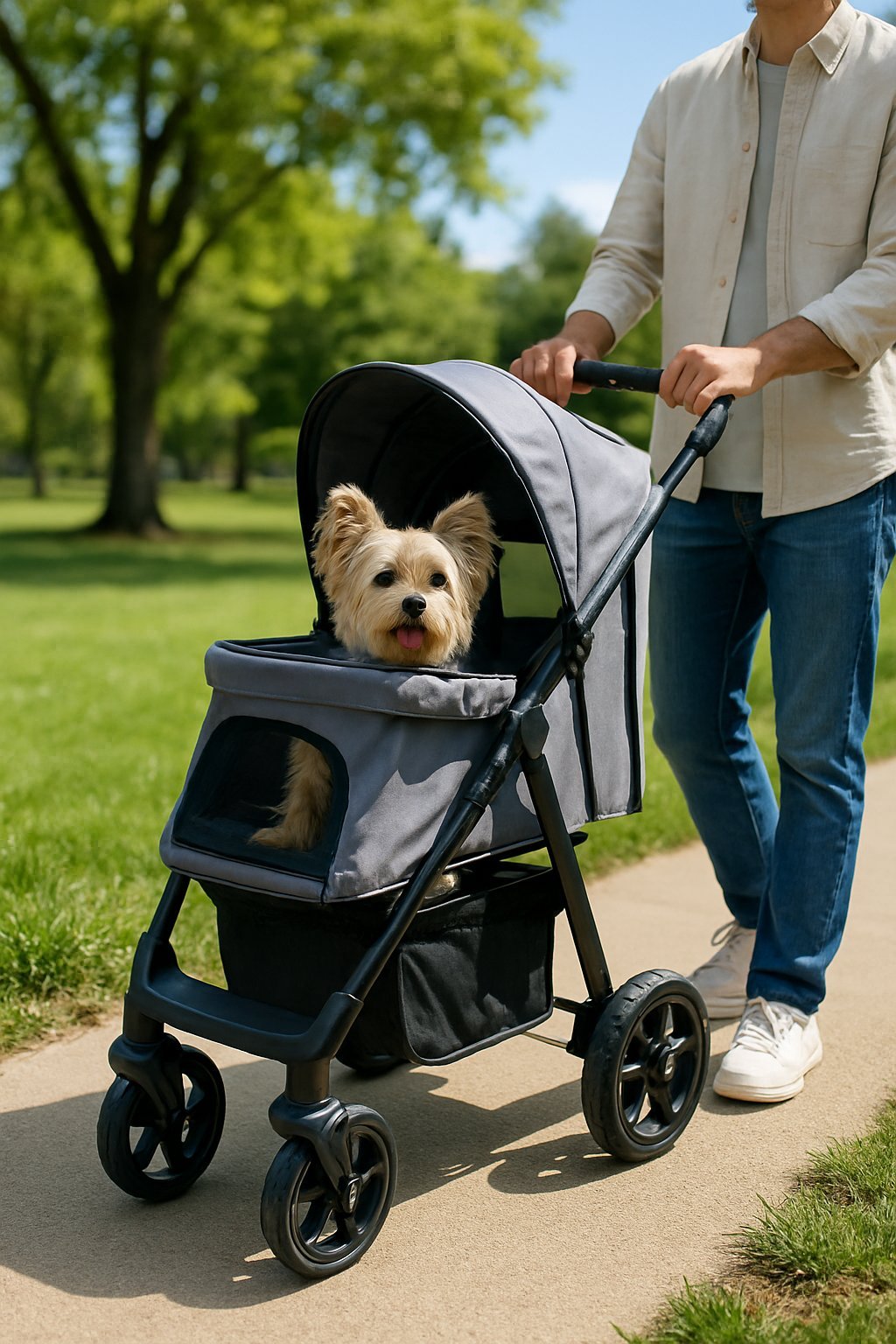
Finding the perfect dog stroller requires thinking about your pet’s specific needs, the type of terrain you’ll cover, and getting the right measurements for a comfortable fit.
Important Considerations Before Buying
I always tell pet parents to start by thinking about why they need a stroller. Dogs with mobility issues, senior pets, or those recovering from injuries benefit most from strollers. Small breeds that tire easily on long walks also make great candidates.
Your lifestyle matters too. If you’re an active jogger, you’ll want a three-wheeled stroller with bike-style tires that handles rough terrain. City dwellers need compact models that fold easily for storage and public transportation.
Weight capacity is critical. I recommend checking both your dog’s current weight and adding a few extra pounds for safety. Many strollers have weight limits between 30 to 75 pounds.
Safety features shouldn’t be overlooked. Look for secure harness attachments, locking wheels, and a parking brake. Mesh windows provide ventilation while keeping your pup safely inside.
Types of Dog Strollers Available
Standard strollers work well for everyday walks and errands. They typically have four wheels and offer good stability on flat surfaces like sidewalks and indoor spaces.
Jogging strollers feature larger wheels and better suspension systems. These models let me maintain my running routine while bringing my dog along safely.
All-terrain strollers handle hiking trails, gravel paths, and uneven ground. They combine the durability of jogging strollers with enhanced stability features.
Double or multiple-pet strollers accommodate two or more small dogs. I find these helpful for households with multiple pets or when bringing along a cat and dog together.
How to Select the Best Size and Fit
Measuring your dog correctly prevents buying a stroller that’s too cramped or unnecessarily large. I measure from the nose to the base of the tail for length, and from floor to shoulder for height.
Your dog needs room to sit, stand, turn around, and lie down comfortably. Add at least 3 inches to both measurements for proper space.
The door opening size matters for easy entry and exit. Larger breeds need wider openings even if they fit inside the cabin.
Test the stroller’s maneuverability before committing. It should turn smoothly and fit through standard doorways. The handlebar height should feel comfortable for your own height to avoid back strain during walks.
Dog Stroller Safety and Maintenance

I’ve learned that proper safety checks and regular upkeep make all the difference in how well a dog stroller performs over time. Keeping your pet secure during walks and maintaining clean, working parts ensures every outing stays enjoyable.
How to Safely Use a Dog Stroller
I always check every secure point on my dog stroller before heading out. The latches, zippers, and safety straps need a quick inspection to make sure nothing has come loose or worn down.
I fasten my dog with the internal safety tether that most strollers include. This prevents my pet from jumping out unexpectedly, even if I need to unzip the canopy for ventilation. Checking latches and compartments helps prevent accidents during our walks.
I test the brakes on flat ground and on slight inclines. The wheels should lock firmly when I engage the parking brake. I also make sure the handlebar height feels comfortable for me to push without straining my back or losing control of the stroller.
Tips for Keeping Your Dog Comfortable
I place a soft blanket or cushion inside the stroller to give my dog a cozy surface to rest on. Familiar bedding with my pet’s scent helps reduce anxiety during the ride.
I monitor the temperature inside the enclosed area, especially on warm days. Opening mesh windows provides airflow while keeping bugs out. I bring water and take breaks so my dog can stretch and drink.
I let my dog get used to the stroller gradually. Short trips around the block help build positive associations before longer adventures. I also bring my dog’s favorite toy to make the space feel more inviting and secure.
Cleaning and Maintenance Guidelines
I wipe down my dog stroller with a damp cloth after each use to remove dirt, allergens, and bacteria from paws and outdoor surfaces. This simple habit keeps the stroller fresh between deeper cleans.
I remove the fabric components monthly and wash them according to the manufacturer’s instructions. Most covers are machine washable, which makes maintenance straightforward. I inspect the frame for any cracks or loose screws during cleaning.
I lubricate the wheels and moving joints every few months to prevent squeaking and ensure smooth rolling. I check tire pressure if my dog stroller has air-filled wheels, and I replace worn brake pads when I notice reduced stopping power.
Fun and Practical Uses for Dog Strollers
Dog strollers open up new possibilities for spending time with your pet, whether you’re running errands around town or exploring outdoor trails. They make it easier to include your dog in daily activities while keeping them safe and comfortable.
Traveling with Your Dog
I find that dog strollers work great for trips to places like farmers markets, outdoor cafes, and shopping centers. My dog stays contained and calm while I move through crowded spaces.
Airport travel becomes much simpler with a stroller. I can wheel my dog through terminals without worrying about them getting stepped on or overwhelmed by the crowds. Many strollers fold up easily for storage on planes or in cars.
Road trips are more enjoyable too. When I stop at rest areas or tourist spots, my dog can join me without getting tired from too much walking. The stroller gives them a safe spot to rest between activities while still experiencing new sights and smells.
Socialization for Puppies and Anxious Dogs
Puppies who haven’t completed their vaccinations need exposure to the world without touching potentially contaminated surfaces. I use a stroller to take young puppies to busy areas where they can see people, hear traffic, and watch other dogs from a protected space.
Dogs with anxiety benefit from the security a stroller provides. My nervous dog feels safer observing new environments from inside the stroller rather than being on the ground. This helps build their confidence gradually.
The stroller acts as a safe zone during overwhelming situations. If my dog gets scared at a park or event, they can retreat into the stroller instead of panicking or trying to flee.
Adventures with Multiple Dogs
Taking several small dogs on walks used to be challenging until I got a dog stroller that improves outdoor adventures. Now I can bring all my pets along even when one gets tired or can’t keep up.
Multi-dog strollers work well when dogs have different energy levels. My older dog rides while my younger one walks, then they can switch places halfway through our outing.
I also use the stroller for dogs that don’t get along on leash. They stay separated but still enjoy the same outdoor experience together. This lets me exercise all my dogs at once without stress or conflict.
