Pet Food Storage Ideas to Keep Kibble Fresh and Your Home Organized

Storing pet food the right way keeps it fresh and makes feeding time easier. I know how frustrating it can be when you don’t have any pet food storage ideas and bags rip open or kibble goes stale before you can use it all. Plus, leaving food out in the open can attract pests or create a mess in your home.
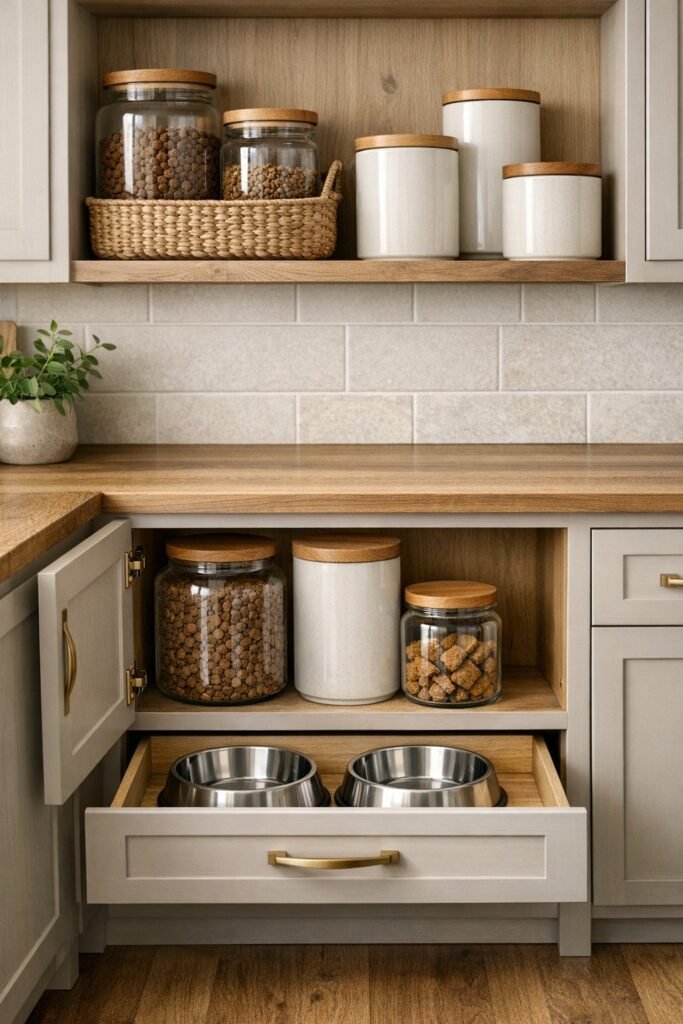
The best pet food storage solutions include airtight containers, dedicated cabinets, and wall-mounted dispensers that protect your pet’s food from moisture and air while fitting your space and style. I’ve found that combining style and practicality makes a big difference in keeping things organized. Whether you have a small apartment or a large home, there are storage options that work for every situation.
I’m going to share ideas that range from simple containers you can buy today to DIY projects you can build yourself. You’ll learn how to keep food fresh longer, save space, and even make your storage look good in your home. These tips will help you find a system that works for both you and your pet.
Key Takeaways
- Proper storage keeps pet food fresh and prevents waste from moisture, air, and pests
- Airtight containers, cabinets, and wall-mounted options offer practical solutions for any space
- DIY storage projects and smart accessories help you customize a system that fits your home and budget
This post contains affiliate links. As an Amazon Associate I earn from qualifying purchases.
Pet food storage worth a look:
Airtight dog food container, Stackable food bins, Food scoop, Treat jar, Elevated feeder with storage.
Why Proper Pet Food Storage Matters

Storing pet food the right way protects your dog’s health and saves you money by keeping meals fresh and safe to eat. Poor storage can lead to spoiled food, wasted nutrients, and even make your pet sick.
Benefits of Storing Pet Food Correctly
I’ve learned that proper dog food storage helps maintain nutritional value while keeping meals safe for my pets. When I store food correctly, it preserves the vitamins and fats that my dog needs to stay healthy.
Using airtight containers keeps air and moisture away from the food. This matters because exposure to these elements breaks down important nutrients over time. My dog’s food works better when stored properly, supporting their energy levels, skin health, and coat condition.
Proper pet food storage also extends freshness and protects against contamination. I seal my containers tightly to keep out humidity and curious pets who might try to sneak extra snacks.
Fresh food means I waste less and spend less money replacing spoiled bags. My pet gets the full benefit of their meals when nutrients stay intact from the first serving to the last.
Risks of Improper Pet Food Storage
Improper storage can lead to harmful bacteria and mold growth in my pet’s food. These contaminants create serious health risks that can make my dog sick.
When I leave food exposed to air, heat, and moisture, it degrades quickly. The fats go rancid and vitamins break down, which means my pet isn’t getting proper nutrition even though they’re eating.
Pests like insects and rodents can get into poorly stored food. They contaminate the entire bag and force me to throw it away.
Temperature changes also damage dog food storage quality. Food left in hot garages or damp basements loses freshness fast and may develop dangerous bacterial growth that I can’t always see or smell.
Choosing the Best Pet Food Storage Containers
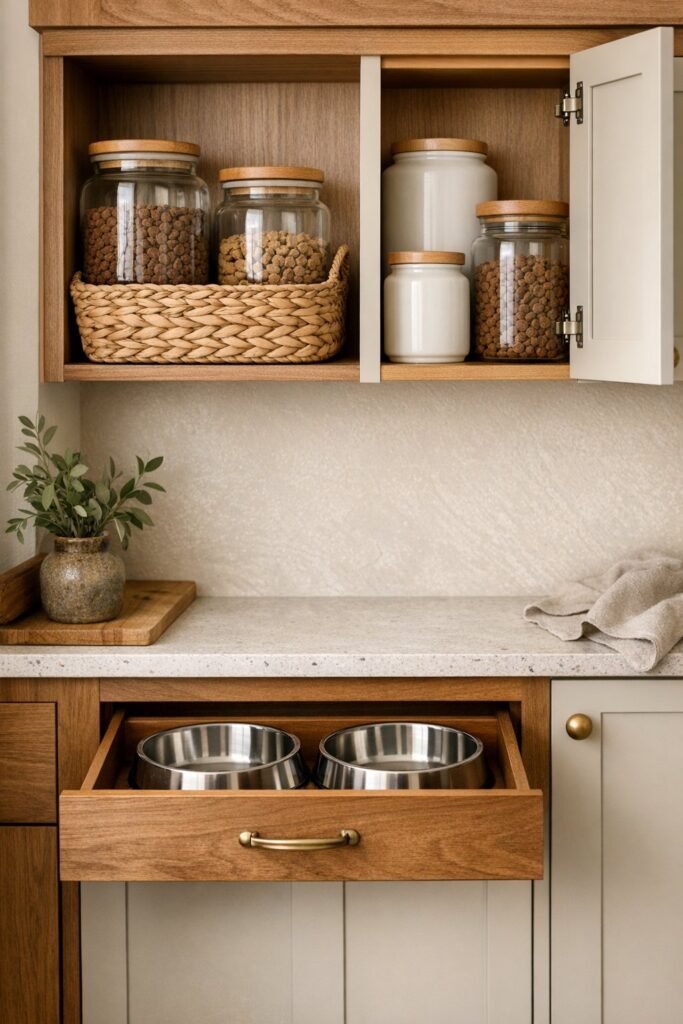
When I’m shopping for pet food storage, I focus on three main factors: how well the container seals to keep food fresh, what material works best for my needs, and whether the size fits my space and my pet’s eating habits.
Airtight Containers for Maximum Freshness
Airtight containers protect against air, moisture, and pests while keeping my pet’s food nutritious. I always check that the lid creates a complete seal because even small gaps let oxygen in, which makes kibble go stale faster.
The OXO Good Grips PET Pop Container is one option I’ve seen that uses a push-button mechanism to create an airtight seal. This type of seal helps lock out humidity, which is especially important if I live in a damp climate.
I make sure to test the seal before buying by pressing down on the lid and checking for resistance. A good airtight dog food storage container should require a bit of effort to open because that means air isn’t getting through. Some containers also include silicone gaskets around the rim, which add an extra layer of protection against moisture and bugs.
Materials: Plastic, Metal, and Glass Options
I choose between plastic, metal, and glass based on where I’ll store the container and how much food I need to keep. Plastic dog food storage containers are lightweight and affordable, but I look for BPA-free options that won’t leach chemicals into the food.
Metal containers resist chewing from determined pets and hold up well in garages or outdoor storage areas. The Gamma2 Vittles Vault is a popular metal option that many pet owners use for long-term storage.
Glass works well for smaller amounts of food and doesn’t retain odors like plastic can. However, glass is heavy and can break if I drop it. I consider where I’ll place the container before choosing the material. If it’s going on a high shelf, I avoid glass. For countertop storage, any material works fine as long as it seals properly.
Size and Capacity Considerations
I measure how much food my pet eats in a month before buying a storage container. A container that’s too large means food sits longer and loses freshness. One that’s too small means I’m constantly refilling it.
Most dog food storage containers list capacity in pounds or quarts. I calculate my needs by checking my pet food bag size and how quickly we go through it. For one small dog, a 10-15 pound container usually works. For multiple pets or large breeds, I look at 40-50 pound options.
I also think about storage space in my home. Tall, narrow containers fit better in pantries, while wide, short ones slide under counters. I measure the space where the container will go before ordering to avoid returns.
Creative and Space-Saving Pet Food Storage Ideas
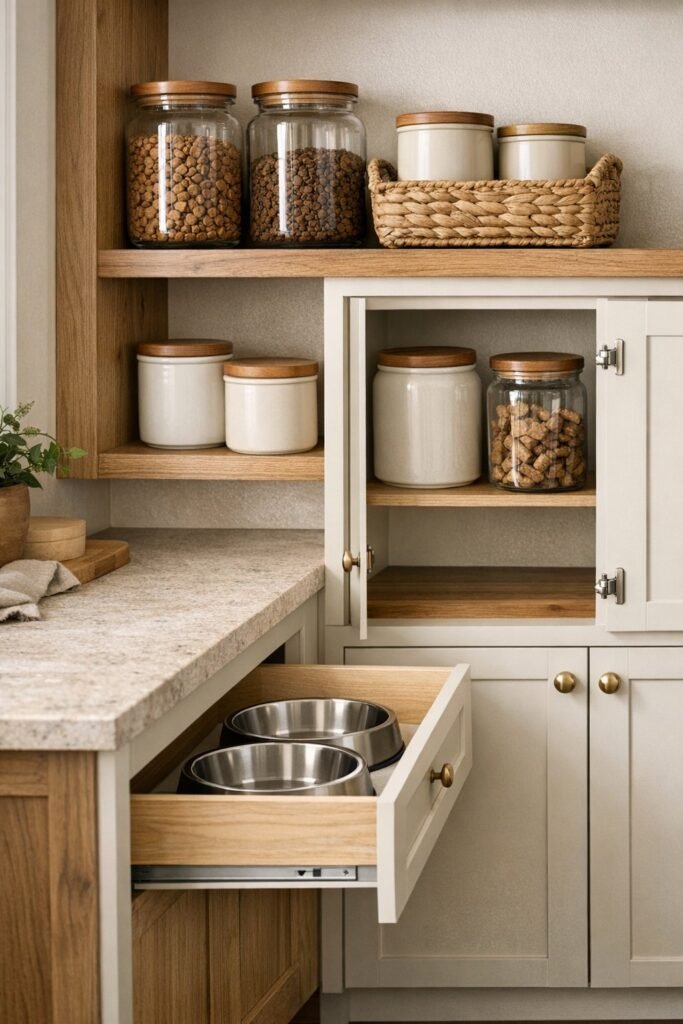
I’ve found that smart storage doesn’t have to mean sacrificing style or taking up extra room. Stackable containers maximize vertical space, while built-in cabinets hide food completely from view, and wall-mounted systems free up valuable floor area.
Stackable and Modular Solutions
I love using stackable containers because they let me store more food without eating up my floor space. These pet food storage solutions work by stacking vertically, which is perfect for small apartments or crowded pantries.
Modular bins are my go-to choice. I can add or remove containers based on how much food I need to store. They come in matching sets that look clean and organized.
Benefits of stackable storage:
- Takes up less floor space
- Easy to label each container
- Keeps different food types separate
- Simple to access what you need
I recommend clear stackable bins so I can see how much food is left at a glance. Airtight lids on each tier keep the food fresh while preventing pests from getting inside.
Built-In and Hidden Storage Options
I’ve discovered that dog food storage ideas work best when they blend into my existing furniture. Built-in storage keeps everything out of sight while staying within easy reach.
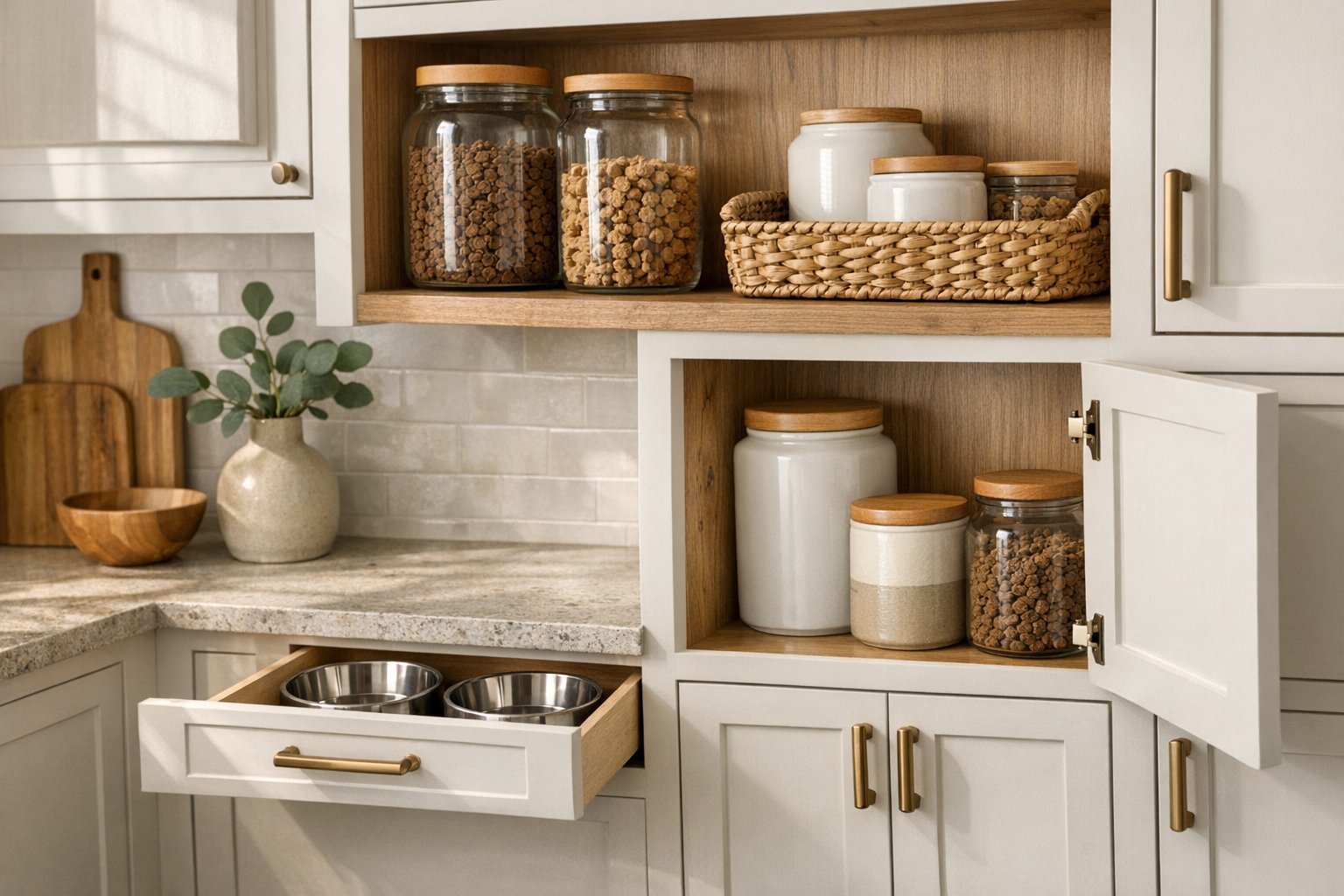
Kitchen cabinets with pull-out drawers make excellent hidden storage. I converted one of my lower cabinets into a dedicated feeding station. The food stays fresh in airtight containers inside, and I can pull out the drawer during meal times.
Old furniture pieces work great too. I’ve used vintage trunks, ottomans with storage, and even repurposed mailboxes for smaller portions. These dog food storage solutions add character to my home while keeping supplies organized.
Wall-Mounted and Dispenser Systems
Wall-mounted dispensers have changed how I handle daily feedings. They save floor space and make portions easy to measure. I installed mine at a height where I can easily turn the knob and fill my pet’s bowl.
Space-saving wall dispensers attach directly to walls or inside cabinet doors. Some models hold up to 40 pounds of dry food.
I prefer gravity-fed dispensers because they require no electricity. The food drops down as I turn a dial, giving me exact portion control. This reduces waste and keeps me from overfeeding.
Magnetic containers on metal boards work well for treats and supplements. I mounted a metal sheet inside my pantry door and attached small magnetic bins for easy access.
DIY Pet Food Storage Tips and Inspiration
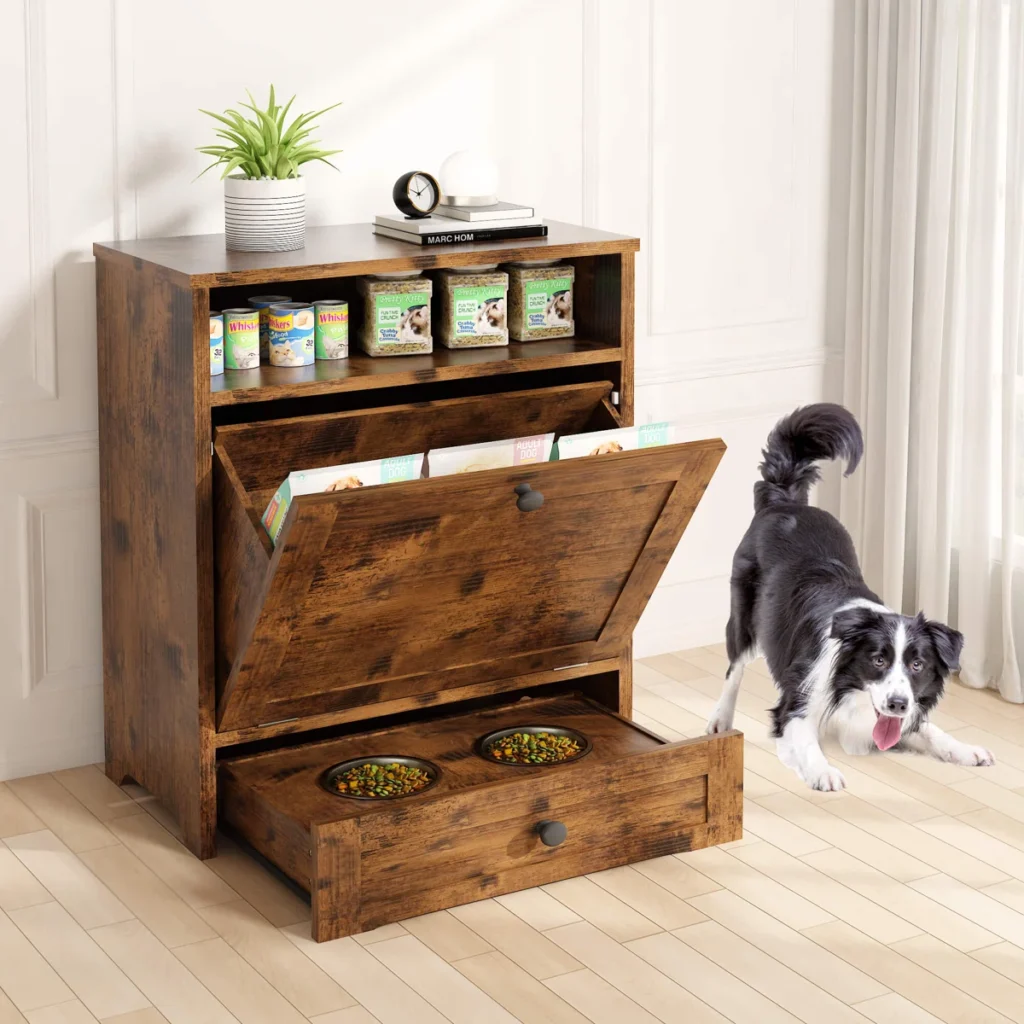
You can transform everyday items into practical pet food containers and create custom storage that matches your home’s style. These projects help you save money while keeping your pet’s food fresh and organized.
Repurposing Household Items for Pet Food Storage
I’ve found that many items you already own can work perfectly for storing pet food. Large plastic containers with tight-fitting lids, like those from holiday decorations or old storage bins, make excellent food holders. Just clean them thoroughly before use.
Glass jars work well for smaller amounts of food or treats. Mason jars and large cookie jars with rubber seals keep food fresh while looking nice on your counter. You can label them with chalkboard paint or stickers.
Old wooden crates or vintage metal bins add character to your space. I line mine with food-safe plastic bags to protect the food. Woven baskets with lids also work if you keep the food in its original bag inside.
Large coffee canisters, pretzel containers, and even cleaned-out protein powder tubs can store smaller portions. The key is making sure whatever you use has an airtight seal to maintain freshness.
Easy and Stylish DIY Storage Solutions
Building your own dog food storage solutions doesn’t require advanced skills. I’ve seen simple projects that anyone can tackle with basic tools.
A popular option is converting a cabinet or wooden box into a feeding station. You can add a hinged lid on top for food storage and cut out space for bowls at the bottom. Paint or stain it to match your kitchen.
Another idea I love is using Lock & Lock containers inside decorated boxes or baskets. This gives you the airtight protection while hiding the plastic.
You can also build a simple wooden storage box from plywood. Add wheels to the bottom for easy movement and paint it any color you want. These creative storage solutions blend into your home while staying functional.
Handy Accessories and Maintenance Tips
The right tools make storing pet food easier and help it stay fresh longer. Regular cleaning and smart accessories keep your storage system working well.
Scoops, Labels, and Portion Control
I always keep a dedicated scoop with my dog food storage containers to make feeding time faster. Using the same scoop every day helps me feed the right amount and prevents overfeeding.
Labels are super helpful when I store multiple types of food. I write the food name, expiration date, and serving size on each container. This keeps me from mixing up different foods or using expired kibble.
Portion control tools help me measure exactly what my pet needs. Some containers come with built-in measuring cups. I also use small portioning containers to prep meals ahead of time for busy mornings.
Cleaning and Maintaining Storage Containers
I wash my storage containers once a month to prevent bacteria and oil buildup. Pet food leaves behind oils that can go rancid and make fresh food taste bad.
I use warm soapy water and a bottle brush to scrub all the corners. After washing, I dry everything completely before adding new food. Moisture can cause mold or make kibble spoil faster.
Between deep cleanings, I wipe down the inside with a dry cloth to remove dust and crumbs. The lid and seal need special attention since food particles get stuck there. I check the seals regularly for cracks or damage that could let air in.
Vacuum Sealers for Pet Food Preservation
Vacuum sealers remove air from bags to keep pet food fresh much longer. I use mine to portion out bulk dog food into smaller packages that stay fresh until I need them.
These tools work great for storing pet food in smaller batches without losing quality. The sealed bags take up less space than big containers too.
I vacuum seal treats, freeze-dried food, and opened bags of kibble. The food stays crunchy and doesn’t get stale or lose its smell. Most vacuum sealers come with reusable bags that save money over time.