DIY Dog Treats: Easy Homemade Recipes Your Pup Will Love

Store-bought dog treats often contain preservatives, artificial flavors, and ingredients you can’t pronounce. Making your own dog treats at home lets you control exactly what goes into your dog’s snacks while saving money and creating healthier options for your pet. Many homemade dog treat recipes use five ingredients or less.
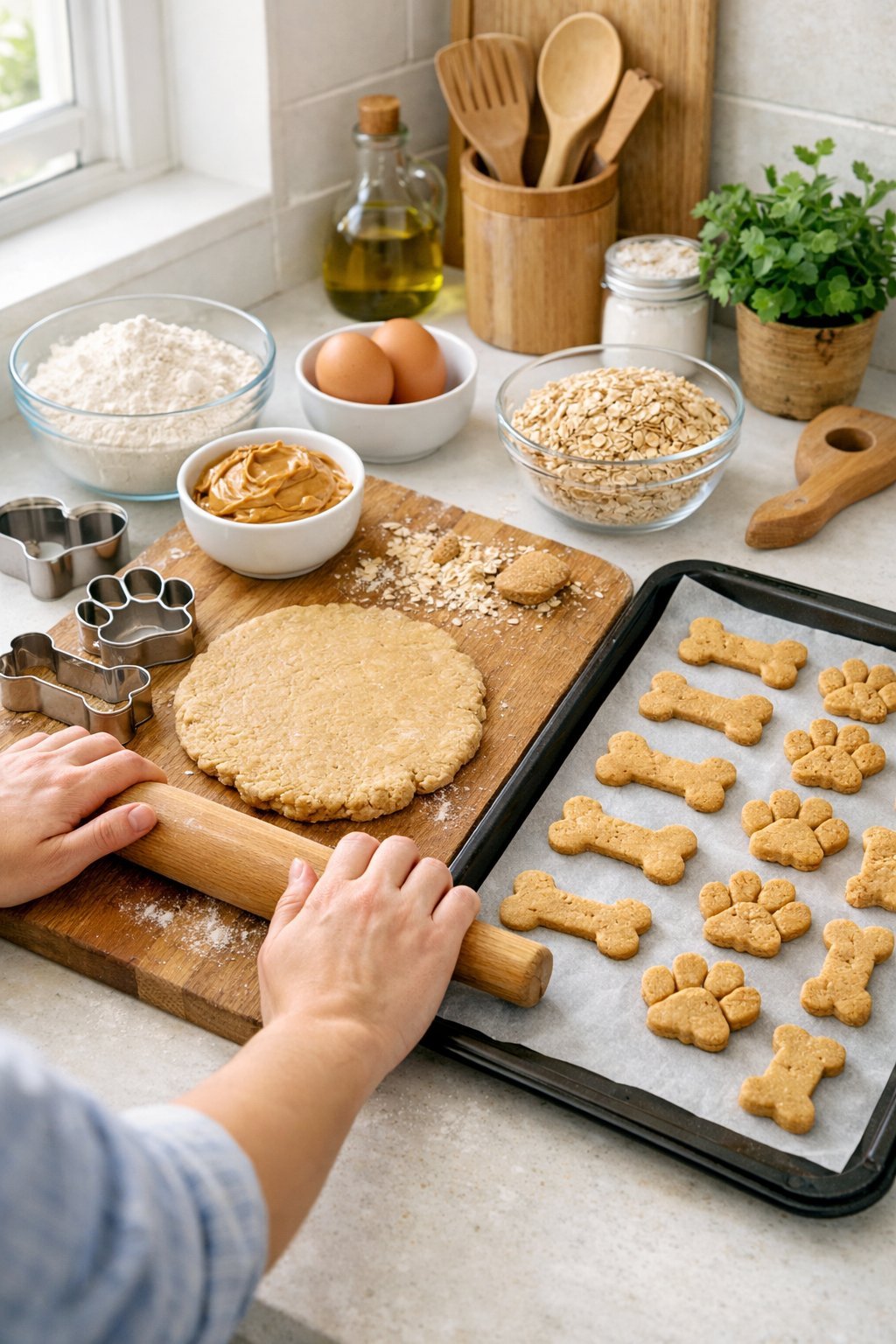
I started making treats for my dog after reading labels on commercial products and feeling concerned about the long list of additives. The process turned out to be much easier than I expected. Most recipes require basic ingredients I already had in my kitchen like peanut butter, oats, and sweet potatoes.
You don’t need fancy equipment or special skills to make healthy dog treats that your pup will love. With a few simple ingredients and basic kitchen tools, you can bake, freeze, or dehydrate treats customized to your dog’s taste preferences and dietary needs. I’ll walk you through everything from choosing the right ingredients to storing your finished treats properly.
Key Takeaways
- Homemade dog treats give you full control over ingredients while being more affordable than store-bought options
- Most DIY dog treat recipes require only basic kitchen ingredients and simple preparation methods
- Proper storage keeps homemade treats fresh for weeks and you can customize recipes for your dog’s specific health needs
Benefits Of DIY Dog Treats
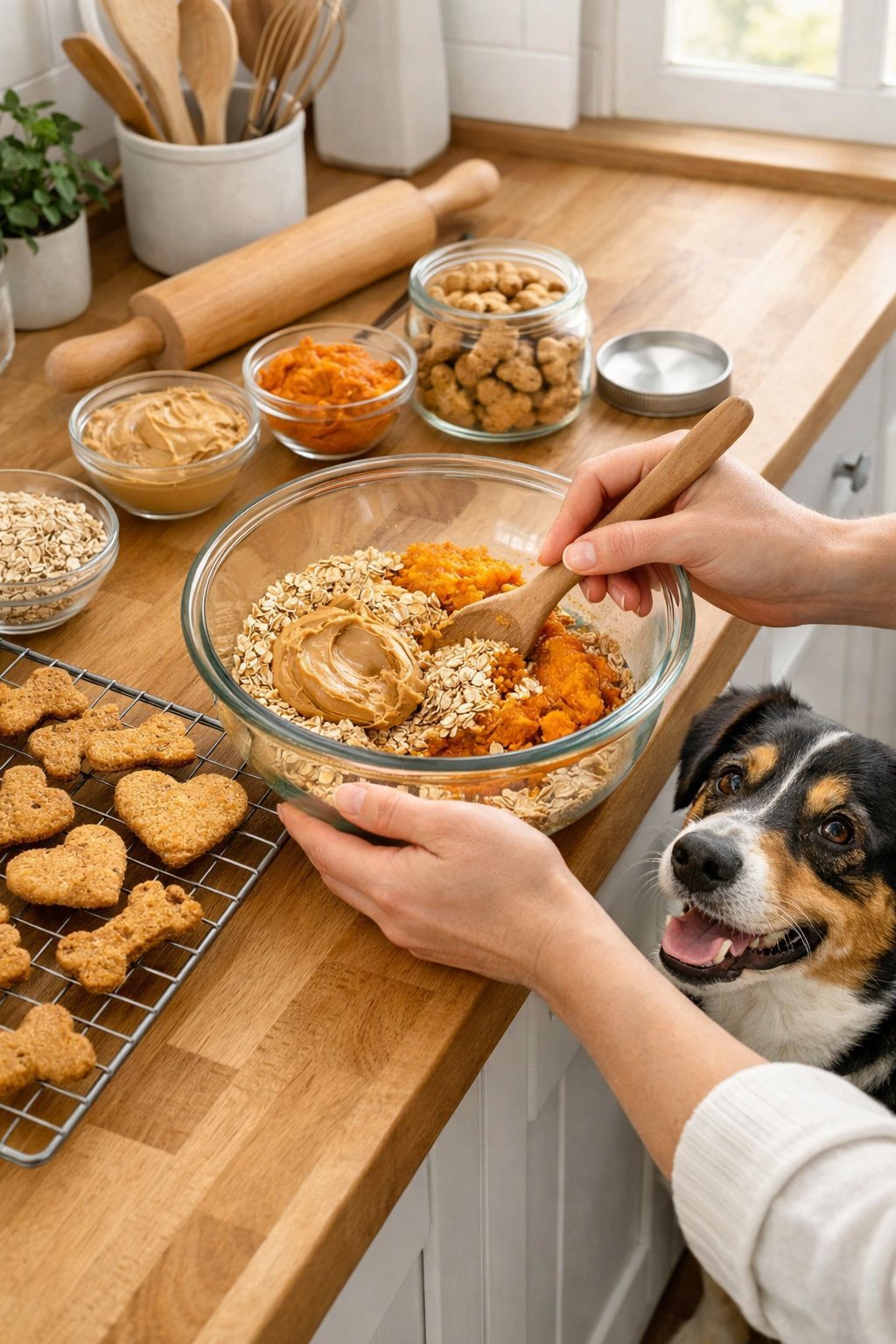
Making dog treats at home gives me complete control over what my dog eats while saving money and supporting better health through fresh, natural ingredients.
Health Advantages For Dogs
When I make treats at home, I avoid the preservatives and artificial additives found in many commercial products. Store-bought treats often sit on shelves for weeks or months, requiring chemicals to stay fresh.
Homemade treats use fresh ingredients that provide better nutrition for my dog. I can include wholesome options like oats, pumpkin, sweet potatoes, and apples that support my dog’s health naturally.
I also control the fat and calorie content in each treat. This helps me manage my dog’s weight more effectively than using pre-packaged options.
For dogs with allergies or sensitive stomachs, homemade treats are especially valuable. I can eliminate ingredients that cause problems and create recipes that work specifically for my dog’s needs.
Ingredient Quality Control
Making my own treats means I know exactly what goes into each batch. I choose fresh, whole ingredients instead of relying on ingredient lists I can’t fully understand or trust.
Many low-cost commercial treats contain additives that don’t support my dog’s long-term health. When I bake at home, I skip those completely.
I can select organic or locally-sourced ingredients when possible. This gives me peace of mind about quality and freshness.
The transparency of homemade treats removes the guesswork. I don’t have to worry about recalls, hidden fillers, or mysterious chemicals listed on packaging.
Cost Savings
Buying basic ingredients in bulk costs less than purchasing premium store-bought treats regularly. A bag of oats, peanut butter, and pumpkin makes dozens of treats for just a few dollars.
I save even more when I use ingredients I already have in my kitchen. Sweet potatoes, bananas, and other common foods work perfectly in simple treat recipes.
The upfront time investment pays off quickly. One baking session produces enough treats to last weeks, eliminating frequent trips to the pet store for expensive options.
Essential Ingredients For Homemade Dog Treats
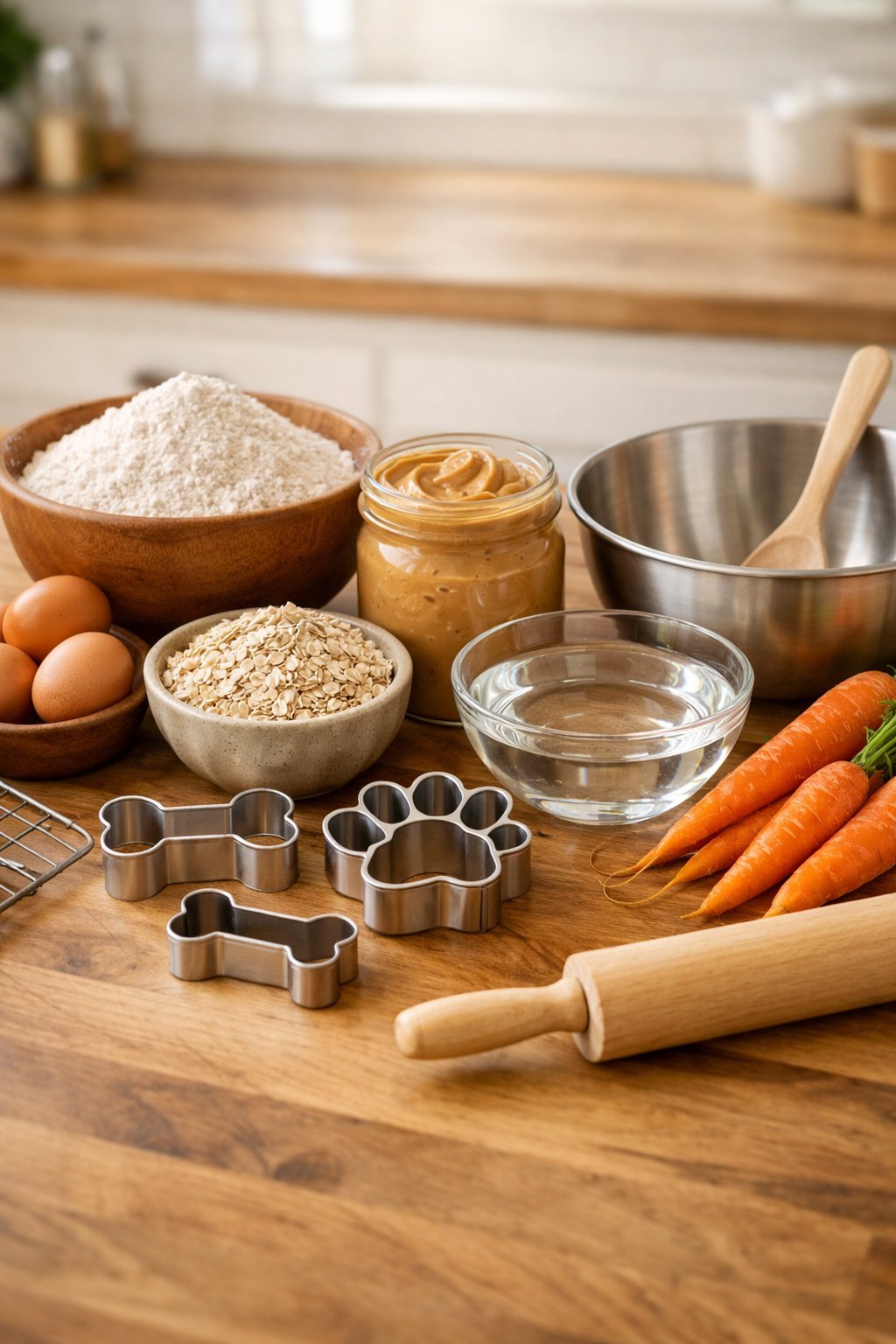
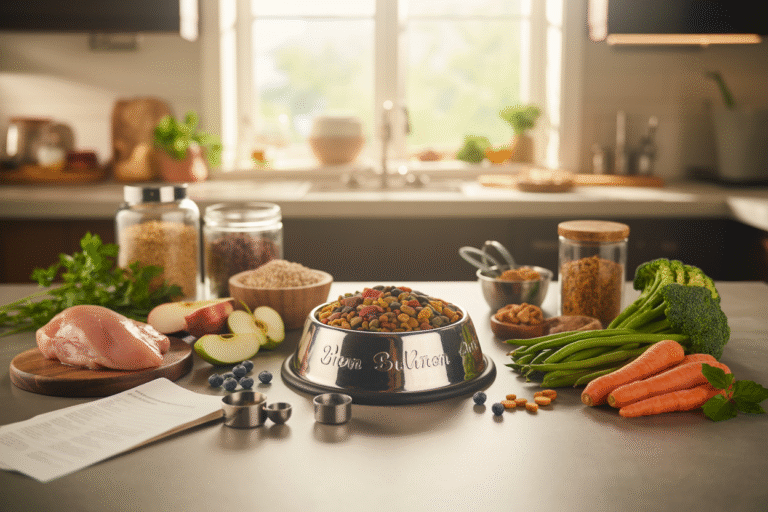
When I make dog treats at home, I focus on using safe, wholesome ingredients that provide nutrition without harmful additives. The right combination of grains, proteins, fruits, and vegetables creates treats my dog loves while supporting their health.
Dog-Safe Grains And Flours
Whole wheat flour is my go-to choice for most dog treat recipes. It provides fiber and essential nutrients while creating a sturdy dough that’s easy to work with.
For dogs with wheat sensitivities, I turn to alternative flours. Oat flour works wonderfully and is gentle on sensitive stomachs. Rice flour offers another mild option that most dogs tolerate well.
I also like using coconut flour in small amounts. It absorbs a lot of moisture, so I use less than other flours. Chickpea flour adds protein and creates a dense, satisfying texture.
Important note: I avoid flours made from macadamia nuts or anything containing xylitol, as these are toxic to dogs. When making homemade dog treats, using only dog-safe ingredients is extremely important.
Protein Options
Peanut butter is probably the most popular protein add-in I use. I always check the label first to make sure it doesn’t contain xylitol, which is deadly for dogs. Natural, unsalted peanut butter works best.
Eggs bind ingredients together while adding high-quality protein. I use them in nearly every batch of treats I make.
Lean meats like cooked chicken, turkey, or beef can be mixed into treat dough or used as the main ingredient. I cook them thoroughly and avoid adding any seasonings, especially onion or garlic powder.
Plain Greek yogurt adds protein and probiotics. Cottage cheese works similarly and most dogs find it irresistible. I keep these dairy additions small since some dogs are lactose intolerant.
Fruits And Vegetables
Pumpkin puree is one of my favorite additions. It’s packed with fiber and vitamins, plus it helps with digestion. I always use plain pumpkin, never pie filling with added sugars and spices.
Sweet potatoes provide vitamins A and C. I bake or steam them first, then mash them into the dough. Carrots add crunch and are great for dental health.
Blueberries contain antioxidants and make tasty training treats. Apples work well too, but I always remove the seeds and core first. Bananas add natural sweetness and potassium, though I use them sparingly due to their sugar content.
Foods to avoid: Grapes, raisins, onions, and garlic are toxic to dogs and should never be included.
Special Add-Ins
Unsweetened applesauce adds moisture and a hint of sweetness without extra sugar. It helps create a softer texture that older dogs with sensitive teeth appreciate.
Ground cinnamon offers anti-inflammatory benefits and a flavor dogs enjoy. I add just a pinch to each batch. Turmeric provides similar benefits but has a stronger taste.
Flaxseed meal or chia seeds boost omega-3 fatty acids for healthy skin and coat. I grind flaxseeds fresh before adding them to maximize their nutritional value.
Bone broth makes treats more appealing and adds nutrients like collagen. I make my own or buy versions without onions, garlic, or excessive sodium. Many vet-approved homemade dog treat recipes include these beneficial add-ins for extra nutrition.
Easy DIY Dog Treat Recipes
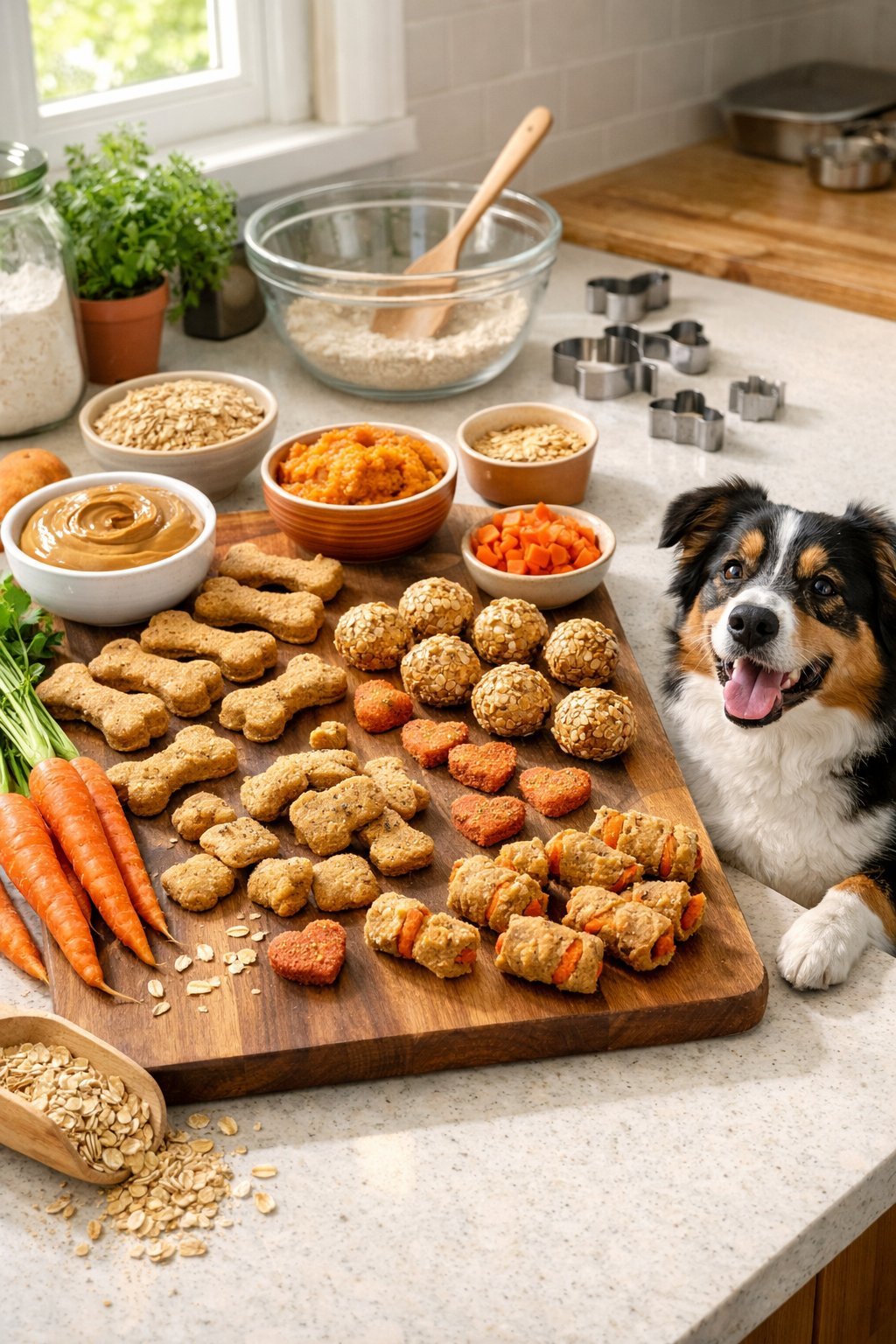
Making treats at home lets you control ingredients while saving money. These recipes use simple pantry items and take less than an hour from start to finish.
Peanut Butter Biscuits
I love making peanut butter biscuits because they only need a few basic ingredients. You’ll need two cups of whole wheat flour, one cup of natural peanut butter (make sure it doesn’t contain xylitol), one egg, and half a cup of water.
Mix everything together until you get a dough that’s easy to roll out. Roll it to about quarter-inch thickness and use cookie cutters to make fun shapes.
Bake at 350°F for 20 minutes until they’re golden and firm. Let them cool completely before giving them to your pup. These homemade dog treats store well in an airtight container for up to two weeks.
I find these work great for training since you can make them small. The peanut butter smell drives dogs crazy in the best way possible.
Grain-Free Bites
If your dog needs grain-free options, I recommend trying sweet potato and coconut flour treats. You’ll need one cup of mashed sweet potato, two cups of coconut flour, one egg, and three tablespoons of coconut oil.
Mix the ingredients until you form a thick dough. Roll into small balls and flatten them with a fork. Bake at 325°F for 25 minutes.
These grain-free treats work well for dogs with sensitive stomachs. The sweet potato adds natural sweetness and vitamins. I keep mine in the fridge where they last about a week.
You can also add a tablespoon of honey if your dog prefers sweeter treats. Just make sure to adjust baking time if you make them thicker or thinner.
Frozen Dog Snacks
Frozen treats are perfect for hot days or teething puppies. My go-to recipe uses plain Greek yogurt, mashed banana, and a spoonful of peanut butter.
Mix everything together and pour into ice cube trays or silicone molds. Freeze for at least four hours before serving. I like adding small pieces of fruit like blueberries for extra nutrition.
Another option I enjoy making uses chicken broth as a base. Pour low-sodium broth into molds and add tiny pieces of cooked chicken or carrots. These vet-approved frozen snacks help keep dogs hydrated while giving them something tasty.
Store frozen treats for up to three months in freezer bags. I pull out one or two at a time so they don’t melt too fast.
Customizing Treats For Different Dog Needs
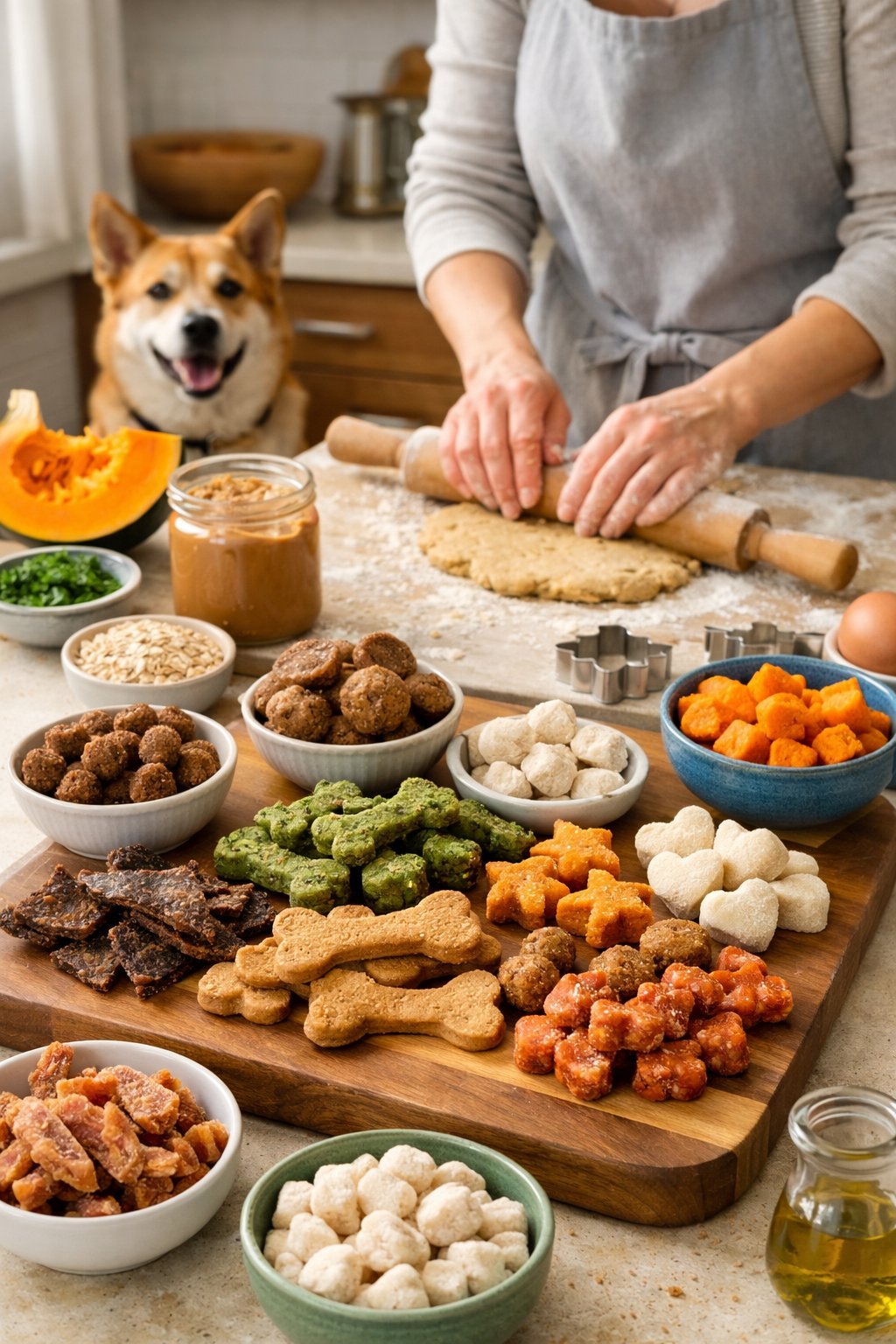
Making treats at home lets me adjust recipes to match my dog’s age, health issues, and dietary needs. I can swap ingredients to avoid allergens, adjust textures for young or aging mouths, and change nutritional content based on what my dog requires.
Allergy-Friendly Options
Many dogs deal with food allergies or sensitivities to common ingredients like wheat, chicken, or beef. I’ve found that customizing treats for specific health requirements helps me avoid triggering reactions in sensitive dogs.
For wheat allergies, I use alternative flours like oat flour, rice flour, or coconut flour. Sweet potato and pumpkin puree work well as binders instead of eggs if my dog can’t tolerate them. When protein allergies are an issue, I switch to novel proteins like duck, venison, or fish that my dog hasn’t eaten before.
I keep a list of safe ingredients for my dog and stick to simple recipes with just three or four components. This makes it easier to identify any problems if they come up. I also introduce new treats slowly, giving just small amounts at first to watch for any itching, digestive upset, or other reactions.
Treats For Puppies
Puppies need softer treats that are easy to chew with their developing teeth and smaller mouths. I make treats slightly smaller than adult versions, about the size of a pea or small blueberry.
I focus on ingredients that support puppy growth like lean proteins, calcium-rich yogurt, and omega-3 sources such as salmon. Banana and pumpkin add natural sweetness and fiber that’s gentle on young digestive systems. I avoid adding salt, sugar, or spices to puppy treats.
The texture matters a lot for young dogs. I bake treats for less time so they stay softer, or I make no-bake options using mashed ingredients frozen in small portions. Puppies use treats during training sessions, so I need lots of small, healthy options that won’t add too many calories to their diet.
Senior Dog Recipes
Older dogs often have dental issues, reduced jaw strength, and slower digestion. I make treats softer by adding more moisture or baking them for shorter periods.
Joint health becomes important as dogs age. I add ingredients like turmeric for its anti-inflammatory properties and fish oil for omega-3 fatty acids. Blueberries provide antioxidants that support brain health in aging dogs.
I reduce fat and calories in senior dog treats since older dogs are less active and gain weight more easily. Sweet potato, green beans, and lean meats like turkey keep treats nutritious without excess calories. For dogs with few teeth, I create treat “bites” that dissolve easily or can be broken into tiny pieces they can gum and swallow safely.
Safe Storage And Shelf Life
I’ve learned that proper storage can make homemade dog treats last anywhere from a few days to several months. The ingredients you use and how you store them determine whether treats stay fresh on the counter or need freezing.
Short-Term Storage Tips
For treats I plan to use within a week, I keep them at room temperature in an airtight container. Glass jars or sealed plastic containers work best because they prevent moisture from getting in.
I always make sure my baked dog treat biscuits are completely cool before storing them. Any leftover heat creates condensation inside the container, which leads to mold.
Counter storage works best for:
- Dry, crunchy biscuits made with flour and minimal wet ingredients
- Treats baked until very crispy with low moisture content
- Recipes without fresh meat, dairy, or eggs
I store treats with fresh ingredients like pumpkin or peanut butter in the refrigerator. These last about 5-7 days when kept cold. I check them daily for any signs of softness, odd smells, or visible mold.
Long-Term Preservation Methods
When I want to make treats last longer, I freeze them in freezer-safe bags or containers. Frozen treats stay fresh for 3-6 months.
I portion treats into smaller bags before freezing. This way, I only thaw what my dog needs for the week. Double-bagging prevents freezer burn and keeps treats tasting fresh.
My favorite preservation techniques include:
- Dehydrating: Removes moisture completely, making treats shelf-stable for 2-3 months
- Freezing in portions: Keeps treats fresh without affecting texture
- Vacuum sealing: Extends freezer life up to 8 months
I label every container with the date I made the treats. This helps me rotate stock and use older batches first.