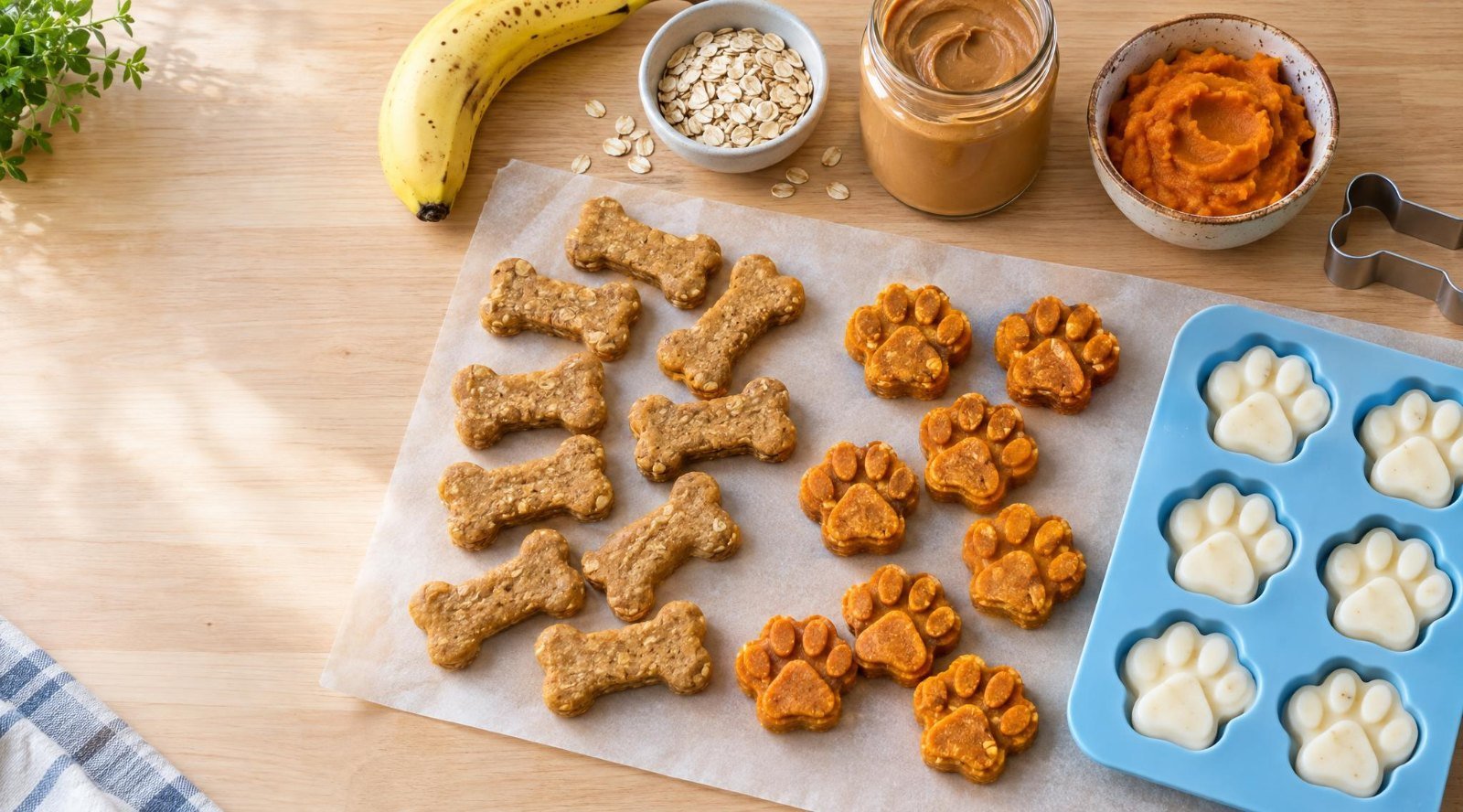
3 Ingredient Dog Treats: 5 Easy Recipes With Exact Amounts

Most store-bought dog treats have a long ingredient list. These don’t. Each recipe below uses three ingredients or fewer, with exact amounts, oven temperatures, batch sizes and an estimate of calories per treat so you know how many to hand out.
Helpful tools for homemade dog treats:
Dog bone cookie cutters, Silicone dog treat molds, Silicone baking mat, Xylitol-free peanut butter for dogs, Oat flour, Airtight treat jar.
Quick Answer: The Best 3 Ingredient Dog Treats
- Peanut butter banana bites: 1 banana, 1/2 cup peanut butter, 1 cup oat flour. Bake 12 to 15 minutes at 350°F.
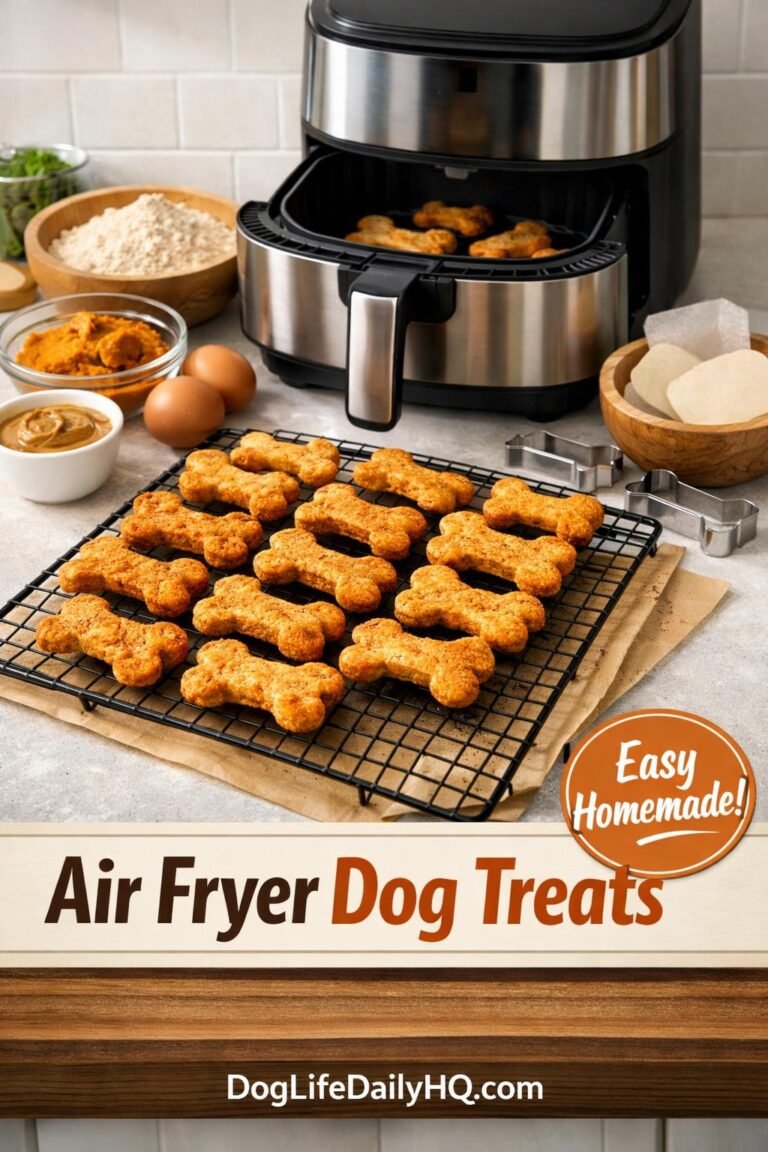
- Pumpkin oat biscuits: 1 cup pumpkin puree, 2 cups oat flour, 2 eggs. Bake 20 to 25 minutes at 350°F.
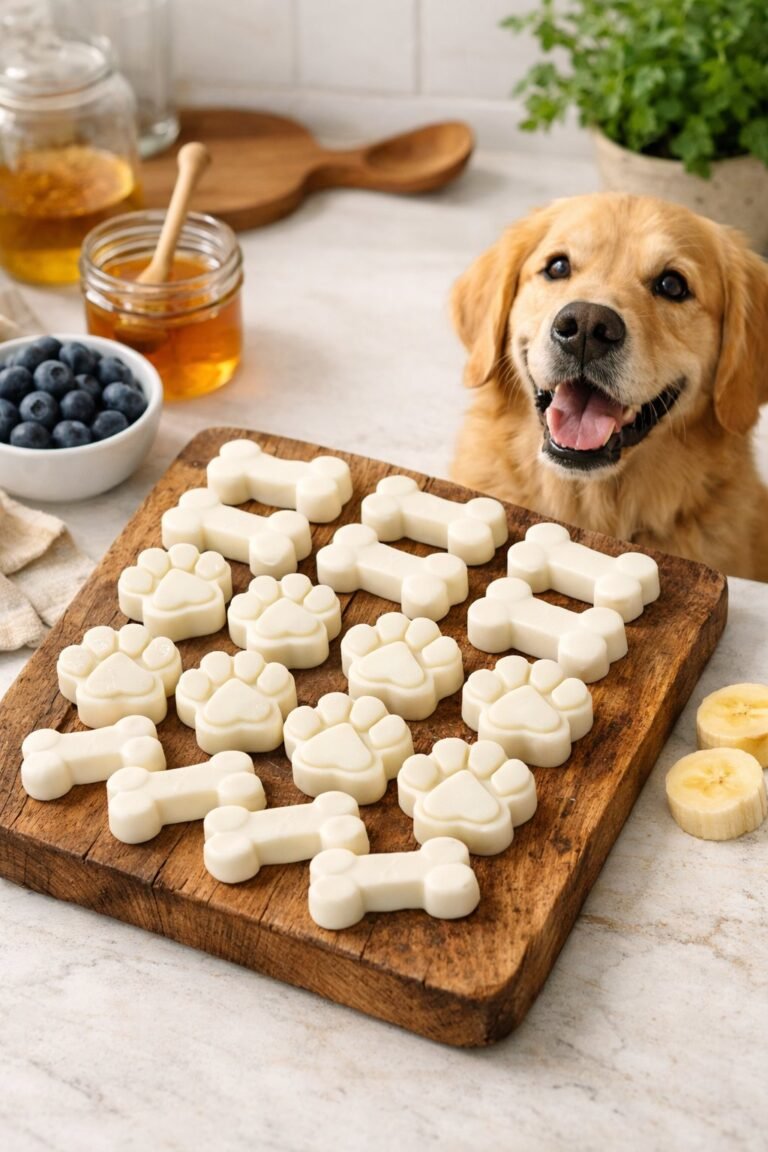
- Frozen yogurt peanut butter pops: 1 cup plain Greek yogurt, 1/4 cup peanut butter, 1 banana. Freeze 4 hours.
- Apple oat bites: 1 cup unsweetened applesauce, 2 cups oat flour, 1 egg. Bake 20 to 25 minutes at 350°F.
- Sweet potato chews: 2 sweet potatoes, 1 tablespoon coconut oil. Bake 2.5 to 3 hours at 250°F.
Always use peanut butter without xylitol. More on that below.
Before You Start: 4 Safety Rules
- No xylitol. Xylitol (also sold as “birch sugar”) is toxic to dogs. It shows up in some peanut butters and many sugar-free yogurts. Read the label every time. The safest peanut butter lists only peanuts, or peanuts and salt.
- Plain pumpkin only. Use 100% pumpkin puree, not pumpkin pie filling. Pie filling has sugar and spices like nutmeg.
- Skip the dangerous extras. No chocolate, grapes, raisins, onion, garlic or macadamia nuts in anything you make for your dog.
- Treats stay under 10%. Treats should be no more than about 10% of your dog’s daily calories. The table near the end shows what that means by dog size.
🐾 Keep It Safe for Your Pup
✅ Dog-Safe Peanut Butter — xylitol-free, made specifically for dogs, no nasty surprises on the label
What You Need
Every recipe here uses pantry staples. Oat flour is the base for most of them because it is gentle and easy to make: blend old-fashioned oats in a blender for about 30 seconds until fine. One cup of oats makes a little under one cup of flour.
- A mixing bowl and fork (or a blender for the frozen pops)
- A baking sheet lined with parchment or a silicone mat
- A small cookie cutter (1.5 inch works well) or a knife
- Silicone molds or an ice cube tray for frozen treats
- An airtight container for storage

5 Easy 3 Ingredient Dog Treat Recipes
Recipe 1: Peanut Butter Banana Bites
Makes: about 30 treats (1.5 inch) | Prep: 10 min | Bake: 12 to 15 min at 350°F | About 40 calories each
Ingredients
- 1 ripe banana (medium)
- 1/2 cup xylitol-free peanut butter
- 1 cup oat flour, plus 2 to 4 tablespoons for rolling
Steps
- Heat the oven to 350°F and line a baking sheet.
- Mash the banana until smooth. Stir in the peanut butter.
- Add the oat flour and mix into a soft dough. If it sticks to your hands, add flour 1 tablespoon at a time.
- Roll to about 1/4 inch thick and cut into shapes, or roll into 1 inch balls and flatten with a fork.
- Bake 12 to 15 minutes, until the edges are golden.
- Cool completely on a rack before serving.
Small dog? Cut the dough into 3/4 inch squares. You get about 60 pieces at roughly 20 calories each.
🐾 Make Baking Even More Fun
✅ Dog Bone Cookie Cutters — fun shapes make these treats extra adorable and Pinterest-worthy
✅ Parchment Paper Baking Sheets — prevents sticking and makes cleanup a breeze
🐾 Recipe 2: Pumpkin Oat Dog Biscuits
Ingredients:
- 1 cup canned pumpkin puree (plain, not pie filling)
- 2 cups oat flour
- 2 eggs
Instructions:
- Mix all three ingredients into a firm dough.
- Roll out on a floured surface.
- Cut into shapes and place on a lined baking sheet.
- Bake at 350°F for 20–25 minutes.
- Let cool fully on a wire rack before storing.
💡 Pro tip: These biscuits come out firmer and crunchier if you leave them in the oven (turned off) for an extra 10 minutes after baking. Great for dogs who love a satisfying crunch!
Recipe 2: Pumpkin Oat Biscuits
Makes: about 30 biscuits | Prep: 10 min | Bake: 20 to 25 min at 350°F | About 35 calories each
Ingredients
- 1 cup canned pumpkin puree (plain)
- 2 cups oat flour, plus extra for rolling
- 2 large eggs
Steps
- Heat the oven to 350°F and line a baking sheet.
- Whisk the eggs and pumpkin together.
- Stir in the oat flour until a firm dough forms. Pumpkin brands vary in moisture, so add up to 1/4 cup more flour if needed.
- Roll out to 1/4 inch on a floured surface and cut into shapes.
- Bake 20 to 25 minutes until dry to the touch.
- For a crunchier biscuit, turn the oven off and leave them inside for another 10 to 15 minutes.
Leftover pumpkin? Freeze it in an ice cube tray. One cube is about 2 tablespoons, handy for the next batch.
🐾 Cool Treats the Right Way
✅ Stainless Steel Wire Cooling Rack — lets air circulate so treats cool evenly and don’t get soggy on the bottom
🐾 Recipe 3: Frozen Yogurt Peanut Butter Pops
Ingredients:
- 1 cup plain Greek yogurt (unsweetened)
- ½ cup xylitol-free peanut butter
- 1 ripe banana
Instructions:
- Blend all three ingredients until smooth.
- Pour into silicone molds or an ice cube tray.
- Freeze for at least 3–4 hours (overnight is best).
- Pop out and serve straight from the freezer.
These are especially amazing in summer. Your dog will lose their mind.
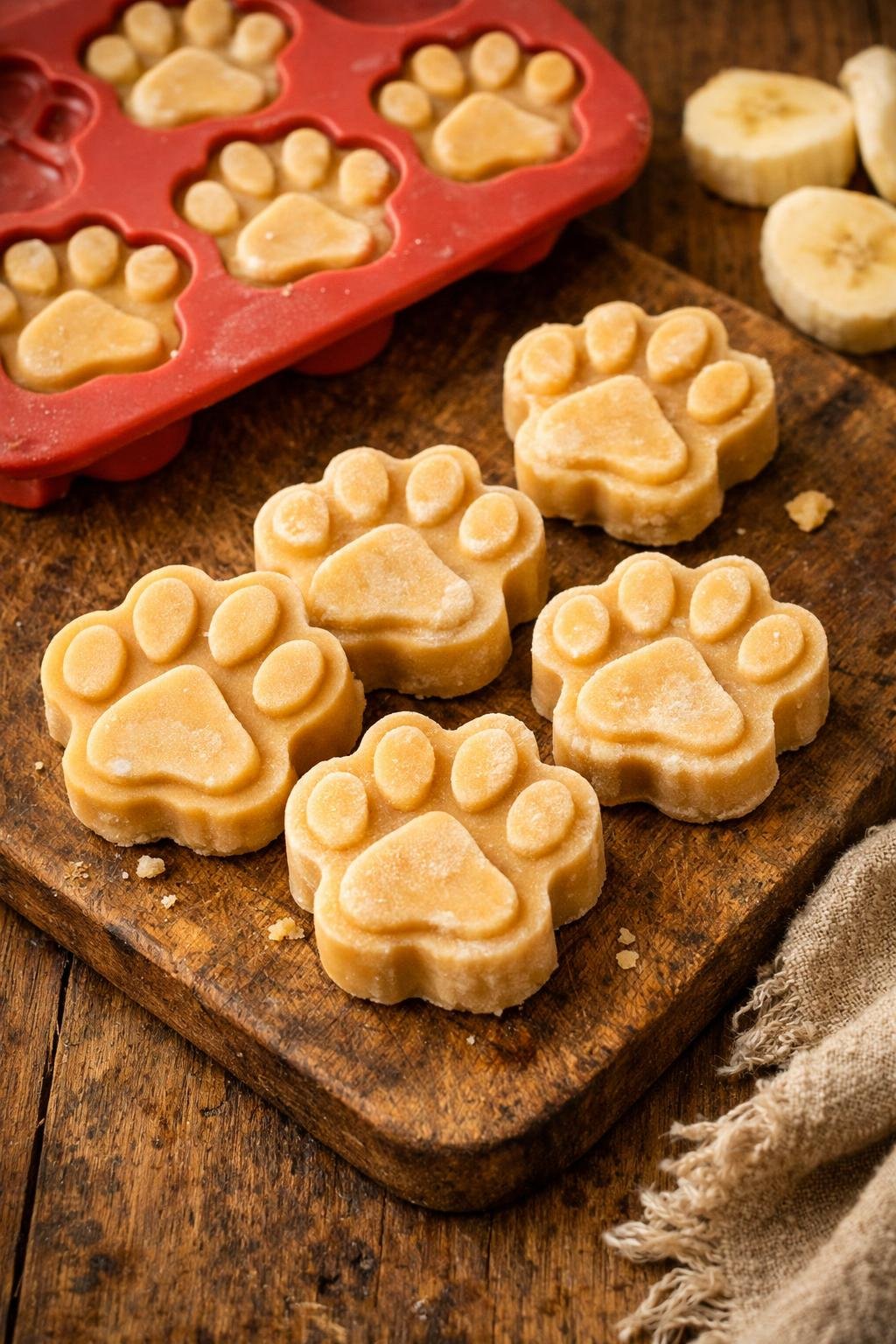
Recipe 3: Frozen Yogurt Peanut Butter Pops
Makes: about 20 cubes | Prep: 5 min | Freeze: 4 hours or overnight | About 30 calories each
Ingredients
- 1 cup plain, unsweetened Greek yogurt
- 1/4 cup xylitol-free peanut butter
- 1 ripe banana
Steps
- Blend everything until smooth.
- Spoon into silicone molds or an ice cube tray.
- Freeze at least 4 hours.
- Pop out and serve frozen. Store the rest in a freezer bag.
Note: Some dogs don’t handle dairy well. Start with one cube and watch for an upset stomach. If dairy is a problem, swap the yogurt for 1 cup of plain pumpkin puree.
🐾 Make Frozen Treats Extra Cute
✅ Silicone Dog Treat Molds — paw print and bone shapes make frozen treats look adorable and portion perfectly
Recipe 4: Apple Oat Bites
Makes: about 30 treats | Prep: 10 min | Bake: 20 to 25 min at 350°F | About 35 calories each
Ingredients
- 1 cup unsweetened applesauce (no added sugar or sweeteners)
- 2 cups oat flour
- 1 large egg
Steps
- Heat the oven to 350°F and line a baking sheet.
- Mix the applesauce and egg, then stir in the oat flour.
- Roll to 1/4 inch and cut, or drop teaspoon-size scoops and flatten.
- Bake 20 to 25 minutes until firm.
- Cool fully before storing.
This is a good option for dogs that can’t have peanut butter.
Recipe 5: Sweet Potato Chews (2 Ingredients)
Makes: about 30 chews | Prep: 10 min | Bake: 2.5 to 3 hours at 250°F | About 12 calories each
Ingredients
- 2 medium sweet potatoes, washed
- 1 tablespoon coconut oil, melted (optional)
Steps
- Heat the oven to 250°F and line two baking sheets.
- Slice the sweet potatoes lengthwise into 1/4 inch strips. Even thickness means even drying.
- Toss lightly with the coconut oil, or skip it for the leanest chew.
- Bake 2.5 to 3 hours, flipping halfway. Shorter gives a soft chew. Longer gives a firm, leathery chew.
- Cool completely. They firm up as they cool.
Watch your dog with any chew. Take it away once it’s small enough to swallow whole.
🐾 Perfect Frozen Treat Tool
✅ Silicone Ice Cube Tray (Fun Shapes) — works perfectly for small frozen dog treats and easy to pop out
Even Simpler: 2 Ingredient Dog Treats
Short on time? These need only two ingredients.
- Banana oat cookies: 1 mashed ripe banana + 1 cup old-fashioned oats. Drop by the tablespoon, flatten, bake 15 minutes at 350°F. Makes about 15.
- Pumpkin yogurt drops: 1/2 cup pumpkin puree + 1/2 cup plain Greek yogurt. Pipe or spoon small drops onto parchment and freeze 2 hours. Makes about 40 small drops.
- Peanut butter pumpkin cubes: 1 cup pumpkin puree + 2 tablespoons xylitol-free peanut butter. Freeze in an ice cube tray. Makes about 8 large cubes.
- Plain sweet potato chews: Recipe 5 without the oil.
Easy Swaps for Allergies and Picky Eaters
| If your dog can’t have… | Swap in | Tip |
|---|---|---|
| Peanut butter | Pumpkin puree or unsweetened applesauce | Use the same amount. Dough will be a bit softer, so add flour as needed. |
| Eggs | 1/4 cup pumpkin or applesauce per egg | Treats will be more crumbly. Roll thicker. |
| Oats | Brown rice flour or chickpea flour | Start with 3/4 of the amount and add more until the dough holds. |
| Dairy | Pumpkin puree in frozen recipes | Same amount, same freeze time. |
| Wheat | Oat flour (already used here) | Buy certified gluten-free oats if your dog has a diagnosed wheat or gluten issue. |
How Many Treats a Day?
The common guideline is to keep treats at 10% or less of daily calories. The numbers below are rough estimates for a typical spayed or neutered adult dog at a healthy weight. Active dogs need more, and senior or less active dogs need less. Your vet can give you your dog’s exact number.
| Dog weight | Approx. daily calories | Treat budget (10%) | Peanut butter banana bites (40 cal) |
|---|---|---|---|
| 10 lb | about 350 | about 35 calories | 1 small bite, or half a regular one |
| 20 lb | about 600 | about 60 calories | 1 to 1.5 |
| 40 lb | about 1,000 | about 100 calories | 2 to 2.5 |
| 60 lb | about 1,300 | about 130 calories | 3 |
| 80 lb | about 1,650 | about 165 calories | 4 |
Calories per treat are estimates based on standard ingredient values and the batch sizes above. Cut treats smaller for training, where you hand out many rewards in one session.
How to Store Homemade Dog Treats
Homemade treats have no preservatives, so they don’t last as long as store-bought ones.
| Type | Counter (airtight) | Fridge | Freezer |
|---|---|---|---|
| Crunchy baked (biscuits, apple oat bites) | up to 5 days | up to 2 weeks | up to 3 months |
| Soft baked (peanut butter banana bites) | 1 to 2 days | up to 1 week | up to 3 months |
| Frozen (yogurt pops, pumpkin drops) | no | no | up to 1 month |
| Sweet potato chews | no | up to 1 week | up to 3 months |
Cool baked treats completely before you seal them. Trapped steam is the main cause of mold. Throw out anything that smells off or shows spots.
🐾 Keep Treats Fresh Longer
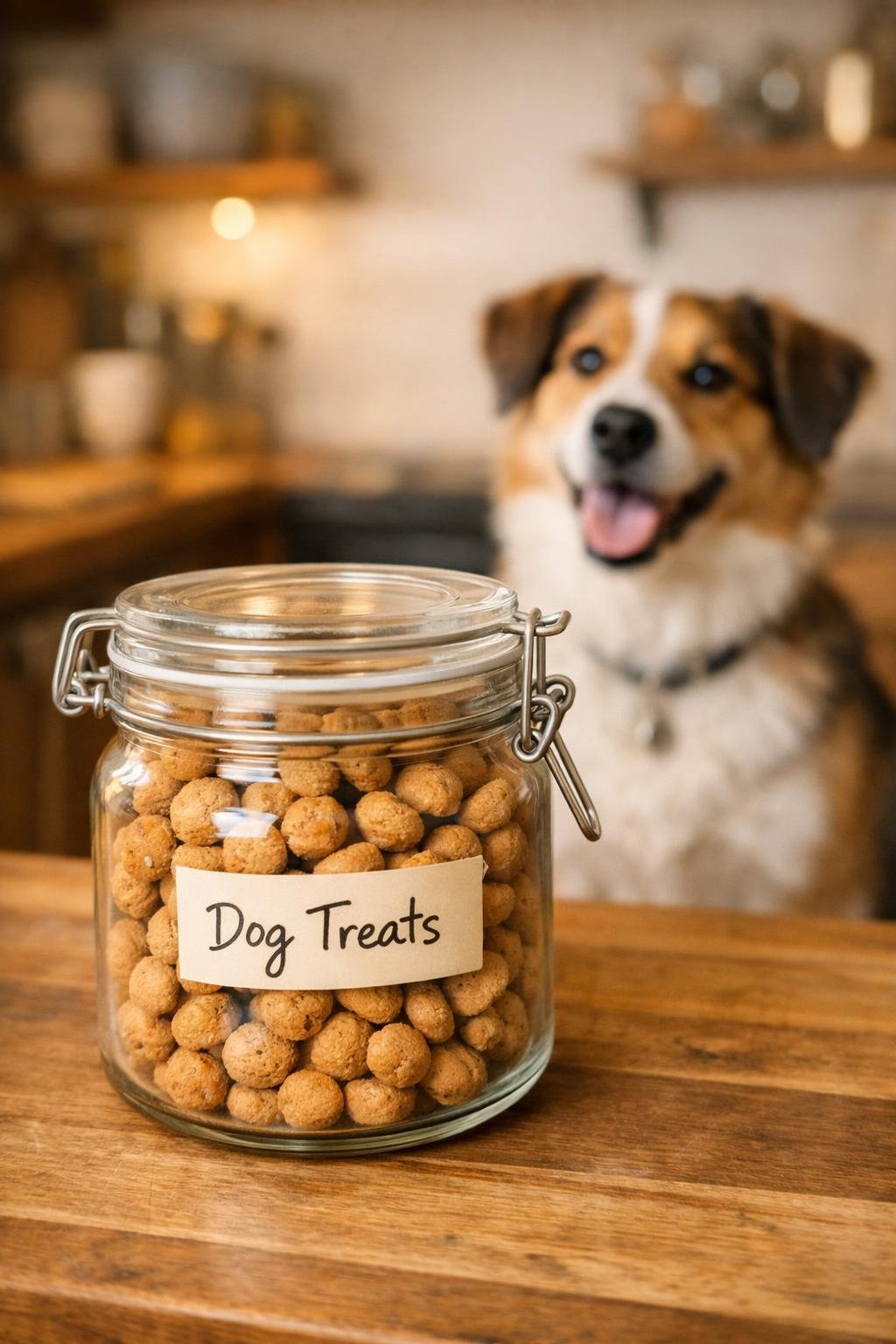
✅ Airtight Glass Treat Storage Container — keeps baked treats fresh and looks cute on your counter too
✅ Reusable Silicone Freezer Bags — great for storing frozen treat batches without plastic waste
Troubleshooting
- Dough too sticky: Add oat flour 1 tablespoon at a time. Bananas and pumpkin brands vary a lot in moisture.
- Dough too crumbly: Add 1 tablespoon of water or pumpkin and knead again.
- Treats soft in the middle: Roll thinner (1/4 inch) or leave them in the turned-off oven for 15 minutes.
- Frozen treats stuck in the tray: Let the tray sit on the counter for 2 minutes, then flex it.
- Treats went moldy: They were sealed while warm, or soft treats were left on the counter too long. Refrigerate soft treats.
Frequently Asked Questions
Can I use regular flour instead of oat flour?
Yes, if your dog has no wheat sensitivity. Whole wheat flour works as a 1 to 1 swap in the baked recipes. It makes a slightly denser treat.
Are these treats OK for puppies?
Once a puppy is eating solid food, small pieces of these treats are generally fine. Cut them small and keep the 10% rule in mind, since puppies need most of their calories from complete puppy food.
Can I use coconut flour?
Coconut flour absorbs far more liquid than oat flour. Use about 1/4 of the amount and add it slowly.
Is cinnamon safe for dogs?
A small pinch of Ceylon or regular cinnamon is generally considered fine for dogs. Never use nutmeg, which can be harmful.
How do I know if my peanut butter is safe?
Check the ingredient list for xylitol or “birch sugar.” If either is listed, don’t use it. Plain peanut butter with only peanuts, or peanuts and salt, is the safest choice.
The Short Version
- Pick one recipe and make a half batch first to see what your dog likes.
- Check every peanut butter and yogurt label for xylitol.
- Cut treats to match your dog’s size and stay inside the 10% treat budget.
- Cool completely, store airtight, and freeze what you won’t use in a week.
More Homemade Treat Recipes
- Peanut Butter and Oats Dog Treats
- Pumpkin Dog Treats
- Frozen Dog Treats
- Homemade Dog Biscuits
- Easy Homemade Dog Treats
Printable Recipe Card
Want just the essential recipe details without scrolling through the article? Get our printable recipe card with just the ingredients and instructions.