Homemade Dog Meals: Simple Recipes and Complete Nutrition

Making your own homemade dog meals gives you complete control over what your pet eats every day. Instead of wondering about mystery ingredients in store-bought kibble, you can prepare fresh meals with real meat, vegetables, and grains that you pick yourself.
Many dog owners have noticed better digestion, shinier coats, and more energy in their pets after switching to homemade meals.

Homemade dog meals let you customize nutrition for your dog’s specific needs, whether they have allergies, weight issues, or other health concerns. I’ve put together this guide to help you understand what goes into a balanced dog meal and how to prepare it safely.
You’ll find practical recipes and tips that make cooking for your dog easier than you might think.
The key is learning which ingredients provide the nutrients dogs need and how to combine them properly. Making homemade dog food requires attention to balance, but it doesn’t have to be complicated.
With some basic knowledge and a few tried-and-true recipes, you can start preparing meals that keep your dog healthy and happy.
Key Takeaways
- Homemade dog food gives you control over ingredients and helps avoid fillers and artificial additives found in commercial food
- A balanced homemade diet must include proper amounts of protein, vegetables, and limited carbohydrates to meet your dog’s nutritional needs
- Always consult your veterinarian before switching to homemade meals to ensure recipes meet your dog’s specific health requirements
Benefits of Homemade Dog Meals
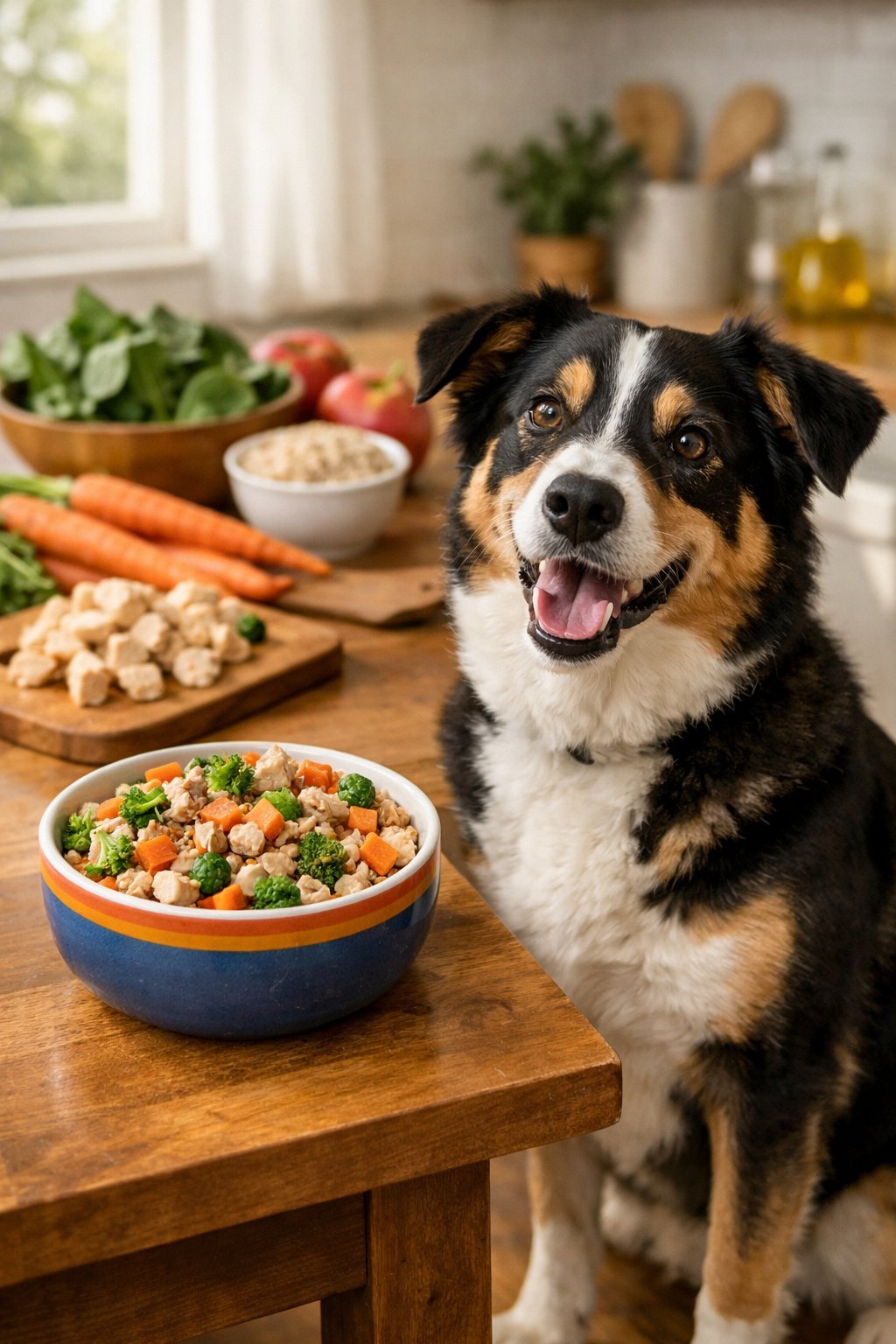
Making meals for my dog at home gives me complete control over what goes into their bowl and lets me adjust recipes based on their specific needs. Fresh ingredients can lead to visible improvements in my dog’s overall health and energy levels.
Ingredient Control and Quality
When I prepare homemade dog food, I choose every ingredient that goes into my dog’s bowl. This means I can select fresh meats, vegetables, and grains without worrying about fillers or artificial additives.
I avoid the concern of dog food recalls that affect commercial products. By shopping for my dog’s ingredients myself, I know exactly where the food comes from.
I can pick high-quality cuts of meat, fresh produce, and whole grains instead of mystery ingredients listed on a bag. Cooking for my dog lets me skip preservatives and artificial colors that many commercial foods contain.
I can use natural ingredients in their whole form. This gives my dog nutrients without chemical additives that might cause problems over time.
Customization for Health and Allergies
I can tailor every meal to fit my dog’s unique needs. If my dog has allergies to chicken or grain, I simply leave those out and use alternatives like fish or sweet potatoes.
Dogs with health conditions benefit from customized meals. For example, I can reduce fat for an overweight dog or increase protein for an active working dog.
Benefits of making food at home include adjusting portions and ingredients based on my dog’s age, size, and activity level. I can also avoid ingredients that upset my dog’s stomach.
Some dogs don’t tolerate certain proteins or carbohydrates well. By preparing meals myself, I test different combinations and find what works best for my specific dog.
Improvements in Digestion, Skin, and Coat
I’ve noticed that fresh, homemade meals are often easier for my dog to digest than processed kibble. This leads to more regular bowel movements and less stomach upset.
Many dogs show visible changes in their coat quality after switching to healthy dog food made at home. Their fur becomes shinier and softer.
Skin issues like dryness or itching often improve because fresh ingredients provide better nutrition. The natural nutrients in whole foods support dog health better than synthetic vitamins added to commercial food.
Fresh meats provide complete proteins, while vegetables offer natural fiber that helps digestion. I see my dog has more energy and seems more comfortable after eating meals I prepare.
Bonding and Feeding Experience
Preparing meals for my dog strengthens our relationship. The time I spend cooking shows my dog that I care about their wellbeing.
My dog gets excited when they see me preparing their food. They know a fresh, tasty meal is coming.
This creates a positive feeding experience that makes mealtime special. I also notice that my dog enjoys the variety in their diet.
Instead of eating the same kibble every day, they get different combinations of meats and vegetables. This keeps them interested in their food and prevents boredom at mealtime.
Understanding Canine Nutrition Essentials
Dogs need a balanced mix of proteins, carbohydrates, fats, vitamins, and minerals to stay healthy. Getting these nutrients right in homemade meals means choosing quality ingredients and understanding how much of each component your dog requires.
Quality Protein Sources
Protein forms the foundation of any good dog diet. I recommend using animal-based proteins like chicken, turkey, beef, lamb, or fish because they contain all ten essential amino acids dogs need for muscle development and tissue repair.
When I prepare homemade meals, I aim for protein to make up about 25-30% of my dog’s daily calories. A 50-pound adult dog typically needs around 50-75 grams of protein per day, though this varies based on activity level and age.
Best protein options include:
- Chicken breast or thighs
- Lean ground beef or turkey
- Salmon or whitefish
- Eggs
- Lamb
I avoid processed meats and stick with fresh, whole cuts whenever possible. Organ meats like liver can be added once or twice weekly for extra nutrients.
If you’re unsure about protein sources for homemade recipes, a veterinary nutritionist can help you create a balanced plan.
Complex Carbohydrates and Fiber
Complex carbs provide steady energy and support digestive health. I’ve found that dogs do well with carbohydrates making up about 40-60% of their daily calories, though this can vary.
Brown rice is my go-to choice because it’s easily digestible and gentle on sensitive stomachs. Sweet potatoes are another excellent option since they’re packed with fiber, vitamins, and minerals.
Oats work well too, but I make sure to cook them thoroughly to prevent digestive issues. When adding vegetables, I choose green beans, carrots, and leafy greens.
I stay away from grapes, raisins, and onions because they’re toxic to dogs.
Safe carbohydrate sources:
- Brown rice
- Sweet potatoes
- Oats (well-cooked)
- Pumpkin
- Green beans
I keep portions appropriate for my dog’s size and activity level since too many carbs can lead to weight gain.
Fats and Essential Fatty Acids
Fats are essential for energy, skin health, and nutrient absorption. I aim for fats to make up 10-20% of my dog’s daily calories, being careful not to overdo it since excess fat can cause pancreatitis.
Omega-3 and omega-6 fatty acids are particularly important for canine nutrition. I add salmon oil or fish oil for omega-3s, which support joint health and reduce inflammation.
Chicken fat and coconut oil provide good sources of energy.
Healthy fat sources:
| Fat Source | Benefits | Amount |
|---|---|---|
| Salmon oil | Omega-3, coat health | 1 tsp per 20 lbs |
| Coconut oil | Energy, digestion | 1 tsp per 10 lbs |
| Chicken fat | Palatability, energy | Moderate amounts |
I watch my dog’s weight closely when adjusting fat content. Too little fat can lead to dry skin and dull coat, while too much causes obesity and digestive upset.
Vitamins, Minerals, and Supplements
Even well-planned homemade meals may need supplementation. Calcium and phosphorus balance is critical, with an ideal ratio of approximately 1:1 to prevent bone problems.
I add ground eggshells or calcium carbonate powder to meet calcium needs. Vitamin D is another essential nutrient that dogs can’t get enough of from food alone, especially without adequate sunlight exposure.
Common supplements I use:
- Calcium supplement (ground eggshells or powder)
- Fish oil for omega-3s
- Multivitamin formulated for dogs
- Vitamin E for antioxidant support
I consult with a canine nutritionist before adding supplements because too much of certain vitamins and minerals can be harmful. Vitamin D toxicity and calcium-phosphorus imbalances are real concerns.
Regular blood work helps me monitor whether my dog’s getting proper nutrition from their homemade dog meals.
Selecting Ingredients for Homemade Dog Meals
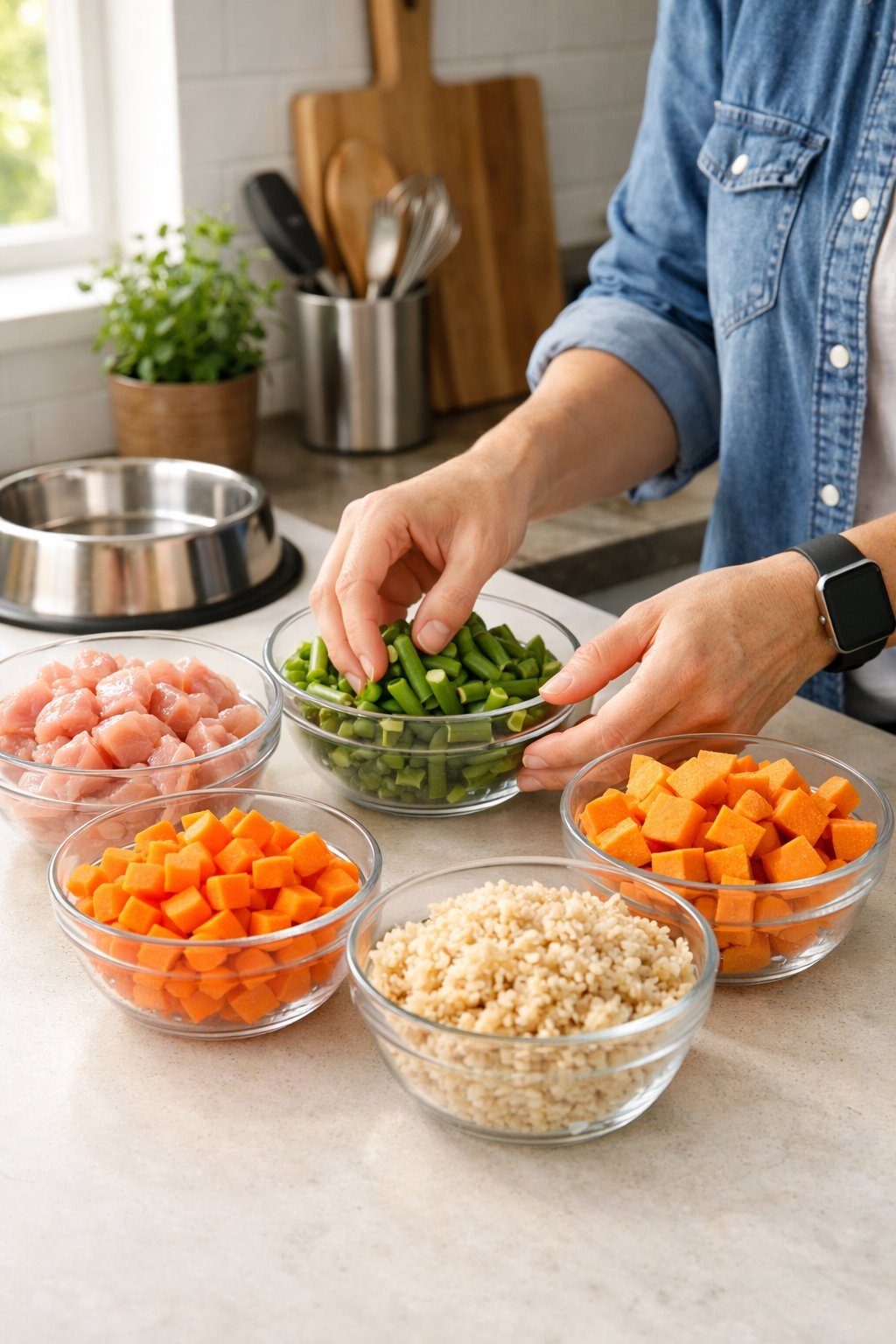
I’ve learned that building balanced homemade dog meals starts with choosing high-quality proteins, adding nutrient-rich vegetables and fruits, deciding between grains or grain-free options, and including essential supplements to fill any nutritional gaps.
Safe and Nutritious Proteins
Protein forms the foundation of any homemade dog diet. I recommend using lean meats like ground turkey, ground beef, chicken, and fish as your primary protein sources.
Ground turkey is one of my favorite common homemade dog meals ingredients because it’s lean and easy to digest. Ground beef works well too, though I suggest choosing lean cuts with no more than 10-15% fat content.
Chicken breast and thighs provide excellent protein, and fish like salmon offers omega-3 fatty acids for skin and coat health. Eggs are another protein option I use regularly.
They’re affordable and packed with nutrients. I also occasionally add cottage cheese or plain yogurt, which provides protein plus beneficial probiotics for digestive health.
Always cook proteins thoroughly before feeding them to your dog. Raw meat can contain harmful bacteria that may make your pet sick.
Optimal Vegetables and Fruits
Vegetables and fruits add essential vitamins, minerals, and fiber to homemade dog meals. I focus on dog-safe options that provide the most nutritional benefit.
Sweet potatoes are one of my go-to ingredients. They’re rich in fiber, vitamins A and C, and most dogs love their taste.
Carrots offer similar benefits and add a satisfying crunch. Green beans are low in calories but high in nutrients, making them perfect for dogs who need to watch their weight.
Other vegetables I include are:
- Peas – good source of vitamins K and B
- Spinach – packed with iron and antioxidants
- Broccoli – contains vitamins C and K (use in small amounts)
- Pumpkin – excellent for digestive health
For fruits, I add blueberries, apples (without seeds), and bananas in moderation. These provide antioxidants and natural sweetness.
I always avoid onions, garlic, grapes, and raisins, as these are toxic to dogs.
Choosing Grains and Grain-Free Alternatives
The grain debate depends on your dog’s individual needs and tolerances. Many dogs digest grains perfectly well, while others do better on grain-free dog food.
Cooked brown rice is my preferred grain option. It’s gentle on the stomach and provides energy through complex carbohydrates.
I cook it plain without any seasonings or butter. Oatmeal is another good choice that I use occasionally, especially for dogs with sensitive stomachs.
Quinoa offers a complete protein source along with carbohydrates. White rice works well for dogs with digestive upset, though it has less nutritional value than brown rice.
For grain-free alternatives, I turn to sweet potatoes, regular potatoes, or legumes like lentils and chickpeas. These provide the carbohydrates dogs need for energy without using traditional grains.
Some dogs with allergies or sensitivities do better on these options. I watch for signs of grain intolerance like itching, ear infections, or digestive issues.
If these appear, I switch to grain-free alternatives.
Recommended Supplements and Add-ins
Even with carefully chosen balanced ingredients, homemade dog meals often need supplements to meet all nutritional requirements.
Calcium is crucial, especially since most homemade diets lack enough of this mineral. I add calcium carbonate powder or ground eggshells to each meal.
Fish oil provides omega-3 fatty acids that support joint health, brain function, and a shiny coat.
A multivitamin designed for dogs helps fill any nutritional gaps.
I also consider adding:
- Vitamin E – supports immune function
- Zinc – promotes healthy skin and coat
- B vitamins – aid in energy metabolism
Plain yogurt serves double duty as both a protein source and probiotic supplement. The beneficial bacteria support digestive health.
I always consult with my veterinarian before starting any supplement regimen. They can recommend specific supplements based on my dog’s age, size, and health status.
Some dogs need more or less of certain nutrients depending on their individual circumstances.
Homemade Dog Meals Preparation Methods
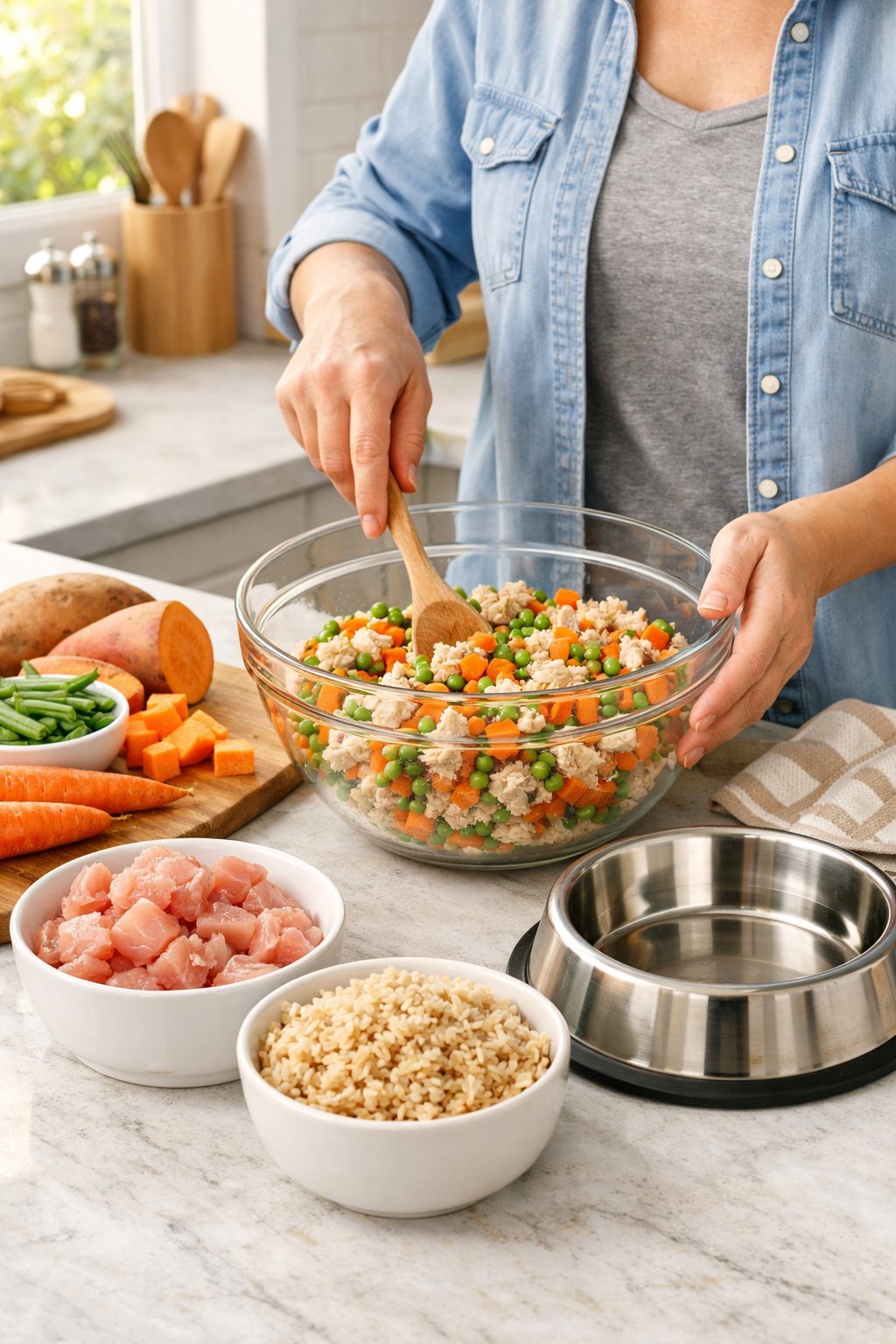
I’ve found that preparing homemade meals for my dog involves choosing between cooked recipes, raw feeding options, or a combination of both.
Learning proper batch cooking techniques helps me save time while keeping meals fresh and nutritious.
Cooked Dog Food Recipes
Cooking food for my dog makes ingredients easier to digest and kills harmful bacteria. I gently cook proteins like chicken, turkey, or beef at medium-low temperatures until most of the meat turns white but some remains slightly pink.
This method keeps more nutrients intact compared to high-heat cooking.
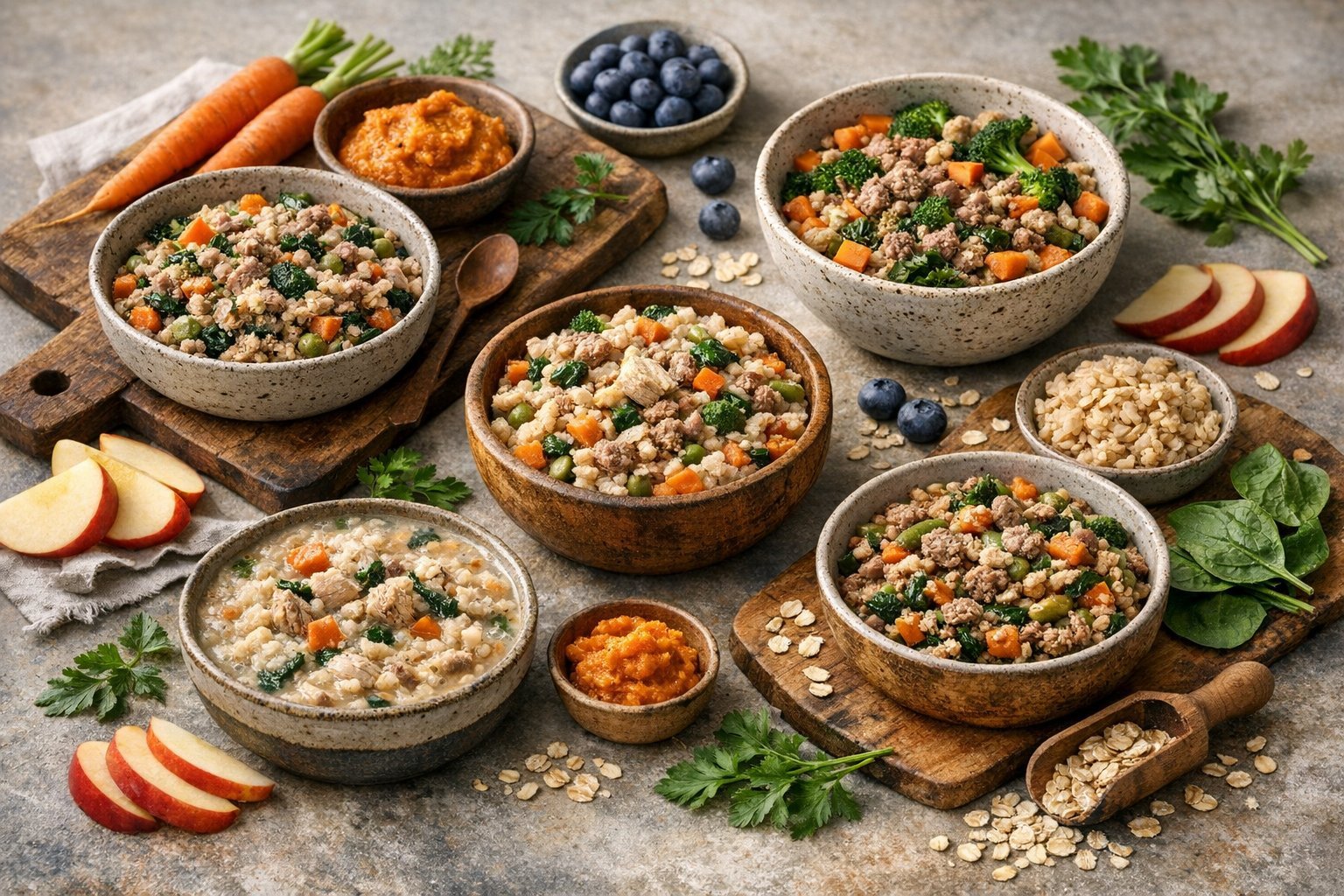
When I prepare homemade dog meals recipes, I include protein, carbohydrates like rice or potatoes, and vegetables.
I always blanch vegetables and use a food processor to grind them finely because this makes them easier for my dog to digest.
I add vegetable oil for healthy fats and include a calcium supplement in every recipe.
I use a food scale to measure ingredients accurately, which helps me follow recipes correctly.
Raw Dog Food Diet Options
A raw dog food diet includes uncooked meat, bones, organs, and vegetables. I use raw proteins like turkey thighs, organ meats such as liver and hearts, and ground raw bones for calcium.
The meat stays fresher when I source it from quality suppliers and handle it safely.
I grind vegetables finely or pulse them in a food processor because dogs can’t break down plant cell walls easily.
Adding raw sunflower seeds and oils like salmon oil provides essential fatty acids my dog needs.
Raw feeding requires extra care with food safety. I wash my hands thoroughly and clean all surfaces after handling raw meat.
I also monitor my dog’s health closely when feeding raw because some dogs have sensitive stomachs.
This DIY dog food approach works well for many dogs but isn’t right for every pet.
Batch Cooking and Storage Tips
I save time by batch cooking homemade dog meals and storing portions for the week.
After preparing a large batch, I let the food cool completely before dividing it into meal-sized containers.
I store what my dog will eat within three to four days in the refrigerator and freeze the rest.
Frozen dog food stays fresh for about two months, though I try to use it within that timeframe.
I avoid keeping frozen meals longer than six months because nutrients break down over time.
I label each container with the date and recipe name so I can track freshness.
When I’m ready to feed my dog, I thaw frozen portions in the refrigerator overnight rather than using a microwave, which can create hot spots that burn my dog’s mouth.
Popular and Vet-Approved Homemade Dog Food Recipes
Chicken and rice combinations provide easy digestion and balanced nutrition. Turkey and sweet potato dishes offer lean protein with fiber-rich carbohydrates.
Beef-based meals deliver essential amino acids paired with nutrient-dense vegetables. Specialized recipes address food sensitivities and stomach issues.
Chicken and Rice Meals
Chicken and rice stands as one of the most recommended homemade dog meals by veterinarians.
I find this combination works well because it’s gentle on the stomach and provides complete protein with easily digestible carbohydrates.
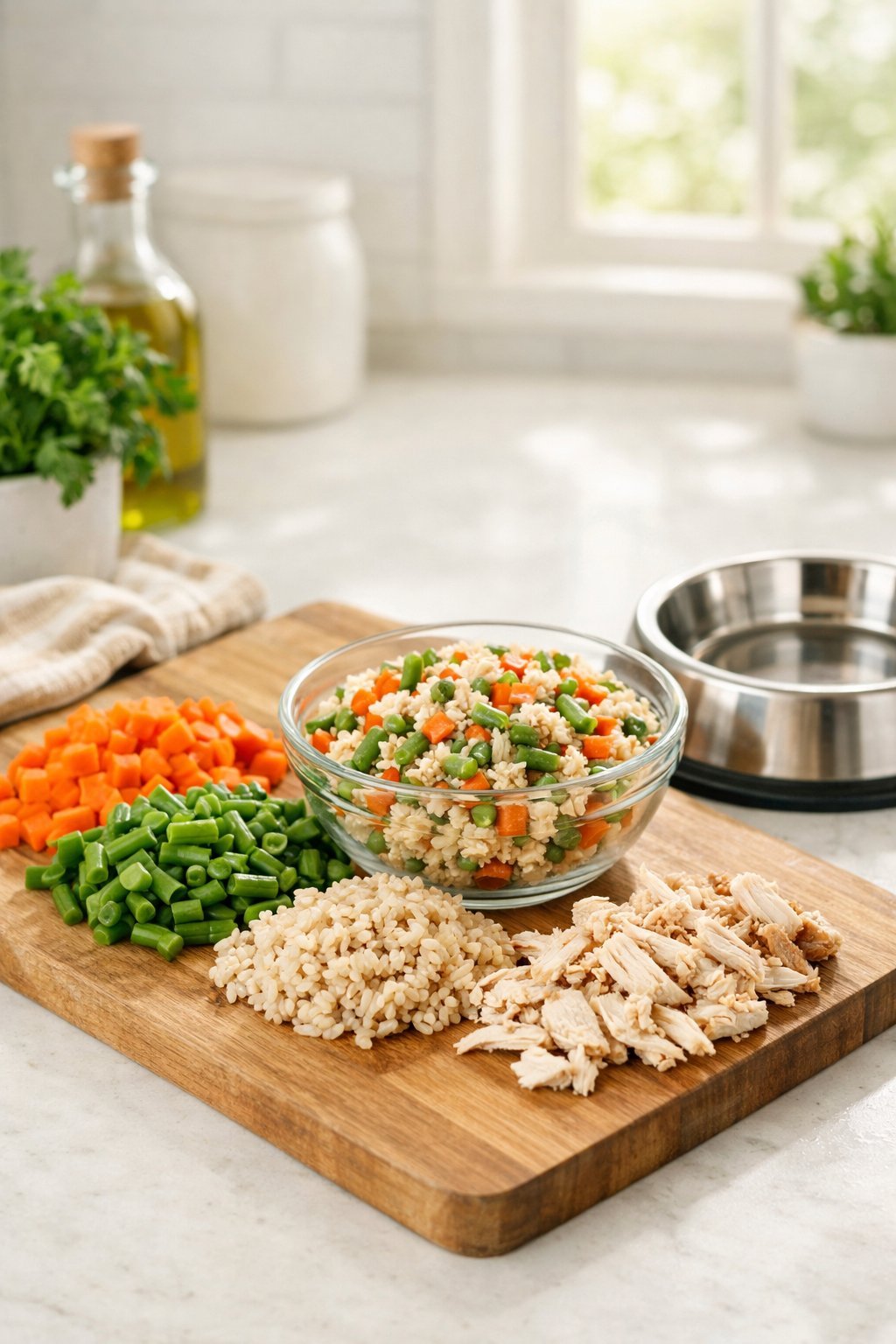
To make a basic chicken and rice dog food recipe, I use boneless, skinless chicken breast or thighs cooked thoroughly without seasoning.
I combine this with white or brown rice in a 1:2 ratio of chicken to rice.
Adding cooked carrots and green beans boosts the vitamin content.
For dogs recovering from digestive upset, I stick with white rice since it’s easier to digest.
Chicken and rice recipes for digestive concerns help soothe inflammation and restore normal bowel function.
When my dog needs extra calories, I add a tablespoon of olive oil or a scrambled egg to the mix.
Turkey and Sweet Potato Dishes
Turkey provides lean protein that’s lower in fat than many other meats.
I pair it with sweet potatoes because they’re packed with fiber, vitamins A and C, and complex carbohydrates that give my dog steady energy throughout the day.
My go-to recipe includes ground turkey or diced turkey breast cooked until no pink remains.
I bake or boil sweet potatoes until soft, then mash them for easier eating.
The ratio I use is about 40% turkey, 30% sweet potato, and 30% vegetables like spinach or broccoli.
Turkey and sweet potato meatballs for dogs with cancer show how versatile these ingredients are for special health needs.
I sometimes add a bit of coconut oil for healthy fats and coat health.
Beef and Vegetable Combinations
Beef delivers high-quality protein and essential nutrients like iron and B vitamins.
I choose lean ground beef or chuck roast to keep the fat content moderate while still providing flavor my dog loves.
When preparing beef-based homemade dog meals, I brown the meat thoroughly and drain excess fat.
I then add vegetables like:
- Carrots for beta-carotene and crunch
- Green beans for fiber and low calories
- Peas for protein and vitamins
- Broccoli for antioxidants (in small amounts)
I cook everything together with a small amount of water to create moisture.
Beef and vegetable recipes give me flexibility to adjust ingredients based on what’s in season or on sale.
Hypoallergenic and Sensitive Stomach Recipes
Some dogs need special consideration when I’m making their homemade dog meals.
Food sensitivities require careful ingredient selection to avoid triggers like chicken, beef, or grains.
For these situations, I turn to novel proteins my dog hasn’t eaten before.
Fish like salmon provides omega-3 fatty acids without common allergens.
I also use lamb or venison as alternative protein sources.
Instead of rice or wheat, I substitute with quinoa or sweet potato.
Recipes for dogs with digestive disorders include options like tapioca and tofu for dogs with multiple intolerances.
I keep these meals simple with minimal ingredients so I can identify any problems quickly.
Bone broth adds flavor and nutrients while being gentle on the stomach.
When my dog has pancreatitis, I prepare low-fat versions using extra-lean meats and no added oils.
Homemade Dog Treats and Special Snacks
Making treats at home gives you control over ingredients and lets you create snacks your dog will love.
Simple recipes using common ingredients can provide healthier alternatives to store-bought options.
Easy Homemade Dog Treat Recipes
I find that homemade dog treat recipes are simple and easy to follow, making them perfect for beginners.
Most recipes use basic ingredients you already have in your kitchen.
One popular option is apple pretzels made with just three ingredients: almond flour, eggs, and unsweetened applesauce.
I mix these together to form a dough, roll it into tubes, and twist them into pretzel shapes before baking at 350 degrees for 25-30 minutes.
Blackberry biscuits are another favorite.
I combine almond flour, flax meal, fresh blackberries, an egg, and olive oil with water to create the dough.
After rolling it out and cutting shapes with a cookie cutter, I bake them until they’re firm and golden brown.
For frozen treats, I make mini yogurt popsicles using plain yogurt, blueberries, and chopped strawberries.
I mix everything together and pour it into ice cube trays before freezing for at least 4-5 hours.
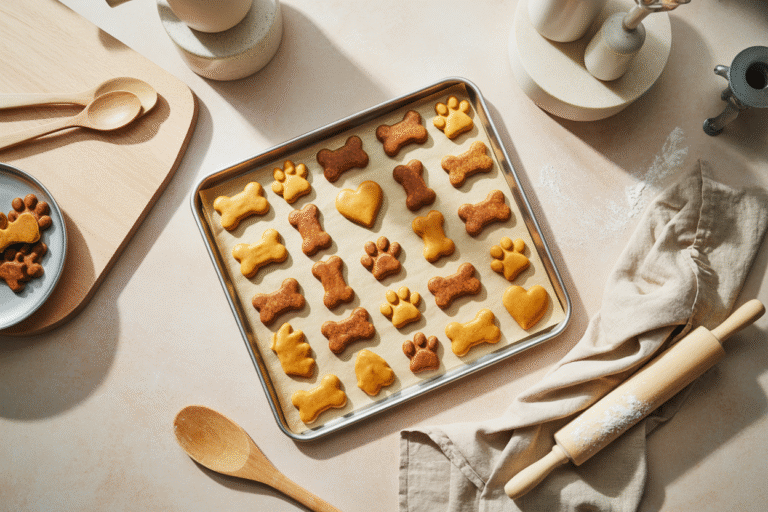
Pumpkin Dog Biscuits and Baked Snacks
Pumpkin dog biscuits are one of my go-to baked treats because pumpkin is gentle on dogs’ stomachs and packed with fiber.
I use pure pumpkin puree, not pie filling, which contains added sugars and spices.
To make basic pumpkin biscuits, I combine pumpkin puree with whole wheat flour or oat flour and an egg.
I roll the dough to about 1/4-inch thickness and cut out shapes before baking until crispy.
These treats store well in an airtight container for up to two weeks.
Sweet potato chips are another healthy baked option I prepare often.
I slice sweet potatoes thin, arrange them on a baking sheet, and bake at a low temperature until they’re dried and crispy.
My dogs love the natural sweetness and crunchy texture.
Chicken Jerky and Protein Treats
Chicken jerky is a high-protein treat I make by slicing chicken breasts into thin strips. I bake them at low heat for several hours.
The slow baking process removes moisture and creates a chewy texture my dogs enjoy. I always use boneless, skinless chicken breast and cut it against the grain into strips about 1/4-inch thick.
After placing them on a lined baking sheet, I bake at 200 degrees for 2-3 hours until fully dried. Frozen meat cubes offer another protein option.
I blend cooked chicken with plain yogurt, carrots, and olive oil, then pour the mixture into ice cube trays to freeze. These homemade dog meals make perfect training rewards or cooling treats on hot days.