Dog Accessories Every Pet Owner Needs for a Happy and Healthy Pup

Dogs need more than just food and water to live happy lives. The right accessories can improve your dog’s comfort, safety, and overall well-being while making daily care easier for you as an owner.
Whether you’re bringing home a new puppy or looking to upgrade your current pet’s gear, knowing which products matter most helps you make smart choices.

The market offers countless dog accessories ranging from basic necessities to fun extras. The key is understanding what your dog actually needs based on their size, age, and lifestyle.
Getting the right supplies before you bring your new pet home sets you both up for success. From collars and beds to toys and seasonal gear, each accessory serves a specific purpose in your dog’s daily routine.
Key Takeaways
- Essential dog accessories include collars, leashes, beds, and feeding supplies that support daily care and safety
- Comfort items like quality bedding and enrichment products such as toys keep dogs physically and mentally healthy
- Seasonal gear and outdoor accessories help protect your dog during different weather conditions and activities
Essential Dog Accessories

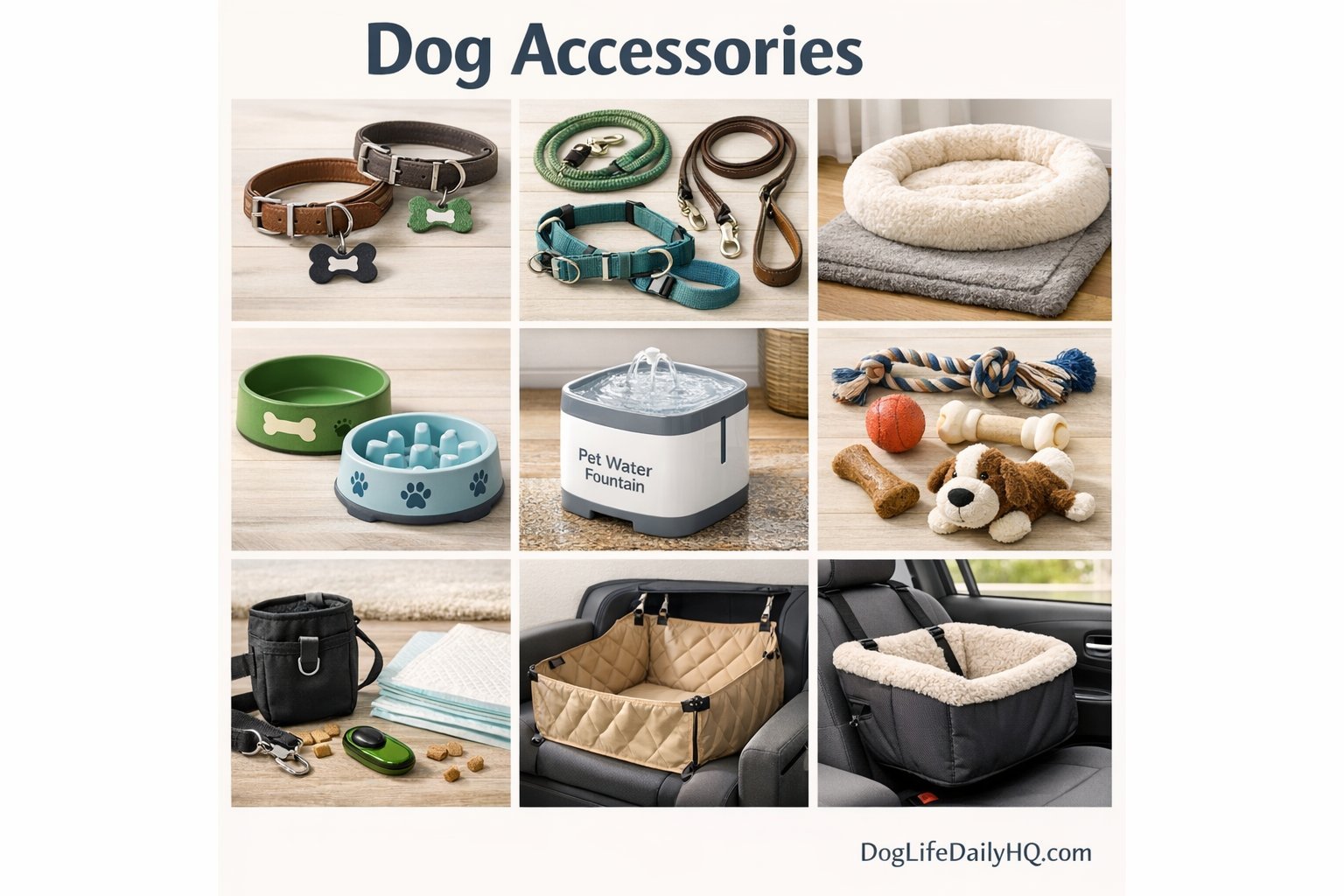
Every dog needs a few key items to stay safe and comfortable during daily activities. The right collar, leash, harness, and ID tag protect your pet while giving you better control during walks and outings.
Collars and Leashes
I recommend getting a sturdy collar that fits your dog properly. You should be able to fit two fingers between the collar and your dog’s neck.
Nylon and leather are popular collar materials. Nylon collars work well for most dogs and come in many colors.
Leather collars last longer but cost more. For leashes, I suggest a 4 to 6-foot length for everyday walks.
This gives your dog some freedom while keeping them close. Retractable leashes offer more range but provide less control in busy areas.
Quality collars support identification and leash training while keeping your dog safe. Avoid collars that are too loose, as dogs can slip out of them.
Dog Harnesses
Harnesses distribute pressure across your dog’s chest instead of their neck. This makes them safer for dogs who pull or have breathing problems.
I find that front-clip harnesses help reduce pulling during walks. The leash attaches at the chest, which turns your dog toward you when they pull.
Back-clip harnesses work better for calm dogs who don’t pull much. They’re easier to put on and take off.
Measure your dog’s chest before buying a harness. Most harnesses have adjustable straps for a better fit.
Check that you can fit two fingers under the straps when fastened.
Identification Tags
ID tags are simple but crucial accessories. I always make sure my dog wears one with current contact information.
Include your phone number and home address on the tag. Some people add their dog’s name, though this can help strangers call to them.
Metal tags last longer than plastic ones. Engraved tags won’t fade like printed ones.
Microchips provide backup identification if your dog loses their collar. The chip goes under your dog’s skin and contains your contact details.
Vets and shelters scan for microchips when they find lost dogs.
Comfort and Bedding Options
Dogs spend up to 14 hours sleeping each day, so I know how important it is to provide them with comfortable resting spaces. The right bedding supports their joints, gives them security, and creates a dedicated spot they can call their own.
Dog Beds
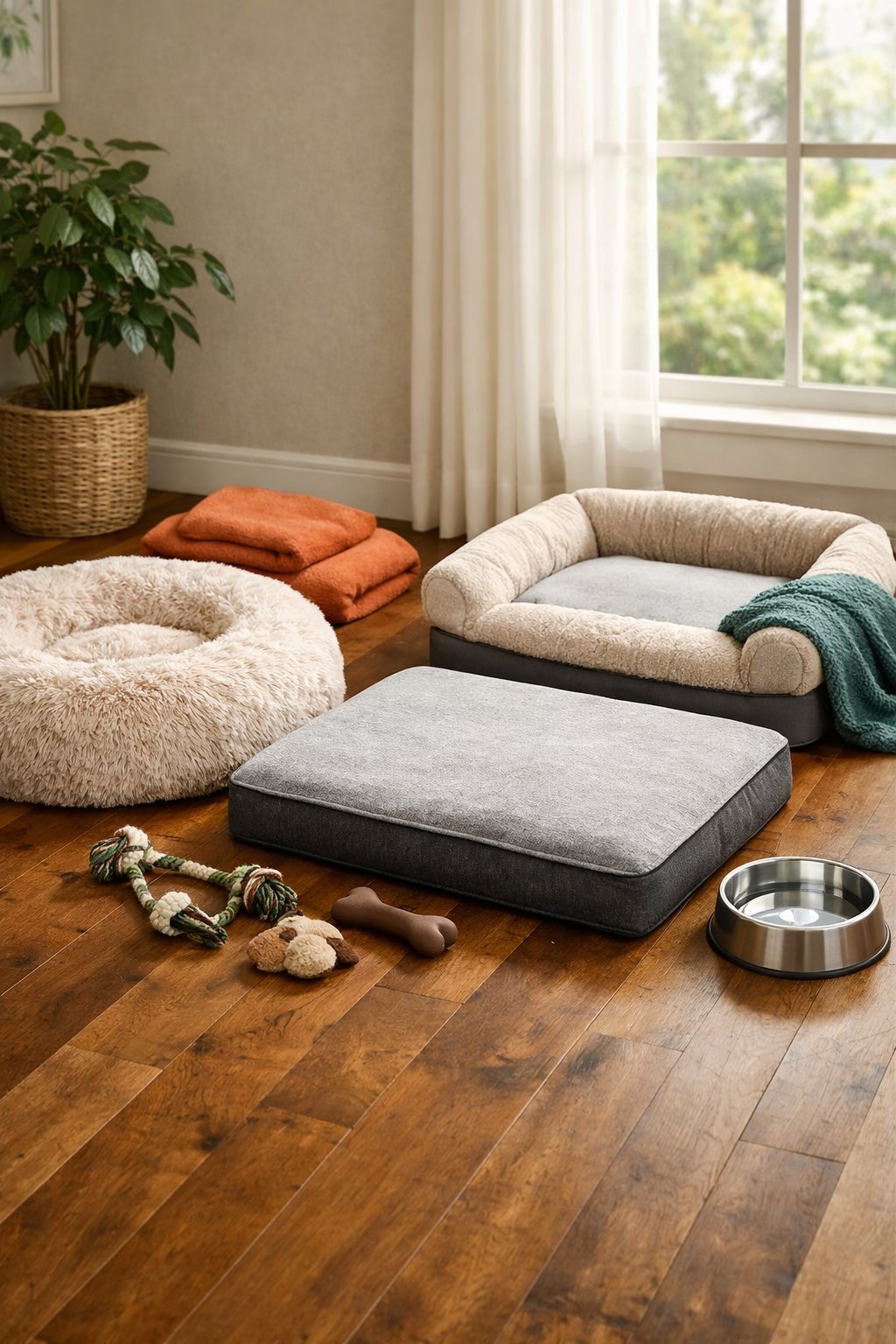
I’ve found that choosing the right dog bed depends on my dog’s size, age, and health needs. Puppies and young dogs do well with basic cushioned beds, while senior dogs benefit from orthopedic or memory foam options that ease joint pain.
When I shop for beds, I look for washable covers since dogs track in dirt and shed fur. Luxury dog beds with memory foam provide extra support for dogs with arthritis or hip problems.
Size matters too. My dog should be able to stretch out fully without hanging off the edges.
I measure my dog from nose to tail and add 6 to 12 inches to find the right bed length.
Common bed types include:
- Standard cushion beds for everyday use
- Bolster beds with raised edges for dogs who like to rest their heads
- Cave or hooded beds for dogs who prefer enclosed spaces
- Elevated beds that keep dogs cool in warm weather
Crates and Carriers
I use crates for house training, travel, and giving my dog a safe space to retreat. A proper crate should be large enough for my dog to stand, turn around, and lie down comfortably.
For puppies, I choose crates with dividers that adjust as they grow. Wire crates offer good airflow and visibility, while plastic carriers work better for air travel since they meet airline requirements.
Soft-sided carriers are lightweight and perfect for small dogs during car trips or vet visits. I always introduce the crate gradually with treats and toys so my dog sees it as a positive space, not punishment.
Blankets and Mats
I keep several dog blankets around my home to protect furniture and give my dog cozy spots to rest. Blankets are easy to wash and move from room to room.
Cooling mats help regulate body temperature during hot months, while heated mats provide warmth for older dogs or cold climates. I use waterproof mats under food bowls and in my car to catch spills and muddy paws.
Throw blankets with pet-friendly fabrics resist scratching and snagging from claws. I choose durable materials that hold up to frequent washing without falling apart.
Feeding and Hydration Essentials
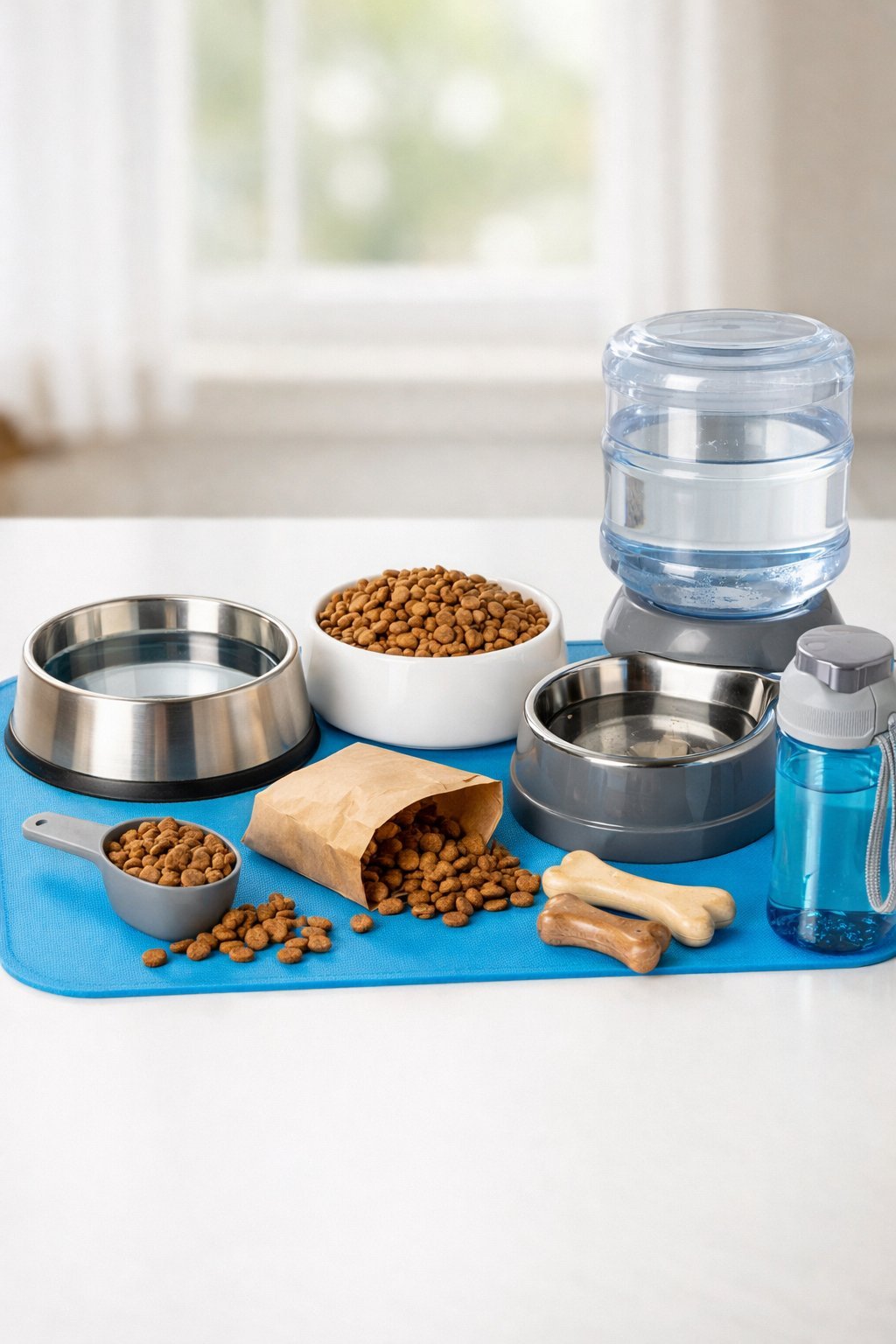
Proper feeding and watering equipment keeps dogs healthy and makes mealtimes easier. The right bowls, fountains, and travel gear support good eating habits and hydration throughout the day.
Food Bowls and Dispensers
I recommend choosing dog food bowls made from stainless steel, ceramic, or food-grade plastic. Stainless steel bowls are my top choice because they don’t hold odors and last for years.
Elevated bowls work well for larger dogs or those with neck problems. They reduce strain during meals by raising the food to a more comfortable height.
Slow feeder bowls help dogs who eat too quickly. These bowls have ridges or maze patterns that make dogs work around obstacles to reach their food.
Non-slip slow feeders stay in place during meals and prevent gulping. Automatic feeders dispense food on a schedule.
I find them useful for dogs who need portion control or for pet parents with irregular work hours.
Water Fountains
Water fountains encourage dogs to drink more throughout the day. Moving water stays fresher than standing water in a bowl and appeals to many dogs naturally.
Most fountains include filters that remove hair, debris, and improve taste. I change filters every few weeks to keep water clean and flowing properly.
Electric fountains need access to an outlet and regular cleaning. I wash the fountain parts weekly to prevent bacterial growth and mineral buildup.
Fountains come in different sizes for small to large dogs. Multi-pet households benefit from larger capacity fountains that hold several cups of water.
Travel Feeders
Collapsible bowls take up minimal space in bags or car compartments. I pack these portable feeding accessories for hikes, road trips, and park visits.
Travel water bottles with attached bowls let me offer drinks without carrying separate containers. The bowl flips out when needed and stores against the bottle when not in use.
Feeding mats contain spills during travel stops. I place them under portable bowls to catch water drips and food crumbs in hotel rooms or campsites.
Some travel feeders clip onto crates or car seats for secure feeding during transport. These prevent tipping and keep meals contained while moving.
Fun and Enrichment Products
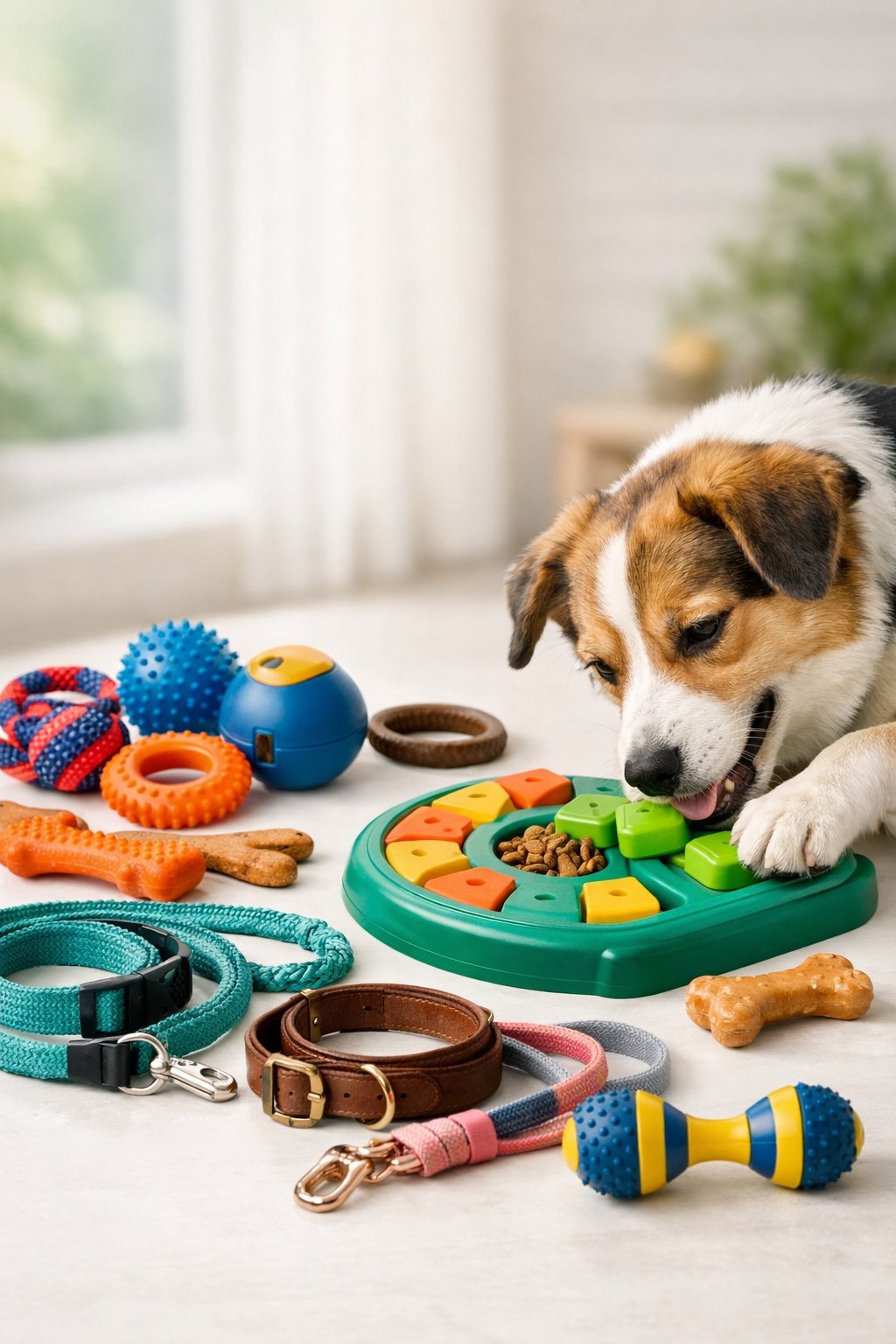
Dogs need mental stimulation and physical activity to stay happy and healthy. The right products can keep them engaged, reduce boredom, and strengthen the bond between you and your pet.
Toys for Dogs
I always recommend having a variety of toys to keep dogs interested. Plush toys with squeakers inside appeal to dogs who like to carry and shake things.
They’re soft and satisfying for most dogs to play with. Rope toys work well for tug-of-war games.
They also help clean teeth as dogs chew on the twisted fibers. Rubber toys like balls and frisbees are great for fetch and outdoor play.
Enrichment toys offer more than just fun because they provide benefits for your dog’s overall health. These toys boost mental sharpness and promote physical fitness.
They keep dogs engaged and prevent unwanted behaviors like excessive barking or destructive chewing. I suggest rotating toys every few days.
This keeps them feeling new and exciting to your dog.
Training Accessories
Clickers are small devices that make a distinct sound to mark desired behaviors. I use them because they provide clear, consistent communication during training sessions.
Dogs quickly learn to associate the click with a reward. Treat pouches attach to your belt or waistband for easy access.
They keep treats handy without bulging pockets or interrupting training flow. Look for ones with magnetic or drawstring closures.
Training leads come in different lengths for various purposes. A 6-foot leash works for basic obedience.
A 15 to 30-foot long line gives dogs more freedom while you maintain control during recall training. Target sticks help teach dogs to follow and touch objects.
They’re useful for shaping complex behaviors and tricks.
Puzzle Games
Puzzle toys challenge dogs to figure out how to access hidden treats. Interactive dog toys provide mental enrichment that keeps dogs thinking and exploring.
Sliding panels, flip lids, and rotating compartments require problem-solving skills. Snuffle mats have fabric strips where you hide kibble or treats.
Dogs use their nose to search through the material. This mimics natural foraging behavior and slows down fast eaters.
Hide-and-seek toys like the ZippyPaws Burrow let dogs pull small plush toys out of a larger container. I find these particularly engaging for dogs with strong prey drives.
Start with easier puzzles and gradually increase difficulty as your dog learns.
Seasonal and Outdoor Gear
Dogs need different gear depending on the weather and activities you have planned. The right equipment keeps your pup safe and comfortable whether you’re dealing with rain, snow, or heading out on an adventure.
Weather Protection
I always make sure my dog has proper protection when the weather gets rough. Lightweight raincoats and breathable windbreakers work great for spring showers and unpredictable conditions.
Winter calls for warmer options like insulated coats and sweaters. These keep my dog’s core temperature stable during cold walks.
I pay attention to my dog’s breed and coat type when choosing winter gear. Short-haired dogs need more insulation than thick-coated breeds.
Summer requires a different approach. Cooling vests help prevent overheating during hot days.
I also use paw protection like booties to shield my dog’s feet from hot pavement and rough terrain.
Reflective gear is essential for evening walks during fall when it gets dark earlier. Reflective collars, leashes, and vests make my dog visible to cars and other pedestrians.
Travel Accessories
Travel bowls are must-have items for any trip with my dog. Collapsible versions fit easily in my bag and work for both food and water on the go.
Dog backpacks let dogs over 30 pounds carry their own supplies. I use these for hiking trips so my dog can transport snacks and water.
The backpacks have multiple adjustment points to ensure a comfortable fit.
Car safety equipment protects my dog during drives. Seat belts, harnesses, and barriers keep my dog secure and prevent distractions while I’m behind the wheel.
I also bring travel kennels for longer trips or when staying at hotels.
Portable first aid kits designed for dogs give me peace of mind during adventures. These include bandages, antiseptic wipes, and tweezers for removing splinters or ticks.
Outdoor Safety Equipment
I never skip safety gear when taking my dog outside for adventures.
Life jackets are critical if my dog will be near water, especially for breeds that aren’t natural swimmers.
LED collars and tags with my contact information help me locate my dog if we get separated.
GPS trackers offer extra security for dogs who like to wander or when exploring unfamiliar areas.
Tick and flea prevention becomes more important during outdoor activities.
I check my dog thoroughly after hikes through wooded areas and grassy fields.
A well-stocked outdoor dog gear kit includes paw wax to protect foot pads from salt, ice, and rough surfaces.
I apply this before walks on challenging terrain or in extreme weather conditions.