
Dog Bathing Station: A Complete Guide to Keeping Your Pup Clean at Home

Giving your dog a bath at home can be a real challenge. You end up with a sore back from bending over the tub, water all over the bathroom floor, and a stressed-out pup who doesn’t want to cooperate.
A dog bathing station is a raised basin designed specifically for washing pets that includes features like spray nozzles, drainage systems, and ramps or stairs to make bath time easier and safer for both you and your dog.
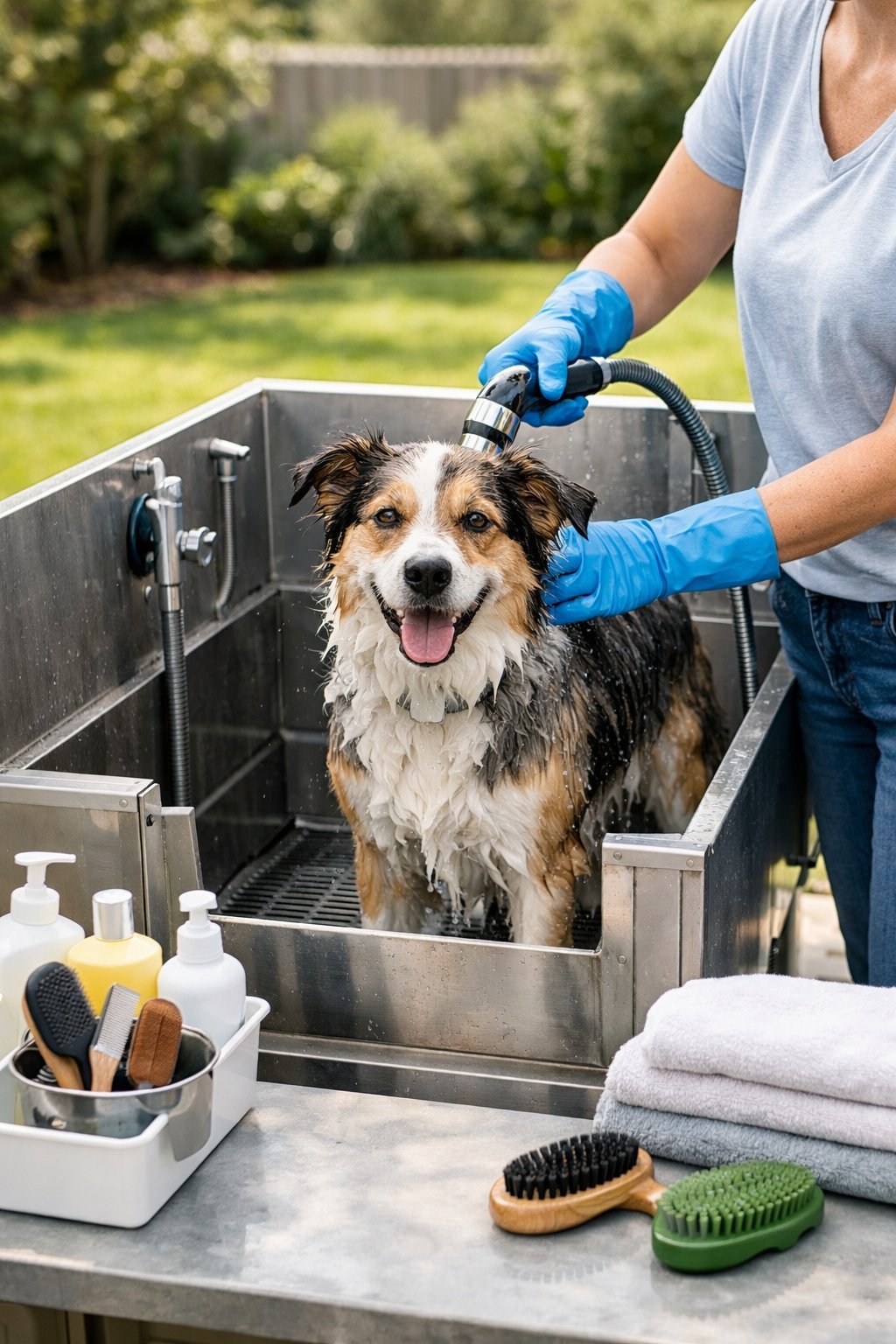
I’ve found that these stations solve many common problems pet owners face during bath time. Professional dog washing stations keep you from hurting your back and give your dog a secure space at a comfortable height.
They also prevent your regular bathtub drain from getting clogged with pet hair. Whether you have a small apartment dog or a large breed that needs regular grooming, the right bathing station can transform bath time from a dreaded chore into a simple routine.
I’ll walk you through everything you need to know about picking, setting up, and using a dog bathing station at home.
Key Takeaways
- Dog bathing stations are raised basins with built-in features that make washing your pet easier and protect your back
- The right station depends on your dog’s size, your available space, and features like adjustable height and storage
- Regular cleaning and proper setup help your bathing station last longer and keep bath time stress-free for your dog
What Is a Dog Bathing Station?

A dog bathing station is a raised basin specifically built for washing pets. It includes features like spray nozzles, drainage systems, and steps or ramps so dogs can easily get in and out.
Key Features of a Dog Bathing Station
When I look at dog bathing stations designed for comfort, I notice several important features that make bath time easier. The most critical element is a non-slip surface that keeps my dog stable during washing.
Most stations include adjustable heights to accommodate different dog sizes. This means I don’t have to bend over awkwardly to wash my small terrier or struggle to reach my neighbor’s Great Dane.
Built-in spray nozzles with flexible hoses let me control water flow and reach every part of my dog. A proper drainage system prevents water from pooling, and many stations include storage drawers and floor grates for grooming supplies.
Steps or ramps are essential for older dogs or those with joint problems. Some models even feature warm water connections for a more comfortable bathing experience.
Types of Dog Bathing Stations
I’ve found three main types of dog bathing stations available. Portable stations snap together easily and work well for apartment dwellers or those with limited space.
Built-in stations are permanent fixtures created by converting existing rooms, like spare bedrooms or laundry rooms. These often feature porcelain tiles and hex flooring to minimize slipping.
They’re ideal if I have multiple dogs or plan to stay in my home long-term. Professional stainless steel stations offer the most durability.
They’re typically 50 inches or larger and include complete grooming features. I see these most often in garages or dedicated pet washing areas where space isn’t an issue.
Choosing the Right Dog Bathing Station
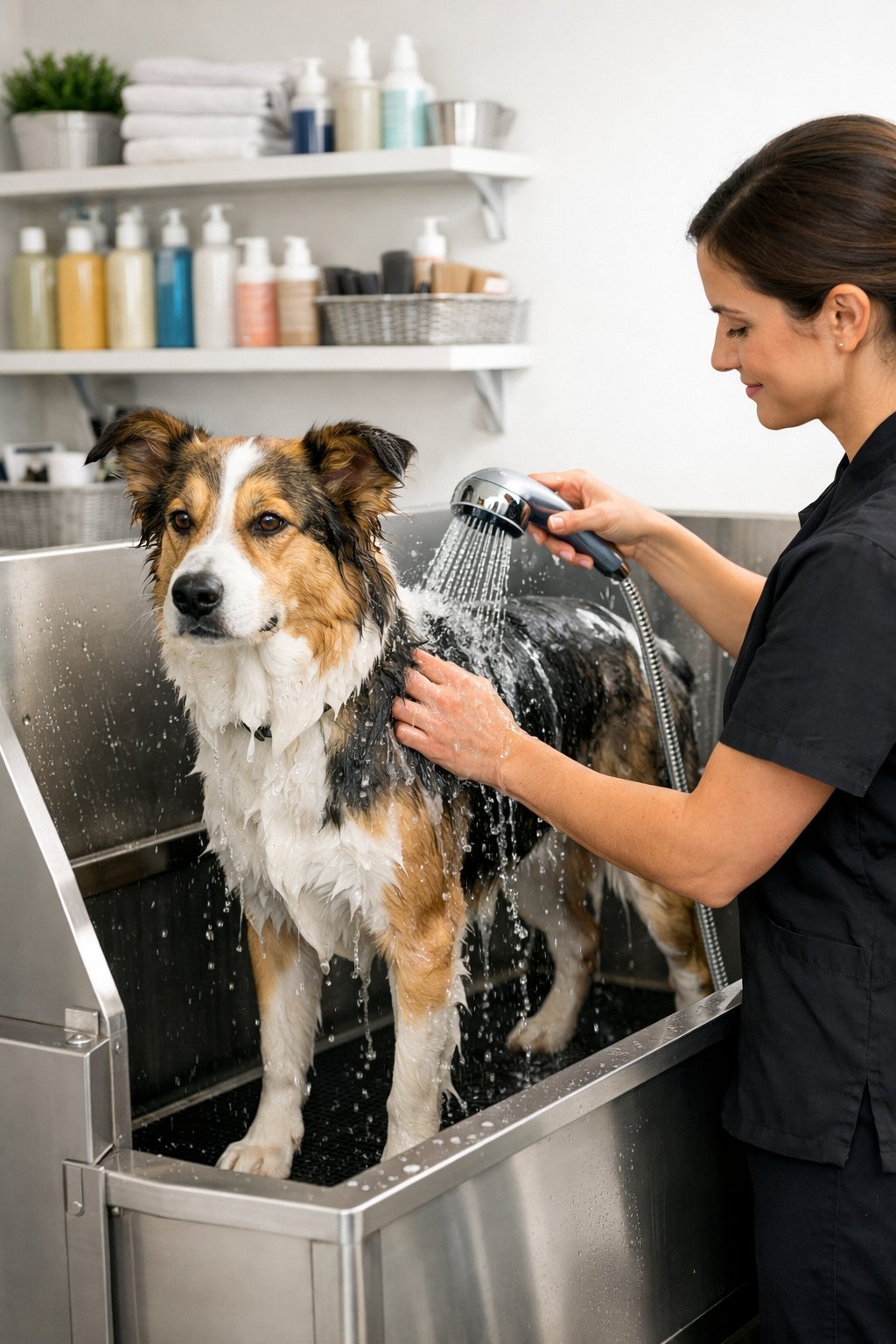
Finding the perfect bathing station means looking at your space, your dog’s size, and what features will make bath time easier for both of you. The right choice depends on durability, where you’ll place it, and whether it fits your budget.
Factors to Consider Before Buying
I always tell people to start by thinking about their dog’s size and weight. A station needs to support your pet safely, so check the weight limit before buying.
Non-slip surfaces are crucial for keeping your dog stable during bath time. Height matters more than most people realize.
An adjustable height feature lets you work comfortably whether you have a small dog or a large breed. This saves your back from strain during longer grooming sessions.
Think about drainage and water access too. You’ll want a station with good drainage to prevent standing water and mold growth.
Built-in plumbing connections make filling and emptying much easier than hauling buckets back and forth. I recommend looking at these key features:
- Weight capacity that exceeds your dog’s current weight
- Non-slip surface on the tub floor
- Drain system that works efficiently
- Restraint attachment points for securing leashes
- Storage shelves for shampoo and supplies
Space and Placement Tips
I’ve learned that measuring your space twice saves headaches later. You need room not just for the station itself but also space to move around it comfortably while bathing your dog.
Indoor placement works best near existing plumbing like a laundry room or garage with a utility sink. This makes water hookup simpler and cleanup faster.
Outdoor stations need protection from weather or a covered area to prevent rust and damage. Consider who will use the station.
If multiple family members help with dog baths, place it in an accessible spot with good lighting. Make sure the floor can handle water exposure – tile or concrete works better than hardwood.
Leave at least two feet of clearance on each side. This gives you room to reach all parts of your dog and access supplies without cramping yourself into tight corners.
Materials and Durability
Stainless steel stands out as the most durable option I’ve found. It resists rust, handles scratches well, and cleans up easily after messy baths.
While stainless steel can show water spots, a quick wipe-down keeps it looking good. Plastic stations cost less but may crack over time, especially in cold weather or with heavy use.
They work fine for small dogs but might not hold up under the weight of larger breeds. I prefer welded construction over bolted pieces because it handles stress better.
Check the legs and frame – thicker metal tubing means better stability when your dog moves around during the bath. Look for powder-coated finishes on metal parts.
This adds an extra layer of protection against moisture and chemicals from shampoos. The coating should be smooth without chips or rough spots where rust could start.
Setting Up Your Dog Bathing Station

Getting your dog bathing station ready involves picking the right tools, putting everything together correctly, and making sure your pup stays safe during bath time.
Essential Accessories
I always start with a non-slip mat or surface. This keeps my dog from sliding around and getting scared during the bath.
A handheld sprayer or shower attachment makes rinsing so much easier than pouring water from a cup. I can control where the water goes and get soap out of hard-to-reach spots.
Adjustable height features help me avoid back pain when bathing small dogs or reach larger breeds comfortably. I keep these items within arm’s reach:
- Dog shampoo and conditioner
- Towels (at least 2-3)
- Brush or comb
- Cotton balls for ears
- Treats for rewards
A soap dish or caddy mounted nearby holds my supplies. Some people add splash guards to keep water contained, which saves cleanup time later.
Installation Steps
Installing a dog bathing station typically includes seven main parts: the tub, support frame with steps, drain system, platform, splash guards, soap holder, shower head, and restraint hooks.
I start by setting up the tub or basin at a comfortable height. If I’m using a raised tub, I make sure the support frame is level and stable before placing the basin on top.
Next, I connect the drain to my existing plumbing or run a hose to an outdoor drain. I attach the shower head and test the water pressure and temperature.
Finally, I add steps or a ramp so my dog can climb in safely. I secure everything with the hardware provided and double-check that nothing wobbles.
Safety Precautions
I never leave my dog unattended in the bathing station. Even calm dogs can panic and hurt themselves trying to jump out.
Grooming loops provide gentle restraint but I always attach them to secure hooks, not just anywhere. I keep the loop loose enough that my dog can move their head but tight enough to prevent jumping.
I test water temperature on my wrist before spraying my dog. Water that’s too hot or cold causes stress.
I also keep all products away from my dog’s eyes and ears by using cotton balls as barriers. The bathing area stays clear of clutter so neither of us trips during the process.
Dog Bathing Station Maintenance
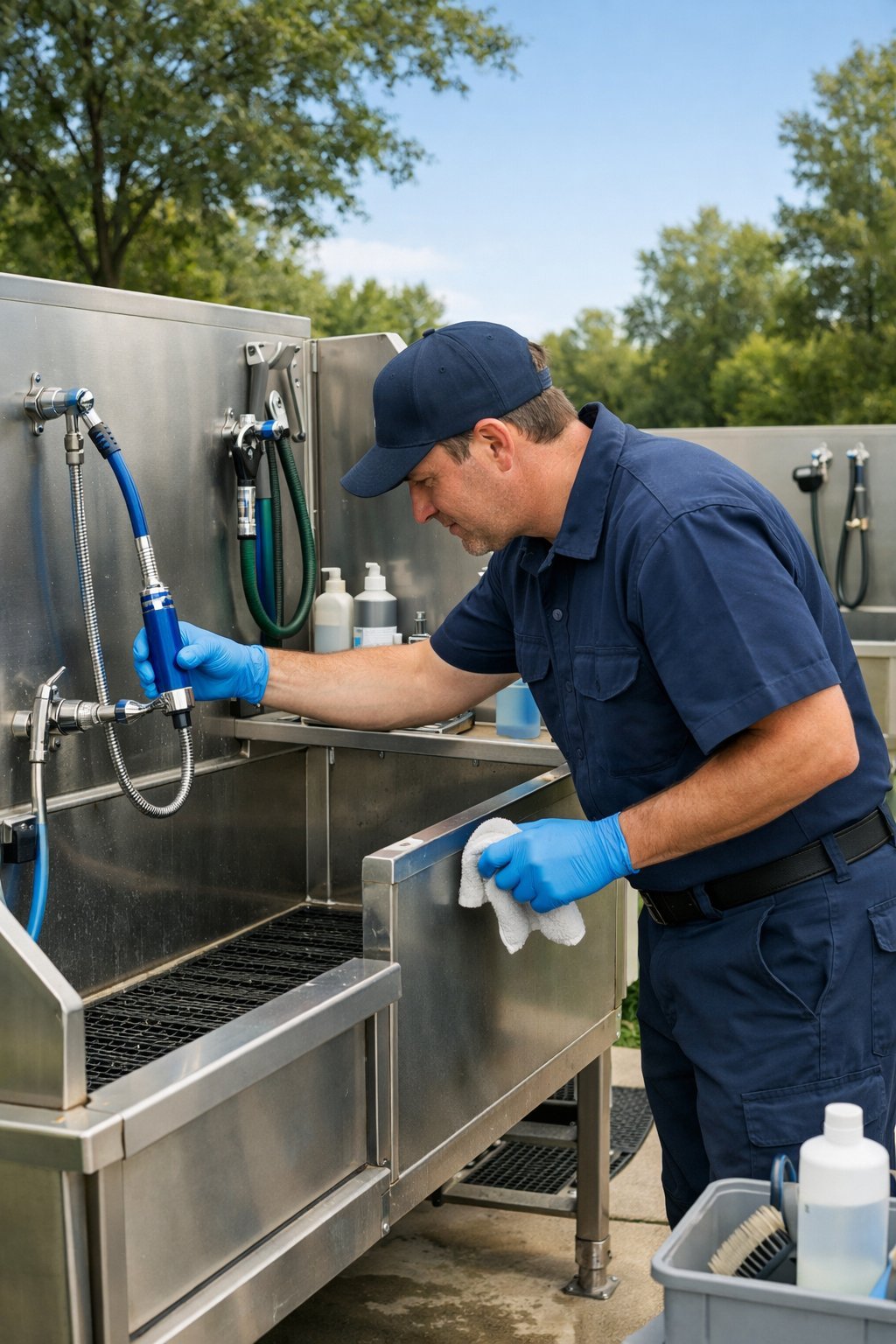
Regular cleaning and proper plumbing care will keep your dog bathing station working well for years. These two tasks prevent buildup, odors, and expensive repairs.
Cleaning and Sanitizing
I clean my dog washing station after every bath to prevent bacteria and odor buildup. I start by rinsing away all the hair and dirt with warm water.
For daily cleaning, I use a pet-safe disinfectant spray on all surfaces. I wipe down the tub, faucet, and spray nozzle thoroughly.
The non-slip mat needs special attention since hair and soap get trapped underneath. Once a week, I do a deeper clean.
I remove the drainage cover and clear out any hair or debris. I scrub the entire basin with a mixture of warm water and mild detergent.
I avoid harsh chemicals that could irritate my dog’s skin during the next bath. Maintaining a hygienic dog washing station means sanitizing high-touch areas like handles and steps.
I spray these with disinfectant and let it sit for a few minutes before wiping clean. I always dry all surfaces completely.
This prevents mold and mildew from growing in damp spots.
Keeping Plumbing in Good Condition
I check my drainage system weekly because dog hair clogs pipes faster than anything else. I installed a hair catcher in the drain, and I empty it after each bath.
Every month, I flush the drain with hot water to clear soap residue. I pour a mixture of baking soda and vinegar down the drain, wait 15 minutes, then rinse with hot water.
This natural solution breaks down buildup without damaging pipes. I inspect all hose connections and the spray nozzle regularly.
Leaks waste water and can cause damage to surrounding areas. I tighten loose connections right away and replace worn washers.
The water pressure should stay consistent. If I notice weak flow, I unscrew the spray head and clean out mineral deposits.
I soak it in white vinegar for 30 minutes to dissolve stubborn buildup. I schedule a professional plumbing inspection once a year.
This catches problems before they become expensive repairs.
Making Bath Time Enjoyable for Your Dog
I’ve learned that creating a positive bathing experience requires patience with anxious pets and choosing products that keep dogs comfortable and calm during the process.
Training Tips for Nervous Dogs
I recommend starting with short, positive sessions if your dog shows fear during bath time. Let your dog explore the bathing area without water first.
Give treats and praise when they step near or into the tub. I use the gradual approach for scared dogs.
Start by just turning on the water while your dog is nearby. Give treats for staying calm.
Next, wet only their paws while offering rewards. Build up to wetting more of their body over several sessions.
Making bath time a positive experience helps prevent anxiety during future grooming and vet visits. I always keep my voice calm and upbeat throughout the bath.
I suggest adding calming elements like soft music or a favorite toy in the tub. Never force a terrified dog into water.
This only makes the fear worse.
Recommended Bathing Products
I choose dog-specific shampoos that match my pet’s skin type and coat condition. Human products have the wrong pH level for dogs and can cause skin irritation.
Essential bathing supplies I keep on hand:
- Non-slip mat for tub safety
- Gentle, tear-free dog shampoo
- Soft washcloths for face cleaning
- Multiple absorbent towels
- Treats for positive reinforcement
- Brush for pre-bath detangling
I prefer shampoos with natural ingredients like oatmeal or aloe for sensitive skin.
For dogs with thick coats, I use a diluted shampoo that rinses out easily.
I always test water temperature on my wrist before wetting my dog.
The water should feel lukewarm, never hot.
I keep a handheld sprayer at my dog bathing station for better control and less stress.
Printable Recipe Card
Want just the essential recipe details without scrolling through the article? Get our printable recipe card with just the ingredients and instructions.
