Dog Collar Guide: Choosing the Perfect Fit for Your Furry Friend

A dog collar is one of the most essential items you’ll buy for your pet, serving as both a safety tool and a way to express your dog’s personality.
Every dog needs a properly fitted collar that holds identification tags, provides a secure attachment point for a leash, and keeps your pet safe during daily activities.
Whether you’re a new dog owner or looking to replace an old collar, understanding your options helps you make the best choice for your furry friend.

I’ve found that picking the right collar involves more than just choosing a cute design.
You need to consider your dog’s size, behavior, and lifestyle.
Major pet retailers offer collars in sizes ranging from XXS to XXXL to fit every breed, from tiny Chihuahuas to giant Great Danes.
The world of dog collars includes many types beyond the basic buckle collar.
From training collars to personalized options with your dog’s name, each style serves a specific purpose.
I’ll walk you through everything you need to know about selecting, using, and maintaining the perfect collar for your canine companion.
Key Takeaways
- Dog collars come in many types including basic, training, and specialty designs to match different needs and activities
- Proper fit and material selection are crucial for your dog’s comfort and safety during everyday wear
- Regular cleaning and inspection of your dog’s collar ensures it stays in good condition and continues protecting your pet
This post contains affiliate links. As an Amazon Associate I earn from qualifying purchases.
Supplies worth a look:
Nylon webbing, Buckle and D-ring hardware kit, Personalized dog collar, Leash and collar set, Poop bag holder, Wall-mounted leash hooks.
Types of Dog Collars

Different collar styles serve specific purposes for training, safety, and everyday wear.
The right choice depends on your dog’s size, behavior, and how you plan to use it.
Flat Collars
Flat collars are the most common type I see on dogs everywhere.
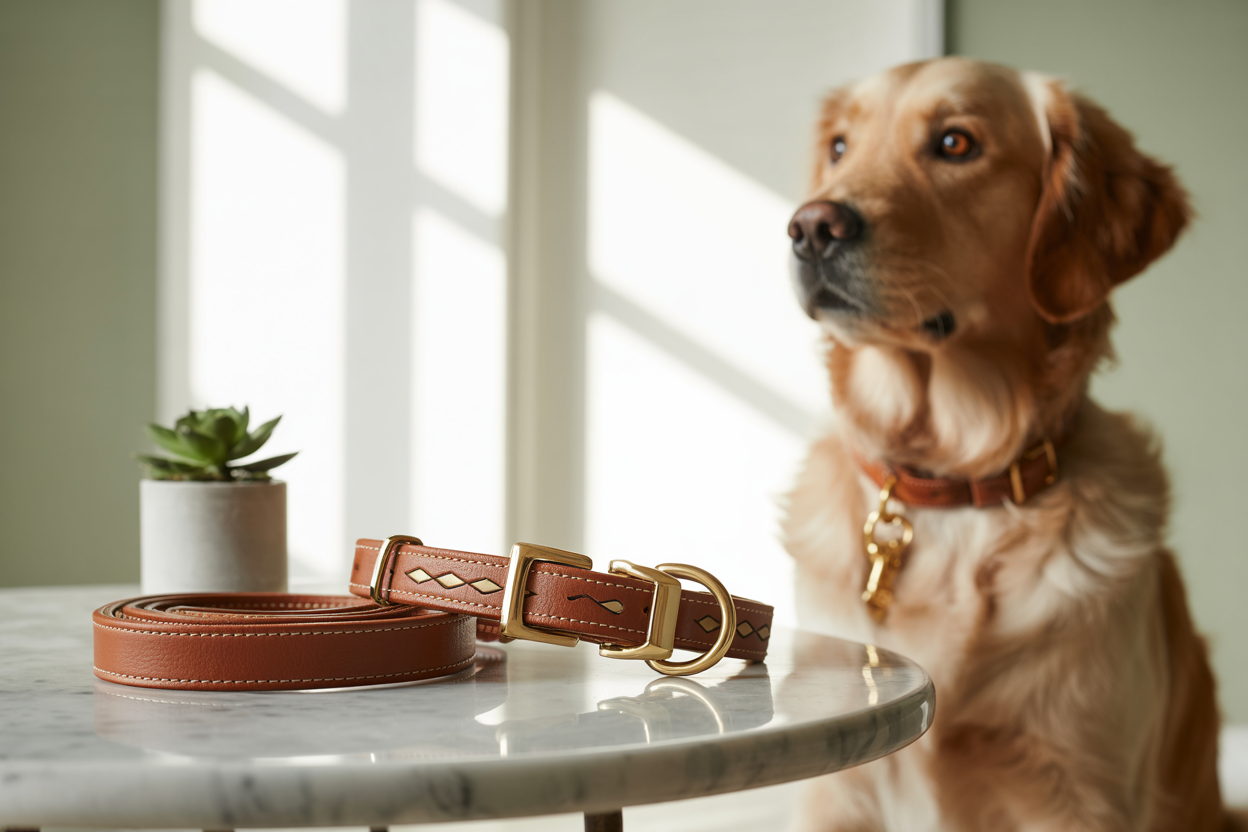
They’re simple strips of nylon, leather, or fabric that buckle or clip around your dog’s neck.
These collars work well for everyday wear and holding ID tags.
Most flat collars include spaces for identification tags, which makes them perfect for regular walks around the neighborhood.
I recommend flat collars for dogs who walk calmly without pulling.
They come in tons of colors and patterns, so you can find one that matches your dog’s personality.
Key features include:
- Adjustable sizing
- D-ring for leash attachment
- Space for ID tags and licenses
- Available in multiple materials
The main drawback is that dogs who pull hard can slip out of flat collars.
Strong pullers might also hurt their necks if they lunge forward repeatedly.
Martingale Collars
Martingale collars have two loops that tighten gently when your dog pulls.
The design prevents dogs from backing out of the collar without choking them.
I find these collars helpful for dogs with narrow heads like Greyhounds or Whippets.
The collar stays loose during normal walking but tightens just enough to prevent escape when your dog pulls backward.
Martingale collars provide better control than flat collars without the risks of choke chains.
The limited tightening action means they can’t close completely around your dog’s neck.
These work great for training dogs to walk politely on leash.
When your dog pulls, they feel gentle pressure that releases immediately when they stop pulling.
Harnesses vs. Collars
Harnesses distribute pressure across your dog’s chest and shoulders instead of concentrating it on the neck.
This makes them safer for dogs with breathing problems or neck injuries.
I prefer harnesses for small breeds and puppies because their necks are delicate.
Dogs who pull constantly also benefit from harnesses since they can’t damage their throats.
Collars offer simpler on-and-off convenience and take up less space.
They’re lighter and less restrictive for dogs who already walk well on leash.
When to choose a harness:
- Brachycephalic breeds (flat-faced dogs)
- Dogs with collapsed trachea
- Puppies still learning leash manners
- Strong pullers
When to choose a collar:
- Well-trained adult dogs
- Quick bathroom breaks
- Holding ID tags
- Dogs who dislike harness straps
Some dogs need both options.
I keep a collar on my dog for ID tags but use a harness for walks.
Choosing the Right Dog Collar

I know that finding the perfect collar involves getting the right measurements, selecting materials that work for your dog’s needs, and making sure safety features are in place.
Sizing and Fit
I always measure my dog’s neck before buying a collar.
I use a soft measuring tape and wrap it around the widest part of the neck where the collar naturally sits.
The two-finger rule is what I follow for proper fit.
I make sure I can slide two fingers between the collar and my dog’s neck.
This keeps the collar snug enough that it won’t slip off but loose enough that it doesn’t choke or irritate the skin.
I check the fit regularly because dogs grow and their weight changes.
Puppies need collar adjustments every few weeks as they develop.
Adult dogs should have their collar checked every few months.
I look for collars with multiple adjustment holes or sliding buckles.
These give me more flexibility to get the perfect fit.
I also make sure there’s room for growth when I’m sizing a collar for a young dog.
Material Options
I’ve used nylon collars the most because they’re affordable and come in many colors.
They’re lightweight and work well for everyday wear.
Nylon dries quickly and cleans easily with soap and water.
Leather collars are what I choose when I want something more durable.
They soften over time and become more comfortable.
Leather needs conditioning to prevent cracking, but it can last for years.
I pick biothane collars when my dog spends time in water.
This material doesn’t absorb moisture or odors.
It’s as strong as leather but requires almost no maintenance.
Chain collars are what I avoid for regular use because they can damage fur and irritate skin.
Cotton and hemp are good natural options that feel soft but may wear out faster than synthetic materials.
Safety Considerations
I always attach ID tags to my dog’s collar with current contact information.
A collar should be safe, secure, and comfortable at all times.
Breakaway collars are what I use when my dog plays off-leash or stays in a crate.
These release under pressure to prevent choking if the collar gets caught on something.
I choose collars with reflective stitching or LED lights for walks after dark.
This makes my dog visible to cars and other people.
Quick-release buckles are features I look for because they’re easy to remove in emergencies.
I avoid collars with sharp edges or loose parts that could hurt my dog or fall off and become choking hazards.
Training and Behavioral Uses
Dog collars serve important roles beyond basic identification, helping with training efforts and daily walks.
The right collar choice can make teaching commands easier and keep walks safe for both you and your dog.
Training Collars
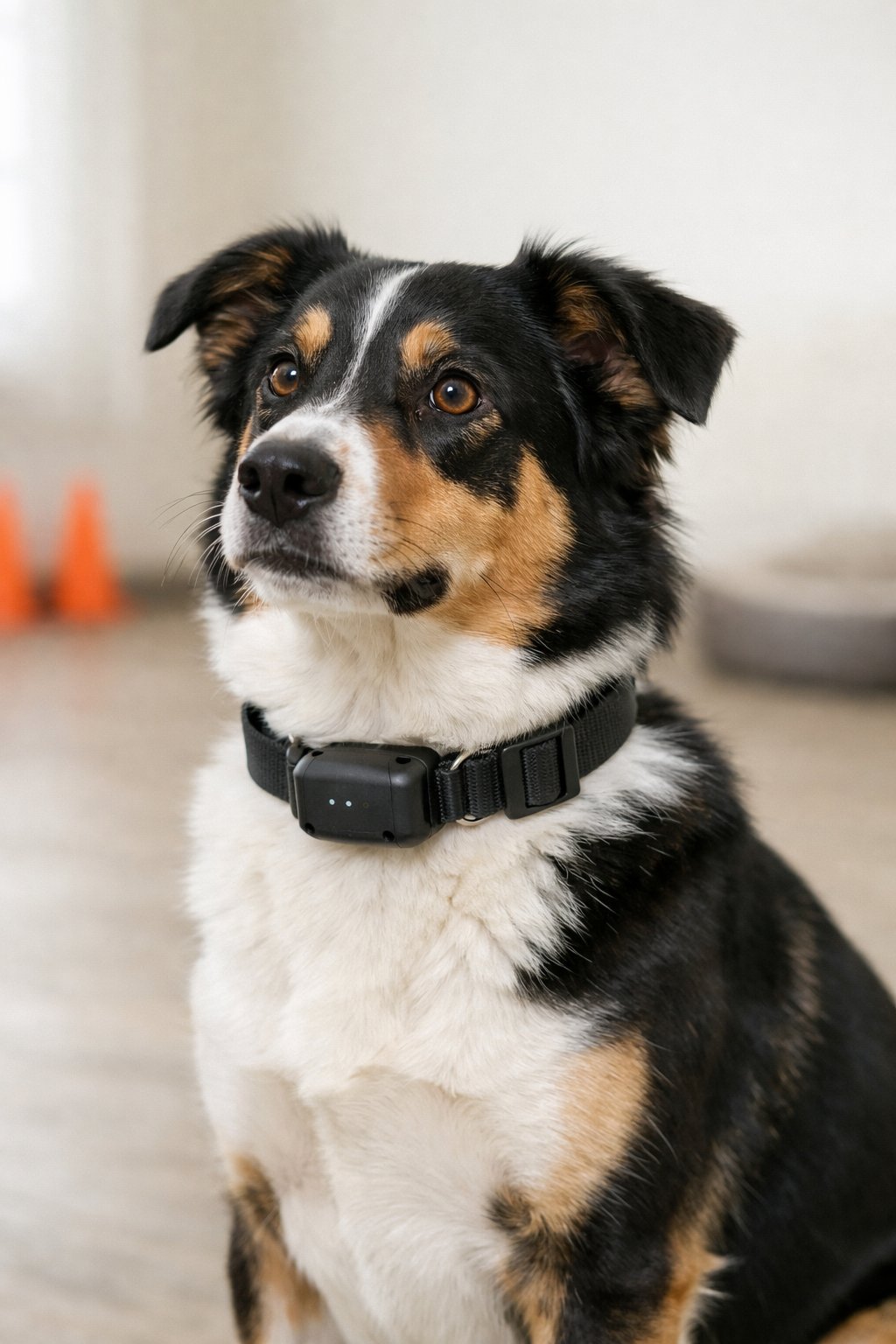
Training collars are specially designed tools that help me teach my dog better behavior and control unwanted actions.
These collars work best when I use them with positive reinforcement methods, not as a replacement for proper training time.
I’ve found that training collars come in several types.
Basic training collars provide gentle feedback during leash training.
Some collars use vibration or sound to get my dog’s attention when they start barking too much or pulling on the leash.
The best training collar depends on my dog’s size, behavior issues, and training goals.
I always make sure any collar I choose doesn’t cause pain or discomfort to my pet.
I remember that consistency matters most when using training collars.
The collar alone won’t fix behavior problems without my time and effort.
Identification and Tag Attachment
Every collar I put on my dog needs a spot for ID tags.
These tags hold my contact information in case my dog gets lost or runs away.
I attach a tag with my phone number, address, and my dog’s name.
Some tags also include my vet’s contact details or medical information if my dog needs special care.
The metal ring or D-ring on the collar keeps these tags secure.
I check the tags regularly to make sure they stay readable.
Weather and daily wear can fade the information over time.
I also make sure the attachment ring stays closed so tags don’t fall off during walks or play.
Walking Support
The collar gives me a safe connection point for the leash during daily walks.
Choosing the right collar and leash combination helps me control my dog without causing neck strain or injury.
I pick collars based on my dog’s pulling habits.
Dogs that pull hard might need a different collar style than calm walkers.
The collar should fit snugly but let me slip two fingers underneath.
During walks, I use the collar to guide my dog and keep them close in busy areas.
The leash clips to the same D-ring that holds ID tags.
I never leave a collar too loose since my dog could slip out and escape.
Caring for Your Dog’s Collar
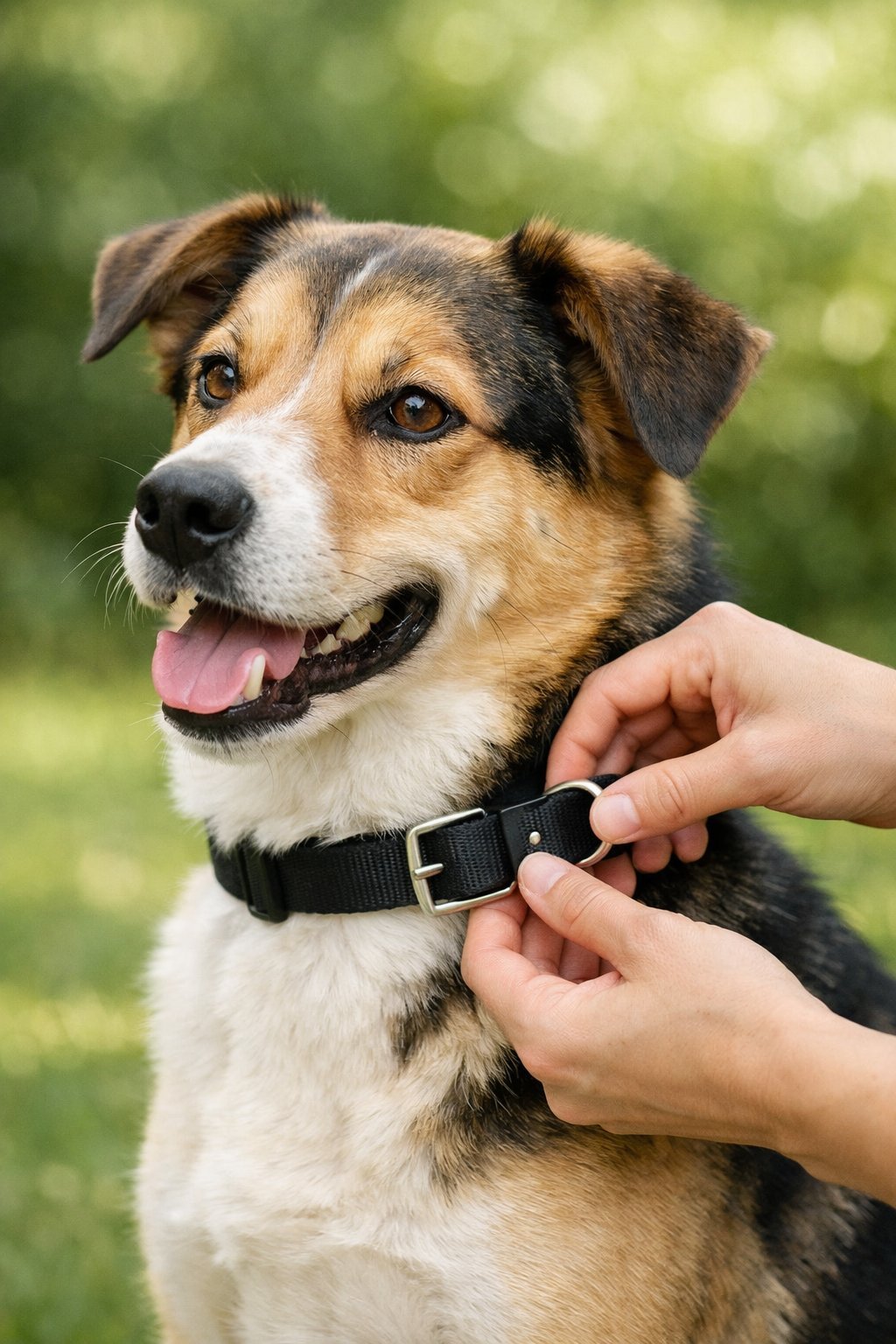
Regular collar maintenance keeps your pup comfortable and ensures the collar lasts longer.
I always check for wear and clean collars based on my dog’s activity level.
Cleaning and Maintenance
I clean my dog’s nylon collars by hand washing them weekly with mild soap and warm water.
I scrub gently with a soft brush to remove dirt and oils that build up from my dog’s skin and outdoor adventures.
For a deeper clean, I put nylon collars in a mesh laundry bag and run them through the washing machine on a gentle cycle.
I always air-dry collars instead of using a dryer, which can damage the material and hardware.
Leather collars need different care.
I wipe them down with a damp cloth and apply a leather conditioner monthly to keep them soft and prevent cracking.
I make it a habit to rinse my dog’s collar after muddy hikes or swimming.
This simple step prevents dirt from breaking down the collar fibers over time.
When to Replace a Collar
I inspect my dog’s collar every few weeks for signs of damage.
Frayed edges, worn stitching, or cracked buckles mean it’s time for a new one.
I check that the collar still fits properly as my dog grows or changes weight.
I should be able to fit two fingers comfortably between the collar and my dog’s neck.
If the collar is too tight or too loose, I replace it right away.
Metal hardware that shows rust or doesn’t click securely is a safety concern.
I never wait to replace a collar with faulty buckles or D-rings that could fail during walks.
Faded colors or stretched material also signal that a collar has reached the end of its useful life.
Trends and Personalization
Pet owners want collars that show off their dog’s unique style while adding useful features.
The market now offers custom designs and tech-enabled options that go beyond basic identification.
Custom and Designer Dog Collars
I’ve noticed that personalized dog collars have become essential accessories rather than simple functional items. Pet owners can now add their dog’s name, phone numbers, and custom patterns directly onto collars.
The customization options include embroidered text, engraved metal plates, and printed designs. These personalized touches help dogs stand out at parks and provide quick identification if they wander off.
Designer collars for every breed come in materials like leather, nylon, biothane, and eco-friendly fabrics. Colors range from basic black and brown to bright patterns with florals, plaids, and geometric shapes.
The personalized dog collar industry keeps growing because people want unique accessories for their pets. More pet parents are treating collars as fashion statements that match their dog’s personality.
Smart Collars and Technology
Technology-driven innovation defines the dog collar market in 2025. Smart collars now include GPS tracking that lets me monitor my dog’s location through a smartphone app.
These high-tech options offer features like activity monitoring and health tracking. Virtual fences are also available.
Some collars track steps, calories burned, and sleep patterns similar to fitness trackers for humans. I appreciate that smart collars can send alerts if my dog leaves a safe zone or shows unusual behavior patterns.
Battery life varies from a few days to several weeks depending on the features used. Most smart collars require monthly subscriptions for GPS and cellular connectivity.