
Dog Cookies Recipe: Easy Homemade Treats Your Pup Will Love

Dog Cookies Recipe – Making treats for your dog at home is easier than you might think. You only need a few simple ingredients like peanut butter, oats, and banana to create healthy homemade dog cookies your pup will love.
I’ve found that baking my own dog treats saves money and lets me control exactly what goes into my dog’s snacks.
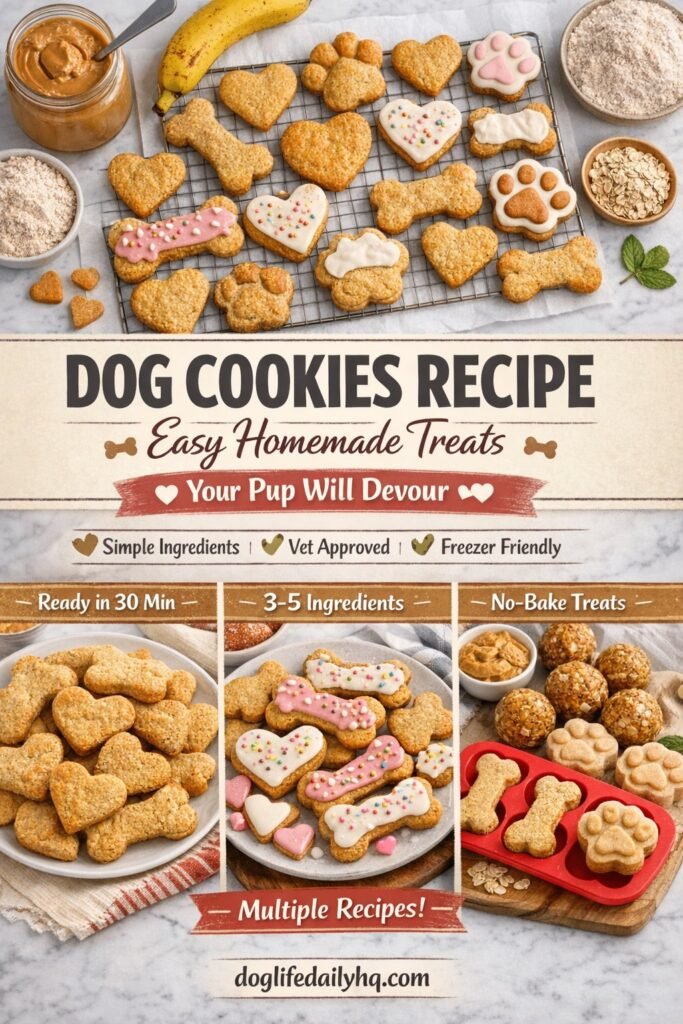
The best part about homemade dog cookies is how simple they are to make. Most dog cookie recipes use ingredients you already have in your kitchen.
You don’t need fancy equipment or special skills to get started. I’m going to walk you through everything you need to know about making dog cookies at home.
You’ll learn which ingredients work best, how to customize recipes for your dog’s taste, and how to store your homemade treats so they stay fresh.
Key Takeaways
- Dog cookies require only basic ingredients like peanut butter, oats, and flour that most people already have at home
- Homemade treats can be customized with safe ingredients your dog loves and stored for several weeks
- Following proper baking and serving guidelines ensures your dog cookies are both tasty and safe for your pet
Essential Ingredients for Dog Cookies
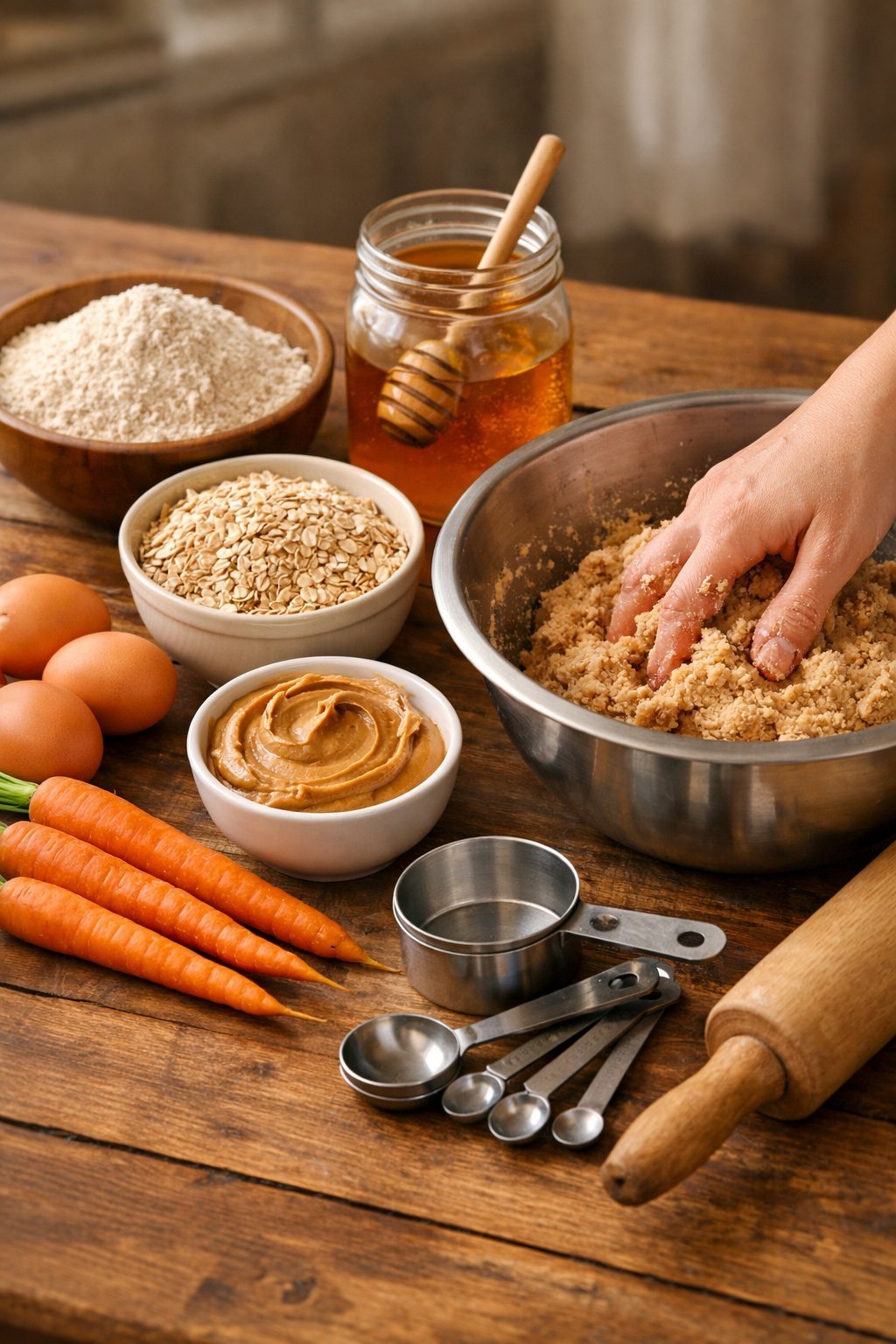
The best dog cookies start with simple, wholesome ingredients that are safe for your pup to eat. I focus on three main categories: the right flour base, nutritious extras, and natural flavors that make tails wag.
Choosing Dog-Safe Flours
Whole wheat flour is my go-to choice for most dog cookies. It provides fiber and nutrients that support healthy digestion.
I use it in almost all my basic dog cookie recipes because it’s affordable and easy to find. Oat flour is another excellent option.
I make it at home by grinding rolled oats in my blender. It’s gentle on sensitive stomachs and adds a slightly sweet taste dogs enjoy.
For dogs with grain sensitivities, I turn to coconut flour or chickpea flour. These work well in grain-free dog biscuit variations and pack extra protein.
Just remember that coconut flour absorbs more liquid, so I adjust my recipe accordingly. Rice flour is mild and easy to digest.
I combine it with other flours to create lighter, crunchier cookies.
Healthy Add-Ins for Dogs
Peanut butter is a classic ingredient that most dogs love. I always use unsalted, unsweetened versions without xylitol, which is toxic to dogs.
It adds protein and healthy fats while acting as a natural binder. Pumpkin puree brings moisture and fiber to my cookies.
I use plain canned pumpkin, not pie filling with added spices. It’s especially good for dogs with digestive issues.
Eggs bind ingredients together and provide protein. I use one egg for most standard batches.
Sweet potato or mashed banana adds natural sweetness and vitamins. I often add shredded carrots or blueberries for extra nutrients and variety.
Natural Sweeteners and Flavors
Dogs don’t need added sugar, so I skip it entirely. Their taste buds respond well to the natural flavors in ingredients like banana, apple, or sweet potato.
Chicken broth or beef broth adds savory flavor that dogs find irresistible. I use low-sodium versions without onion or garlic, which are harmful to dogs.
A small amount of honey can add moisture and flavor. I use it sparingly since dogs don’t need much sweetness.
Cinnamon is safe in small amounts and adds warmth to cookies. I avoid nutmeg, which can be harmful in larger quantities.
Step-By-Step Instructions
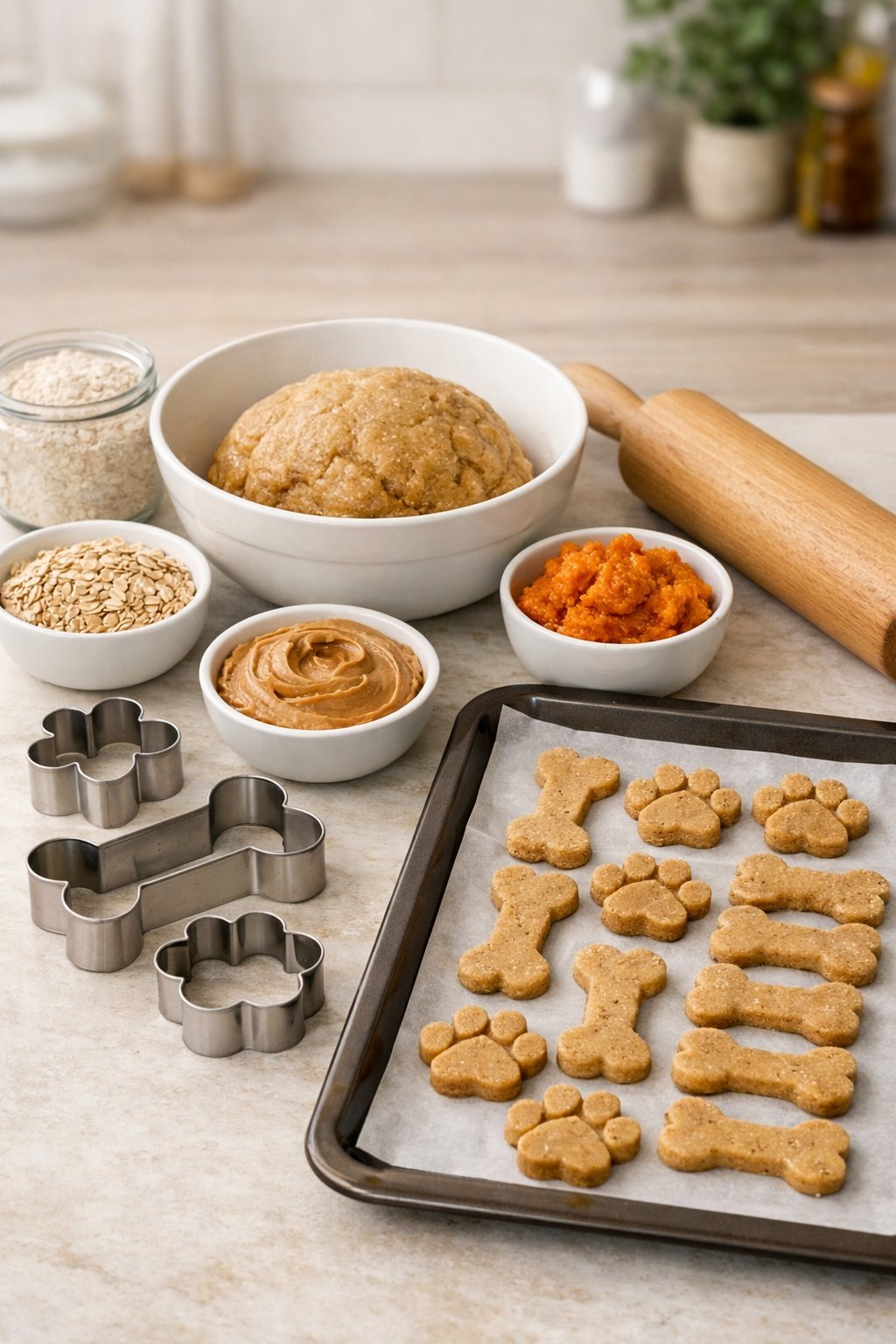
Making dog cookies involves mixing your ingredients into a firm dough, cutting them into shapes your pup will love, and baking them until they’re crispy and golden.
Preparing the Dough
I always start by gathering all my ingredients before I begin mixing. This makes the process smoother and faster.
In a large mixing bowl, I combine the dry ingredients first. I add whole wheat flour, oats, or any other flour base I’m using.
Then I create a small well in the center for the wet ingredients. Next, I add peanut butter, applesauce, eggs, or whatever wet ingredients my recipe calls for.
Make sure your peanut butter doesn’t contain xylitol, which is toxic to dogs. I use a wooden spoon or my hands to mix everything together until it forms a thick dough.
The dough should be firm enough to roll out without sticking too much. If it’s too wet, I add a tablespoon of flour at a time.
If it’s too dry, I add a small amount of water or broth to help it come together.
Shaping and Cutting Cookies
I lightly flour my work surface and rolling pin to prevent sticking. Then I roll the dough to about 1/4 inch thickness for crispy cookies or 1/2 inch for softer treats.
I use bone-shaped cookie cutters or any fun shapes I have on hand. You can also just cut the dough into squares with a knife if you don’t have cutters.
I place each cookie on a baking sheet lined with parchment paper, leaving about half an inch between them. For simple homemade treats, I sometimes roll the dough into small balls and flatten them with a fork.
This creates a quick pattern and saves time when I’m making a large batch.
Oven Baking Tips
I preheat my oven to 350°F before putting the cookies in. This ensures even baking from the start.
Most dog cookies need 20 to 25 minutes in the oven. I check them at the 15-minute mark to make sure they’re not burning.
The cookies should turn golden brown around the edges. I let the cookies cool completely on the baking sheet before giving them to my dog.
They’ll continue to harden as they cool, which makes them crunchier. For extra-crispy cookies, I turn off the oven and leave them inside for another 30 minutes to dry out more.
Customizing Your Dog Cookies
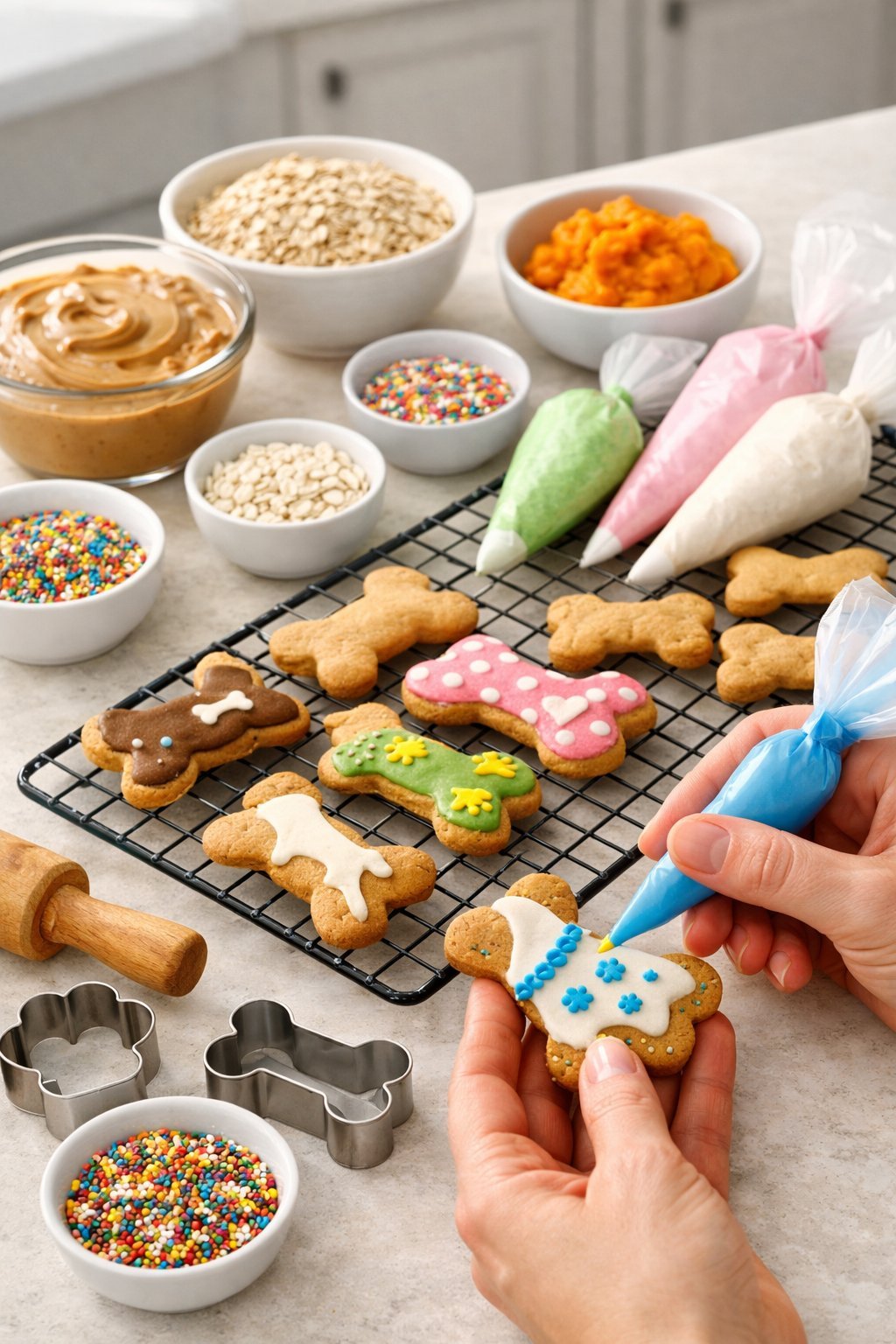
I’ve found that tailoring homemade dog cookies to my pup’s specific needs makes treat time even more special. Whether I’m working around health issues, trying new flavors, or avoiding allergens, small changes to basic recipes create treats my dog actually needs.
Incorporating Special Dietary Needs
I always consider my dog’s health conditions before baking. If my dog needs low-fat treats, I use lean proteins and reduce oil content in recipes.
For dogs with sensitive stomachs, I keep ingredients simple. I stick to one or two main ingredients at first to see how my dog reacts.
When my dog needs weight management, I make smaller cookies and use pumpkin puree to add moisture without extra calories. I also swap out high-calorie ingredients like peanut butter for plain yogurt or applesauce.
For senior dogs, I make softer cookies by adding more liquid or baking them for less time. This makes chewing easier on older teeth.
I can also customize recipes to meet specific dietary needs like grain-free diets by using coconut or almond flour instead of wheat flour.
Flavor Variations Dogs Love
I rotate flavors to keep my dog interested in treats. Peanut butter remains a top choice, but I make sure to use unsweetened, xylitol-free varieties.
My dog goes crazy for savory options too. I add shredded cheese, crumbled bacon, or small pieces of cooked chicken to the dough.
Pumpkin and sweet potato work well for dogs who prefer milder tastes. For a nutritional boost, I mix in blueberries or mashed banana.
I sometimes combine flavors like peanut butter with banana or cheese with bacon bits. This creates more complex tastes my dog loves.
Allergen-Friendly Alternatives
I’ve learned to work around common food allergies in dogs. When my dog can’t have wheat, I use oat flour, rice flour, or chickpea flour as substitutes.
For dogs allergic to chicken, I switch to beef, turkey, or fish-based proteins. If my dog has dairy sensitivities, I skip the cheese and yogurt completely.
I make vegetable-based cookies using carrots, green beans, or zucchini as main ingredients. These work well for dogs with multiple protein allergies.
When egg allergies are an issue, I use mashed banana or applesauce as binders instead. A quarter cup of either typically replaces one egg in most recipes.
I test new ingredients one at a time to identify what my dog tolerates best.
Storage and Shelf Life
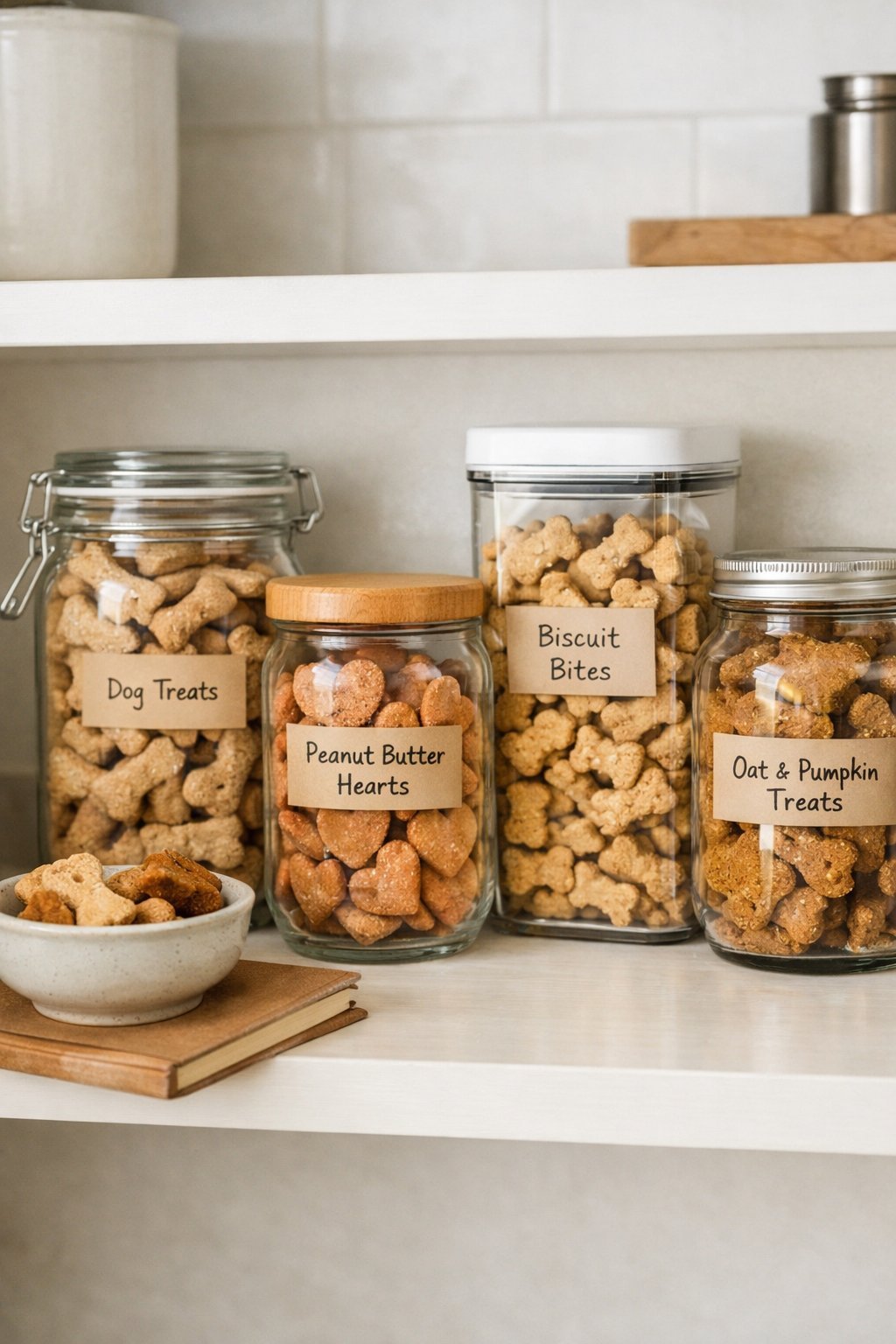
I always make sure my homemade dog cookies are stored properly so they stay fresh and safe for my pup. The right storage method depends on whether the cookies are crunchy or soft, and freezing is a great option for long-term storage.
Best Storage Methods
I store my fully dried, crunchy dog biscuits at room temperature for 3-4 days in an airtight container. This works perfectly for treats I know my dog will eat quickly.
For softer cookies or ones with higher moisture content, I keep them in the fridge for up to 1 week. Ingredients with high moisture content like fruits and vegetables can reduce shelf life, so refrigeration helps prevent mold.
I always let my cookies cool completely before storing them. Any residual heat can create condensation inside the container, which leads to soggy treats and faster spoilage.
I use glass jars or plastic containers with tight-fitting lids to keep air and moisture out.
How to Freeze Dog Cookies
I freeze dog cookies when I make large batches, and they last 2-3 months in the freezer. I place cooled cookies in freezer-safe bags or containers, making sure to remove as much air as possible.
I like to portion them into smaller bags so I can thaw just what I need. This prevents the whole batch from going through freeze-thaw cycles.
When I’m ready to use them, I simply take out a few cookies and let them thaw at room temperature for about 15 minutes. My dog doesn’t mind eating them slightly cold, so sometimes I skip the thawing step entirely.
I label each container with the date so I know when I made them.
Serving and Safety Tips
When I make homemade dog cookies, I always pay close attention to how much I give my pup and how I serve them. Getting portion sizes right and following safe feeding practices helps keep treats healthy and enjoyable.
Appropriate Portion Sizes
I follow the 10% rule when giving my dog treats. This means treats should make up no more than 10% of my dog’s daily calorie intake.
For small dogs under 20 pounds, I give 1-2 small cookies per day. Medium dogs between 20-50 pounds can have 2-3 cookies.
Large dogs over 50 pounds can enjoy 3-4 cookies depending on their size and activity level. I adjust my dog’s regular meals slightly when I give extra treats to avoid overfeeding.
If my pup has health issues like diabetes or weight problems, I check with my vet first about appropriate portions. The size of each cookie matters too.
I make smaller cookies for little dogs and larger ones for big breeds so the portion fits their mouth and digestive system properly.
Safe Feeding Practices
I always supervise my dog when eating cookies, especially hard or crunchy ones that could be choking hazards. I make sure the cookies are fully cooled before serving since hot treats can burn their mouth.
I store my homemade dog cookies in airtight containers in the refrigerator for up to two weeks. I freeze them for up to three months.
I throw away any cookies that smell off or show mold.
Before trying a new recipe, I check that all ingredients are safe for dogs. I never use chocolate, xylitol, grapes, raisins, onions, garlic, or macadamia nuts in my dog treats.
I introduce new cookies gradually by giving just one small piece first. I watch for any signs of upset stomach, itching, or allergic reactions over the next 24 hours.
Printable Recipe Card
Want just the essential recipe details without scrolling through the article? Get our printable recipe card with just the ingredients and instructions.
