
Dog Room Ideas: Creative Ways to Design a Special Space for Your Furry Friend

Dog Room Ideas – Your dog deserves a special place in your home where they can relax, play, and feel safe.
A dog room can be set up in almost any space like a laundry room, mudroom, pantry, under the stairs, or even in a garage, and should include essentials like a feeding station, comfortable bed, and storage for toys and supplies.
I’ve put together ideas that will help you create the perfect space for your furry friend.
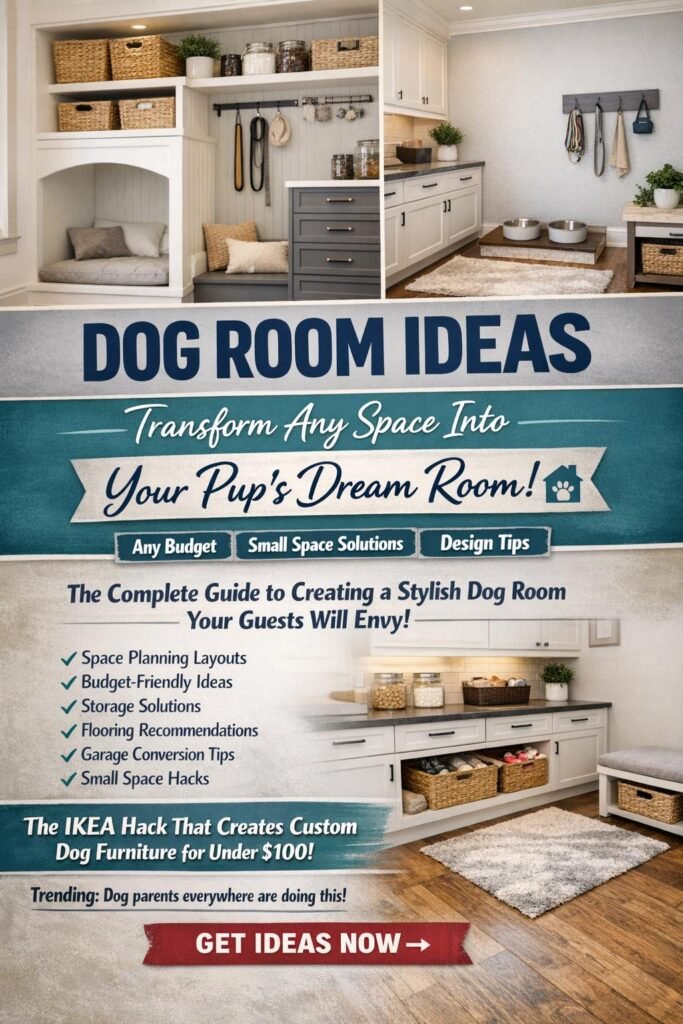
Setting up a dedicated dog room doesn’t have to be complicated or expensive.
Whether you have an entire room to work with or just a small corner, you can design a space that works for both you and your pup.
From cozy sleeping spots to functional wash stations, I’ll show you how to create a space that combines style with practical features.
These ideas work for dogs of all sizes and can fit any budget or home layout.
Key Takeaways
- A dog room can be created in any spare space and should include a bed, feeding area, and toy storage
- Combining function with style makes the space work better for both you and your dog
- Adding enrichment features and easy-to-clean surfaces keeps your dog happy and your home tidy
Designing the Perfect Dog Room
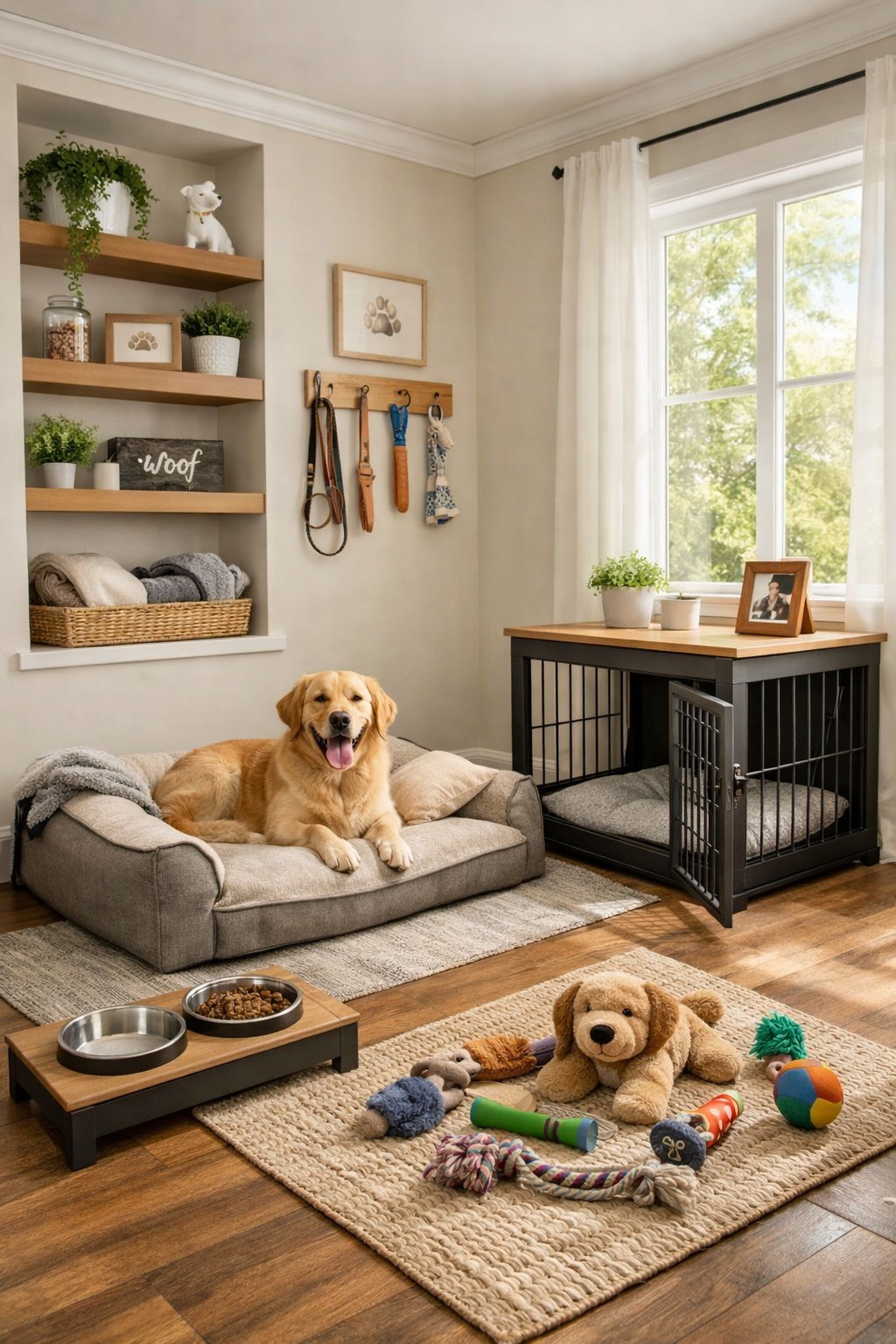
The right location and thoughtful layout turn any space into a comfortable retreat where your pup feels safe and happy.
I’ve found that considering your dog’s size, your home’s layout, and how you’ll use the space makes all the difference.
Choosing the Right Location
I always recommend picking a spot that balances your dog’s needs with your household flow.
Ground floor locations work best since dogs can easily access the space without stairs, though any level can work if your pup is mobile.
Look for areas with good ventilation and natural light.
Dogs need fresh air and benefit from daylight just like we do.
Avoid spaces near loud appliances like washing machines or furnaces, as the noise can stress some dogs.
Popular location choices include:
- Spare bedrooms or guest rooms
- Under-staircase nooks
- Converted closets
- Mudroom corners
- Laundry room sections
I prefer spots close to family activity so my dog doesn’t feel isolated.
However, the space should still offer some quiet when your pup needs rest.
Temperature control matters too—avoid areas that get too hot or cold throughout the day.
Planning the Room Layout
I start by measuring the space and listing what my dog actually needs.
A functional dog room layout includes zones for sleeping, eating, and playing.
Place the bed or crate in the quietest corner away from the door.
This gives your dog a retreat spot.
I position food and water bowls on easy-to-clean flooring, keeping them separate from the sleeping area.
Essential zones to include:
- Sleeping area: Comfortable bed or crate
- Feeding station: Bowls on washable mats
- Play zone: Open space with toy storage
- Grooming spot: If space allows
Leave enough room for your dog to move around freely.
I make sure pathways are clear and there’s space to play with favorite toys.
Built-in storage keeps supplies organized and the room looking neat.
Multi-Purpose Spaces for Dogs
I’ve learned that combining a dog space with other room functions works great for smaller homes.
Your dog room can share space with a home office, mudroom, or laundry area without problems.
In my home office, I set up a dog bed in the corner so my pup stays nearby while I work.
The key is creating clear boundaries between human and pet zones.
Use area rugs, pet gates, or furniture placement to define each space.
Mudrooms make excellent dual-purpose dog rooms since they already handle messy situations.
I added hooks for leashes, a drawer for waste bags, and a feeding station alongside my regular mudroom storage.
This setup means everything my dog needs for walks stays in one convenient spot.
Dog Room Decor and Aesthetics

Creating a space that looks good while meeting your dog’s needs takes some planning.
The right colors, wall designs, and flooring can make the room both practical and attractive.
Color Schemes and Themes
I recommend starting with colors that hide dirt and pet hair well.
Neutral tones like beige, gray, and tan work great because they don’t show every speck of fur.
Dark colors can hide stains better than light ones.
Black-and-white color palettes keep dog rooms looking polished and sophisticated.
This classic combination feels grown-up while still being pet-friendly.
You can add pops of color through accessories like toy bins or water bowls.
Theme-wise, I suggest keeping things simple.
You don’t need to go overboard with bone patterns and paw prints everywhere.
A few dog-themed touches like whimsical wallpaper or artwork add personality without making the space feel childish.
Consider your dog’s personality when picking colors.
Calming blues and greens work well for anxious dogs.
Brighter colors like yellow or orange can energize a lazy pup’s space.
Wall Treatments and Murals
I always tell people to choose wall treatments that can handle wear and tear.
Washable paint is a must-have in any dog room.
Semi-gloss or satin finishes wipe clean easier than flat paint.
Dog-themed wallpaper adds character to the space without overwhelming it.
I like patterns that are subtle rather than cartoonish.
Removable wallpaper works great if you want to change the look later.
Beadboard or wainscoting on the lower half of walls protects against scratches and bumps.
This treatment looks classic and stands up to daily dog activity.
You can paint it a different color than the upper walls for visual interest.
Wall-mounted hooks keep leashes and collars organized.
Floating shelves display photos of your pup or store grooming supplies within easy reach.
Pet-Friendly Flooring Options
Flooring needs to handle accidents, scratches, and heavy traffic.
I recommend hard-surface floors over carpet because they clean up much easier.
Tile, vinyl, and sealed concrete are all good choices.
Luxury vinyl plank flooring looks like hardwood but costs less and resists water damage.
It’s warm underfoot and doesn’t scratch as easily as real wood.
The textured surface gives dogs good traction.
I avoid hardwood in dog rooms because nails scratch it and urine can damage the finish.
If you must have wood, go with engineered hardwood and keep your dog’s nails trimmed short.
Washable area rugs add comfort and warmth without the commitment of wall-to-wall carpet.
I can throw them in the washing machine when they get dirty.
Look for rugs with non-slip backing so they stay in place during playtime.
Tile works well in dog washing stations because water won’t hurt it.
Choose textured tile rather than smooth so your dog doesn’t slip when wet.
Essential Dog Room Features
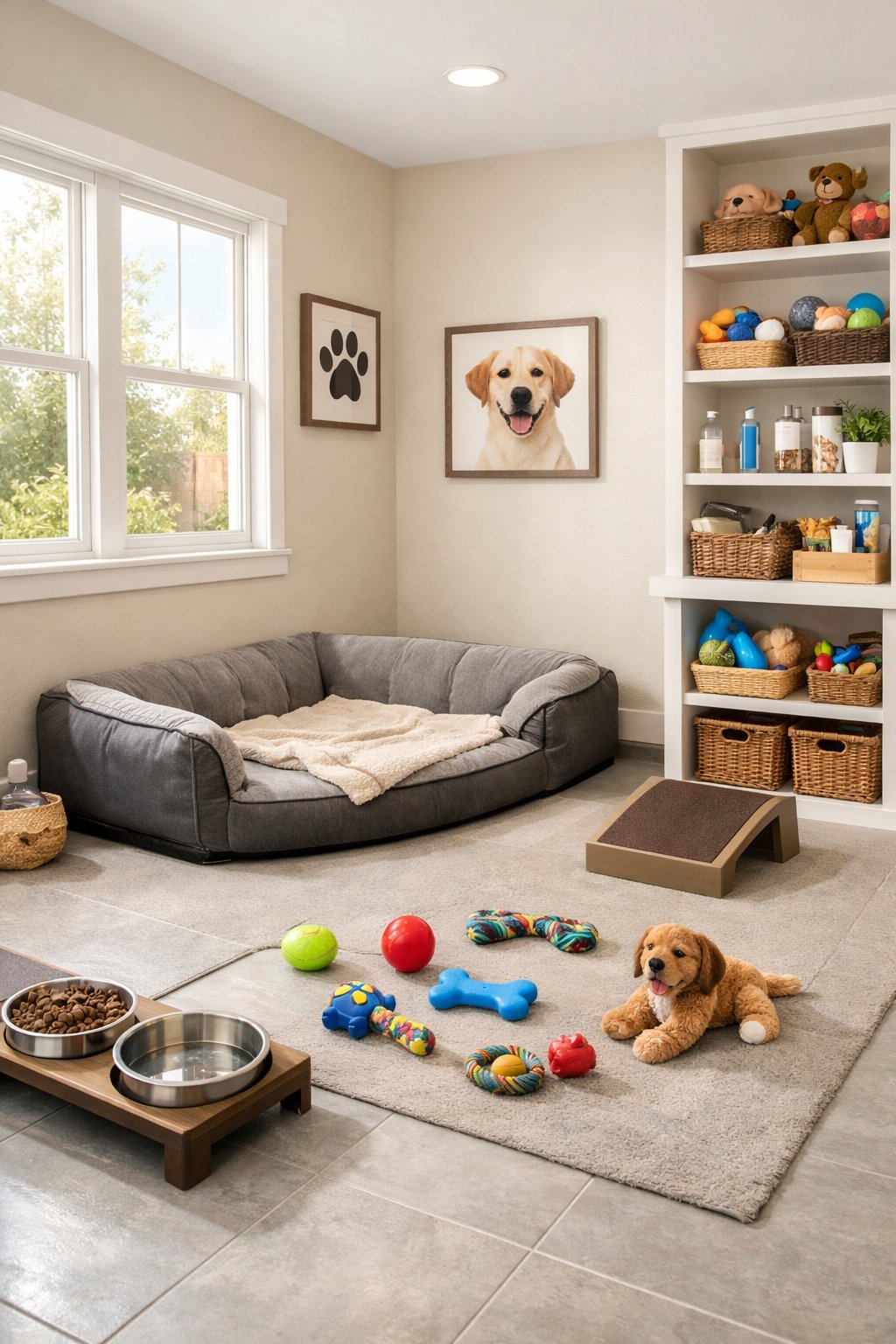
A well-designed dog room needs the right basics to keep your pup happy and healthy.
I focus on comfortable sleeping spots, easy access to food and water, and smart storage that keeps everything organized.
Cozy Bedding and Sleeping Areas
I always start with a good bed or sleeping mat that matches my dog’s preferences.
Some dogs like firm surfaces while others prefer soft, fluffy cushions.
The size matters too.
My dog needs enough space to stretch out fully without hanging off the edges.
I look for beds with washable covers since they get dirty quickly.
Location is important for the sleeping area.
I place the bed in a quiet corner away from high-traffic areas so my dog can rest without constant interruptions.
Under-stair spaces work great because they feel cozy and enclosed.
I add blankets and pillows to make the space extra comfortable.
These items also help with temperature control during different seasons.
Feeding Stations and Water Bowls
I set up dedicated feeding stations that keep food and water bowls in one spot.
This prevents spills from spreading throughout the room.
Raised feeding stations work well for larger dogs.
They reduce neck strain during meals and make eating more comfortable.
I use non-slip mats under the bowls to catch any spills and prevent the bowls from sliding around.
Stainless steel or ceramic bowls are my top choices because they’re easy to clean and don’t hold odors like plastic.
Water bowls need daily refills with fresh water.
I keep the water station away from the food area to reduce mess and maintain cleanliness.
Storage Solutions for Toys and Supplies
I need organized storage to keep all my dog’s items in one place.
Bins, baskets, and cabinets help me sort toys, treats, grooming tools, and cleaning supplies.
Open baskets work great for everyday toys since my dog can access them easily.
I use closed cabinets for items I don’t want my dog getting into, like medications or cleaning products.
Wall-mounted shelves save floor space while providing storage for leashes, collars, and other accessories.
I label containers so I can quickly find what I need.
Built-in storage solutions blend with the room’s design better than standalone furniture.
I store bulky items like food bags in lower cabinets and keep frequently used items at eye level for easy access.
Enrichment and Comfort Ideas
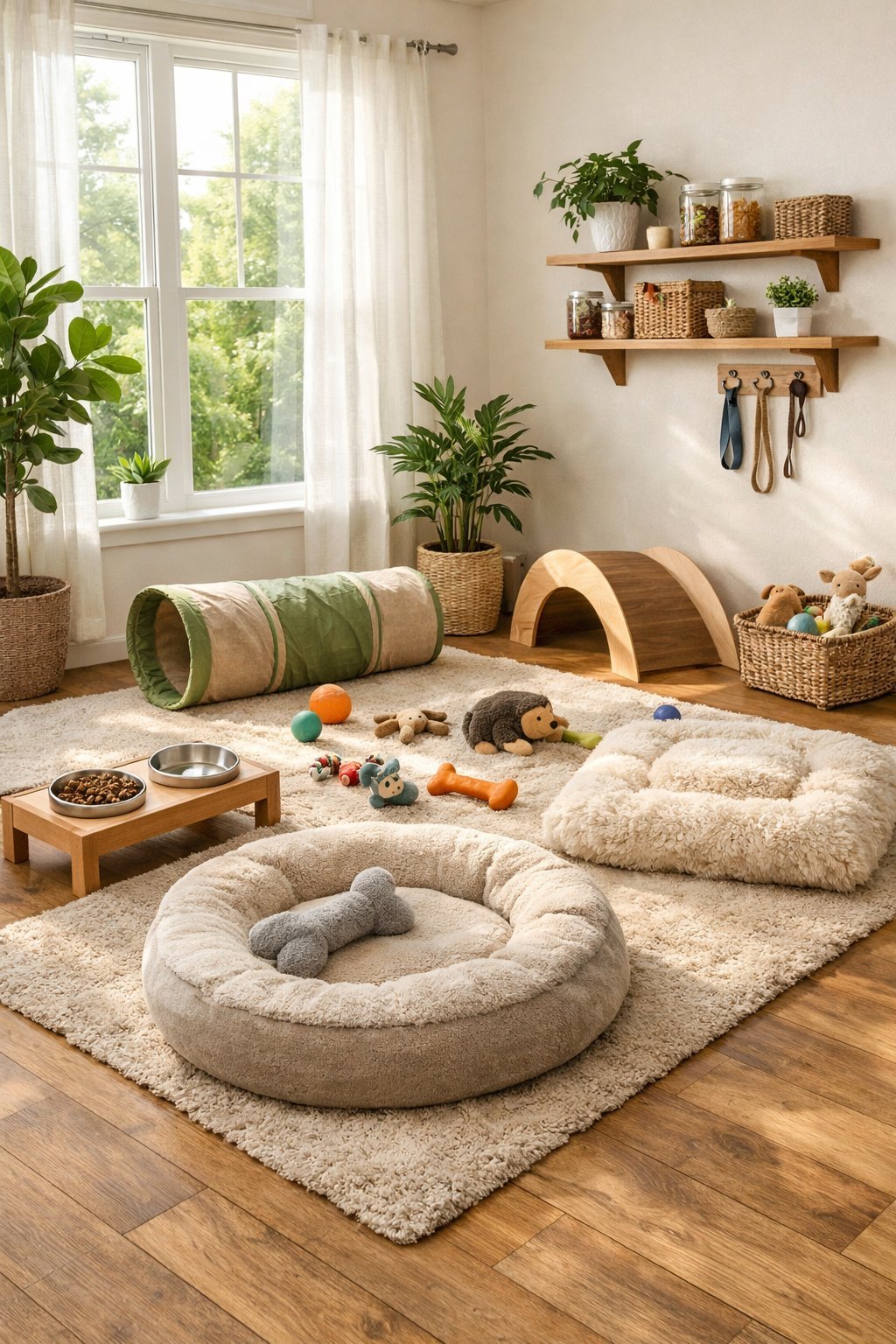
Dogs need spaces that keep their minds active and bodies comfortable throughout the day.
The right mix of play areas, climbing spots, and sensory items can turn any dog room into a place where your pup feels happy and engaged.
Built-In Play Zones
I recommend creating dedicated play areas that give your dog a place to burn energy indoors.
Built-in play zones work best when they’re designed with your dog’s size and energy level in mind.
Consider adding a small agility course with ramps or tunnels.
These features give your dog physical exercise and mental challenges at the same time.
I like to include toy storage bins right next to the play area so everything stays organized.
For smaller spaces, I suggest installing a ball track on the wall or a treat-dispensing puzzle board.
These options don’t take up floor space but still keep your dog entertained.
You can also add a designated digging box filled with sand or shredded paper if your dog loves to dig.
Climbing and Rest Platforms
Dogs enjoy having different levels to explore and rest on throughout the day. Platforms give dogs a sense of security while letting them watch their surroundings.
Low platforms or steps work well for older dogs or small breeds. Taller platforms suit active dogs who like to climb and observe from above.
Each platform should have a non-slip surface and cushioned bedding on top. Window perches are a great type of platform because they let dogs watch outside activity.
You can build window perches into existing window sills or add standalone units. Placing platforms at different heights allows your dog to choose their preferred spot based on their mood.
Sensory-Enhancing Accessories
Items that stimulate your dog’s senses make their room more interesting. Scent-based toys or treat puzzles engage their powerful sense of smell and keep them mentally sharp.
Textured surfaces like rubber mats, soft rugs, and cooling pads give dogs variety under their paws. Rotating different textures every few weeks helps maintain interest.
Sound machines with nature sounds or calming music help anxious dogs feel more relaxed. Interactive feeders slow down eating and turn mealtime into a mental workout.
Snuffle mats let dogs hunt for hidden treats through fabric strips. These accessories satisfy natural foraging instincts without requiring much space.
Keeping Your Dog Room Clean and Safe
A clean dog room protects your pet’s health and makes maintenance easier for you. The right materials and proper airflow prevent odors, bacteria, and safety hazards.
Easy-to-Clean Surfaces
Choose flooring that can handle accidents and muddy paws. Vinyl, tile, and sealed concrete are top picks because they wipe clean in seconds and resist stains.
These materials don’t absorb liquids like carpet does. Spills can be mopped up before they become permanent problems.
For walls, use washable paint or smooth panels that don’t trap dirt in crevices. Durable wall materials make scrubbing down surfaces quick and simple.
Skip textured walls if possible. They collect fur and dust that’s hard to remove.
Keep cleaning supplies stored in the dog room. Having paper towels, pet-safe cleaner, and a small broom nearby means messes can be tackled immediately.
A waterproof mat under food and water bowls catches drips before they reach your flooring.
Ventilation and Climate Control
Good airflow keeps the dog room from smelling like a kennel. Make sure there’s at least one window that opens or install an exhaust fan to move stale air out.
Fresh air circulation prevents moisture buildup that leads to mold. This is especially important if your dog comes in wet from outside.
Temperature control keeps your pet comfortable year-round. Set the thermostat between 68-78°F for most dogs.
Breeds with thick coats need cooler temps, while small or short-haired dogs prefer warmth. A ceiling fan helps distribute air evenly.
Place the dog bed away from heating vents and air conditioning units that blow directly on your pet.
Pet-Safe Materials
I avoid toxic materials that could harm my dog if chewed or licked.
Safe flooring options don’t contain harmful chemicals or loose pieces that become choking hazards.
Paint should be zero-VOC and fully cured before letting your dog in.
Regular paint fumes can irritate your pet’s sensitive nose and lungs.
I check that all storage containers have secure lids.
Cleaning products, medications, and even dog food need to stay locked away where curious paws can’t reach them.
Watch for small items like screws, rubber bands, or plastic pieces during setup.
These everyday objects become dangerous if swallowed.
I do a thorough floor check before my dog uses the space.


