
Farmers Dog Copycat Recipe: Make Fresh Dog Food at Home

Farmers Dog Copycat Recipe – The Farmer’s Dog delivers fresh, human-grade meals right to your door, but the monthly cost can add up quickly. Many dog owners spend hundreds of dollars per year on these premium meals.
The good news is that you can make fresh, balanced dog food at home using a copycat recipe that costs just $1-3 per day, potentially saving up to $600 annually.
I started making homemade dog food because I wanted to give my dog the same quality nutrition without the hefty price tag. Making your own version means you control every ingredient that goes into your dog’s bowl.
You’ll know exactly what your pet is eating. You can adjust recipes based on their specific needs or preferences.
This guide walks you through creating fresh, balanced meals that match the quality of commercial fresh dog food. You’ll discover which ingredients to use, how to prepare them properly, and how to transition your dog safely to homemade meals.
Key Takeaways
- Making homemade dog food can save hundreds of dollars per year while providing the same fresh, quality nutrition
- A balanced recipe requires lean protein, healthy carbohydrates, fresh vegetables, and proper nutritional supplements
- Gradual transition over 7-10 days helps your dog adjust to homemade meals without digestive upset
What Is the Farmers Dog Copycat Recipe?
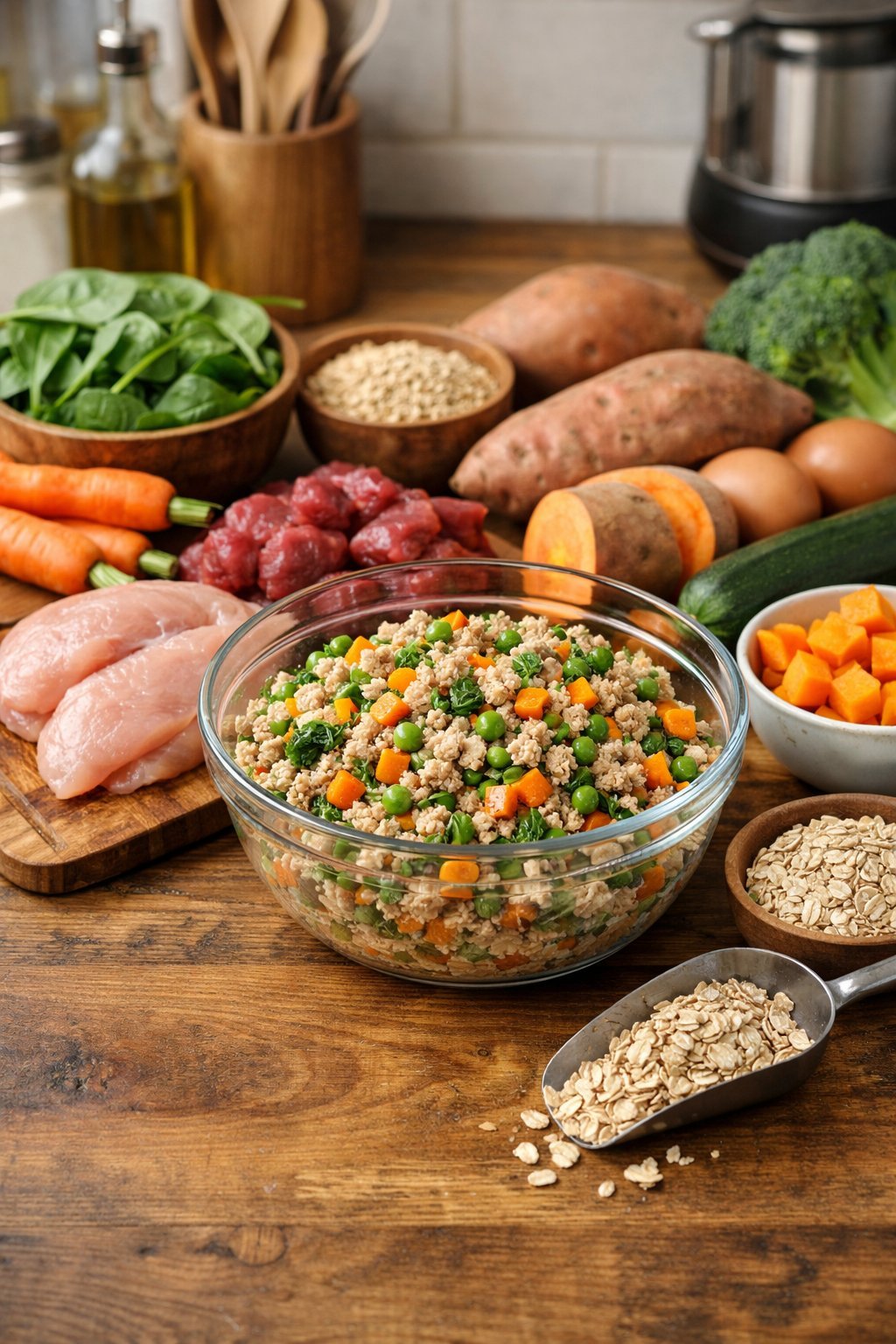
A Farmers Dog copycat recipe is a homemade version of the fresh dog food sold by The Farmer’s Dog company. It uses similar whole-food ingredients like lean proteins, vegetables, and grains that you cook and prepare in your own kitchen.
Origins of the Recipe
The Farmer’s Dog company started delivering fresh, human-grade dog food directly to customers’ homes. Their meals became popular because they used real ingredients instead of processed kibble.
Pet owners noticed the high cost of the subscription service and began creating their own versions at home. I found that making DIY Farmer’s Dog food can save up to $600 annually compared to buying the commercial version.
The copycat recipes emerged from pet owners who wanted to maintain the quality of fresh food while controlling costs. The Farmer’s Dog formulates its meals using fresh, lightly cooked ingredients, which made it easier for home cooks to replicate.
Many dog owners also needed to adjust recipes for pets with allergies or special dietary needs.
Key Differences from Commercial Products
The main difference is preparation and convenience. The Farmer’s Dog delivers pre-portioned meals to your door, while homemade versions require shopping, cooking, and storage planning.
Commercial Farmer’s Dog recipes are formulated by veterinary nutritionists to meet AAFCO standards. I make my copycat versions with similar ingredients, but they may not have the exact same nutrient ratios unless I work with a vet nutritionist.
Here are the key differences:
- Cost: Homemade versions cost $1-3 per day versus $5-12 for commercial
- Convenience: Commercial arrives ready to serve; homemade requires 1-2 hours of prep
- Customization: I can adjust homemade recipes for allergies or preferences
- Shelf life: Commercial meals have tested freshness dates; homemade lasts 4-5 days refrigerated
Benefits of Homemade Dog Food
Making dog food at home gives me complete control over what my dog eats. I know exactly which ingredients go into each meal and can avoid fillers or additives.
The cost savings are significant. Homemade dog food can be nutritionally comparable to commercial options like Farmer’s Dog Food when I include the right balance of proteins, fats, and carbohydrates.
I can adjust recipes immediately if my dog develops sensitivities. Fresh ingredients also mean I can source organic or locally-raised meats if that matters to me.
Many dogs with food allergies benefit from homemade meals because I can eliminate problem ingredients completely. The preparation process lets me make large batches and freeze portions for later use.
This means I only need to cook once or twice a week instead of daily meal prep.
Essential Ingredients for a Balanced Dog Meal
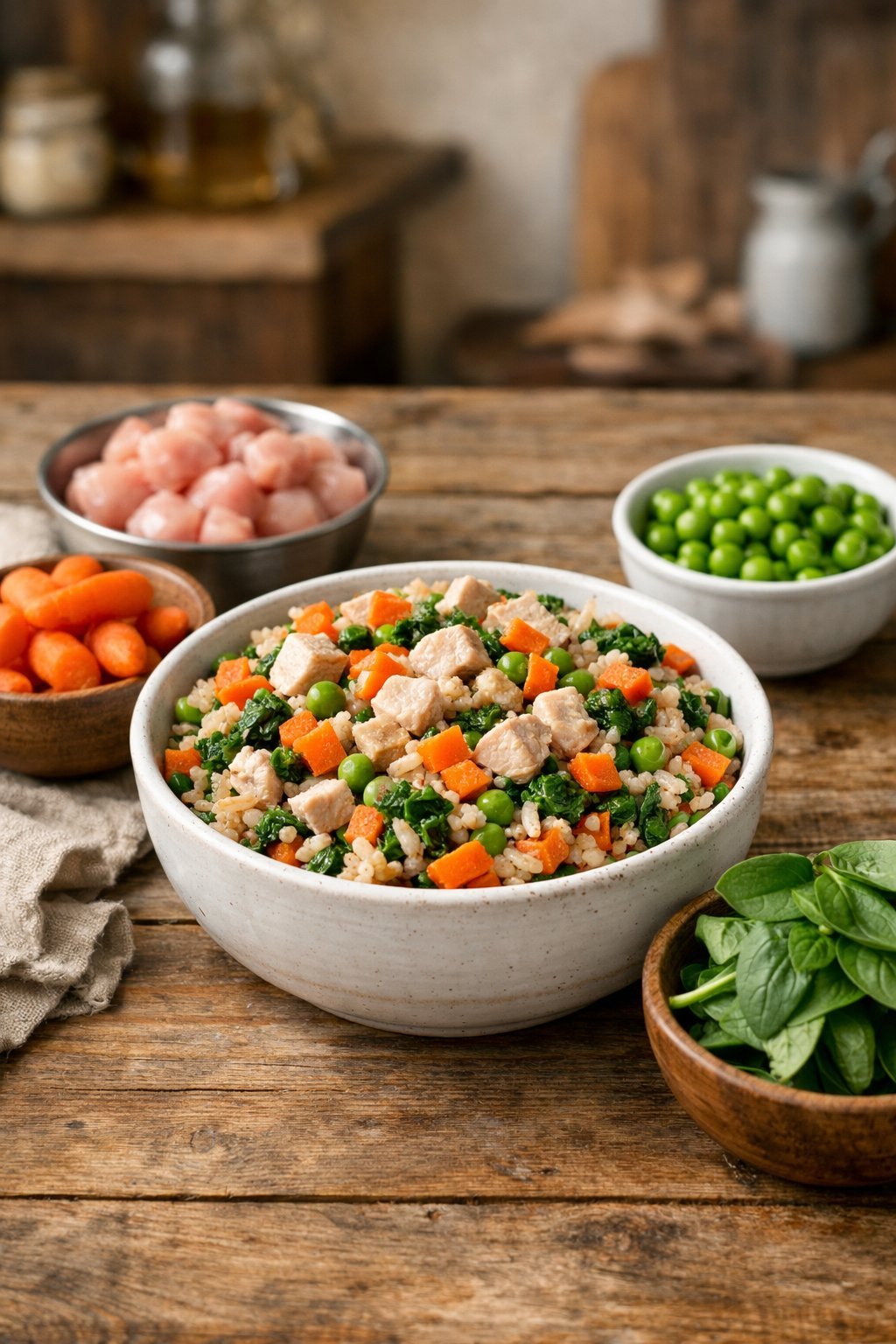
When I make homemade dog food, I focus on combining lean proteins, complex carbohydrates, and fresh vegetables to create meals that meet all nutritional needs. The right balance of these ingredients helps dogs maintain healthy weight, strong muscles, and good energy levels.
Proteins for Proper Nutrition
I always start with high-quality protein as the foundation of my homemade dog food recipes. Lean ground beef, chicken breast, turkey, and white fish work well as primary protein sources.
Most dogs need protein to make up about 40-50% of their meal. I cook the meat thoroughly to kill any harmful bacteria while keeping it moist and easy to digest.
Ground beef with 85-90% lean meat provides good protein without too much fat. Boneless, skinless chicken breast offers lean protein that most dogs tolerate well.
Turkey is another excellent option that’s gentle on sensitive stomachs. I avoid seasoning the meat with salt, garlic, or onions since these can harm dogs.
Plain cooked protein is what I aim for in every batch.
Healthy Carbohydrates
Carbohydrates give dogs energy and help their digestive systems work properly. I include carbs to make up about 30-40% of each meal I prepare.
Sweet potatoes are my go-to carbohydrate source. They’re packed with fiber, vitamins, and have a natural sweetness dogs enjoy.
White or brown rice also works well and is easy on digestion. I cook sweet potatoes until they’re soft and mash them slightly.
For rice, I use a 2:1 water-to-rice ratio and cook it completely. Oats can be another good option for dogs who tolerate them.
These carbohydrates should be fully cooked and cooled before mixing with other ingredients. Raw or undercooked carbs can be hard for dogs to digest.
Vitamins and Minerals
Fresh vegetables and a nutrient mix are essential for complete nutrition. I add vegetables to make up about 10-20% of the total meal.
Carrots, green beans, peas, and spinach are safe vegetables I use regularly. I steam or lightly cook them to make nutrients easier for dogs to absorb.
Safe vegetables for dogs:
- Carrots (cooked or raw, chopped small)
- Green beans (steamed)
- Peas (fresh or frozen)
- Spinach (in small amounts)
- Broccoli (small portions)
Calcium is critical for bone health. I add ground eggshell powder or calcium supplements as directed by nutritional guidelines.
Without proper calcium, homemade diets can cause serious health problems.
Safe Additions and Seasonings
I keep additions simple and dog-safe. A small amount of fish oil or flaxseed oil provides omega-3 fatty acids for healthy skin and coat.
Dogs don’t need salt, pepper, or spices in their food. I never add onions, garlic, chives, or similar seasonings because they’re toxic to dogs.
A tiny drizzle of olive oil can help with nutrient absorption. Some dogs benefit from a probiotic powder mixed into cooled food.
I measure oils carefully since too much fat can cause digestive upset. One teaspoon of fish oil per 20 pounds of body weight is a general guideline I follow.
Step-by-Step Farmers Dog Copycat Recipe Guide

Making fresh dog food at home requires attention to ingredient ratios and proper cooking methods to keep meals nutritious and safe. I’ll walk you through the prep work, cooking process, and storage techniques that help maintain quality.
Preparation Tips
Before I start cooking, I always gather my ingredients and measure everything out. Fresh proteins like chicken or beef work best, and I aim for about 40-50% protein in the recipe.
I recommend weighing ingredients on a kitchen scale instead of using measuring cups. This gives me more accurate portions and helps keep the recipe balanced each time I make it.
For vegetables, I dice sweet potatoes, carrots, and green beans into small, uniform pieces. This helps them cook evenly and makes them easier for my dog to digest.
I also keep the pieces about pea-sized or smaller, especially for smaller dogs. I wash all produce thoroughly and trim any fat from the meat.
Raw ingredients should stay refrigerated until I’m ready to cook them to prevent bacteria growth.
Cooking Instructions
I start by cooking the protein in a large pot with just enough water to cover it. For ground meat, I break it apart as it cooks.
For whole cuts like chicken breasts, I simmer them for 20-25 minutes until fully cooked through. Next, I add the chopped vegetables and grains to the same pot.
Rice or quinoa need about 15-20 minutes to cook completely. Sweet potatoes take slightly longer, so I add them first.
I let everything simmer together until the vegetables are soft and the grains are tender. The water level should be low but not completely absorbed.
Once done, I let the mixture cool completely before portioning it out.
Proper Storage Methods
I portion the cooled food into meal-sized containers based on my dog’s daily needs. Storage tips include using airtight containers to maintain freshness.
The food stays fresh in my refrigerator for 3-4 days. I keep what my dog will eat in that timeframe refrigerated and freeze the rest in individual portions.
For freezing, I use freezer-safe bags or containers and label them with the date. Frozen portions last up to 3 months.
I thaw meals overnight in the refrigerator before serving, never at room temperature.
Customizing the Recipe for Your Dog
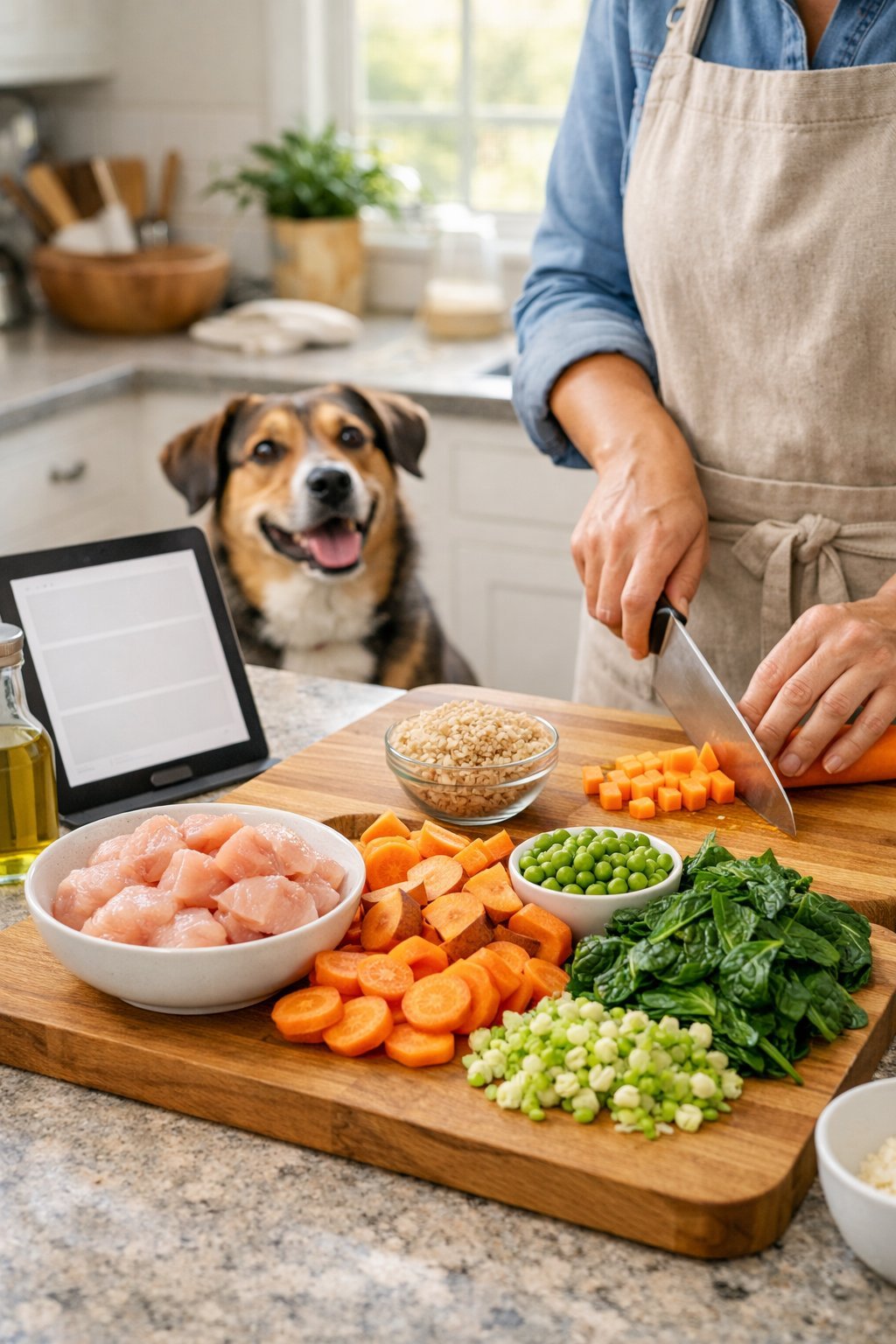
Every dog has different needs based on their size, health issues, and eating habits. I’ve learned that small changes to a basic recipe can make a big difference in keeping your dog healthy and happy.
Adjusting for Dog Size and Breed
I always calculate portions based on my dog’s weight to avoid overfeeding or underfeeding. Small dogs under 20 pounds need about 1-1.5 cups of food per day, while medium dogs between 20-50 pounds need 2-3 cups.
Large dogs over 50 pounds typically need 3-5 cups daily. Giant breeds like Great Danes need extra joint support, so I add fish oil or glucosamine supplements.
Small breeds have faster metabolisms, which means they need more calorie-dense meals with higher protein content. I also consider my dog’s activity level.
Working dogs or highly active breeds need 20-30% more calories than the standard recipe provides. Senior dogs need fewer calories but more fiber to maintain a healthy weight.
Common Allergies and Substitutions
Many dogs have food sensitivities that require ingredient swaps when making homemade dog food. I’ve found chicken is a common allergen, so I substitute it with turkey, duck, or fish.
If my dog can’t eat beef, I use lamb or venison instead. For grain allergies, I replace rice with quinoa, oats, or sweet potatoes.
Dogs with vegetable sensitivities do well when I swap out peas or carrots for green beans or zucchini.
Common substitutions I use:
- Chicken → Turkey, duck, or salmon
- Beef → Lamb, venison, or bison
- Rice → Quinoa, oats, or sweet potatoes
- Carrots → Green beans, broccoli, or spinach
Picky Eater Solutions
I’ve discovered several tricks to make homemade food more appealing to fussy dogs. Adding a small amount of low-sodium chicken broth makes the meal smell better and taste more interesting.
Warming the food slightly releases aromas that encourage eating. I mix in a teaspoon of plain pumpkin puree or a small amount of shredded cheese as a flavor booster.
Some dogs prefer different textures, so I experiment with blending the food smoother or leaving it chunkier. I also try hand-feeding the first few bites to create positive associations with the new food.
Gradually mixing the homemade recipe with their current food over 7-10 days helps picky eaters adjust without rejecting the meal completely.
Serving and Transitioning Your Dog to Homemade Food
I recommend making the switch to homemade food gradually over 7-10 days to avoid stomach upset. Your dog’s portion sizes will depend on their weight, age, and activity level.
Transitioning from Commercial Dog Food
I always start by mixing a small amount of homemade food with my dog’s current commercial food. The Farmer’s Dog recommends starting with 25% fresh food and 75% old food.
Then I gradually increase the new food ratio. Here’s the schedule I follow:
- Days 1-2: 25% homemade, 75% commercial
- Days 3-4: 50% homemade, 50% commercial
- Days 5-6: 75% homemade, 25% commercial
- Days 7+: 100% homemade
I watch my dog closely during this period for any signs of digestive issues like loose stools or gas. If I notice problems, I slow down the transition and stay at the current ratio for a few extra days.
Some dogs with sensitive stomachs need a longer transition period of up to two weeks.
Serving Sizes and Feeding Frequency
I calculate my dog’s daily food portions based on their weight and activity level.
A general rule I use is 2-3% of their body weight per day for adult dogs.
Daily Portion Guidelines:
| Dog Weight | Daily Amount | Meals Per Day |
|---|---|---|
| 10 lbs | 3-5 oz | 2 |
| 25 lbs | 8-12 oz | 2 |
| 50 lbs | 16-24 oz | 2 |
| 75 lbs | 24-36 oz | 2-3 |
I feed adult dogs twice daily, splitting their total portion between morning and evening meals.
Puppies need more frequent feeding, typically three to four times per day.
I adjust portions based on my dog’s body condition.
If they’re gaining weight, I reduce portions by 10-15%.
If they’re losing weight or seem hungry, I increase by the same amount.
Printable Recipe Card
Want just the essential recipe details without scrolling through the article? Get our printable recipe card with just the ingredients and instructions.