
10 Must-Have Features Every Dog Grooming Shop Needs to Succeed and Keep Clients Happy

Dog Grooming Shop – Opening a successful dog grooming business takes more than just knowing how to trim nails and give baths.
The right features can make the difference between a shop that barely survives and one that builds a loyal customer base.
Whether you’re planning to open your first salon or looking to improve an existing one, knowing what dog owners expect is critical.
A well-equipped grooming shop needs professional tools, a safe setup, trained staff, a range of services, and smooth customer management to stand out.
From the moment a customer walks through your door to the final pickup, every detail matters.
I’ve put together this guide to help you understand which features are truly essential for your grooming business.
Each one plays a specific role in building trust with customers and making your daily operations run more smoothly.
Let’s look at what equipment needed to start a dog grooming business and other key elements will set you up for success.
Key Takeaways
- Quality grooming equipment and a safe environment are the foundation of any successful dog grooming shop.
- Trained staff and diverse service offerings help you meet different customer needs and build trust.
- Strong customer service and scheduling systems keep your business running smoothly and clients satisfied.
This post contains affiliate links. As an Amazon Associate I earn from qualifying purchases.
Grooming equipment worth a look:
Grooming table with arm, High-velocity dog dryer, Professional dog clippers, Grooming shears set, Grooming apron, Rolling storage cart.
State-of-the-Art Grooming Equipment

Investing in top-quality grooming equipment makes every appointment smoother and keeps dogs more comfortable.
The right tools help you work faster while delivering professional results that pet owners notice.
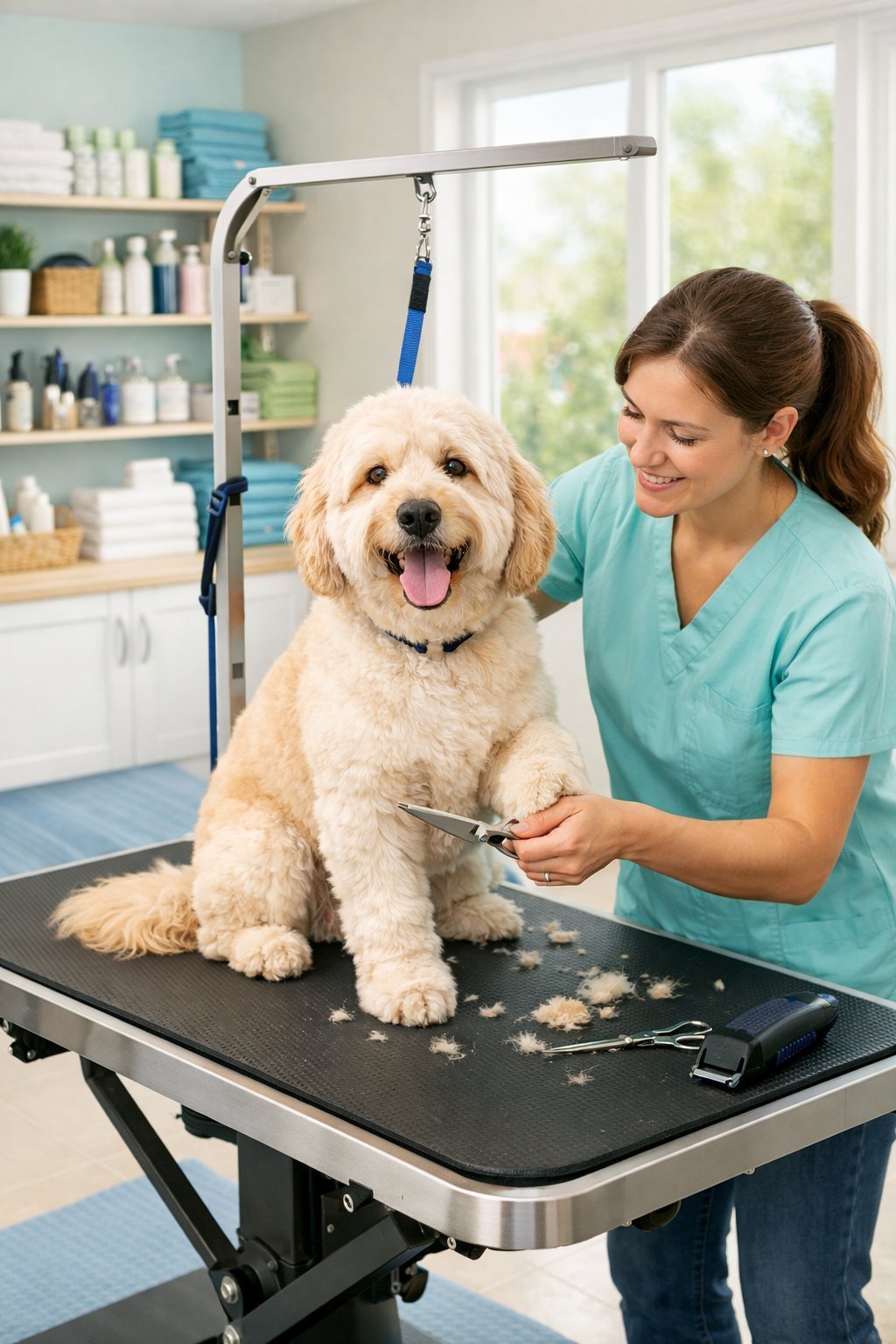
Professional-Grade Grooming Tables
Professional grooming tables are the foundation of any shop.
A sturdy table with a non-slip surface keeps dogs secure during appointments.
Look for tables with adjustable heights so you can work comfortably, whether grooming a small terrier or a large retriever.
Electric lift tables cost more upfront but they’re worth every penny.
The table needs a strong grooming arm with a secure leash attachment.
This keeps dogs in place safely while you work on detailed areas like faces and paws.
Make sure the table surface is easy to clean and disinfect between appointments.
Key table features:
- Weight capacity of at least 300 pounds
- Rubberized non-slip top
- Adjustable arm with two attachment points
- Sturdy legs that don’t wobble
High-Velocity Dryers
High-velocity dryers are a game changer.
These powerful tools cut drying time in half compared to regular pet dryers.
The strong airflow blows water off the coat instead of just heating it to evaporate.
You can dry a golden retriever in 20 minutes instead of 45.
I recommend dryers with variable speed settings and adjustable temperature controls.
Some dogs get nervous with too much noise or heat, so being able to adjust these settings keeps anxious pets calmer during the drying process.
Wall-mounted dryers save floor space in the shop.
Stand dryers with flexible hoses work better when you need to move around the dog.
Having both types on hand is helpful.
Quality Shears and Clippers
Professional-grade clippers are a must.
Cheap ones overheat and pull hair, while quality clippers stay sharp longer and run quietly, helping nervous dogs relax.
Keep multiple blade sizes for different coat types and body areas.
A #10 blade works for sanitary trims, while a #4 or #5 handles body work on most breeds.
Clipper blades need regular cleaning and oiling between each dog.
Your shear collection should include straight shears for general cutting, curved shears for rounded areas, and thinning shears for blending.
Shears between 7 and 8 inches long are great for most work, while shorter shears give better control around faces and paws.
Basic shear kit:
- 8-inch straight shears
- 7-inch curved shears
- 46-tooth thinning shears
- 5-inch detail shears
Sharpen your shears every few months for clean cuts.
Safe and Comfortable Environment
Creating a space where dogs feel secure and relaxed makes grooming sessions easier for everyone.
The right flooring, holding areas, and temperature settings protect both pets and staff while reducing stress during appointments.
Non-Slip Flooring
Non-slip flooring is essential in any grooming shop.
Dogs naturally feel anxious on slippery surfaces, which can cause them to panic or resist grooming.
Maintaining a clean and safe environment starts with the right floor material.
Rubber flooring or textured vinyl provides excellent grip even when wet.
These materials are easy to clean and sanitize between appointments.
They offer a cushioned surface that reduces fatigue for groomers standing all day.
Water-resistant properties prevent mold and bacteria growth, and they’re durable enough to withstand constant traffic and cleaning.
Investing in quality flooring from the start saves money on replacements and prevents injuries to dogs moving between stations.
Secure Holding Areas
Dedicated spaces where dogs can wait safely before and after their grooming appointments are a must.
These areas must prevent escapes while keeping pets comfortable and calm.
Holding areas should include secure kennels or crates with proper ventilation.
Separate spaces for anxious or aggressive dogs and visual barriers between kennels help reduce stress.
Easy-to-clean surfaces maintain hygiene.
Make sure all latches and doors lock properly to prevent accidental releases.
Safety protocols in dog grooming businesses require constant vigilance when multiple dogs are in the facility.
Position holding areas away from the main grooming stations so nervous dogs can relax without watching other pets being groomed.
Climate Control Features
Keep temperatures between 68-72°F throughout the grooming space.
Dogs can overheat quickly during blow-drying or when stressed, so proper ventilation is critical.
A good climate control system includes powerful exhaust fans that remove excess moisture and pet odors.
Use adjustable heating and cooling to accommodate different seasons and breeds.
Keep humidity levels between 40-50% to prevent skin irritation and maintain coat health during grooming sessions.
Experienced and Certified Staff

Having trained professionals on your team makes all the difference in how pets are treated and how clients trust your business.
Staff members need proper credentials and hands-on skills to handle different breeds and temperaments safely.
Ongoing Professional Training
Make sure your groomers stay current with formal training or certification from recognized institutions.
Grooming techniques and safety standards constantly evolve, and new tools, products, and breed-specific styling methods come out regularly.
Encourage your team to attend workshops and certification courses throughout the year.
This keeps their skills sharp and expands what services you can offer clients.
Training areas to prioritize:
- Advanced clipper and scissor techniques
- Breed-specific styling standards
- Product knowledge and safe usage
- Health issue identification
- Customer service skills
Clients appreciate when staff can answer questions about their pet’s coat health or recommend appropriate grooming schedules.
Pet Handling Expertise
Groomers should be able to read animal behavior and respond appropriately to stress signals.
Dogs show anxiety through body language, and staff must recognize when to pause or adjust their approach.
Key handling skills:
- Calming nervous or aggressive dogs
- Proper restraint techniques that don’t harm pets
- Recognizing signs of pain or distress
- Managing different temperaments safely
Train your team to handle pets with care and empathy.
Rough handling can traumatize animals and damage your shop’s reputation.
Every dog deserves gentle, patient treatment regardless of how they behave.
Groomers with strong handling skills complete appointments faster and with less stress for everyone involved.
Comprehensive Grooming Services

A successful dog grooming shop needs to offer complete care that goes beyond a simple bath.
Provide bathing options for different coat types, essential health maintenance like ear cleaning and nail trimming, and specialized cuts that match each breed’s standards.
Bathing and Drying Options
Offer multiple bathing solutions because different dogs have different needs.
Basic care includes bathing, thorough drying, and brushing to prevent matting and keep coats healthy.
Provide several shampoo types for specific coat conditions.
Hypoallergenic formulas work well for dogs with sensitive skin, while medicated shampoos help with skin issues like allergies or infections.
Moisturizing shampoos are perfect for dogs with dry or brittle coats.
The drying process matters just as much as the bath itself.
Use different methods depending on the dog’s size and temperament:
- Hand drying for small or nervous dogs
- Cage dryers for dogs who need gentle air circulation
- High-velocity dryers to remove loose undercoat on thick-coated breeds
Don’t rush through drying because damp fur can lead to hot spots and skin problems.
Ear and Nail Care
Ear cleaning and nail trimming are essential services that support your dog’s health and comfort.
Include these services in every full grooming appointment because they prevent serious health issues.
For ear care, gently clean the outer ear with appropriate solutions to remove dirt, wax, and debris.
Check for signs of infection like redness, odor, or excessive discharge.
Dogs with floppy ears need more frequent cleaning since their ear canals don’t get as much air circulation.
Nail trimming requires careful attention to avoid cutting the quick, which causes pain and bleeding.
Trim nails at the right angle and length based on the dog’s size and activity level.
File sharp edges to prevent scratching.
For dogs with dark nails where the quick isn’t visible, trim small amounts at a time.
Breed-Specific Styling
Different breeds need different grooming approaches. I make sure to personalize my services for each dog’s unique requirements.
Poodles and doodles need regular haircuts every 4-6 weeks to prevent matting. I offer clip styles ranging from puppy cuts to show cuts.
Golden Retrievers and other double-coated breeds benefit from deshedding treatments. These remove loose undercoat without damaging the topcoat.
Terriers often need hand-stripping to keep their wiry texture. Breeds like Shih Tzus require careful face trimming around the eyes.
I stay up-to-date with breed standards and modern styling trends. This way, I can offer both traditional and creative cuts.
Each breed has its own problem areas. I pay extra attention to Cocker Spaniel feet, sanitary areas on long-haired dogs, and the facial folds on breeds like Bulldogs.
Efficient Scheduling and Customer Service
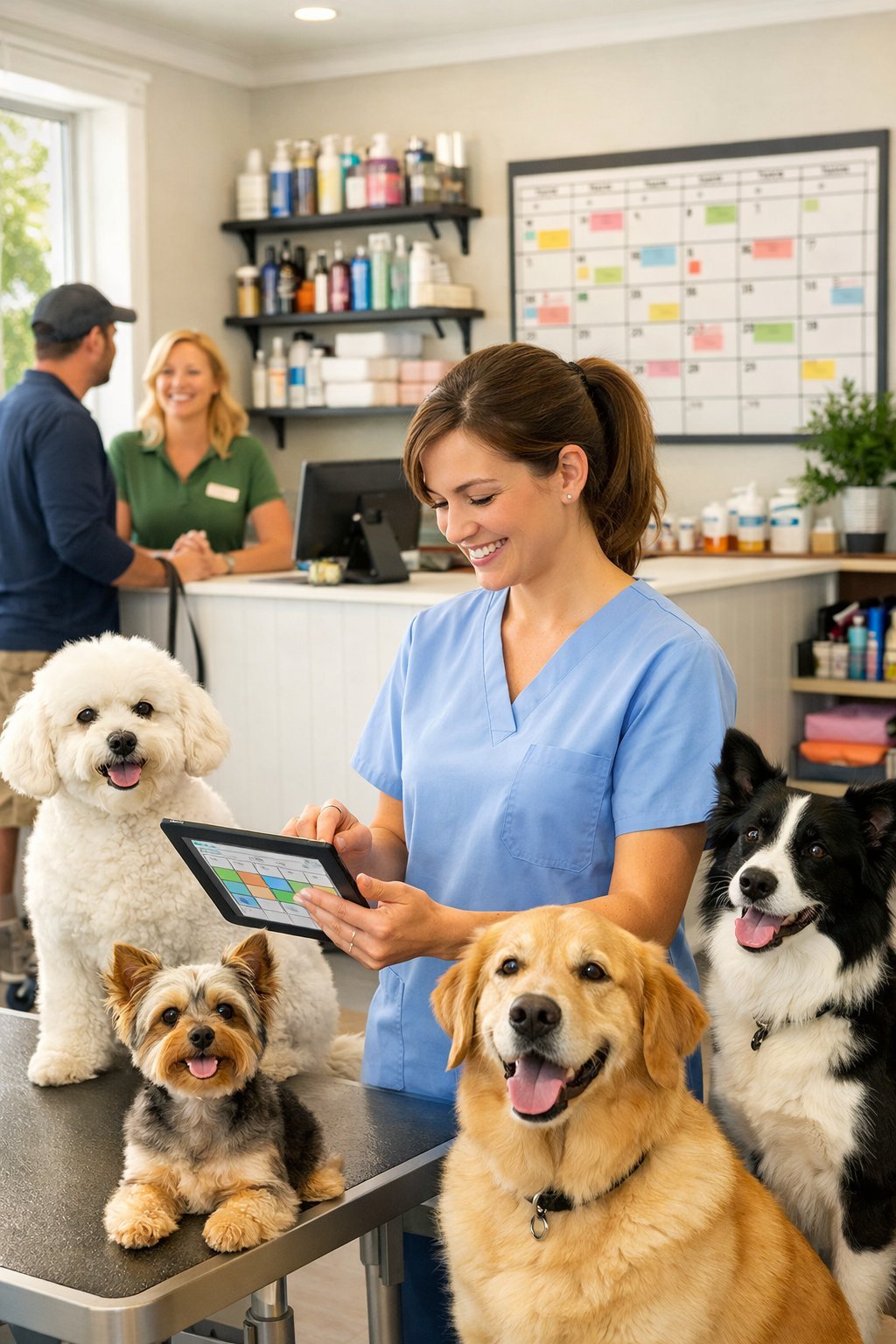
A smooth booking process and reliable communication keep clients coming back. This also helps reduce missed appointments and scheduling conflicts.
User-Friendly Booking System
I need a booking system that works for both my clients and my business. Online scheduling software lets pet owners book appointments 24/7 without having to call.
This convenience can boost bookings. The system should show real-time availability so clients can pick times that work for them.
I recommend features like automatic appointment confirmations and the option to select specific services during booking. Smart scheduling tools help me allocate the right amount of time for each dog.
A waitlist feature fills cancellation gaps quickly. When someone cancels, the system notifies people on the waitlist about the open slot.
This keeps my schedule full and maximizes revenue. Mobile-friendly booking is essential since many clients use their phones.
The interface should be simple. Ideally, it only takes a few clicks to complete a reservation.
Clear Communication Channels
I keep several ways open for clients to reach me, like phone, text, and email. Quick responses to questions about pricing, services, or appointment changes help build trust with pet owners.
Automated appointment reminders go out 24-48 hours before scheduled grooming sessions. I send these by text or email, depending on what the client prefers.
These reminders include the appointment date, time, and any prep instructions, like “please ensure your dog has been walked before drop-off.”
After each grooming session, I send a follow-up message to thank clients and ask for feedback. This personal touch shows I care about their pet’s experience.