
DIY Dog Crate Furniture: Transform Your Pet’s Space Into Stylish Home Decor

Dog crates don’t have to be ugly metal boxes that clash with your home. Building your own dog crate furniture lets you create a space that looks great in any room while keeping your pet comfortable and safe.
DIY dog crate furniture transforms a basic crate into a stylish piece like a side table or media console that blends perfectly with your existing decor.

The best part is you don’t need to be an expert woodworker to make this happen. Many DIY dog crate projects are easy to follow and can save you money compared to buying expensive furniture-style crates from stores.
You can customize the size, color, and design to match exactly what you want. From picking the right materials to adding those finishing touches, this guide will walk you through everything you need to know.
Key Takeaways
- Building your own dog crate furniture saves money while creating a custom piece that matches your home’s style
- You can transform basic materials into functional furniture without advanced woodworking skills
- Proper design and care ensure your DIY crate stays attractive and comfortable for years
Benefits of DIY Dog Crate Furniture

Building my own dog crate furniture lets me save money while creating a piece that fits perfectly in my home. I can design it to match my style and meet my dog’s specific needs.
Customization for Your Space
When I build my own dog crate furniture, I control every measurement and design choice. I can make it fit into that awkward corner in my living room or slide perfectly under my staircase.
Store-bought options come in standard sizes that rarely work with my unique floor plan. I can also add features that matter most to me and my dog.
Maybe I need extra ventilation holes for my anxious pup who gets hot easily. Or I might want to include a built-in drawer for storing toys and treats right where I need them.
The personalized design lets me integrate features that suit my space and preferences. I can choose the door style, whether it swings left or right, and even add cushioned dividers if I have multiple dogs.
Cost Savings Compared to Store-Bought Options
Building my own dog crate furniture typically costs 40-60% less than buying a pre-made version. A quality store-bought dog crate console can run $400-$800, while I can build something similar for $150-$300 in materials.
The savings add up quickly when I shop smart for lumber and hardware. I often find deals at local home improvement stores or use reclaimed wood.
My budget stretches further because I only pay for materials, not labor or retail markups. I can also choose less expensive alternatives for non-structural elements without sacrificing quality where it counts.
Enhancing Your Home Décor
A DIY dog crate doubles as attractive furniture instead of looking like a pet cage. I can stain or paint it to match my existing tables and cabinets.
The finished piece blends seamlessly with my decor rather than sticking out as obvious pet equipment. My guests often compliment what they think is a side table or console, not realizing it’s actually my dog’s crate.
This dual purpose maximizes my space without cluttering my rooms with separate pet furniture. The style options are endless.
I can go modern with clean lines and bold colors, rustic with distressed wood, or traditional with classic finishes.
Choosing the Right Materials
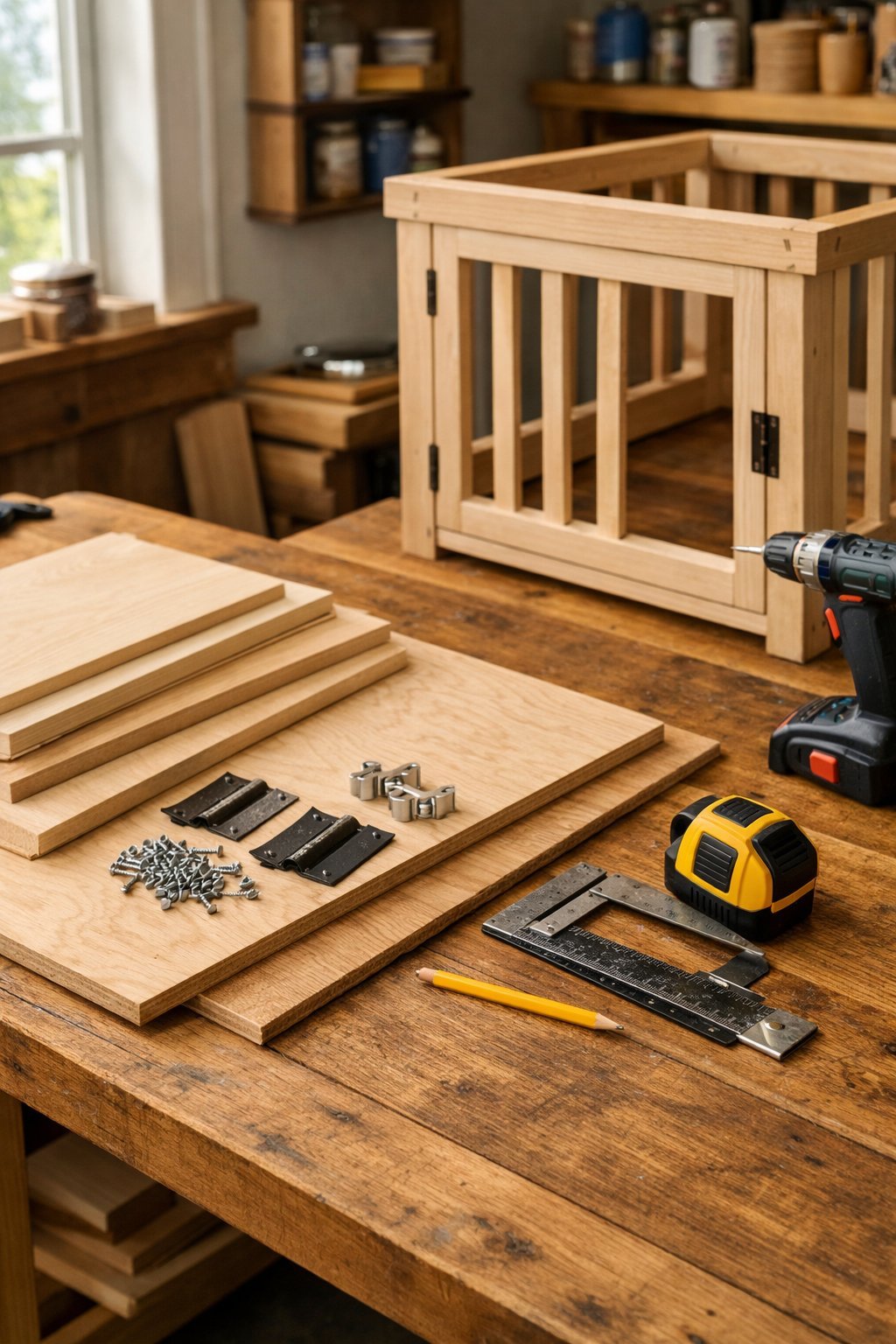
When I build dog crate furniture, I pick materials that keep my dog safe while lasting for years. Wood type, finish selection, and quality hardware all affect how well the final piece works and looks in my home.
Safe Wood and Finishes
I always choose solid hardwoods like oak, maple, or birch for my dog crate furniture projects. These woods handle wear and tear better than softwoods like pine.
Plywood works well too, but I make sure to get furniture-grade plywood without formaldehyde. The edges need sanding so no splinters poke through.
For finishes, I stick with water-based polyurethane or natural oils. These options don’t release harmful fumes that could bother my dog.
I let everything dry completely for at least 48 hours before letting my dog near it. The smell test helps—if I can still smell chemicals, it needs more time to cure.
Hardware and Fasteners for Durability
I use 2.5-inch wood screws for joining thick pieces together. These hold better than nails and won’t work loose over time.
Pocket hole screws work great for hidden joints that look clean. Metal corner brackets add strength to areas that take the most stress.
I put them on all four corners of the frame. L-brackets reinforce where the top meets the sides.
For the door, I pick heavy-duty hinges rated for at least 20 pounds. Ball-bearing hinges open smoothly and last longer.
I add a secure latch that my dog can’t accidentally open but I can reach easily. All my hardware gets countersunk so no sharp edges stick out.
I check that screws don’t poke through to the inside where my dog sits.
Eco-Friendly and Sustainable Choices
I look for FSC-certified wood from responsibly managed forests. This wood costs a bit more but supports better forestry practices.
Reclaimed wood from old furniture or pallets works well if I sand and clean it properly. Low-VOC or zero-VOC finishes protect indoor air quality.
Natural options like linseed oil or beeswax work beautifully and smell pleasant. These finishes are safe if my dog chews on edges.
Building custom dog crate furniture lets me choose sustainable materials that match my values. Bamboo plywood offers another eco-friendly option since bamboo grows back quickly.
Step-by-Step Building Guide

Getting accurate measurements and having the right tools makes the building process smooth. This ensures your dog crate furniture fits perfectly in your space and keeps your pet safe.
Measuring for the Perfect Fit
I always start by measuring my dog when they’re standing and lying down. My dog needs at least 4 inches of clearance above their head when standing, and they should be able to turn around comfortably inside the crate.
I measure the space where the crate furniture will go in my home. I check the height, width, and depth to make sure the finished piece fits properly.
When building custom dog crate furniture, I also consider whether it needs to fit under a counter or table. I write down all my measurements and add 2-3 inches to the interior dimensions for comfort.
This extra space prevents my dog from feeling cramped. I double-check every measurement before cutting any materials to avoid costly mistakes.
Essential Tools and Supplies
I gather these basic tools before starting my project:
- Electric saw or circular saw
- Cordless drill with drill bits
- Measuring tape
- Clamps
- Hammer
- Sandpaper or electric sander
- Safety glasses
For materials, I need wood boards for the frame, wood screws, wood glue, and paint or stain. I choose non-toxic finishes that are safe for pets.
I also get welded wire panels or a pre-made wire crate that fits my measurements. I make sure to use reclaimed wood when possible since it’s durable and budget-friendly.
Pet-safe materials are essential because dogs often chew or lick surfaces inside their crate.
Building the Frame
I cut my wood pieces according to my measurements, creating four corner posts and horizontal support beams. I sand all pieces thoroughly to remove splinters that could hurt my dog.
I assemble the bottom frame first by connecting four boards in a rectangle shape. I use wood glue and screws at each corner for extra strength.
I attach the four vertical corner posts to this base, making sure they’re perfectly straight. I add the top frame by connecting horizontal boards between the posts.
I reinforce all joints with corner brackets for stability. I build additional support beams in the middle if my crate is larger than 36 inches wide.
I insert the wire panels or pre-made crate into the wooden frame, securing them with small screws or zip ties. I ensure there are no gaps smaller than 1 inch that could trap paws or noses.
Finishing Touches and Assembly
I sand the entire structure again, paying special attention to edges and corners. Smooth surfaces prevent splinters and make the crate safer for my dog.
I apply my chosen finish in a well-ventilated area. I use pet-safe wood stain or paint and let it dry completely for at least 48 hours.
Strong fumes can harm dogs, so proper drying time matters. I add a latch or lock to the door that’s secure but easy for me to open.
I install rubber feet on the bottom to protect my floors and prevent sliding. I place a comfortable bed or blanket inside before introducing my dog to their new space.
Designing for Style and Function

When I build dog crate furniture, I focus on making pieces that look great in my home while meeting my dog’s needs. The best designs blend with my existing decor, add useful storage space, and make it easy for my pet to get in and out comfortably.
Matching Furniture Styles
I always start by looking at the furniture I already have in the room where the crate will go. If my living room has modern pieces with clean lines, I build a crate with simple geometric shapes and minimal hardware.
For a rustic farmhouse look, I use darker wood stains and chunky legs that match my other tables. The wood finish makes a huge difference.
I sand and stain my crate furniture to match my coffee table or side tables so everything feels connected. Many DIY dog crate furniture designs work as side tables or console tables, which helps them blend right in.
I also think about hardware choices. Sleek metal bars work well in modern spaces, while wooden slats or decorative panels fit better in traditional homes.
The top surface matters too—I make mine flat and sturdy so I can use it like any other table for lamps, photos, or plants.
Incorporating Storage Solutions
I love adding storage to my dog crate furniture because it saves space and keeps supplies organized. Here are my favorite storage additions:
Built-in drawers – I add one or two drawers along the side for storing leashes, toys, and treats.
Bottom shelves – A simple shelf underneath holds food bags and extra water bowls.
Side cubbies – Small compartments work great for poop bags and grooming supplies.
I measure my dog’s items before building to make sure drawers are deep enough. A 4-inch drawer holds most leashes and collars, while an 8-inch drawer fits food containers.
When I add storage, I make sure it doesn’t block my dog’s ventilation or make the crate feel cramped inside. I keep drawers on the sides or back of the crate, never blocking the front entrance.
Accessibility for Your Dog
I always build the door opening at least 2 inches wider than my dog’s shoulders so they can walk through comfortably.
The door should sit low enough that my dog doesn’t have to jump up to enter.
For older dogs or puppies, I skip any raised thresholds at the entrance.
A flat transition from floor to crate makes getting in and out much easier on their joints.
Some stylish DIY dog crate furniture ideas include ramps for dogs who need extra help.
I position the door on the long side of the crate rather than the narrow end.
This gives my dog more room to turn around when entering or exiting.
I also make sure there’s enough headroom—my dog should be able to stand up and turn around without hitting the top.
Caring for Your DIY Dog Crate Furniture
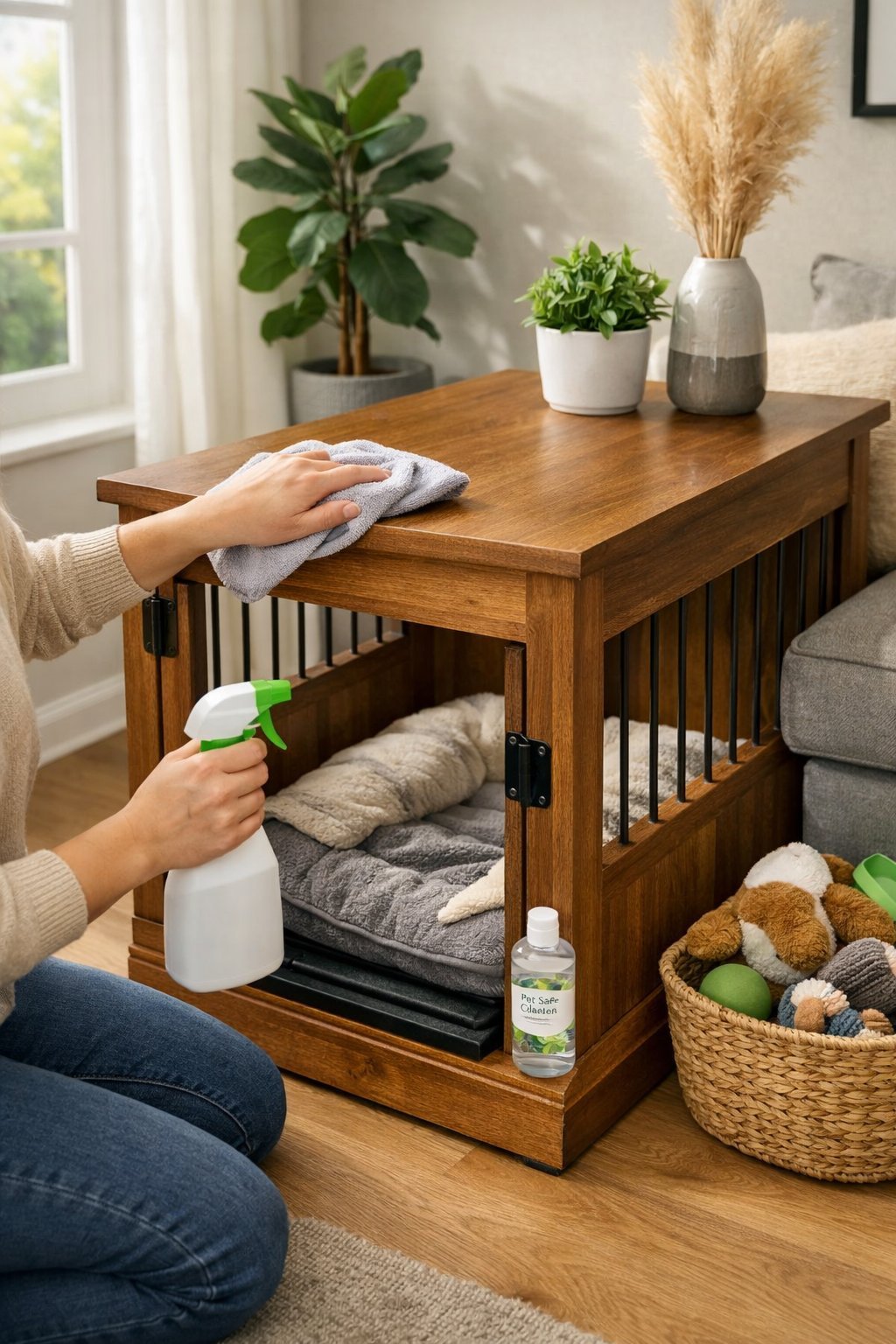
Regular cleaning and safety checks will keep your dog crate furniture looking good and working properly.
Cleaning and Maintenance Tips
I recommend wiping down your DIY dog crate furniture weekly with a damp cloth to remove dust, dirt, and pet hair.
For wooden surfaces, I use a mild wood cleaner or a mixture of water and gentle dish soap.
Daily maintenance tasks:
- Remove pet hair with a lint roller or vacuum
- Wipe up any spills or accidents immediately
- Check bedding for cleanliness
I deep clean my crate furniture monthly by removing all bedding and accessories.
I vacuum all corners and crevices where debris collects.
For stubborn stains, I apply a pet-safe cleaner and let it sit for a few minutes before wiping clean.
If your furniture has a painted or stained finish, touch up any scratches or chips right away to prevent further damage.
I keep extra paint or stain from the original build for quick repairs.
For metal hardware like hinges or latches, I apply a small amount of lubricant every few months to keep them working smoothly.
Safety Checks and Longevity
I inspect my dog crate furniture every two weeks for loose screws, weakened joints, or splintered wood. These issues can create safety hazards for my pet.
I tighten any loose hardware with a screwdriver and replace damaged parts right away.
Monthly safety checklist:
- Test door latches and locks
- Check for sharp edges or protruding nails
- Examine weight-bearing supports
- Look for signs of chewing or wear
I focus on spots my dog touches or scratches a lot. If I notice wood splitting or cracking, I reinforce it with wood glue or extra bracing.
For functional pet spaces that double as end tables or nightstands, I make sure the top surface is always stable and secure.
I also check that ventilation openings stay clear and unblocked. Good airflow keeps my dog comfy and helps prevent moisture buildup that could damage the furniture over time.
