
Dog Crate Topper DIY: Easy Step-by-Step Guide to Create a Stylish Furniture Cover

Your dog’s crate doesn’t have to be an eyesore in your home. A dog crate topper DIY can turn a basic wire crate into functional furniture that doubles as a side table or storage space, all while keeping your pup comfy.
I’ve found that building my own topper costs much less than buying premade options. Plus, you get to match your home’s style perfectly.

Making a dog crate topper is quick and easy, and you don’t need advanced woodworking skills. Most projects take just a few hours and use simple materials like plywood, wood boards, and basic tools.
The best part is your finished topper serves multiple purposes in your home. It can help blend pet furniture into your decor, so you’re not stuck with a bare metal cage in the living room.
You can customize the size, finish, and design to fit any room. Whether you want extra space for a lamp and books or a spot to display photos, a DIY crate cover that doubles as a table makes your dog’s space work harder for you.
Key Takeaways
- Building a dog crate topper turns your pet’s crate into useful furniture that matches your home decor.
- Most DIY crate toppers require basic materials like plywood and simple tools that beginners can handle.
- A finished topper provides extra storage or display space while keeping your dog’s area looking neat.
Benefits of a Dog Crate Topper
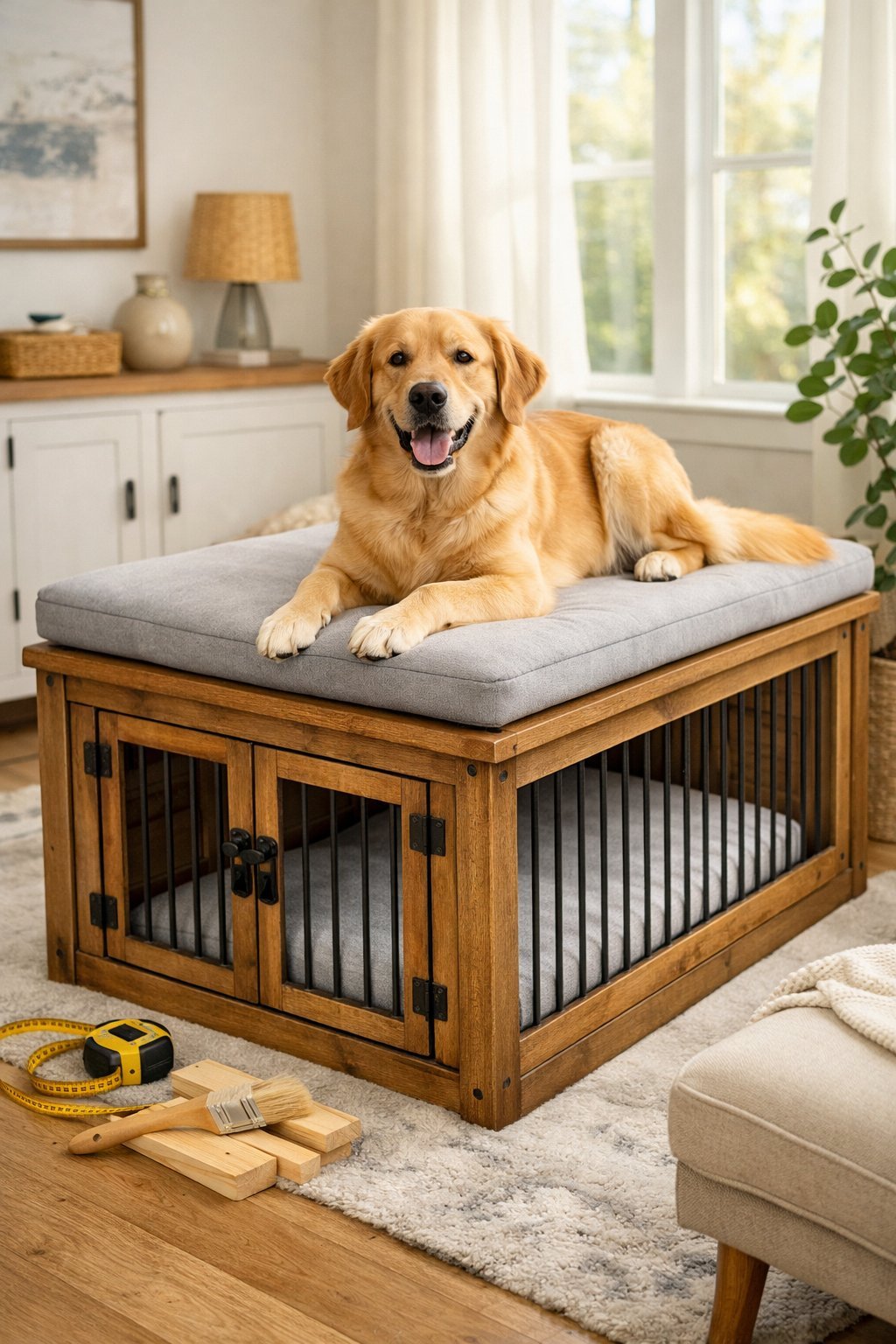
A dog crate topper transforms your pet’s crate into a more comfortable space while adding practical storage and improving your home’s look. These simple additions create a cozy environment for dogs and help pet owners make better use of their living space.
Enhanced Comfort for Your Dog
A dog crate topper helps trap body heat and provides extra insulation for your pet. This creates a warmer, more secure environment that many dogs find calming.
The added layer above the crate can reduce outside noise and activity that might stress your dog. Toppers create a den-like atmosphere dogs naturally prefer by blocking some light and visual distractions from above.
This is especially helpful during thunderstorms or when guests visit your home. Many dogs sleep better with a topper because it makes the crate feel more like a safe bed.
The enclosed feeling mimics the security of a natural shelter. Your dog can relax more fully when they feel hidden from potential threats or overwhelming stimulation.
Improved Crate Aesthetics
A DIY topper helps your dog kennel blend into your decor instead of standing out as an eyesore. Wire crates can look industrial and out of place in bedrooms or living rooms.
Adding a wooden or fabric-covered top makes the crate look like intentional furniture. You can customize your topper with paint, stain, or fabric that matches your existing furniture.
This turns the crate into an attractive piece that complements the room. Guests often don’t even realize there’s a dog crate in the room when it has a nice topper.
This lets you keep your dog’s space accessible without sacrificing your home’s appearance.
Organizational Advantages
The crate topper serves as a platform for storage that functions like an end table or shelf. You can place baskets with dog toys, treats, and supplies right on top where they’re easy to reach.
This keeps all your pet’s items organized in one convenient spot. The extra surface area is perfect for holding a lamp, books, or decorative items.
I use mine as a functional side table in my bedroom that also happens to house my dog’s crate below. Having supplies stored directly above the crate means everything you need is within arm’s reach during crate training or bedtime routines.
The topper creates a dedicated pet station that keeps your home tidier overall.
Choosing Materials for Your DIY Dog Crate Topper
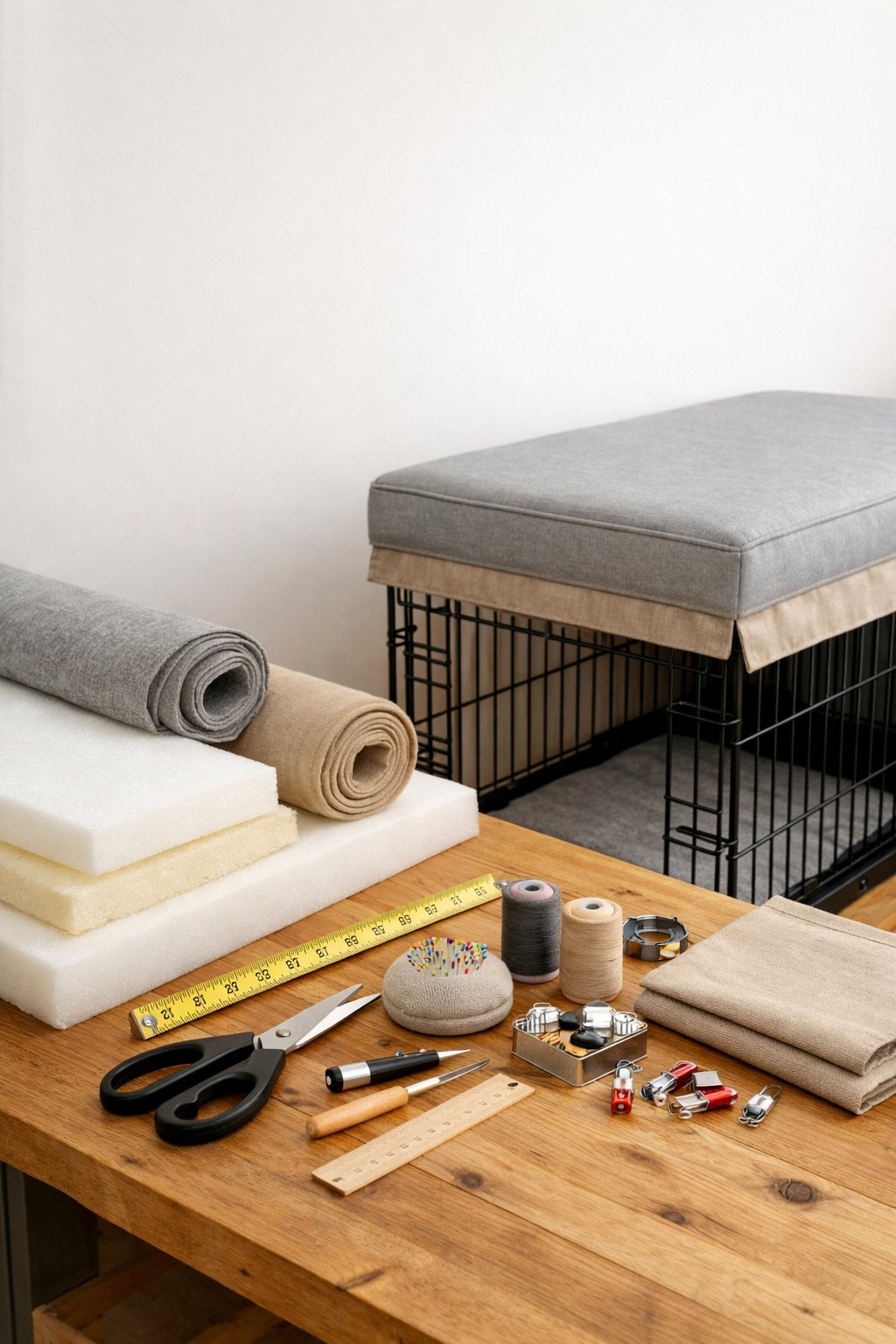
The right materials make your crate topper sturdy, safe, and long-lasting. Wood type, finish, and eco-friendly choices all affect how well your topper performs and protects your dog.
Best Wood Types for Durability
I recommend pine for budget-friendly builds since it’s easy to work with and costs between $10-$20 for basic boards. Pine cuts smoothly and handles everyday use well enough for most homes.
Plywood is my go-to for building a simple dog crate table topper because it resists warping better than solid wood. I use ¾-inch thick plywood for the top surface to support items like drinks or phones without sagging.
For heavier use, hardwoods like oak or maple provide extra strength. These woods cost more but last longer if you plan to place heavy items on top.
Birch plywood offers a nice middle ground between price and durability. Avoid particleboard or MDF if your dog tends to chew, since these materials break down quickly when exposed to moisture.
Safe Finishes and Paints
I always choose water-based, non-toxic finishes when customizing my pet’s space. These finishes don’t release harmful fumes that could bother my dog’s sensitive nose.
Look for paints labeled as zero-VOC or low-VOC. These products dry quickly and won’t make your dog sick if they lick the surface.
I let all finishes cure for at least 72 hours before letting my dog near the crate. Natural options like beeswax or mineral oil work great for sealing wood.
I apply food-safe mineral oil with a clean cloth and let it soak in overnight. This creates a protective layer without any chemicals.
Skip stains with strong odors or oil-based polyurethanes. These take longer to cure and can irritate your dog’s respiratory system.
Eco-Friendly Options
Reclaimed wood from old pallets or furniture gives you free materials while reducing waste. Sand down rough spots and check for nails or staples before using salvaged wood.
Bamboo plywood grows faster than traditional trees and works just as well for crate toppers. It costs a bit more than pine but offers similar strength with less environmental impact.
Use natural wood glue instead of synthetic adhesives when joining pieces. These plant-based glues hold strong without releasing toxic chemicals into your home.
Leftover wood from other projects helps you build your topper without buying new materials. Measure your crate first and check your scrap pile for pieces that fit your dimensions.
Step-by-Step Guide to Building a Dog Crate Topper

I’ll walk you through making a functional topper that transforms your dog’s crate into useful furniture. The process involves careful measurements, basic woodworking tools, and simple assembly techniques that anyone can master.
Measuring Your Dog Crate
Start by measuring the length and width of your dog’s crate top. Use a tape measure to get exact dimensions, measuring from the outside edges where the topper will sit.
Write down these measurements and add about 1-2 inches to each side for overhang. This creates a more finished look and ensures the topper sits securely on the crate.
Also, measure the depth of any handle or latch mechanisms on top of the crate. If there are raised features, you’ll need to account for them in your design.
Double-check all measurements before buying materials. One mistake in measuring can waste wood and money.
Gathering Essential Tools
You’ll need a circular saw or hand saw to cut the wood to size. A drill with basic bits helps you attach pieces together and add screws.
Here’s what to have ready:
- Wood boards (plywood or pine boards work well)
- Measuring tape and pencil
- Sandpaper (medium and fine grit)
- Wood screws (1.5-inch length)
- Wood glue
- Paint or stain (optional)
- Paintbrush or foam applicator
3/4-inch plywood is sturdy and affordable for the main surface. Pine boards are another good option if you want a more traditional wood look.
Make sure your drill is charged and your saw blade is sharp. Having everything ready saves time and frustration during assembly.
Cutting and Assembly
Cut your main board to match the measurements you took earlier. Use a straight edge as a guide to keep your cuts clean and even.
Sand all edges and surfaces with medium-grit sandpaper first, then switch to fine-grit for a smooth finish. This step prevents splinters and creates a better surface for finishing.
If you want to add a frame around the edges, cut four strips of wood to match each side. Attach these strips to the underside of the main board using wood glue and screws.
The frame adds stability and helps the topper sit securely on the crate. Place the topper on the crate to test the fit before finishing.
Make any needed adjustments at this stage.
Finishing Touches
Apply paint or stain to match your home decor. Use two thin coats instead of one thick coat for better coverage and durability.
Let each coat dry completely before adding the next one. This usually takes 2-4 hours depending on the product you use.
Add felt pads to the bottom corners where the topper contacts the crate. This protects both surfaces from scratches and keeps the topper from sliding around.
Converting your dog’s crate into a side table makes it blend into your room while giving you extra surface space. Place a basket or decorative items on top to complete the look.
Creative Design Ideas for Dog Crate Toppers
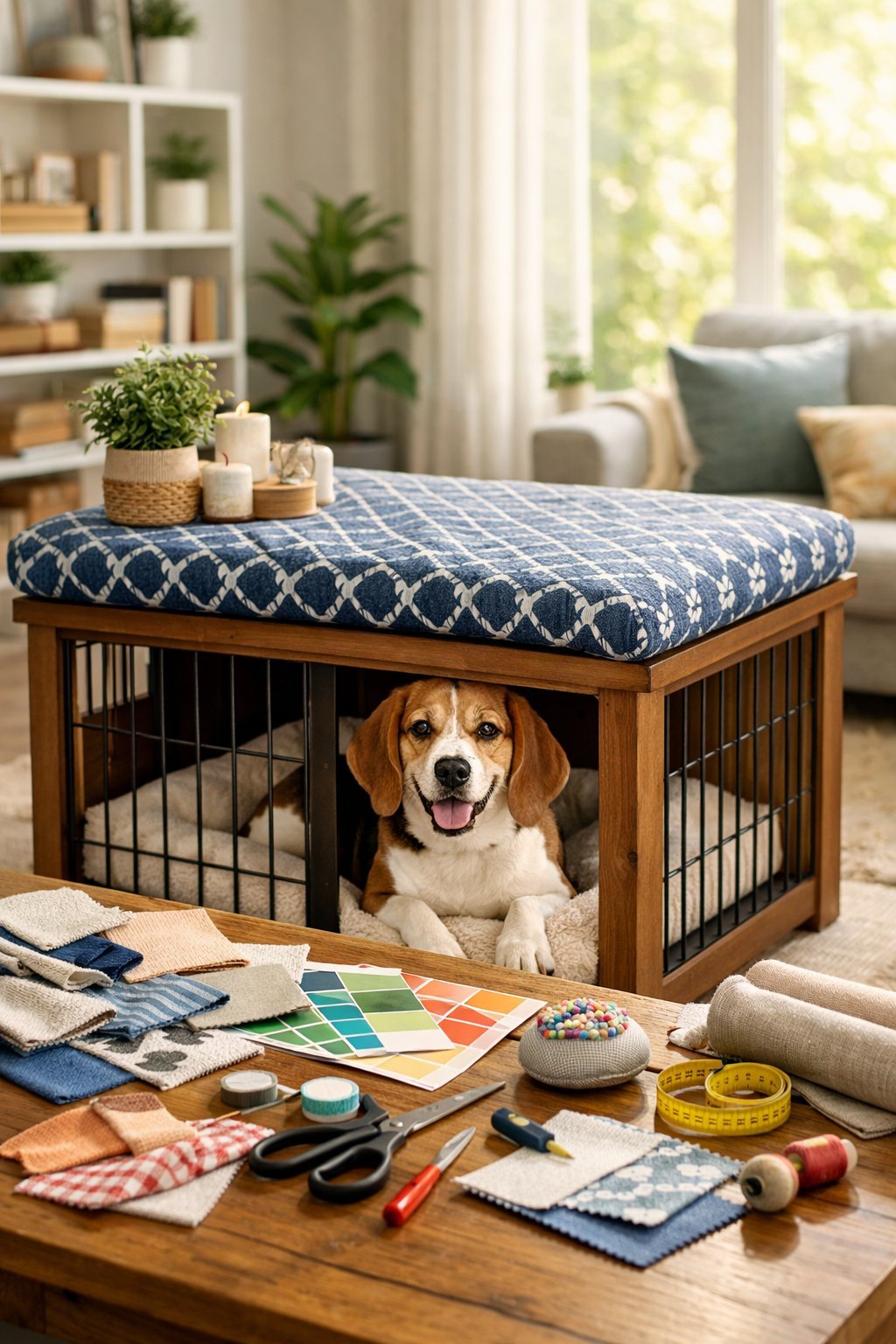
A dog crate topper can serve multiple purposes beyond just covering the top of your pet’s space. Combining practical features with attractive design elements creates a piece that both you and your dog will appreciate.
Multi-Functional Surfaces
The top of a dog crate offers valuable space that you can transform into a useful surface. Creating a topper that doubles as a table gives you extra room for lamps, books, or decorative items.
Add cushioned padding to the topper for a cozy reading nook or window seat. The flat surface works well as a coffee table alternative in small living spaces.
Some designs include flip-up sections that reveal hidden compartments underneath. The key is choosing materials that can handle weight.
Use sturdy plywood or solid wood boards that won’t sag over time. Adding rubber feet or felt pads protects both the crate and the topper from scratches.
Custom Storage Solutions
Building storage into my crate topper helps me keep all my dog’s supplies organized in one spot. I can attach small baskets or bins to the sides to hold leashes, toys, and grooming tools.
Creative storage designs include built-in drawers that slide out from the front or sides. I’ve added hooks along the edges for hanging items like spare collars or waste bag dispensers.
Open shelving on one end gives me quick access to frequently used items. For a cleaner look, I sometimes install a lift-top design where the entire surface opens up.
This gives me deep storage space while keeping everything hidden from view. Magazine holders or file organizers attached to the sides work great for storing training pads or paperwork.
Decorative Features
I enjoy adding personal touches that make the crate topper match my home’s style. Paint colors, wood stains, or decorative contact paper can transform a basic topper into a statement piece.
Stenciled designs or vinyl decals let me add patterns without much effort. I’ve seen great results from adding trim pieces, corbels, or decorative molding around the edges.
Fabric panels stretched across frames create a softer appearance. Plants, photo frames, or candles on top help the crate blend into my living space.
I make sure any decorations are secure and won’t fall if my dog bumps the crate. The goal is making the piece look intentional rather than like pet furniture.
Care and Maintenance of Your DIY Crate Topper

Regular cleaning keeps your dog crate topper fresh and safe for your pet. Simple repairs can extend its life for years.
I’ll show you how to maintain your topper with easy cleaning methods and quick fixes.
Cleaning Tips
I clean my crate topper every two weeks to keep it fresh and hygienic. For wooden toppers, I use a damp cloth with mild soap to wipe down the surface, making sure to dry it completely to prevent warping.
If I’ve added fabric cushions or covers, I remove them and wash them in cold water on a gentle cycle. I always check the care labels first since some materials need hand washing.
For stubborn stains, I spot-clean with a pet-safe enzyme cleaner before putting them in the wash.
Quick Cleaning Schedule:
- Weekly: Vacuum or sweep off pet hair and debris
- Bi-weekly: Wipe down surfaces with damp cloth
- Monthly: Deep clean fabric elements and check for damage
I avoid harsh chemicals like bleach because they can irritate my dog’s nose and paws. Instead, I stick to pet-safe cleaners or a simple mixture of water and white vinegar.
After cleaning, I let everything air dry completely before reassembling the topper.
Repair and Longevity
I check my crate topper every month for loose screws, splinters, or worn fabric. Tightening screws only takes a few minutes and helps avoid bigger issues.
If I spot rough edges on the wood, I smooth them out with fine-grit sandpaper. For fabric tears, I patch them right away with iron-on patches or a quick hand stitch.
I replace cushion inserts when they get lumpy or lose their shape. Flat padding just isn’t comfortable for my dog.
Once a year, I use a pet-safe sealant on wooden toppers. This protects the wood from moisture and makes cleaning easier.
If the legs or supports start to wobble, I add some wood glue and clamp them overnight. That usually does the trick.
I keep the topper out of direct sunlight to prevent fading and warping. I also make sure the crate stays in a dry spot to avoid wood rot and mold on the fabric.
