
DIY Dog Ramp: Build a Safe and Easy Access Solution for Your Pet

Diy Dog Ramp – I know how tough it can be to watch your dog struggle with stairs or jump into the car. Whether you have a senior pup with achy joints or a small breed that can’t quite make the leap, a ramp can make their life so much easier.
Store-bought ramps often cost between $100 and $180, which seems like a lot when you can make one yourself.
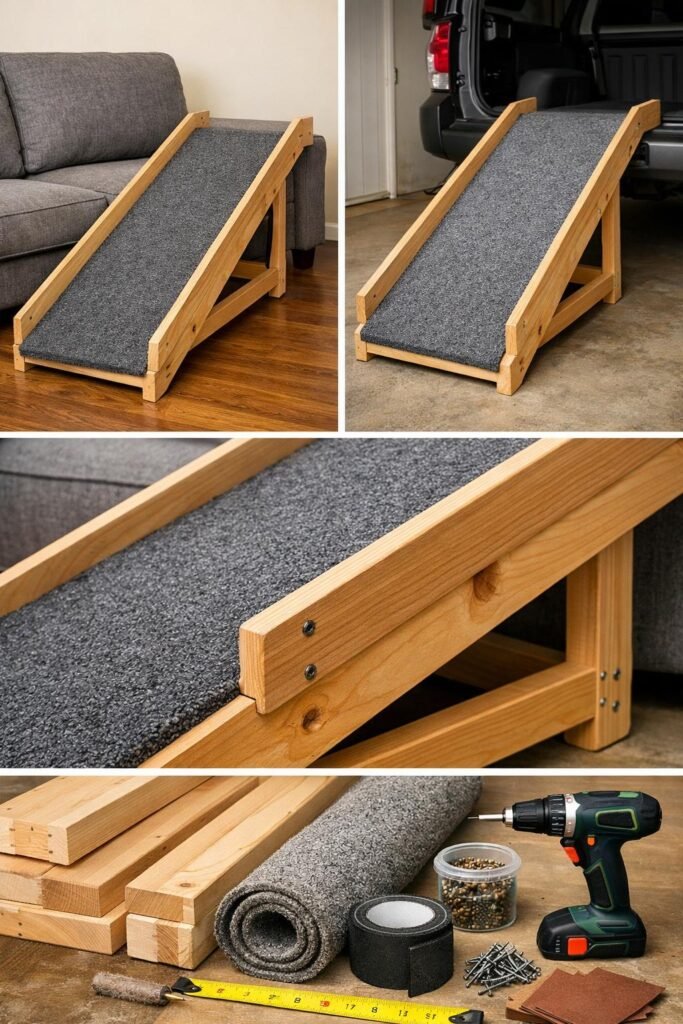
Building your own dog ramp at home using basic materials like plywood and wood boards is a simple weekend project that can save you money while giving your pet safe access to furniture, vehicles, and stairs.
I’ve found that DIY dog ramps can range from simple designs to more elaborate builds, so there’s an option for every skill level and budget.
The best part about making your own ramp is that you can customize it to fit your dog’s exact needs and your home’s layout. You can adjust the angle for easier climbing, add carpet for better grip, or even build a collapsible version if you’re short on space.
I’ll walk you through everything you need to know to create a sturdy, safe ramp that your furry friend will love.
Key Takeaways
- You can build a functional dog ramp at home using simple materials from hardware stores at a fraction of retail prices.
- Custom ramps can be designed to fit your specific needs whether for beds, cars, or stairs with adjustable angles and surfaces.
- Training your dog to use the ramp and regular maintenance will ensure safe long-term use for pets with mobility challenges.
What Is a DIY Dog RAMP?
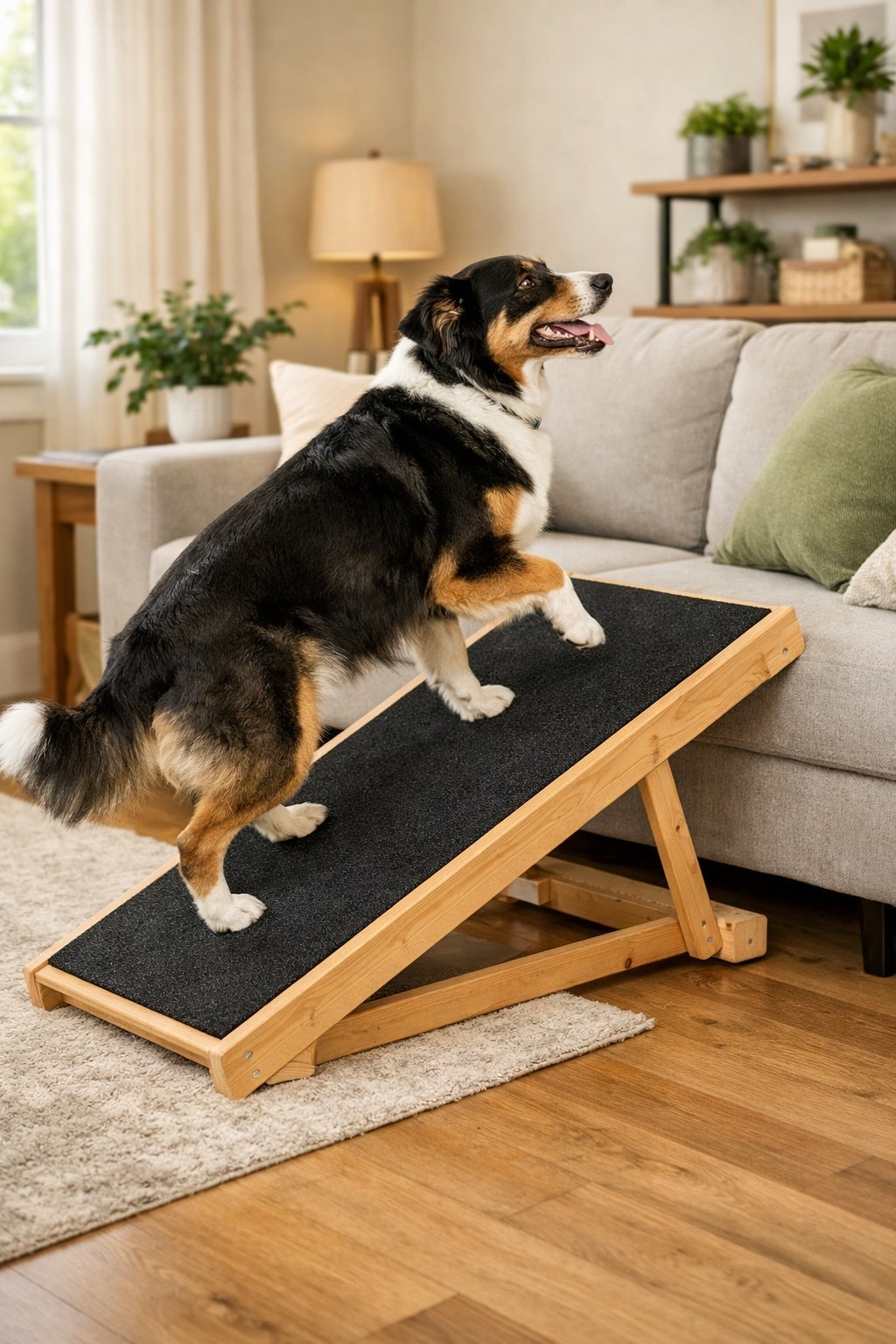
A DIY dog ramp is a homemade inclined platform that helps dogs move between different heights safely and comfortably. Building your own ramp lets you customize the design for your dog’s specific needs while saving money compared to store-bought options.
Definition and Basic Concept
A DIY dog ramp is a sloped walking surface I can build at home using basic materials like plywood and wooden boards. The ramp creates a gradual incline instead of requiring my dog to jump or climb stairs.
Most DIY dog ramps use simple materials like wood, though some designs work with wire shelving and carpet. The key parts include a flat walking surface, support boards underneath for stability, and a non-slip covering on top.
I can make ramps in different sizes depending on where I need them. Short ramps work for getting onto beds or couches.
Longer ramps help with car access or outdoor steps. The slope angle matters for safety.
A gentler slope is easier for dogs to walk on but requires more length. Steeper ramps take up less space but can be harder for dogs with joint problems.
Benefits of DIY Dog RAMPS
Building my own ramp saves money since DIY versions cost under $80 compared to store-bought ramps that often exceed $150. I get a sturdy product without the high retail markup.
Custom sizing is another major advantage. I can tailor the ramp to my dog’s size and the exact measurements I need for my home or vehicle.
Store ramps come in fixed sizes that might not fit my space. Making a ramp myself means I control the materials and quality.
I can choose stronger wood or add extra support if my dog is large or heavy. The building process is straightforward for most skill levels.
Some designs don’t require sawing or drilling, making them accessible even if I’m new to DIY projects.
Common Applications
I can use dog ramps in several places around my home. Bedroom ramps help dogs get on and off beds without jumping, which protects their joints from impact stress.
Car ramps make vehicle entry easier. Dogs can walk into SUVs, trucks, or sedans instead of jumping up or needing me to lift them.
Indoor furniture access is another use. Ramps let dogs reach couches or window seats safely.
This works especially well for small breeds with short legs. Outdoor stairs present challenges for aging dogs, so I can build ramps alongside porch steps or deck access points.
Senior dogs and those with mobility issues benefit most from these assistive ramps. Some people build portable ramps they can move between locations.
Others create permanent installations for frequently used spots.
Planning Your DIY Dog Ramp Project

The right materials and thoughtful design choices will make your dog ramp safe and functional for years to come. I’ll walk you through picking supplies, ensuring stability, and adjusting dimensions to fit your pet’s specific needs.
Selecting the Right Materials
I recommend starting with plywood as your base material because it’s sturdy, affordable, and easy to work with. A ¾-inch thick sheet provides enough strength for most dogs without being too heavy to move around.
For the walking surface, I always add carpet remnants or outdoor turf. These materials give my dog’s paws good traction and prevent slipping.
Some builders use rubber mats or adhesive grip tape as alternatives. The frame needs 2×4 lumber pieces for support underneath.
I space these supports about 12 inches apart to prevent the ramp from bowing under weight. For hardware, I use wood screws that are at least 2 inches long to secure everything firmly.
Weather-resistant stain or paint protects outdoor ramps from moisture damage. I apply two coats and let each dry completely before use.
Design Considerations for Safety
The slope angle is the most critical safety factor I consider. I keep my ramps at a 20 to 30-degree incline, which is gentle enough for dogs with joint problems to climb comfortably.
Side rails prevent falls and give nervous dogs extra confidence. I make mine 3 to 4 inches high using additional pieces of lumber attached along both edges.
These rails are especially important for senior pets or those with mobility issues. I test the ramp’s stability by putting my own weight on it first.
Any wobbling means I need to add more support brackets underneath. The base should sit flat on the ground without rocking.
Non-slip surfaces are non-negotiable. I’ve seen dogs refuse to use ramps that feel slippery under their paws.
Size and Breed Adaptations
I measure the height from the ground to the target surface before cutting any wood. A bed ramp typically needs 16 to 30 inches of rise, while car ramps require different measurements based on vehicle height.
Small breeds under 25 pounds do well with ramps that are 12 inches wide. I build mine 16 to 18 inches wide for medium dogs and expand to 20 inches or more for large breeds like Labs or German Shepherds.
Length depends on the desired angle. I calculate this by multiplying the height by 3 or 4 to get a comfortable slope.
A 20-inch tall bed would need a ramp between 60 and 80 inches long. Weight capacity matters for larger dogs.
I reinforce ramps for dogs over 50 pounds by adding extra support beams and using thicker plywood.
Step-by-Step Guide to Building a Dog Ramp
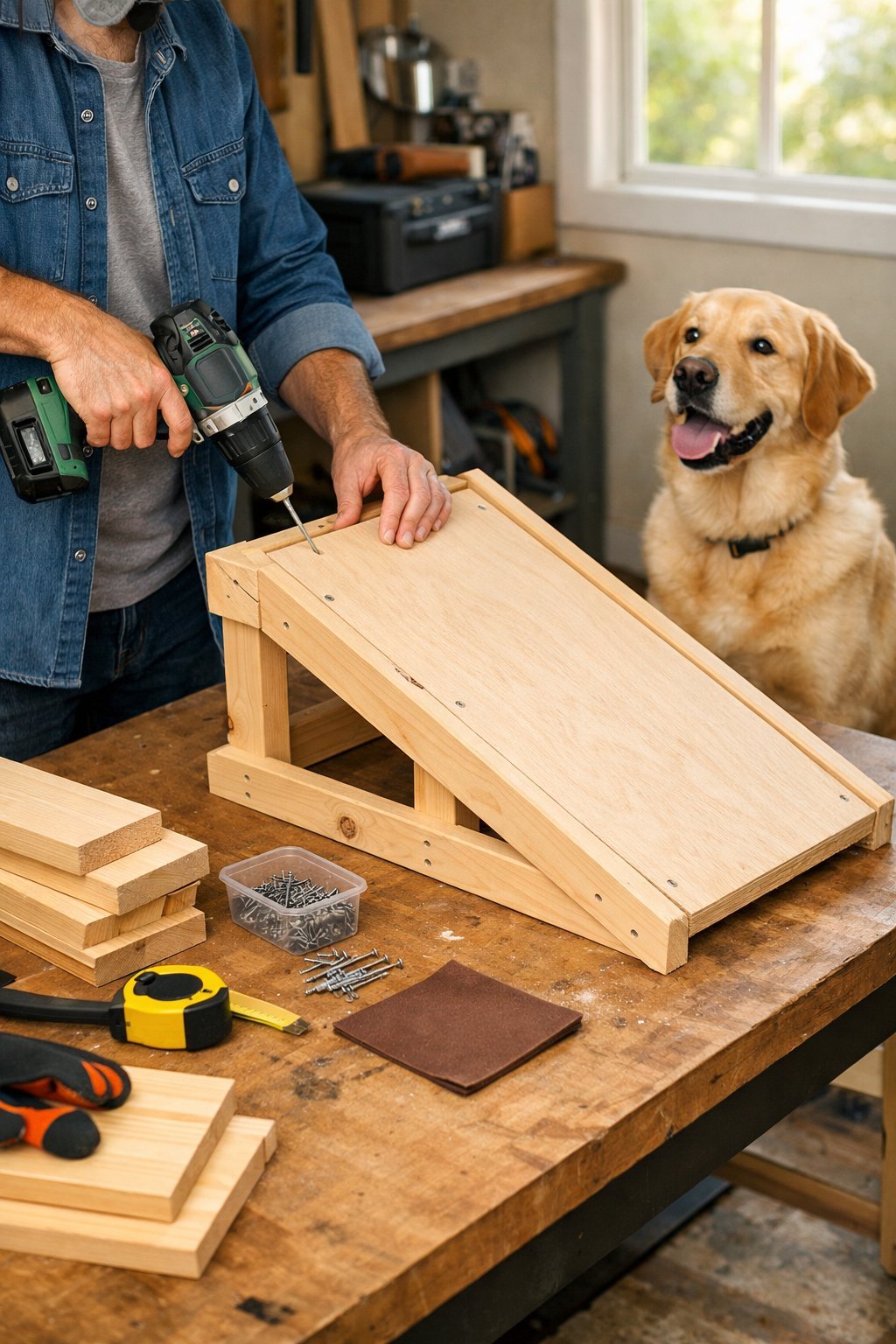
Building a dog ramp requires precise measurements, careful cutting, and proper assembly to create a safe structure for your pet. I’ll walk you through each phase from preparing materials to adding the final touches that make the ramp sturdy and slip-resistant.
Cutting and Shaping Materials
I start by cutting a piece of plywood to my desired ramp length, typically 36 to 48 inches for most furniture heights. The width should be at least 12 inches for small dogs and 16 to 20 inches for larger breeds.
Next, I cut two side rails from 1×4 lumber that match the ramp length. These rails prevent my dog from stepping off the edges.
I use a circular saw or handsaw to make clean, straight cuts. For the support structure, I cut 2×4 lumber pieces to create a frame underneath the plywood.
I measure and mark where each support piece will go, spacing them about 12 inches apart for stability. When building a collapsible dog ramp, I add hinges between sections.
I sand all edges and surfaces with medium-grit sandpaper to remove splinters. Smooth edges protect both me and my dog from injury during use.
Assembly Instructions
I attach the 2×4 support frame to the underside of the plywood using wood screws. I drill pilot holes first to prevent the wood from splitting.
Each screw should be long enough to grip both pieces firmly but not poke through the top surface. I secure the side rails along both edges of the ramp using wood glue and finishing nails or screws.
The rails should sit flush with the ramp surface or slightly higher to create a barrier. For added strength, I attach cross braces between the side rails at the top and bottom of the ramp.
I use a level to ensure the ramp sits evenly when positioned. If I’m making a folding dog ramp, I install heavy-duty hinges at the midpoint.
Securing and Finishing Touches
I apply a pet-safe wood stain or sealant to protect the ramp from moisture and wear. Two coats work best, with drying time between applications.
I avoid toxic finishes that could harm my dog. The most important finishing step is adding traction.
I attach carpet runners, rubber stair treads, or outdoor turf to the ramp surface using heavy-duty adhesive or staples. This prevents my dog from slipping.
I install rubber feet or non-slip pads on the bottom of the ramp. These keep it stable on various floor surfaces.
At the top edge, I add a hook-and-loop fastener or bracket to secure the ramp to furniture or vehicle bumpers when needed.
Training Your Dog to Use the DIY RAMP
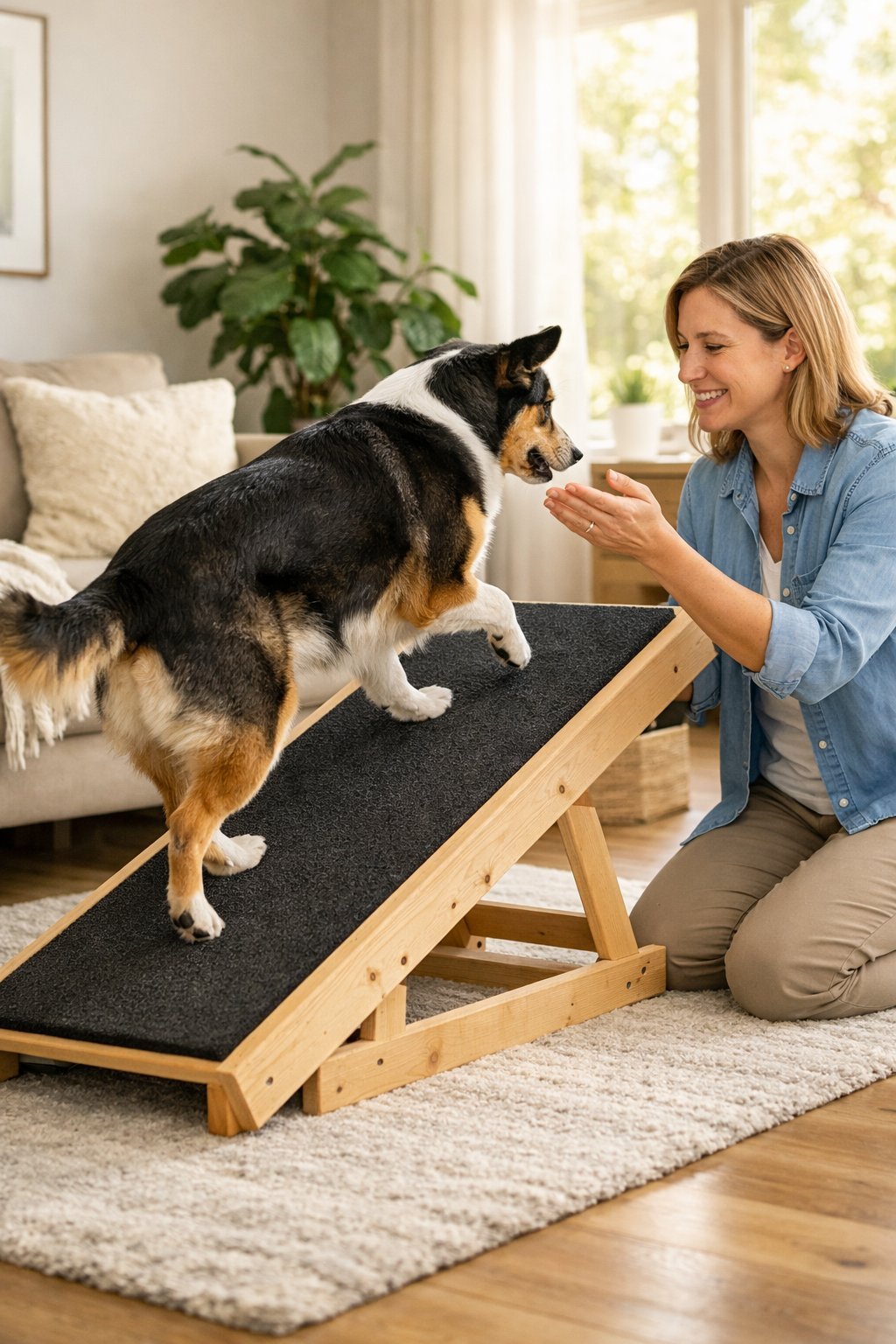
Getting your dog comfortable with a new ramp takes patience and the right approach. Most dogs can learn to use a ramp successfully in about a week with consistent training and encouragement.
Introducing Your Dog to the RAMP
I always start by placing the ramp on the ground flat or at a very slight angle. This lets my dog walk across it without any pressure or height involved.
I let them sniff and explore the ramp at their own pace. Once they seem comfortable walking on the flat ramp, I gradually increase the angle.
I raise it just a few inches at a time over several days. Rushing this step can make dogs nervous about the incline.
I make sure to place treats along the ramp to create a positive association. Some dogs need more time than others, and that’s perfectly normal.
If my dog seems scared, I go back to a lower angle and spend more time at that level.
Key steps for introduction:
- Start with the ramp flat on the ground
- Allow plenty of sniffing and exploration time
- Increase angle slowly over multiple sessions
- Never force your dog onto the ramp
Positive Reinforcement Techniques
I use high-value treats that my dog really loves during ramp training. Small pieces of chicken, cheese, or special training treats work best because they’re motivating without filling up my dog too quickly.
I reward every successful step my dog takes on the ramp. At first, I give treats just for putting one paw on it.
Then I reward for two paws, then walking halfway, and finally for completing the full length. My voice tone matters a lot during training.
I use an excited, happy voice to encourage my dog forward. I also pair verbal praise like “good job” or “yes” with each treat to reinforce the behavior.
I keep training sessions short, around 5-10 minutes at a time. Multiple short sessions throughout the day work better than one long session.
This prevents my dog from getting frustrated or tired.
Ensuring Long-Term Success
I keep using treats randomly even after my dog has mastered the ramp. This keeps them interested and motivated.
Adding carpet samples enhances traction and helps dogs feel more secure on the ramp. I check the carpet regularly to make sure it stays attached and doesn’t become a tripping hazard.
I practice using the ramp in different locations and situations. For example, if I built it for the bed, I also practice at different times of day so my dog can generalize the skill.
Maintenance tips:
- Check ramp stability weekly
- Replace worn carpet or grip material
- Practice ramp use several times per week
- Monitor your dog for any signs of discomfort
I watch my dog’s body language during ramp use. Hesitation, trembling, or refusing to use the ramp might mean they’re in pain or the ramp angle is too steep.
Maintenance, Troubleshooting, and Upgrades

I check my dog ramp regularly to keep it safe and working well. Small fixes now prevent bigger problems later, and simple upgrades can make the ramp even better.
Routine Safety Checks
I inspect my dog ramp before each use to catch potential problems early. I look at all screws and bolts to make sure they’re tight, since vibration from driving can loosen them.
I run my hand along the walking surface to feel for splinters or rough spots that could hurt my dog’s paws. I also check the carpet or traction material to see if it’s wearing thin or coming loose.
If I notice any peeling edges, I secure them right away with adhesive. The hinges need attention too if my ramp folds.
I test the hinges to confirm they open and close smoothly without sticking. If they feel stiff, I apply a small amount of lubricant.
I put weight on the ramp to listen for creaking sounds that might mean weak joints. The plywood deck and rubber traction mat are the heaviest parts, so I pay special attention to how they’re attached.
I check for any warping in the wood, especially if the ramp gets wet often.
Repairing Common Issues
The most common problem I run into is worn traction material. When my dog starts slipping, I replace the carpet or rubber mat right away.
I use outdoor carpet or rubber stair treads because they hold up better than indoor materials. Loose boards happen when wood screws work their way out.
I replace them with longer screws or add wood glue to the joints for extra strength. If a board cracks, I replace the entire piece to maintain safety and durability.
Water damage shows up as dark spots or soft areas in the wood. I sand down the affected area and apply waterproof sealant.
For serious damage, I replace the damaged section completely. If my ramp wobbles, I add corner braces or L-brackets to stabilize the joints.
Metal brackets work better than relying on screws alone for high-stress areas.
Enhancing Your Dog RAMP Design
I added side rails to my ramp after my dog nearly walked off the edge. I cut 1×2 boards and attached them along both sides, raising them about 2-3 inches above the walking surface.
Better grip material makes a big difference. I upgraded from carpet to marine-grade non-slip tape, which stays grippy even when wet.
Some people use rubber mats with texture for older dogs who need extra traction.
I painted my ramp with bright colors so my dog could see it better in low light. A coat of exterior paint also protects the wood from weather damage.
For truck beds, I built a platform in sections that come apart easily. This gives me storage space underneath and makes removal simple when I need the full bed.
I cut the platform into thirds so each piece is light enough to lift alone.
Adding foam padding under the carpet helps cushion my senior dog’s joints. I use thin camping pad foam that doesn’t make the ramp too bouncy or unstable.

