DIY Dog Washing Station Outdoor: Easy Backyard Setup Guide for Happy Pups

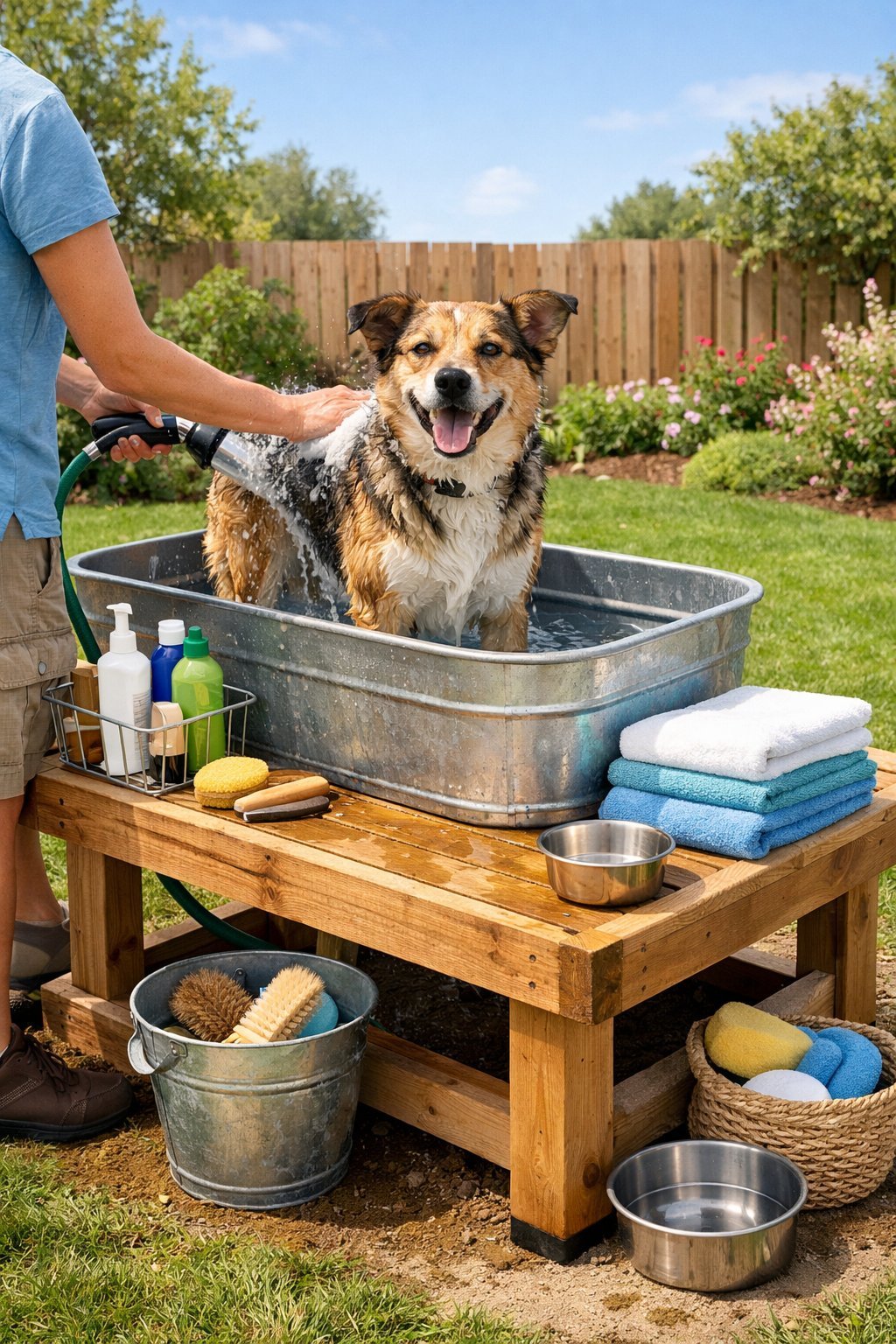
Diy Dog Washing Station Outdoor – Washing your dog outside can turn a messy chore into a much easier task. Instead of flooding your bathroom or wrestling with your pup in a slippery tub, you can set up a dedicated space in your yard.
Building a DIY outdoor dog washing station gives you a permanent spot to bathe your furry friend. This keeps the mess outside where it belongs.
Grooming costs can add up quickly. A homemade dog washing station can save you money over time and make bath time less stressful for both you and your dog.
You can build one using basic materials like pallet wood, PVC pipes, or even an old bathtub. Washing your dog outdoors means faster drying and less cleanup inside your home.
Whether you have a small backyard or a big one, you can design a washing station that fits your space and your dog’s size.
Key Takeaways
- You can build an outdoor dog washing station using affordable materials like pallets, PVC pipes, or repurposed tubs.
- An outdoor wash station keeps the mess outside and makes cleanup easier than bathing your dog indoors.
- Proper planning for location, water access, and drainage will make your DIY dog wash station more functional and long-lasting.
This post contains affiliate links. As an Amazon Associate I earn from qualifying purchases.
Short on time? Buy it ready-made:
- Elevated dog bathing tub – no bending or lifting
- Dog shower sprayer attachment – turns any tub or hose into a wash station
- Non-slip bath mat – keeps paws steady
- High-velocity dog dryer – cuts drying time
- Absorbent dog towel – soaks up water fast
Planning Your Outdoor Dog Washing Station
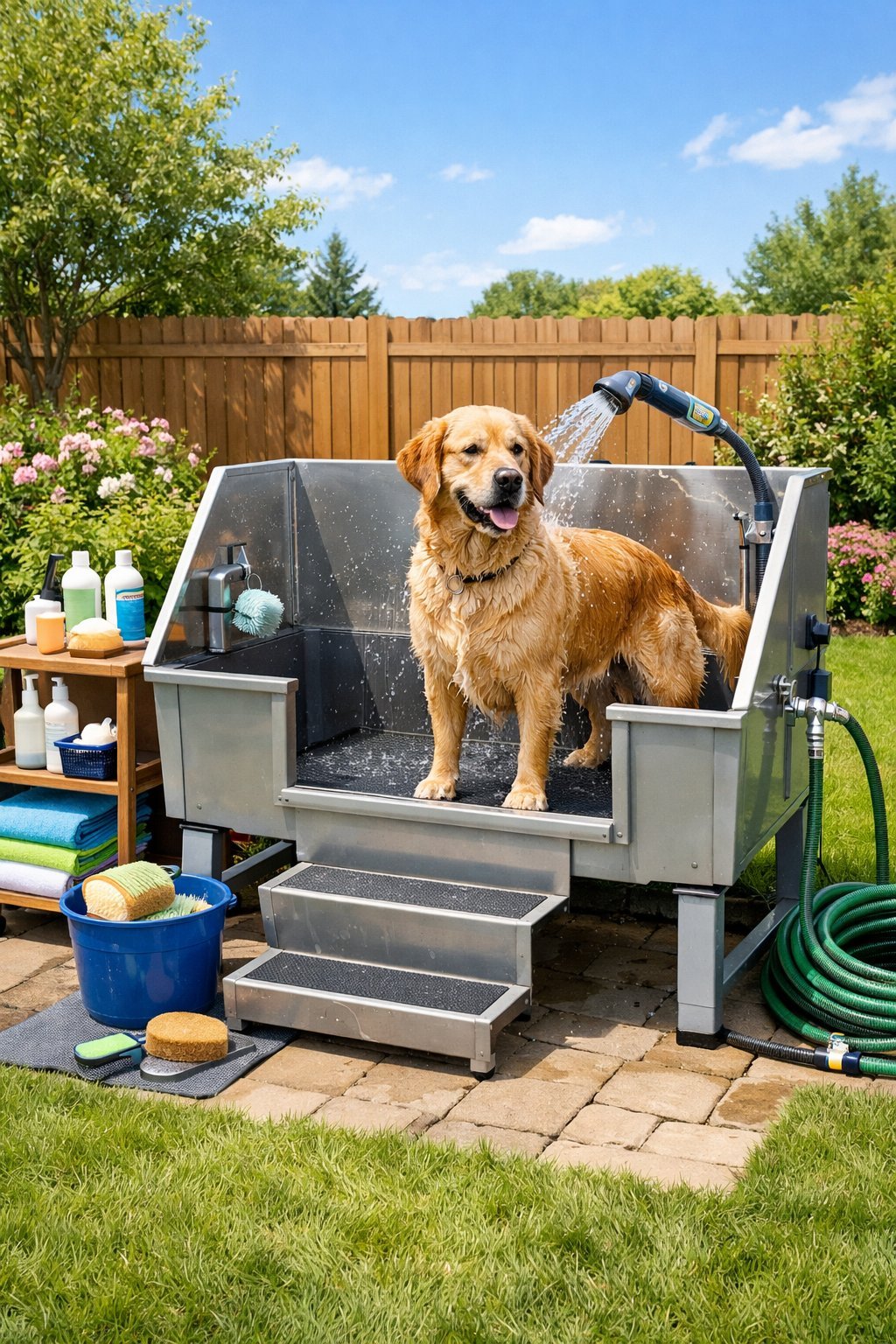
The success of your dog washing station depends on picking the right spot, having good water access, and planning for drainage.
Choosing the Right Location
Find a flat, level area in your yard for your washing station. This keeps things safer for both you and your dog during bath time.
Pick a spot with some shade to keep your dog comfortable. Direct sunlight can make metal fixtures hot and stress out your pup.
Place the station near your house for convenience but far enough away to avoid water damage to your foundation. A distance of about 10 feet usually works well.
You’ll want easy access to water hookups and electrical outlets if you ever want to add heated water. Consider your neighbors too—make sure runoff won’t flow into their yards.
Privacy can also help if your dog gets anxious during baths.
Assessing Water Supply Needs
Connect your washing station to a reliable water source. An outdoor spigot is the most common option and works for most setups.
Test the water pressure at your chosen location. Turn on the nearest outdoor faucet to see if the flow is strong enough for rinsing thick fur.
Standard garden hoses work fine, but hoses rated for drinking water are safest for your dog. Make sure the hose reaches your station with a little extra length.
For winter use, you might want to add hot water capability. This could mean running a hot water line from inside or installing a backyard pet washing station with a tankless water heater.
Considering Drainage Options
Good drainage keeps your yard from turning into a mud pit. Plan where the soapy water will go before building anything.
The simplest option is letting water drain naturally into your lawn if you use pet-safe soap. Grass can handle small amounts of water.
Make sure the ground slopes slightly away from the washing area. For better control, dig a small drainage trench filled with gravel to direct water to a specific spot.
Some people connect their station to their home’s drainage system or install a dry well. This option costs more but is great for large dogs or frequent washing.
Check your local codes first, since some areas have rules about pet washing water drainage.
Essential Tools and Materials
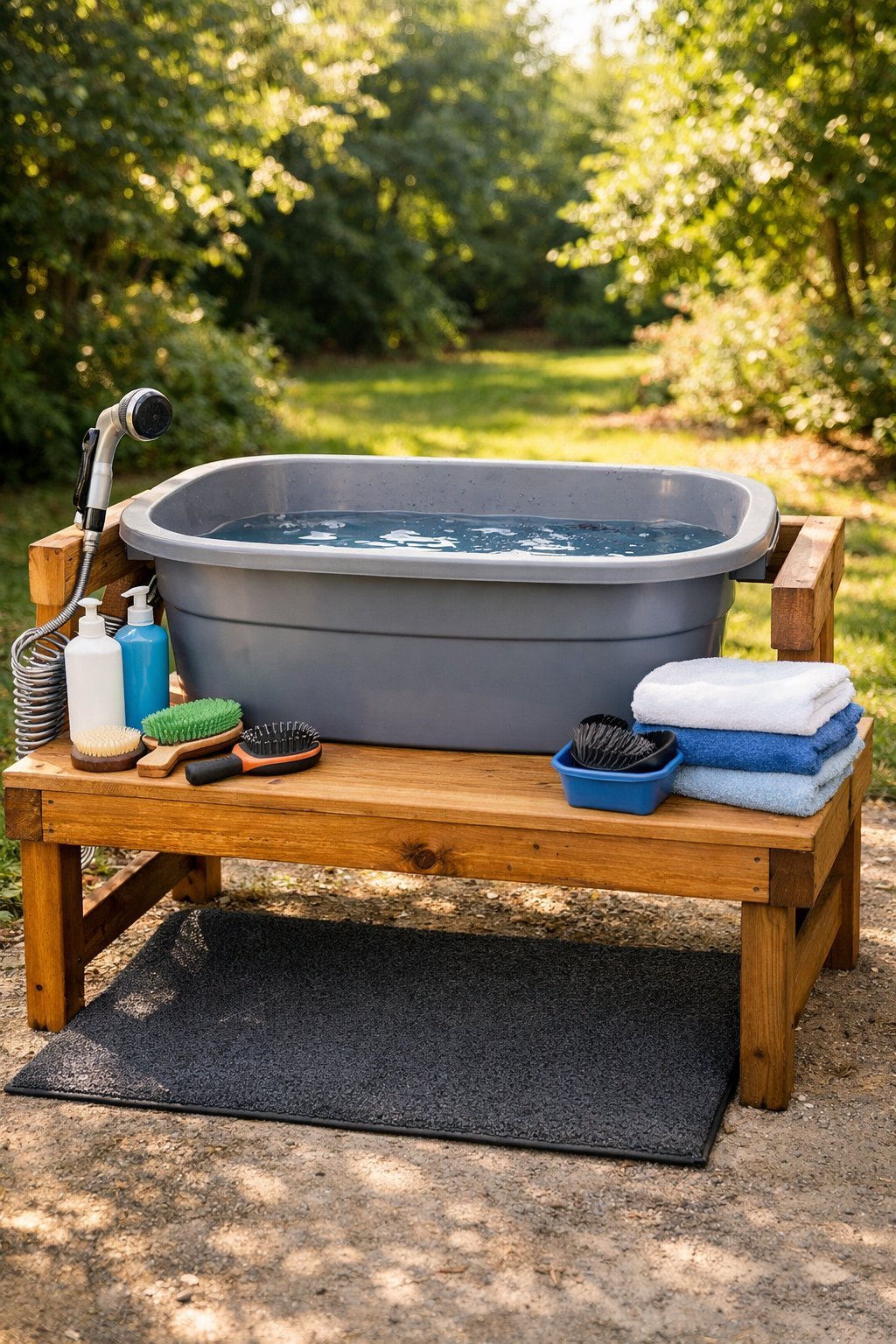
Building an outdoor dog wash station means picking materials that can handle water and daily use. Focus on items that resist weather damage and are easy to clean.
Recommended Cleaning Supplies
Always keep dog-specific shampoo handy since human products can irritate your dog’s skin. A handheld spray nozzle with adjustable pressure settings makes rinsing easier.
Store your supplies in waterproof containers or mounted dispensers near the wash station. My essential cleaning items include:
- Dog shampoo and conditioner
- Brushes and combs for different coat types
- Towels just for dog baths
- Non-slip mat for the washing surface
- Bucket for mixing solutions
A detachable shower head attachment gives better control during the wash. Keep a squeegee nearby to quickly remove standing water from the platform.
Selecting Durable Flooring
For large breed dogs, you’ll need 36 to 48 inches of platform length so they can turn around comfortably. The flooring needs to drain well and provide good traction.
Treated lumber, composite decking, or sealed concrete all make good bases. Pallet wood is sturdy and budget-friendly if properly sealed.
Space slats about half an inch apart so water can drain through. Add rubber mats or textured coating to smooth surfaces for extra grip.
Waterproofing Materials
Seal all wood surfaces with exterior-grade polyurethane or marine varnish to prevent rot and warping. Choosing weather-resistant materials helps your station last longer.
Use silicone caulk to seal joints where water might seep through. Apply at least two coats of waterproof sealant on all wooden parts.
For metal hardware, go with stainless steel or galvanized options to prevent rust. Waterproof any plumbing connections with thread seal tape and check them for leaks regularly.
Step-By-Step Building Guide
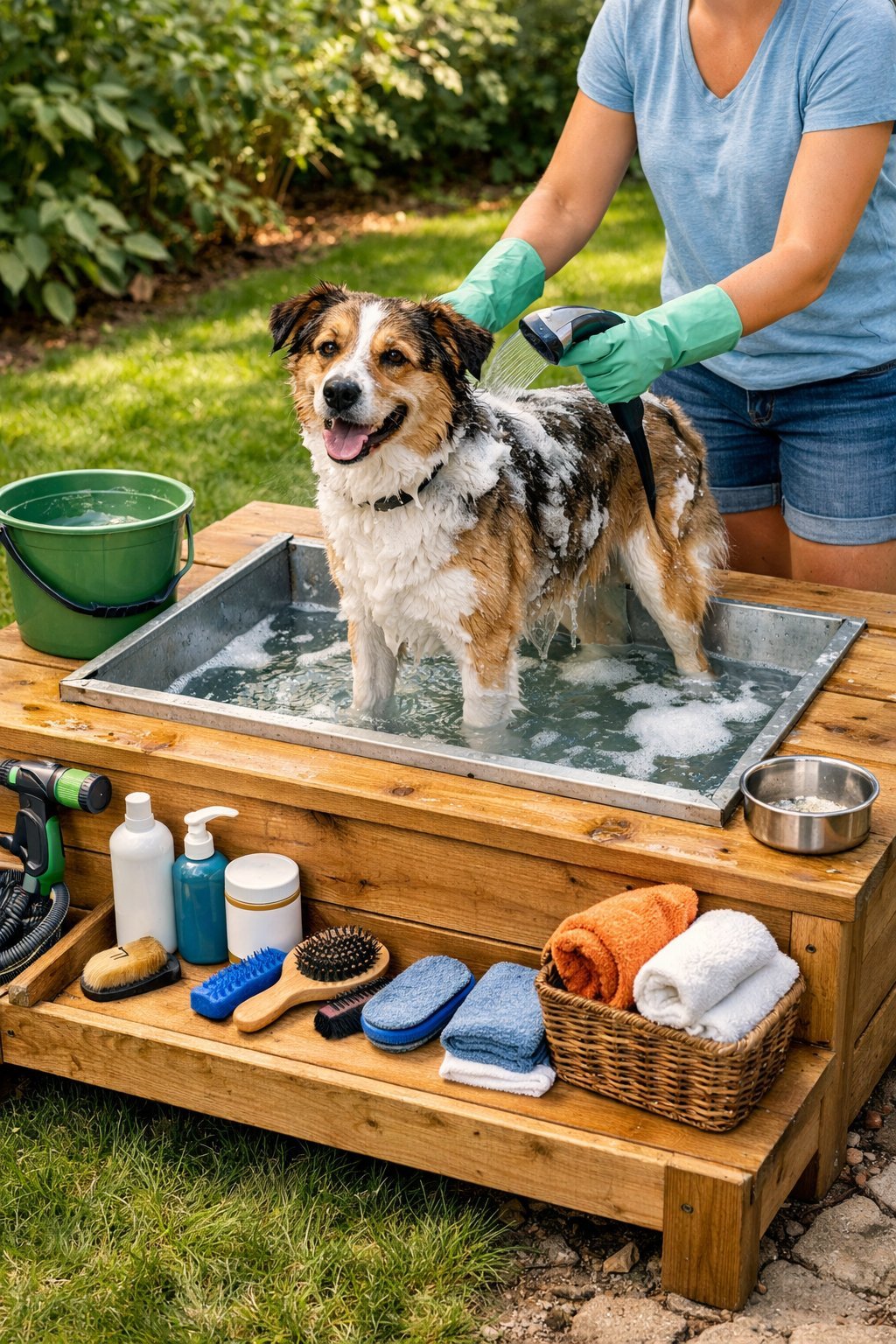
Building your outdoor dog washing station involves four main tasks: creating a stable base, connecting water supply and drainage, adding safety restraints, and setting up rinsing and drying areas.
I’ll walk you through each step so you can make bath time easier.
Assembling the Base
Start with a raised platform about 24 to 36 inches off the ground. This saves your back from bending during washing.
You can build an elevated washing station using pressure-treated lumber. For the surface, use marine-grade plywood or composite decking boards since they don’t rot when wet.
Cut your base to at least 3 feet by 4 feet for medium to large dogs. Build a frame using 2×4 lumber for the legs and support beams.
Space the legs at each corner and add cross braces for stability. Sand all edges smooth so your dog doesn’t get splinters.
Add a non-slip surface on top—rubber mats or outdoor grip tape work great. Make sure the platform slopes a bit so water drains off easily.
Installing Plumbing Fixtures
Connect your washing station to an outdoor spigot using a standard garden hose. Attach a handheld spray nozzle with an on-off switch for better control.
Basic plumbing supplies you’ll need:
- Garden hose (25-50 feet)
- Spray nozzle with multiple settings
- Hose holder or hook
- Y-splitter if you need water for other tasks
For drainage, drill small holes in the platform or leave gaps between boards. Position your station over gravel or dirt that drains well.
Some people add hot water connections for winter. This takes more work but makes cold-weather washing comfortable.
Attaching Secure Tethers
Install at least two tether points on your washing station. These keep your dog in place so you don’t have to hold the leash the whole time.
Mount heavy-duty eye bolts or carabiner clips to the vertical posts of your platform. Place one at your dog’s chest height and another near the back.
Use stainless steel hardware since it won’t rust. Attach a grooming loop or short leash to these anchor points.
Never leave your dog unattended while tethered. The restraints should be snug but comfortable.
For nervous dogs, add a non-slip mat inside the washing area for better footing and security.
Creating Rinsing and Drying Areas
Set up specific zones around your washing station for different tasks. The main platform is for shampooing and rinsing.
Right next to it, place a drying mat on the ground where your dog can shake off. Store your supplies within arm’s reach.
Build a small shelf or use a weatherproof storage box for shampoo, towels, and brushes. Hang towels on hooks attached to the station posts.
For rinsing, use a spray nozzle with a gentle shower setting to remove soap without scaring your dog. Keep a bucket nearby for mixing shampoo or spot cleaning.
If you want, add a small awning or roof over your station for shade or light rain protection. A simple tarp stretched over posts works if you don’t want to build something permanent.
Maintaining and Cleaning Your Washing Station
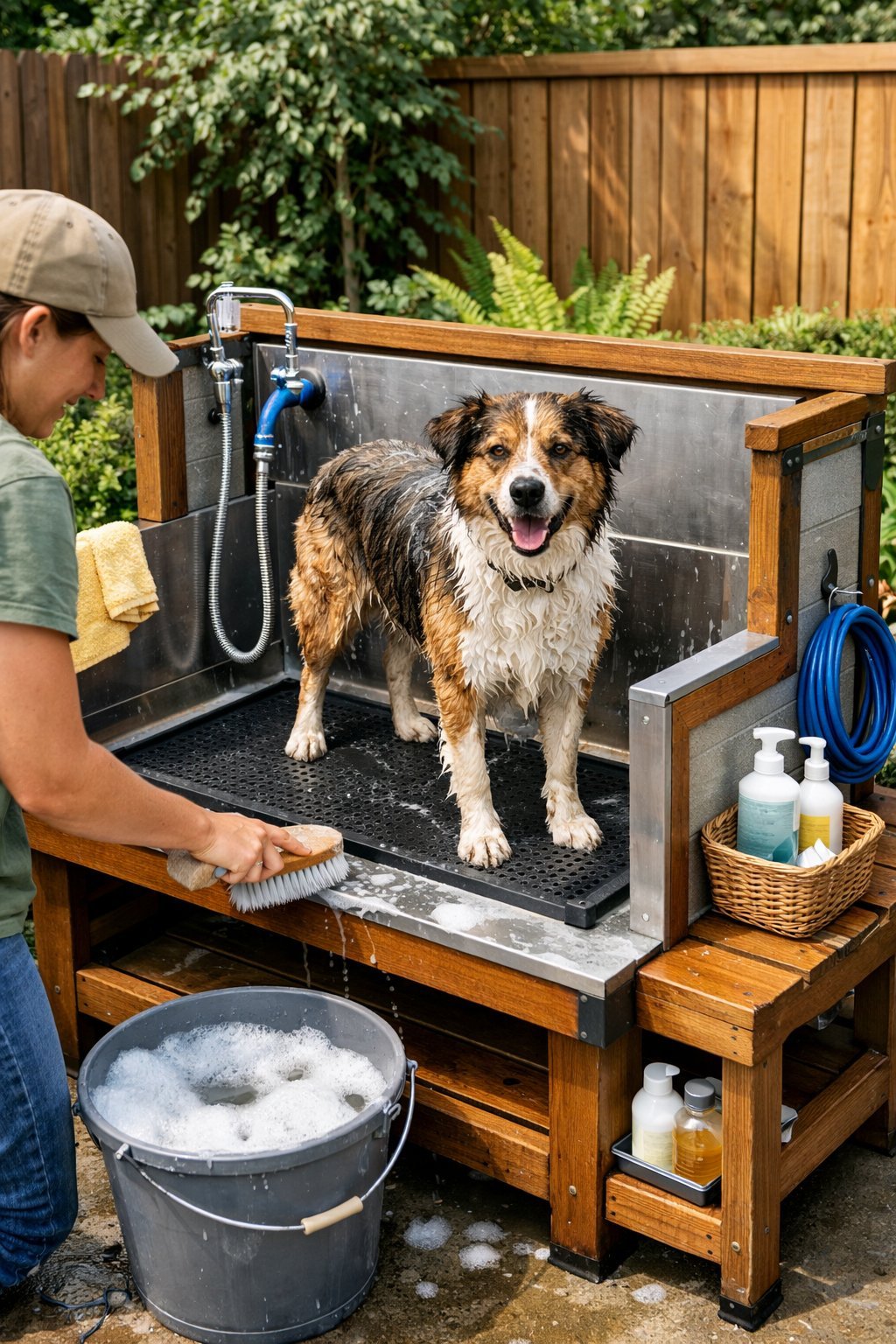
Clean your dog washing station after each use and check it regularly throughout the year. This keeps everything working well and helps avoid bigger problems later.
Routine Cleaning Practices
Rinse down the whole washing station right after bathing your dog. This removes loose fur, soap, and dirt before they build up or clog the drain.
Use a spray nozzle to wash away debris from all surfaces. Wipe down everything with a pet-safe cleaner or a mix of water and white vinegar.
Pay extra attention to corners and edges where grime collects. For tough soap buildup, scrub gently with a soft brush.
Check for clogged drains and remove any hair or debris from the drain cover after every bath. Once a week, pour hot water down the drain to help break down any soap or oil buildup.
Clean your hose and spray nozzle regularly. Disconnect them and rinse out any dirt or minerals trapped inside.
Seasonal Maintenance Tips
Before winter arrives, I drain all water from my outdoor station’s pipes and hoses. Water left inside can freeze and crack the plumbing.
I disconnect hoses and store them indoors until spring.
I inspect all weather-resistant materials for signs of wear or damage each season. Wood surfaces need fresh sealant every year to prevent rot.
Metal parts might need rust treatment or a new coat of protective paint.
In spring, I do a deep clean of the entire station. I check all connections, tighten loose bolts, and replace any worn washers or gaskets.
I turn the water back on slowly and watch for leaks at every connection point.
During summer, I clean more frequently because I use the station more often. I also check that the area around my station drains properly after heavy rain.
Troubleshooting Common Issues
When water drains slowly, I remove the drain cover and pull out any trapped hair with gloves or a drain snake. If that doesn’t work, I use a natural drain cleaner made from baking soda and vinegar.
Low water pressure usually means a clogged aerator or mineral buildup in the hose. I unscrew the spray nozzle and soak it in vinegar for 30 minutes to dissolve deposits.
Leaky connections need attention right away to prevent water waste and damage. I tighten connections first, but if that doesn’t work, I replace the washer or gasket inside.
Most hardware stores sell these parts for a few dollars.
If mold or mildew appears on surfaces, I clean it immediately with a solution of one part bleach to ten parts water. I make sure the area dries completely and consider adding better drainage or ventilation to prevent it from coming back.
Safety and Comfort Tips for Dogs
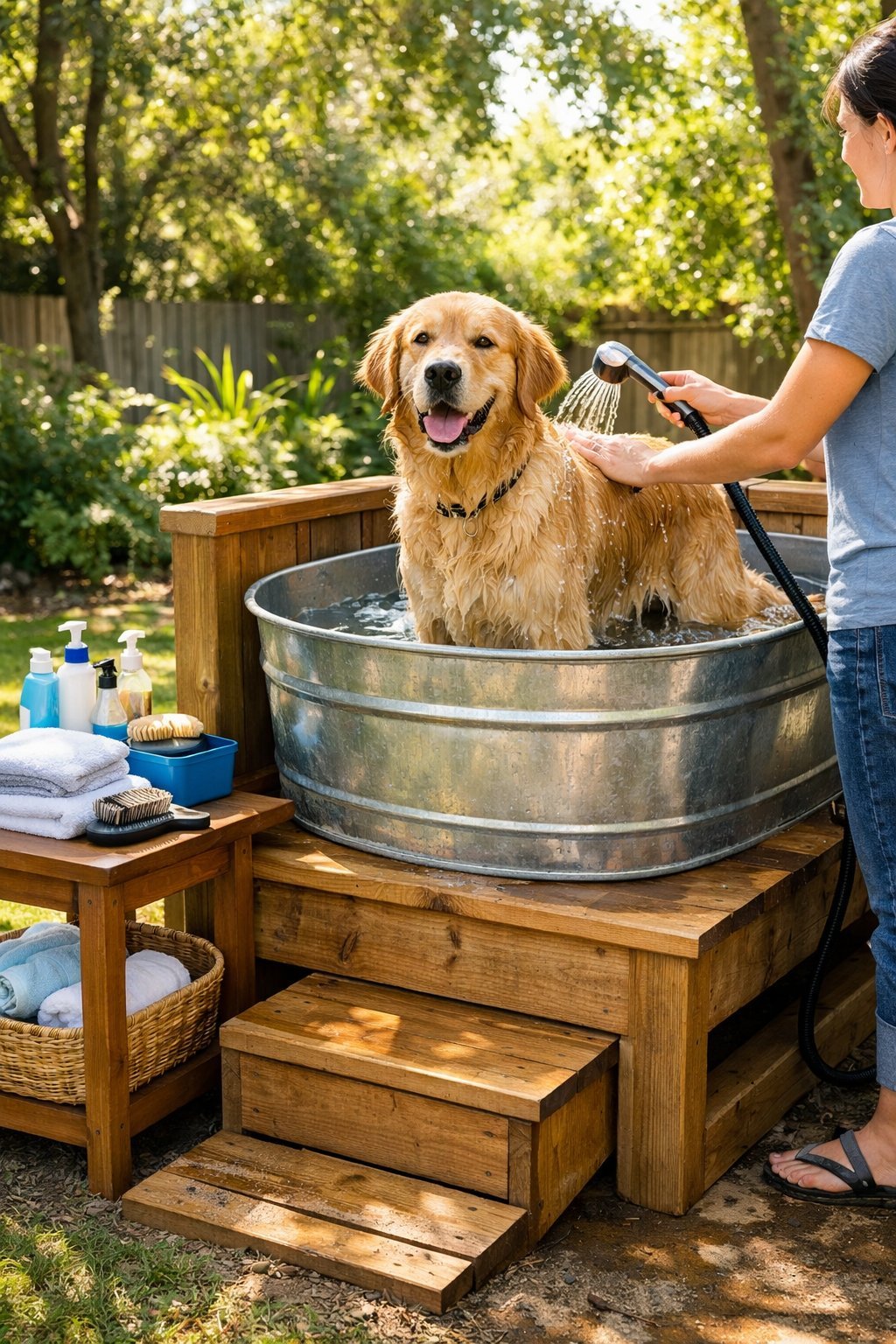
Making bath time safe and pleasant for your dog means paying attention to traction, water temperature, and handling methods. These elements help reduce stress and prevent accidents during washing.
Non-Slip Surfaces
I always recommend adding a non-slip surface to the bottom of your washing station. Dogs can panic when their paws slip on wet surfaces, which makes the whole experience stressful.
Rubber mats are my go-to solution because they provide great grip and are easy to clean. You can find them at most pet stores or home improvement centers.
I cut mine to fit the exact dimensions of my wash station floor. Another option I’ve used is adhesive non-slip strips or textured decking material.
These work well on permanent outdoor structures where you want a built-in solution. The key is making sure the material can handle water exposure and doesn’t trap dirt or bacteria.
I check my non-slip surfaces regularly for wear and tear. A mat that’s starting to deteriorate should be replaced right away.
Temperature Control
Water temperature makes a big difference in how my dog reacts to bath time. I test the water on my wrist before spraying my dog, just like I would for a baby’s bath.
Lukewarm water is ideal for most situations. Water that’s too cold can cause shivering and discomfort, while hot water can burn sensitive skin or cause overheating.
I aim for water that feels slightly warm to the touch but not hot. During summer months, I use cooler water since outdoor temperatures are already high.
In cooler weather, I make sure the water is warm enough to keep my dog comfortable throughout the bath. I also pay attention to air temperature.
Bathing a dog outside when it’s below 50 degrees Fahrenheit can lead to dangerous chilling, especially for smaller breeds or dogs with thin coats.
Gentle Grooming Techniques
I start every bath by speaking calmly to my dog and moving slowly. Rushing can frighten dogs and create negative associations with bath time.
When applying water, I begin at the legs and work my way up. This helps avoid startling my dog with spray on the face or head.
I use a handheld sprayer on low pressure instead of a strong jet of water. For shampooing, I choose non-toxic, biodegradable products that are gentle on the skin and safe for the environment.
I work the shampoo in with gentle circular motions and steer clear of the eyes, ears, and nose. I keep one hand on my dog at all times to reassure them and prevent sudden jumps.
If my dog gets stressed, like panting a lot or trying to escape, I take a break. Treats and praise help make the experience more positive before we continue.