How to Make Dog Treats: A Beginner’s Guide to Homemade Goodies for Your Pup

How to Make Dog Treats – Making dog treats at home is easier than you might think. You don’t need fancy equipment or hard-to-find ingredients to create healthy snacks your dog will love.
With just a few basic kitchen tools, simple ingredients like peanut butter and oats, and straightforward baking steps, you can make homemade dog treats in under an hour.
I’ve found that making homemade dog treats gives me complete control over what goes into my dog’s snacks. Store-bought treats often contain preservatives and fillers that I can’t even pronounce.
When I bake treats myself, I know exactly what my pup is eating. The best part is that you probably already have most of what you need in your kitchen.
Basic pantry staples work perfectly for beginner-friendly dog treat recipes. Whether you want crunchy biscuits or soft training treats, I’ll walk you through the tools, ingredients, and techniques that make baking for your dog simple and fun.
Key Takeaways
- You only need basic kitchen tools and common pantry ingredients to start making dog treats at home.
- Simple recipes using peanut butter, pumpkin, and oats can be baked in less than an hour.
- Proper storage keeps homemade treats fresh for weeks in the fridge or months in the freezer.
This post contains affiliate links. As an Amazon Associate I earn from qualifying purchases.
Helpful tools for homemade dog treats:
Dog bone cookie cutters, Silicone dog treat molds, Silicone baking mat, Xylitol-free peanut butter for dogs, Oat flour, Airtight treat jar.
Essential Tools for Making Dog Treats
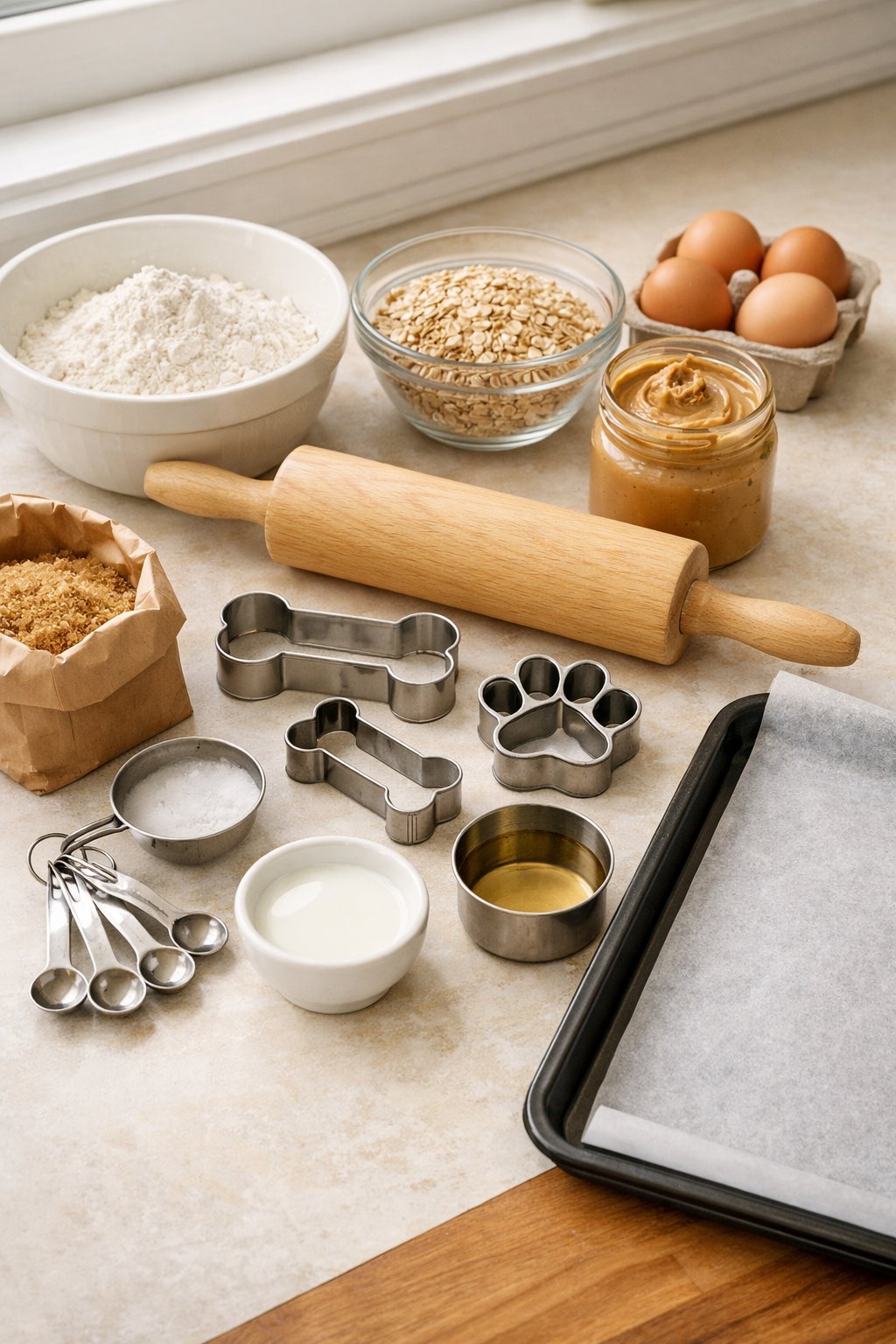
You don’t need a fancy kitchen to start making dog treats at home. A few basic baking tools and proper storage containers will set you up for success.
Must-Have Baking Equipment
I always start with the basics when I make homemade dog treats. A good mixing bowl is essential for combining ingredients without making a mess.
I prefer stainless steel or glass bowls because they’re easy to clean and don’t hold odors. You’ll need measuring cups and spoons to get the right ingredient ratios.
Baking is all about precision, so I keep both dry and liquid measuring cups on hand. A baking sheet or cookie tray is where the magic happens, and I line mine with parchment paper to prevent sticking and make cleanup easier.
A rolling pin helps flatten dough to the right thickness, usually about a quarter inch. Cookie cutters in fun shapes make the treats more appealing, though a simple knife works too.
I also keep a silicone spatula nearby for scraping bowls and mixing sticky ingredients. An oven thermometer ensures your treats bake at the correct temperature, which is important for food safety.
Safe Storage Containers
Proper storage keeps your homemade treats fresh and safe for your dog to eat. I use airtight containers made from glass or food-grade plastic to store finished treats.
These containers prevent moisture from getting in, which can cause mold. Mason jars work great for smaller batches and let me see what’s inside.
For larger quantities, I prefer plastic containers with tight-fitting lids that seal completely. I always label my containers with the date I made the treats.
Most homemade dog treats last about one week at room temperature or two weeks in the refrigerator. For longer storage, I freeze treats in freezer-safe bags or containers for up to three months.
Never store treats while they’re still warm, as condensation creates moisture that leads to spoilage.
Optional Specialty Tools
While not required, certain tools make the process easier and more fun. A food processor quickly grinds ingredients like oats into flour or purees fruits and vegetables.
Silicone baking mats are reusable alternatives to parchment paper that never stick. Cookie scoops create uniform treat sizes, which helps with even baking.
I like using a pastry brush to apply egg wash for a shiny finish on baked treats. A dehydrator is perfect if you want to make jerky-style treats or preserve ingredients without baking.
Bone-shaped or paw-shaped silicone molds let you create treats without rolling and cutting dough.
Best Ingredients for Healthy Dog Treats
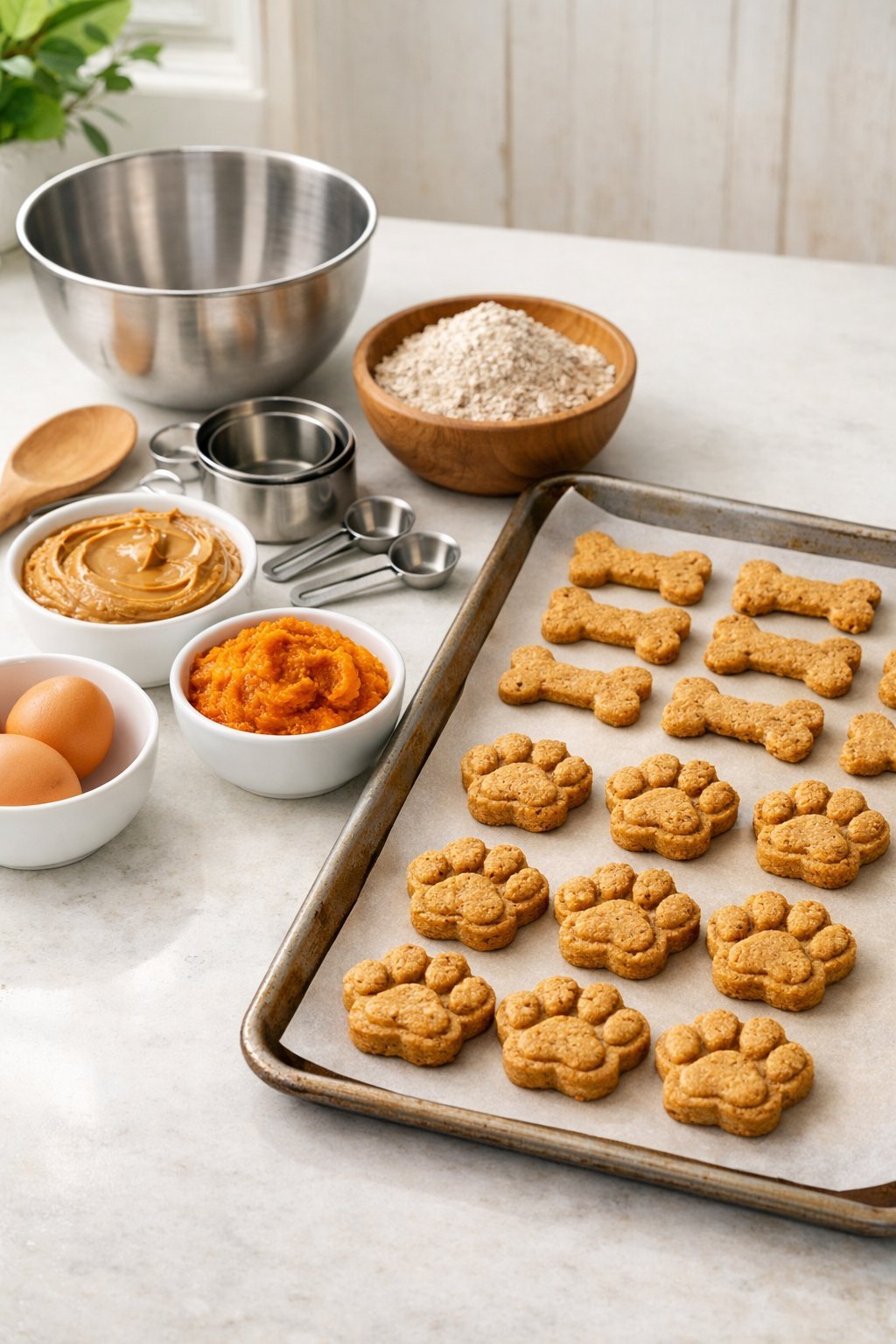
Choosing the right ingredients makes a big difference in your dog’s health and how much they enjoy the treats. I focus on safe flours, nutritious add-ins, and avoiding anything that could harm my dog.
Dog-Safe Flours and Bases
I use whole wheat flour as my go-to base because it’s affordable and works well in most recipes. It has fiber and nutrients that benefit my dog’s digestion.
Oat flour is another excellent choice. I make it by grinding plain oats in my food processor.
It’s gentle on sensitive stomachs and naturally gluten-free. For dogs with grain allergies, I turn to alternative flours like coconut or chickpea flour.
These options work differently than wheat flour, so I adjust the liquid amounts in my recipes. Rice flour creates lighter, crunchier treats.
I mix it with other flours for better texture and nutrition.
Wholesome Add-Ins and Flavors
Peanut butter tops my list of favorite add-ins. I always check the label to make sure it doesn’t contain xylitol, which is toxic to dogs.
Natural peanut butter with just peanuts works best. Pumpkin puree adds moisture and fiber.
I buy plain canned pumpkin, not pumpkin pie filling. My dogs love the taste, and it supports healthy digestion.
Eggs bind ingredients together and add protein. I use them in almost every batch I make.
Sweet potatoes, carrots, and apples provide vitamins and natural sweetness. I cook and mash sweet potatoes before adding them to my dough.
Bananas work well in soft treats. They add natural sweetness without any added sugar.
Avoiding Harmful Ingredients
I never use chocolate, grapes, raisins, or onions in dog treats. These foods are toxic to dogs and can cause serious health problems.
Xylitol is a sweetener found in some peanut butters and baked goods. It’s extremely dangerous for dogs, so I read every label carefully.
I avoid garlic and macadamia nuts completely. Even small amounts can harm my dog.
Salt and sugar aren’t necessary in dog treats. I leave them out or use very small amounts.
I skip artificial colors, flavors, and preservatives. My dogs don’t care what color their treats are, and natural ingredients keep them healthier.
Simple Step-by-Step Baking Instructions
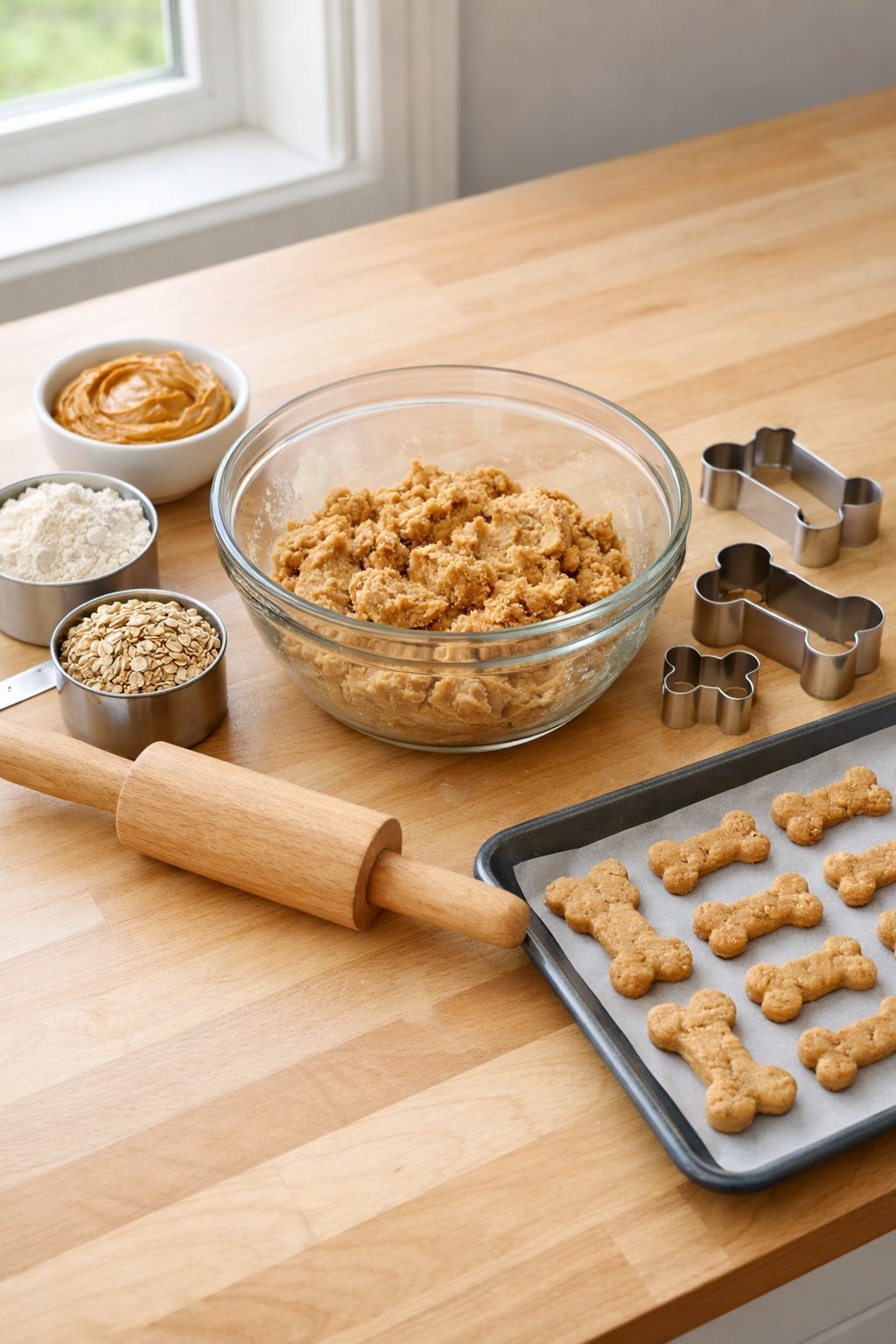
I’ll walk you through the basic process that works for most dog treat recipes, from setting up your kitchen to pulling finished treats from the oven. These steps apply whether you’re making crunchy biscuits or soft training treats.
Preparing Your Workspace
I always start by cleaning my countertop and gathering everything I need before mixing anything. This saves time and prevents mistakes.
First, I preheat my oven to the temperature my recipe calls for, usually between 300°F and 350°F. While the oven heats up, I lay out my tools: mixing bowls, measuring cups, spoons, a rolling pin, and cookie cutters if I’m using them.
I line my baking sheets with parchment paper or silicone mats to prevent sticking. Regular greasing works too, but parchment makes cleanup much easier.
I measure out all my ingredients and set them within reach. This includes checking that my peanut butter doesn’t contain xylitol, which is toxic to dogs.
Having everything ready means I can work quickly once I start mixing.
Mixing and Shaping the Dough
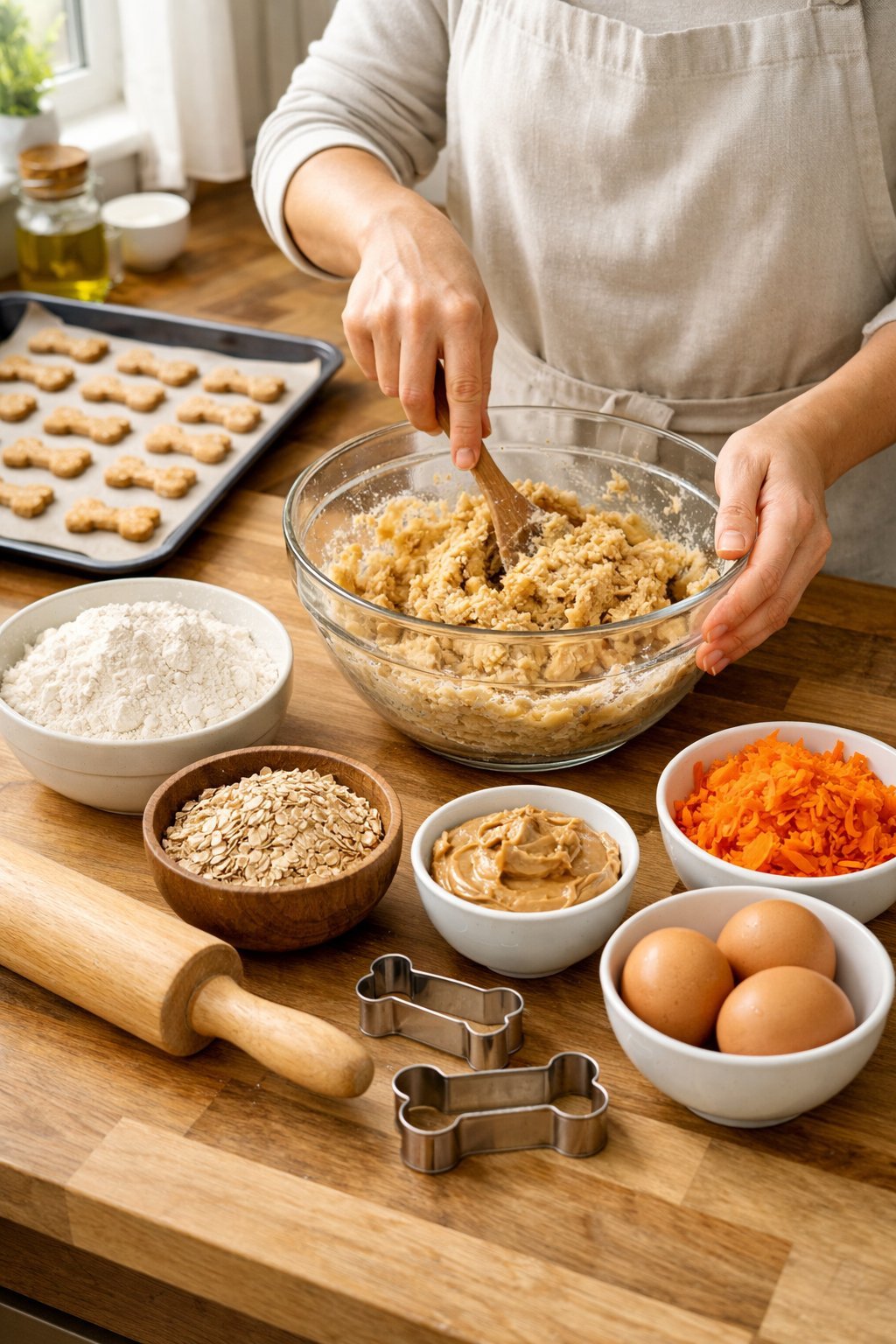
I combine my dry ingredients first in a large bowl, then add wet ingredients gradually. Most basic dog treat recipes use flour, an egg, and a binding ingredient like pumpkin or peanut butter.
I mix everything with a spoon or my hands until a dough forms. The dough should hold together without being sticky.
If it’s too dry, I add water one tablespoon at a time. If it’s too sticky, I add a bit more flour.
For rolled treats, I dust my counter with flour and roll the dough to about ¼ inch thick. I use cookie cutters to make fun shapes, or simply cut squares with a knife or pizza cutter.
For drop treats, I scoop small portions and roll them into balls, then flatten them slightly on the baking sheet. I space them about an inch apart since they don’t spread much during baking.
Baking and Cooling Tips
I place my treats in the preheated oven and set a timer for the minimum baking time. Most treats take 15-25 minutes, depending on thickness.
I check treats at the halfway point and rotate the baking sheet if my oven heats unevenly. The treats are done when they’re firm to the touch and lightly browned on the edges.
Softer treats need less time, while crunchy biscuits benefit from extra baking. For extra-crunchy treats, I turn off the oven and leave them inside for another 30 minutes to dry out.
This method works well for hard training treats. I let treats cool completely on the baking sheet or a wire rack before storing them.
Warm treats can create condensation in containers, leading to mold. Complete cooling usually takes 30-60 minutes.
Basic Peanut Butter Dog Biscuits
🍳 Cook: 20 min
⏰ Total: 30 min
🦴 Yield: 30-40 treats
📊 Difficulty: Beginner
🥘 Ingredients:
- 2 cups whole wheat flour
- 1 cup rolled oats
- 1/2 cup natural peanut butter (xylitol-free)
- 1 egg
- 1/2 cup water
👩🍳 Instructions:
- Preheat oven to 350°F and line baking sheets with parchment paper
- Mix flour and oats in a large bowl
- Add peanut butter, egg, and water, then mix until dough forms
- Roll dough to ¼ inch thickness on floured surface
- Cut into shapes and place on prepared baking sheets
- Bake for 18-22 minutes until edges are golden brown
- Cool completely on wire rack before storing
📦 Storage Instructions:
Store in an airtight container at room temperature for up to 2 weeks, or refrigerate for up to 1 month. Freeze for up to 3 months in freezer-safe bags.
💪 Nutritional Benefits:
Whole wheat provides fiber and B vitamins. Oats support digestive health. Peanut butter offers protein and healthy fats that dogs love. Eggs add high-quality protein for muscle maintenance.
⚠️ Special Dietary Notes:
Creative Dog Treat Recipes for Beginners
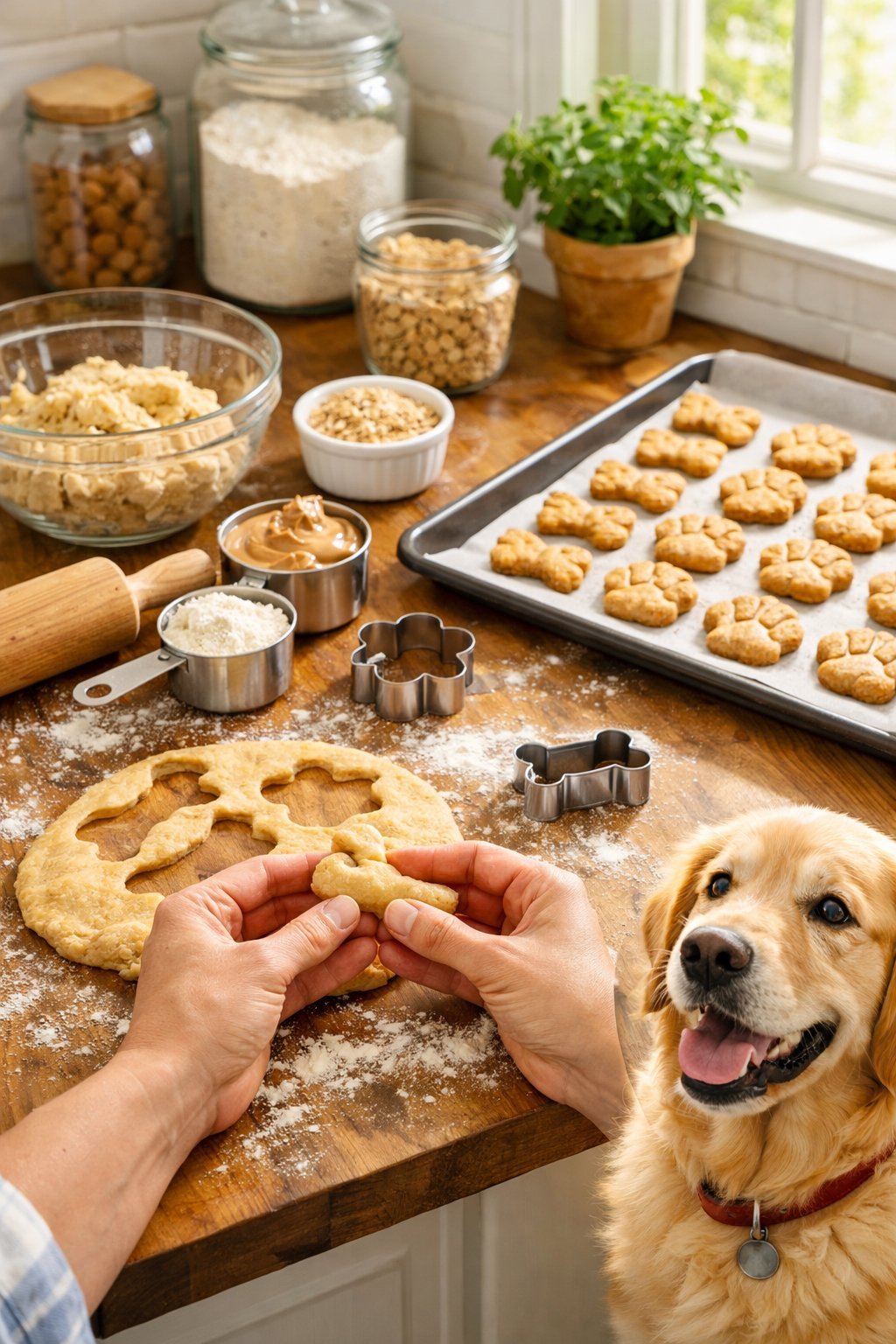
Starting with simple recipes helps you build confidence in the kitchen while creating treats your dog will love. These three recipes use common ingredients and require basic tools, making them perfect for your first baking session.
Classic Peanut Butter Biscuits
Peanut butter biscuits are one of the easiest dog treat recipes for beginners because they need just a few ingredients and take minimal time to prepare. Most people already have everything needed in their pantry.
Classic Peanut Butter Biscuits
🍳 Cook: 20 min
⏰ Total: 30 min
🦴 Yield: 24 treats
📊 Difficulty: Easy
🥘 Ingredients:
- 2 cups whole wheat flour
- 1/2 cup unsalted peanut butter (xylitol-free)
- 2 eggs
- 1/2 cup water
👩🍳 Instructions:
- Preheat your oven to 350°F and line a baking sheet with parchment paper.
- Mix the peanut butter and eggs in a large bowl until smooth.
- Add the flour gradually while stirring, then add water until a dough forms.
- Roll the dough to 1/4 inch thickness on a floured surface.
- Cut into shapes using cookie cutters and place on the baking sheet.
- Bake for 18-20 minutes until the edges turn golden brown.
- Let the treats cool completely on a wire rack before serving.
📦 Storage Instructions:
Store in an airtight container at room temperature for up to 2 weeks. For longer storage, freeze in a sealed bag for up to 3 months.
💪 Nutritional Benefits:
Peanut butter provides protein and healthy fats that support your dog’s coat and energy levels. Whole wheat flour adds fiber for digestive health. Eggs contribute essential amino acids for muscle development.
⚠️ Special Dietary Notes:
Always use xylitol-free peanut butter as xylitol is toxic to dogs. Not suitable for dogs with peanut or wheat allergies. You can substitute oat flour for wheat flour if needed.
The dough should feel firm but not crumbly. If it’s too dry, add water one tablespoon at a time.
Pumpkin and Oat Bites
Pumpkin treats are gentle on sensitive stomachs and many dogs find them tasty. I recommend using canned pumpkin puree rather than pumpkin pie filling, which contains added sugars and spices that aren’t good for dogs.
Pumpkin and Oat Bites
🥘 Ingredients:
- 1 cup canned pumpkin puree (not pie filling)
- 2 1/2 cups oat flour
- 1 large egg
- 2 tablespoons coconut oil, melted
- 1/4 teaspoon cinnamon (optional)
👩🍳 Instructions:
- Preheat your oven to 350°F and line a baking sheet with parchment paper.
- In a large bowl, mix the pumpkin puree, egg, and melted coconut oil until well combined.
- Gradually add the oat flour and cinnamon, stirring until a firm dough forms.
- Roll out the dough to 1/4 inch thickness on a floured surface and cut into desired shapes.
- Place treats on the prepared baking sheet, spacing them about 1 inch apart.
- Bake for 25 minutes until firm and lightly golden around the edges.
- Allow to cool completely on a wire rack before serving.
📦 Storage Instructions:
Store in an airtight container at room temperature for up to 1 week, or refrigerate for up to 3 weeks. These treats can be frozen for up to 4 months for longer storage.
💪 Nutritional Benefits:
Pumpkin is rich in fiber and supports digestive health, while also providing vitamins A, C, and E. Oats offer beta-glucans for heart health and coconut oil provides medium-chain fatty acids that support skin and coat health.
⚠️ Special Dietary Notes:
Grain-free and wheat-free option. Ensure you use pure pumpkin puree, not pumpkin pie filling which contains harmful spices and sugars. Suitable for dogs with wheat sensitivities. Appropriate for all life stages when portioned correctly.
Storage, Shelf Life, and Serving Suggestions
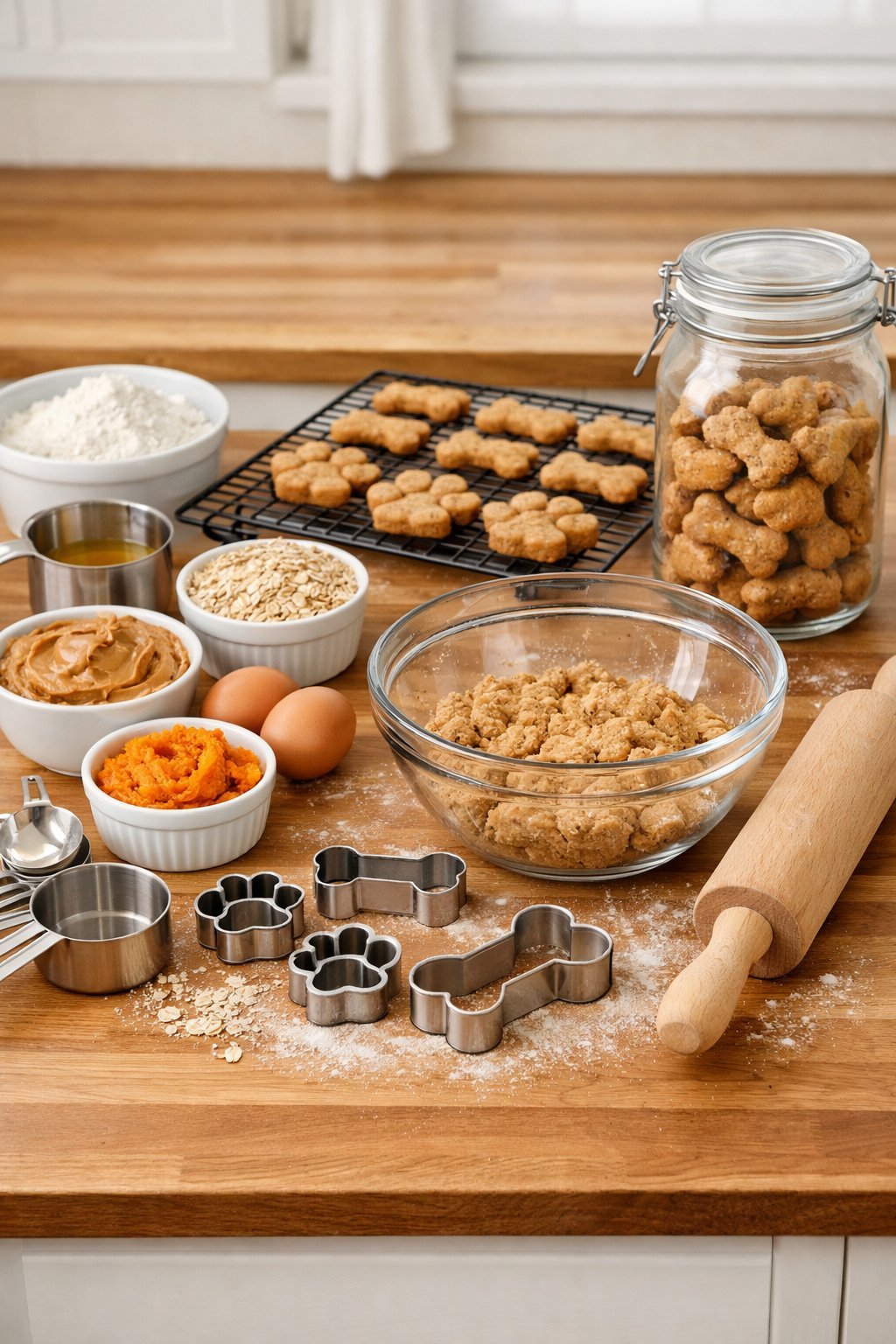
Proper storage keeps your homemade dog treats fresh and safe. Understanding shelf life helps you know when to toss old batches.
Giving the right portion sizes based on your dog’s breed prevents overfeeding. I always store my completely cooled treats in airtight containers to keep moisture out.
The ingredients you use and how you store treats directly affect how long they stay fresh. For dry, crunchy treats made with flour and no meat, I keep them at room temperature in a sealed jar or container.
These last about 2-3 weeks on the counter. Treats with meat, eggs, peanut butter, or other moist ingredients need refrigeration and typically last 1-2 weeks in the fridge.
I freeze treats in batches when I make large amounts. I put them in freezer bags, squeeze out the air, and label them with the date.
Frozen treats stay good for 2-3 months. Moisture content affects spoilage rates, so I make sure my treats are fully baked and dry before storing.
I also prepare smaller batches more often instead of making huge amounts that might go bad. I check my homemade treats regularly for signs of spoilage.
Any treats with mold, strange smells, or slimy texture go straight in the trash. Fresh treats should smell like their ingredients—nothing sour or off-putting.
I look for visible mold spots, which can be white, green, or black fuzzy patches. Even if mold only appears on one treat, I throw out the entire batch since mold spreads through spores.
Texture changes also signal problems. Treats that feel sticky, wet, or unusually soft have likely absorbed moisture and may be growing bacteria.
Discoloration or dark spots that weren’t there originally mean it’s time to discard them. When I’m unsure about freshness, I don’t risk it.
My rule is when in doubt, throw it out. Dog treats are inexpensive to remake, but vet bills from food poisoning aren’t worth the gamble.
Portion Sizes for Different Dog Breeds
I follow the 10% rule—treats should make up no more than 10% of my dog’s daily calories. This keeps their regular meals as the main nutrition source.
| Dog Size | Weight Range | Treats Per Day |
|---|---|---|
| Small | Under 20 lbs | 1-2 small treats |
| Medium | 20-50 lbs | 2-3 medium treats |
| Large | 50-80 lbs | 3-4 large treats |
| Extra Large | Over 80 lbs | 4-5 large treats |
I adjust treat sizes based on my dog’s activity level and weight goals. Active dogs can handle slightly more treats, while dogs needing to lose weight get fewer or smaller portions.
For training, I break treats into tiny pieces so my dog gets lots of rewards without extra calories. A single treat can become 4-5 training rewards.
I also reduce their regular meal portions a bit on days when I give more treats than usual.
Frequently Asked Questions
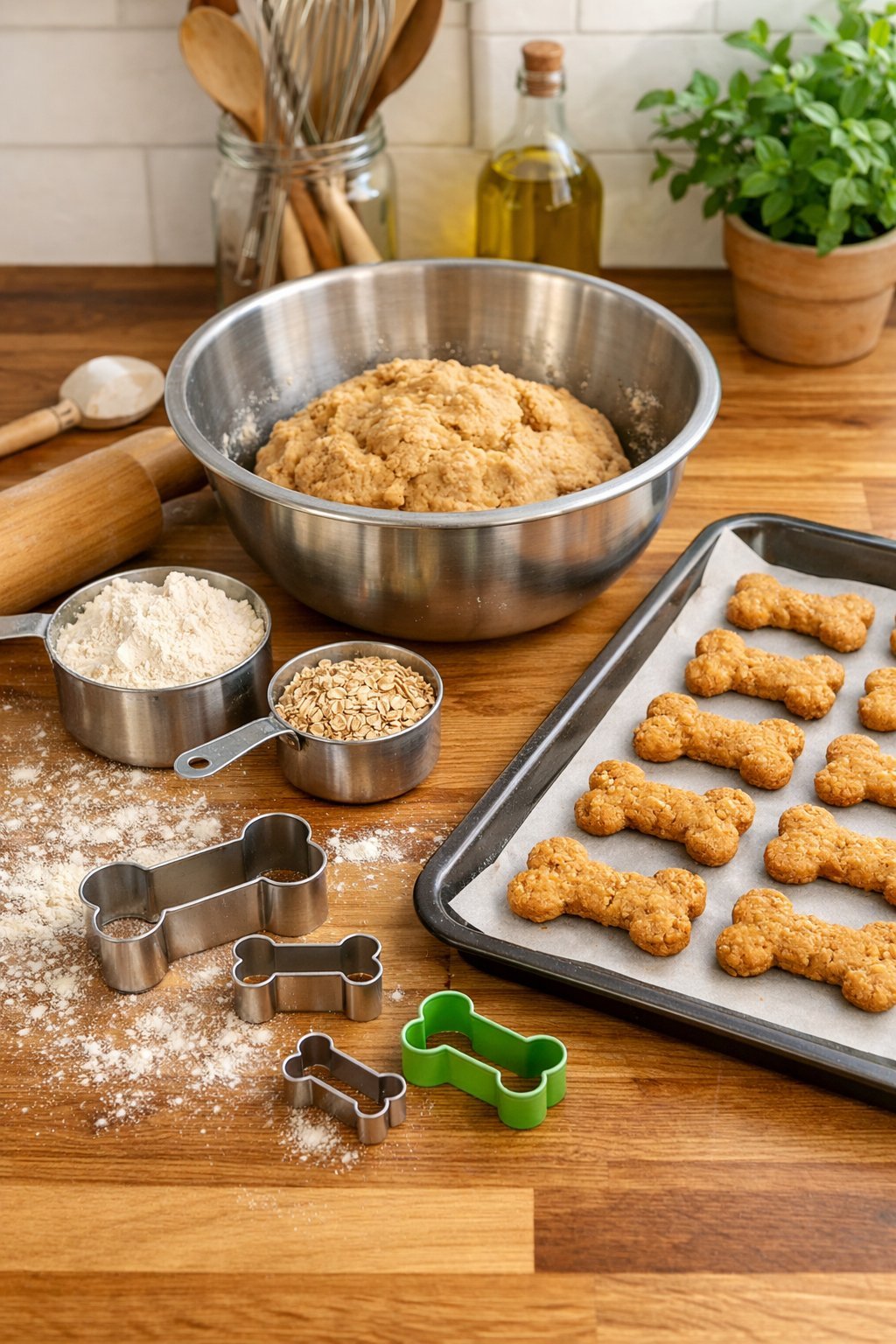
Making dog treats at home is pretty simple. Choose safe ingredients like whole wheat flour and peanut butter, and follow easy recipes that require basic baking skills.
What are some simple homemade dog treat recipes that are vet approved?
I recommend starting with a basic peanut butter and banana recipe that most vets consider safe for dogs. This combo uses ingredients with nutritional value and no harmful additives.
Peanut Butter Banana Bites
🍳 Cook: 15 min
⏰ Total: 25 min
🦴 Yield: 24 treats
📊 Difficulty: Easy
🥘 Ingredients:
- 1 ripe banana, mashed
- 1/2 cup unsalted peanut butter (xylitol-free)
- 1 1/2 cups whole wheat flour
- 1/4 cup water
👩🍳 Instructions:
- Preheat your oven to 350°F and line a baking sheet with parchment paper.
- Mix the mashed banana and peanut butter in a bowl until smooth.
- Add the flour gradually and mix until a dough forms, adding water as needed.
- Roll out the dough to 1/4 inch thickness and cut into small shapes.
- Place treats on the baking sheet and bake for 15 minutes until golden.
- Let cool completely before serving to your dog.
📦 Storage Instructions:
Store in an airtight container at room temperature for up to 1 week, or refrigerate for up to 2 weeks. You can also freeze these treats for up to 3 months.
💪 Nutritional Benefits:
Bananas provide potassium and vitamins while peanut butter offers protein and healthy fats. Whole wheat flour adds fiber that supports digestive health.
⚠️ Special Dietary Notes:
Always use peanut butter without xylitol, which is toxic to dogs. This recipe contains gluten, so avoid if your dog has wheat sensitivities. Suitable for dogs of all sizes when portioned appropriately.
Another vet-approved option combines sweet potato and oats for dogs with sensitive stomachs. Sweet potatoes are easy to digest and packed with vitamins.
How can I make no-bake dog treats with just a few ingredients?
I like to make frozen yogurt treats that are super easy and need only three ingredients. Just grab some plain yogurt, fresh blueberries, and a little honey for a cool snack your pup will love.
Frozen Yogurt Treats
🥘 Ingredients:
- 1 cup plain unsweetened yogurt (Greek or regular)
- 1/2 cup fresh blueberries
- 1 ripe banana, mashed
- 2 tablespoons natural peanut butter (xylitol-free)
- 1 tablespoon honey (optional)
👩🍳 Instructions:
- In a medium bowl, mix the yogurt, mashed banana, and peanut butter until smooth and well combined.
- Gently fold in the blueberries, keeping some whole for texture.
- If using honey, stir it in until evenly distributed.
- Spoon the mixture into silicone molds, ice cube trays, or small paper cups.
- Place in the freezer and freeze for 3-4 hours or until completely solid.
- Pop treats out of molds and serve frozen to your dog as a refreshing snack.
📦 Storage Instructions:
Store frozen treats in an airtight container or freezer bag in the freezer for up to 2 months. Serve directly from freezer – no thawing needed. Perfect for hot summer days!
💪 Nutritional Benefits:
Yogurt provides probiotics for digestive health and is rich in calcium and protein. Blueberries are packed with antioxidants that support immune function. Bananas offer potassium and natural sweetness, while peanut butter provides healthy fats and protein.
⚠️ Special Dietary Notes:
Use only xylitol-free peanut butter as xylitol is highly toxic to dogs. Choose plain, unsweetened yogurt without artificial sweeteners. Some dogs may be lactose intolerant – introduce gradually and monitor for digestive upset. Suitable for dogs of all ages and sizes when portioned appropriately. These treats are great for cooling down in summer or as a special reward.
Printable Recipe Card
Want just the essential recipe details without scrolling through the article? Get our printable recipe card with just the ingredients and instructions.