
Blueberry Dog Treats: Healthy Homemade Recipes Your Pup Will Love

Dogs love tasty snacks, and blueberry dog treats are a great choice for your furry friend. These treats combine the sweet flavor dogs enjoy with real health benefits.
Blueberries are packed with antioxidants and vitamins that support your dog’s immune system, brain function, and overall health.
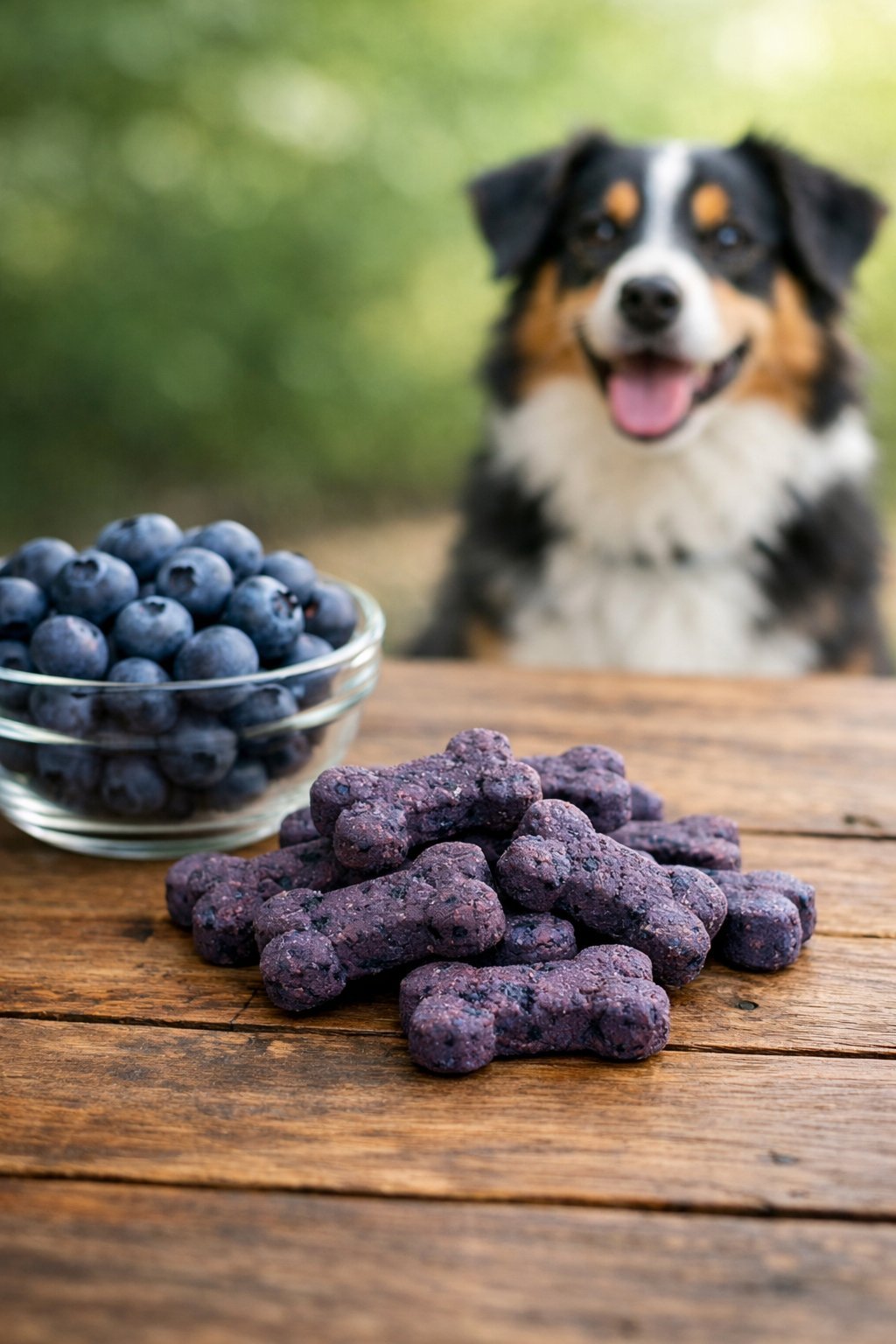
Homemade blueberry dog treats let you control exactly what your dog eats while saving money compared to store-bought options. You can make crunchy homemade blueberry treats with simple ingredients like oats, peanut butter, and flour.
The best part is that these treats are easy to prepare, even if you’ve never baked for your dog before.
I’ll show you everything you need to know about blueberry dog treats. You’ll learn about their health benefits, how to pick good store-bought options, and how to make your own at home.
Plus, I’ll share tips on serving these treats safely so your dog can enjoy them without any problems.
Key Takeaways
- Blueberry treats offer antioxidants and vitamins that boost your dog’s immune system and brain health
- Making treats at home gives you full control over ingredients and costs less than buying them from stores
- Proper serving sizes and safe ingredients like xylitol-free peanut butter keep your dog healthy while enjoying treats
What Are Blueberry Dog Treats?
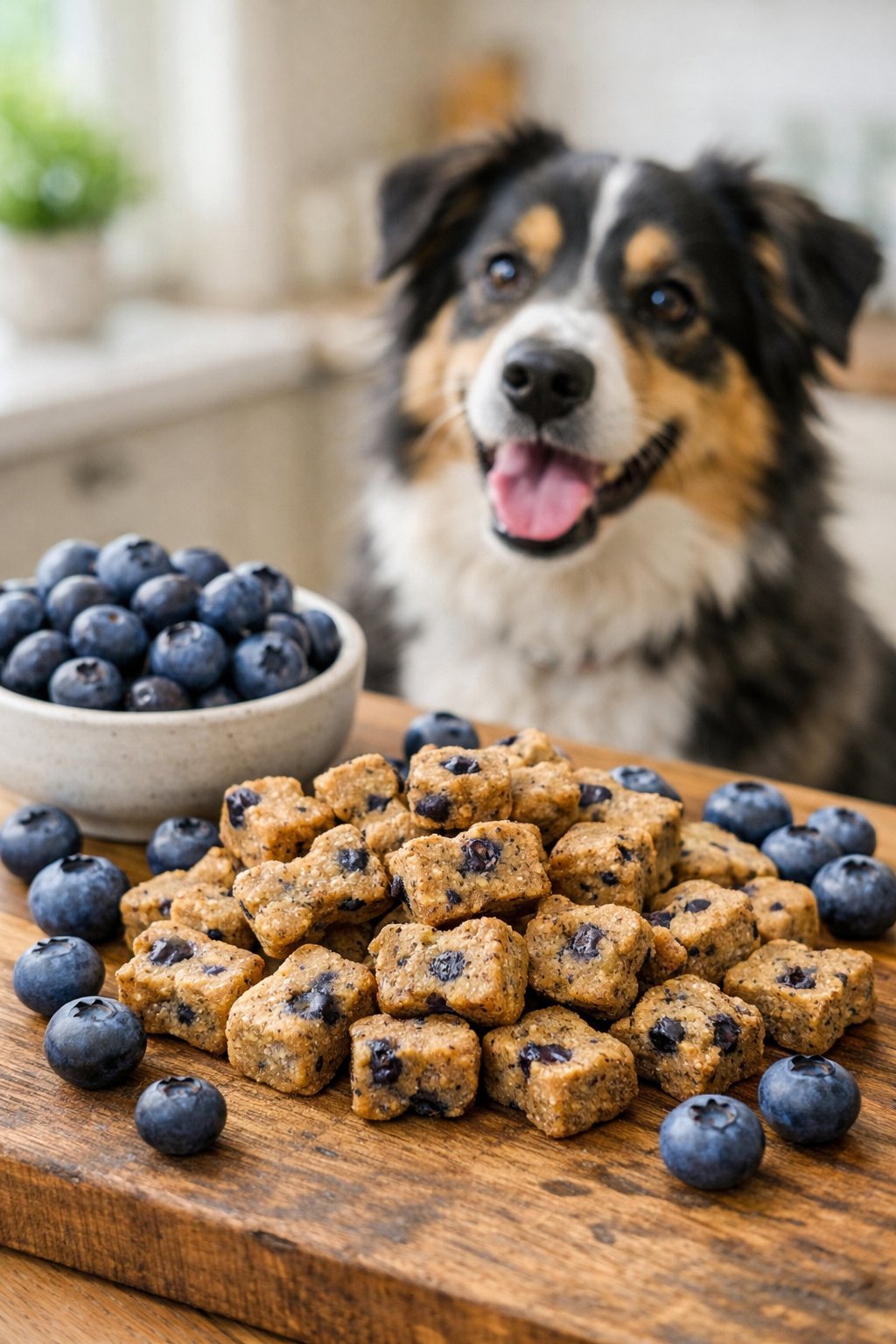
Blueberry dog treats are snacks made specifically for dogs that feature blueberries as a main ingredient. These treats combine the natural sweetness and health benefits of blueberries with other dog-safe ingredients to create tasty rewards your pup will love.
Definition and Overview
Blueberry dog treats are specially made snacks that use blueberries as a primary ingredient alongside other safe foods for dogs. I find these treats work great as training rewards or everyday snacks because they’re packed with antioxidants that support your dog’s immune system.
Blueberries contain high amounts of vitamin C and fiber, which are vital for proper canine nutrition. The antioxidants in blueberries can help support healthy aging in dogs while promoting better brain and eye health.
These treats are also low in calories compared to many commercial options. Both fresh and frozen blueberries work well in dog treat recipes, giving you flexibility when making treats at home.
Types of Blueberry Dog Treats
You’ll find several different types of blueberry treats available for your dog. Crunchy baked treats are popular because they last longer and help clean teeth while your dog chews them.
Soft or chewy blueberry treats work better for older dogs or puppies who might struggle with harder textures. Some recipes combine blueberries with other healthy ingredients like pumpkin, which adds fiber and creates treats with both antioxidants and digestive support.
You can buy ready-made blueberry treats from stores or make your own at home. Homemade treats are less expensive than store-bought options and let you control exactly what goes into your dog’s snacks.
Key Ingredients
The main ingredient in these treats is obviously blueberries, which can be fresh or frozen. Most homemade recipes use simple base ingredients like whole wheat flour or oat flour to bind everything together.
Common additions include eggs for protein and binding, and sometimes a small amount of honey for extra sweetness. Some recipes use just three ingredients to keep things simple while still providing nutritional value.
You might also see peanut butter (always xylitol-free), coconut oil, or yogurt in blueberry treat recipes. These add healthy fats and make the treats more appealing to picky eaters.
Water or broth helps achieve the right dough consistency for baking.
Health Benefits of Blueberry Dog Treats
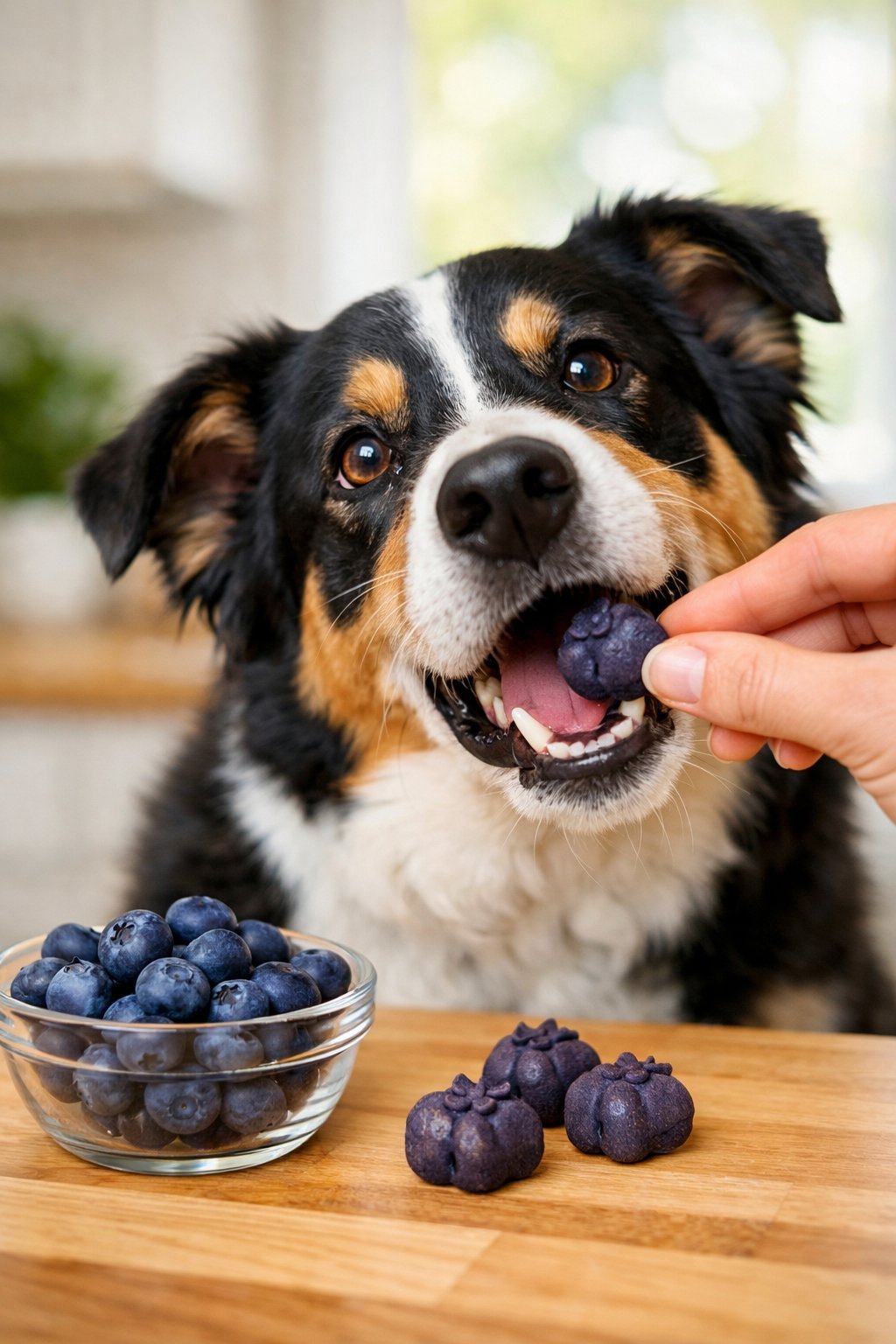
Blueberries pack a powerful nutritional punch for dogs, offering vitamins, minerals, and antioxidants that support their overall health. These small berries help with everything from brain function to digestion while being low in calories.
Nutritional Value for Dogs
Blueberries contain several important nutrients that benefit dogs. Each berry is loaded with vitamin C, which supports immune system function and helps dogs fight off infections.
Vitamin K in blueberries plays a key role in blood clotting and bone health. The berries also provide vitamin A for eye health and skin condition.
I find it impressive that blueberries contain important minerals like manganese, which helps dogs metabolize proteins and carbohydrates properly. Blueberries are low in calories, making them an ideal treat for dogs who need to watch their weight.
A cup of blueberries contains only about 84 calories. The fiber content in these berries helps dogs feel full without adding excessive calories to their diet.
Antioxidant Properties
Blueberries are rich in antioxidants that help protect dogs from cellular damage. These antioxidants fight free radicals in the body, which can cause inflammation and age-related health problems.
The main antioxidants in blueberries include anthocyanins, which give the berries their blue color. Studies show that blueberries can improve cognitive function in dogs, particularly in older dogs experiencing mental decline.
This brain-boosting benefit helps dogs stay sharp and alert as they age. The antioxidants also support heart health by reducing inflammation in blood vessels.
I appreciate how these compounds help combat free radicals and support overall health throughout a dog’s body, from their organs to their skin and coat.
Digestive Health Support
The fiber in blueberries promotes healthy digestion in dogs. This fiber helps food move through the digestive tract at the right pace, preventing both constipation and diarrhea.
High fiber content promotes a healthy digestive system by feeding beneficial gut bacteria. These good bacteria help dogs absorb nutrients better and maintain strong immune function.
The natural sugars in blueberries are balanced by the fiber, which slows down sugar absorption. I recommend introducing blueberries gradually to avoid digestive upset.
Start with just a few berries and watch how your dog responds. Too many blueberries at once can cause loose stools due to the high fiber content.
How to Choose the Best Blueberry Dog Treats
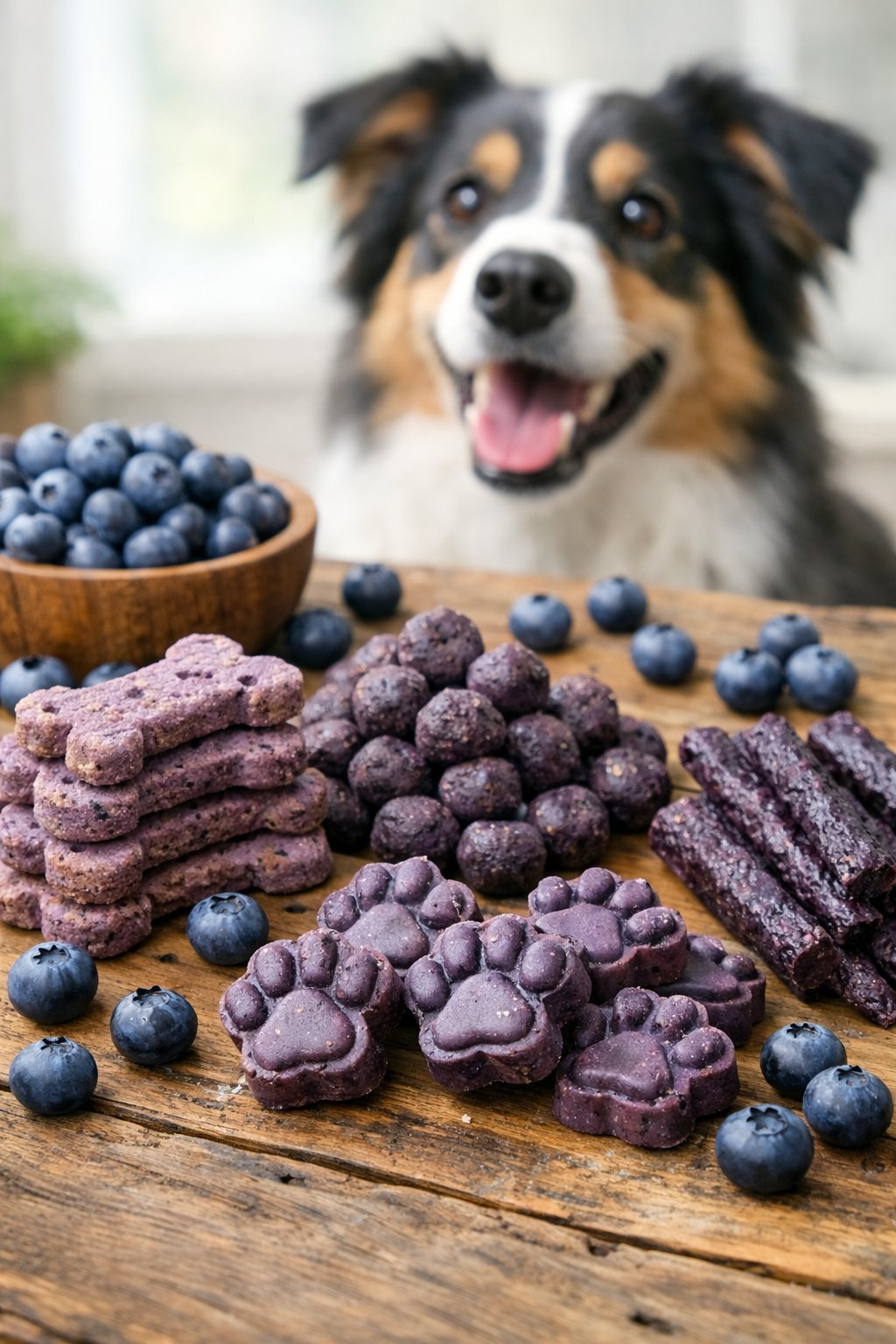
When shopping for blueberry treats, I focus on three main factors: checking what’s actually in the product, making sure my dog won’t have an allergic reaction, and deciding whether natural or artificial options work best for my pup’s needs.
Reading Ingredient Labels
I always flip the package over and read the ingredient list before buying any treat. The first few ingredients matter most because they make up the largest portion of the product.
I look for real blueberries listed near the top rather than blueberry flavoring. Fresh blueberries or blueberry powder provide actual nutrients, while artificial flavoring just adds taste without health benefits.
I check for whole grains like oats or brown rice instead of unnamed “meat meal” or fillers like corn syrup. Antioxidant-rich blueberry treats should list recognizable ingredients I could find in my own kitchen.
I avoid products with long chemical names I can’t pronounce. Preservatives like BHA, BHT, and ethoxyquin have raised health concerns in dogs.
I also skip treats with added sugar or salt since dogs don’t need these extras. The ingredient list tells me exactly what I’m feeding my dog, so I take the time to understand it.
Identifying Allergens
I know my dog’s specific allergies before shopping for any treats. Common allergens in dog treats include wheat, soy, corn, dairy, chicken, and beef.
Many grain-free blueberry treats use alternative ingredients like chickpea flour or sweet potato. These work well for dogs with grain sensitivities.
I watch for cross-contamination warnings on packages. Some treats are made in facilities that also process common allergens.
If my dog has severe allergies, I choose brands dedicated to allergen-free production. When trying a new treat, I give my dog just one piece and watch for reactions over 24 hours.
Signs of food allergies include itching, ear infections, digestive upset, or skin redness. I keep a list of safe ingredients that my dog tolerates well.
This makes shopping faster and safer every time.
Natural vs. Artificial Options
I prefer natural blueberry treats made with real fruit over artificial versions. Natural treats contain actual antioxidants and vitamins that support my dog’s health.
Artificial blueberry flavoring creates the taste without nutritional value. These treats might use blue food coloring to look like they contain real berries.
I check if treats use natural preservatives like vitamin E (mixed tocopherols) or rosemary extract. These keep treats fresh without synthetic chemicals.
Homemade blueberry treats give me complete control over ingredients, but quality store-bought options save time.
I balance convenience with my dog’s health needs. Price doesn’t always indicate quality.
I’ve found affordable natural treats that work just as well as premium brands. I compare labels rather than just looking at the price tag.
Making Homemade Blueberry Dog Treats
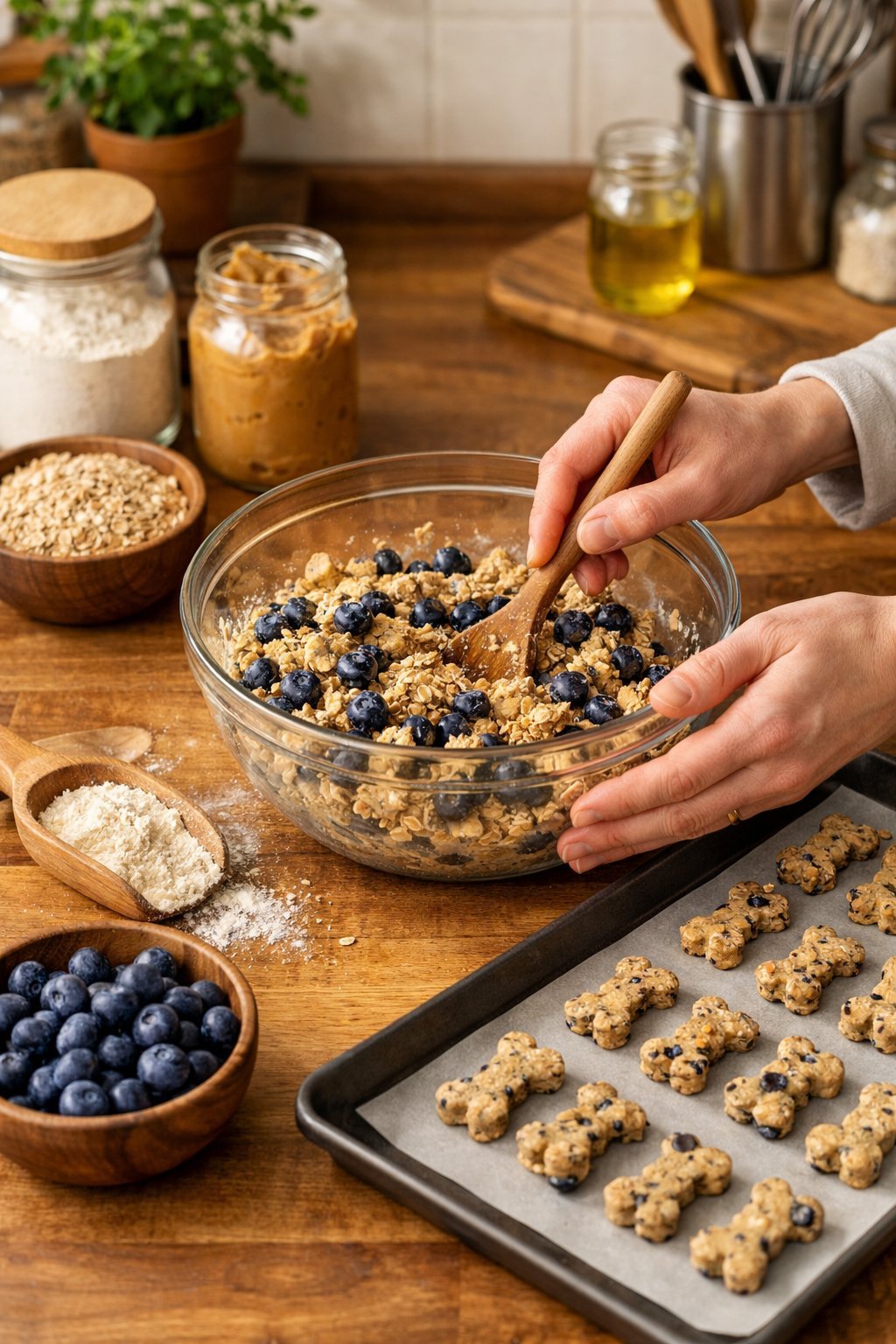
Making treats at home gives you control over what your dog eats while saving money compared to store-bought options. The basic process involves mixing dog-safe ingredients like blueberries with flour and binding agents, shaping the dough, and baking until crunchy.
Simple Recipes
I’ve found that homemade blueberry dog treats are easiest to make with just a few basic ingredients. Most people already have what they need in their kitchens.
The simplest version combines whole wheat flour, fresh or frozen blueberries, eggs, and a bit of coconut oil or peanut butter. For a basic batch, I mix 2 cups of whole wheat flour with 1 cup of fresh blueberries, 1 egg, and 2 tablespoons of melted coconut oil.
The dough should be firm enough to roll out but not crumbly. If you want to add more fiber, toss in some rolled oats.
I usually roll the dough to about 1/4 inch thick and use cookie cutters for fun shapes. Bake at 350°F for 15-20 minutes until the edges are golden brown.
Classic Blueberry Dog Biscuits
🍳 Cook/Bake: 20 min
⏰ Total: 30 min
🦴 Yield: 30 treats
📊 Difficulty: Easy
🥘 Ingredients
- 2 cups whole wheat flour
- 1 cup fresh or frozen blueberries
- 1 large egg
- 2 tablespoons melted coconut oil
- 2-4 tablespoons water (as needed)
👩🍳 Instructions
- Preheat oven to 350°F and line a baking sheet with parchment paper.
- Mash blueberries in a large bowl with a fork until mostly broken down.
- Add egg and melted coconut oil to blueberries and mix well.
- Stir in whole wheat flour gradually until a firm dough forms. Add water 1 tablespoon at a time if dough is too dry.
- Roll dough out on a floured surface to 1/4 inch thickness.
- Cut into shapes using cookie cutters and place on prepared baking sheet.
- Bake for 18-20 minutes until edges are golden brown and treats are firm.
- Let cool completely on a wire rack before serving.
📦 Storage
Store in an airtight container at room temperature for up to 1 week, in the refrigerator for up to 2 weeks, or freeze for up to 3 months.
💪 Key Nutritional Benefits for Dogs
Blueberries provide antioxidants that support immune system health and may help with cognitive function. Whole wheat flour adds fiber for digestive health, while coconut oil contains healthy fats for skin and coat.
⚠️ Important Notes
Check with your vet before introducing new treats if your dog has allergies or digestive sensitivities. Use unsweetened coconut oil only. Treats should make up no more than 10% of your dog’s daily calorie intake.
Tips for Safe Preparation
I always start by checking that every ingredient I use is safe for dogs. Blueberries are perfectly safe and packed with antioxidants that support your dog’s immune system.
Serving Blueberry Dog Treats Safely
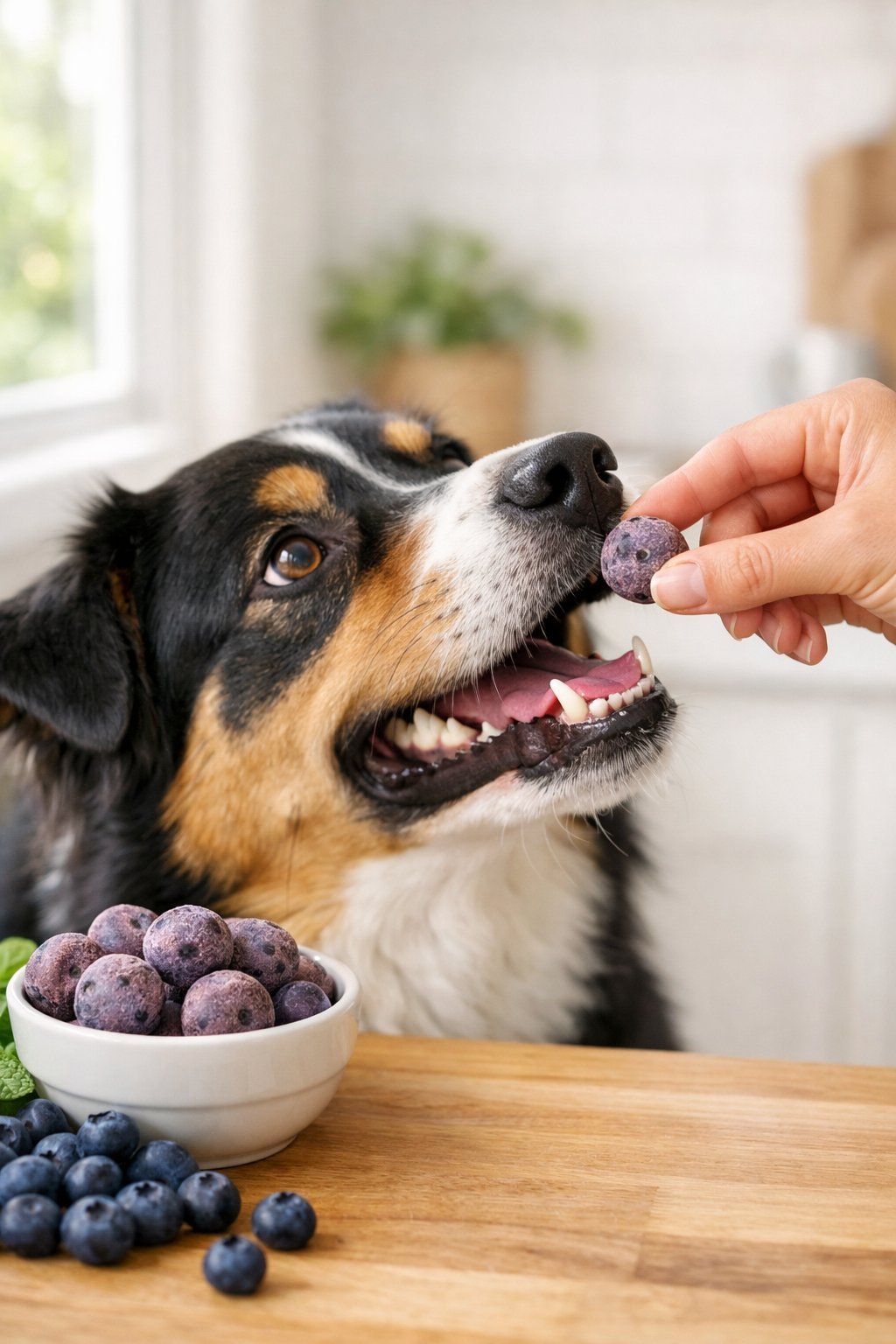
I make sure to serve blueberries in the right amounts and watch for any unusual reactions. Proper portion sizes depend on your dog’s size.
Timing matters for digestion, and knowing allergy signs keeps your pup safe. The amount of blueberries I give my dog depends entirely on their size.
Small dogs should get one to two berries per day. Medium dogs can have three to four berries, and large dogs can enjoy five to six berries daily.
I treat blueberries as snacks, not meal replacements. They should make up no more than 10% of my dog’s daily calorie intake.
Serving sizes by weight:
- Under 20 lbs: 1-2 blueberries
- 20-50 lbs: 3-4 blueberries
- Over 50 lbs: 5-6 blueberries
For tiny dogs or puppies, I chop or crush fresh blueberries before serving. Whole berries can be a choking hazard or cause digestive blockages in smaller breeds.
I also start with just one or two berries the first time to see how my dog’s stomach handles them. I use blueberry treats as training rewards because they’re small and easy to carry.
Fresh or frozen blueberries work great during walks or practice sessions. Frozen blueberries make excellent cool-down treats after exercise on hot days.
I avoid giving blueberries right before bed since the extra fiber might cause bathroom trips during the night. Morning or afternoon works best for my dog’s digestive schedule.
Spacing out treats throughout the day helps prevent stomach upset. I never dump a handful of blueberries in my dog’s bowl all at once.
Instead, I give them one or two at a time during different activities. I also use homemade blueberry treats between meals as a special snack.
This keeps my dog interested without disrupting their regular feeding routine. I watch my dog carefully after introducing blueberries for the first time.
While rare, some dogs can have sensitivities to new foods. I look for itching, scratching, or red patches on their skin within a few hours of eating.
Common allergy symptoms I watch for:
- Excessive licking or scratching
- Hives or skin redness
- Vomiting or diarrhea
- Swelling around the face or paws
- Difficulty breathing
Digestive upset can show up as loose stools, gas, or stomach rumbling. If I notice any of these signs, I stop giving blueberries right away.
I contact my veterinarian if symptoms last more than 24 hours or seem severe. Breathing problems or facial swelling need emergency vet care immediately.
These signs point to a serious allergic reaction that needs quick attention.
Frequently Asked Questions
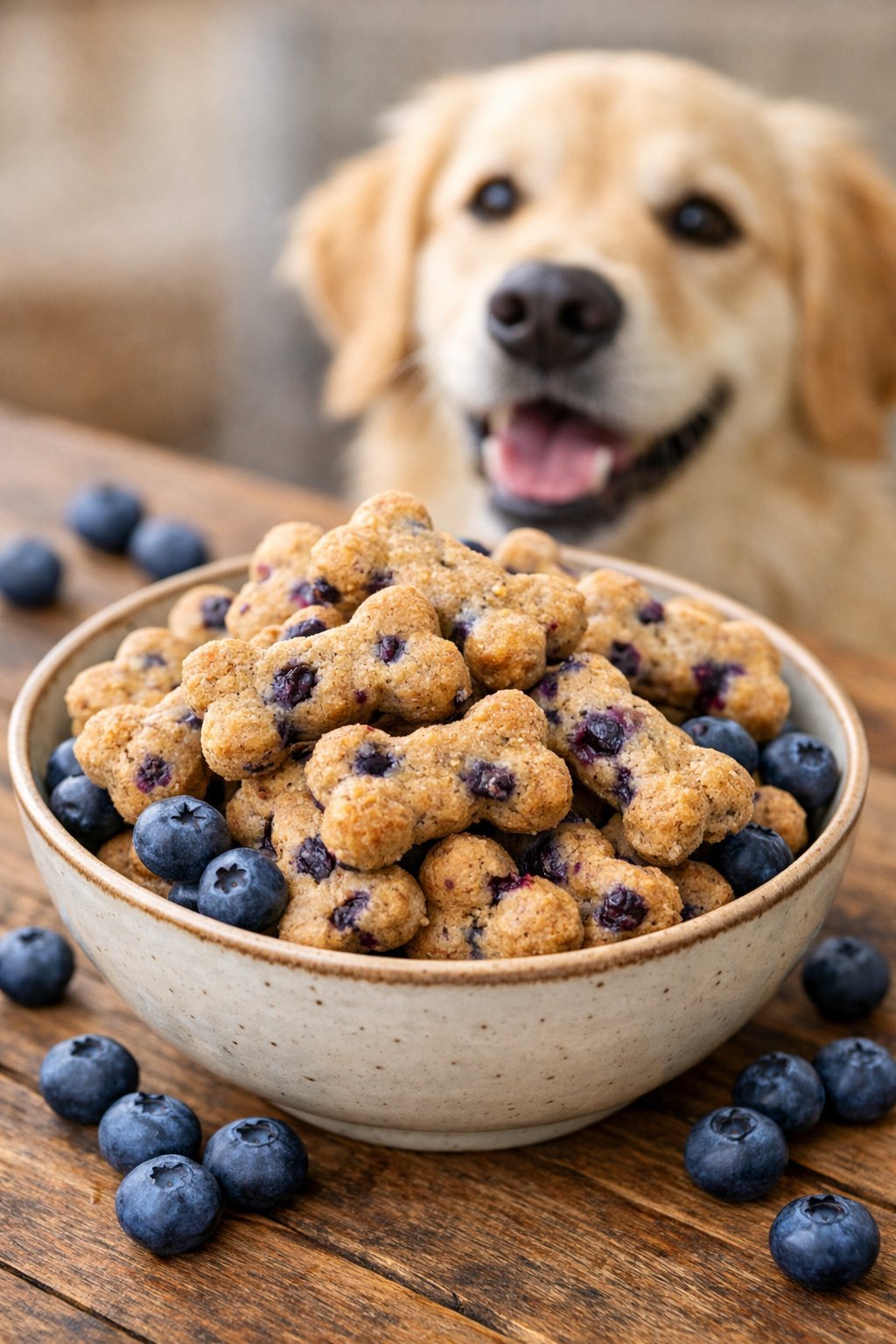
Making blueberry treats at home is simple and lets you control exactly what goes into your dog’s snacks. Blueberries are safe for dogs and pack nutritional benefits like antioxidants and vitamins that support their overall health.
How can I make homemade blueberry dog treats?
Making homemade blueberry dog treats is actually pretty simple. You just need a few basics like flour, blueberries, and something to bind it all together, such as eggs or pumpkin puree.
Start by mixing your dry ingredients. Then add the wet ingredients and blueberries.
I like to mash some of the blueberries to help spread their flavor in the dough. This gives the treats a nice burst of blueberry taste.
Once your dough is ready, roll it out and use cookie cutters to make fun shapes. Most recipes bake at 350°F for about 20-25 minutes until the treats are firm and golden.
Basic Blueberry Dog Treats
🍳 Cook/Bake: 25 min
⏰ Total: 35 min
🦴 Yield: 30 treats
📊 Difficulty: Easy
🥘 Ingredients
- 2 cups whole wheat flour
- 1 cup fresh or frozen blueberries
- 1 large egg
- 1/4 cup water (add more if needed)
- 2 tablespoons coconut oil, melted
👩🍳 Instructions
- Preheat your oven to 350°F and line a baking sheet with parchment paper.
- In a large bowl, mix the whole wheat flour together.
- Mash half of the blueberries with a fork in a separate bowl, then add the egg, water, and melted coconut oil.
- Pour the wet ingredients into the flour and stir until a dough forms, adding more water if the dough is too dry.
- Fold in the remaining whole blueberries gently.
- Roll the dough out on a floured surface to about 1/4 inch thickness.
- Use cookie cutters to cut out shapes and place them on the prepared baking sheet.
- Bake for 25 minutes or until the treats are firm and lightly golden.
- Let the treats cool completely on a wire rack before serving.
📦 Storage
Store in an airtight container in the refrigerator for up to 2 weeks or freeze for up to 3 months.
💪 Key Nutritional Benefits for Dogs
Blueberries provide antioxidants that support immune health, while whole wheat flour offers fiber for digestion. Coconut oil contains healthy fats for skin and coat health.
⚠️ Important Notes
If your dog has grain sensitivities, substitute oat flour or rice flour for the whole wheat flour. Always introduce new treats gradually to watch for any digestive upset.
What are some simple recipes for blueberry dog treats with few ingredients?
I love recipes that only require three to four ingredients because they’re quick to prepare and use items I already have in my kitchen.
A simple combination of oat flour, mashed banana, and blueberries creates delicious treats without any fuss.
Another easy option uses just peanut butter, eggs, and blueberries.
The peanut butter acts as both a binder and a flavor your dog will love.
These minimal ingredient recipes are perfect for busy days when I still want to give my dog something special.
They bake quickly and don’t require complicated techniques.
Printable Recipe Card
Want just the essential recipe details without scrolling through the article? Get our printable recipe card with just the ingredients and instructions.

