
Bacon Dog Treats: Healthy Homemade Recipes Your Pup Will Love

Dogs go crazy for bacon, and combining that irresistible flavor with nutritious ingredients makes for the perfect treat. You can make homemade bacon dog treats with simple ingredients like whole wheat flour, real bacon, peanut butter, and cheese that are healthier and more affordable than most store-bought options.
I’ve found that making these treats at home lets me control exactly what goes into my dog’s snacks.
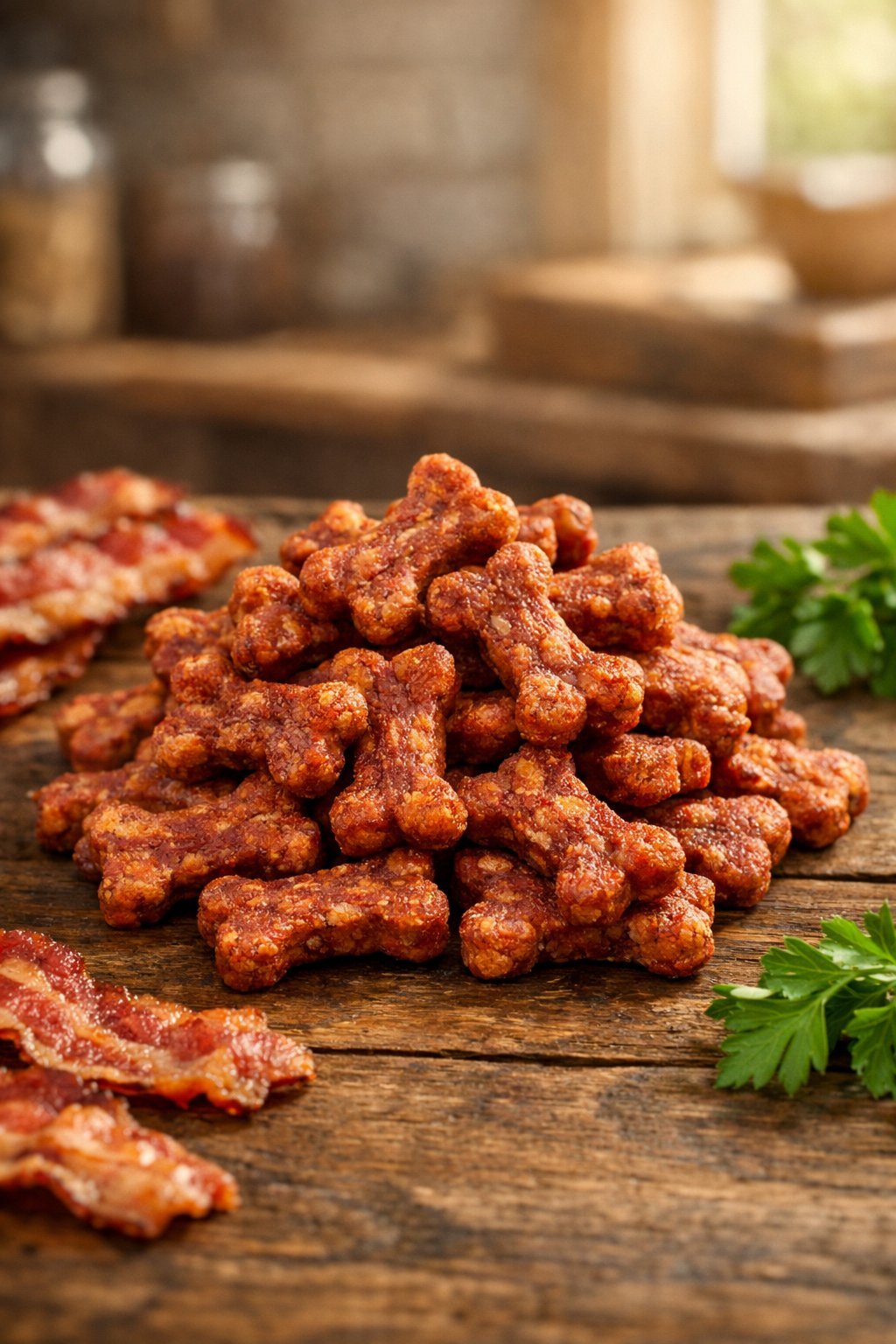
Whether you want to bake your own treats or buy ready-made options, bacon-flavored snacks are a great way to reward good behavior and keep your pup happy. The best part is that bacon dog biscuits are surprisingly easy to make, taking just about 40 minutes from start to finish.
I’ll walk you through everything from choosing quality ingredients to storing your finished treats properly.
In this guide, I’ll share my favorite recipes, tips for selecting the best store-bought options, and important safety info to keep your furry friend healthy and satisfied. You’ll learn how to create delicious bacon treats that will have your dog’s tail wagging every time.
Key Takeaways
- Homemade bacon dog treats use simple ingredients and take about 40 minutes to bake at 350°F.
- You can customize recipes with cheese, peanut butter, or pumpkin while avoiding artificial additives.
- Store finished treats in airtight containers and follow safe serving sizes based on your dog’s weight.
What Are Bacon Dog Treats?
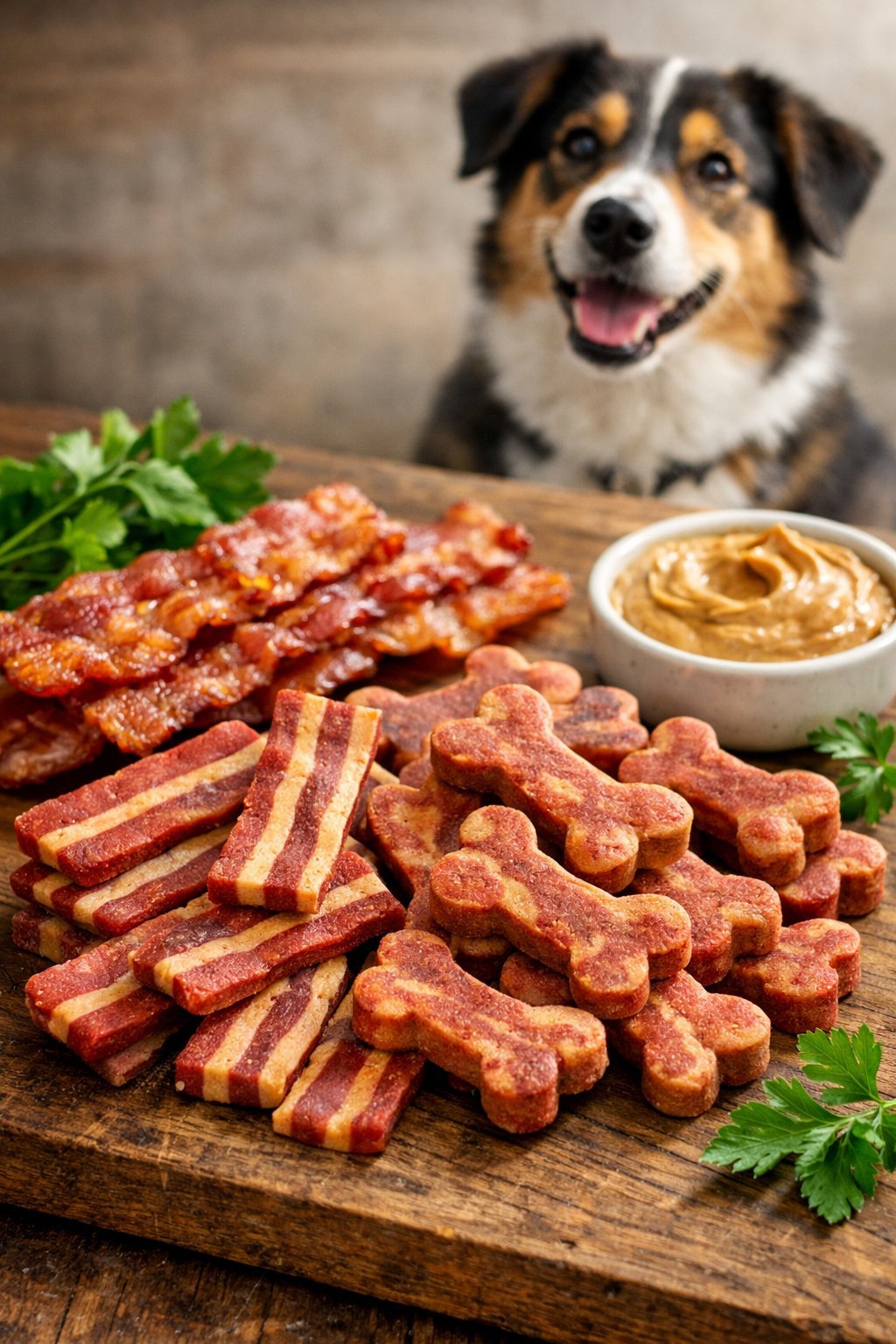
Bacon dog treats are snacks made specifically for dogs that feature bacon as a primary ingredient or flavoring. They come in different forms and can be purchased ready-made or prepared at home with simple ingredients.
Definition of Bacon Dog Treats
Bacon dog treats are specially formulated snacks that incorporate real bacon or bacon flavoring to appeal to dogs’ taste preferences. These treats typically feature bacon combined with other dog-safe ingredients like flour, eggs, and sometimes additional proteins or veggies.
The treats can have different textures ranging from soft and chewy to crunchy and crispy. Soft and chewy bacon treats work well for training sessions because they’re easy to break into smaller pieces and quick for dogs to eat.
I find that most bacon treats serve multiple purposes beyond just being a snack. Dogs love them as rewards during training or simply as an occasional indulgence to show affection.
Types of Bacon Used
Real cooked bacon is the most common type used in bacon dog treats. The bacon can be crispy and crumbled into small pieces or left slightly chewy depending on the recipe or product.
Some treats use bacon fat or bacon grease as a flavoring agent instead of whole bacon pieces. This gives the treats a strong bacon aroma and taste without adding as much actual meat.
Bacon flavoring or bacon powder appears in lower-quality commercial treats. While dogs may still enjoy these options, they don’t provide the same nutritional benefits as real bacon.
Turkey bacon serves as an alternative for dogs with pork sensitivities. It offers a similar smoky flavor profile but with different fat content and protein composition.
Store-Bought vs Homemade Options
Store-bought bacon treats offer convenience and consistent quality. Commercial bacon treats often come from established pet food brands that follow safety standards and quality control measures.
However, they may contain preservatives, artificial colors, or fillers that some pet owners prefer to avoid.
Homemade bacon treats give me complete control over ingredients and portion sizes. Making bacon treats at home lets me use leftover bacon and ensure my dog gets fresh treats without unnecessary additives.
I can adjust recipes based on my dog’s dietary needs or preferences. The cost difference varies depending on ingredients.
Homemade treats can be more economical when using bacon I already have, while premium store-bought options may cost more but save preparation time.
Benefits of Bacon Dog Treats
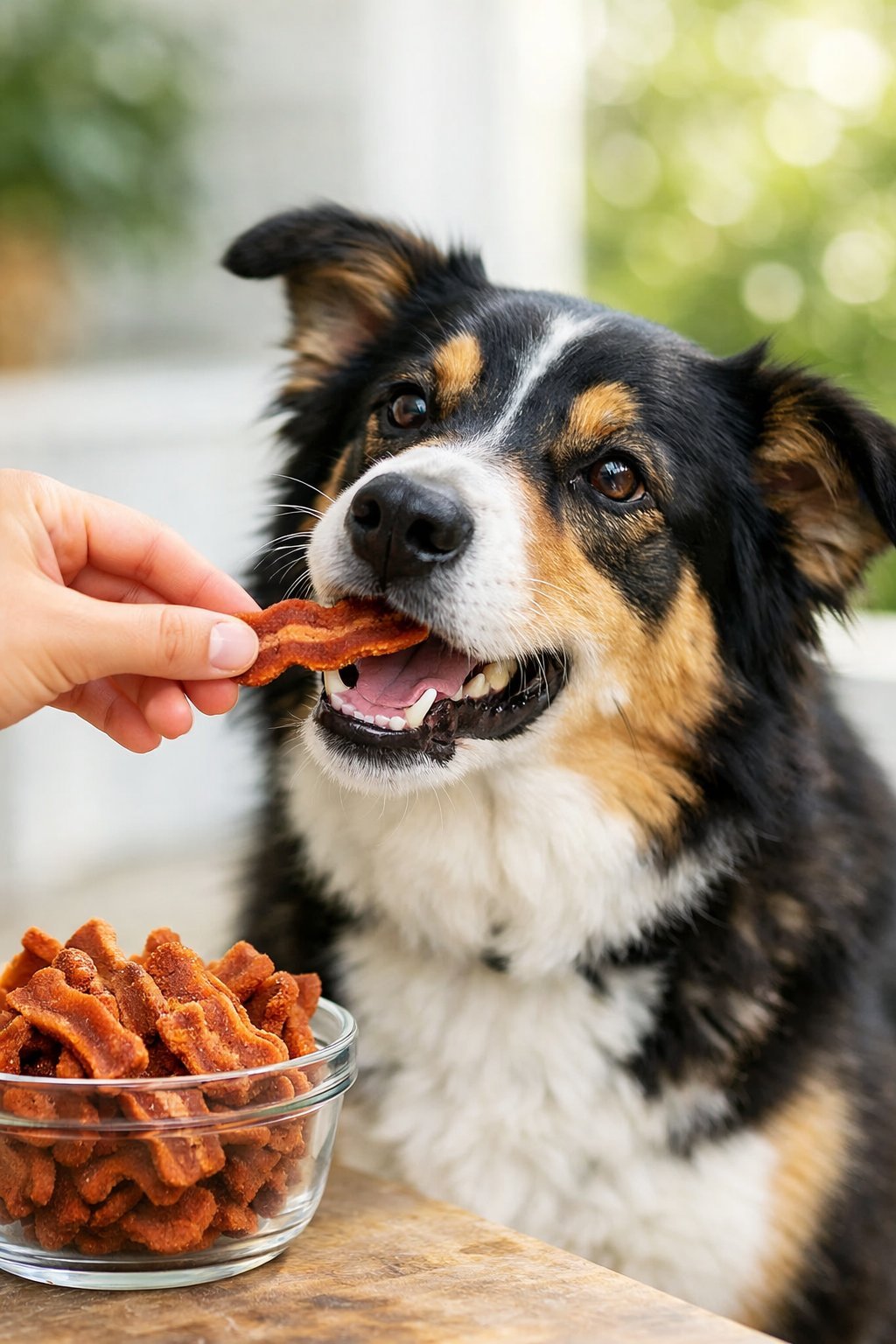
Bacon dog treats offer several advantages that make them popular among dog owners. They provide strong taste appeal that dogs find hard to resist, contain beneficial nutrients, and work well as training rewards.
Taste Appeal for Dogs
Dogs are naturally drawn to the smell and taste of bacon. The strong aroma captures their attention immediately, making bacon-flavored treats highly desirable to most dogs.
This high taste appeal makes bacon treats useful when I need to give my dog something special. The savory flavor keeps dogs interested and excited.
Bacon treats can make training more enjoyable because dogs respond enthusiastically to the taste. When my dog gets excited about a treat, it creates a positive association that reinforces good behavior.
Nutritional Value
Bacon contains protein, which helps support muscle development and maintenance in dogs. Real bacon also provides B vitamins that contribute to energy metabolism and overall health.
However, I should note that bacon is high in fat and salt. While bacon can be given as an occasional treat for dogs that tolerate it well, moderation is key.
The nutritional benefits work best when bacon treats are part of a balanced diet. I prefer treats made specifically for dogs rather than regular bacon because they typically have controlled sodium and fat levels.
Training Uses
Bacon treats work exceptionally well as training rewards because of their strong appeal. When I’m teaching my dog new commands, high-value treats like bacon-flavored options help maintain focus and motivation.
The small size of most bacon dog treats makes them perfect for training sessions. I can give multiple rewards without overfeeding or disrupting my dog’s regular meal schedule.
These treats are especially helpful for challenging training situations. When I need my dog to perform difficult tasks or work in distracting environments, bacon treats provide the extra motivation needed for success.
How to Choose the Best Bacon Dog Treats
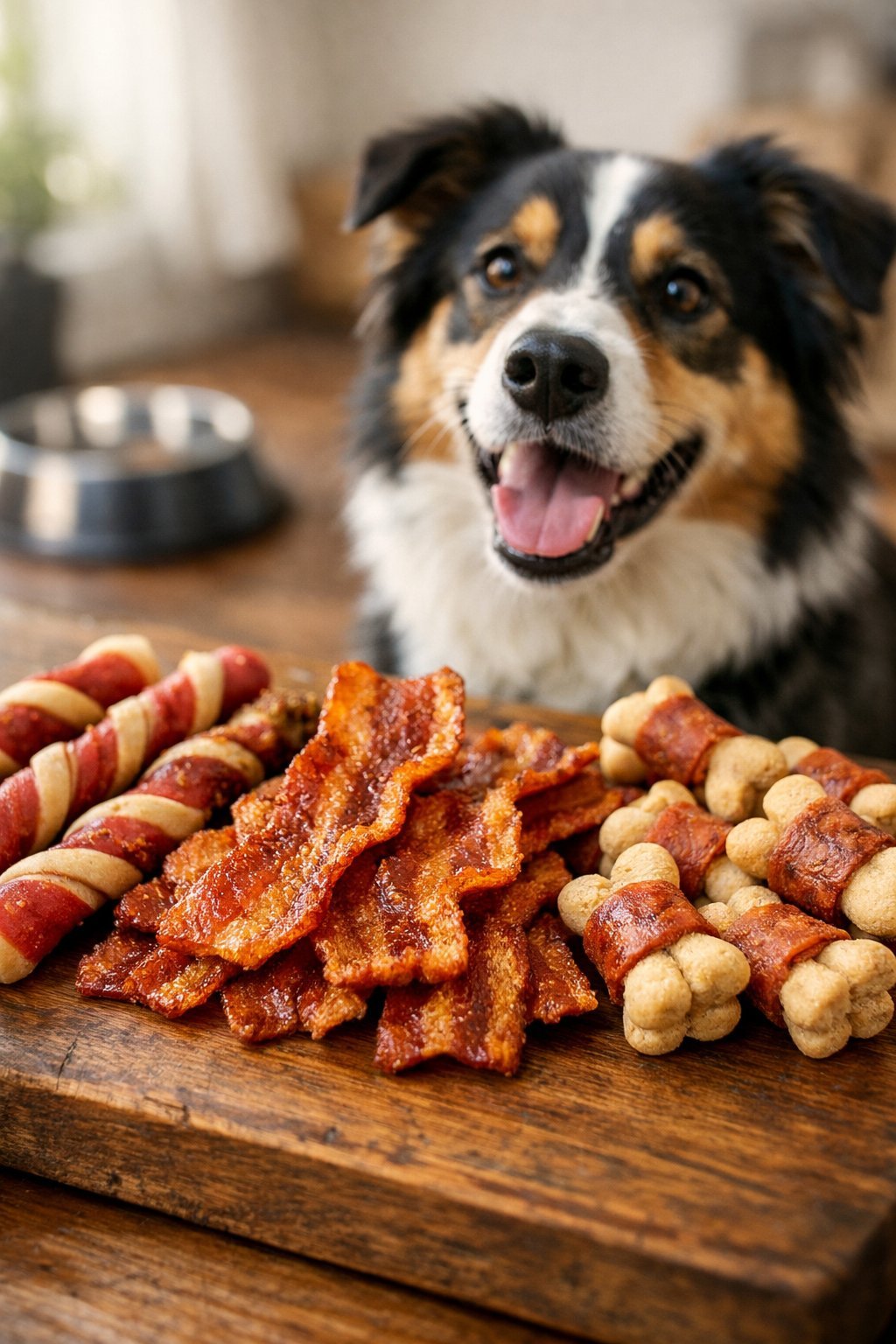
When I’m shopping for bacon treats, I focus on three main factors: the ingredient list, safety standards, and whether the treats match my dog’s specific dietary requirements.
Ingredients to Look For
I always check if the treats contain real bacon rather than artificial bacon flavoring. Bacon dog treats are popular because most dogs love the taste and smell, but real meat provides actual nutritional value.
I look for treats that list bacon or pork as one of the first ingredients on the label. The ingredient list appears in order by weight, so items at the top make up most of the product.
I prefer treats with minimal additives and preservatives. Natural preservatives like mixed tocopherols (vitamin E) are better choices than artificial chemicals.
I also check for added protein sources, vitamins, and minerals that support my dog’s health. I avoid treats with fillers like corn syrup, excessive salt, or artificial colors.
These ingredients add no nutritional value and can cause digestive issues in some dogs.
Safety and Quality Standards
I only buy treats made in facilities that follow proper manufacturing standards. I look for products made in the United States, Canada, or other countries with strict pet food regulations.
I check for recalls by researching the brand’s history before purchasing. Reputable companies are transparent about their sourcing and manufacturing processes.
The treat texture matters for safety too. Soft and chewy treats work well for most dogs, while harder treats might pose choking risks for some pets.
I match the treat size to my dog’s size to prevent choking. I always read customer reviews to see if other dog owners reported any safety concerns or quality issues.
Special Dietary Needs
I consider my dog’s age, size, and health conditions when choosing treats. Puppies need softer treats that are easier to chew, while senior dogs might need low-fat options.
If my dog has food allergies, I carefully read labels to avoid problem ingredients. Some dogs are sensitive to certain proteins or grains that might appear alongside the bacon.
I calculate how many calories the treats add to my dog’s daily intake. Treats should make up no more than 10% of daily calories to maintain a healthy weight.
For dogs with diabetes or weight issues, I choose lower-calorie options or give smaller portions. Dogs with dental problems need softer treats they can chew easily without pain or difficulty.
Homemade Bacon Dog Treats Recipes
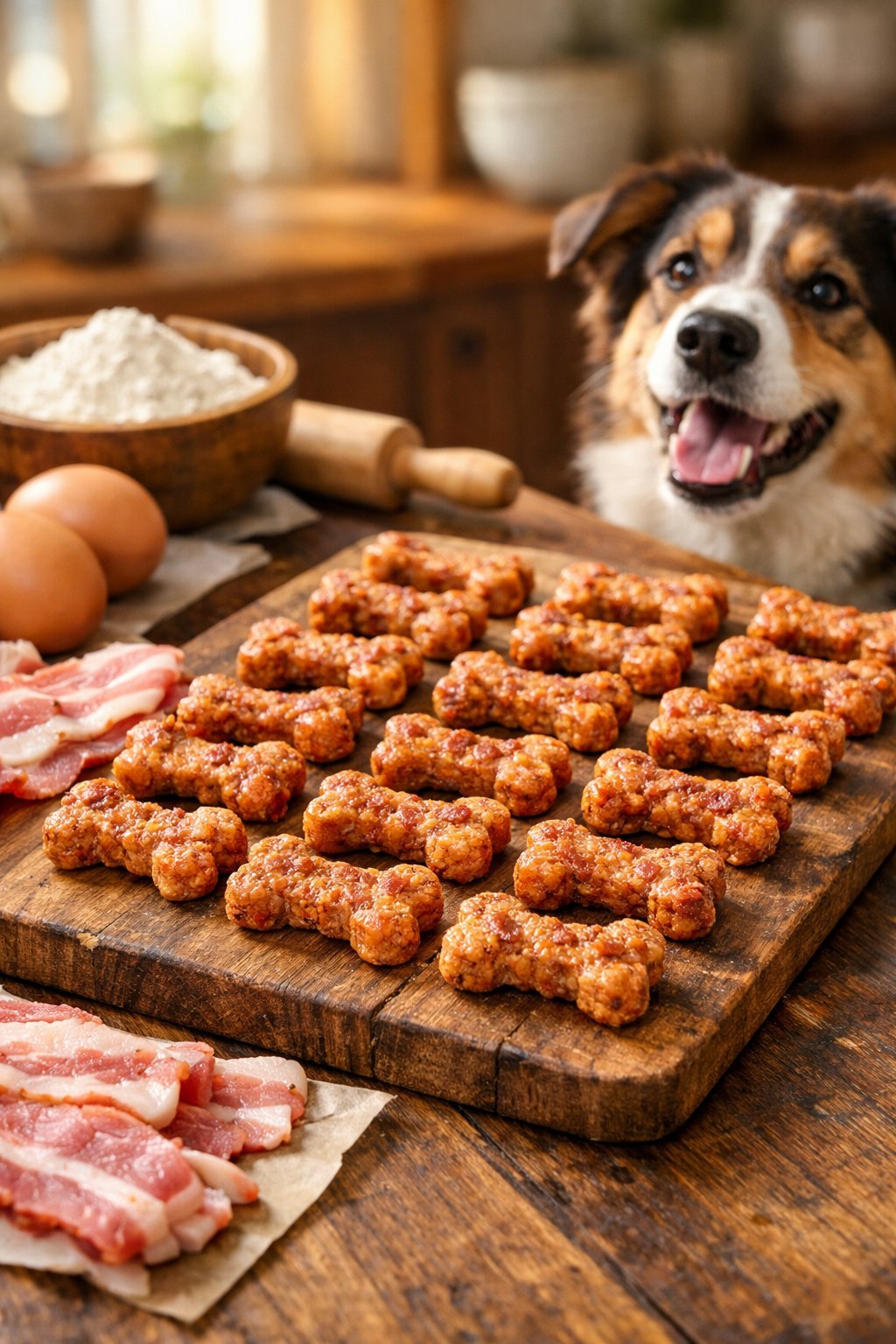
Making bacon treats at home lets you control exactly what goes into your dog’s snacks while saving money compared to store-bought options. These recipes use basic ingredients you probably already have in your kitchen.
Simple Two-Ingredient Recipe
I love starting with the easiest recipe possible, and this one only needs bacon and flour. Cook 2-3 strips of bacon until crispy, then crumble them into small pieces.
Save about 2 tablespoons of the bacon grease. Mix 1 cup of whole wheat flour with the crumbled bacon and bacon grease.
Add water one tablespoon at a time until you get a dough that holds together. I usually need about 3-4 tablespoons of water.
Roll the dough out to about 1/4 inch thick and cut it into small shapes. Place them on a baking sheet and bake at 350°F for 20 minutes.
Let them cool completely before giving them to your pup.
Bacon and Peanut Butter Biscuits
This combination of peanut butter and bacon creates treats that dogs go crazy for. Mix together 2 cups whole wheat flour, 1/2 cup rolled oats, 1 egg, 1/3 cup peanut butter, and 4 strips of cooked crumbled bacon in a large bowl.
Add 1/2 cup of milk gradually until the dough comes together. Make sure you use xylitol-free peanut butter, as xylitol is toxic to dogs.
Roll out the dough and cut into shapes with cookie cutters. Bake at 350°F for about 20-25 minutes until they’re golden brown and firm.
These bacon cheese dog treats can be stored in an airtight container for up to two weeks.
Grain-Free Options
Some dogs need grain-free treats due to allergies or sensitivities. I make bacon dog treats with banana as a healthier grain-free alternative.
Mash one ripe banana in a bowl, then add 2 strips of cooked crumbled bacon, 1 egg, and 1 tablespoon of coconut flour. Mix until combined.
The dough will be stickier than flour-based recipes. Drop small spoonfuls onto a parchment-lined baking sheet or roll into small balls.
Bake at 325°F for 15-18 minutes. You can also use almond flour or oat flour as grain-free alternatives, adjusting the amount until you get the right consistency.
Safe Serving and Storage Tips
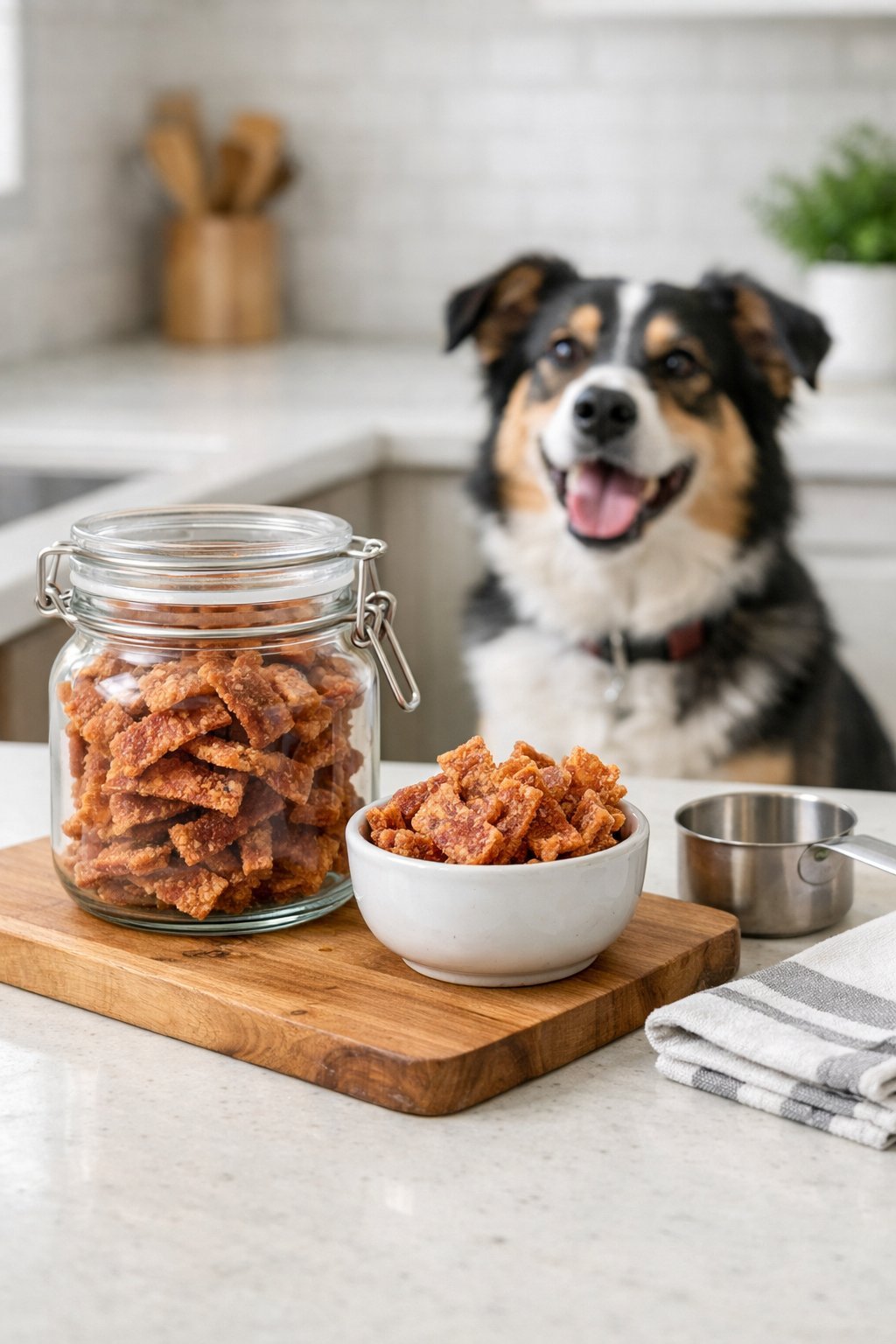
Bacon dog treats need proper portion control and storage to keep your pup healthy and the treats fresh. Let’s look at the right serving amounts for different dog sizes, the best ways to store these snacks, and how to spot when they’ve gone bad.
Appropriate Serving Sizes
The amount of bacon treats your dog should get depends on their size. Small dogs under 20 pounds need 1-2 treats per day, while medium dogs between 20-50 pounds can have 2-3 treats daily.
Large dogs over 50 pounds can enjoy 3-4 treats per day. Treats should make up no more than 10% of your dog’s daily calories.
Bacon treats are high in fat, so I always adjust my dog’s regular meals when I give extra snacks. Watch your dog when introducing bacon treats for the first time.
Some dogs might have sensitivities to rich foods or specific ingredients.
How to Store Treats
Homemade bacon treats can last up to 7 days in the refrigerator when stored correctly. I always use an airtight container or resealable bag with as much air pressed out as possible.
For longer storage, the freezer is your best friend. Frozen bacon treats can last several months.
I separate layers with parchment paper to prevent the treats from sticking together. Store-bought bacon treats that haven’t been opened can usually stay at room temperature, but always check the package instructions.
Signs of Spoiled Treats
I always check treats before giving them to my dog. An unusual odor is the first warning sign that something’s wrong.
Visible mold, changed texture or color, and a hardened or crumbly consistency all mean the treats need to go in the trash. Bacon treats that feel slimy or have developed a sticky coating have gone bad.
If the treats smell rancid or different from when you first made them, don’t risk it. I throw out any treats I’m unsure about because my dog’s health isn’t worth the risk.
Frequently Asked Questions
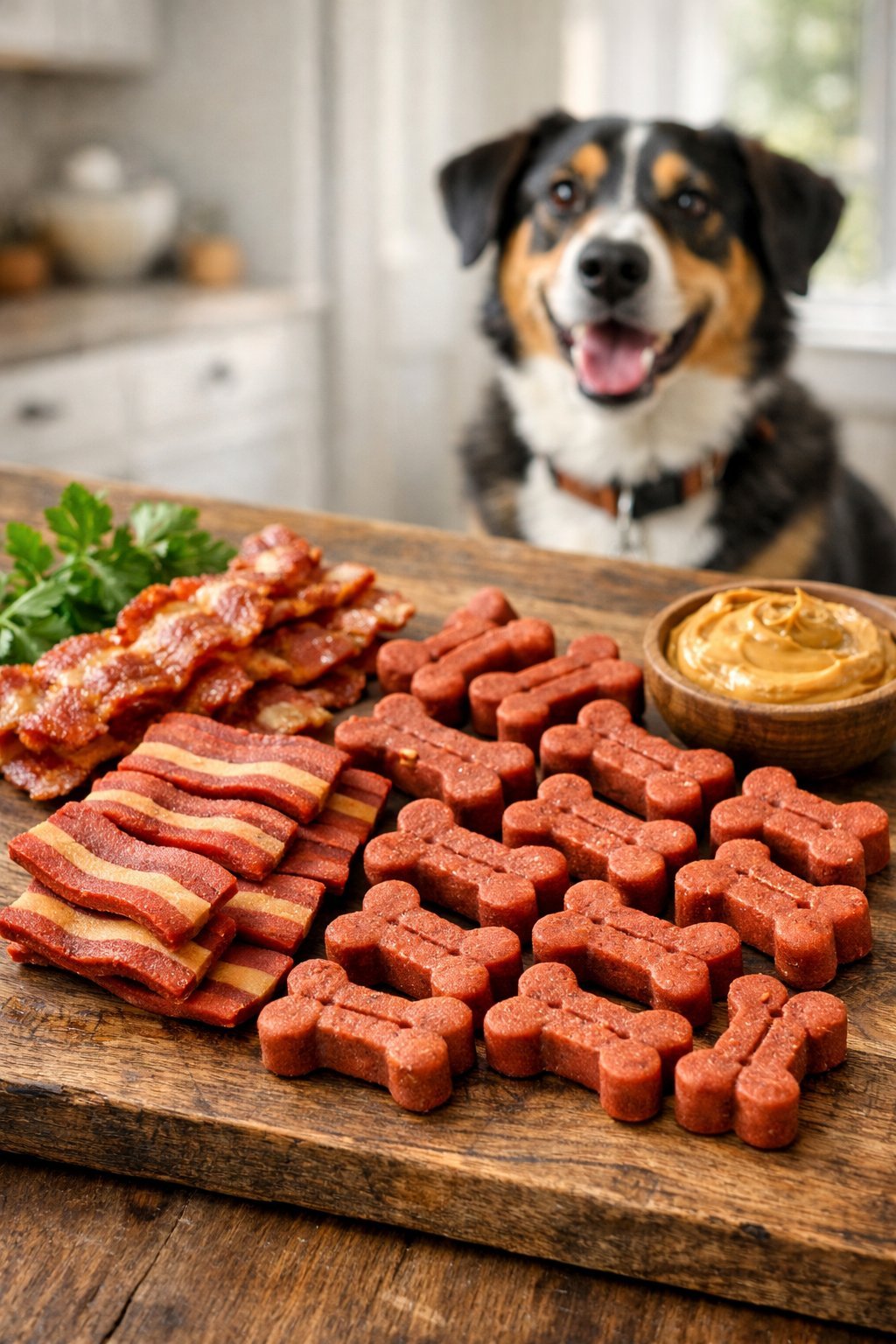
Dog owners often want to know about making treats at home, understanding health risks, and finding the best products available. Treats should stay under 10% of your dog’s daily calories to keep snacking safe and healthy.
What are some homemade bacon dog treat recipes?
I love making homemade bacon dog treats because I can control exactly what goes into them. The simplest recipe combines cooked bacon pieces with whole wheat flour, an egg, and a bit of water to form a dough.
You can roll out the dough and cut it into small shapes before baking at 350°F for about 20 minutes. Another easy option is to bake thin strips of bacon until they’re crispy, then break them into training-size pieces.
Store homemade treats in an airtight container in the refrigerator for up to one week.
Have there been any health concerns associated with bacon-flavored dog treats?
Raw bacon poses dangers to dogs because of its high salt content, fat levels, and additives. Real bacon contains ingredients that can upset your dog’s stomach or lead to pancreatitis if given too often.
I recommend looking for treats with natural bacon flavoring instead of real bacon. These products are made specifically for dogs and avoid the health risks.
For a 30-pound dog, keep bacon treats to roughly 2-3 small strips or about 6-8 training-size bits per day. This keeps treats under 10% of daily calories.
What are the most popular bacon-flavored dog treats on the market?
Beggin’ treats are made with real bacon combined with other quality ingredients. They’re one of the most recognized brands in stores.
I’ve seen several top bacon dog treats that consistently get good feedback from pet owners. Popular options include training-size bits, strips, and chewy treats in various textures.
Many brands now offer bacon-flavored options made specifically for different dog sizes. Some focus on soft treats for older dogs while others make crunchy biscuits.
Can you share some reviews on bacon dog treats?
I’ve noticed that the 10 best and safest bacon dog treats have dogs drooling and begging for more. Dogs respond strongly to the bacon smell and taste.
Reviews often mention that dogs who are picky eaters will still take bacon-flavored treats. Many owners use them successfully for training because dogs stay motivated.
The main complaints I see involve treats that are too hard for senior dogs or products with too many fillers. Pet owners prefer treats where bacon or bacon flavoring appears early in the ingredient list.
What are the healthiest bacon dog treats available?
The healthiest bacon treats use real meat as the first ingredient without artificial preservatives or flavors. I look for options with simple ingredient lists I can understand.
Treats labeled for specific health needs, like grain-free or limited ingredient formulas, work well for dogs with sensitivities. Some brands add vitamins or joint-supporting ingredients.
I avoid treats with lots of salt, sugar, or chemical additives. Natural bacon flavoring tends to be healthier than products loaded with real bacon fat.
How do bacon and cheese dog treats compare to regular bacon dog treats?
Bacon and cheese treats mix two flavors that most dogs go crazy for. They usually smell stronger than treats with just bacon.
The cheese boosts the protein, but it also means more calories and fat. It’s a good idea to watch portion sizes with these combo treats.
If your dog has trouble with dairy, plain bacon treats might be a better choice. Cheese can also make treats softer, which is great for dogs who don’t like hard biscuits.
Printable Recipe Card
Want just the essential recipe details without scrolling through the article? Get our printable recipe card with just the ingredients and instructions.
