Puppy Training Tips: Essential Guidance for Raising a Well-Behaved Dog

Puppy Training Tips – Getting a new puppy is exciting, but it can also feel overwhelming when you’re not sure where to start with training. The first few weeks with your puppy are the most important time to establish good habits, teach basic commands, and help your pup feel confident in their new home.
I’ve put together this guide to walk you through everything you need to know about training your new puppy.
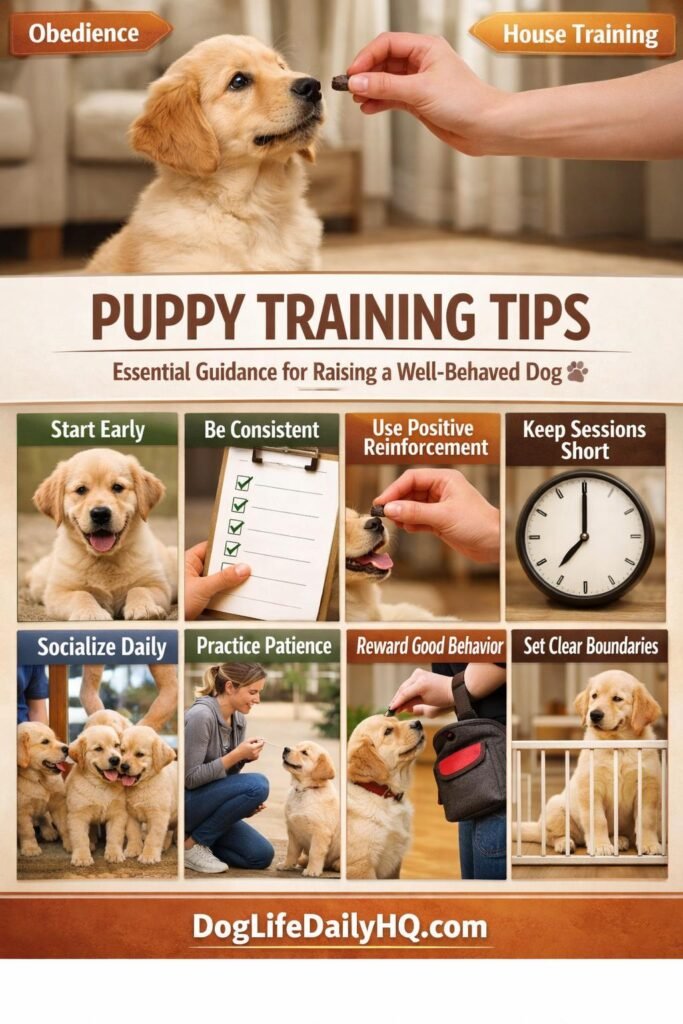
Training your puppy doesn’t have to be stressful or confusing. With the right approach and some patience, you can help your puppy learn the skills they need to become a well-behaved adult dog.
From potty training to socialization, I’ll share expert techniques that work. Whether you’re a first-time dog owner or just need a refresher, this guide covers the most important training topics.
You’ll learn how to teach basic commands, handle common behavior problems, and set your puppy up for success.
Key Takeaways
- Start training your puppy as soon as you bring them home to build good habits early
- Focus on positive reinforcement methods and basic commands like sit, stay, and come
- Socialization and consistent schedules are essential for raising a confident, well-behaved dog
Getting Started With Puppy Training
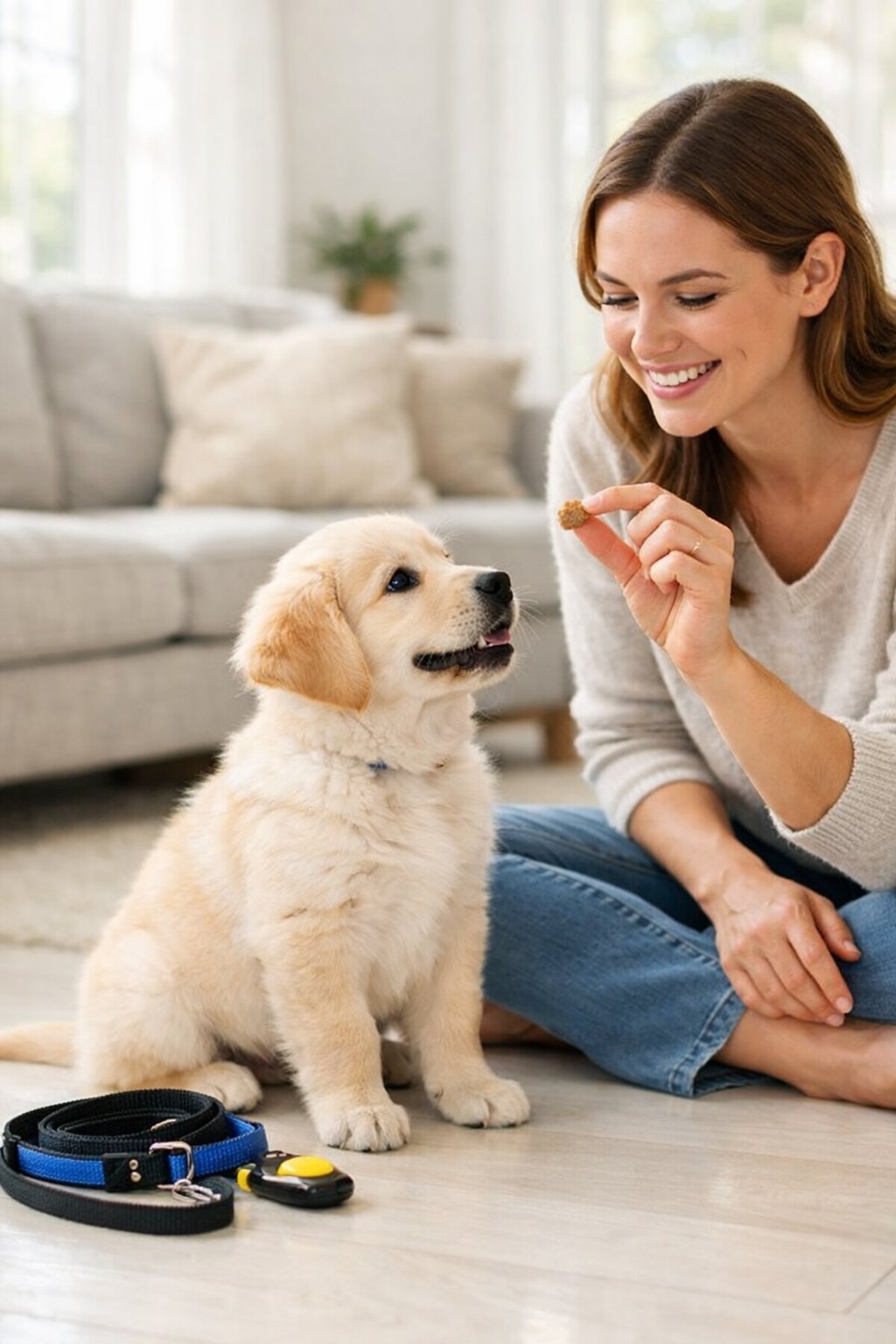
Success with puppy training starts before your first lesson by creating the right environment. Gather essential supplies and understand what your puppy can realistically achieve at different ages.
Preparing Your Home for Training Success
I recommend setting up your home before your puppy arrives to make training easier from day one. Start by choosing one room where your puppy will spend most of their time initially, which helps with potty training and prevents them from feeling overwhelmed.
Remove any items your puppy might chew on or knock over. This includes electrical cords, toxic plants, shoes, and small objects they could swallow.
I suggest creating designated zones for different activities. Set up a sleeping area with a crate or bed, a feeding station with water and food bowls, and a play zone with safe toys.
This helps your puppy understand where different behaviors are appropriate. Block off areas you don’t want your puppy accessing with baby gates.
Limiting their space makes it easier to supervise them and catch accidents before they happen.
Choosing the Right Training Supplies
Having the right supplies makes training your puppy much smoother. You’ll need a properly fitted collar or harness and a 4-6 foot leash for walking practice.
Get small, soft training treats that your puppy can eat quickly without losing focus. I prefer treats about the size of a pea that won’t fill up their stomach during training sessions.
A crate that gives your puppy enough room to stand up, turn around, and lie down comfortably is essential for basic puppy training. Choose one with a divider so you can adjust the space as they grow.
You’ll also need cleaning supplies specifically designed for pet accidents. Enzyme-based cleaners remove odors that might encourage your puppy to go in the same spot again.
Setting Realistic Training Goals
Understanding what puppies can handle at different ages prevents frustration for both of us. Puppies under 12 weeks have very short attention spans of just 5-10 minutes, so I keep training sessions brief and fun.
Early puppy training should focus on socialization, bite inhibition, and basic house rules rather than complex commands. I prioritize teaching my puppy their name, coming when called, and where to potty.
Most puppies can’t hold their bladder for more than one hour per month of age. A 2-month-old puppy needs bathroom breaks every two hours, so I plan my schedule around this reality.
I expect accidents and mistakes during the first few months. Puppies learn through repetition and consistency, not perfection.
Essential Training Fundamentals
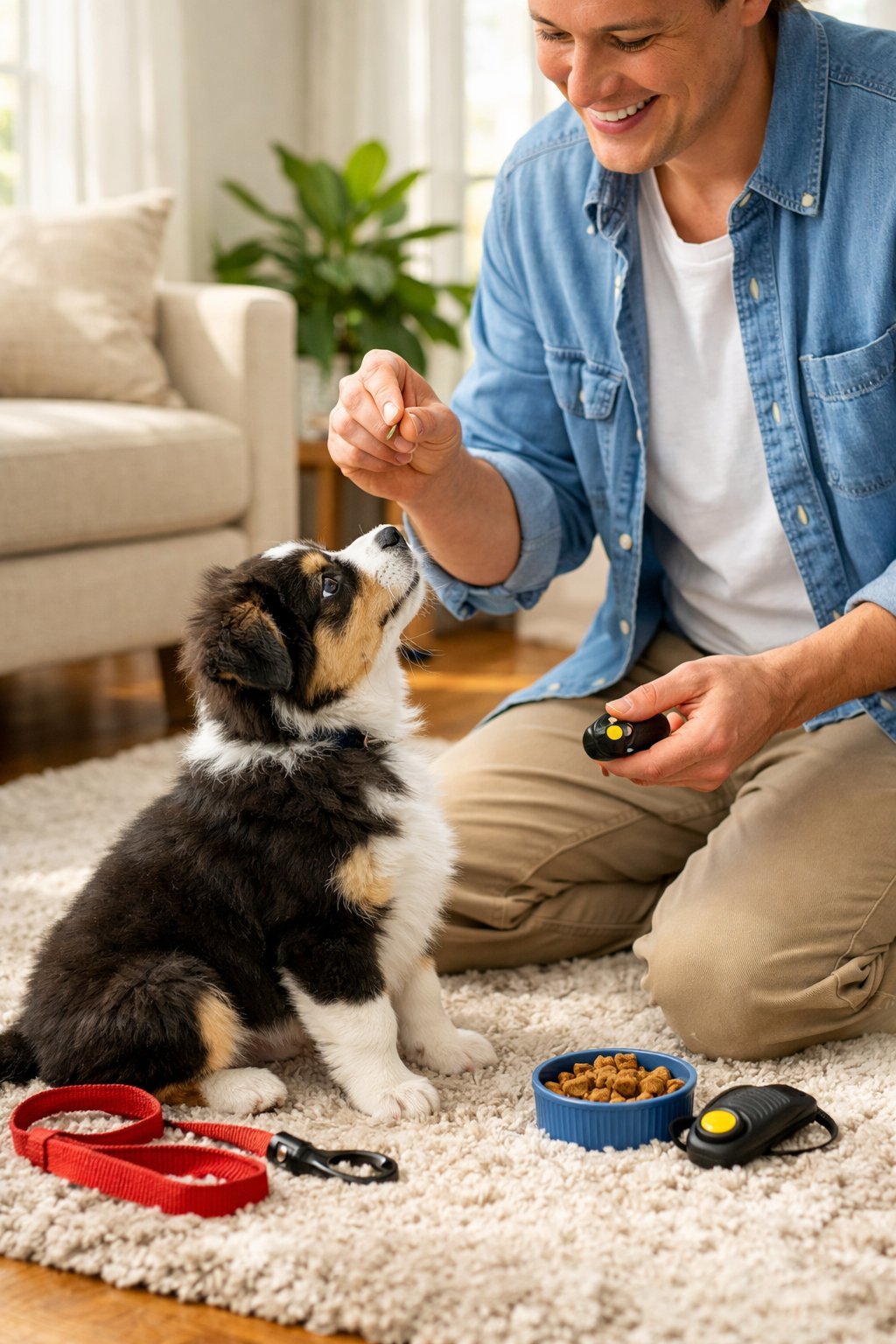
Starting with the right training approach makes all the difference in raising a well-behaved dog. I focus on creating consistent routines, using rewards to encourage good behavior, and keeping training sessions short and effective.
Building Positive Routines
Puppies thrive on predictability. Setting up a daily schedule for feeding, potty breaks, playtime, and sleep helps my puppy know what to expect throughout the day.
I feed my puppy at the same times each day, which makes potty training much easier. Most puppies need to go outside within 15-20 minutes after eating.
I also take my puppy out first thing in the morning, after naps, and before bedtime. Creating structure through schedules teaches my puppy good habits from the start.
I use a consistent routine for everything, including where we play and where my puppy sleeps. This helps reduce confusion and anxiety.
I keep my puppy’s crate in the same spot and use the same door when going outside for potty breaks. These small consistencies add up to big results in training success.
Using Reward-Based Methods
I always reward behaviors I want to see again. This means giving treats, praise, or playtime immediately when my puppy does something right.
Positive reinforcement is far more effective than punishment. When my puppy sits on command, I give a small treat within one second of the behavior.
This quick reward helps my puppy connect the action with the positive outcome. I use high-value treats like small pieces of chicken or cheese for new commands.
I also praise my puppy with an excited voice and gentle petting. Some puppies respond better to play rewards than food.
I’ve discovered that good things happen when puppies listen to their humans, which builds trust and encourages cooperation.
Timing Your Training Sessions
I keep training sessions short because puppies have limited attention spans. Five to ten minutes is perfect for young puppies.
I’d rather do three short sessions throughout the day than one long session. I train my puppy when they’re alert but not overly excited or tired.
Right after a nap or a potty break works well. I avoid training right before meals when my puppy is too hungry to focus.
I end each session on a positive note, even if that means asking for an easy command my puppy already knows. This keeps training fun and prevents frustration for both of us.
I watch for signs my puppy is losing focus, like looking away or lying down, and stop before they get bored.
Teaching Basic Commands

I recommend starting with core obedience commands like sit, stay, and come as soon as you bring your puppy home. These foundational skills help establish communication, build confidence, and keep your puppy safe in everyday situations.
Sit, Stay, and Come
The five basic obedience cues every dog should know form the foundation of good behavior. I find that “sit” is the easiest command to teach first because puppies naturally sit on their own.
To teach sit, I hold a treat close to my puppy’s nose and slowly move it up and back over their head. As their head follows the treat, their bottom naturally drops to the ground.
The moment they sit, I say “sit” and give the treat immediately. For “stay,” I start by asking my puppy to sit, then hold my palm out like a stop sign while taking one step back.
I return immediately and reward them if they stayed put. I gradually increase the distance and duration over several training sessions.
“Come” is the most important safety command. I practice in a safe, enclosed area by saying my puppy’s name followed by “come” in an excited voice.
When they run to me, I reward them generously with treats and praise.
Loose Leash Walking
Teaching proper leash manners prevents years of pulling and makes walks enjoyable for both of us. I never let my puppy pull me toward something they want because this teaches them that pulling works.
I start training in a quiet area with few distractions. When my puppy walks beside me with a loose leash, I reward them frequently.
The moment the leash gets tight, I stop walking completely and stand still. I wait for my puppy to look back at me or return to my side.
Once the leash is loose again, I continue walking. This teaches them that pulling stops all forward progress.
I keep training sessions short, around 5-10 minutes, because puppies have limited attention spans. Consistency is more important than duration when building this skill.
Crate Training Essentials
A crate becomes a safe den where my puppy can rest and feel secure. I choose a crate that’s large enough for my puppy to stand up, turn around, and lie down comfortably, but not so large that they can use one end as a bathroom.
I make the crate inviting by placing soft bedding and a favorite toy inside. I never use the crate as punishment because I want my puppy to view it positively.
I start by feeding meals inside the crate with the door open. Once my puppy enters willingly, I close the door for a few seconds while they eat.
I gradually increase the time the door stays closed. At night, I place the crate in my bedroom so my puppy doesn’t feel isolated.
Young puppies need bathroom breaks every 2-3 hours, so I set an alarm to take them out.
Housebreaking Techniques
I take my puppy outside immediately after waking up, after meals, after play sessions, and before bedtime. Puppies typically need to go every 1-2 hours during the day.
I always take my puppy to the same spot outside because the scent helps trigger elimination. I use a specific phrase like “go potty” each time, and I reward them immediately after they finish.
Common housebreaking schedule:
- First thing in morning
- After every meal (15-30 minutes)
- After naps
- After play sessions
- Before bedtime
- Every 1-2 hours for young puppies
I watch for signs that my puppy needs to go, such as sniffing, circling, or walking toward the door. If an accident happens inside, I clean it thoroughly with an enzyme cleaner to remove all odor.
I never punish accidents because puppies don’t understand delayed consequences. Instead, I focus on reinforcing success by celebrating every time my puppy eliminates in the correct spot.
Addressing Puppy Behavior Challenges
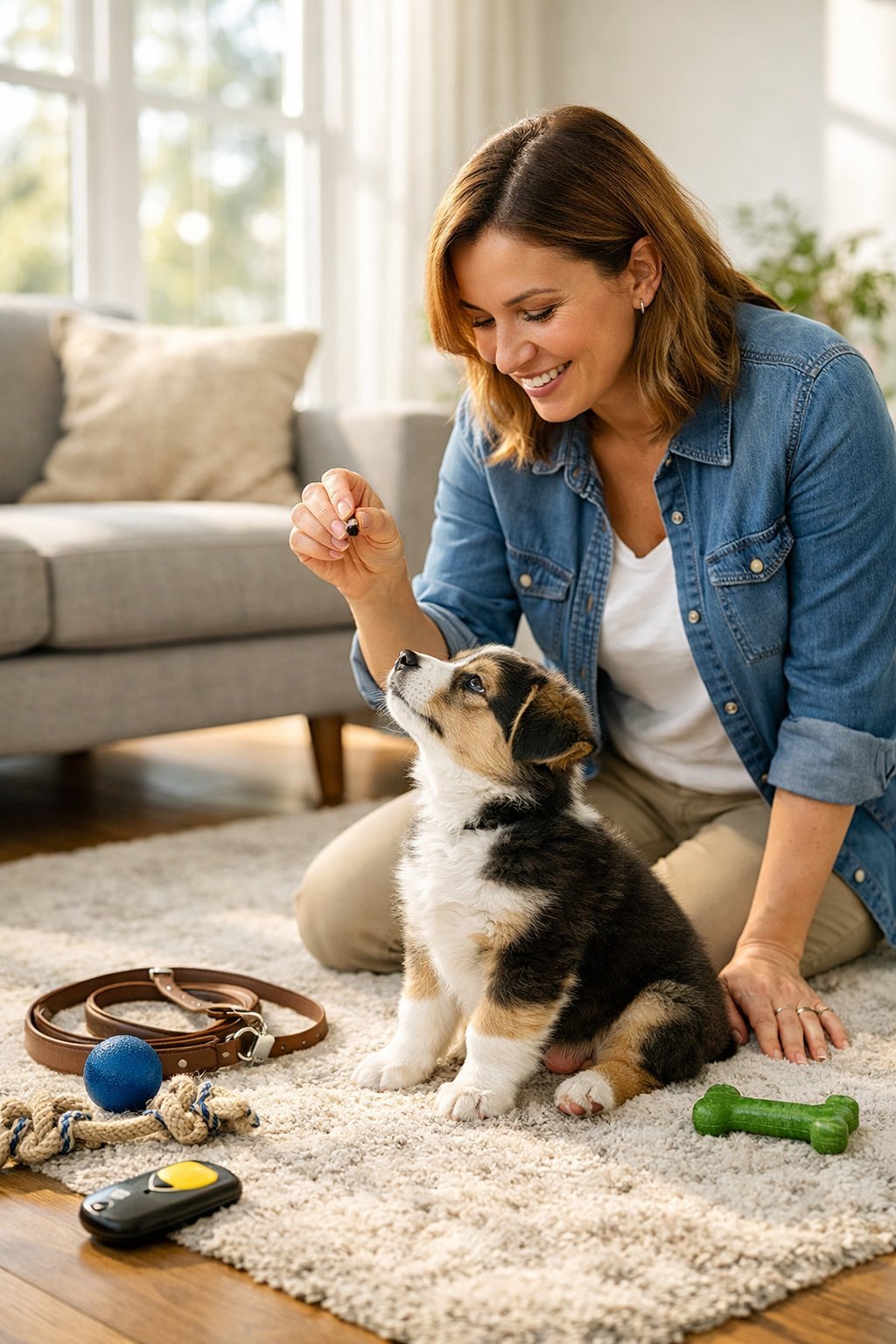
Young puppies naturally explore their world through their mouths, voices, and energy. This often leads to behaviors like biting, barking, jumping, and anxiety when left alone.
I’ll show you practical ways to handle these common issues so you can build better habits early on.
Preventing Biting and Chewing
Puppies bite and chew for a few reasons: teething, exploring new things, or playful energy. They’re just being puppies and learning about the world.
If your puppy bites during play, make a high-pitched yelp and stop all interaction. This mimics how their littermates would react and helps teach bite inhibition.
Walk away for about 30 seconds to show that biting means playtime is over. This simple reaction gets the message across.
Give your puppy safe chew toys made of rubber or nylon. Switch up the textures to keep things interesting.
If you catch your puppy chewing on something they shouldn’t, gently redirect them to an approved toy. No need to scold—just swap the item.
Puppy-proof your home by moving shoes, cords, and other tempting things out of reach. Baby gates are great for keeping your puppy out of rooms you can’t supervise.
Make sure your puppy gets enough exercise and mental stimulation each day. A tired puppy is less likely to chew on your favorite stuff.
Managing Barking and Whining
Figure out what triggers your puppy’s barking. Common reasons are boredom, anxiety, wanting attention, or reacting to something new.
Don’t give attention right away when your puppy barks. Wait until they’re quiet for at least five seconds before responding so they learn that calmness gets your attention.
Exercise and mental enrichment are your best friends here. Age-appropriate play sessions and puzzle toys help keep your puppy busy. For a 10-week-old, aim for 10-15 minutes of structured exercise twice a day.
For alert barking, teach the “quiet” command. Say “quiet” when your puppy stops barking and immediately give a treat.
If your puppy whines in their crate at night, check if they need a potty break, water, or just some comfort. Avoid letting them out right away, so you don’t reinforce whining as a way to escape.
Handling Jumping Up
Puppies jump up to greet people and get attention. It’s cute now, but not so much when they’re bigger.
Instead of just saying “no,” teach your puppy to sit before getting attention. Only reward them when all four paws are on the floor. If they jump, turn away and ignore them.
Consistency is key. Everyone in the house needs to follow the same rules, or your puppy will get mixed signals.
Practice greetings in easy situations first. Have a friend help out while you hold the leash, and reward calm behavior.
When guests arrive, put your puppy on a leash so you have control. Keep treats by the door for quick rewards during greetings.
Dealing With Separation Anxiety
Separation anxiety shows up as barking, chewing, accidents, or pacing when your puppy is left alone. It’s tough on both of you.
Start early by making alone time a positive thing. Begin with super short absences—just 30 seconds—and slowly increase the time as your puppy gets comfortable.
Set up a cozy, safe space like a crate or small room. Leave an item with your scent and a special toy they only get when alone.
Try “pretend departures” by picking up your keys or putting on your coat, then just sitting back down. This helps your puppy get used to those cues.
Give your puppy a good workout before you leave. A tired puppy is more likely to nap while you’re gone. Puzzle feeders can help tire them out mentally, too.
Build confidence with training and socialization. Confident puppies handle being alone much better. Never punish anxiety-related behaviors—it only makes things harder.
Socialization and Life Skills
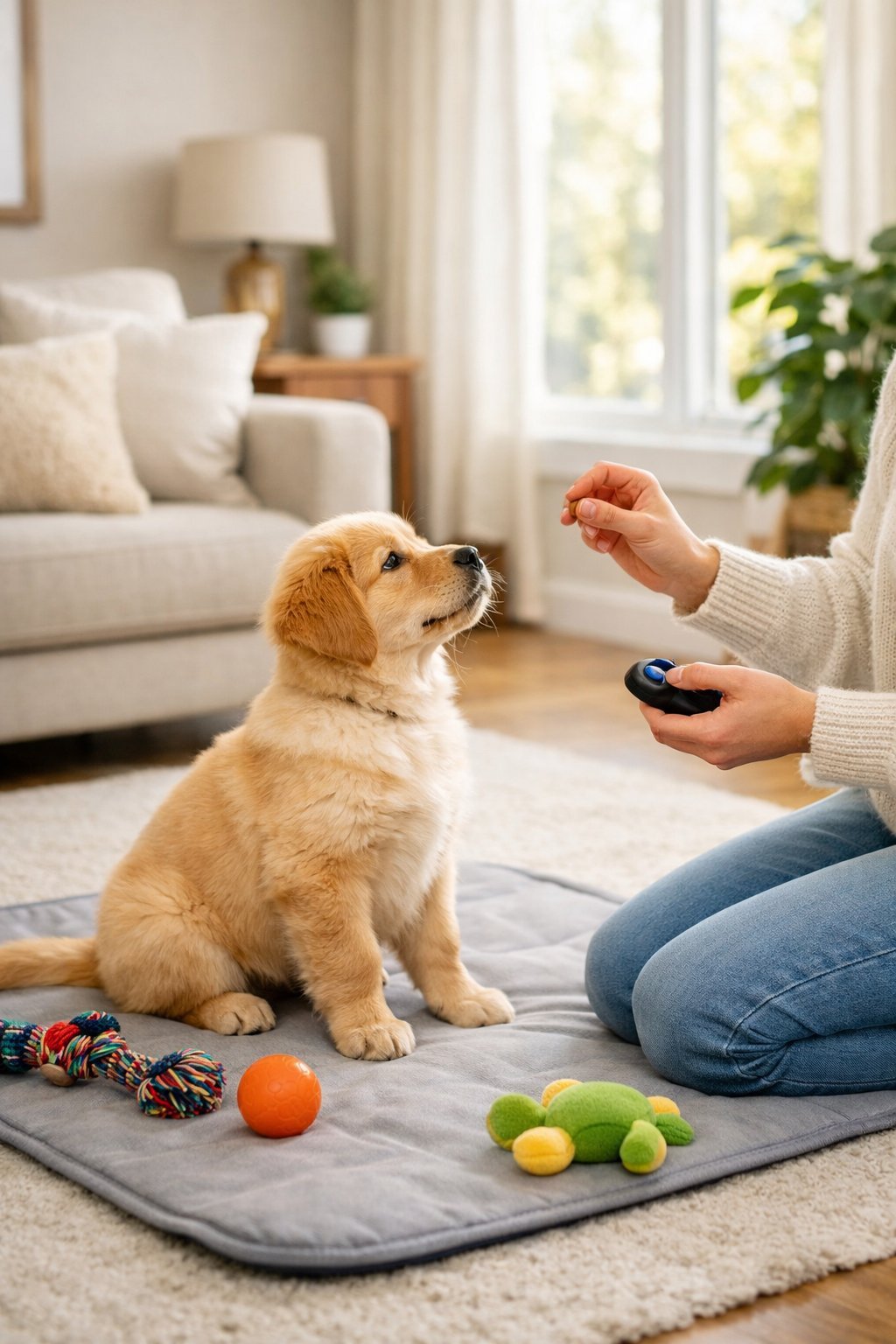
Those first few months are huge for shaping your puppy’s view of the world. Positive experiences with new places, animals, and routines help them grow into confident, happy dogs.
Introducing Your Puppy to New Experiences
The critical socialization window is between 3 and 16 weeks. This is the time to introduce your puppy to all sorts of things.
Start with calm, controlled settings and slowly add more challenges. Let your puppy try walking on grass, tile, carpet, and gravel.
Play recordings of thunder, fireworks, or traffic at low volume during meals. This helps your puppy get used to new sounds in a positive way.
Key experiences to introduce:
- Car rides to fun places
- Different types of weather
- Noisy things like vacuums and dishwashers
- New indoor and outdoor spots
- People wearing hats, sunglasses, or uniforms
Keep new experiences short and sweet. If your puppy gets nervous, take a step back and try again later.
Meeting Other Dogs and People
Proper socialization helps prevent fear and anxiety as your puppy grows. Arrange safe meetups with friendly, vaccinated dogs.
Puppy classes are a great way to let your pup interact with others in a structured environment. Wait on dog parks until your puppy is fully vaccinated and has some basic training.
When meeting people, let your puppy approach first. Exposure to people of all ages, sizes, and appearances is important.
Kids move differently than adults, so keep those interactions supervised. Always reward calm greetings and redirect any jumping or over-excitement.
Handling Vet Visits and Grooming
Early vet visits are important for both health and behavior. Book some extra visits where your puppy just gets treats and love from the staff.
At home, practice touching your puppy’s paws, ears, and mouth every day. Handle each toe and look at their teeth while giving treats.
Start grooming with short sessions and a soft brush. Let your puppy hear clippers and blow dryers from a distance before using them. Groomers will thank you if your puppy is already comfortable with being handled and hearing grooming tools.
Frequently Asked Questions
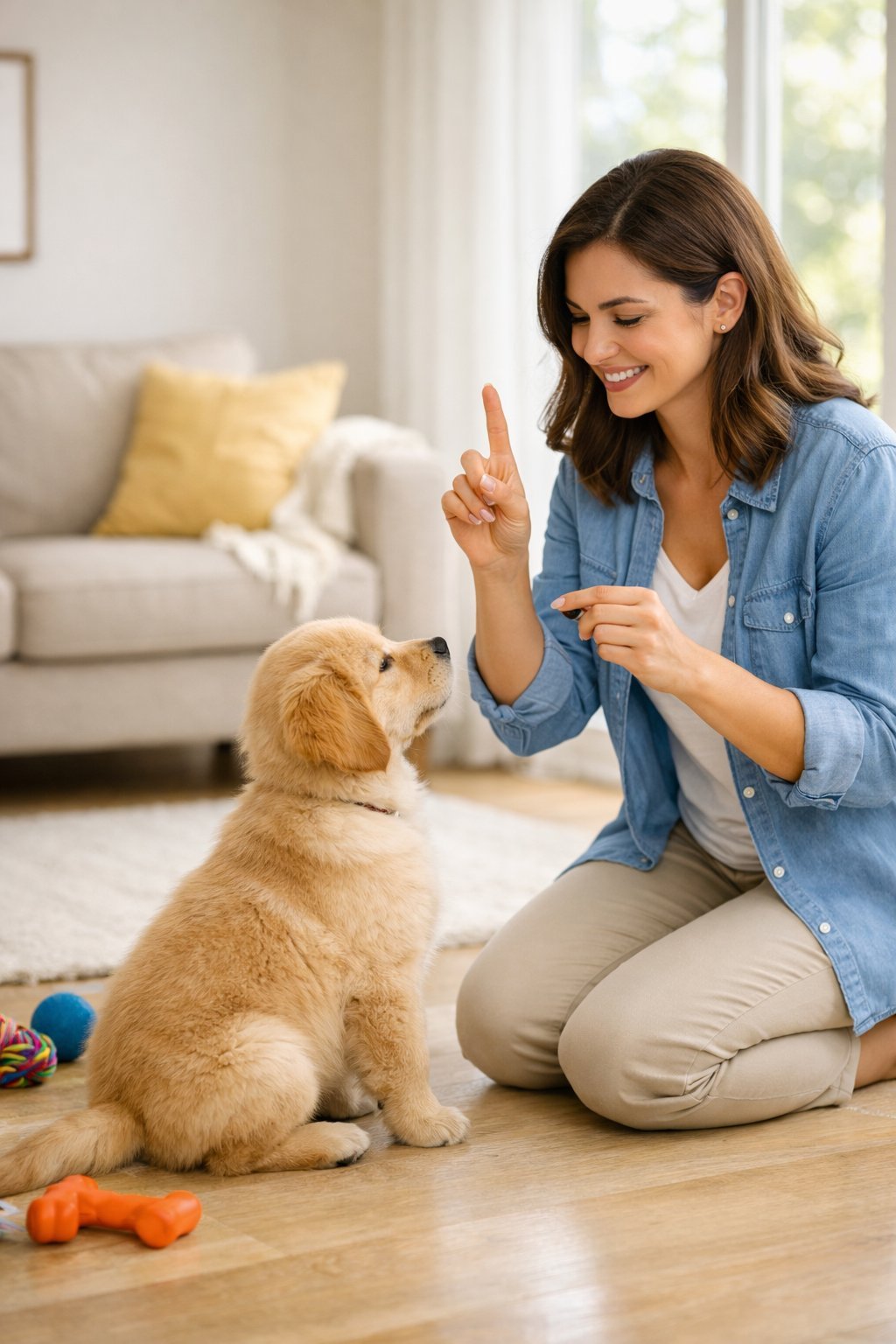
New puppy owners have lots of questions about training and handling common challenges. It’s all about understanding your puppy’s needs and using techniques that work.
How can I successfully housebreak my new puppy?
Take your puppy outside first thing in the morning, after meals, after naps, and before bed. Young puppies usually need to go every 2-3 hours.
When your puppy goes potty outside, give lots of praise or a small treat right away. This helps them connect the dots between going outside and getting rewarded.
Accidents will happen—just clean them up with an enzyme cleaner and move on. No need to scold, since that can make your puppy afraid.
Crate training can help because puppies don’t like to soil where they sleep. Make sure the crate is just big enough for your puppy to stand up, turn around, and lie down.
What’s the best way to socialize my puppy with other dogs and people?
Start socialization as early as possible, ideally between 3 and 14 weeks. This is when your puppy is most open to new experiences.
Expose your puppy to all sorts of people—kids, adults, people with hats or wheelchairs. Each positive meeting builds confidence.
Puppy classes are great for safe, controlled dog-to-dog interactions. Choose classes with positive training and socialization.
Supervise all interactions and watch for signs of stress, like tucked tails or trying to hide. If your puppy seems overwhelmed, give them space and try again later.
When should I start obedience training with my puppy, and what are the basic commands to teach first?
Start training the day your puppy comes home. Young puppies pick things up fast, and early lessons stick.
First, teach your puppy their name and “sit.” Hold a treat near their nose, move it back over their head, and when their bottom hits the ground, reward them.
Next, work on “come.” Practice in a quiet space and reward every time they run to you.
Once your puppy has sit and come down, add “stay” and “down.” Keep training sessions short—5 to 10 minutes is perfect for young pups.
How do I deal with common puppy behaviors like biting, chewing, and barking?
Puppy biting is normal but should be redirected early. When your puppy bites, stop playing and turn away for 10-15 seconds.
Give your puppy plenty of safe chew toys and rotate them to keep things fresh. Teething puppies (3 to 6 months old) especially need things to chew.
If your puppy chews on something off-limits, calmly offer a toy instead. Avoid yelling or chasing, since that can turn it into a game.
Barking usually has a cause—boredom, excitement, fear, or a need. Figure out what’s behind the barking so you can address it properly.
Which types of rewards are most effective when training my puppy?
Small, soft treats work best for training because your puppy can eat them quickly.
Mix up the rewards—sometimes treats, sometimes praise, petting, or a quick play session. Variety keeps your puppy interested.
Save high-value treats like tiny bits of chicken or cheese for tough commands or distracting places.
Timing is everything. Give the reward within a second or two of the right behavior so your puppy knows exactly what they’re being rewarded for.
How often should I schedule training sessions to keep my puppy engaged but not overwhelmed?
I train in short bursts of 5-10 minutes, two to three times per day. Puppies tire quickly, so keeping sessions short helps avoid frustration.
I always end on a positive note, even if that means going back to an easy command my puppy already knows. This helps keep them excited for the next session.
Throughout the day, I look for natural training opportunities. For example, I’ll ask my puppy to sit before meals or stay before going outside.
Rest days are important too. I make sure my puppy gets time to play, explore, and just be a puppy without constant instruction.