
Leash Training Puppy: Transform Your Wild Walks Into Peaceful Strolls

Leash Training Puppy – Walking your puppy should be fun, but it can get overwhelming when your pup pulls, lunges, or wraps you in the leash. I know how frustrating those first walks can be.
The good news is that with consistent training and the right techniques, most puppies can learn to walk calmly on a leash within 2-4 weeks.
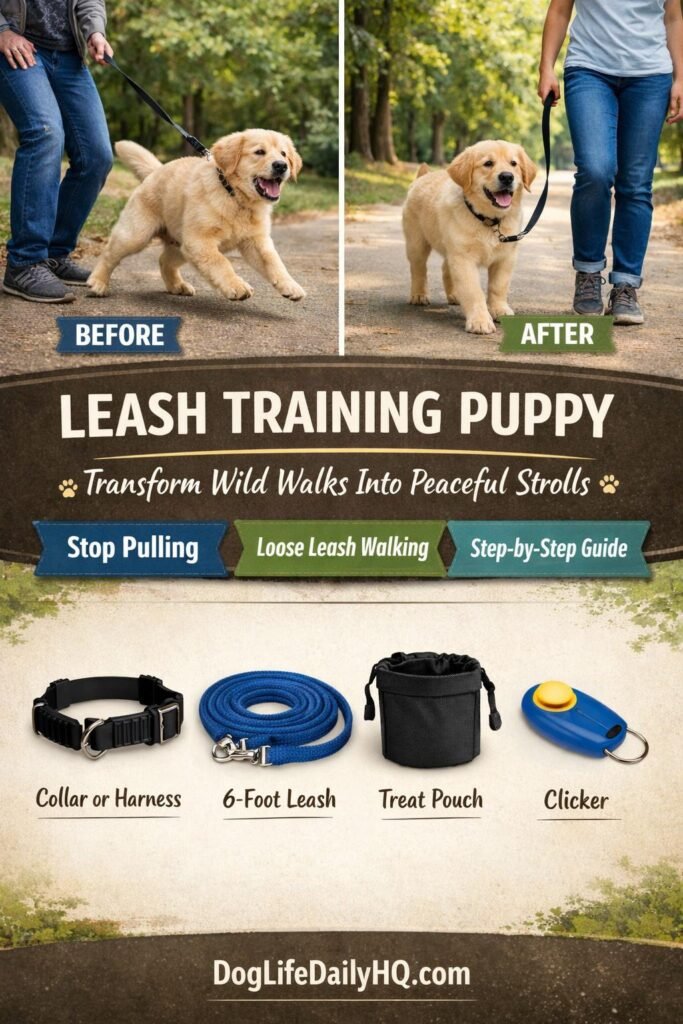
Leash training is one of the most important skills you can teach your puppy. It provides exercise, improves obedience, and really strengthens your bond.
Whether your puppy is just starting out or you’re dealing with stubborn pulling, I’ll share practical steps that work.
In this guide, I’ll walk you through everything from choosing the right gear to handling distractions. You’ll learn how to stop pulling and set the foundation for peaceful, enjoyable walks together.
Key Takeaways
- Successful leash training takes patience, consistency, and positive reinforcement over several weeks.
- Start with basic equipment and short indoor sessions before moving to outdoor walks with distractions.
- Never yank or drag your puppy, and always reward calm walking to build confidence and trust.
Understanding the Basics of Leash Training
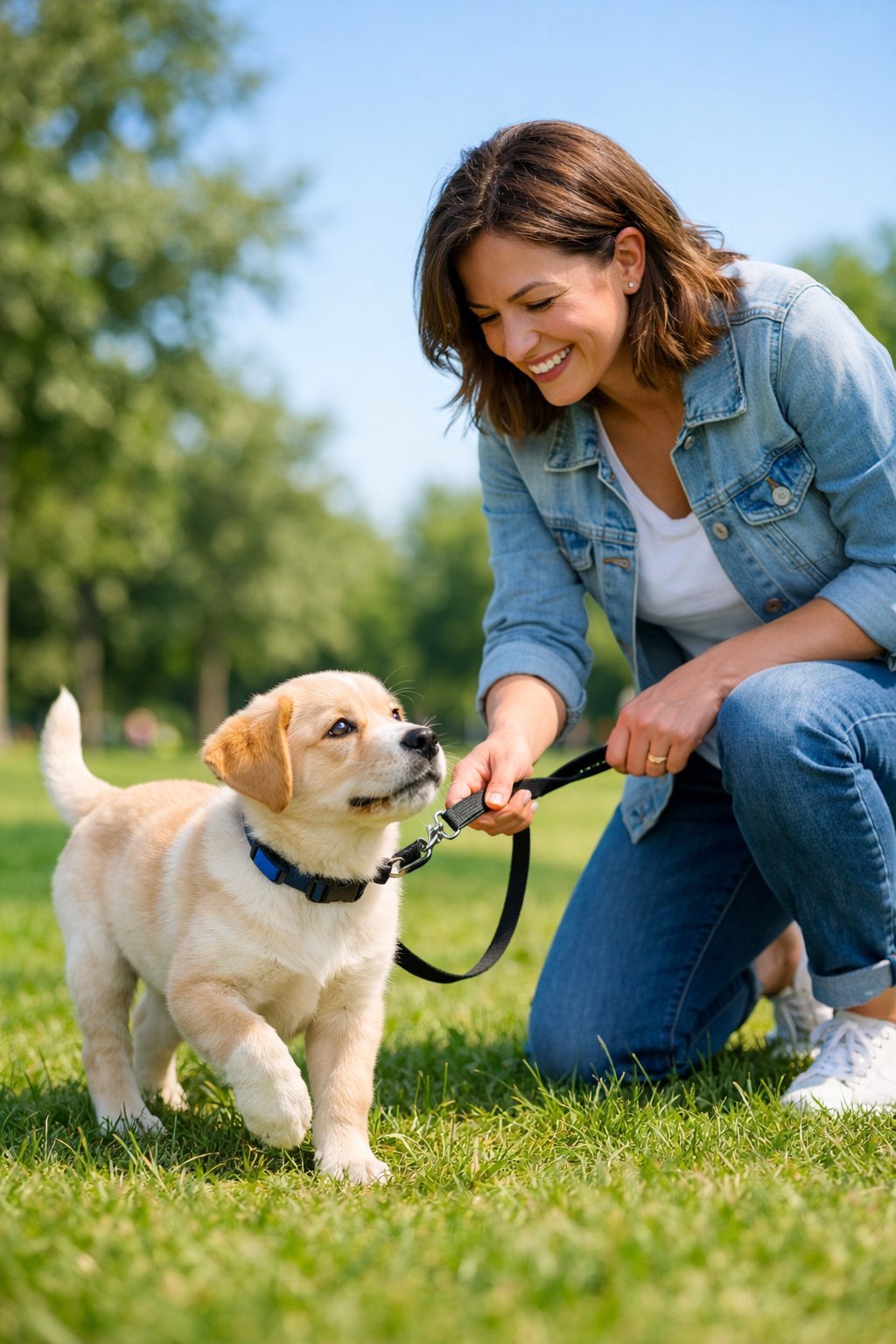
Starting leash training early sets your puppy up for a lifetime of safe, enjoyable walks. The right equipment and timing make a big difference in how quickly your puppy learns.
Why Early Leash Training Matters
I always recommend starting leash training as soon as you bring your puppy home, usually around 8 weeks old. Puppies learn best during their early stages, and waiting too long can make the process tougher.
Early training helps your puppy build positive associations with the leash before any bad habits form. A puppy that pulls constantly can grow into a dog that’s tough to walk, making outings stressful instead of fun.
Teaching your puppy to walk on a leash opens up new experiences for both of you. You’ll be able to explore trails, visit dog-friendly spots, and take safe neighborhood walks.
Starting young also builds your puppy’s confidence around new sights and sounds while they’re still a manageable size. A tiny puppy that pulls is way easier to handle than a full-grown dog with the same habit.
Choosing the Right Collar and Leash
I like starting puppies with a flat buckle collar or harness that fits snugly but allows two fingers underneath. The collar should sit high on the neck, just below the ears and jaw.
For the leash, go for a standard 4 to 6-foot nylon or leather leash. Avoid retractable leashes during training—they teach puppies to pull and give you less control.
Best collar options for puppies:
- Flat buckle collar for basic training
- Front-clip harness for puppies that pull
- Martingale collar for dogs that slip out of regular collars
Pick lightweight materials so your puppy isn’t weighed down. Heavy hardware can be uncomfortable and discourage good walking. Check the fit weekly since puppies grow fast.
Assessing Your Puppy’s Readiness
I look for signs that my puppy is comfortable wearing their collar before adding the leash. They should be able to wear it for short periods without scratching or trying to remove it.
Your puppy is ready for leash training when they can focus on you for a few seconds and respond to their name. Basic attention skills make the whole process smoother.
Watch your puppy’s energy levels, too. Training works best when they’re calm and alert—not overtired or super hyper.
I find that 10 to 15 minutes after a play session is ideal. Some puppies take to the leash right away, while others need more time. Be patient and move at your puppy’s pace.
Step-By-Step Leash Training Techniques
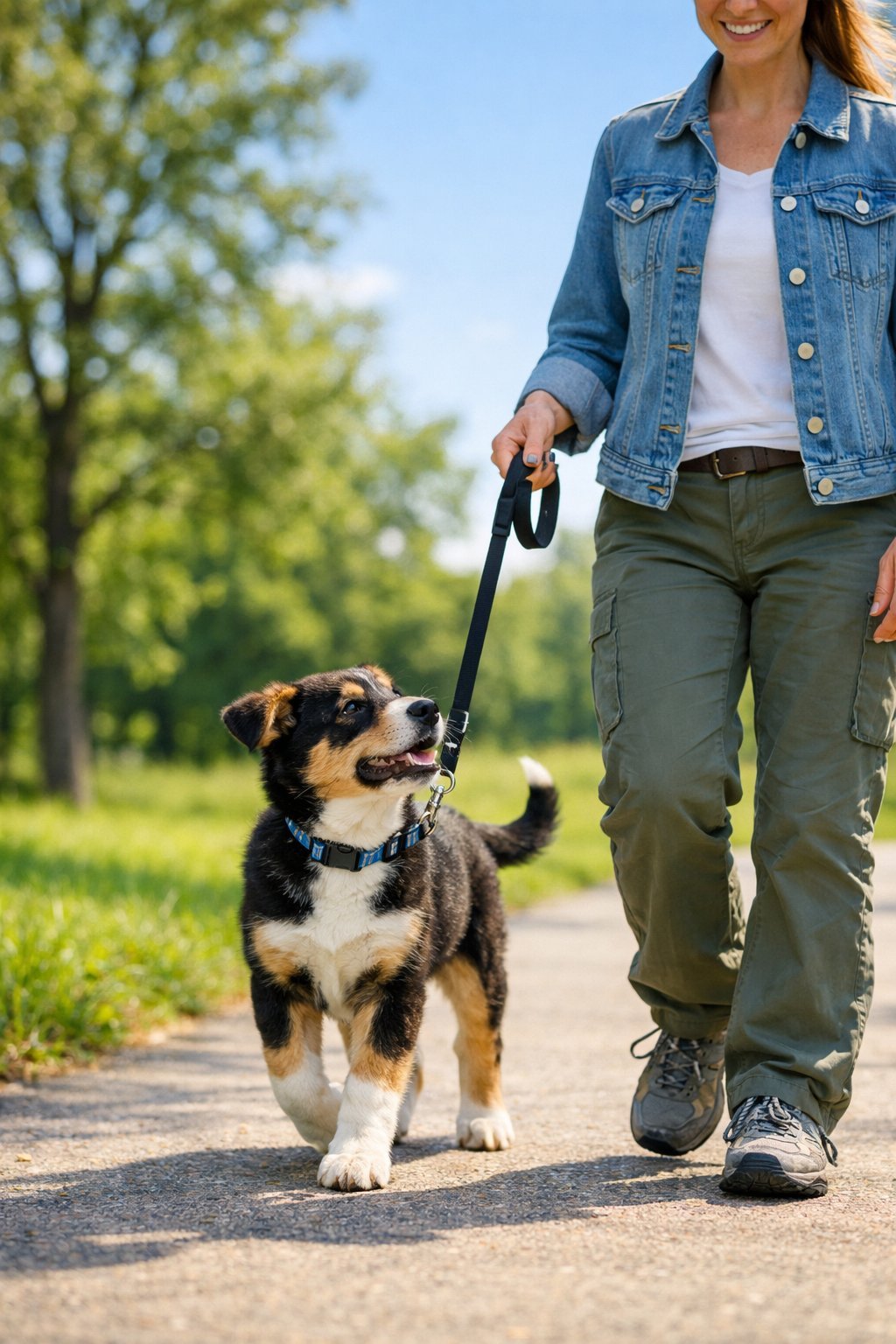
Success with leash training starts by helping your puppy feel good about the leash, then gradually teaching them to walk calmly beside you.
Introducing the Leash Positively
I always start by letting my puppy get comfortable with wearing a collar or harness indoors for short periods. Let them sniff the gear first and give treats right after putting it on.
Once my puppy seems relaxed, I attach the leash and let them drag it around the house while I supervise. This helps them get used to the weight and feel of it.
I make sure to reward calm behavior with treats and praise. After a few sessions, I pick up the leash and follow my puppy around without pulling.
The goal is to make the leash feel like no big deal. Patience is key—no puppy learns to walk perfectly in one day.
I keep these early sessions short, around 5-10 minutes. If my puppy seems stressed or starts biting the leash, we take a break and try again later with more treats and encouragement.
Establishing Good Walking Habits
I start actual walking practice in a quiet, low-distraction spot like my backyard or a calm hallway. I hold treats and encourage my puppy to walk beside me for just a few steps.
The moment my puppy starts pulling, I stop walking. I stand still and wait until the leash loosens, then reward them and keep going.
This teaches them that pulling gets them nowhere, but walking nicely keeps the walk going. I use a consistent command like “let’s go” or “with me” when I start walking.
I keep the leash loose and relaxed, holding it at about waist level. When my puppy walks beside me without pulling, I reward them every few steps with treats and praise.
Key techniques:
- Stop immediately when pulling happens
- Reward loose leash walking often
- Keep training sessions short (10-15 minutes)
- Practice in the same quiet spot until your puppy understands
Building Focus and Attention
I work on getting my puppy to check in with me during walks by using their name and rewarding eye contact. When my puppy looks at me, I give them a high-value treat and lots of praise.
I practice the “check-in” game where I say my puppy’s name and reward them for looking at me. This helps them pay attention to me instead of every squirrel or interesting smell.
Teaching basic commands during walks helps maintain focus. I ask my puppy to sit at curbs or stop signs, which creates natural breaks and keeps their attention on me.
As my puppy improves, I slowly add more distractions. If my puppy struggles, I go back to an easier environment and build up again.
Overcoming Common Leash Training Challenges
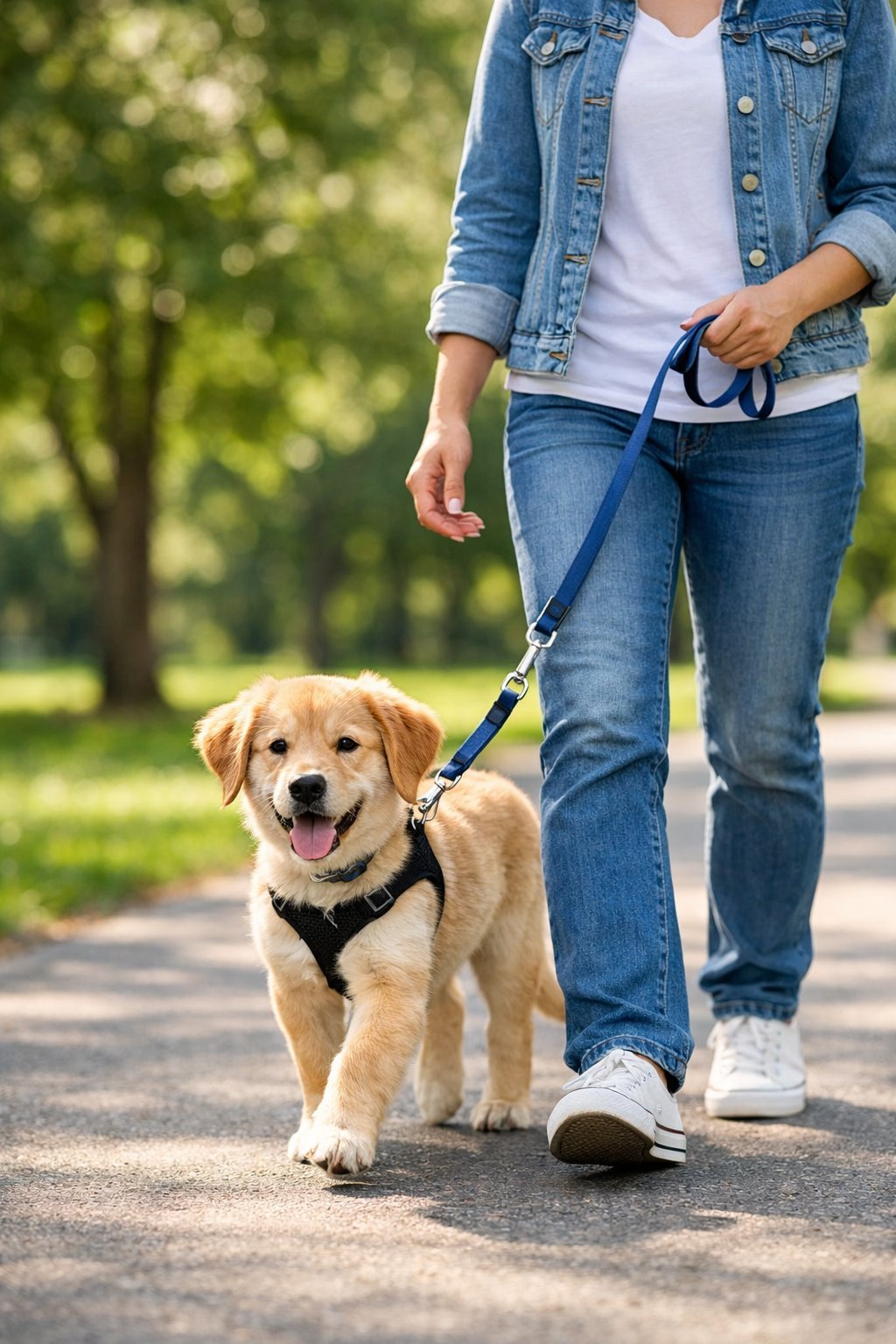
Pulling, lunging, and freezing are the three behaviors that cause the most frustration during puppy walks. Each one needs a different approach, but patience and consistency are always key.
Dealing With Pulling
Pulling happens because puppies naturally want to explore everything faster than we walk. I stop walking the moment my puppy pulls on the leash.
When the leash goes tight, I stand still like a tree. I wait until my puppy looks back at me or the leash loosens, then praise them and keep walking.
What works:
- Stop immediately when pulling starts
- Wait for slack in the leash before moving
- Reward loose-leash walking with treats
- Change direction if your puppy pulls
I use the “stop and go” method every walk. Some walks might only cover a short distance at first, but consistency pays off.
Managing Lunging and Excitement
Lunging usually happens when my puppy sees other dogs, people, or interesting objects. Their excitement takes over, and they forget what they’ve learned.
I keep treats ready and watch for triggers before my puppy notices them. The moment I spot another dog or person, I get my puppy’s attention with a treat.
Distance is my best friend here. I create enough space between my puppy and the trigger so they can stay calm.
As they improve, I slowly decrease that distance over time.
Steps I follow:
- Spot the trigger early
- Get my puppy’s attention
- Reward calm behavior
- Move away if needed
I don’t let my puppy practice lunging. Instead, I redirect their focus to me before they react.
Addressing Stopping or Freezing
Some puppies do the opposite of pulling and just stop completely. Mine would freeze in the middle of the sidewalk, refusing to move.
This usually comes from fear, uncertainty, or feeling overwhelmed. I never drag or pull a frozen puppy—it just creates more fear.
Instead, I kneel down and encourage them with a happy voice. Treats work wonders for frozen puppies.
I toss a treat a few feet ahead to encourage movement. When they take steps toward it, I praise them enthusiastically.
Sometimes my puppy just needs a break. I let them sniff around and process everything for a minute.
Young puppies get tired quickly, and new experiences can be exhausting. I also check if something specific is scaring them, like loud noises or slippery surfaces.
Once I figure out the fear, I work on building confidence around that trigger with gradual exposure and positive reinforcement.
Progressing From Basic to Advanced Walks
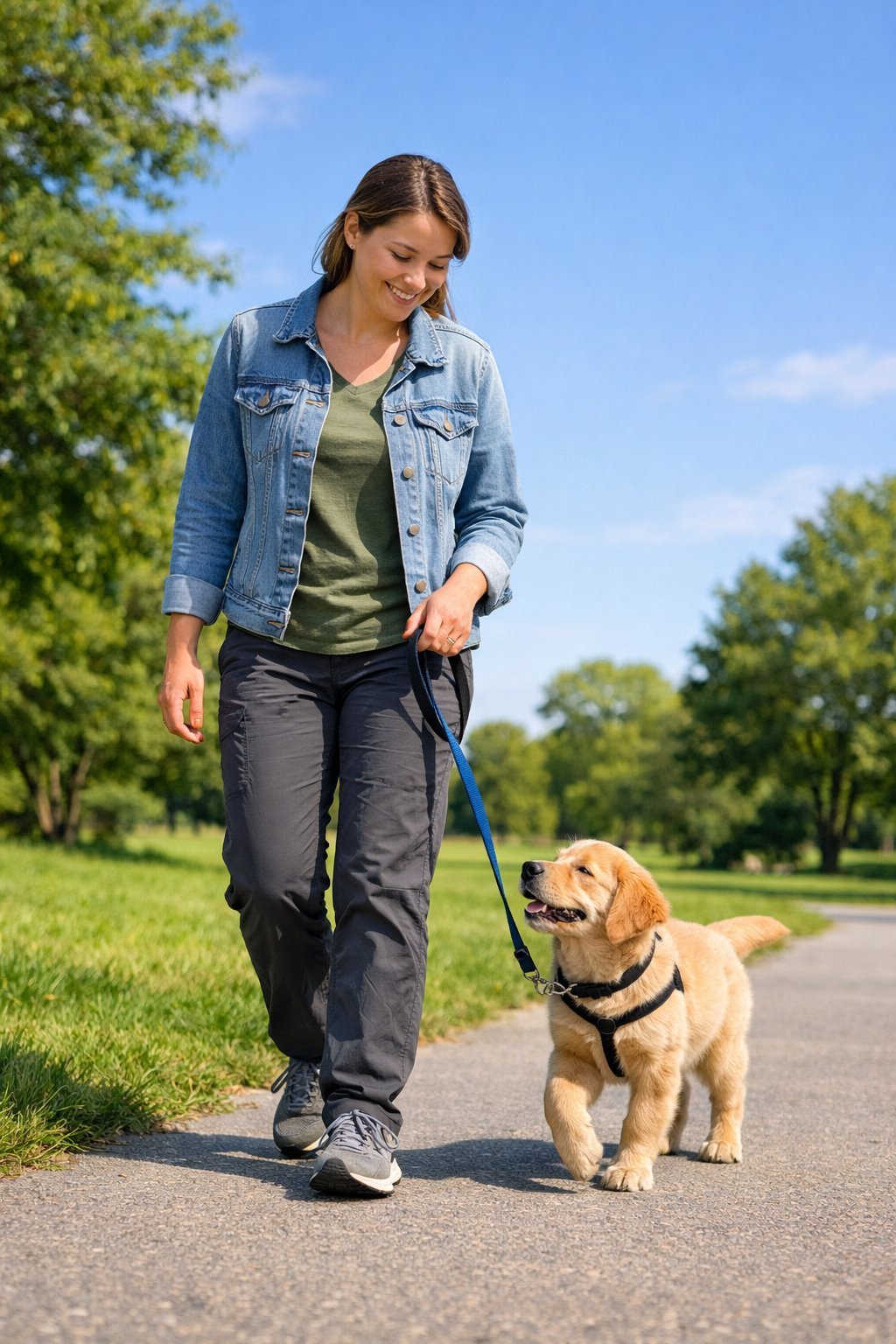
Once your puppy can walk calmly in quiet areas, it’s time to add some challenges. I’ll help you move through distractions, refine your leash technique, and extend your walks.
Increasing Distractions Gradually
Start with low-level distractions like a quiet sidewalk with the occasional passerby. Watch your puppy’s reactions and reward calm behavior when they notice something new but don’t pull.
Next, try moderate distractions like busier streets or parks with other dogs in the distance. Keep treats handy and reward your puppy the moment they look at a distraction but choose to focus back on you.
Eventually, work up to high-distraction places like dog parks or busy shopping areas. This should happen over weeks, not days.
If your puppy struggles, go back to the previous level for more practice.
Distance matters too. Start far away from distractions where your puppy can stay calm, then gradually get closer as they improve.
Practicing Loose-Leash Walking
Loose-leash walking means your puppy walks with a relaxed leash that has a slight curve or “J” shape. I teach this by stopping immediately when the leash gets tight.
When my puppy pulls, I stand still like a tree. I don’t move forward until they create slack in the leash by stepping back or to the side.
The second the leash loosens, I praise and continue walking. I also use the “penalty yard” method where I take a few steps backward when my puppy pulls.
This teaches them that pulling makes them move away from where they want to go. Practice in short sessions of 5-10 minutes at first.
Frequent, brief training works better than one long, frustrating walk.
Mastering Longer Walks
I start extending walk length once my puppy can maintain good leash manners for 10-15 minutes consistently. I add just 5 minutes at a time to avoid overwhelming them.
Watch for signs of fatigue like lagging behind, sitting down, or panting heavily. Young puppies have limited stamina.
I follow the guideline of 5 minutes per month of age, twice daily. I build in “sniff breaks” during longer walks where my puppy can explore and smell freely.
These mental breaks help them reset and prevent frustration. I use a specific cue like “go sniff” so they know when it’s exploration time versus walking time.
Bring water on walks longer than 20 minutes, especially in warm weather. I also vary my routes to keep things interesting and expose my puppy to different environments as part of their ongoing training development.
Encouraging Consistency and Positive Reinforcement
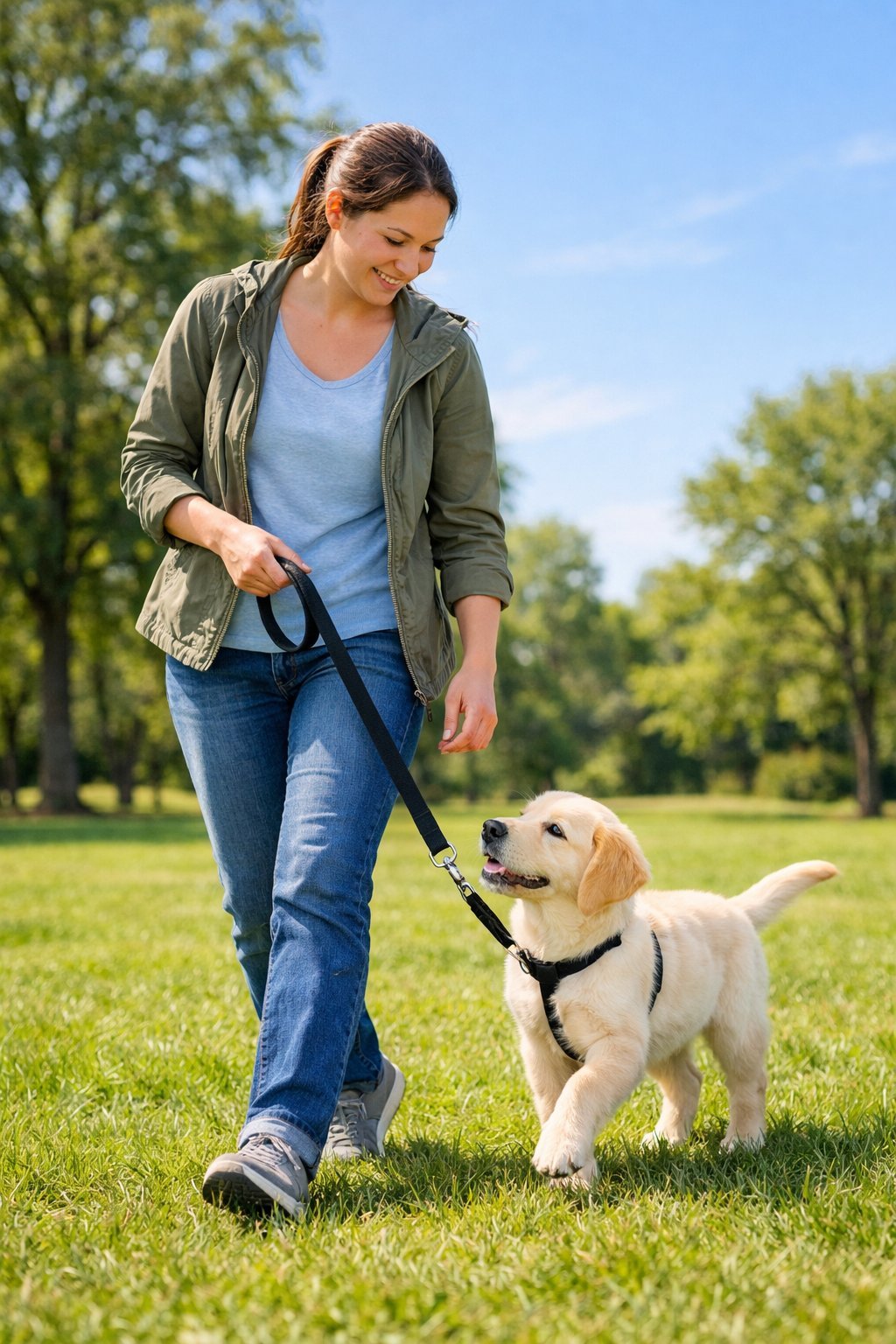
Training works best when you reward your puppy for good choices and stick to a clear routine. Your puppy learns faster when they know what to expect and receive treats or praise for walking nicely.
Rewarding Good Behavior
I always keep small, soft treats in my pocket during walks so I can reward my puppy the moment they do something right. When my puppy walks beside me without pulling, I give them a treat within 1-2 seconds.
This quick timing helps them connect the reward with their good behavior. Positive reinforcement teaches your dog that walking calmly by your side brings rewards.
I use different types of rewards to keep my puppy interested:
- Small training treats (pea-sized pieces)
- Verbal praise in an excited voice
- Quick play sessions with a favorite toy
- Gentle pets on the chest or shoulders
I reward my puppy every few steps when we first start training. As they improve, I gradually give treats less often.
Setting Realistic Expectations
I remind myself that leash training takes patience, consistency, and positive reinforcement. My puppy won’t master loose leash walking in just a few days.
Most puppies need several weeks of daily practice to walk politely. I keep training sessions short at first, around 5-10 minutes.
Young puppies get tired and distracted easily. I monitor my puppy’s body language and energy levels, taking breaks as needed.
I focus on progress, not perfection. Some days my puppy pulls more than others, and that’s normal.
I stay consistent with my training methods and celebrate small improvements like walking nicely for half a block instead of just a few steps.
Frequently Asked Questions
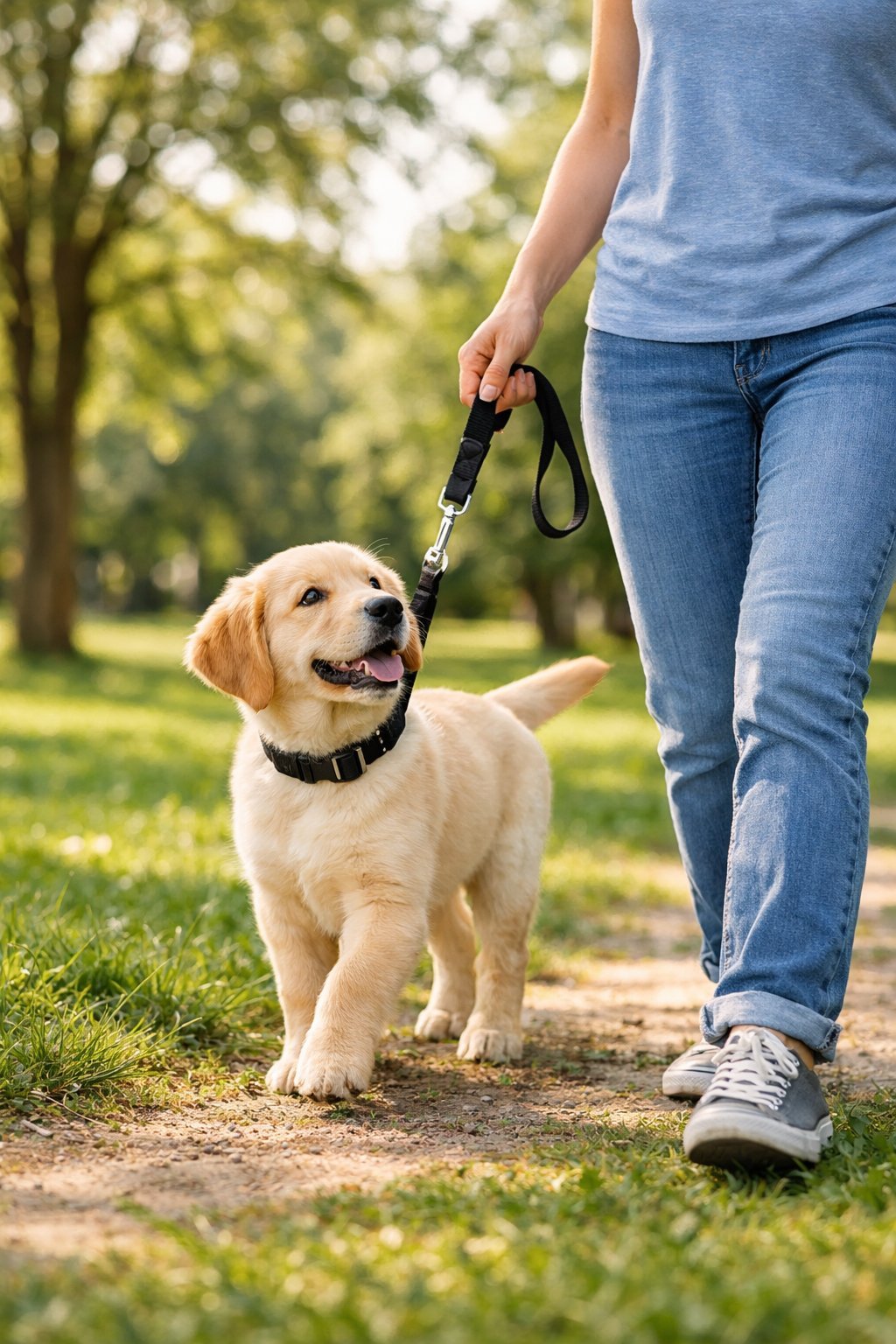
I’ve found that most puppy owners face similar challenges when leash training, from dealing with constant pulling to getting their dog moving in the first place. These questions cover the practical solutions that work best for different situations and dog types.
What are the most effective methods to stop a puppy from pulling on the leash?
I always start with the stop-and-go method because it’s simple and works fast. When my puppy pulls, I stop walking immediately and stand still like a tree.
I only move forward again when the leash goes slack. The key is consistency.
Every single time my puppy pulls, I stop. I also use the direction change technique.
When my puppy starts pulling ahead, I turn and walk the opposite way. This teaches them to pay attention to where I’m going instead of dragging me around.
Reward-based training is essential too. I keep small treats in my pocket and give one every few steps when my puppy walks nicely beside me.
Over time, I can space out the treats as the good behavior becomes a habit.
Can you offer tips for quickly teaching a dog not to pull during walks?
I practice in a quiet area first, not on busy streets where there are too many distractions. My backyard or a calm park works best for the first few sessions.
Short training sessions work better than long ones. I do 5 to 10 minutes of focused leash work several times a day instead of one long walk.
I use a front-clip harness because it gives me more control and makes pulling uncomfortable for my dog without hurting them. When they pull forward, the harness turns them back toward me naturally.
The “be a tree” method helps too. I stand completely still when pulling starts and don’t move until my dog comes back to my side.
Then I reward them and continue walking.
What is the best way to start leash training a new puppy?
The best time to start leash training is right when my puppy comes home, usually at 8 to 10 weeks old. I let my puppy wear their collar or harness around the house for short periods first so they get used to the feeling.
Next, I attach the leash and let my puppy drag it around while supervised indoors. This helps them learn that the leash isn’t scary or something to fight against.
I use treats to create positive associations. When my puppy looks at the leash, I give them a treat.
When they let me clip it on, they get another treat. Once my puppy seems comfortable, I pick up the end of the leash and follow them around the house.
I let them lead at first so they don’t feel trapped or restricted. After a few days of this, I can start gently guiding them in the direction I want to go.
How do you train a rescue dog to walk calmly on a leash?
I give my rescue dog extra time to adjust because they might have bad experiences with leashes from their past. Patience matters more than speed with rescue dogs.
I start by building trust indoors before attempting outdoor walks. I let my rescue dog approach the leash on their own terms and reward any interest they show in it.
Food rewards work well for most rescue dogs. I use high-value treats like chicken or cheese to make leash time the best part of their day.
If my rescue dog seems fearful, I break training into smaller steps. We might spend a week just getting comfortable wearing the harness before I even attach the leash.
Then we practice walking indoors before moving outside. I also watch for triggers that make my rescue dog pull or panic.
Once I identify them, I can work on desensitization by exposing my dog to those triggers from a distance while rewarding calm behavior.
What techniques work well for teaching large breeds to walk without pulling?
I start leash training large breeds as early as possible because a 20-pound puppy is much easier to manage than a 70-pound adult dog. The habits they learn as puppies stick with them.
A no-pull harness is essential for large dogs. I use one with a front clip that redirects their momentum when they pull instead of letting them use their full strength against me.
I never let my large breed puppy practice pulling, even once. If I give in just one time, they learn that pulling eventually works and will keep trying it.
The “penalty yard” method helps with stubborn large breeds. When my dog pulls, I back up several steps so they lose the ground they just gained.
They quickly learn that pulling actually moves them farther from where they want to go. I also work on impulse control through basic commands like “sit” and “wait” before walks.
A large dog who can control themselves indoors will have an easier time controlling themselves outside.
What should you do if your dog refuses to walk on a leash?
First, check if something is scaring your dog, like a strange noise or an uncomfortable harness. Sometimes the issue is with the equipment, not the training.
If your puppy just sits down and won’t move, don’t drag them. Try making yourself more exciting by using a happy voice, clapping, or showing a treat.
When your dog takes even one step toward you, reward them with lots of praise or a treat. This helps them learn that moving forward is a good thing.
Practice in different locations, since dogs can freeze in new places. Starting in your backyard helps your dog feel more confident before heading out to busier spots.
Some puppies do better when following another dog. If you have a friend with a calm, leash-trained dog, walking together can help your puppy see that leash walks are normal and fun.
Make sure walks aren’t your puppy’s only exercise. If they’re too energetic, they might refuse to walk calmly, so try a game of fetch before leash practice.
