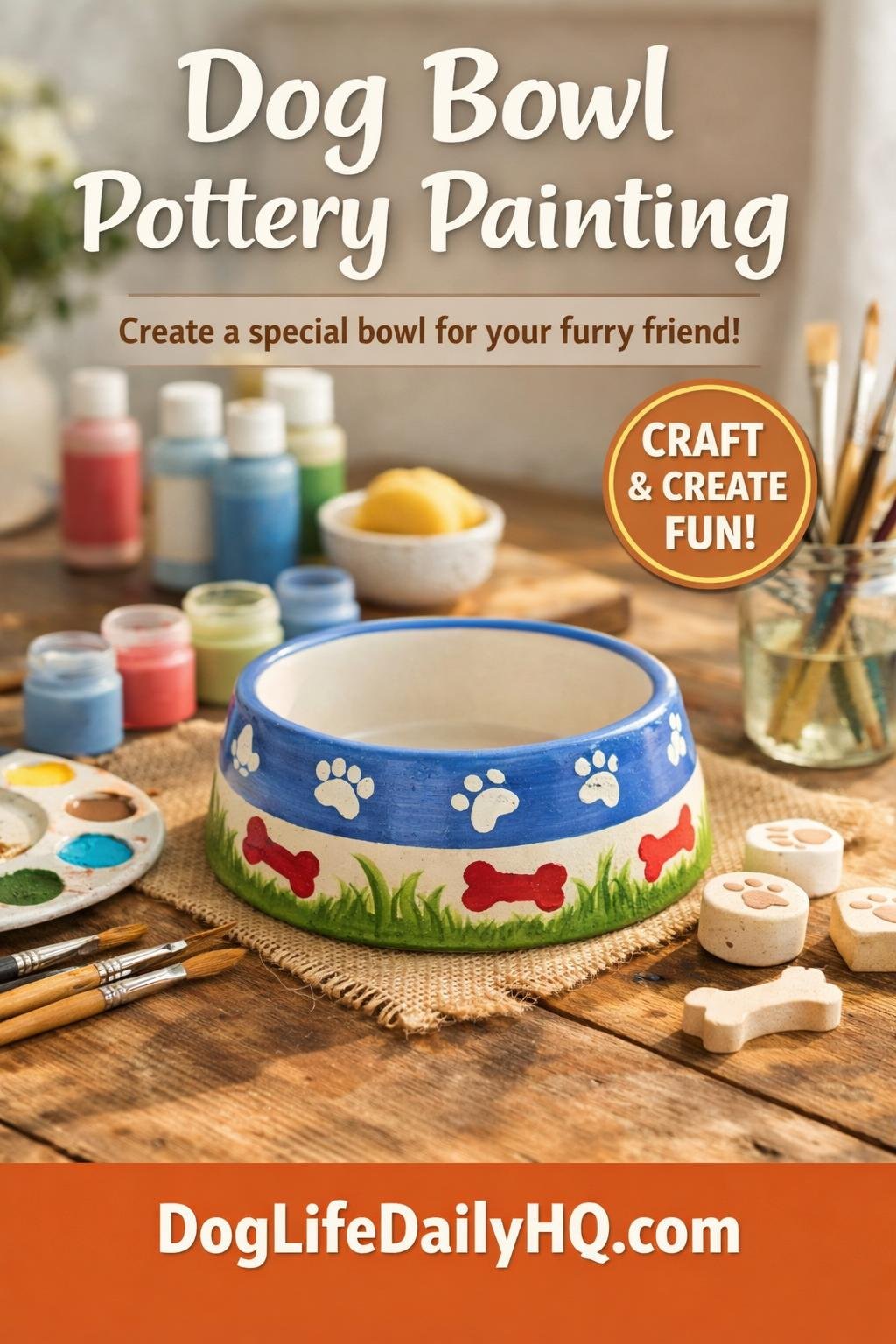
Dog Bowl Pottery Painting: Create a Custom Masterpiece for Your Furry Friend This Weekend

Dog Bowl Pottery Painting – Your dog’s feeding area can become something special with a simple craft project that takes just a few hours. Painting a ceramic dog bowl lets you create a custom piece that matches your home while giving your pet something totally unique.
You can add your dog’s name, paw prints, bones, or any design you like. It’s a fun way to personalize your pup’s mealtime.
This project is easy enough for beginners but still fun for experienced crafters. You don’t need fancy skills or expensive supplies to get started.
You can even involve your pup in the process. Whether you use their paw print as part of the design or just have them hang out while you paint, it’s a great way to spend time together.
Plus, you’ll end up with a custom dog bowl that makes every meal feel more personal.
Key Takeaways
- Painting ceramic dog bowls is an easy weekend craft that creates personalized feeding dishes for your pet.
- You can customize bowls with names, paw prints, and designs using basic painting supplies and safe materials.
- The project works for all skill levels and lets you involve your dog in the creative process.
This post contains affiliate links. As an Amazon Associate I earn from qualifying purchases.
Feeding gear worth a look:
Elevated dog bowl stand, Stainless steel dog bowls, Slow feeder bowl, Ceramic dog bowl, Waterproof feeding mat, Airtight food storage container.
Getting Started with Dog Bowl Pottery Painting
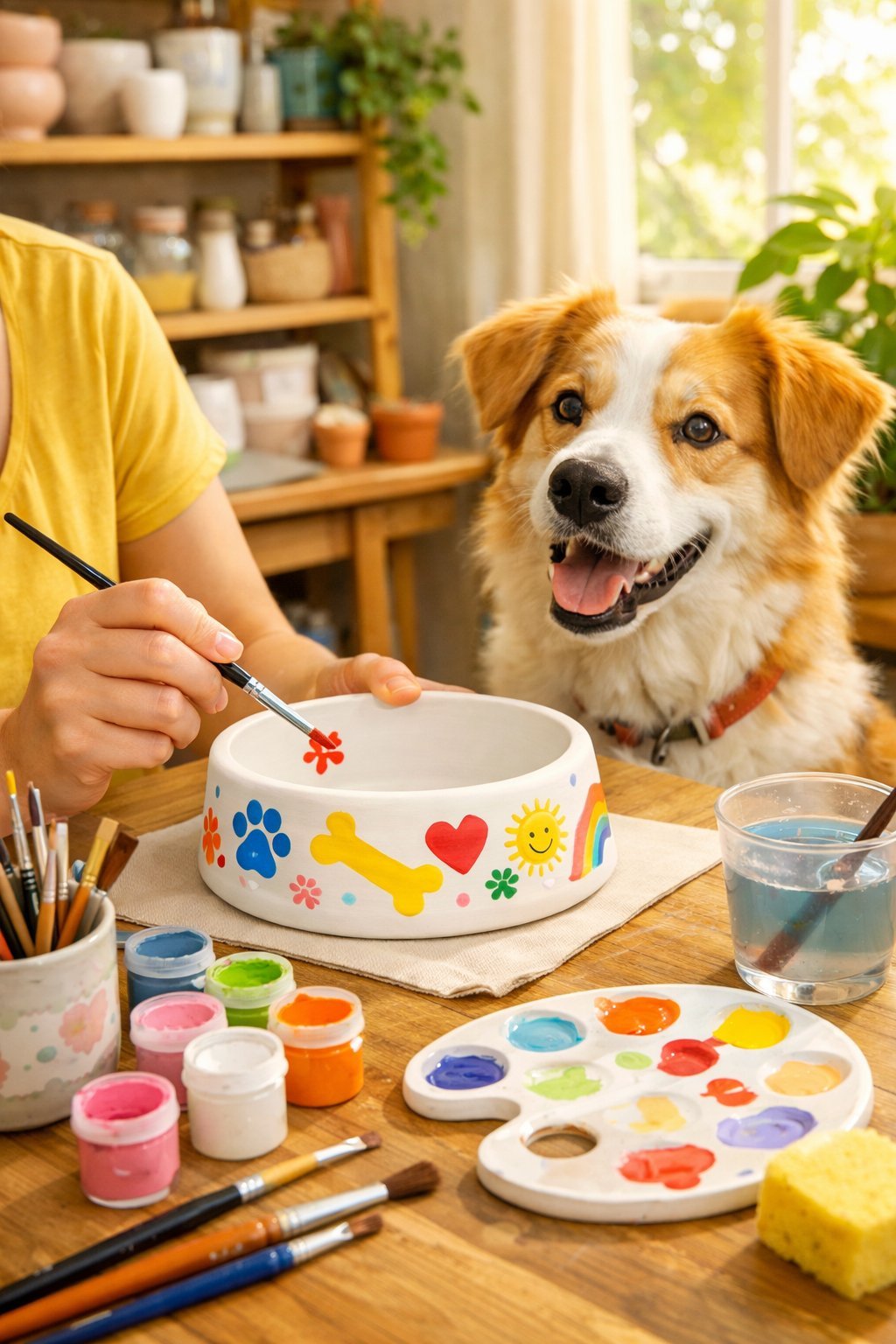
Success with this project comes down to three things: picking a bowl that’s easy to paint, using materials that are safe for your pet, and having the right tools ready before you start.
Selecting the Perfect Ceramic Dog Bowl
Look for plain, unglazed ceramic bowls when you start a new painting project. These bisque bowls give paint the best surface to stick to.
You can usually find them at pottery studios or craft stores. The size matters for your dog’s comfort, so measure your dog’s height and pick a bowl that sits at a comfortable level when eating.
Small dogs need bowls around 4-6 inches wide, while larger breeds do better with 8-10 inch bowls. Go for bowls with smooth, rounded edges—they’re easier to paint and safer for your pup.
Make sure the bowl feels sturdy and has some weight so it won’t slide around during meals. Check that the bowl has a flat bottom to keep it stable and make painting the outside easier.
Avoid bowls with deep grooves or textured surfaces since these make it harder to apply paint evenly.
Choosing Pet-Safe Paints and Materials
Always use paints labeled as non-toxic and food-safe for dog bowl projects. Ceramic paints and glazes designed for pet bowls are the safest choice since they’re made for items that touch food and water.
Acrylic paints marked as non-toxic work for the outside of the bowl only—never use regular acrylics on surfaces that will touch food or water. For interior painting, only use fired ceramic glazes.
Dimensional paint like Tulip brand works well for raised designs on the bowl’s exterior. Let these dry completely and cure for at least 72 hours before use.
Always read the label to confirm the paint is dishwasher-safe and waterproof once cured.
Essential Tools and Supplies
Gather your basic supplies before starting: paintbrushes in various sizes, a palette for mixing colors, water cups for rinsing, and paper towels. Fine-tip brushes help with detail work, while broader brushes cover larger areas quickly.
Stencils make painting much easier if you’re not confident in freehand drawing. Use them for paw prints, bones, and letters.
Painter’s tape helps create clean lines and protect areas you don’t want painted.
My basic toolkit includes:
- Small detail brushes (sizes 0-2)
- Medium round brushes (sizes 4-6)
- Flat brushes for base coats
- Pencils for sketching designs
- Sealant rated for food contact areas
- Sandpaper for smoothing rough edges
Keep old newspapers or a drop cloth handy to protect your work surface. A rotating platform helps you reach all sides of the bowl without constantly picking it up.
Designing Your Unique Dog Bowl
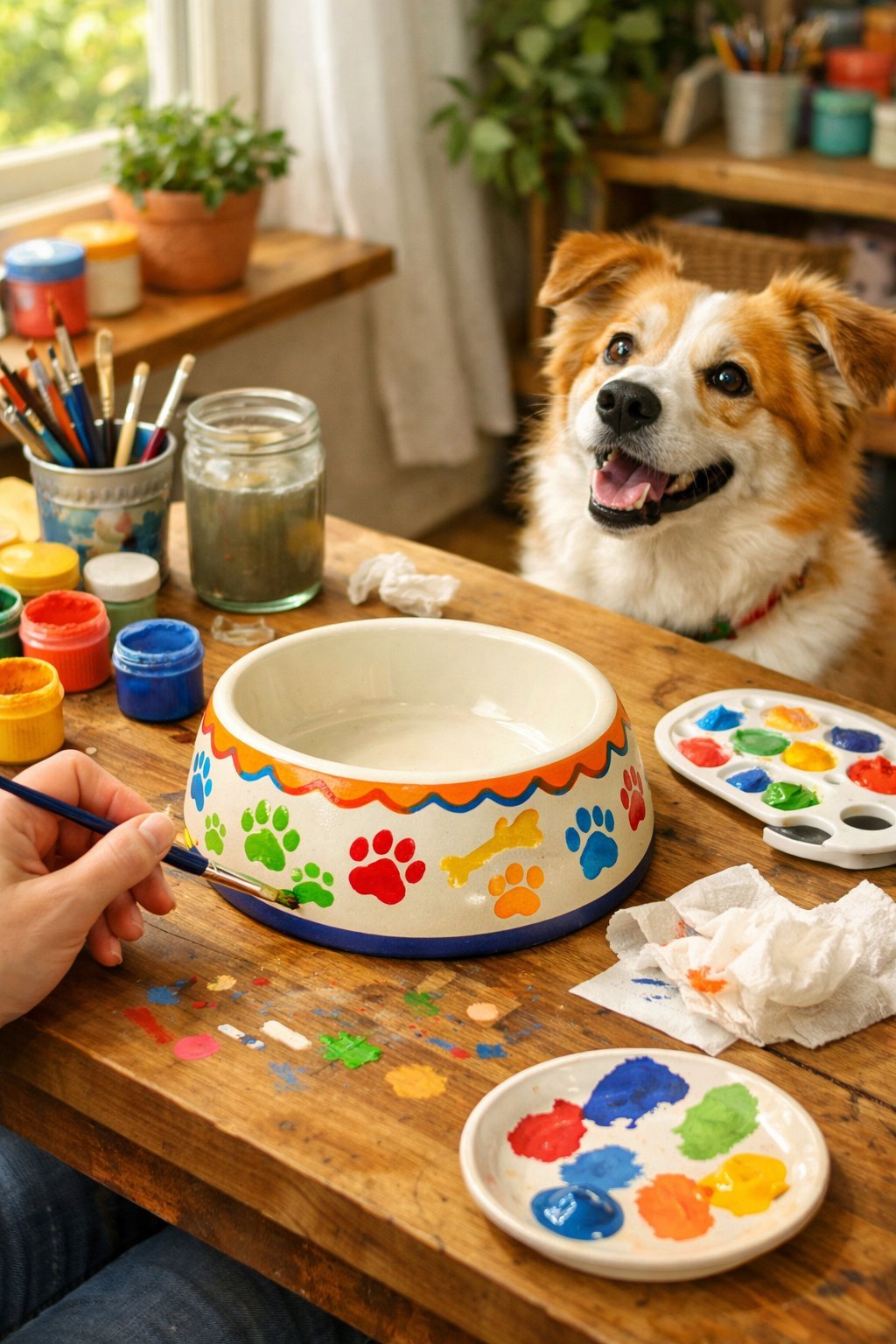
The best part about painting a dog bowl is making it truly one-of-a-kind for your furry friend. Let’s check out some creative design ideas, personalization techniques, and color choices that work great for dogs.
Creative Painting Ideas for Every Pup
Classic paw prints are simple and look adorable on any bowl. You can stamp them around the rim or scatter them across the surface.
Bone patterns are another go-to design. Paint small bones in a repeating pattern or make one large bone as the centerpiece.
For dogs with big personalities, try adding fun elements like hearts and stars, geometric shapes, floral designs, or bold abstract patterns. You can also paint your dog’s favorite things—tennis balls, squirrels, or anything else they love.
Mixing patterns works well, too. Try combining paw prints with bones or adding dots around the edge of your main design.
Personalization Tips: Names, Paw Prints, and More
Adding your dog’s name makes the bowl feel extra special. Paint names in bold, easy-to-read letters along the side or bottom of the bowl.
You can personalize ceramic pet bowls with details that match your dog’s personality. Try including the adoption date or a small nickname under the main name.
Real paw prints add a sweet personal touch. Press your dog’s paw gently into non-toxic ink, then stamp it onto paper to trace the shape onto the bowl.
Some other fun personalization ideas:
- Your dog’s name in playful fonts
- Actual paw print tracings
- Birthday or adoption date
- Funny phrases like “Spoiled Rotten” or “Good Boy”
- Your dog’s breed silhouette
Sketch your design on paper first to figure out spacing and size before you start painting.
Color Choices That Dogs Love
Dogs see colors differently than we do—they see blues and yellows really well, but reds and greens look more like browns or grays.
Focus on blue and yellow as your main colors since dogs can actually see these. A bright blue bowl with yellow accents will stand out to your pup during mealtime.
Purple works too because dogs can see the blue tones in it. Avoid using red or green as the primary colors since they won’t be as visible to dogs.
Here are some go-to colors:
- Cobalt blue – bright and easy for dogs to see
- Sunshine yellow – stands out well
- White – provides great contrast
- Black – works as an outline or accent color
Of course, you can still use colors you love. You’ll be looking at the bowl every day too.
Step-by-Step Guide to Pottery Painting
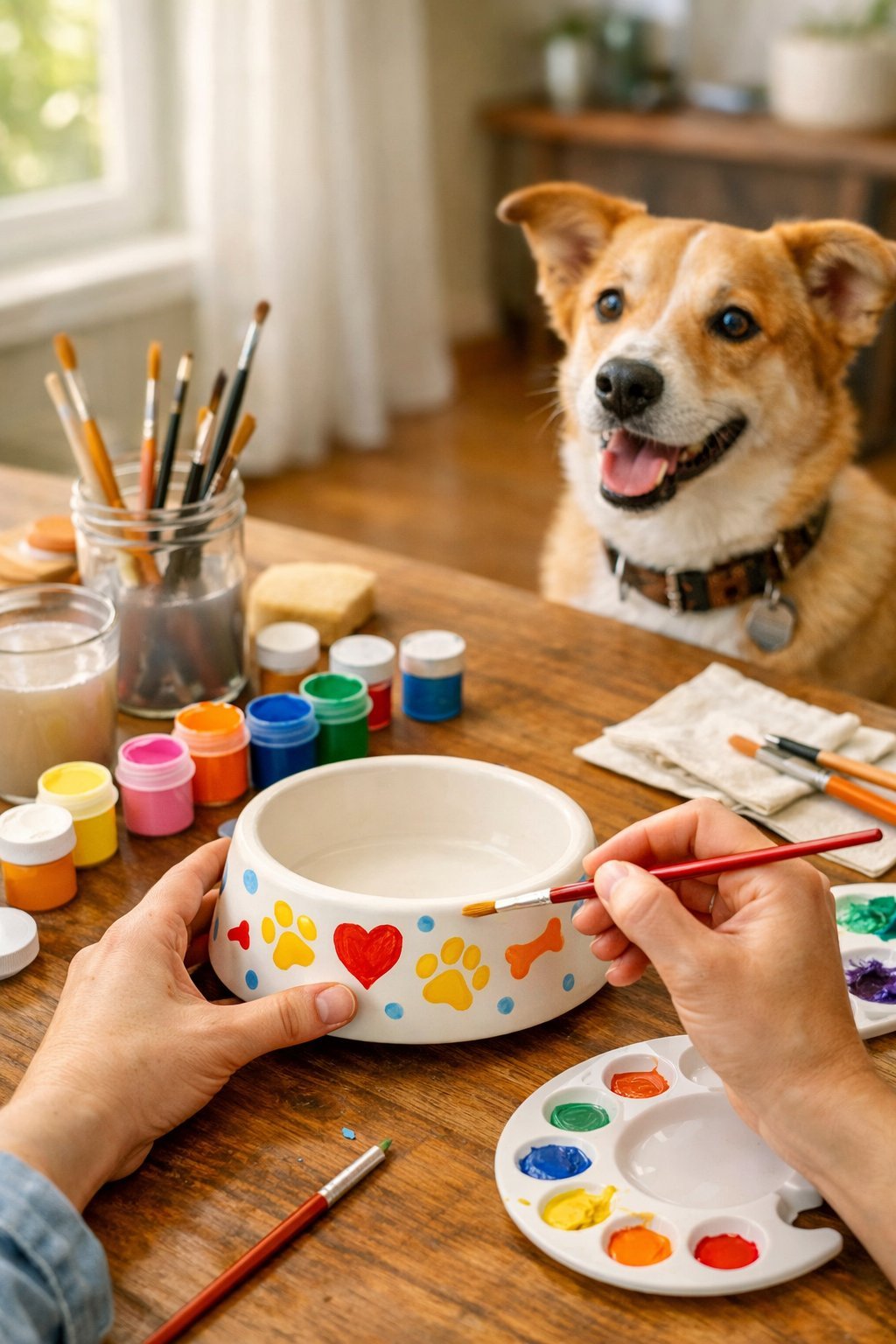
Here’s how to paint your dog’s bowl, from cleaning the surface to applying the final protective coat. These steps work whether you’re using a store-bought ceramic bowl or one you’ve made yourself.
Preparing Your Bowl for Painting
Start by washing your bowl with warm soapy water to remove any dust, oils, or residue. Paint won’t stick properly to a dirty surface.
Dry the bowl completely with a clean towel. Then wipe it down with rubbing alcohol on a cotton ball or paper towel to remove any remaining oils.
Let the bowl air dry for at least 10 minutes before you start painting. While it dries, gather your supplies and set up your workspace with newspaper or a plastic mat.
If you’re using stencils for designs like paw prints or bones, prepare them now by cutting them out if needed. Sketch your design on paper first if you’re painting freehand.
Applying Your Base Coat
Use ceramic paint or dimensional paint designed for pottery—regular acrylic paint won’t hold up to washing. Dimensional paint works well for creating raised designs that add texture.
Apply your first coat thin and even, using a foam brush or regular paintbrush depending on the effect you want. Foam brushes give smoother coverage; regular brushes create more texture.
Paint only the outside of the bowl, never the inside where your dog will eat. The rim can be painted as long as you stay below where food touches.
Let the first coat dry completely according to the paint manufacturer’s instructions. This usually takes 1-2 hours.
If the coverage looks thin, add a second base coat and let it dry again.
Adding Decorative Details
Start with the largest design elements first, then move to smaller details. Popular dog bowl painting ideas include paw prints, bones, your dog’s name, or abstract patterns.
For paw prints, use a small round brush or a stencil. Paint the main pad first, then add four toe prints above it.
If you make a mistake, quickly wipe it off with rubbing alcohol before it dries. Use thin brushes for fine lines and dots.
Your dog’s name looks great painted around the rim or on one side of the bowl. You can also add simple shapes like hearts, stars, or stripes.
Between each color or layer, let the paint dry for at least 30 minutes. This prevents colors from bleeding together and keeps your design crisp.
Finishing Touches and Sealing
Once your decorative painting is complete and fully dry, check for any spots that need touch-ups. Fix these small areas with a fine brush before sealing.
Apply a food-safe ceramic sealer to the outside of the bowl only. This protects your design from water, scratches, and fading.
Use a clean foam brush to apply an even coat. The sealer needs to cure according to the product instructions—some require baking in the oven, while others air dry for 24-72 hours.
After curing, hand wash the bowl gently with mild soap and avoid putting it in the dishwasher. This keeps your painted design looking fresh for years.
Making It a Fun Activity with Your Pup
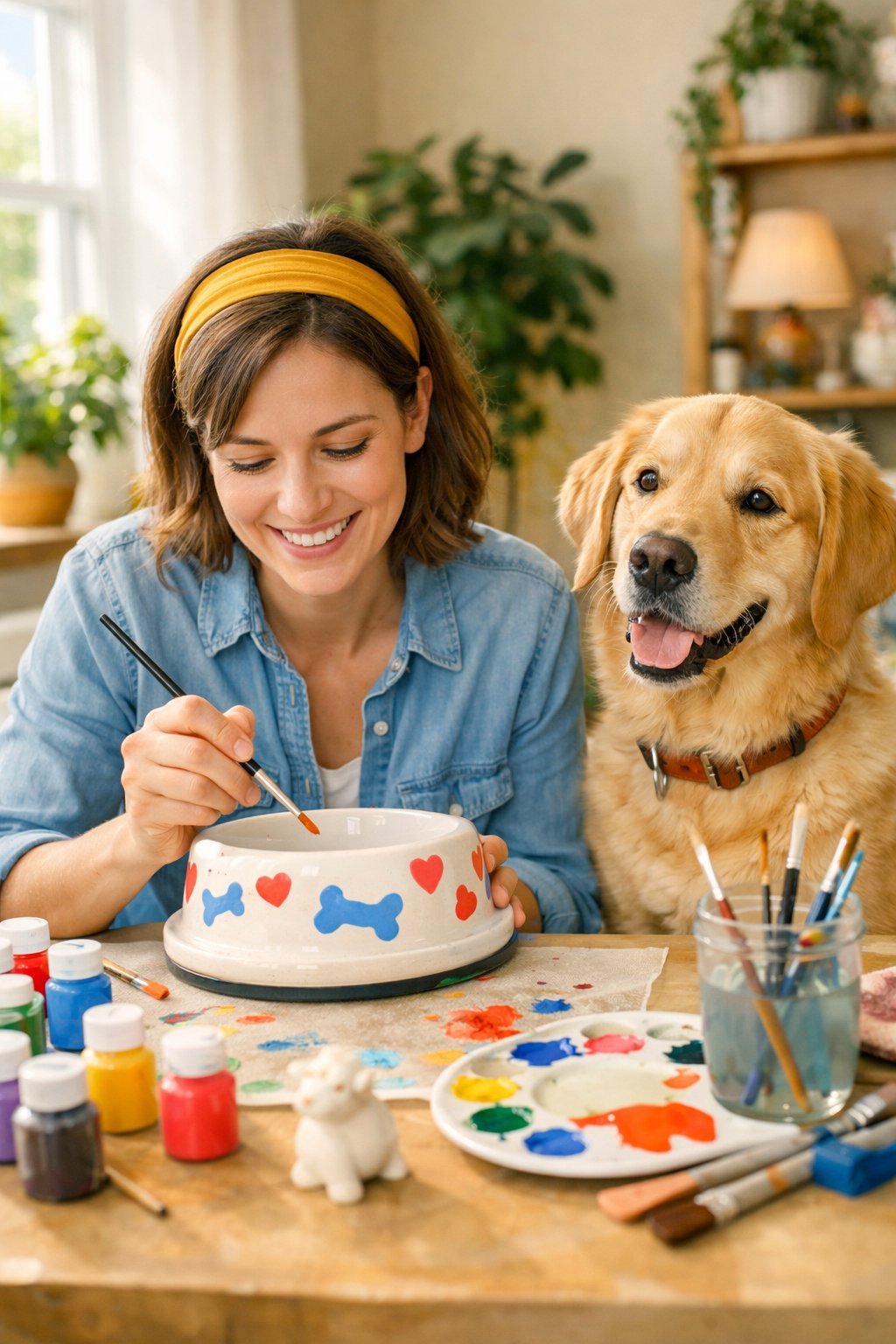
Your dog can be part of the painting process in safe and creative ways. Including your pup makes the craft more memorable, whether you’re capturing their paw prints or just having them nearby for company.
Getting Your Dog Involved Safely
I keep my dog in the same room while I paint so they feel included without getting into supplies. Setting up a comfortable spot with their favorite blanket or bed near my work area keeps them happy and calm.
Never let your dog lick or eat ceramic paints or glazes. Most craft paints aren’t safe for pets to consume.
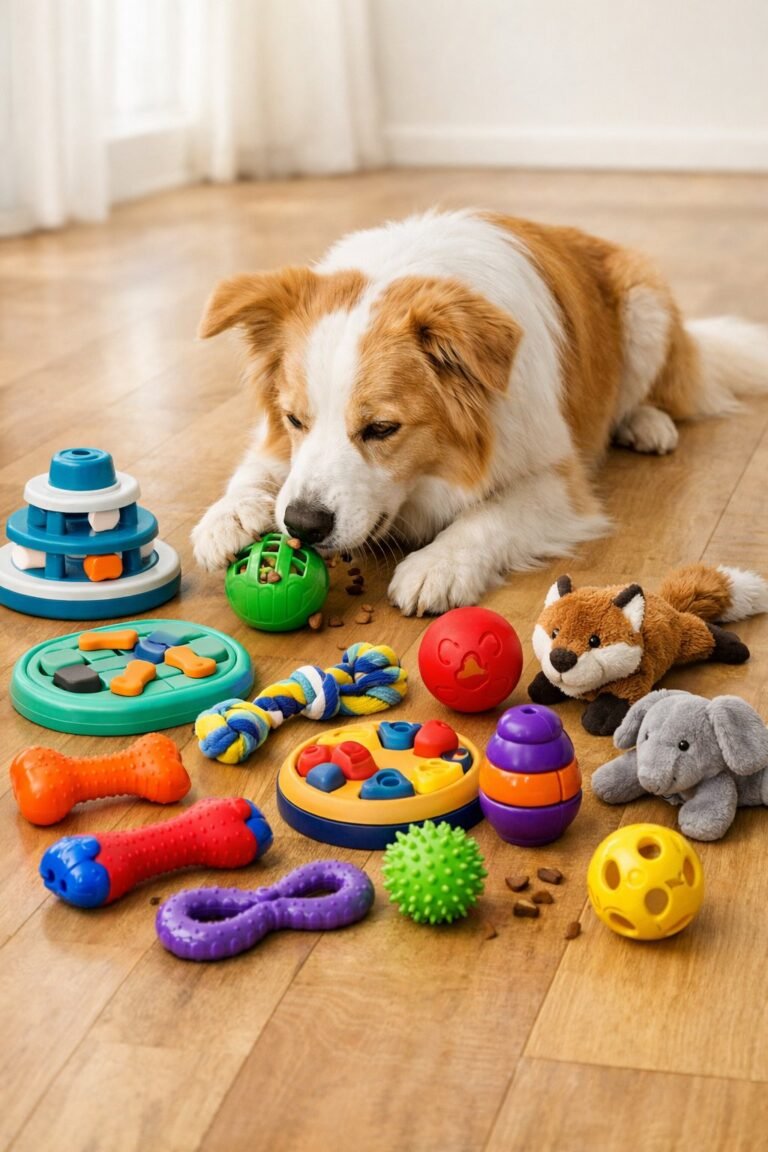
I always keep paint containers closed and out of reach. If I want my dog closer to the action, I give them a puzzle toy or stuffed Kong to keep them occupied.
This works great for dogs who get curious about what I’m doing. Some dogs do better in another room if they’re too excitable or anxious around new activities.
I wash my hands before petting my dog during craft time. Paint residue can transfer to their fur and potentially cause problems if they groom themselves later.
Capturing Paw Prints on Pottery
Non-toxic washable paint is the only safe option for getting actual paw prints from your dog. I use pet-safe, water-based paint that washes off easily with soap and water.
Here’s how I capture clean paw prints:
- Have treats ready as rewards
- Gently press one paw into a shallow dish of paint
- Quickly stamp the paw onto the pottery surface
- Immediately wipe the paw clean with a damp cloth
- Give treats and praise
I only do one or two paw prints per session. Most dogs tolerate this for about 30 seconds before they get wiggly.
Working with a peanut butter painting activity can be easier for some pets. Some dogs hate having their paws touched, so I never force it.
Instead, I trace their paw on paper and use that as a template to paint the design myself.
Clean-Up Tips for Craft Time
I lay down old towels or a plastic sheet before starting any dog bowl pottery painting project. This saves my floors and makes cleanup much faster.
Pet wipes work better than regular cloths for removing paint from paws quickly. I keep a stack within arm’s reach during the entire process.
A bowl of warm water nearby also helps rinse brushes and wipe up spills immediately. My dog gets a full paw wash in the sink after any painting activity.
I check between their toe pads to make sure no paint is hiding there. Even non-toxic paint shouldn’t stay on their skin.
I store all painting supplies in sealed containers on high shelves. Dogs are curious and might knock over bottles or chew on brushes if left accessible.
Displaying and Using Your Hand-Painted Dog Bowl
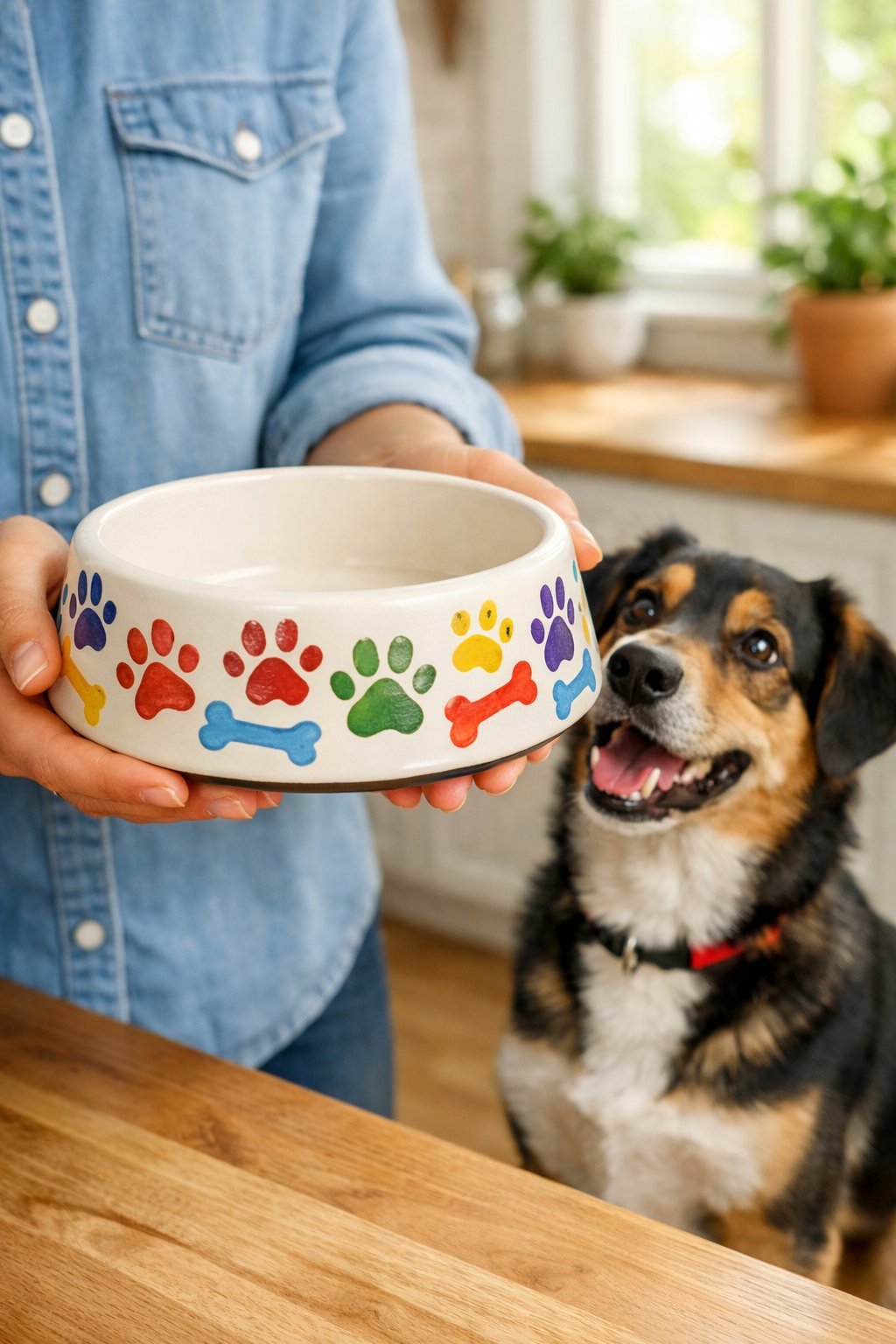
Once your painted bowl is dry and ready, you’ll want to make sure it stays looking great while your dog uses it daily. You can also find creative ways to show off your artwork and share your new crafting skills with other pet owners.
Caring for Your Painted Dog Bowl
I always hand-wash my painted dog bowls with warm water and mild dish soap. This keeps the design from fading or chipping over time.
Avoid putting your custom dog bowls in the dishwasher unless you used paint specifically marked as dishwasher-safe. The high heat and harsh detergents can damage your artwork.
I let my bowls air dry completely before filling them with food or water. If you notice any chips or wear spots, touch them up with the same paint you used originally.
Store extra paint in a cool, dry place so you can make repairs when needed. Place a mat or tray under the bowl to catch spills and protect your floor.
This also makes cleanup easier after messy eaters.
Inspiring Ideas for Showcasing Your Work
I like to take photos of my finished bowls before my dog uses them. The lighting is best near a window during daytime.
I usually place the bowl on a solid-colored surface to make the design stand out. You can display an extra painted bowl on a shelf or in a cabinet as home decor.
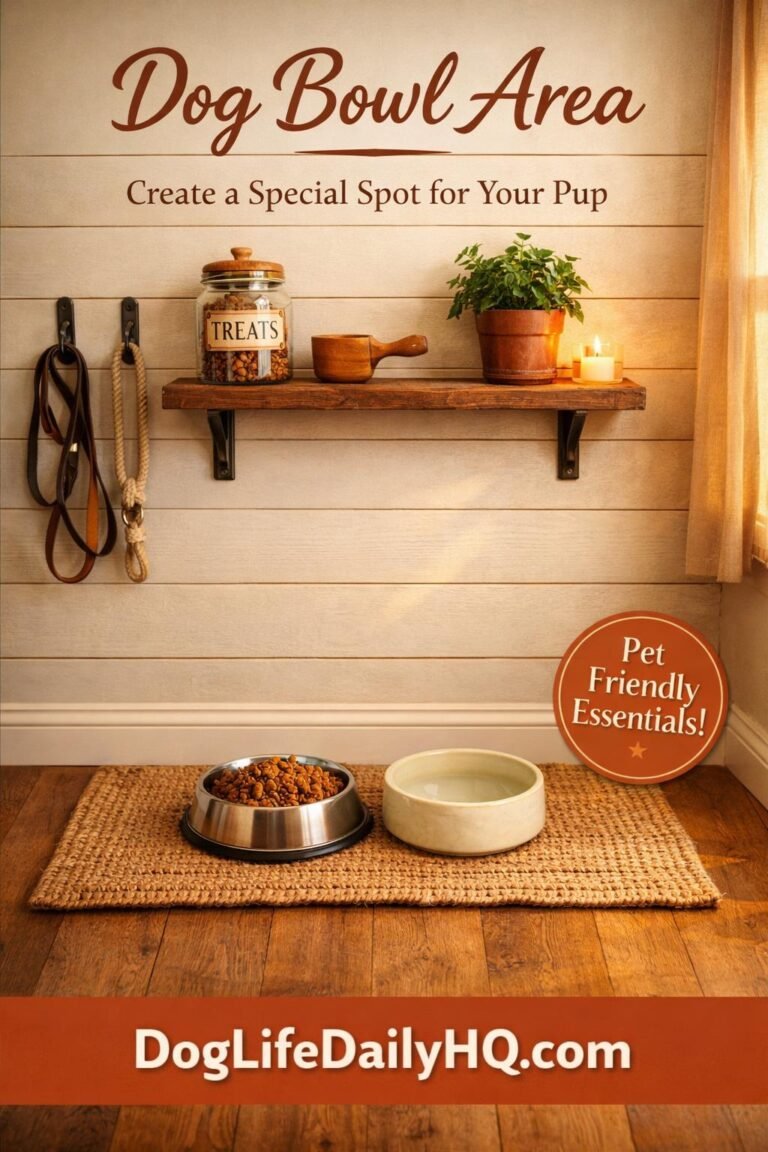
Some people create matching sets and rotate them throughout the week. I’ve seen dog bowl pottery painting ideas that include making coordinating pieces like treat jars or water pitchers.
This creates a complete feeding station that looks polished and intentional. Share your work on social media with hashtags like #dogbowlart or #petpottery.
Other crafters often comment with tips or their own designs for inspiration.
Gift Ideas and Sharing with Fellow Dog Lovers
Hand-painted dog bowls make thoughtful gifts for friends who just adopted a puppy or are celebrating their pet’s birthday. I personalize each one with the dog’s name and colors that match their personality.
Consider hosting a pottery painting party where everyone brings plain ceramic bowls and paints together. This turns the craft into a social activity that dog-loving friends will enjoy.
You can also donate painted bowls to local animal shelters. Many shelters appreciate colorful bowls that make kennel spaces feel more welcoming.
Just check with them first about their specific needs and any safety requirements for donated items.
Frequently Asked Questions
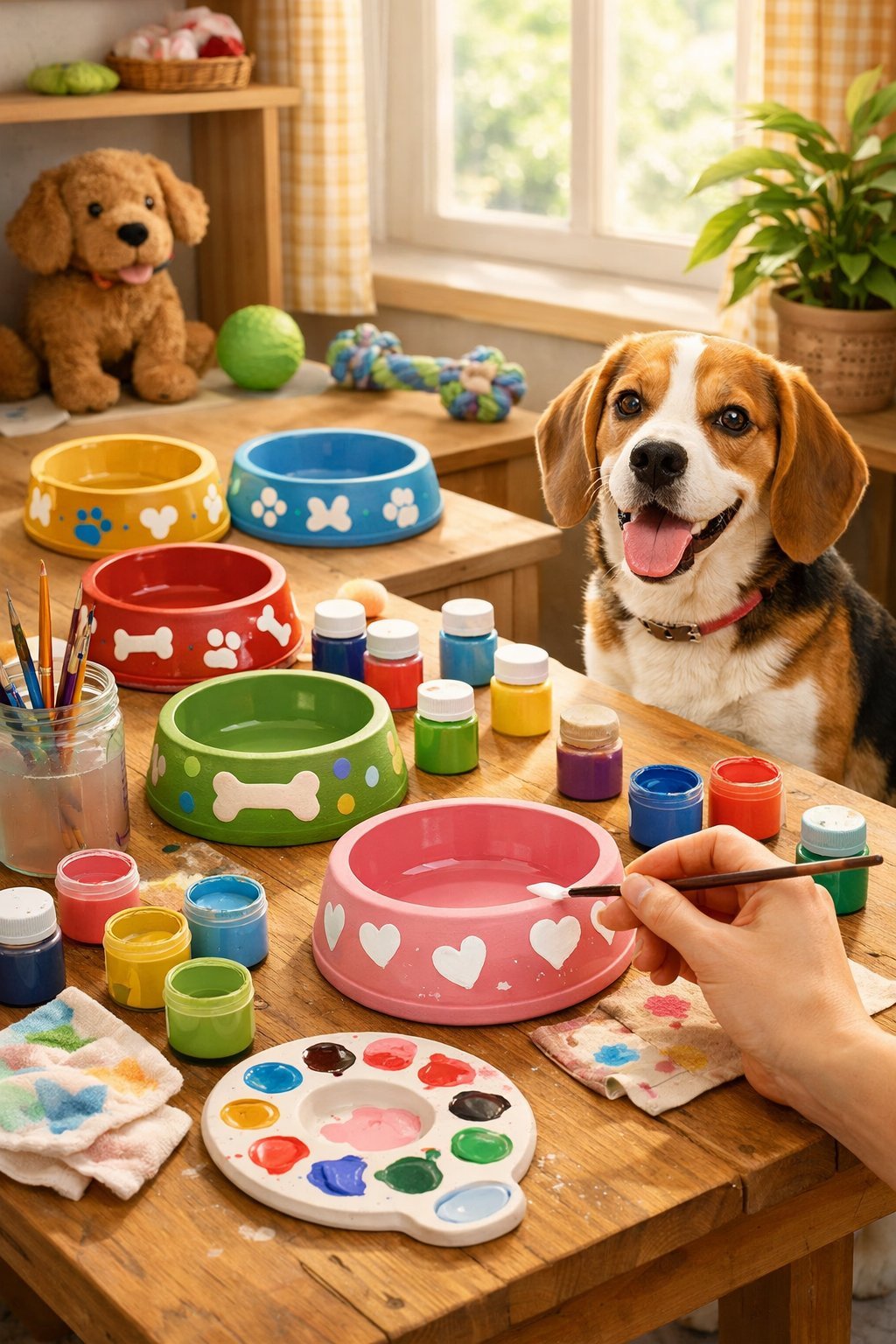
Getting the right materials and techniques makes all the difference when painting your dog’s bowl. Safety is the top priority, so choosing pet-safe paints and sealants protects your furry friend while keeping your artwork looking great.
How do I prepare a ceramic dog bowl for painting?
I always start by washing the bowl with warm soapy water to remove any dust or oils. After it dries completely, I wipe it down with rubbing alcohol on a clean cloth.
This extra step helps the paint stick better to the ceramic surface. Make sure the bowl is totally dry before you start painting.
What types of paint are safe to use on dog bowls?
I recommend using food-safe ceramic paints or acrylic paints labeled as non-toxic. The safest option is to paint only the outside of the bowl where your dog won’t make direct contact with the paint.
If you want to paint the inside of dog bowls, you need special food-safe glazes that get fired in a kiln. Regular craft paints should never touch areas where food or water sits.
Are there any patterns or designs you’d recommend for first-time painters?
Simple paw prints and bone designs work great for beginners. I also love painting my dog’s name in bold letters around the rim.
Polka dots are super easy and look cheerful. Geometric shapes like stripes or chevrons give a modern look without requiring advanced painting skills.
Can you recommend any sealants to protect the painted dog bowl?
I use food-safe sealants specifically made for ceramics that will contact food and water. Look for sealants labeled as FDA-compliant or food-safe on the packaging.
Apply thin coats and let each layer dry completely before adding the next one. Even with sealant, I only let painted surfaces touch the outside of the bowl.
What if my dog chews on his painted bowl, how can I ensure it’s safe?
I stick to painting the exterior bottom and sides of the bowl where my dog can’t reach. Using non-toxic, pet-safe paints gives me peace of mind even if my pup gets curious.
If your dog is a heavy chewer, consider a stainless steel bowl instead. You can still paint a ceramic saucer or tray to place underneath it for decoration.
How should I clean and maintain my dog’s hand-painted bowl?
I hand-wash painted bowls with mild dish soap and warm water. The dishwasher’s high heat can damage the paint.
I use a soft sponge and avoid scrubbing the painted areas too hard. After washing, I let the bowl air dry completely before filling it again.