Pet Treats Recipes: Simple Homemade Goodies Your Furry Friend Will Love

Making treats for your pet at home lets you control every ingredient that goes into their snacks. Homemade pet treats recipes are simple to follow, often requiring just a few basic ingredients you already have in your kitchen, and they help you save money while keeping your furry friend healthy.
Store-bought treats can contain additives and preservatives that you might want to avoid.

I’ve gathered easy recipes that work for dogs, cats, and small pets. These treats take little time to make and don’t require special cooking skills.
Your pets will love the fresh taste, and you’ll feel good knowing exactly what they’re eating. Many simple dog treat recipes use five ingredients or less, making them perfect for busy pet owners.
Whether your pet prefers crunchy biscuits or soft snacks, you’ll find options that match their taste and dietary needs.
Key Takeaways
- Homemade pet treats give you full control over ingredients and help avoid unwanted additives found in store-bought options.
- Most pet treat recipes require only a few simple ingredients and basic cooking skills to prepare.
- You can create healthy treats for dogs, cats, and small pets while saving money and customizing flavors to your pet’s preferences.
Benefits of Homemade Pet Treats
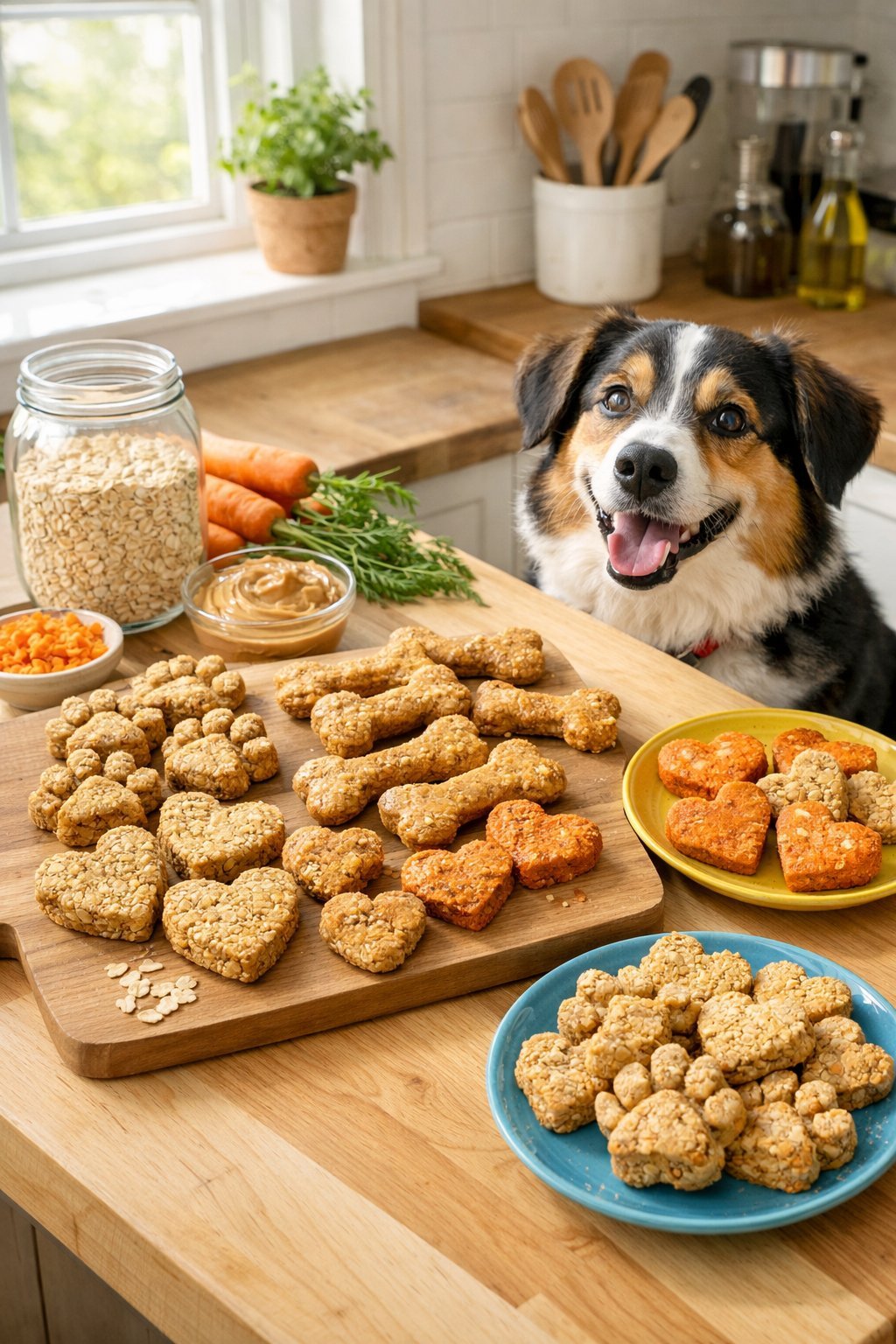
Making treats at home lets me choose exactly what goes into my pet’s snacks while avoiding mystery ingredients. I can tailor recipes to meet specific health needs and dietary restrictions.
Improved Nutrition for Pets
When I make treats at home, I can pack them with nutrients my pet actually needs. Store-bought treats often contain fillers like corn syrup and wheat that add calories without much nutritional value.
I can use fresh ingredients like sweet potatoes, blueberries, and lean proteins instead. Homemade treats give me control over portion sizes too.
I can make smaller treats for training or larger ones for special rewards. This helps me manage my pet’s weight better.
Fresh ingredients mean more vitamins and minerals in every bite. I can add ingredients like pumpkin for fiber or salmon for omega-3 fatty acids.
These nutrients support my pet’s coat, digestion, and overall health in ways that processed treats can’t match.
Quality Control Over Ingredients
I know exactly what my pet is eating because I picked and prepared every ingredient myself. Store-bought treats sometimes contain artificial preservatives, colors, and flavors that can upset sensitive stomachs.
When I make treats, I skip the questionable additives. I can choose organic ingredients if I want.
I can leave out salt, sugar, and artificial flavors completely. Making my own treats also means fresher food for my pet.
I know when each batch was made and how it was stored. There’s no guessing about expiration dates or wondering if the bag sat in a warehouse for months.
Allergy and Sensitivity Solutions
Making homemade pet treats lets me work around my pet’s specific allergies and sensitivities. Many pets react badly to common ingredients like chicken, beef, or grains found in commercial treats.
I can create recipes using alternative proteins like turkey, duck, or fish. If my pet can’t handle wheat, I can use rice flour, oat flour, or chickpea flour instead.
This customization isn’t always possible with store-bought options. Food sensitivities often cause itching, digestive upset, or ear infections in pets.
By controlling ingredients, I can eliminate triggers and keep my pet comfortable. I can test new ingredients one at a time to see how my pet responds.
Essential Ingredients for Safe Pet Treats
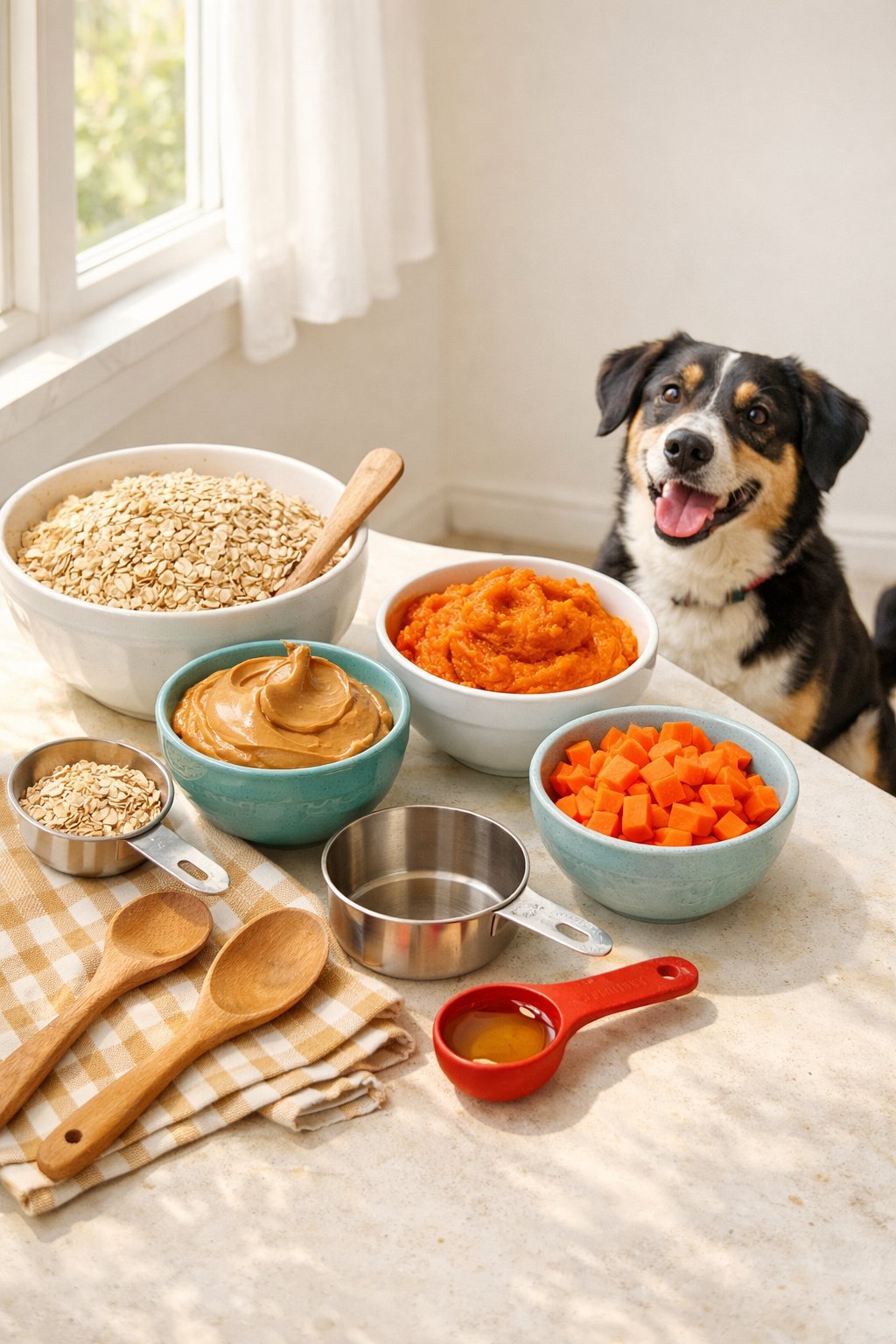
Making treats at home means knowing which foods keep your pet healthy and which ones can cause harm. I’ll walk you through the best ingredients to stock up on, the dangerous ones to skip, and the basic tools that make treat-making easy.
Pet-Friendly Foods to Use
I always start with whole foods that provide real nutrition for my pets. Oats are perfect for baked treats because they add fiber and help bind ingredients together.
Pumpkin puree works great in soft treats and helps with digestion. Sweet potatoes offer vitamins and natural sweetness that pets love.
Lean proteins like chicken, turkey, and salmon give treats a boost of flavor and nutrients. I use peanut butter often, but I always check the label to make sure it doesn’t contain xylitol.
Plain Greek yogurt adds creaminess and probiotics to frozen treats. Fruits like blueberries, apples (without seeds), and bananas make healthy additions in small amounts.
Carrots provide crunch and vitamins whether I use them raw or cooked. Eggs work as both a binding agent and protein source in many recipes.
For dogs specifically, I include ingredients like beef, cheese in moderation, and green beans. Cats do well with tuna, chicken liver, and small amounts of cooked egg.
Common Ingredients to Avoid
I never use chocolate in pet treats because it contains theobromine, which is toxic to both dogs and cats. Xylitol is extremely dangerous and can be found in sugar-free products like certain peanut butters and baked goods.
Grapes and raisins can cause kidney failure in dogs, so I keep them out of my kitchen when making treats. Onions and garlic damage red blood cells in pets, even in small amounts.
Macadamia nuts are toxic to dogs and cause weakness and trembling. I avoid artificial sweeteners, preservatives, and additives since store-bought treats often contain fillers that contribute to allergies and digestive issues.
Avocado contains persin, which is harmful to many pets. Raw yeast dough expands in the stomach and creates dangerous bloating.
Salt and sugar should be minimal or absent from pet treats. I also skip dairy for pets with lactose intolerance.
Helpful Baking Tools and Supplies
I keep my pet treat prep simple with just a few basic tools. A mixing bowl, measuring cups, and spoons are essential for getting recipes right.
A baking sheet works for most cookie-style treats, while silicone molds help me create fun shapes. A rolling pin lets me flatten dough to the right thickness.
Cookie cutters in bone or fish shapes make treats look special, though a knife works fine too. Parchment paper prevents sticking and makes cleanup faster.
For storage, I use airtight containers to keep treats fresh. A food processor helps me blend ingredients smoothly for certain recipes.
Ice cube trays are perfect for making frozen treats in single servings.
Simple Dog Treat Recipes
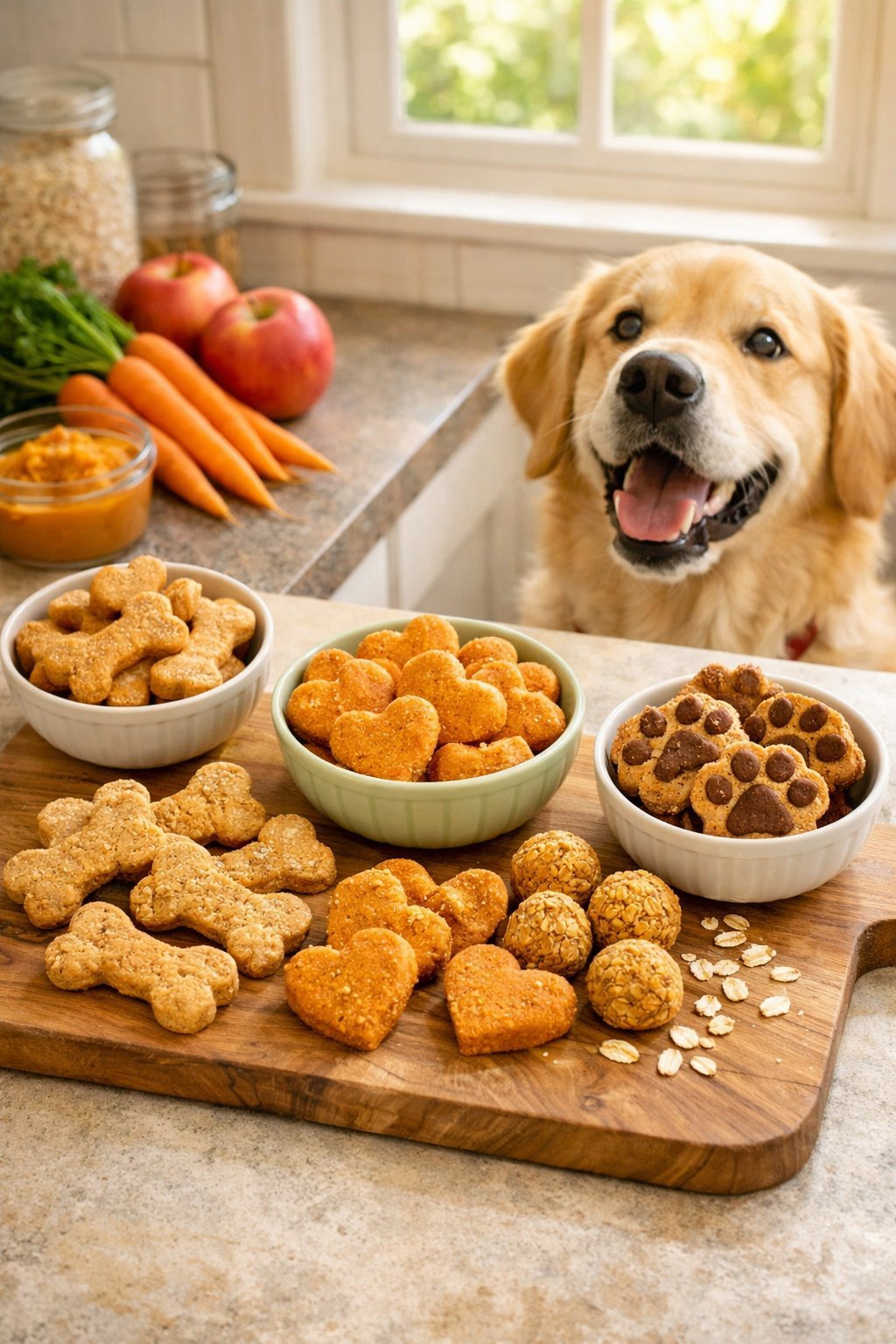
Making treats for your dog at home lets you control what goes into their snacks. These three recipes use basic ingredients you probably already have in your kitchen.
No-Bake Peanut Butter Bites
I love this recipe because it takes about 10 minutes and doesn’t require an oven. You’ll need just three ingredients: peanut butter, oats, and honey.
Mix 1 cup of peanut butter with 2 cups of rolled oats and 2 tablespoons of honey in a bowl. Make sure the peanut butter doesn’t contain xylitol, which is toxic to dogs.
Roll the mixture into small balls about the size of a marble. Place them on a plate lined with parchment paper.
Pop them in the fridge for 30 minutes until they firm up. I store mine in an airtight container in the fridge for up to two weeks.
These simple dog treat recipes work great for training because they’re soft and easy to break into smaller pieces.
Oven-Baked Chicken Chews
These crunchy treats are perfect if your dog loves chicken. I use boneless, skinless chicken breast for this recipe.
Preheat your oven to 200°F. Slice the chicken into thin strips about a quarter-inch thick.
Lay the strips on a baking sheet lined with parchment paper. Make sure they don’t overlap so they cook evenly.
Bake for 2-3 hours until the chicken is completely dried out and slightly crispy. The low temperature removes moisture without burning the meat.
Let them cool completely before giving them to your dog. I keep these in the fridge for up to one week or freeze them for longer storage.
Pumpkin and Oat Cookies
Pumpkin is great for digestion and most dogs love the taste. These cookies are gentle enough for puppies and senior dogs.
Mix 2.5 cups of whole wheat flour, 2 eggs, 1/2 cup of canned pumpkin (not pumpkin pie filling), and 2 tablespoons of water. Stir until you get a dough that holds together.
Roll out the dough to about 1/4 inch thick on a floured surface. Cut into shapes with cookie cutters or just slice into squares.
Bake at 350°F for 20-25 minutes until they’re golden brown and firm. These homemade dog treat recipes stay fresh in an airtight container for two weeks.
Easy Cat Treat Recipes
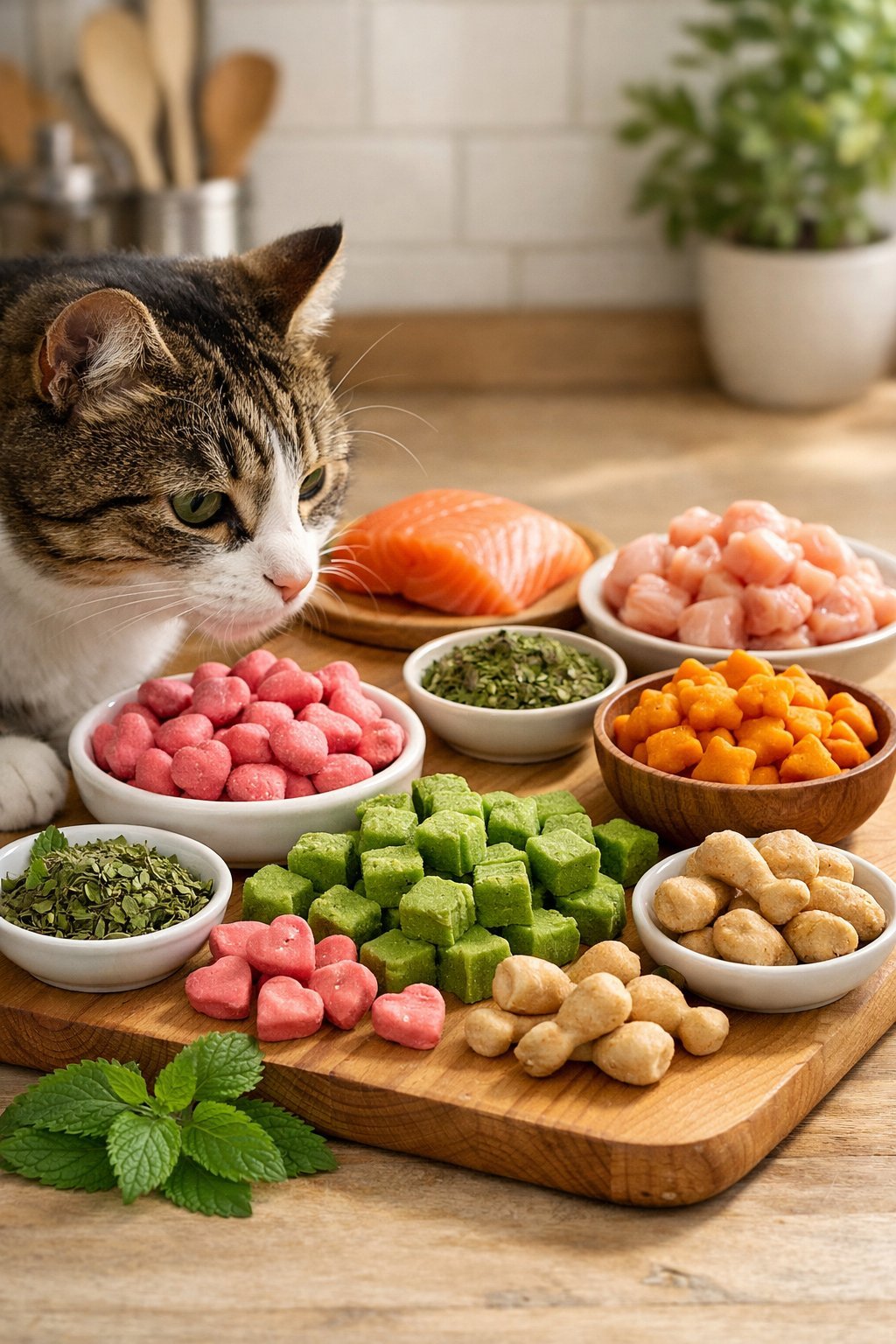
Making treats for your cat at home gives you control over ingredients and lets you avoid fillers and preservatives. These three recipes use simple ingredients that most cats love, and they’re easy enough to make in under 30 minutes.
Tuna Crunchies
I use canned tuna in water for this recipe because it’s affordable and cats go crazy for it. Drain one 5-ounce can of tuna completely and mix it with one cup of whole wheat flour and one egg.
The mixture should form a thick dough. If it’s too sticky, I add a tablespoon more flour.
Roll the dough flat to about 1/4 inch thick on a floured surface. Cut it into small bite-sized pieces with a knife or use a tiny cookie cutter.
Place the pieces on a greased baking sheet and bake at 350°F for 12-15 minutes until they’re golden and crispy. These homemade cat treats stay fresh for up to a week when stored in an airtight container in the refrigerator.
Chicken and Catnip Snacks
I start by cooking one boneless, skinless chicken breast until it’s fully cooked through. Let it cool, then chop it into tiny pieces or pulse it in a food processor until it’s finely minced.
Mix the chicken with 1/4 cup of oat flour and one tablespoon of dried catnip. Add one egg to bind everything together.
The catnip makes these treats extra appealing to most cats. Form the mixture into small balls about the size of a marble.
Flatten them slightly and place them on a parchment-lined baking sheet. Bake at 350°F for 10-12 minutes.
When making DIY cat treat recipes, I always make sure to check with my vet first if my cat has any dietary restrictions.
Cheesy Salmon Nibbles
I use cooked salmon for this recipe, either fresh or canned. Take about 1/2 cup of cooked, flaked salmon and mix it with 1/4 cup of shredded cheddar cheese and one cup of oat flour.
Add one beaten egg to help bind the ingredients. Mix everything until you have a firm dough that holds together well.
Roll out the dough and cut it into small shapes. Bake these healthy homemade cat treats at 325°F for 15 minutes until they’re firm but not burnt.
The lower temperature helps preserve the omega-3 fatty acids in the salmon. Store these treats in the refrigerator and use them within five days.
I always let treats cool completely before giving them to my cat.
Creative Treat Ideas for Small Pets
Small pets like rabbits, hamsters, and guinea pigs need treats that match their tiny digestive systems and natural diets. Fresh fruits and vegetables can be turned into simple snacks that keep these little animals happy and healthy.
Rabbit-Approved Apple Medallions
I love making apple medallions for rabbits because they’re so simple to prepare. I start by washing an apple thoroughly and cutting it into thin slices about 1/4 inch thick.
I remove the seeds and core since apple seeds contain small amounts of cyanide that can harm rabbits. The round slices look like little medallions, which is how they got their name.
I place them on a baking sheet and dry them in my oven at 200°F for about 2-3 hours until they’re crispy. The low heat removes moisture while keeping the natural sweetness.
Important tip: I only give my rabbit one or two medallions per week as a special treat. Apples contain sugar, so too many can upset their stomach.
I store the dried medallions in an airtight container for up to two weeks.
Homemade Hamster Treat Balls
Hamster treat balls are fun to make and give my hamster something to play with while eating. I mix together these simple ingredients:
- 2 tablespoons of plain oats
- 1 tablespoon of unsalted sunflower seeds
- 1 teaspoon of mashed banana
- A tiny bit of water if needed
I combine everything in a small bowl and form the mixture into balls about the size of a marble. The sticky banana helps hold everything together.
I let them dry for about an hour at room temperature before giving them to my hamster. These treats work great for hamsters because they can hold them in their tiny paws.
I make small batches since fresh treats are better than storing them for too long. My hamster can have one treat ball every few days.
Guinea Pig Veggie Crisps
Guinea pigs need vitamin C in their diet, so I make veggie crisps from bell peppers and carrots. I slice red or yellow bell peppers into thin strips and cut carrots into rounds about 1/8 inch thick.
I arrange them on a parchment-lined baking sheet without overlapping. I bake them at 225°F for 1.5 to 2 hours, flipping them halfway through.
The vegetables should be crispy but not burned. Bell peppers take less time than carrots, so I check them often.
Storage and serving: I keep the crisps in a sealed container in my refrigerator for up to five days. My guinea pig gets excited when I add two or three crisps to their regular hay and pellets.
The crunchy texture helps wear down their teeth naturally while giving them extra nutrients.
Tips for Storing and Gifting Pet Treats
Homemade pet treats need the right storage methods to stay fresh and safe for our furry friends to enjoy. When sharing these treats as gifts, thoughtful packaging shows care for both the pet and the person receiving them.
Proper Storage for Freshness
I always make sure my homemade pet treats are completely cool before storing them. Warm treats create moisture in containers, which leads to mold growth.
For treats without preservatives, I store them in airtight containers at room temperature for up to one week. Improper storage can cause treats to lose their flavor and nutritional value within just a few days.
I refrigerate treats that contain fresh meat, eggs, or dairy for up to two weeks. For longer storage, I freeze them in freezer-safe bags or containers for up to three months.
I write the date on each container so I know when I made them. The ingredients I use determine how I store homemade dog treats.
Dry, baked treats last longer than soft, chewy ones. I keep different treat types in separate containers to maintain their textures.
Safe Packaging for Gifting
I use food-grade containers or bags when packaging treats as gifts. Glass jars with tight-fitting lids work great and look nice too.
I always include a label with the treat name, ingredients list, and storage instructions. This helps pet owners identify any ingredients their pets might be allergic to.
I also add the date I made the treats so recipients know how fresh they are. For mailing treats to friends, I wrap them individually in parchment paper first.
Then I place them in an airtight container inside a padded envelope or box. I include a note about refrigerating treats with perishable ingredients immediately upon arrival.
Cellophane bags tied with ribbon make simple, attractive packaging for hand-delivered gifts. I slip a small card inside with feeding suggestions and storage tips.
Sharing with Fellow Pet Lovers
I bring homemade treats to dog park meetups and pet playdates in portable containers. This lets me share treats while keeping pet treats fresh throughout the outing.
Before offering treats to someone else’s pet, I always ask the owner first. Some pets have allergies or dietary restrictions I need to respect.
I share my ingredient list so owners can make informed decisions. I organize treat exchanges with other pet parents where we swap different recipes.
This gives our pets variety and helps us learn new recipes. I package individual portions so each person takes home the right amount for their pet’s size.
When hosting pet-friendly gatherings, I set up a treat station with labeled containers. I include ingredients lists and serving size recommendations based on pet weight.
Frequently Asked Questions
Making treats at home can seem tricky at first, but most recipes use basic ingredients you already have in your kitchen. I’ve answered the most common questions about creating healthy snacks your pet will love.
What are some vet-approved recipes for homemade dog treats?
I recommend starting with vet-approved homemade dog treat recipes that use safe, wholesome ingredients. Simple peanut butter biscuits made with whole wheat flour, eggs, and natural peanut butter are always a hit.
Sweet potato chews are another great option. I just slice sweet potatoes thin, brush them with a bit of coconut oil, and bake them at 250°F for about three hours until they’re chewy.
Frozen yogurt treats work well for hot days. I mix plain yogurt with mashed banana and freeze the mixture in ice cube trays.
How can I make no-bake dog treats with only a few ingredients?
No-bake treats are perfect when I don’t want to turn on the oven. I mix natural peanut butter with oats and a bit of honey, then roll the mixture into small balls and refrigerate them for an hour.
Frozen fruit treats are even easier. I blend watermelon or blueberries with plain yogurt and pour the mix into silicone molds or ice cube trays.
Another simple option is to stuff a Kong toy with mashed banana and plain Greek yogurt, then freeze it overnight. My dog loves working to get every last bit out.
Can you recommend any simple 2 or 3 ingredient dog treat recipes?
I love simple dog treats that only need 3 ingredients because they’re quick and easy. Peanut butter banana bites use just mashed banana, peanut butter, and whole wheat flour mixed together and baked at 350°F for 15 minutes.
Two-ingredient sweet potato jerky is even simpler. I slice sweet potatoes into thin strips and dehydrate them in the oven at 250°F for three hours.
For a frozen treat, I blend plain yogurt with pureed pumpkin and freeze the mixture in small portions. These three ingredients create a healthy snack my dog goes crazy for.
What human foods are safe and healthy to use in dog treat recipes?
I always use plain peanut butter without xylitol, which is toxic to dogs. Bananas, sweet potatoes, pumpkin, and apples (without seeds) are all safe and nutritious.
Plain yogurt and eggs add protein to homemade treats. Oats and whole wheat flour work as healthy binders in baked recipes.
Blueberries, watermelon, and carrots make great additions too. I avoid grapes, raisins, chocolate, onions, garlic, and anything with artificial sweeteners since these are dangerous for dogs.
How do I make peanut butter banana oatmeal cookies for my dog?
I start by mashing one ripe banana in a bowl. Then I mix in half a cup of natural peanut butter and one cup of oats until everything is well combined.
I scoop small spoonfuls onto a parchment-lined baking sheet and flatten them slightly with a fork. The cookies bake at 350°F for about 15 minutes until they’re golden brown.
After they cool completely, I store them in an airtight container in the fridge for up to a week. My dog loves these soft, chewy cookies as training rewards.
What is the simplest recipe for homemade dog treats that my pet will love?
The easiest recipe I make uses just two ingredients. I mash two ripe bananas and mix them with two cups of oats until I have a thick dough.
I drop spoonfuls onto a baking sheet. Then I bake them at 350°F for 15 minutes.
These treats are soft and healthy. They’re perfect for dogs with sensitive stomachs.
If I want to get fancy, I sometimes add a tablespoon of peanut butter to the mix. The treats stay fresh in the fridge for about five days.
Printable Recipe Card
Want just the essential recipe details without scrolling through the article? Get our printable recipe card with just the ingredients and instructions.