
DIY Raised Dog Bed That Looks Like Expensive Furniture: Budget-Friendly Tutorial for Pet Parents

Diy Raised Dog Bed – Store-bought raised dog beds that look stylish can cost hundreds of dollars. But you can build one yourself using basic materials like plywood and 2x2s for a fraction of the price.
You can create a modern elevated dog bed that looks like expensive furniture for under $50 using simple woodworking techniques and materials from your local hardware store.

I’ve seen DIY elevated dog beds made from plywood that rival designer versions selling for $500 or more. The best part is you don’t need advanced carpentry skills to pull this off.
With a few tools and an afternoon of work, you can build a custom bed that fits your dog perfectly and matches your home’s style.
The secret is choosing the right materials and finishes that give your DIY project a high-end look. I’ll walk you through everything from selecting wood that won’t break your budget to adding those finishing touches that make people think you spent a fortune.
Your dog will have a comfortable elevated spot to rest, and your living room will look better too.
Key Takeaways
- You can build a stylish raised dog bed for under $50 using plywood and basic lumber.
- The project requires only basic tools and simple woodworking skills that beginners can handle.
- Choosing the right finish and design details makes your DIY bed look like expensive store-bought furniture.
Choosing Materials for a Designer Look
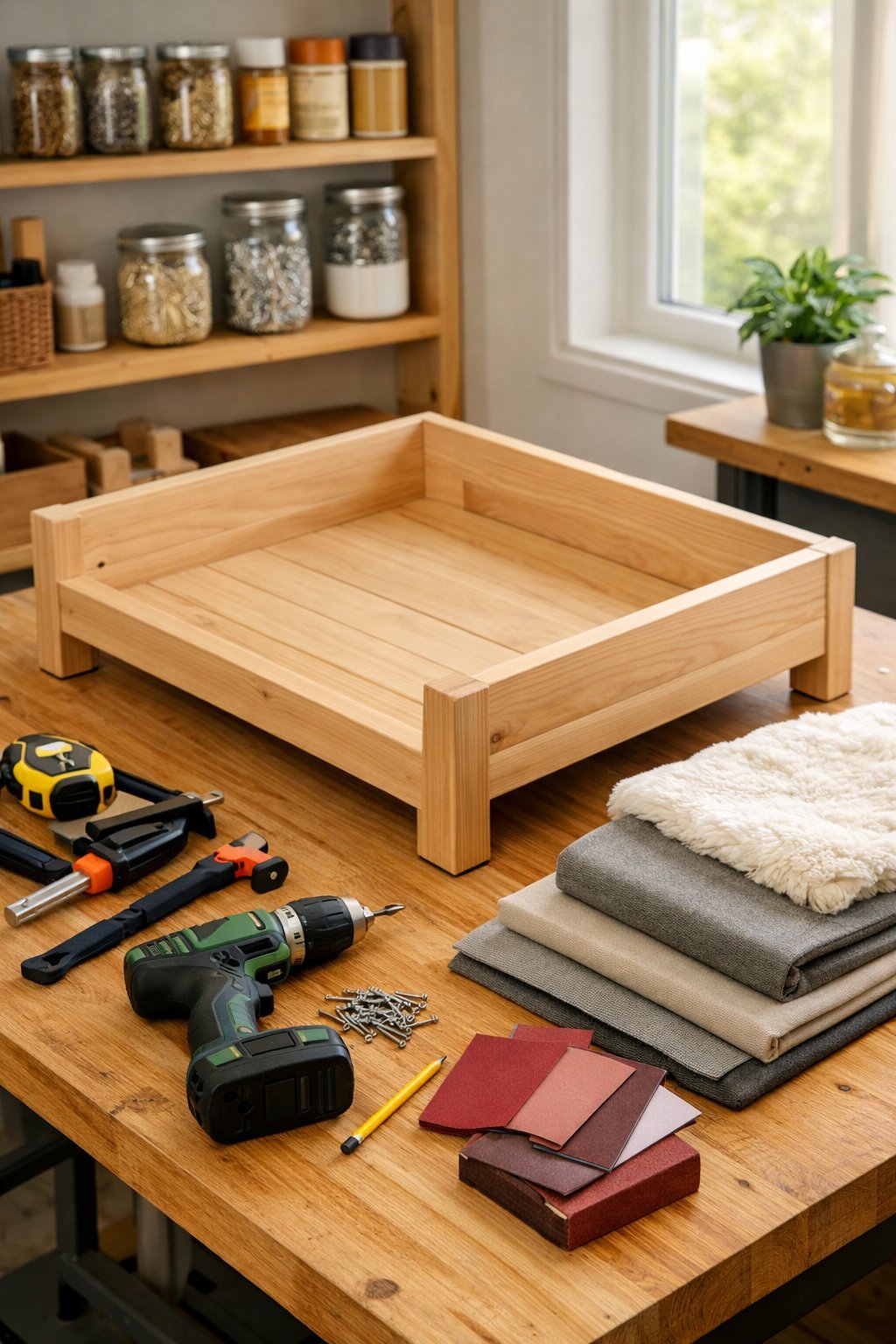
The right materials can make your DIY dog bed look like a high-end piece of furniture without the luxury price tag. Focus on wood choices, fabric selections, and finishes that create an elegant appearance while staying budget-friendly and safe for pets.
Affordable Wood and Alternative Options
Plywood is the cheapest and easiest option for building a raised dog bed frame. It’s strong enough to support most dogs and takes paint or stain well for a polished look.
If you want to work with real hardwood, alder or ash are affordable choices that are easy to cut and shape. These woods give your project a more refined appearance without breaking the bank.
PVC pipes offer another budget-friendly option that works great for elevated dog bed frames. They’re lightweight, sturdy, and easy to cut to any size.
For a unique look, try repurposing materials like wine barrels or old end tables. These give your dog bed character and cost very little since you’re reusing existing furniture pieces.
Picking Pet-Friendly Fabrics
Choose fabrics that are durable and easy to clean. Fleece remnants work well for the top layer because they’re soft and comfortable for your dog.
Canvas or heavy-duty cotton makes an excellent bottom layer. These materials stand up to wear and scratching while providing good support.
Look for these fabrics in the remnant section of fabric stores to save money. You can also create a no-sew bed using tie-blanket style construction by weaving fleece and canvas together.
Best fabric choices:
- Fleece – Soft, washable, inexpensive
- Canvas – Durable, tough, easy to find
- Outdoor fabric – Water-resistant, fade-proof
- Cotton duck cloth – Strong, breathable, affordable
Safe Finishes and Paints
Only use pet-safe, non-toxic finishes on any surfaces your dog might chew or lick. Water-based polyurethane is a good choice because it doesn’t contain harmful chemicals once it fully cures.
Natural oil finishes like linseed oil or tung oil are safe options that bring out the wood’s natural beauty. Apply thin coats and let each one dry completely before adding the next.
For painted finishes, stick with low-VOC or zero-VOC paints. Let painted pieces cure for at least a week before letting your dog use the bed.
Planning Your DIY Raised Dog Bed
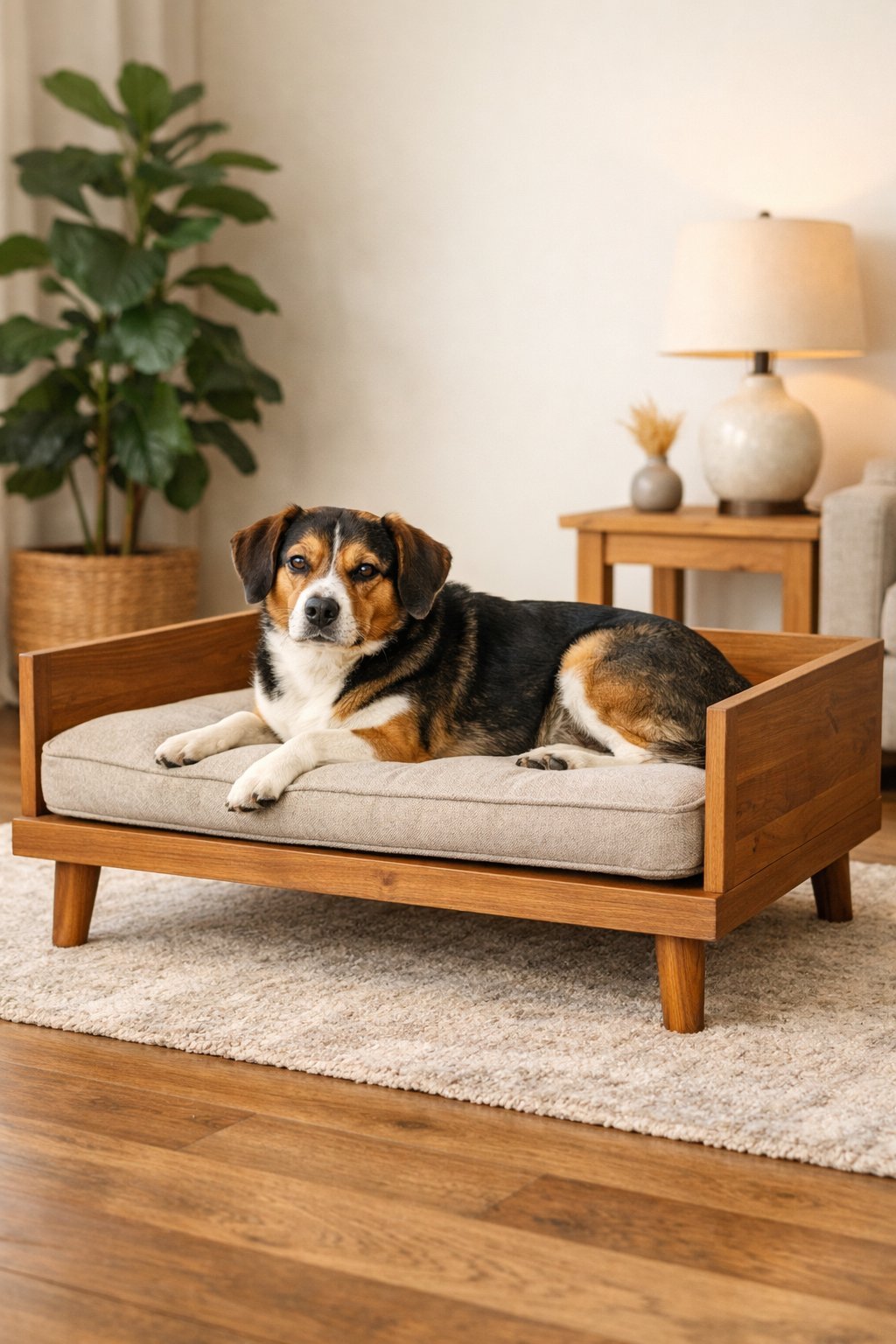
Getting the measurements right and choosing a design that fits your home will make the difference between a bed that looks homemade and one that rivals store-bought furniture.
Always start with your dog’s size and your space before picking up a single tool.
Measuring for Your Dog’s Comfort
Measure your dog from nose to tail while they’re stretched out sleeping. Add 6 to 12 inches to that number for the bed length.
For width, measure across your dog’s body at the widest point and add another 6 to 10 inches. Larger dogs need more room to sprawl out comfortably.
Bed height matters too. Keep it between 4 to 8 inches off the ground for small dogs and 8 to 12 inches for larger breeds.
Elevated beds keep dogs off cold floors in winter and help them stay cooler in summer.
Write down all these measurements before shopping for materials. This prevents buying wood that’s too short or fabric that won’t fit properly.
Sketching a Stylish Design
Draw a simple rectangle on paper first, then add legs at each corner. Clean lines work well and can match your existing furniture style.
For a modern look, sketch straight legs and a flat platform. For something more traditional, add slightly angled legs or decorative posts.
Decide whether you want the bed at sofa height or lower to the ground. Some people use an old table top with casters attached for a vintage vibe.
Plan where fabric or cushioning will go on top. Sketching helps you see if the proportions look right before cutting any wood.
Gathering Essential Tools
You’ll need a saw for cutting wood—either a hand saw or power saw works. A drill with screws is better than a hammer and nails for a sturdy frame.
Sandpaper smooths rough edges that could snag fabric or scratch floors. Use 80-grit for rough shaping and 120-grit for finishing.
Basic tool list:
- Measuring tape
- Pencil for marking cuts
- Wood glue for extra strength
- Level to keep everything even
- Safety glasses and gloves
For building elevated dog beds from PVC pipes, swap the saw for PVC cutters. Most projects require tools you probably already have around the house.
Step-by-Step Building Instructions
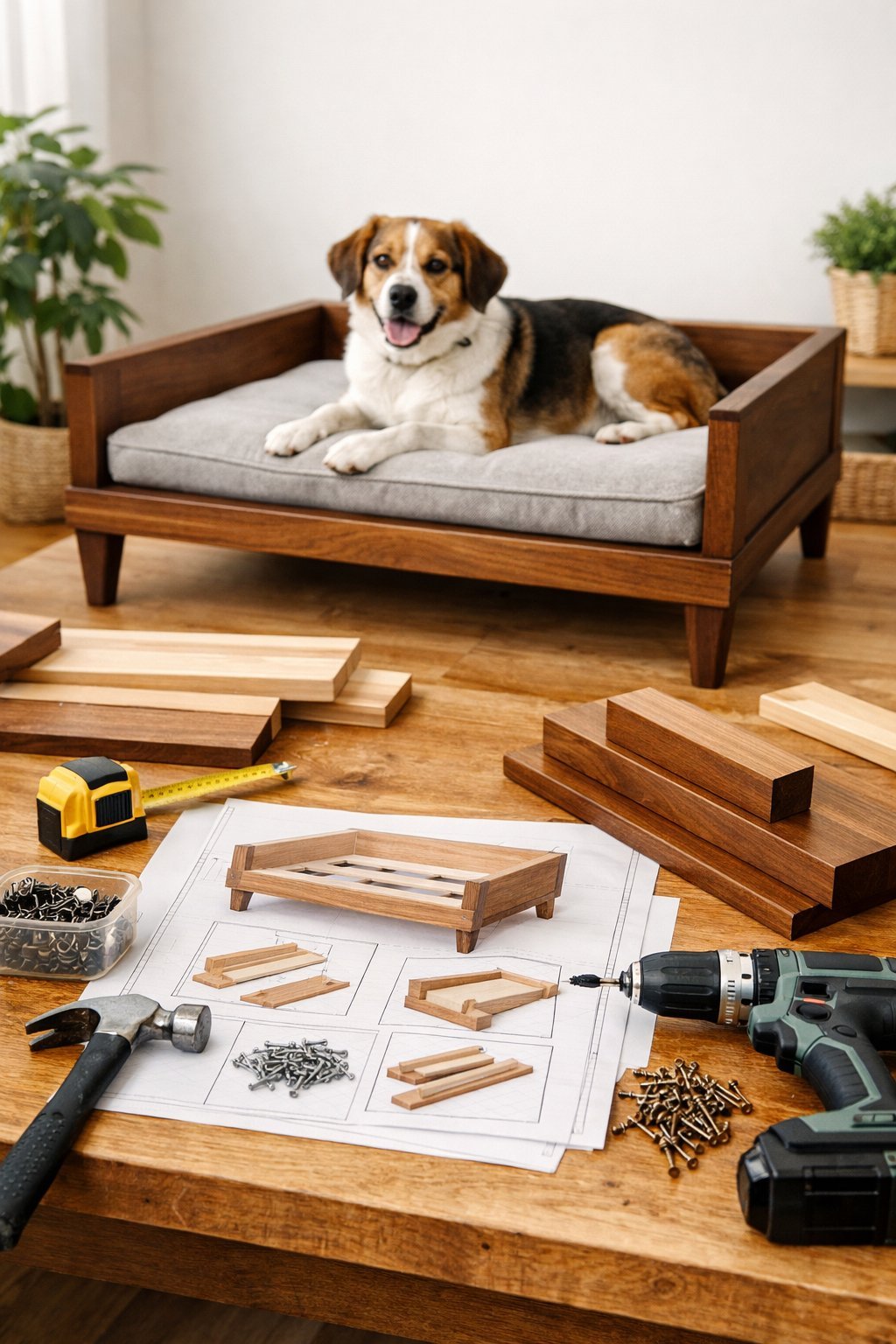
Here’s a simple walkthrough for building your raised dog bed from start to finish.
Cutting and Preparing Materials
Start by measuring and marking all your wood pieces before making any cuts. For a medium-sized dog bed, cut four pieces of 1×4 boards at 30 inches for the frame sides and four pieces at 24 inches for the front and back.
Cut four legs from 2×2 lumber at 8 inches each. Sand all the cut edges with 120-grit sandpaper to remove splinters and rough spots.
This step helps prevent scratches and gives the bed a nice finish. Lay out all your pieces to double-check measurements before assembly.
Pre-drill screw holes in the frame pieces to prevent the wood from splitting when you attach everything together.
Assembling the Frame
Connect the four frame pieces into a rectangle using wood glue and 2-inch wood screws. Apply a thin line of glue along the edges where the pieces meet, then secure each corner with two screws.
Use a carpenter’s square to check that each corner forms a perfect 90-degree angle. Clamp the corners while the glue sets for about 15 minutes.
After the frame is dry, reinforce the corners with small L-brackets on the inside for extra sturdiness.
Attaching the Legs or Base
Flip the frame upside down and mark where each leg will go, positioning them about 2 inches in from each corner. Attach each leg using two 2.5-inch wood screws driven through the frame into the top of each leg.
Make sure all four legs are the same length so the bed sits level on the floor. Before fully tightening the screws, stand the bed upright to check if it wobbles.
If one leg is shorter, add a small wooden shim underneath. For a more furniture-like appearance, wrap the legs with decorative trim or stain them a darker color than the frame.
Elevated dog beds keep dogs off cold floors and provide better air circulation.
Securing the Mattress Platform
Cut a piece of plywood or canvas fabric to fit snugly inside the frame opening. The platform needs to support your dog’s weight without sagging, so use either 1/2-inch plywood or heavy-duty canvas fabric.
If you use plywood, sand it smooth and drill several 1-inch ventilation holes. For a canvas platform, staple the fabric tightly to the underside of the frame every 2 inches around the perimeter.
Pull the fabric taut as you go to prevent sagging in the middle. Place a foam mattress or dog bed cushion on top of the platform.
Pro tip: Make your frame dimensions 2 inches smaller than your mattress so the cushion fits snugly and looks fuller. This creates a professional, finished appearance.
Adding Chic Finishing Touches
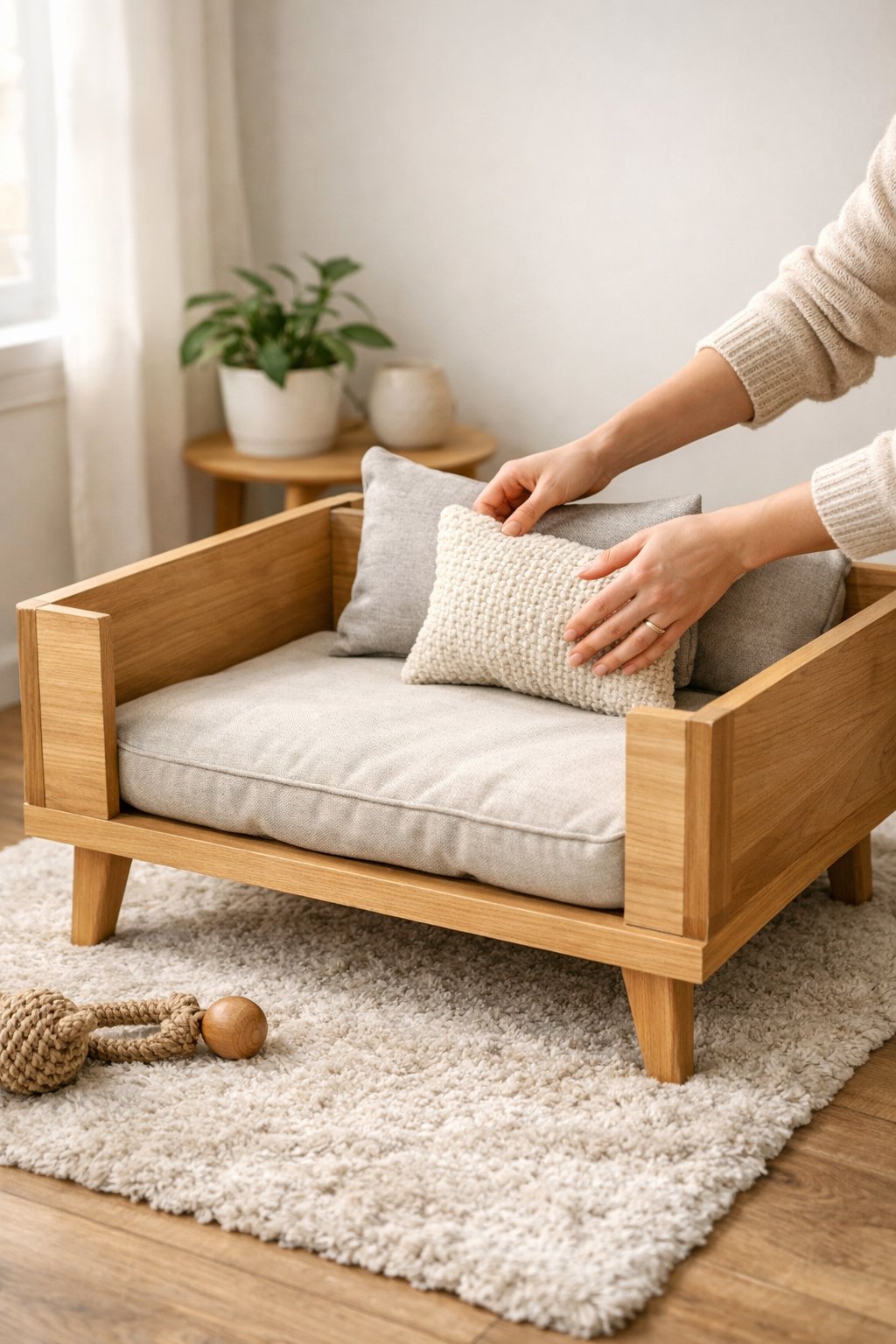
The right cushioning and decorative details can turn a basic raised dog bed into a furniture-quality piece.
Cushioning with Upcycled Materials
Cut down old memory foam mattress toppers to fit the bed frame perfectly. These provide great support for your dog’s joints.
Old couch cushions are another option. Remove the covers, trim the foam to size, and create new covers from blankets or drop cloths.
For the cover itself, use materials you already own. An old duvet cover cut to size makes a washable cushion cover.
Canvas drop cloths from past painting projects are durable and easy to clean. Add a zipper or envelope closure to the bottom so you can remove and wash the cover weekly.
Some people make removable mattress cushions covered in durable washable fabric in neutral colors that match their decor.
Applying Decorative Accents
I stain the wood frame in walnut or dark oak to match my furniture. A simple coat of stain takes about 15 minutes and dries in a few hours.
Decorative hardware adds an upscale look without much effort. Brass or black corner brackets and decorative wooden feet can really make a difference.
I sometimes use upholstery tacks along the edges for extra detail. Swapping out plain legs for more stylish options also helps.
I attach fabric trim or grosgrain ribbon around the cushion edges using fabric glue. This gives the bed a mid-century modern vibe with clean lines and tapered legs.
Paint is my go-to for matching the bed to my room colors. I use leftover wall or furniture paint in shades like white, gray, or navy.
Easy Maintenance Tips
I vacuum the elevated bed frame weekly since dirt falls through the mesh or slats. This takes less than two minutes with a handheld vacuum.
The cushion cover goes in my washing machine every week on hot water. I hang it to dry or use low heat in the dryer.
Having two covers lets me swap them out instantly during wash day. It keeps things simple and quick.
I wipe down wooden frames monthly with a damp cloth and wood cleaner. For painted frames, I use all-purpose cleaner and dry with a towel right after.
Quick cleaning schedule:
- Daily: Shake out loose fur from cushion
- Weekly: Wash cushion cover, vacuum frame
- Monthly: Deep clean frame, check for loose screws
I keep a lint roller near the bed to quickly remove pet hair before guests arrive. It keeps the bed looking fresh between deeper cleans.
Showcasing Your Handmade Masterpiece
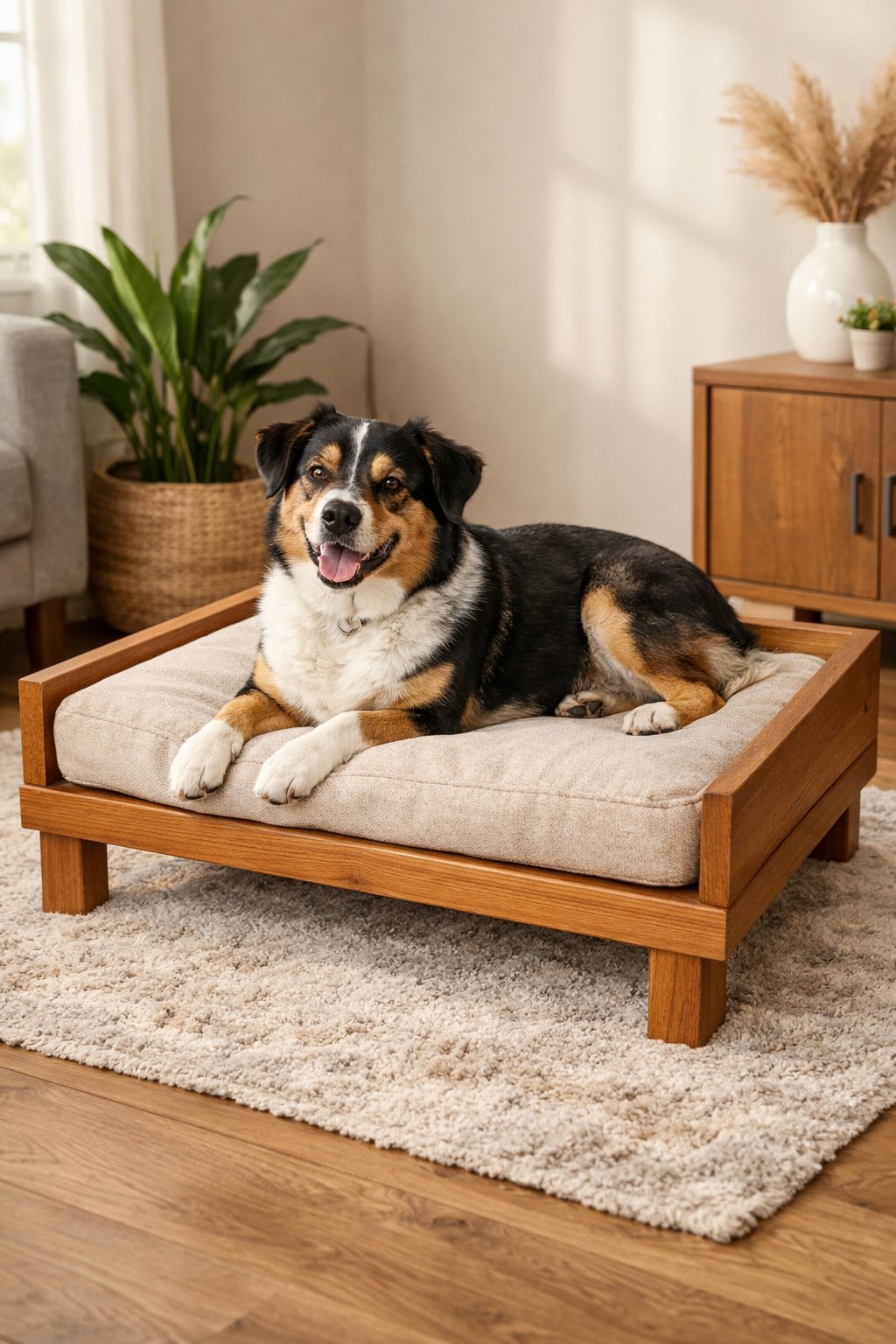
Once you finish building your elevated dog bed, you can have fun styling it to match your home and documenting your work. A well-placed bed becomes a functional design element, and good photos help you remember the build process or share your success with others.
Incorporating the Bed Into Home Décor
I always place my DIY dog bed where it complements the room’s style. Corners work great because they keep the bed out of the way and make use of unused space.
I position the bed near furniture pieces that share similar wood tones or finishes. Adding a cushion or insert that matches my throw pillows keeps everything looking cohesive.
I choose fabrics in neutral colors like gray, beige, or white for a modern feel. For a pop of color, I pick cushions that match accent pieces in the room.
Placing the bed on an area rug helps define the space and protect my floors. It makes the dog bed feel intentional instead of random.
Small touches like a nearby basket for toys or a wall-mounted leash hook complete the look. Indoor plants placed near the bed soften the space and add life to the corner.
I make sure the bed’s height works with surrounding furniture so nothing looks out of place. The goal is to make the bed blend in so naturally that guests assume I bought it from a store.
Capturing Photos of Your DIY Project
I take photos throughout the build process, starting with materials laid out before assembly. Progress shots help me track what worked and what I’d change next time.
I photograph each major step so I can reference them for future projects. For final photos, I wait until my dog is actually using the bed.
Action shots of my pet enjoying their new space make the project feel complete. I shoot from multiple angles to capture the bed’s design details and how it fits in the room.
Natural lighting makes a huge difference in photo quality. I photograph near windows during the day and avoid using flash to prevent harsh shadows.
Getting down to the bed’s level instead of shooting from above creates more interesting photos. I include close-ups of special details like corner joints, stain finish, or decorative accents.
Before-and-after comparisons showing the transformation from raw materials to finished piece tell a great story.
Frequently Asked Questions
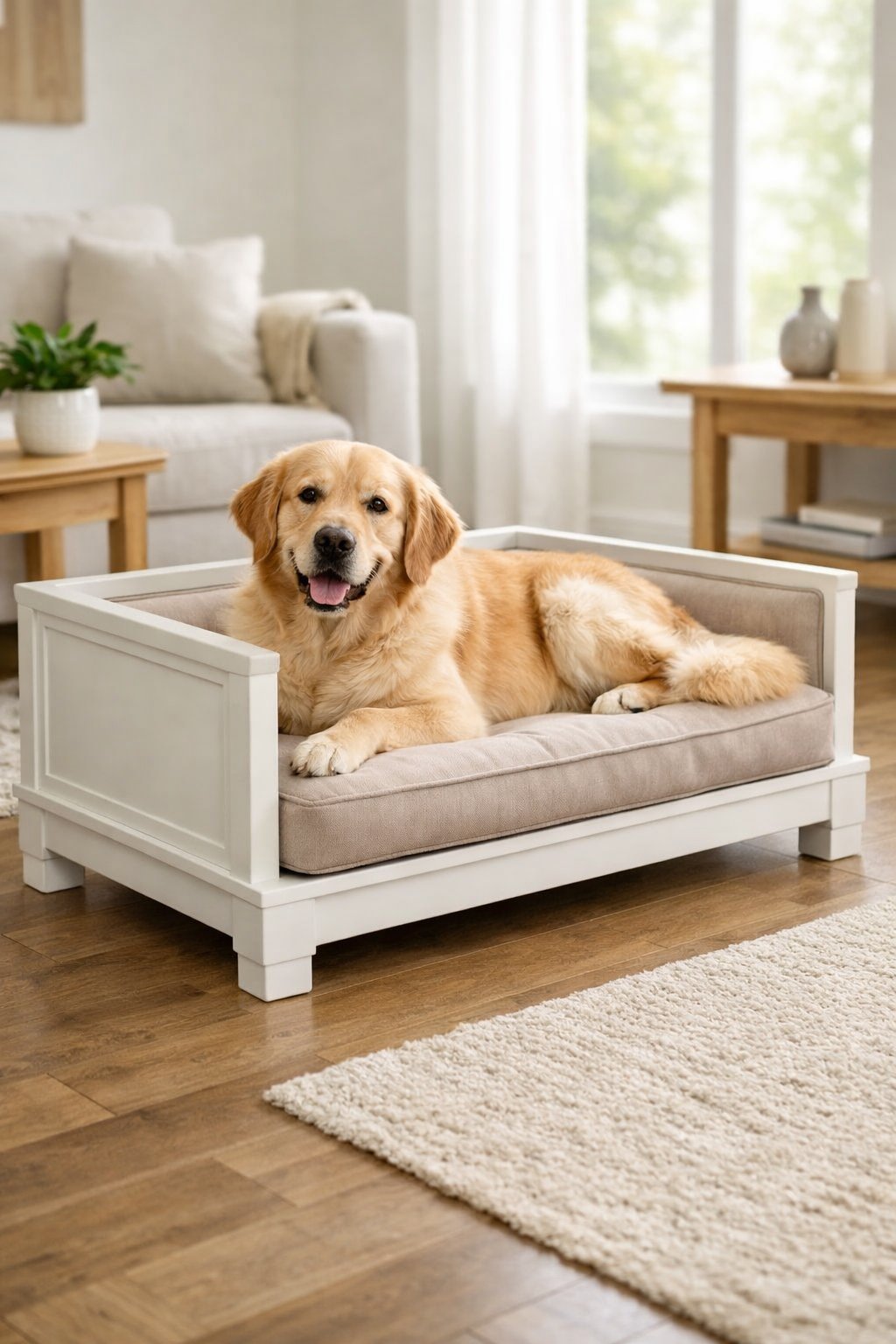
Building a raised dog bed that looks expensive doesn’t require fancy skills or a big budget. Most projects use basic materials like wood, PVC pipes, or repurposed furniture you can find cheaply or already have at home.
How can I build a DIY dog bed frame that looks luxurious without spending a lot?
Start with simple wood panels or PVC pipes as your base. You can find these at hardware stores for way less than a finished dog bed.
The secret is in the finishing touches. Sand the wood smooth, apply a nice stain or paint that matches your home, and add cushions with stylish covers.
Elevated dog bed projects usually cost between $30 and $60 in materials. That’s a fraction of what store-bought options cost.
Using reclaimed wood or repurposed furniture can save you even more. An old side table or wooden crate can become a beautiful dog bed with a little creativity.
What are some free plans for creating a DIY raised dog bed?
There are plenty of websites offering free step-by-step instructions. Multiple raised dog bed plans are available online with detailed pictures and measurements.
Many plans include materials lists and cutting guides, so you don’t have to guess what to buy. Various DIY wood dog bed designs show you exactly how to build beds from basic lumber.
Look for plans that match your skill level. Some need only basic tools like a drill and saw, while others are more advanced.
Are there any DIY dog bed plans available in PDF format for easy reference?
Yes, comprehensive raised dog bed plans are available to download as PDFs. Having a PDF lets you print it out or view it on your phone while you work.
These plans usually include diagrams, measurements, and shopping lists. It’s handy to have everything in one place instead of jumping between web pages.
Some PDFs even have photos of the finished product from different angles. This helps you see what you’re working toward.
How do I make an elevated dog bed for large breeds myself?
For large dogs, use stronger materials and bigger dimensions. The frame needs to support more weight without sagging.
Thicker wood boards or reinforced PVC pipes rated for heavy loads work best. Standard materials for small dogs won’t hold up for big breeds.
Measure your dog while they’re fully stretched out and add at least 6 inches to each side. The legs need to be sturdy and well-secured to the frame.
Using corner brackets or strong screws helps prevent wobbling.
What are the steps to construct a DIY elevated dog bed with stairs?
Start by building the basic raised bed frame. Once that’s solid, add the stairs as a separate piece.
For stairs, measure the bed’s height and divide by the number of steps you want. Each step should be about 4-6 inches high for easy climbing.
Build a simple box frame for each step using wood boards. Make sure the steps are wide enough for your dog’s paws.
Attach the stairs securely to the side of the bed frame with screws or brackets. Test the stability before letting your dog try it out.
Adding carpet or grip tape to each step helps prevent slipping, which is especially important for older dogs or those with joint issues.
Is investing in a luxury dog bed more beneficial than creating a DIY elevated one?
DIY beds usually offer better value for most pet owners. Homemade dog beds cost significantly less while still providing comfort and support.
Store-bought luxury beds can cost hundreds of dollars. A DIY version with similar quality typically costs around $80 or less in materials.
The main advantage of DIY is customization. You can build the exact size, height, and style that fits your dog and matches your home decor.
Luxury beds do save you time if you don’t enjoy building things. They also come with warranties and are ready to use right away.
Making your own bed lets you choose higher quality materials for the same price as a cheap store-bought option. The durability often ends up being better with a well-built DIY project.
