DIY Dog Cone: Easy Homemade Alternatives to Keep Your Pup Comfortable and Healing

DIY Dog Cone – Your dog just had surgery or has a wound that needs to heal, but the plastic cone from the vet makes them bump into walls and seem miserable. I’ve been there, and I know how stressful it can be to watch your pet struggle with an uncomfortable cone.
The good news is that there are other options.
You can make a comfortable dog cone at home using simple materials like towels, pool noodles, or soft fabric. These homemade options keep your dog from licking without causing extra stress.
Making a DIY protective cone saves money and lets you create something that fits your dog’s size and comfort needs. They do the important job of protecting wounds while being easier for your dog to wear.
I’ll show you how to create different types of cones using things you probably already have at home. You’ll learn which materials work best, how to make sure your DIY cone is safe, and how to help your dog adjust to wearing it.
Key Takeaways
- Dogs need cones to prevent licking wounds, which can cause infections or slow healing.
- Homemade cones made from soft materials like fabric or pool noodles are more comfortable than hard plastic versions.
- A properly fitted DIY cone should allow your dog to eat and drink while preventing them from reaching their wound.
This post contains affiliate links. As an Amazon Associate I earn from qualifying purchases.
Short on time? Buy a ready-made alternative:
- Soft recovery cone – gentler than hard plastic
- Inflatable recovery collar – lets your dog eat and sleep normally
- Recovery suit – covers the wound without a cone
Why Dogs Lick and When a Cone Is Needed
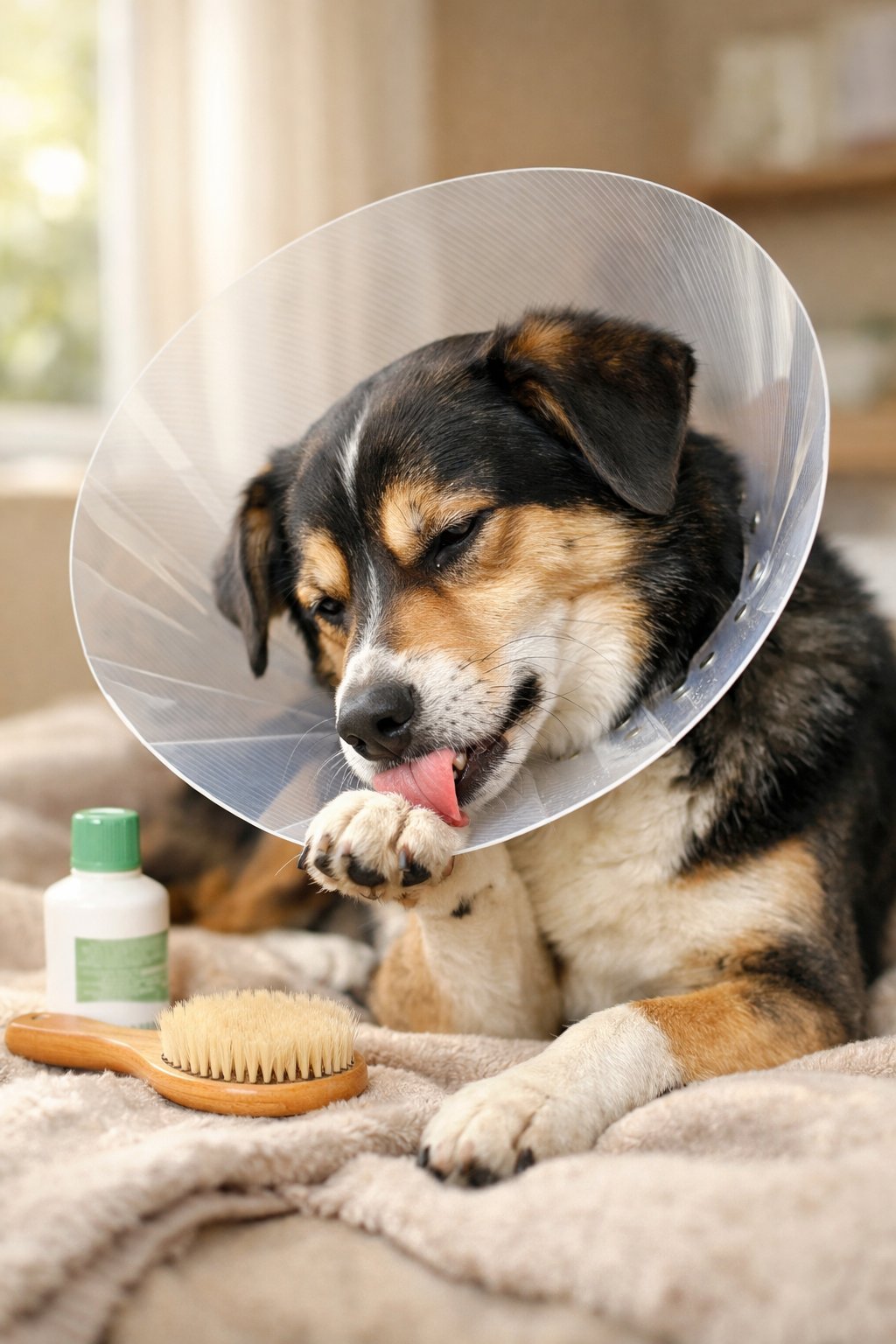
Dogs lick themselves for many normal reasons, but sometimes this behavior gets out of hand and needs to be stopped. Knowing when licking crosses the line from normal grooming to a problem helps me protect my dog’s health.
Common Reasons for Excessive Licking
Dogs naturally lick themselves to stay clean and comfortable. It’s part of their grooming routine.
However, excessive licking can happen for several reasons. Allergies are one of the most common causes.
My dog might lick their paws or skin when they react to food, pollen, or chemicals. Pain or discomfort also triggers licking.
If my dog has a wound, hot spot, or surgical incision, they’ll instinctively lick the area to soothe it. Skin conditions like infections, rashes, or dry patches make dogs want to lick constantly.
Parasites such as fleas or mites create intense itching that leads to non-stop licking. Anxiety and boredom can cause licking too.
Some dogs lick as a nervous habit or to pass the time when they’re understimulated.
Risks of Unchecked Licking
Allowing my dog to keep licking can turn a small problem into a serious medical issue. Constant licking on wounds or lesions can lead to infection and inflammation.
The moisture from saliva creates the perfect environment for bacteria to grow. This slows down healing and can make wounds much worse.
Hot spots can develop quickly from excessive licking. These are painful, red, inflamed areas of skin that spread if left untreated.
Licking surgical incisions is especially dangerous. It can pull out stitches, reopen the wound, and cause serious complications.
Over time, chronic licking can damage the skin and create permanent hair loss or thickened, darkened patches.
Signs Your Dog Needs a Cone
I should consider using a cone when my dog won’t stop licking a specific area despite my attempts to redirect them. If my dog has had surgery or has stitches, a cone stops them from licking or scratching the healing area.
Watch for these signs:
- Red, wet, or inflamed skin from repeated licking
- Open wounds or sores that aren’t healing
- Hair loss in areas my dog targets
- My dog wakes up at night to lick
- Blood or discharge on areas they’ve been licking
- Swelling around surgical sites
If my dog has a hot spot, rash, or any injury they keep bothering, a cone helps give the area time to heal.
How DIY Dog Cones Reduce Stress
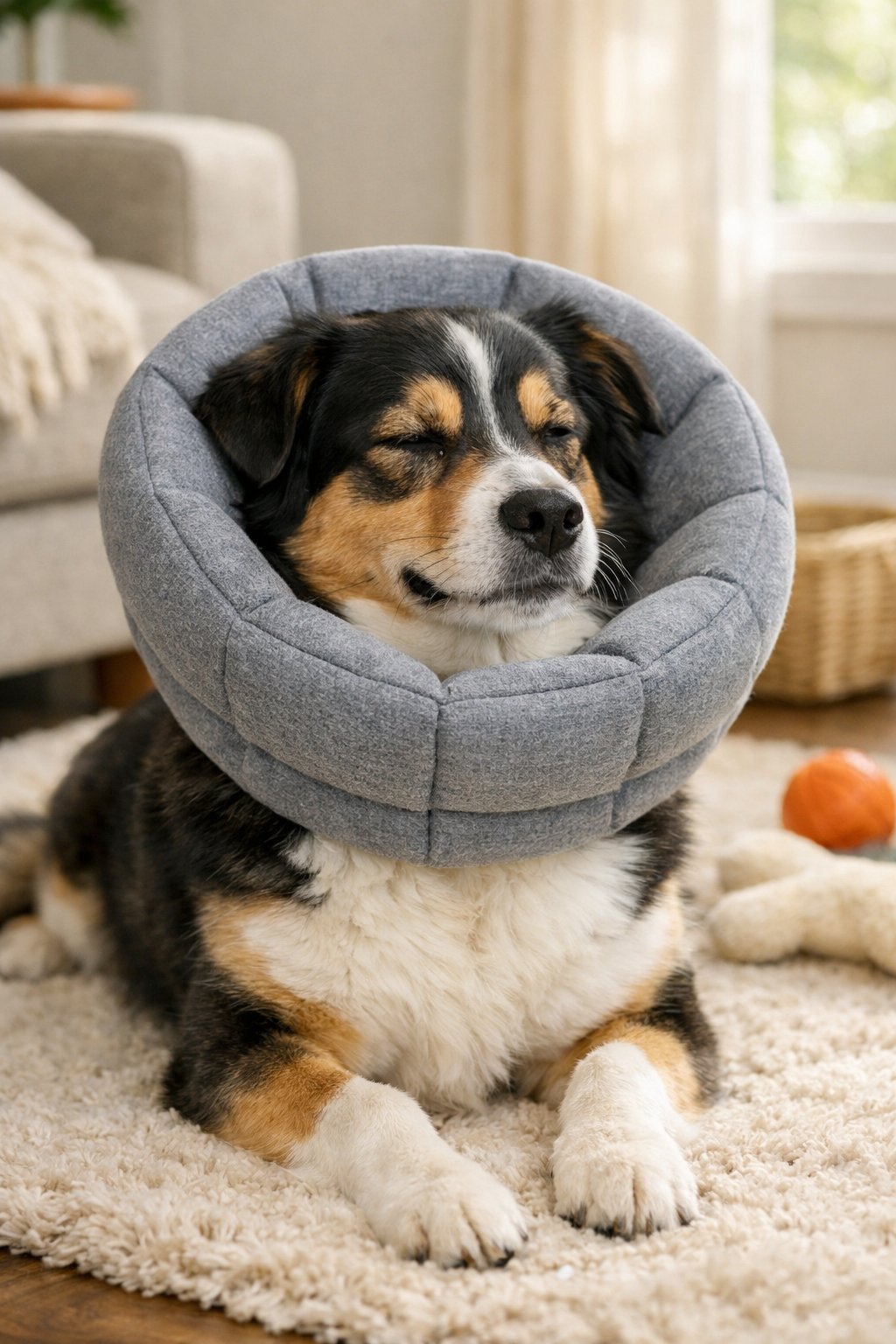
Making a cone at home lets me customize the fit and materials for my dog’s comfort. I can choose softer options that don’t bang into doorways or block my pet’s vision completely.
Benefits Over Store-Bought Cones
Store-bought plastic cones often feel rigid and uncomfortable for dogs. They bump into furniture and make it hard for pets to eat or drink normally.
When I make a dog cone at home, I can select materials that work better for my dog’s size and temperament. A soft fabric cone might work well for a calm dog, while a sturdier cardboard option suits a more active pet.
DIY options also save money. Most homemade alternatives use materials I already have around the house like towels, pool noodles, or cardboard.
I can adjust the cone’s size as my dog heals. If the wound gets better, I can trim the cone smaller so my pet gains more freedom gradually.
Comfort Considerations for Your Pet
Proper fit matters most when making any cone. I always make sure I can slide two fingers between the cone and my dog’s neck to check breathing room.
Vision is another key factor. Traditional plastic cones block peripheral vision, which makes dogs anxious and clumsy.
I prefer alternatives like pool noodle collars that don’t obstruct sight at all. The material I choose affects how well my dog tolerates wearing it.
Soft fabrics feel less invasive than hard plastic. Some dogs do better with inflatable donut-style collars that let them rest their head comfortably.
I watch for these signs of poor fit:
- Difficulty breathing or excessive panting
- Unable to reach food or water bowls
- Rubbing or chafing on the neck
- Constant attempts to remove the cone
Tips for a Positive Experience
I introduce the cone gradually before my dog actually needs it. Letting my pet sniff and investigate it first reduces fear.
Positive reinforcement helps tremendously. I give treats and praise whenever my dog wears the cone calmly.
Feeding time requires adjustments. I elevate food and water bowls so my dog can eat without the cone getting in the way.
Removing the cone during supervised meals works if my dog won’t bother the wound. I check the homemade cone daily for wear and tear.
Cardboard can get soggy or bent, while fabric versions might fray. Replacing worn parts keeps my dog safe and comfortable.
Distraction techniques work well during the adjustment period. Extra playtime, puzzle toys, or gentle walks help my dog focus on activities rather than the cone itself.
Choosing the Best DIY Dog Cone Materials
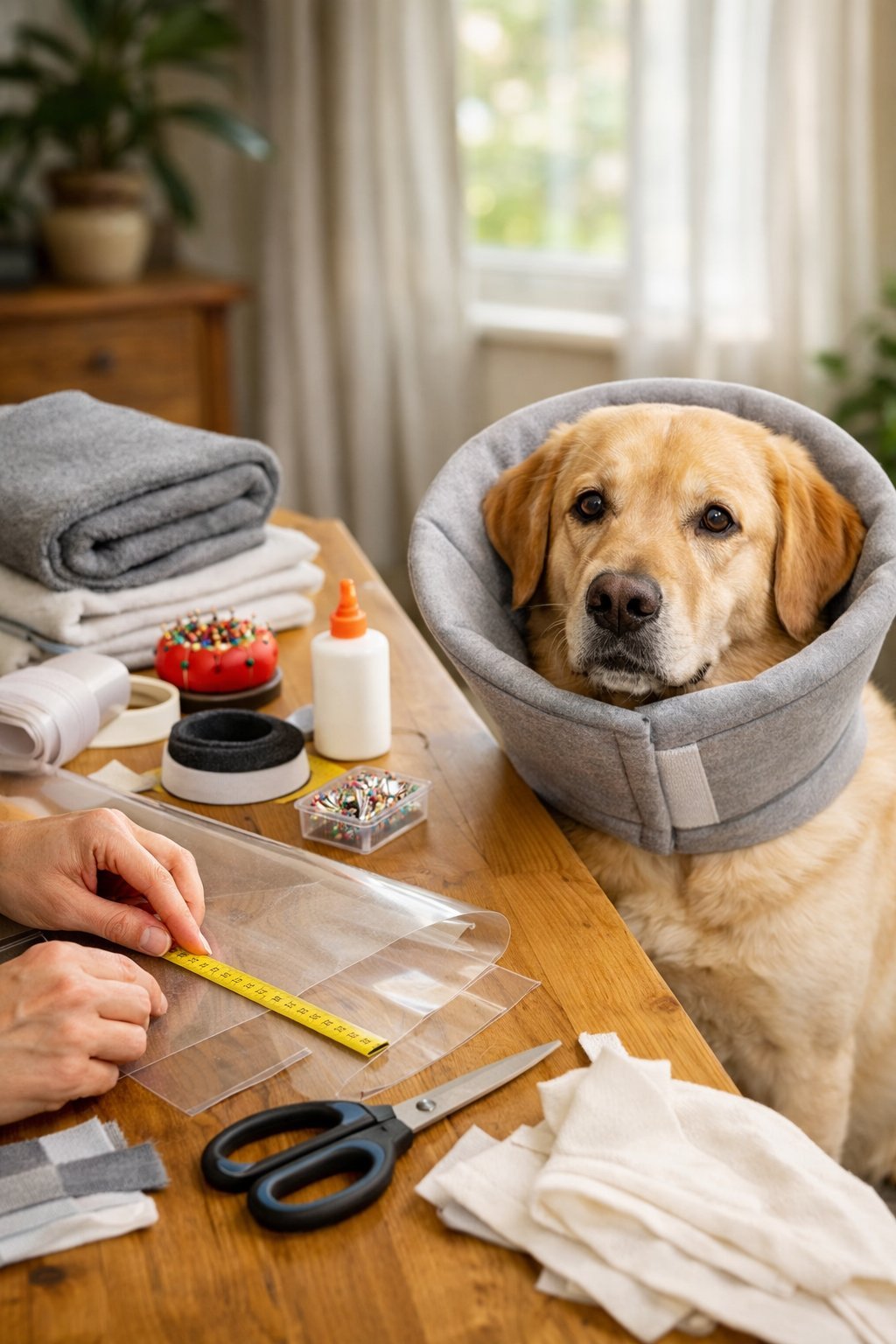
The right materials make all the difference between a cone your dog tolerates and one that causes more stress. I focus on soft, flexible options that protect wounds while keeping my pup comfortable.
Safe and Soft Materials to Use
Soft foam sheets work great because they bend easily around my dog’s neck without creating hard edges. I can find foam sheets or thick felt fabric for $5-$10 at most craft stores.
Towels are another excellent choice I keep on hand. They’re gentle against my dog’s skin and I already have them at home.
Pool noodles create a comfortable barrier that stops licking without blocking my dog’s view completely. Felt fabric gives me a sturdy option that’s still soft.
I like that it holds its shape while remaining gentle. Fleece material works similarly and feels cozy against fur.
Poster board covered with soft fabric combines structure with comfort. The poster board provides the cone shape while the fabric layer protects my dog’s neck from rough edges.
Materials to Avoid
I never use materials with sharp edges or rough textures. Metal, hard plastic, and cardboard without padding can irritate my dog’s skin and cause rubbing.
Anything too stiff makes it hard for my dog to move around comfortably. Materials that don’t breathe well, like thick rubber or vinyl, can trap heat and moisture around the neck area.
I stay away from materials my dog might easily chew through and swallow. Small pieces that could break off pose a choking hazard.
Toxic materials or anything treated with chemicals should never touch my dog’s skin.
Tools You’ll Need
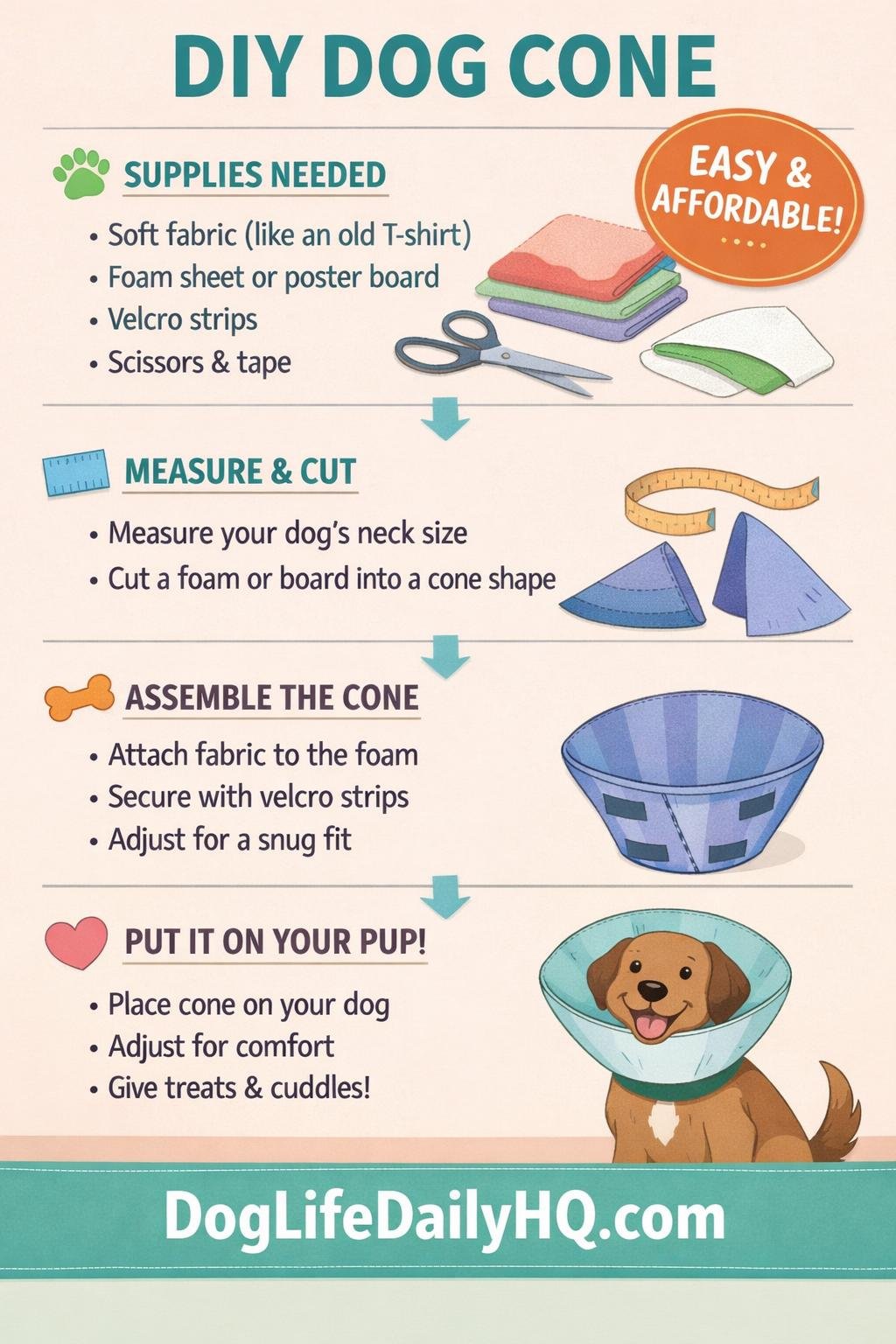
Basic scissors are essential for cutting materials to the right size. I use measuring tape or a ruler to get accurate measurements of my dog’s neck.
Velcro strips or adjustable snaps cost $2-$5 and help me create a secure closure. These fasteners let me adjust the fit as needed without permanent attachment.
A marker helps me trace cutting lines on my materials. I keep fabric glue or a hot glue gun ready for securing layers together safely.
Step-by-Step Guide to Making a DIY Dog Cone
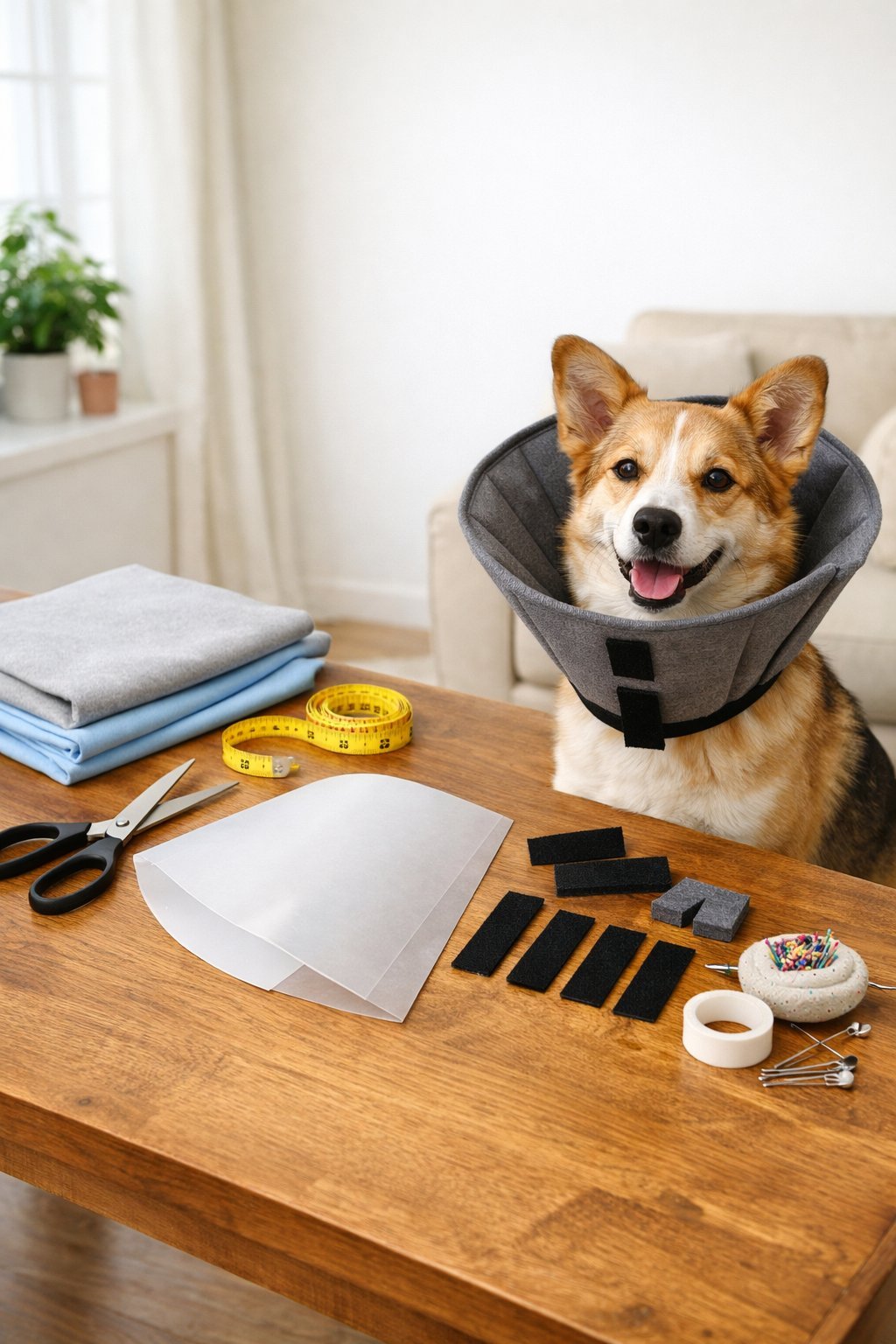
I’ve found that getting accurate measurements and choosing the right assembly method makes all the difference when creating a homemade cone. The key is ensuring proper fit while keeping your dog comfortable enough to eat, drink, and move around safely.
Measuring Your Dog for a Cone
I always start by measuring my dog’s neck circumference at the widest part, just like I would for a collar. I use a soft measuring tape and make sure I can fit two fingers between the tape and my dog’s neck for comfort.
Next, I measure from the base of my dog’s neck to the tip of their nose. This tells me how long the cone needs to be to prevent licking.
I add one to two inches to this measurement to ensure full protection. For the cone’s outer diameter, I measure from my dog’s neck to about three inches past their nose.
This extra length stops them from reaching wounds on their body. I write down all three measurements before cutting any materials.
If I’m making a soft foam cone, I also measure the distance around my dog’s head at the ears. This helps me create the right opening size so the cone doesn’t slip off.
How to Assemble Various DIY Cone Styles
For a basic paper cone, I cut a large circle from poster board using my outer diameter measurement. I then cut out a smaller circle in the center based on my neck measurement.
I make one straight cut from the outer edge to the inner circle, overlap the edges to form a cone shape, and secure with tape or staples. When I make a pool noodle collar, I cut the noodle into six-inch sections and thread them onto a rope or string.
I tie the ends together, making sure the necklace sits snugly around my dog’s neck without being too tight. For a soft fabric cone, I cut two identical cone shapes from fleece or felt fabric.
I sew the pieces together along the outer edge, leaving the neck opening free. I attach Velcro strips to the straight edges so I can wrap and secure it around my dog’s neck easily.
Customizing Fit and Security
I always test the fit by sliding two fingers between the cone and my dog’s neck. If I can’t do this comfortably, the cone is too tight and needs adjustment.
I check that my dog can eat and drink while wearing the cone. If they struggle, I trim the cone’s length slightly or raise their bowls.
To prevent the cone from sliding off, I thread my dog’s regular collar through the inner edge of the cone. This keeps everything in place while allowing me to remove the cone quickly if needed.
I make sure the cone doesn’t affect breathing by checking that air flows freely around my dog’s neck. I add padding to the neck opening using soft foam or fleece strips to prevent chafing and make it more comfortable.
Ensuring Safety and Comfort With Homemade Cones
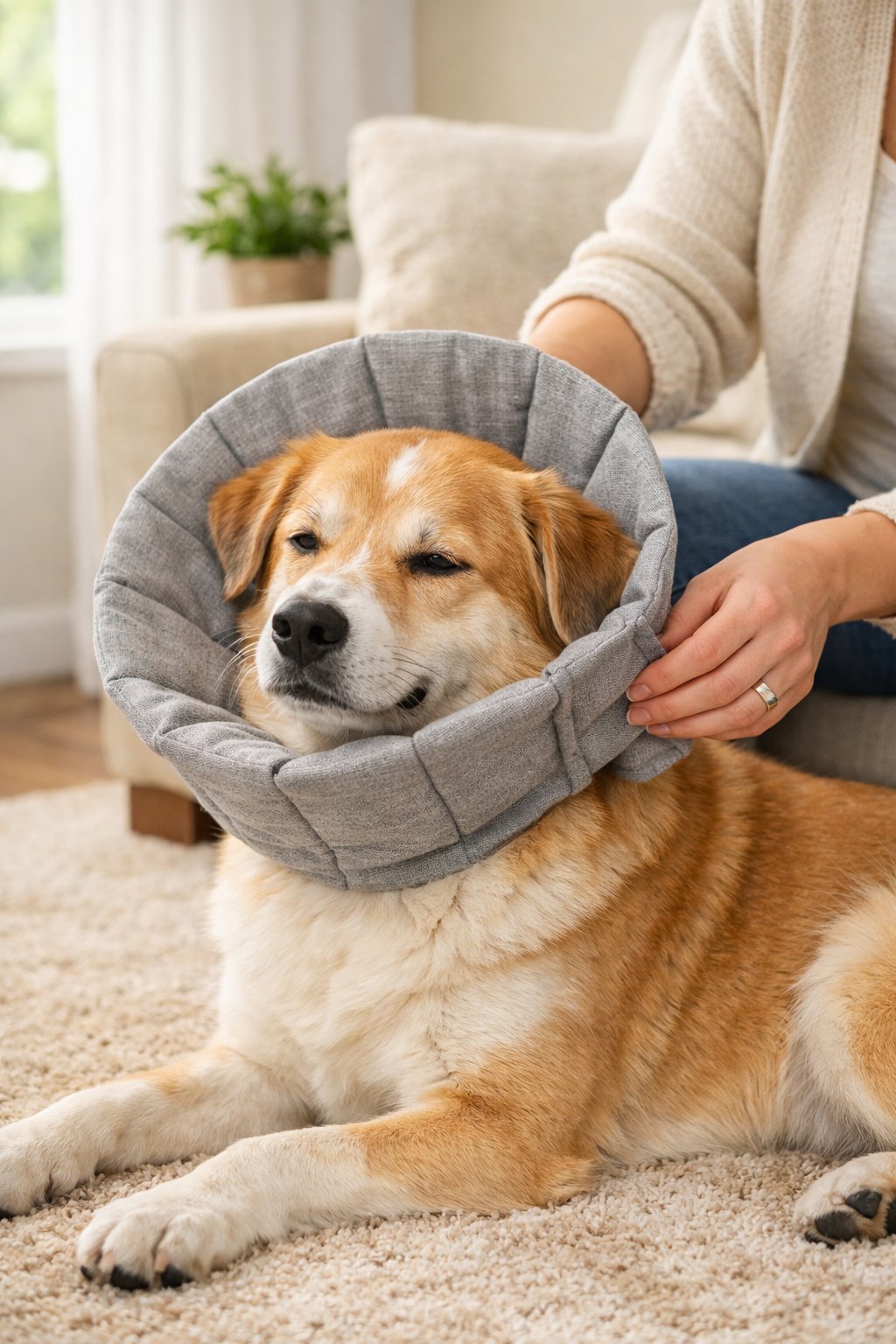
A well-fitted cone protects your dog while allowing them to eat, drink, and move around safely. I always check that my homemade cone fits properly and make adjustments when issues come up.
Proper Fitting for Different Breeds
I measure my dog’s neck circumference and add two inches to ensure the cone isn’t too tight. My fingers should easily slide between the cone and my dog’s neck without any restriction.
The cone needs to extend past my dog’s nose by about two inches. For short-nosed breeds like pugs or bulldogs, I make the cone shorter since they don’t need as much length to prevent licking.
Large breeds need sturdier materials like thick cardboard or multiple layers. Small dogs do well with lighter options like soft fabric or thin poster board that won’t weigh them down.
I secure the cone with soft fabric strips or gauze wrapped through holes in the base. I avoid using materials that could irritate my dog’s skin or cause discomfort during extended wear.
Signs of proper fit:
- Dog can eat and drink normally
- No rubbing or red marks on neck
- Dog cannot reach wounds or stitches
- Collar stays in place during movement
Troubleshooting Common Issues
When my dog bumps into furniture or doorways, I pad the cone’s edges with soft foam or fleece. This prevents licking while ensuring comfort during the healing process.
If my dog seems anxious or refuses to move with a traditional cone, I switch to a pool noodle collar alternative. Some dogs adapt better to different styles.
If the cone slips off, I reinforce it by attaching it to my dog’s regular collar with zip ties or strong tape. I check the fit multiple times throughout the day, especially after my dog eats or plays.
When my dog can still reach their wound, I make the cone longer or try a different design. I never leave a poorly fitting cone on my dog unsupervised.
Frequently Asked Questions
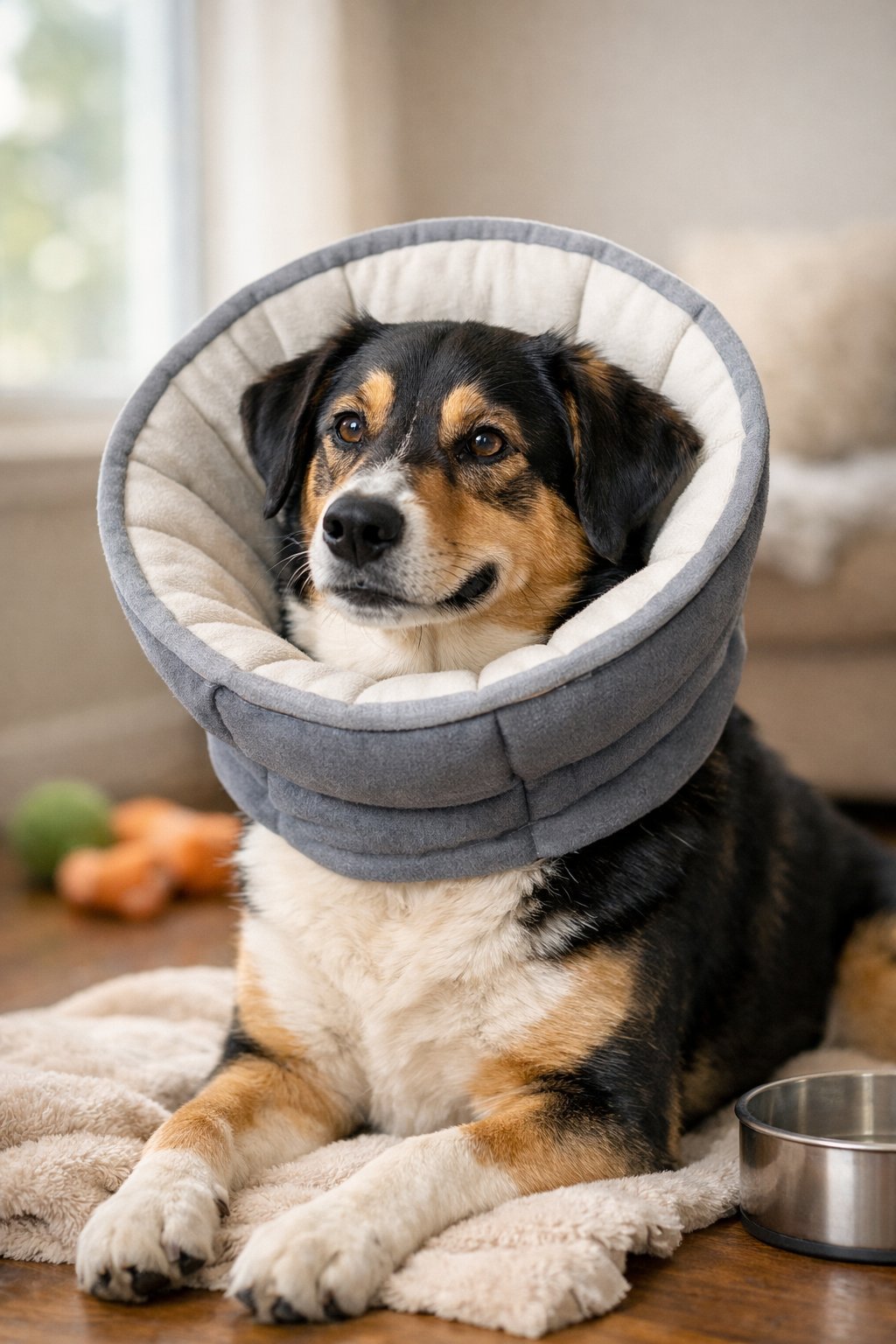
Making a cone at home raises practical questions about comfort, materials, and effectiveness. Dogs need protection from licking wounds while still being able to eat, drink, and move around normally.
How can I make a homemade dog cone that’s comfortable?
I recommend using soft materials like foam, fabric, or pool noodles instead of hard plastic. These materials are gentler on my dog’s neck and don’t bump into things as much.
I always make sure the cone fits properly by checking that I can slide two fingers between the collar and my dog’s neck. This prevents breathing problems and keeps my pup comfortable.
Padding the edges with soft fabric or foam tape helps prevent irritation. I also make sure the cone is short enough that my dog can still reach their food and water bowls.
What are some simple steps to create my own DIY dog cone?
I can make a traditional cone using poster board or paper plates by cutting a circle and removing a wedge-shaped piece. Then I wrap it around my dog’s neck and secure it with tape or string.
For a simpler option, I cut a pool noodle to fit around my dog’s neck and thread rope through the center hole. I tie the ends together to create a soft collar that stops licking without blocking vision.
I always attach the homemade cone to my dog’s regular collar for extra security. This prevents my dog from pulling it off while still allowing movement.
Are there effective alternatives to traditional dog cones for small dogs?
Small dogs do well with inflatable donut collars that look like travel pillows. I can make one by sewing fabric into a ring shape and stuffing it with soft filling or bubble wrap.
Baby onesies work great for small dogs when I need to protect wounds on the body. I just cut holes for the legs and tail, and the snug fit prevents access to stitches or hot spots.
Soft fabric collars made from towels rolled into tubes also work well. I wrap the towel around my small dog’s neck and secure it with safety pins or Velcro.
Can I use a t-shirt as a DIY cone alternative for my dog?
Yes, I can use a t-shirt to cover wounds on my dog’s body and prevent licking. I put my dog’s front legs through the arm holes and secure the extra fabric with a hair tie or clip.
This method works best for protecting the chest, belly, or back areas. The fabric creates a barrier that my dog can’t easily get around.
I make sure to use a clean, breathable cotton shirt that fits snugly but doesn’t restrict movement. I check the shirt regularly to ensure it stays in place and doesn’t cause discomfort.
What’s the best way to prevent my dog from licking without using a cone?
I can put a cone on my dog to stop licking, but I also use distraction techniques like puzzle toys and extra playtime. Keeping my dog’s mind busy reduces the urge to lick wounds.
Applying bitter-tasting sprays around the wound area (not directly on it) discourages licking. I always check with my vet before using any products near injuries.
I also increase supervision and redirect my dog’s attention whenever I catch them trying to lick. Consistent redirection helps break the habit over time.
Are there any natural remedies that can discourage my dog from licking wounds?
I use diluted apple cider vinegar around the wound area, making sure to avoid the wound itself. Most dogs dislike the taste, so it helps keep them from licking.
Aloe vera gel can soothe irritation and also tastes unpleasant to dogs. I stick to pure aloe with no added ingredients.
I always check with my vet before trying anything new on my dog’s wounds. Some natural remedies can interfere with healing or cause allergic reactions.