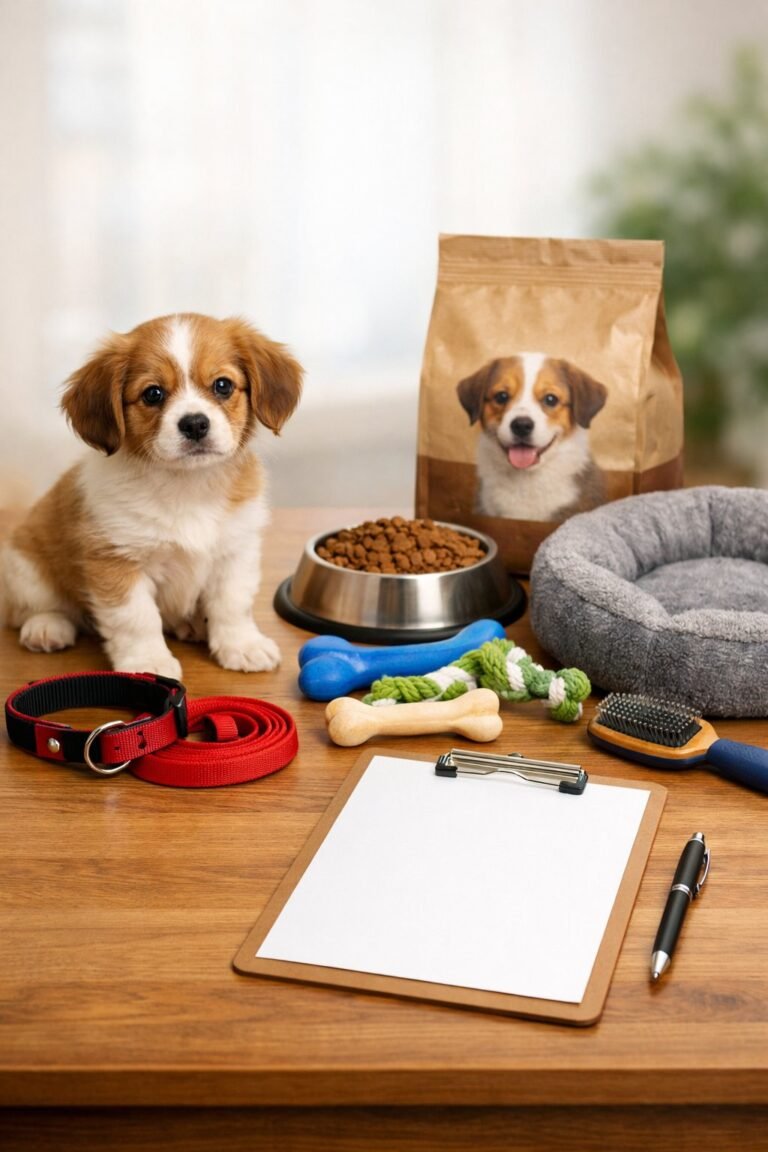
7 Dog And Mom Photoshoot Poses That Look Professional With a Phone

Dog And Mom Photoshoot – You don’t need expensive camera equipment to capture beautiful moments with your dog. Using just your phone camera and the right poses, you can create professional-looking photos that celebrate the special bond between you and your furry best friend.
The secret isn’t in the gear but in knowing how to position yourself and your pup for natural, heartwarming shots.
I’ve discovered that simple poses work better than complicated setups when photographing with my dog. Your pet doesn’t need to be a trained model to look great in photos.
By focusing on genuine connection and movement, you’ll get images that truly capture your relationship.
These seven poses will help you take photos that look like they came from a professional studio. Whether your dog loves to cuddle or prefers playful action shots, there’s a pose that will work perfectly for both of you.
Key Takeaways
- You can take professional-looking photos with just your phone camera by using the right poses and techniques.
- Focus on natural connection and movement with your dog for more authentic results.
- Simple setups with good lighting and creative angles make your phone photos look studio-quality.
Quick Guide: Capturing Professional Dog and Mom Photos At Home
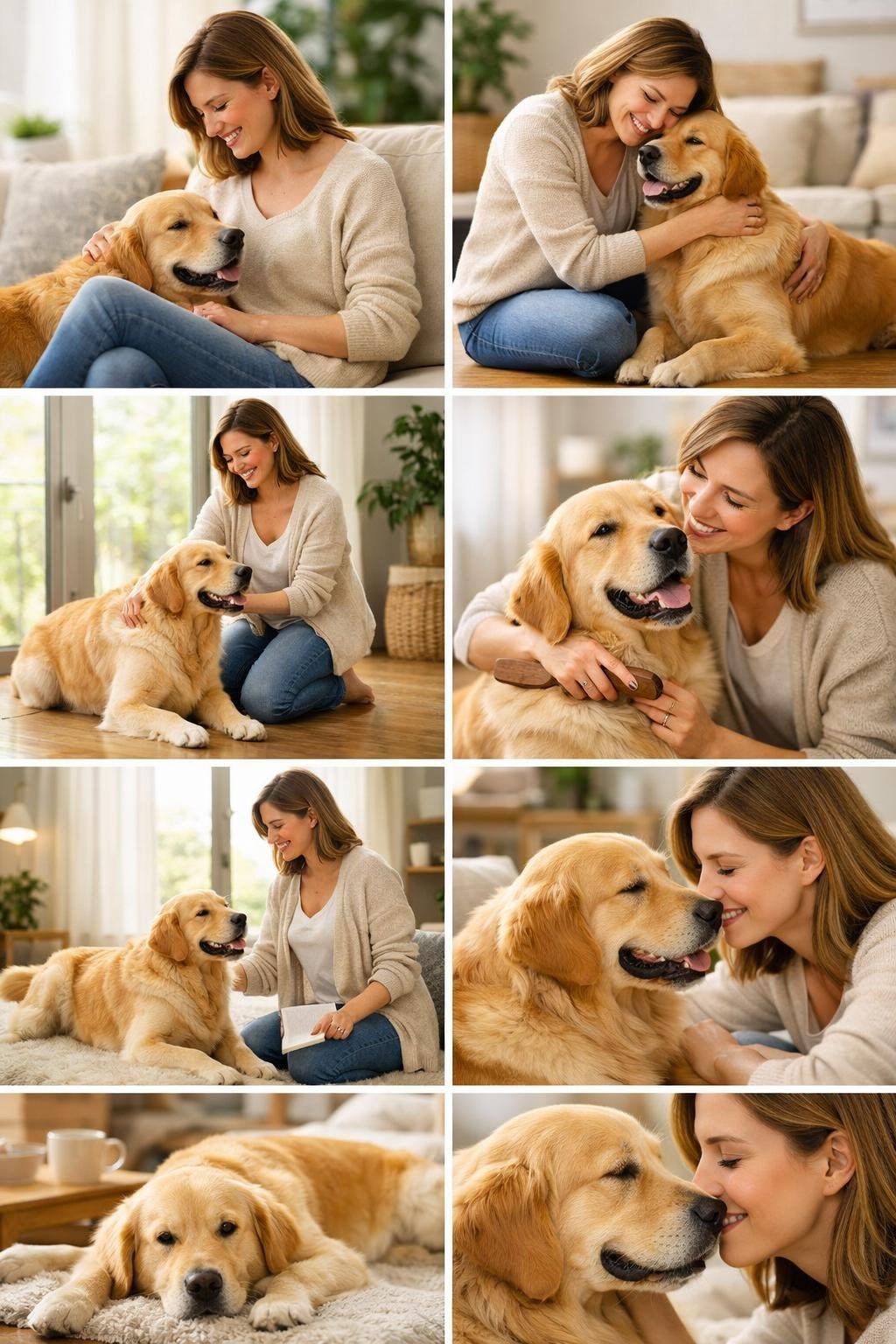
You don’t need expensive equipment to create beautiful photos with your dog. Good lighting, simple backgrounds, and a calm pup make the biggest difference in getting professional-looking results.
How to Use Your Phone for High-Quality Shots
I always clean my phone lens before starting any dog photoshoot. A smudged lens creates blurry photos that look amateur.
Key phone camera settings:
- Turn on portrait mode for blurred backgrounds.
- Tap the screen to focus on my dog’s eyes.
- Use the grid lines to compose balanced shots.
- Avoid using digital zoom, which reduces quality.
I hold my phone at my dog’s eye level instead of shooting from above. This creates more engaging photos that show personality.
Taking multiple shots in burst mode helps me capture the perfect moment, especially with wiggly dogs.
I keep my phone stable by tucking my elbows against my body. Shaky hands create blurry images.
If my dog moves a lot, I increase the exposure slightly to get faster shutter speeds.
Best Lighting and Background Tips
Natural light works best for pet photography. I schedule photos during golden hour, which happens one hour after sunrise or before sunset.
Ideal lighting conditions:
- Overcast days create soft, even lighting.
- Bright shade eliminates harsh shadows.
- Window light for indoor sessions.
- Avoid direct midday sun.
I position myself so the light hits my dog’s face from the side or front. Backlighting creates silhouettes unless I want that artistic look.
For indoor shots, I place my dog near a large window.
Simple backgrounds keep the focus on me and my dog. I choose solid walls, clean grass areas, or blurred outdoor scenery.
Busy backgrounds with clutter distract from the subjects. A plain blanket or sheet works great for creating clean indoor backgrounds.
Keeping Dogs Relaxed and Happy
I schedule dog photography sessions after my pup has exercised. A tired dog sits still better than one with pent-up energy.
- Use high-value treats for rewards.
- Take frequent play breaks.
- Keep sessions under 20 minutes.
- Practice poses before the actual shoot.
I never force my dog into uncomfortable positions. Stressed dogs show it through their body language, which ruins photos.
Instead, I work with my dog’s natural behaviors and capture candid moments.
Having a helper hold treats near the camera lens keeps my dog’s attention focused forward. I use my dog’s favorite squeaky toy to get alert, happy expressions.
Patience matters more than anything when working with pets.
Choosing the Perfect Outfit and Accessories
I wear solid colors that complement my dog’s fur without matching exactly. If my dog has dark fur, I choose lighter clothing to create visual contrast.
Best outfit choices:
- Neutral tones like cream, gray, or denim.
- Avoid busy patterns or logos.
- Choose comfortable clothes for sitting on the ground.
- Consider matching color schemes, not identical outfits.
My dog’s accessories stay simple and comfortable. A festive scarf or bandana adds personality without overwhelming the photo.
I avoid accessories that my dog constantly tries to remove.
I skip heavy makeup and jewelry that catches light awkwardly. The goal is looking like myself, just polished.
For seasonal shoots, I add subtle props like flowers or cozy blankets that enhance the scene without dominating it.
Top 7 Dog And Mom Photoshoot Poses You Can Try
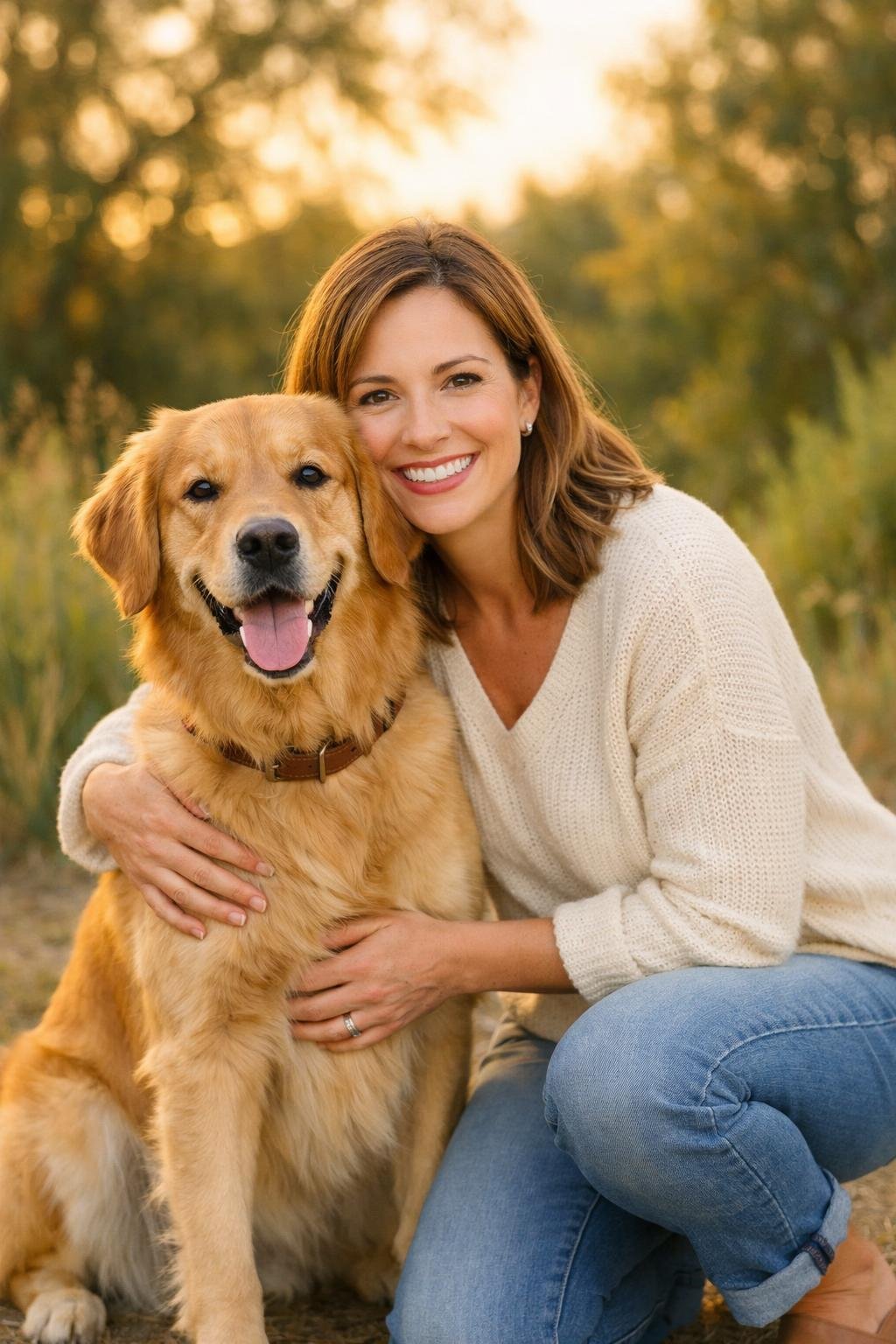
These poses work well whether your dog is calm or energetic, and they don’t require fancy equipment. Focusing on natural interactions and simple positioning creates the most authentic photos that show your real bond with your pet.
The Classic Sitting Portrait
I always start with this pose because it’s straightforward and gives you a polished result. Sit close to your dog with both of you facing the camera.
You can position yourself on the ground, on a bench, or on steps. Keep your body angled slightly toward your dog rather than sitting completely straight.
This creates a natural connection in the frame. Place your hand gently on your dog’s back or chest to keep them calm and focused.
For smaller dogs, I recommend holding them in your lap or arms. Larger dogs should sit beside you at roughly the same height as your face.
You can achieve this by kneeling down to their level.
Quick tips for this pose:
- Have someone hold a treat near the camera lens.
- Keep your shoulders relaxed.
- Smile naturally rather than forcing it.
- Take multiple shots to catch the moment when your dog looks alert.
The Sweet Snuggle Close Up
This dog and owner pose captures intimacy and works especially well for affectionate dogs. Get close to your dog’s face and let them lean into you naturally.
I like to rest my cheek against theirs or touch foreheads gently. The key is getting the camera close enough to fill the frame with just your faces.
This eliminates distracting backgrounds and puts all the attention on your connection. You can do this lying down on a blanket, sitting together, or even standing if someone else is taking the photo.
Don’t worry if your dog licks your face during this shot. Those candid moments often turn into my favorite photos.
Just make sure the lighting is good on both of your faces.
Over-The-Shoulder Bond
I love this pose for its simplicity and emotional impact. Turn your back to the camera and have your dog look over your shoulder.
For smaller dogs, hold them up. For larger breeds, kneel down so they can rest their paws on your shoulder.
This angle works well because it focuses on your dog’s face while still showing you’re together. The composition feels more artistic than a standard front-facing shot.
I usually tilt my head slightly toward my dog to show connection.
What makes this pose work:
- Your dog’s face is the main focus.
- Creates depth in the photo.
- Shows trust between you and your pet.
- Works great for holiday cards.
Make sure your hair is pulled to one side so it doesn’t cover your dog. Ask your helper to take several shots since dogs don’t always look at the camera right away.
Playful Action Moments
Movement-based pet photography captures your dog’s personality better than still poses. I throw a ball, run together, or play tug-of-war while someone snaps photos continuously.
These shots look professional because they’re genuine and full of energy. The trick with phone cameras is to use burst mode.
Hold down the shutter button and let your phone take dozens of photos in seconds. You’ll get at least a few sharp images even with lots of movement.
Choose an open area with good natural light. Early morning or late afternoon gives you the best lighting for action shots.
I avoid midday sun because it creates harsh shadows on faces. Don’t pose at all for this one—just play normally with your dog and let the photographer capture whatever happens.
The joy on both of your faces will show naturally.
Celebrate With a Paw Shake
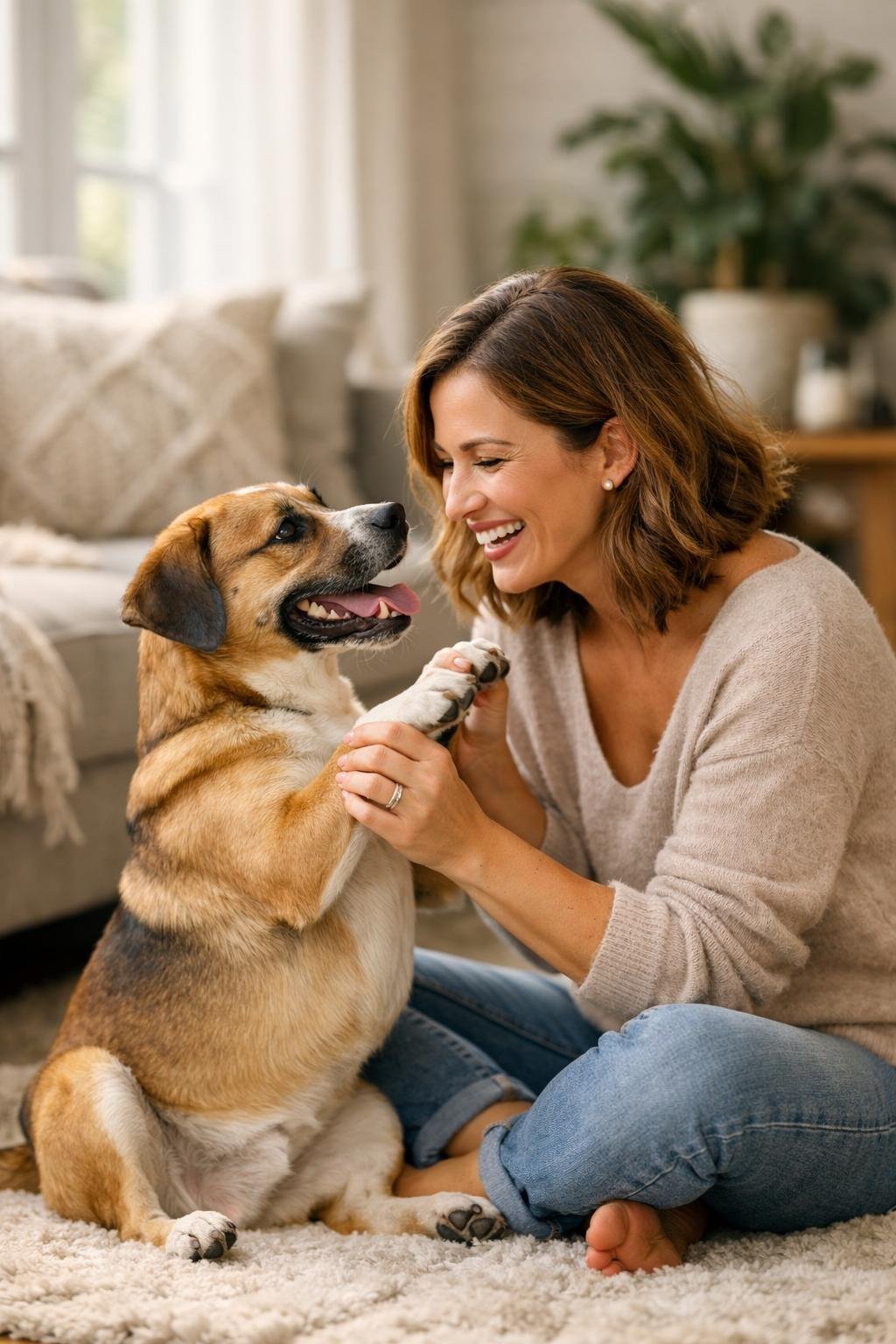
This interactive pose adds personality to your dog photoshoot ideas collection. Kneel down and ask your dog to shake hands with you.
The camera should capture the moment your hands meet. I position myself at an angle rather than straight on.
This lets the camera see both my face and my dog’s face clearly. Your expression should be warm and engaged, like you’re actually communicating with your pet.
If your dog doesn’t know how to shake, you can gently lift their paw and hold it. Use a treat in your other hand to keep them focused and happy.
The goal is to look like you’re having a sweet moment together. This pose works well because it shows training and connection.
It’s also easy to recreate even if you’re working alone with a tripod and timer.
Lay Down Together Perspective
Getting down on the ground creates intimate photos that feel different from standing shots. I lay on my stomach or side next to my dog in the same position.
We’re at eye level, which makes the photo feel equal and connected. You can both look at the camera, look at each other, or look off in the same direction.
I prefer when we’re both relaxed and comfortable rather than perfectly positioned. Your dog will naturally settle in if you stay calm and still.
Best surfaces for this pose:
- Soft grass outdoors.
- Cozy blanket inside.
- Clean floor with good lighting.
- Beach sand or fallen leaves.
The camera should be on the ground too, at your eye level. This perspective makes the viewer feel like they’re part of the moment.
I set my phone against a book or small object to get the right angle.
Dog’s Eye View Pose
This creative angle puts your dog front and center with you slightly behind or beside them. The camera focuses on your dog while you’re partially visible in the background or frame.
I might have my hands gently on my dog or be kneeling beside them. The composition makes your dog the star while still showing you’re together.
I use this when I want to highlight my dog’s expression or when they’re wearing something cute. It’s a great option for dog photography that feels professional.
For phone cameras, tap your dog’s face on the screen to focus correctly. This keeps them sharp while softly blurring the background.
Natural light from a window or outdoors works best for this technique. You can also try having your dog sit in front while you peek around them or rest your chin on their head.
These variations all keep the focus on your pet while showing your presence and bond.
Pose Techniques: Bringing Out Natural Connections
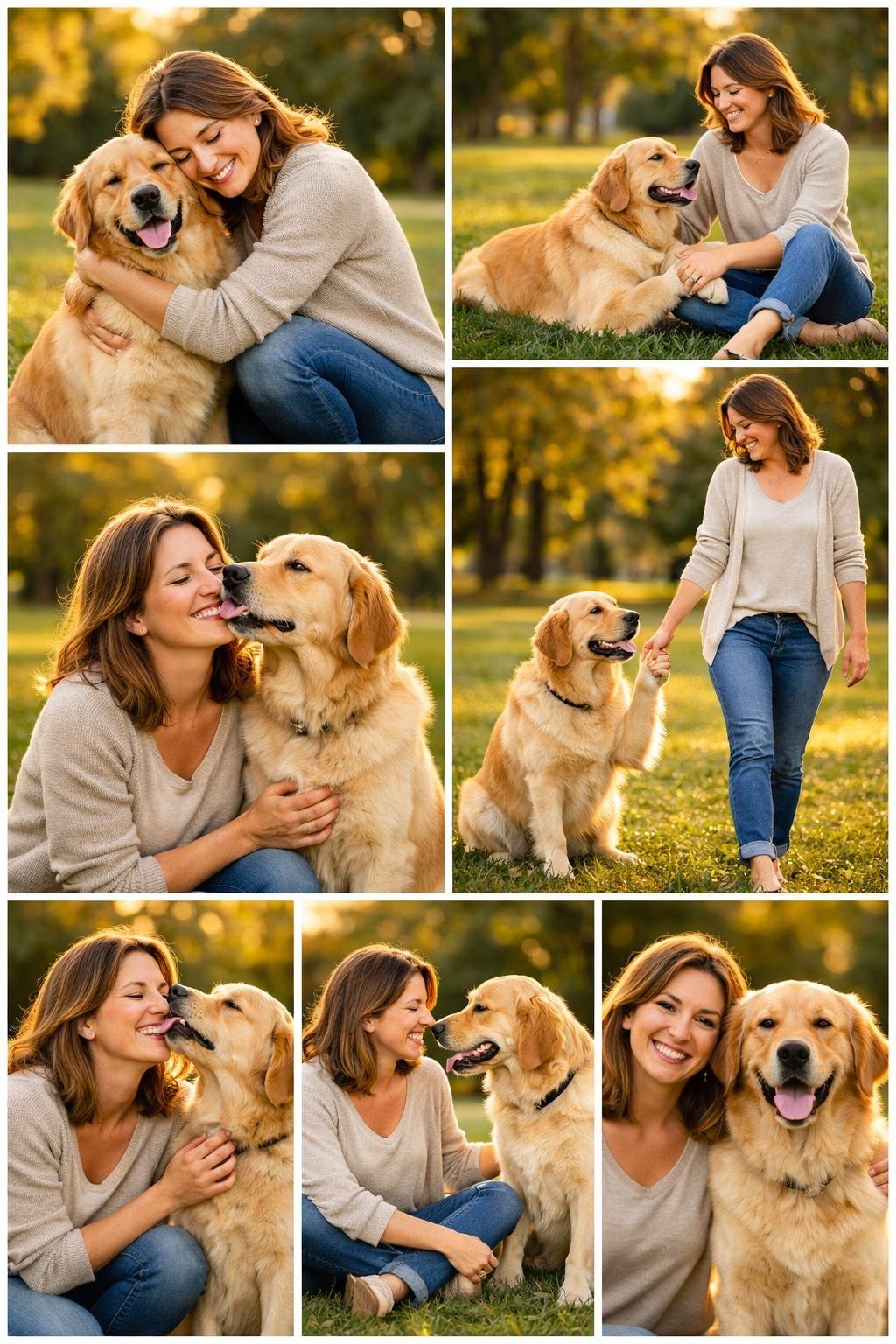
The best dog and mom photos happen when you focus on real moments instead of forced smiles. Working with your dog’s energy and using simple tricks creates images that feel authentic and warm.
Capturing Genuine Emotions
I always start by forgetting about the camera for a minute and just connecting with my dog. When I talk to her in my normal voice or play our favorite game, her ears perk up and her eyes light up in a way that no treat can replicate.
The key is to capture reactions instead of poses. I might whisper something silly, give unexpected belly rubs, or make the squeaky noise she loves.
These movement-based posing techniques bring out natural reactions that show our real bond. I keep my phone ready because the best expressions happen fast.
My dog’s head tilt when I say “walk” or her gentle lean against my leg when she’s content tell our story better than any staged smile.
Coordinating Movement and Stillness
I like to mix walking shots with calm moments to capture different sides of our relationship. When we’re moving, I let my dog set the pace while I walk beside her or just behind.
For movement shots, I focus on:
- Casual walks where we’re both looking ahead
- Her running toward me while I’m crouched down
- Side-by-side strolls with her leash loose
For still poses, I try:
- Sitting together on the ground at her level
- Standing close while she sits calmly
- Lying down next to her for more intimate shots
Switching between these styles during our dog photoshoot helps keep my dog engaged. The contrast makes the final collection feel lively.
Using Treats and Toys to Direct Attention
I always bring my dog’s favorite treats in my pocket. Holding a treat near my phone camera gets her to look exactly where I want without forcing her into weird positions.
I use treats strategically by:
- Keeping them hidden until the right moment
- Rewarding calm behavior instead of just tricks
- Using small pieces so she doesn’t get full too quickly
Toys are awesome for action shots. I’ll toss her ball just out of frame to catch her mid-jump or use her rope toy to get playful expressions.
These dog photography tips help me work with her energy, not against it. I try not to overdo the rewards so she stays focused on me, not just the treats.
Fun Themes and Creative Props for Your Dog & Mom Shoot
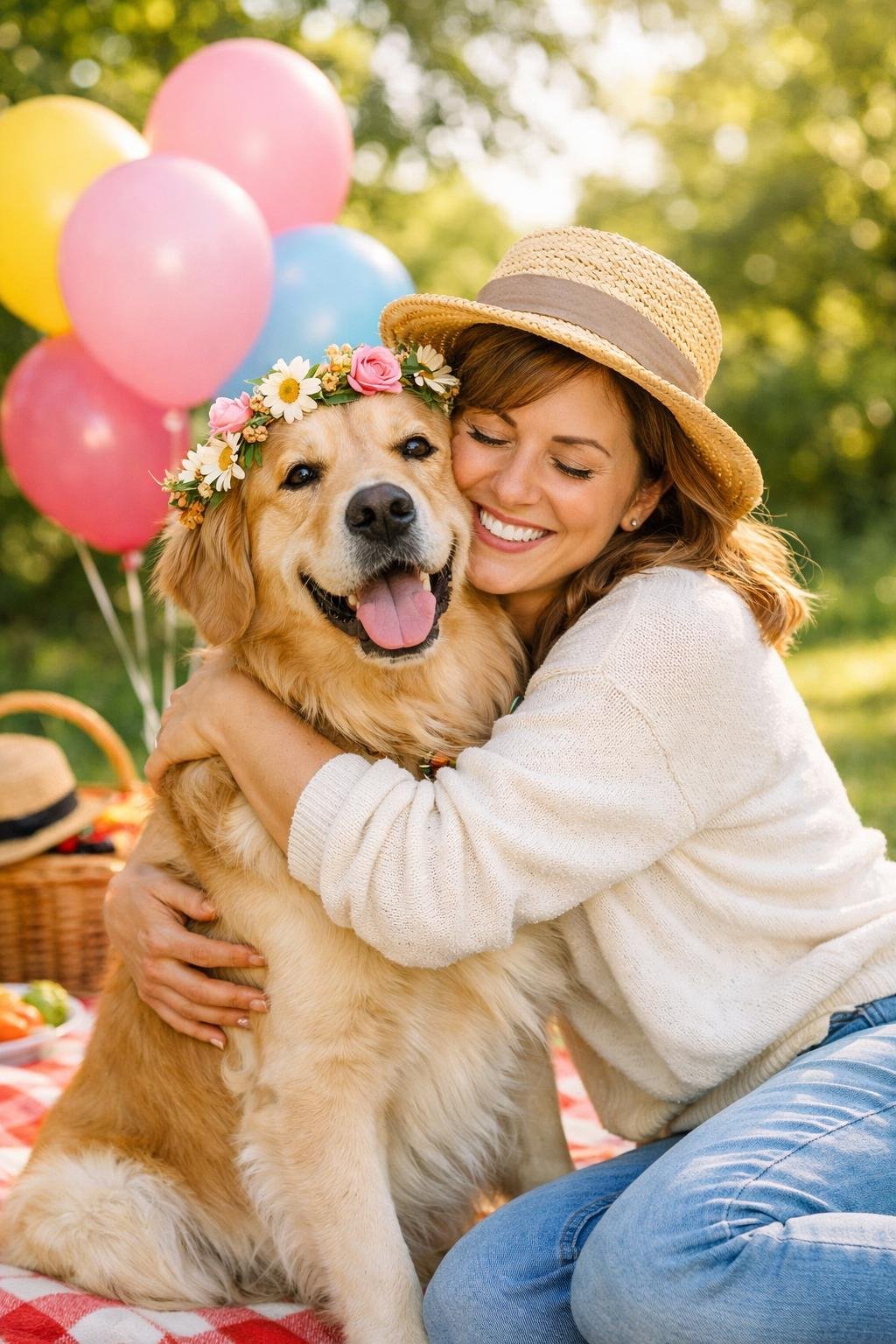
Themes and props can turn basic snapshots into memorable images that really show off your bond. The right accessories help tell your story and keep things fun and relaxed.
Seasonal and Holiday Inspiration
I love using seasonal elements because they add color and context to photos. Fall shoots look great with pumpkins, colorful leaves, and cozy blankets.
Winter sessions can include string lights, evergreen branches, or matching scarves for a warm vibe. Spring and summer are perfect for creative family photo setups with dogs—think flower fields, beaches, or gardens.
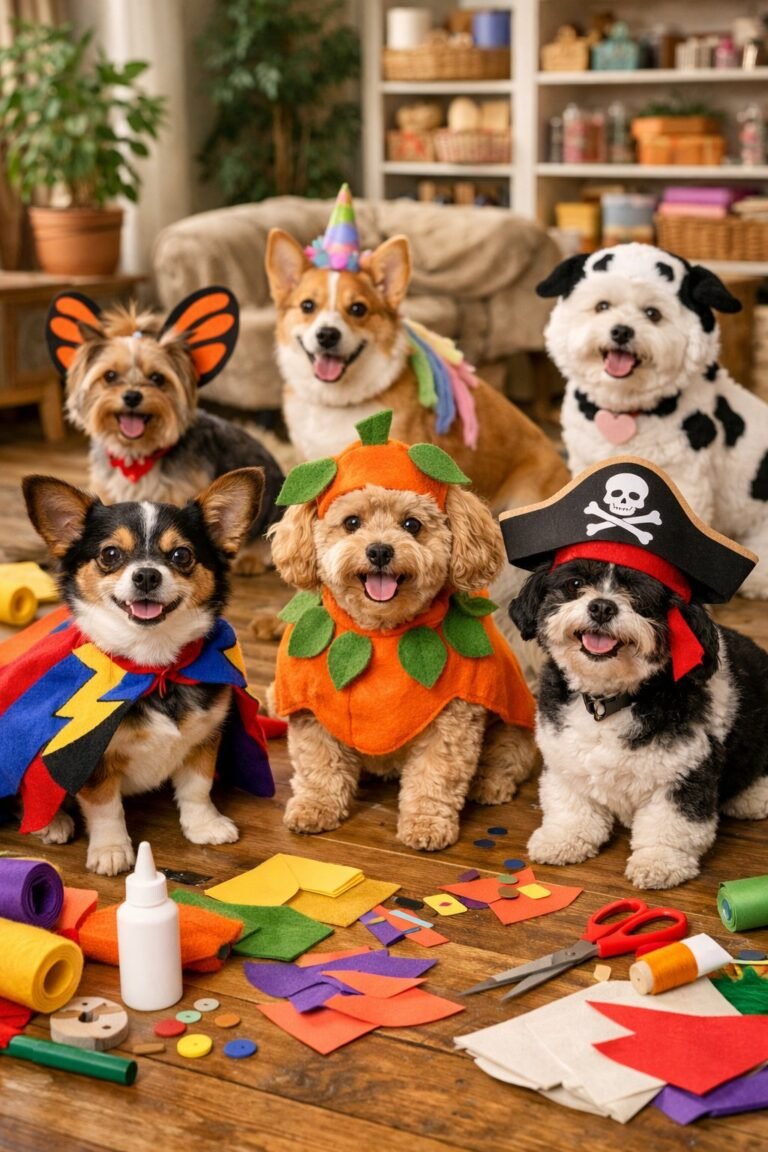
Holiday themes are always a hit. For Christmas, I might add a simple wreath or festive bandana. Valentine’s Day is cute with red props and heart-shaped decorations. Halloween is perfect for cute costumes if your pup is into it.
I keep decorations simple—usually just a couple of props per setup so nothing distracts from us.
Adding Personality With Accessories
Small touches show your dog’s personality without making the photos look cluttered. I pick items that fit my dog’s vibe and our relationship.
Some favorites:
- Bandanas or bow ties in solid colors
- Favorite toys or tennis balls
- Matching coffee mugs for a cozy morning look
- Books or picnic baskets for lifestyle shots
- Leashes with fun textures or patterns
When choosing the right props for studio photos, I make sure everything is pet-friendly and comfy. I skip anything too tight, noisy, or uncomfortable—happy pups make the best models!
Building a Scene for Storytelling
Creating a little scene adds meaning to the photos. I think about what my dog and I actually do together instead of forcing weird setups.
A blanket picnic with treats captures our chill time. Reading a book while my dog rests nearby shows our quiet moments.
Location matters too. Our backyard, a favorite trail, or even my living room can work, as long as there’s good light and not too much clutter.
Props should support the story, not steal the show. For a morning routine, I might add a coffee cup and newspaper. For adventure themes, a backpack or water bowl does the trick.
Pro Tips: Making Photos Look Studio-Quality With a Phone
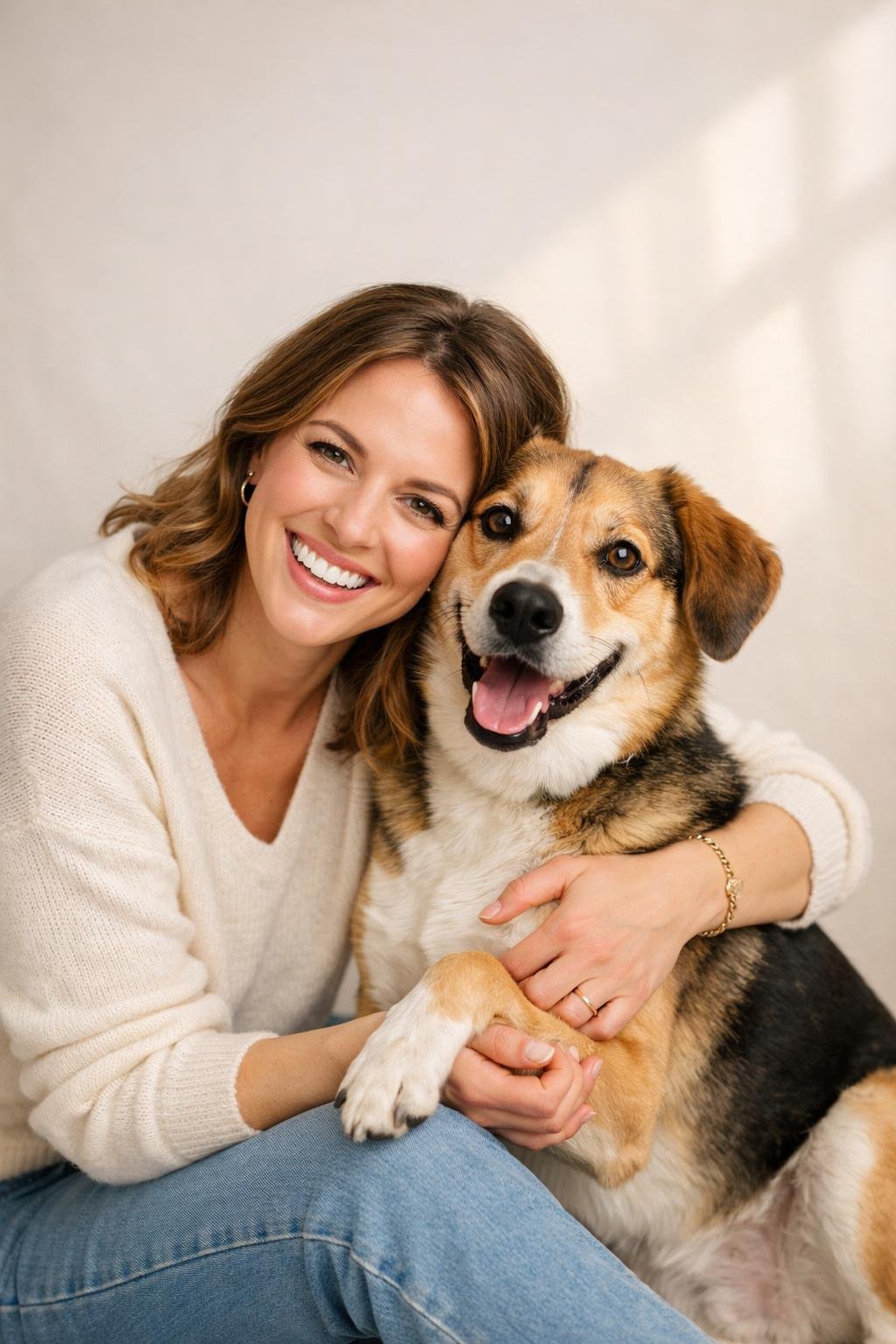
Your phone camera can totally deliver pro-level shots if you know a few tricks. Focus on editing basics, smart angles, and mixing candid with posed moments to turn simple snaps into gallery-worthy pics.
Simple Editing for Stunning Finishes
I always start by adjusting brightness and contrast. These two settings make the biggest difference to phone photos looking professional.
Saturation is best kept subtle so fur and skin tones look natural. Shadows and highlights are my secret weapons—I lift shadows a bit to show details, and pull down highlights to avoid blown-out spots.
Sharpening is my last step. Just a touch makes eyes pop without making the image grainy.
I usually skip the auto-enhance button in editing apps. Manual tweaks give me more control. Cropping helps too—I trim distractions from the edges and use the rule of thirds for balance.
Framing Tricks and Angles
Getting down to my dog’s eye level makes photos way more engaging. It brings you right into the moment instead of just looking down at the scene.
Photographing from below can make both mom and dog look powerful and confident. I’ll kneel or even lie on the ground for this.
Natural frames like doorways, tree branches, or furniture add depth and draw eyes to the main subjects.
Key angles I use:
- Eye level for close, intimate shots
- Low angle for dramatic, powerful vibes
- High angle for playful, cute expressions
- Side angle to catch profile details
I move around my subjects instead of making mom move. Walking around helps me find the best light and background while keeping things relaxed.
Candid Vs. Posed: When to Capture Each
Posed shots are great for portraits where everyone’s looking at the camera. I use these for consistent images.
Candid moments are where the magic happens. I watch for natural interactions—like mom laughing at her dog’s antics or the pup snuggling in her lap.
Burst mode is my go-to for capturing action shots and spontaneous moments. Holding the shutter gives me lots of frames to choose from.
I like to start with a few posed shots to get everyone comfy, then let things unfold naturally for candid moments. This mix keeps the session fun and the photos varied.
Treats help with both styles. I use them to get attention for posed shots and then catch natural reactions as my dog gets excited.
Frequently Asked Questions
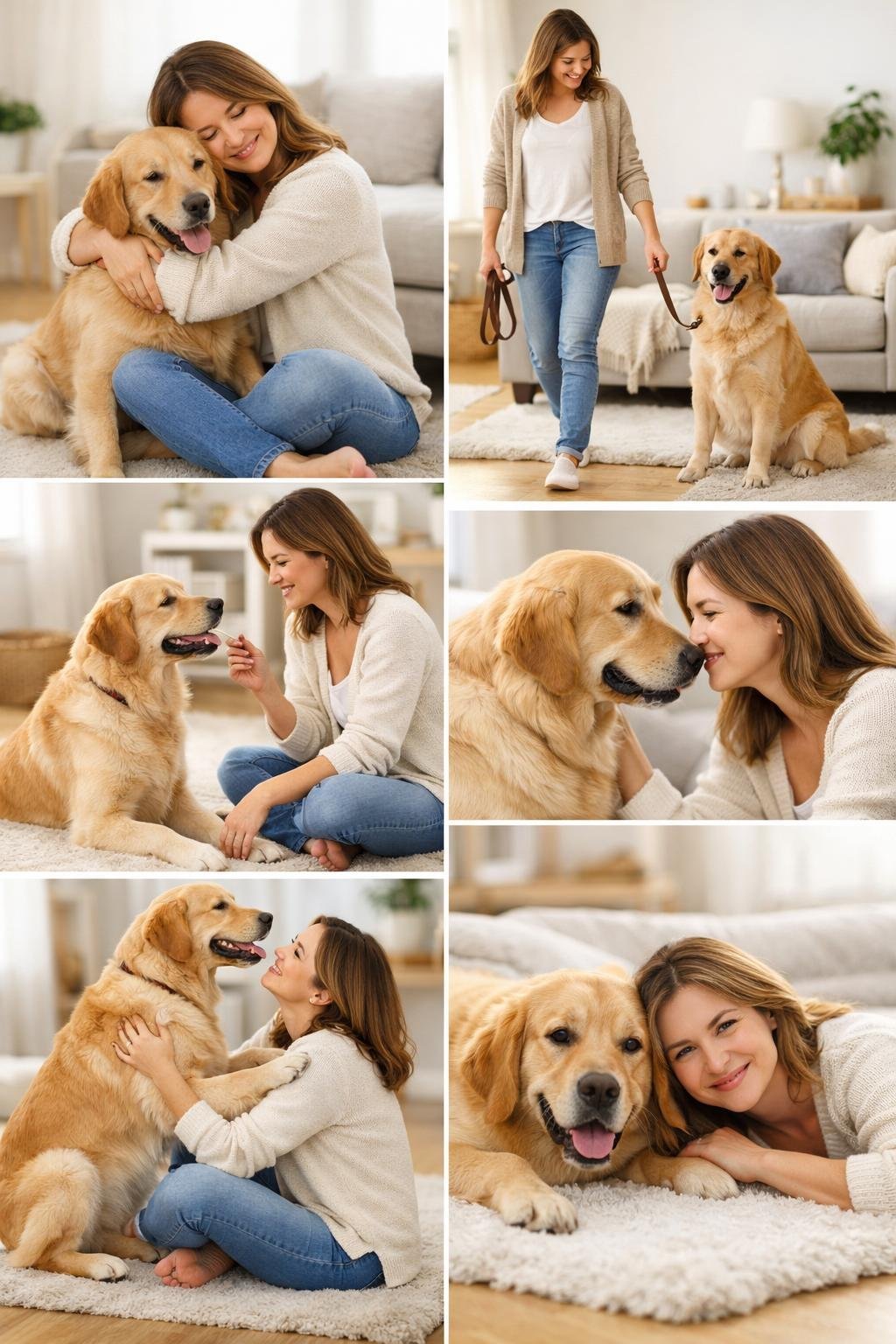
Getting great photos with your dog takes some know-how, from keeping them calm to finding the right light. Here are some answers to help you tackle common challenges and get images you’ll love.
What are some easy pose ideas for a mom and her dog that look natural and not stiff?
Walking side by side naturally is always a winner for casual shots. Hold your dog’s leash loosely and look at each other or just chat as you stroll.
Sitting together on the ground feels cozy. I like to sit cross-legged with my dog in my lap or leaning against me.
The cuddle pose is another favorite. I’ll sit on a blanket or couch and let my dog snuggle close while I rest my head near theirs or give them a gentle hug.
For playful shots, I get down on my dog’s level. Lying on the floor face-to-face or playing with a toy together captures real moments.
How can I pose my dog so they stay calm and cooperate during photos?
I always make sure my dog has burned off some energy before we start. A quick walk or play session helps them relax.
Short sessions are key. I stick to 10-15 minutes before taking a break.
I use treats to reward calm behavior, like sitting nicely or looking in the right direction.
Familiar spots work best—my dog is more relaxed at home or in a favorite park.
If my dog isn’t enjoying a pose, I just move on. No forced positions!
What are the best ways to get my dog to look at the camera for a shot?
Holding a treat right next to my phone camera lens works like magic. My dog looks exactly where I want.
Making funny sounds helps too. I’ll squeak a toy, whistle, or make a kissing noise to grab her attention.
Having a helper stand behind me with a toy or treat is another great trick. They can wave it to direct my dog’s gaze.
I say my dog’s name in an excited voice right before snapping the photo. Ears perk up and I get that alert expression.
Patience is everything. I take lots of shots and know only a few will be perfect.
How can I take professional-looking dog-and-owner photos using only my phone?
First, I always clean my phone camera lens. Smudges make photos look blurry.
Portrait mode is awesome for that blurred background effect, making you and your dog pop.
Natural light is my best friend. I avoid using my phone’s flash since it can make harsh shadows and startle my dog.
Taking photos at eye level with my dog is way more engaging than shooting from above. I kneel or sit to get on their level.
Burst mode is a lifesaver. Holding down the shutter lets me catch the perfect moment, especially with wiggly pups.
What are some cute at-home setup ideas for taking photos with my dog?
A cozy corner with blankets and pillows is my favorite. It’s a soft, comfy spot where my dog loves to relax.
The couch or bed makes a great backdrop. I’ll add throw pillows in matching colors for a pulled-together look.
Shooting near a window with good natural light is always flattering.
Sometimes I’ll hang a plain sheet or fabric for a simple backdrop to cut out clutter.
A few small props like my dog’s favorite toy or a seasonal item keep things interesting, but I make sure not to overcrowd the frame.
What simple photography tips (like lighting and angles) make pet photos look more polished?
Golden hour lighting gives the most beautiful glow. I like to shoot either early morning or late afternoon when the sun is low.
I position myself so the light is behind me and shining on my dog. This helps avoid harsh shadows on their face.
Getting down to my dog’s eye level creates more connection in photos. Shooting from above can make them look small and distant.
I always watch my background carefully. I make sure there aren’t distracting objects like trash cans or random people in the frame.
Leaving some empty space around me and my dog gives the photo room to breathe. I try not to crop in too tightly on our faces.