
Applesauce Dog Treats: Easy Homemade Recipes Your Pup Will Love

Making treats for your dog at home can feel overwhelming. Applesauce dog treats are one of the easiest and healthiest snacks you can bake for your furry friend.
These simple treats combine wholesome ingredients like applesauce, flour, and sometimes peanut butter to create soft, chewy snacks your dog will love. I’ve found that homemade treats give me peace of mind because I know exactly what my dog is eating.
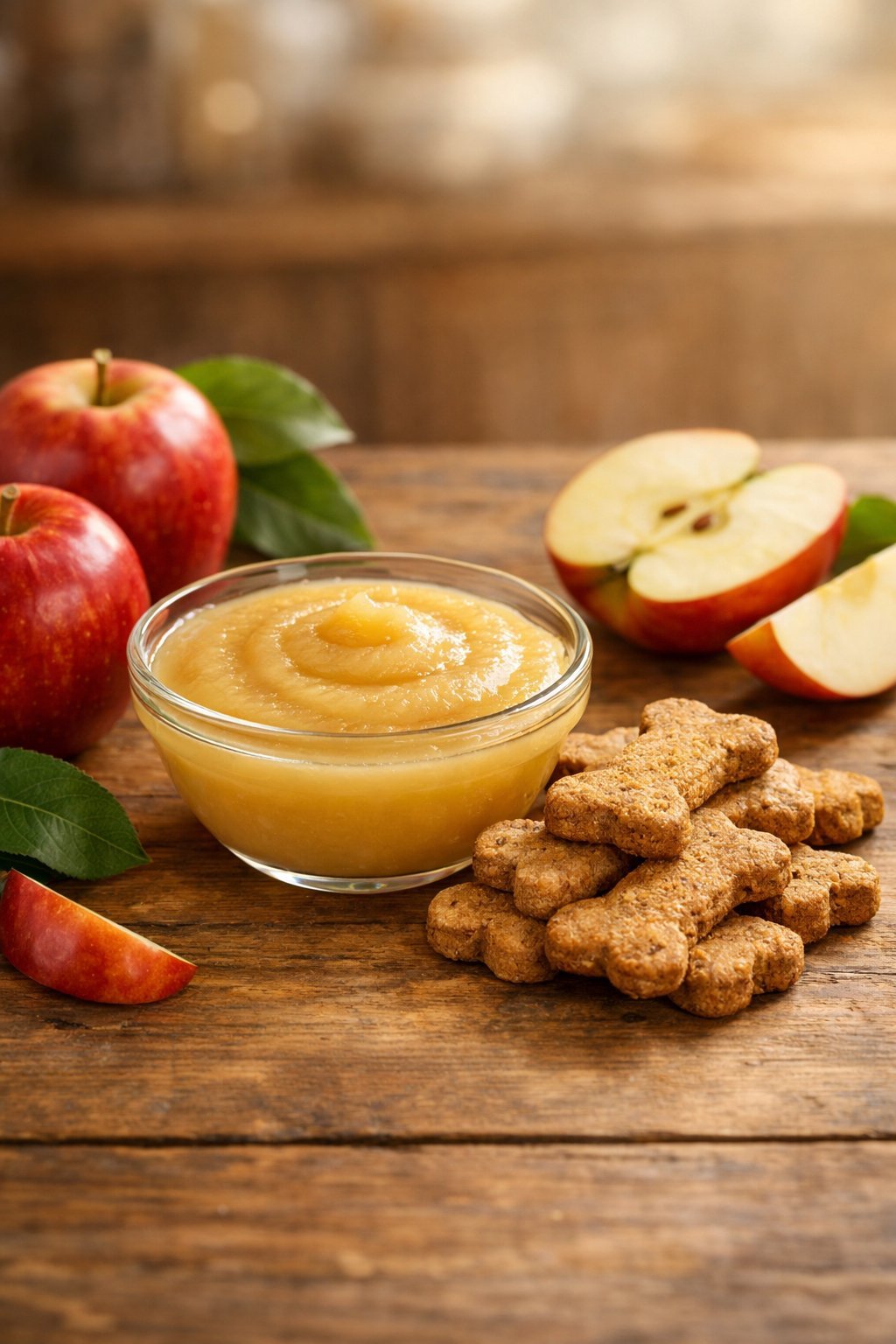
Applesauce adds natural sweetness and moisture to dog treats without any added sugar. It also provides fiber that can help with digestion.
Whether you want to make frozen treats for hot days or baked biscuits for training, applesauce works perfectly as a base ingredient. The best part is that most recipes need just three to five simple ingredients you probably already have in your kitchen.
I’ll show you how to make these treats, share helpful baking tips, and explain how to store them so they stay fresh.
Key Takeaways
- Applesauce dog treats require only a few basic ingredients and are simple to make at home
- These treats provide natural sweetness and fiber while avoiding artificial additives found in store-bought options
- Proper storage keeps homemade dog treats fresh for several weeks in the refrigerator or months in the freezer
Why Choose Applesauce Dog Treats?

Applesauce brings natural sweetness and moisture to homemade dog treats while adding fiber and nutrients that support your pup’s health. This pantry staple makes treats soft and tasty without needing extra sugar or complicated ingredients.
Health Benefits for Dogs
I’ve found that applesauce adds fiber and moisture to dog treats, which helps with digestion. The fiber content supports regular bowel movements and can help dogs feel full without adding empty calories.
Applesauce contains vitamins and antioxidants that come from apples. These nutrients support your dog’s immune system and overall wellness.
I always make sure to use plain, unsweetened applesauce since added sugars and artificial sweeteners can harm dogs. The natural moisture in applesauce makes treats softer and easier to chew.
This is especially helpful for older dogs or puppies who might struggle with hard, crunchy snacks. It also keeps baked treats from drying out too quickly.
Appeal of Applesauce Flavor
Dogs love the naturally sweet taste of apples, which makes applesauce treats hard to resist. I’ve noticed that even picky eaters get excited when they smell these treats baking.
The mild flavor of applesauce pairs well with other dog-friendly ingredients like peanut butter, pumpkin, or cinnamon. You can create different flavor combinations without overwhelming your dog’s taste buds.
This variety keeps treat time interesting for your pup. Applesauce doesn’t have the strong smell that some other ingredients do, making it pleasant for both you and your dog.
The subtle sweetness encourages dogs to eat without needing artificial flavors or enhancers.
How Applesauce Supports Canine Nutrition
Applesauce provides natural carbohydrates that give dogs energy throughout the day. These simple sugars from fruit digest easily and don’t cause the blood sugar spikes that refined sugars do.
The pectin in applesauce acts as a prebiotic, feeding the good bacteria in your dog’s gut. A healthy gut microbiome improves digestion and helps your dog absorb nutrients better from their regular food.
I appreciate that applesauce adds moisture to treats without adding fat or excess calories. This makes it easier to control portion sizes while still giving my dog a satisfying snack.
Ingredients and Sourcing

Making applesauce dog treats starts with choosing the right ingredients. I always focus on using unsweetened applesauce and dog-safe add-ins while avoiding anything that could harm my pup.
Selecting the Best Applesauce
I always reach for unsweetened applesauce when I’m making treats for my dog. Unsweetened applesauce adds moisture and natural sweetness without the harmful effects of added sugar.
Regular applesauce often contains corn syrup or cane sugar, which dogs don’t need in their diet. These added sugars can lead to weight gain and dental problems.
I check the ingredient label carefully to make sure it only lists apples and maybe water. Some brands sneak in artificial sweeteners like xylitol, which is toxic to dogs.
Organic applesauce is a good choice if I want to avoid pesticides, but any plain unsweetened version works well.
Recommended Supplementary Ingredients
I like adding ingredients that boost nutrition and flavor in my dog treats. Oats are my go-to base because they add fiber and create a nice chewy texture.
Whole wheat flour or oat flour works great as a binder. Peanut butter, pumpkin, and bananas are popular additions that my dogs love.
When I use peanut butter, I make sure it doesn’t contain xylitol. A pinch of cinnamon has anti-inflammatory benefits and improves breath and digestion.
I use it sparingly to prevent stomach upset. Pumpkin puree adds vitamins and helps with digestion, while bananas provide potassium and natural sweetness.
Ingredients to Avoid for Dogs
I never include chocolate, grapes, raisins, or onions in dog treats because these are toxic to dogs. Xylitol is probably the most dangerous sweetener I watch out for since it appears in many sugar-free products.
Macadamia nuts can cause weakness and vomiting in dogs, so I skip all nuts except plain peanut butter. Garlic and anything in the onion family should stay out of the mixing bowl.
I avoid using raisins or grapes in any form, even if the recipe seems healthy otherwise. Added salt isn’t necessary for dogs and can be harmful in large amounts.
Artificial sweeteners, preservatives, and food dyes have no place in homemade dog treats I make.
Homemade Applesauce Dog Treat Recipes

Making dog treats at home lets me control exactly what goes into my pup’s snacks. Applesauce works as a natural binder and sweetener in recipes ranging from crunchy biscuits to soft cookies perfect for older dogs.
Basic Applesauce Biscuit Recipe
I start with a simple mix of 2 cups whole wheat flour, 1/2 cup unsweetened applesauce, and 1/4 cup water. These three ingredients form the base of a basic applesauce biscuit that my dog loves.
I combine the flour and applesauce in a bowl first. Then I add water slowly until the dough holds together without being sticky.
If it feels too wet, I add more flour one tablespoon at a time. I roll the dough to about 1/4 inch thick on a floured surface.
Using cookie cutters makes fun shapes, but I can also cut the dough into squares with a knife. I place them on a greased baking sheet and bake at 350°F for 25-30 minutes until golden and firm.
These treats stay fresh in an airtight container for up to two weeks. I can also freeze them for longer storage.
Grain-Free Applesauce Treats
For dogs with grain sensitivities, I swap regular flour for grain-free alternatives. I use 2 cups of coconut flour or almond flour as the base ingredient.
The recipe needs 1 cup unsweetened applesauce, 2 eggs, and 1 tablespoon coconut oil. Grain-free options work well for pups with allergies or digestive issues.
Coconut flour absorbs more liquid than wheat flour, so the dough might seem dry at first. I let it rest for 5 minutes before rolling.
The mixture should feel like play dough when ready. I bake these at 325°F for 20-25 minutes.
They turn out slightly softer than wheat-based treats but still hold their shape nicely. My dogs can’t tell the difference in taste.
Peanut Butter and Applesauce Cookies
This combination creates a flavor that drives my dogs crazy. I mix 1/2 cup unsweetened applesauce with 1/2 cup natural peanut butter (no xylitol), 1 egg, and 1 1/2 cups whole wheat flour.
I always check that my peanut butter doesn’t contain xylitol, which is toxic to dogs. Plain peanut butter with just peanuts and maybe salt works best.
The peanut butter and applesauce combo makes irresistible treats. The dough should be soft but not sticky.
I roll it out and cut shapes, then bake at 350°F for 15-20 minutes. These cookies come out slightly chewy in the center with crispy edges.
I store them in the fridge since peanut butter can go rancid at room temperature. They last about 10 days refrigerated.
Soft Treats for Senior Dogs
Older dogs with dental issues need softer textures. I make gentle treats using 1 cup unsweetened applesauce, 1 mashed banana, 1 egg, and 1 cup oat flour.
The banana adds extra softness and natural sweetness. I blend all ingredients until smooth, creating a batter instead of a dough.
I pour the mixture into silicone molds or spread it thin on a parchment-lined baking sheet. I bake these at 300°F for just 12-15 minutes.
They should be set but still soft when cooled. Breaking them into small pieces makes eating easier for senior pups.
These treats stay moist for about 5 days in the fridge. I freeze portions in small batches so I always have soft treats ready for my older dog.
Baking Tips and Storage

Getting the baking process right and storing your treats properly will keep them fresh and safe for your dog. The right temperature and timing matter just as much as how you package and refrigerate the finished treats.
Proper Baking Techniques
I always preheat my oven to the exact temperature the recipe calls for, usually between 325°F and 350°F for applesauce dog treats. Using an oven thermometer helps me make sure the temperature is accurate since many ovens run hot or cold.
I line my baking sheets with parchment paper to prevent sticking and ensure even baking. The treats should be rolled to an even thickness, typically around 1/4 inch, so they bake at the same rate.
I check the treats a few minutes before the suggested baking time ends. They’re done when the edges turn golden brown and the centers feel firm to the touch.
For crunchier treats, I turn off the oven and let them sit inside for an extra 30 minutes to dry out completely.
Safe Storage Guidelines
I store my homemade applesauce dog treats in airtight containers to keep them fresh and prevent moisture from making them soggy. Glass jars or plastic containers with tight-fitting lids work best.
Room temperature storage is fine for 3-5 days if the treats are completely dry and crunchy. I always make sure they’ve cooled completely before sealing them up, since trapped heat creates condensation.
For longer storage, I keep the treats in the refrigerator where they stay fresh for up to 2 weeks. I can also freeze them in freezer-safe bags or containers for up to 3 months.
I write the date on each container so I know when I made them.
Shelf Life of Homemade Treats
The shelf life depends mainly on moisture content and storage method. Soft, chewy treats with more applesauce last about 5-7 days in the fridge, while hard, crunchy treats can last up to 2 weeks.
I always check for signs of spoilage before giving treats to my dog. Mold, odd smells, or a slimy texture mean the treats need to be thrown out immediately.
I prefer making smaller batches more often rather than trying to keep large quantities around for weeks.
Serving Suggestions and Portion Control
When I give my dog applesauce treats, I always keep portion sizes small and offer them at strategic times during the day. The amount depends on my dog’s size, and timing matters for training success and digestive health.
Daily Treat Limits
I follow the 10% rule when giving my dog applesauce treats. This means treats should make up no more than 10% of my dog’s daily calories.
For small dogs under 20 pounds, I limit applesauce to 1-2 teaspoons per day. Medium dogs between 20-50 pounds can have 1-2 tablespoons.
Large dogs over 50 pounds can safely enjoy up to 3-4 tablespoons daily. I always choose plain unsweetened applesauce since sugar and spices need tight control.
When I’m practicing portion control, I measure each serving instead of guessing. I reduce these amounts if my dog has diabetes or weight issues.
The treats are calorie-dense, so I adjust my dog’s regular meals slightly on days when I offer applesauce treats.
Best Times to Offer Treats
I find applesauce treats work best during training sessions as rewards for good behavior. The sweet taste motivates my dog without filling them up too much.
I avoid giving applesauce treats right before meals since it can reduce my dog’s appetite for regular food. Instead, I offer them mid-morning or mid-afternoon as snacks.
After exercise is another good time since my dog appreciates the natural sugars for energy. I also use frozen applesauce treats on hot days to help my dog cool down.
I never give applesauce treats right before bedtime. The natural sugars can cause energy spikes when my dog should be settling down for sleep.
