Baked Dog Biscuits: How to Make Golden, Crunchy Homemade Treats Your Pup Will Love

Your dog deserves treats that smell amazing and taste even better. Making baked dog biscuits at home lets you control every ingredient while creating golden, crunchy treats your pup will love.
I started baking my own dog biscuits because I wanted to know exactly what my dog was eating. The results were better than anything I could buy at the store.

Baking homemade dog biscuits fills your kitchen with the warm smell of fresh cookies. The process is simple and uses ingredients you probably already have in your pantry.
I’ll show you how to make crunchy dog biscuits that stay fresh and keep your dog coming back for more. These treats are more than just snacks—they’re a way to show your dog you care.
You’ll also save money and avoid questionable ingredients found in some store-bought options.
Key Takeaways
- Homemade baked dog biscuits let you control ingredients and create healthier treats your dog will enjoy.
- The perfect crunchy texture comes from using whole-grain flours and baking at the right temperature and time.
- You can customize recipes with safe ingredients like peanut butter and pumpkin to match your dog’s taste preferences.
Why Bake Dog Biscuits at Home?
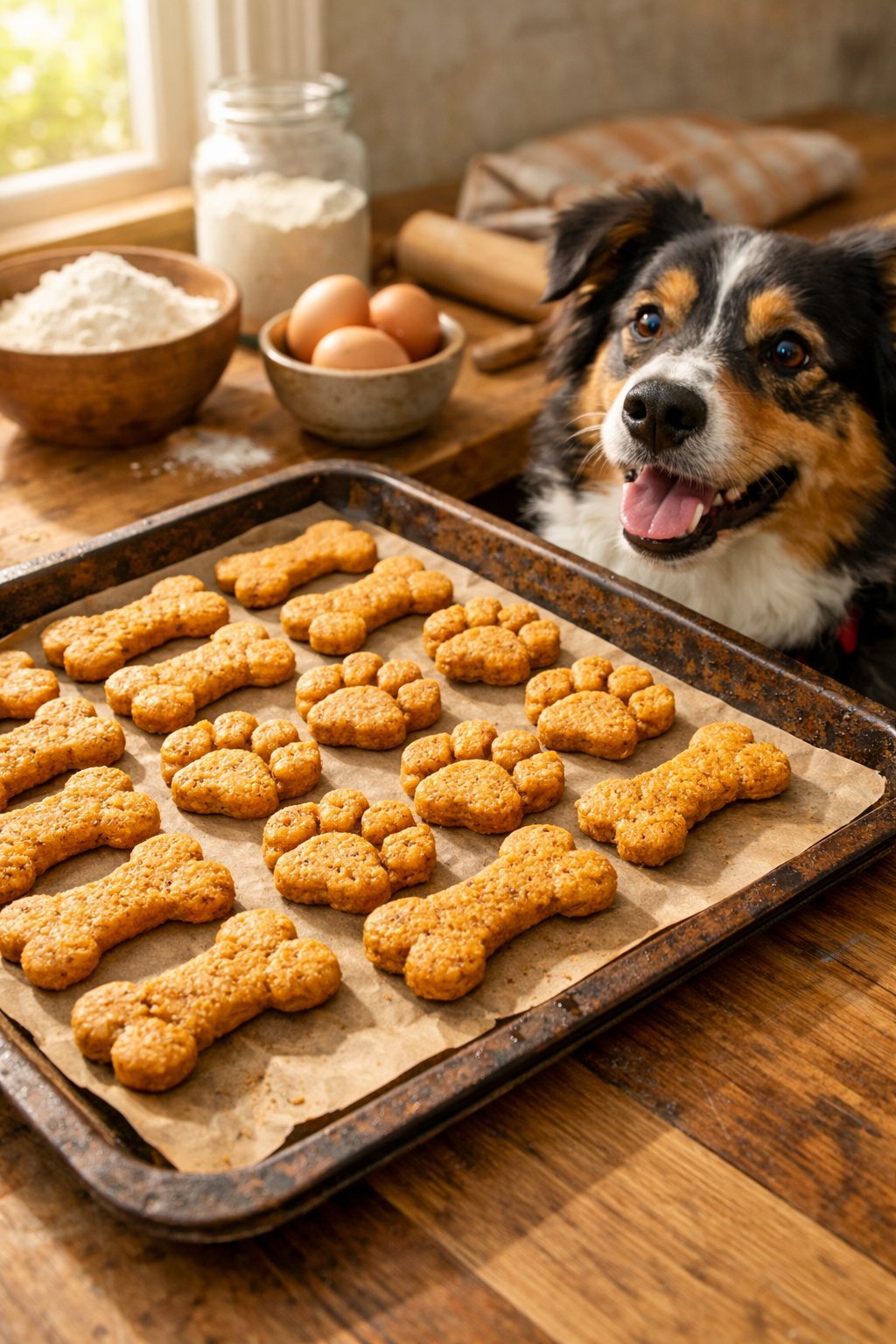
Making dog biscuits in my own kitchen gives me full control over what my dog eats. I can skip harmful additives and choose ingredients that support my pup’s health.
Health Benefits of Homemade Treats
When I bake treats at home, I know exactly what nutrition my dog gets. Store-bought biscuits often contain preservatives, artificial colors, and fillers that offer no real value.
Homemade biscuits let me avoid additives and preservatives found in many commercial options. I can add ingredients like pumpkin for fiber, peanut butter for protein, or sweet potato for vitamins.
My dog gets nutrients from real food instead of processed ingredients I can’t pronounce. I also control the calorie content, which matters if my dog needs to maintain a healthy weight or has specific dietary needs.
If my pup has allergies or sensitivities, I simply leave out problem ingredients. No more reading tiny labels or worrying about recalls.
Control Over Ingredients
Having complete ingredient control means I choose quality over convenience every time. I pick unsweetened peanut butter without xylitol and pure pumpkin instead of pie filling.
I can use whole-grain flours like oat or whole wheat when my dog tolerates them well. For dogs with grain sensitivities, I switch to alternatives without compromise.
Ingredients I always avoid:
- Xylitol (toxic to dogs)
- Artificial sweeteners
- Excessive salt
- Chocolate or raisins
- Unknown additives
I read every label and make informed choices. When I want crunchier biscuits, I adjust baking time and temperature rather than adding mystery ingredients.
Cost-Effectiveness
Baking my own treats saves significant money compared to premium store-bought options. A batch of homemade dog biscuits uses pantry staples I already have.
One bag of flour, a jar of peanut butter, and a few eggs make dozens of biscuits. The same amount spent on boutique treats might buy just a handful.
I calculate my cost per treat at pennies rather than dollars. This adds up when I have an active dog who earns frequent rewards during training.
The investment in basic ingredients goes further than repeatedly buying small packages. I also reduce packaging waste since I store homemade biscuits in reusable containers.
Strengthening Your Bond With Your Dog
Baking creates a special connection between me and my dog. They watch me work in the kitchen, tails wagging as they smell the biscuits baking.
The time I spend making their treats shows care in a way that opening a bag never could. My dog associates the kitchen smells with something made just for them.
When I hand over a fresh treat, I see genuine excitement. Training sessions become more rewarding when I use something I crafted with them in mind.
This simple act of baking transforms treat time into quality time. My dog feels valued, and I feel good knowing I provided something healthy and made with love.
Golden, Crunchy, and Irresistible: What Makes the Perfect Dog Biscuit?
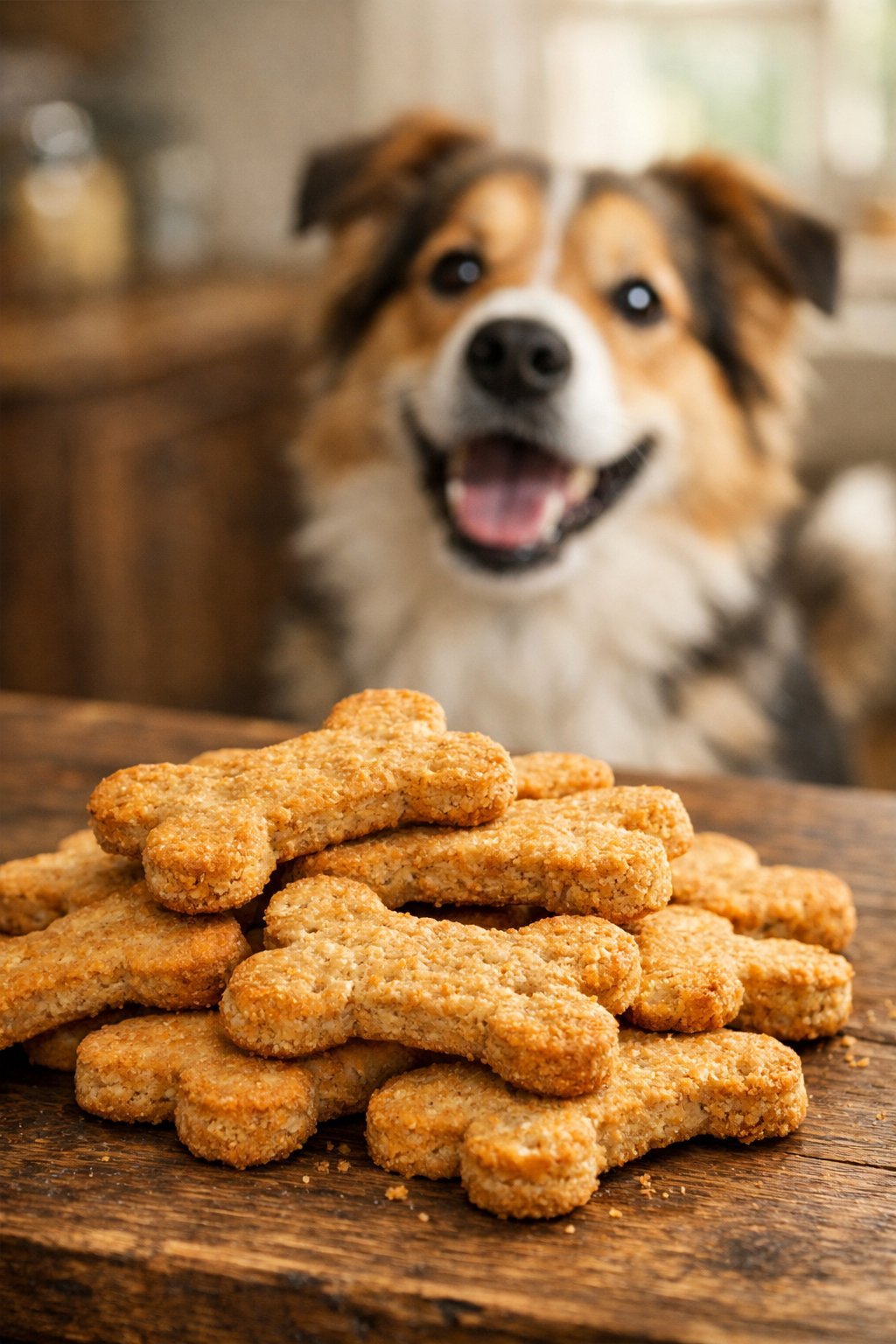
The best dog biscuits combine the right texture, flavors your dog craves, and ingredients that create that satisfying crunch. Getting these three elements right means your pup will love every bite.
Choosing the Best Textures for Your Pup
I’ve learned that texture matters just as much as taste when it comes to dog biscuits. Most adult dogs prefer a firm, crunchy texture that gives their jaws something to work on.
This crunchiness also helps clean their teeth as they chew. Puppies and senior dogs need softer biscuits they can break apart easily.
I adjust my baking time to control the final texture. Longer baking at lower temperatures creates harder biscuits, while shorter baking leaves them slightly softer inside.
The thickness of your biscuits affects texture too. I roll my dough to about 1/4 inch thick for maximum crunch.
Thicker biscuits stay softer in the middle, which works better for dogs with sensitive teeth.
Flavor Profiles Dogs Love
Dogs respond best to savory flavors rather than sweet ones. I focus on meat-based flavors like chicken, beef, and bacon since these match what dogs naturally prefer.
Peanut butter ranks high on their favorites list too. Cheese adds a strong flavor that gets dogs excited about treats.
I use cheddar or parmesan in small amounts to boost taste without adding too much fat. Even picky eaters usually can’t resist cheese-flavored biscuits.
Pumpkin and sweet potato offer mild flavors that most dogs enjoy. These ingredients also add natural sweetness without any added sugar.
I often combine these with savory flavors to create balanced taste profiles.
Ingredients That Enhance Crunchiness
Whole wheat flour creates the best crunchy texture in homemade dog biscuits. The protein in wheat flour develops structure during baking, which gives biscuits their satisfying snap.
I sometimes mix in oat flour for added fiber. Eggs work as a natural binder that holds everything together while promoting browning.
The proteins in eggs set during baking and contribute to that golden color. One egg typically binds enough dough for about 20 medium biscuits.
I always bake my treats until they’re fully dry throughout. Moisture is the enemy of crunchiness, so I let biscuits cool completely on a wire rack.
This allows air to circulate and prevents any sogginess from trapped steam.
Essential Ingredients for Homemade Dog Biscuits
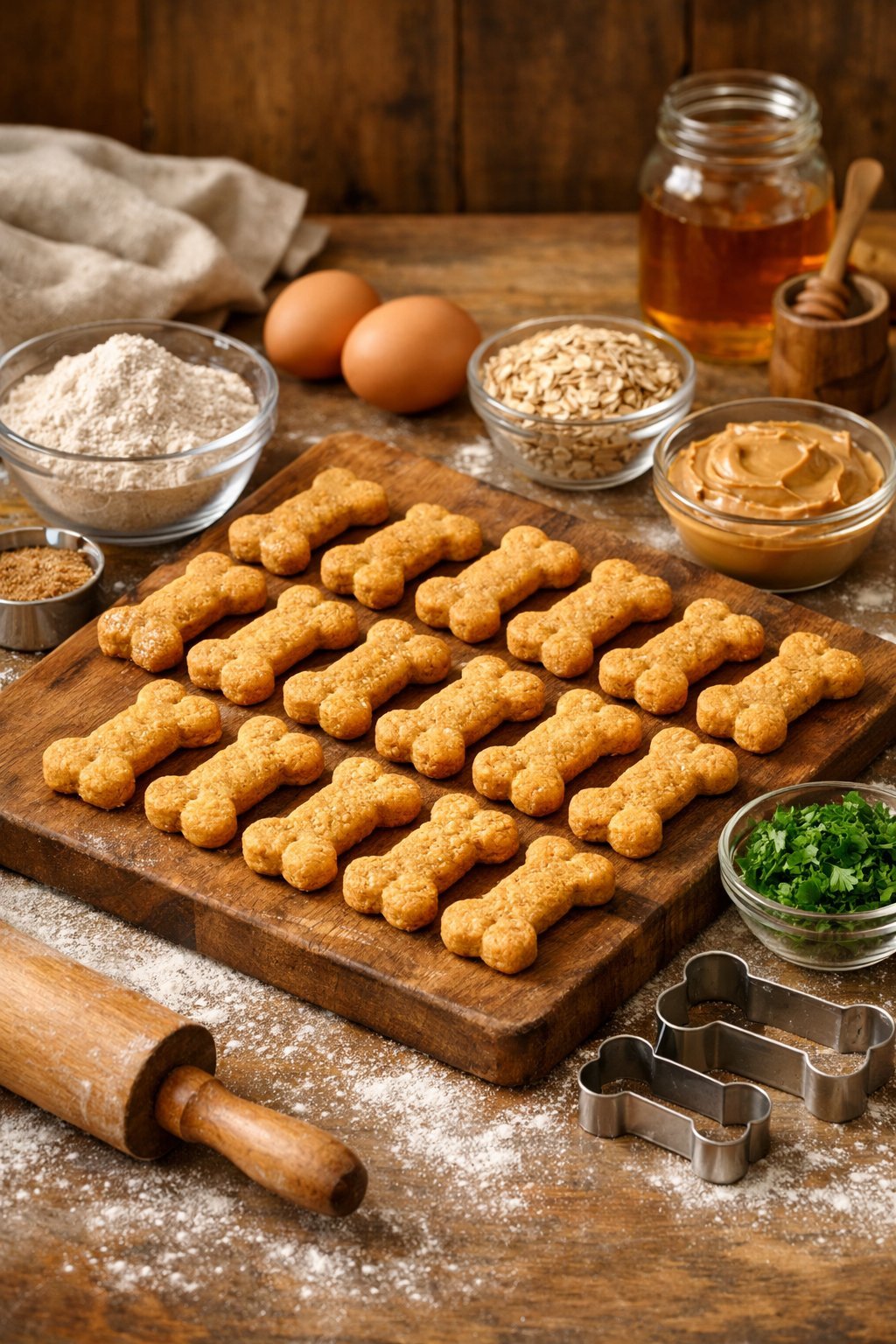
When I make dog biscuits at home, I focus on three main ingredient groups: proteins that are safe for dogs, wholesome grains or their alternatives, and natural ingredients that add flavor without risk.
Safe Protein Choices
I always start with protein sources that are both nutritious and safe for dogs. Peanut butter is my go-to option, but I make sure to choose unsweetened varieties without xylitol, which is toxic to dogs.
Eggs work wonderfully as a binding protein. They add structure to the dough and provide essential amino acids.
I use one or two eggs depending on my batch size. Plain Greek yogurt is another protein I like to include.
It adds moisture and a slight tang that dogs seem to enjoy. Just make sure your dog tolerates dairy before adding it to the recipe.
Cooked chicken or turkey can be mixed into the dough for extra protein. I use lean, unseasoned meat that I’ve baked or boiled.
Ground meat works best because it blends evenly throughout the biscuit dough.
Grains and Alternatives
Whole wheat flour forms the base of most of my dog biscuit recipes. It provides fiber and holds the dough together well.
I typically use about two to three cups for a standard batch. Oat flour is perfect for dogs with wheat sensitivities.
I either buy it pre-ground or make my own by blending rolled oats in a food processor. It creates a slightly softer texture than wheat flour.
For grain-free options, I turn to coconut flour or chickpea flour. These alternatives work well but absorb more liquid, so I adjust the moisture content accordingly.
Rice flour is another gentle option that’s easy on sensitive stomachs.
Natural Flavor Boosters
Pure pumpkin puree (not pie filling) is one of my favorite additions. It adds natural sweetness, fiber, and moisture to the biscuits.
I use about half a cup per batch. Unsalted chicken or beef broth makes the biscuits incredibly appealing to dogs.
I replace some of the water in recipes with broth for extra flavor. Low-sodium options are best.
Grated carrots, sweet potato, or apple (without seeds) add natural sweetness and nutrients. I keep these additions to about a quarter cup so they don’t make the dough too wet.
Fresh herbs like parsley or mint can freshen breath naturally. I chop them finely and add just a tablespoon or two to the mix.
Step-by-Step Guide: Baking the Ultimate Dog Biscuits
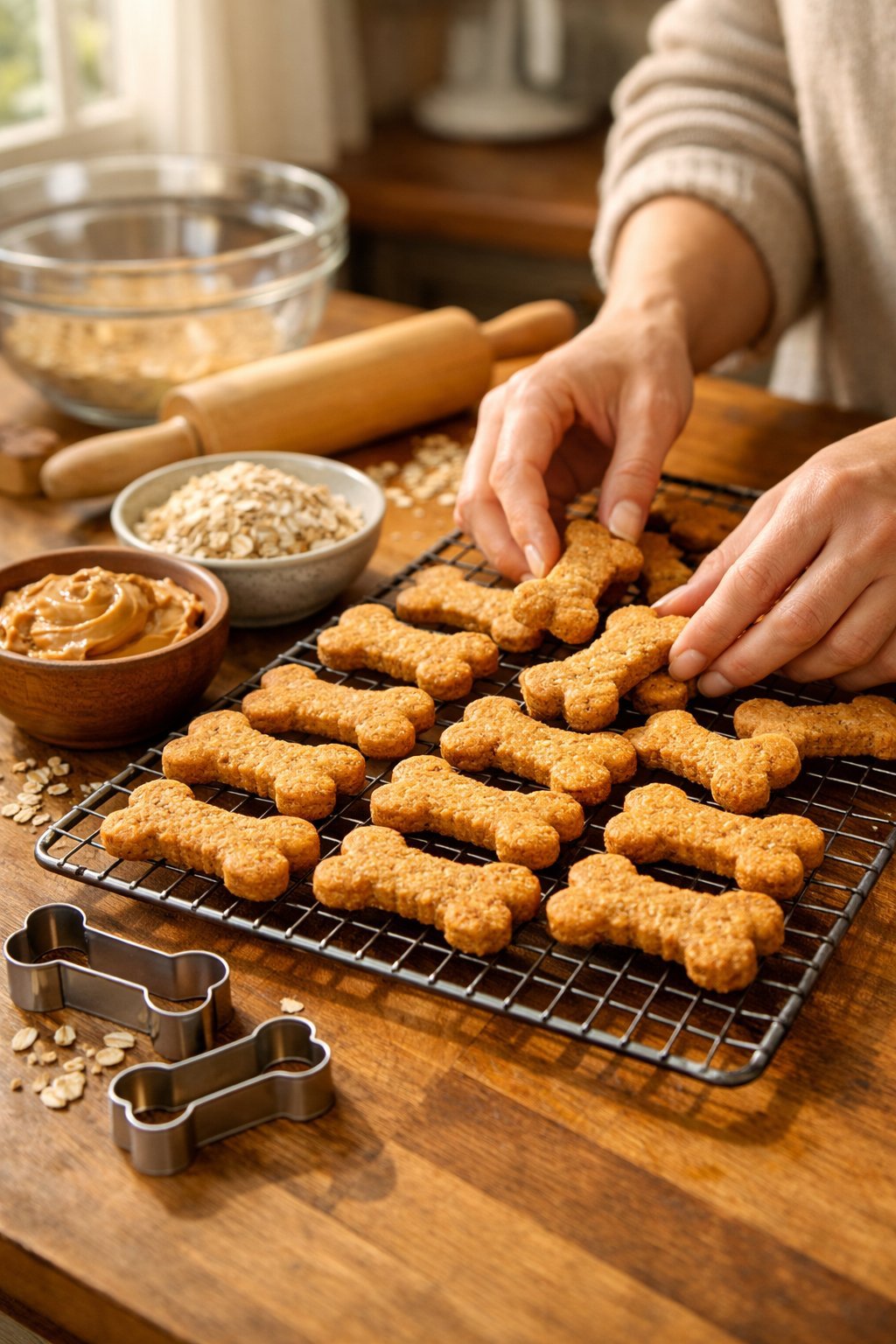
Getting the right texture and flavor means paying attention to how you mix your dough. The temperature and time you bake, plus how you store your finished treats, matter too.
Mixing and Shaping Techniques
I always start by mixing my dry ingredients in one bowl and wet ingredients in another. This helps everything blend evenly when I combine them.
When I bring the dough together, I knead it for about three to four minutes until it feels smooth. The dough should be firm but not sticky.
If it sticks to my hands, I add a tablespoon of flour at a time. For shaping, I roll the dough to about 1/4 inch thick on a lightly floured surface.
Thinner biscuits get crunchier, while thicker ones stay a bit softer in the middle. I use cookie cutters in fun shapes, though simple circles work just as well.
Making homemade dog biscuits gives you control over the final shape and size. I gather scraps, re-roll them, and keep cutting until all the dough is used.
Baking Tips for Golden Crunch
I preheat my oven to 325°F for most recipes. Lower temperatures work better than high heat because they dry out the biscuits without burning them.
I place the cut biscuits on a parchment-lined baking sheet with about half an inch between each one. They don’t spread much, but this spacing helps air circulate.
I bake them for 30 to 35 minutes, flipping them halfway through for even browning. The key to creating crunchy dog biscuits is controlling moisture through longer, lower-temperature baking.
When the edges turn golden brown and the biscuits feel firm to the touch, they’re ready. For extra crunch, I turn off the oven and let them sit inside for another 10 minutes.
Proper Cooling and Storage
After baking, I move the biscuits to a wire cooling rack right away. They need to cool completely before storage, which usually takes about 30 minutes.
I store cooled biscuits in an airtight container at room temperature. They stay fresh for up to two weeks this way.
For longer storage, I keep them in the refrigerator for up to a month or freeze them for three months. I never seal warm biscuits in a container because trapped moisture creates mold.
If my biscuits feel soft after a few days, I pop them back in a 300°F oven for 10 minutes to restore their crunch.
Creative Variations and Serving Ideas
You can transform basic dog biscuits into special treats by adding seasonal ingredients, cutting them into fun shapes, or packaging them as thoughtful gifts. These simple touches make homemade biscuits feel more personal and exciting for both you and your pup.
Seasonal and Festive Flavors
I love switching up my biscuit recipes based on what’s in season. During fall, I add pureed pumpkin and a pinch of cinnamon to create tasty baked dog biscuits that capture the season’s spirit.
Winter calls for cranberry and sweet potato combinations that dogs go crazy for. Spring is perfect for adding fresh blueberries or mashed strawberries to the dough.
Summer biscuits work well with watermelon powder or fresh mint mixed in. I also make special batches for holidays like Valentine’s Day with beet powder for a natural pink color.
You can use carob chips instead of chocolate for a dog-safe treat that looks festive. Just remember to always check that ingredients are safe for dogs before experimenting with new flavors.
Fun Shaping for Special Occasions
I use cookie cutters to make biscuits match different occasions throughout the year. Bone shapes work for everyday treats, but hearts are perfect for birthdays or adoption anniversaries.
I’ve collected cutters in shapes like paws, fire hydrants, and even little dog silhouettes. For special events, I’ll stamp my dog’s initial into each biscuit using a letter press or fork.
You can also use a toothpick to write short messages before baking. Birthday biscuits look amazing when you stack three different sizes and add a carob drizzle on top.
Small bite-sized pieces work better for training, while larger statement pieces make great photo props. I keep both sizes on hand for different needs.
Gift-Worthy Presentation
I package homemade biscuits in clear cellophane bags tied with raffia or ribbon when giving them as gifts. Mason jars also work beautifully and can be reused by the recipient.
Adding a handwritten tag with the recipe name and ingredients list shows you care about the dog’s safety. For baked dog treats recipes meant as gifts, I arrange them in decorative tins lined with parchment paper.
You can layer different flavors or shapes to create variety. Small kraft paper boxes with a window cutout let people see the treats inside.
I always include storage instructions on my gift tags. Most baked biscuits stay fresh for two weeks in an airtight container or up to three months in the freezer.
Frequently Asked Questions
Making dog biscuits at home brings up questions about ingredients, textures, and what works best for your pup. Here are answers to common concerns about baking treats your dog will love.
What are some simple recipes for homemade dog treats using only 3 ingredients?
I love keeping things simple when I bake for my dog. A basic three-ingredient recipe combines 2 cups of whole wheat flour, 1 cup of unsweetened applesauce, and 1 egg.
Mix everything together until you get a dough, roll it out to about 1/4 inch thick, and cut into shapes. Bake at 350°F for 20-25 minutes until firm.
Another easy option uses 1 cup of mashed banana, 1 cup of oat flour, and 1/3 cup of natural peanut butter. The banana acts as a binder and adds natural sweetness dogs enjoy.
Can you make tasty dog biscuits without including peanut butter in the recipe?
Yes, I make peanut butter-free biscuits all the time. Dogs love treats made with pumpkin puree, which gives moisture and flavor without any nut products.
Try mixing 2 1/2 cups of whole wheat flour with 1/2 cup of pure pumpkin puree and 2 eggs. You can also use mashed sweet potato or applesauce as the wet ingredient instead.
Meat-based treats work great too. I blend cooked chicken or beef with flour and an egg to create savory biscuits my dog goes crazy for.
Which healthy ingredients can I include in my homemade dog treats for a nutritious snack?
I add ground flaxseed to my recipes for omega-3 fatty acids that support coat health. Just a tablespoon or two mixed into the dough works well.
Oats provide fiber and are gentle on sensitive stomachs. I use both oat flour and rolled oats in different recipes.
Pumpkin puree offers vitamins A and C plus helps with digestion. Carrots add crunch and beta-carotene when grated into the dough.
Sweet potatoes give potassium and vitamin B6. I also include eggs for protein and to help bind ingredients together naturally.
What type of flour is most suitable for baking crunchy dog biscuits?
Whole wheat flour creates the crunchiest texture I’ve found. Control moisture for texture by using longer, lower bakes to get that satisfying snap.
Oat flour works well if your dog has wheat sensitivities. It makes slightly softer biscuits but still provides good texture.
I avoid all-purpose white flour because it has less nutritional value. Brown rice flour is another solid option that produces firm, crunchy treats.
The key is rolling the dough thin, about 1/4 inch thick. Thicker biscuits won’t get as crunchy all the way through.
How can I incorporate sweet potato into my homemade dog treats?
I use cooked, mashed sweet potato as a replacement for other wet ingredients. About 1/2 to 1 cup of mashed sweet potato works in most recipes.
You can bake or microwave the sweet potato until soft, then mash it completely. Let it cool before mixing with flour and other ingredients.
Sweet potato adds natural sweetness and a beautiful orange color to the biscuits. It also keeps them moist before baking while still allowing them to crisp up in the oven.
I sometimes slice sweet potatoes thin and bake them alone as simple dehydrated chips. Dogs love the chewy texture.
Is it possible to create homemade dog treats that are both delicious and flour-free?
Yes! I make flour-free treats using ingredients like rolled oats or ground oatmeal.
Just blend oats in a food processor until they turn into a fine powder.
Coconut flour is another option, but you’ll want to use less since it soaks up a lot of liquid.
Start with about 1/4 cup and add more if you need it.
Ground flaxseed mixed with water can also work as a binder and flour substitute.
Use 1 tablespoon of flaxseed with 3 tablespoons of water for every egg you want to replace.
Meat-based treats can skip flour entirely.
I like to dehydrate thin strips of chicken, beef, or liver in the oven at a low temperature for several hours.
These turn into chewy, protein-packed snacks that my dog absolutely loves.