Best No-Pull Leashes for Puppies You Can Find on Amazon Right Now

There’s nothing sweeter than those first puppy walks — until your tiny tornado turns into a full-body tugboat the second you clip on the leash. If you’re new to puppy life, I want to say this right away: pulling does not mean your puppy is stubborn or “bad.” It usually means they are excited, under-trained, distracted, or simply moving faster than their little brains can handle. The good news? With the right no-pull leash setup, a little patience, and a whole lot of consistency, you can make walks calmer for both of you.
When I talk about “no-pull leashes for puppies,” I’m really talking about tools that make learning easier. The leash itself can’t train your dog on its own, but the right design can reduce strain, give you more control, and help your puppy understand what you want. For most new puppy parents, the best Amazon options are lightweight, gentle, adjustable, and easy to pair with positive training. You want something that supports good habits without making your puppy feel trapped or overwhelmed.
What actually helps puppies stop pulling?
First, let’s set expectations. Puppies pull because the world is exciting. Every leaf, squirrel, person, smell, and sidewalk crack is basically a giant “look at me!” sign. The fix is not yanking harder. The fix is teaching your puppy that staying near you is rewarding. A no-pull leash can help you do that by giving you better steering, better feedback, and less chaos while you train.
Three things matter most: comfort, control, and consistency. Comfort means your puppy can move naturally without getting choked or tangled. Control means you can gently redirect instead of wrestling. Consistency means you use the same cue, the same walking routine, and the same expectations every single time. That’s how your puppy learns that loose-leash walking is the habit, not the exception.
Harnesses and leashes that usually work well together
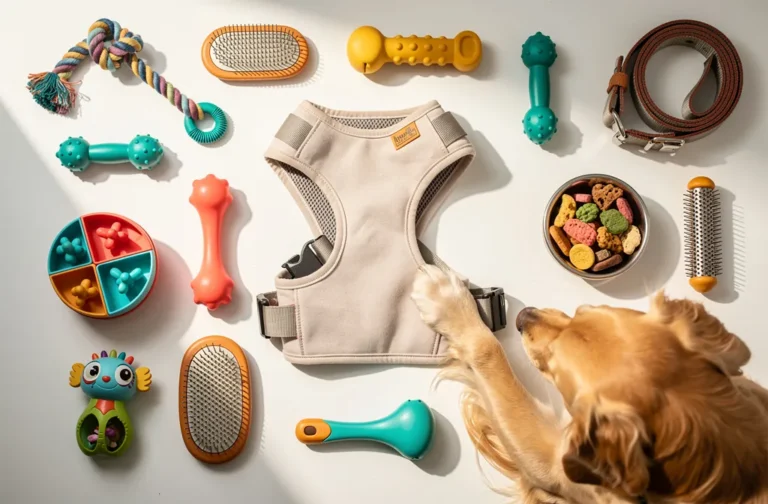
If you’re shopping on Amazon, many dog moms and trainers look for a front-clip harness paired with a lightweight leash. A front-clip harness helps redirect forward motion back toward you when your puppy lunges ahead. That small design change can make a huge difference, especially for young pups who are still learning impulse control. It doesn’t magically solve pulling, but it makes training a whole lot easier.
A standard six-foot leash is often the sweet spot for puppy training. It gives your puppy enough room to sniff and explore while still keeping them close enough for guidance. Very short leashes can feel restrictive, while super long retractable leashes can make pulling worse because the puppy learns that lunging gets rewarded with more freedom. For most puppy owners, a simple fixed-length leash is kinder and more practical.
Features to look for on Amazon
When you’re comparing no-pull leashes on Amazon, I’d focus on a few parent-friendly details. Look for soft padding if the handle tends to slide in your hand. Choose hardware that feels sturdy but not heavy. If your puppy is tiny, avoid bulky clips that weigh down their collar or harness. And if your dog is a little escape artist, make sure the harness has secure buckles and good adjustability so it fits snugly without rubbing.
Reflective stitching is another little detail that I love for new puppy owners. Evening walks happen, life gets busy, and it’s comforting to have extra visibility. A leash with reflective threading or a bright color can help cars and cyclists notice you sooner. It’s one of those simple features that adds peace of mind without costing much extra.
Training tips that make the gear work better
Here’s the part I never want anyone to skip: the gear matters, but the routine matters more. Start indoors or in the yard before heading out into the big, distracting world. Practice a few steps with a treat in your hand. Reward your puppy when the leash is loose and they are walking near your side. If they surge forward, stop moving. The moment they return or the leash loosens, praise and continue. That simple pattern teaches your puppy that pulling does not make the walk go faster.
Keep early walks short and successful. Five to ten minutes of calm practice is often better than a long walk full of frustration. Puppies have tiny attention spans and growing bodies, so there’s no prize for doing too much too soon. You want your puppy to finish thinking, “That was fun, and I can do that again,” not “Wow, that was stressful.”
Use high-value treats for leash training. Tiny bits of chicken, cheese, or soft puppy treats can work wonders. Your puppy is not ignoring you to be difficult; they’re simply choosing the most exciting option available. Make the choice to walk politely worth their while. Positive reinforcement is especially important with puppies because it builds trust instead of tension.
My favorite kind of no-pull setup for puppies
If I were shopping for a brand-new puppy on Amazon today, I’d look for a breathable front-clip harness, a six-foot leash with a comfortable handle, and maybe a lightweight backup lead for training sessions around the yard. I’d avoid anything that encourages punishment-based corrections or heavy pressure on the neck. Puppies are still growing, and we want to protect their bodies while we teach their manners.
The ideal setup is one that helps you guide, not force. You should be able to keep your puppy safe, prevent those dramatic shoulder-dragging sprints, and still let them learn how to walk like a civilized little companion. That balance is exactly why so many new dog parents prefer no-pull options when they’re starting out.
Common mistakes to avoid
One common mistake is buying a tool and expecting instant results. Another is switching gear every week because training feels slow. Puppies learn through repetition, not perfection. Also, try not to use the leash to constantly correct or scold. If the walk turns into a tug-of-war, your puppy may become more excited, more anxious, or more resistant.
Another big one: don’t forget to match the gear to your puppy’s size and personality. A leash that works beautifully for a calm little Cavalier may not be the right choice for a high-energy Lab mix. Shopping Amazon reviews can help, but read them with your own puppy in mind. The best product is the one that fits your pup, your hands, and your training style.
What I’d tell a new puppy mom
If you’re feeling overwhelmed, please know that you are not alone. Every puppy parent has at least one walk that feels like a tiny disaster. That’s normal. You and your puppy are learning together, and that bond is built in the ordinary moments — the pauses, the treats, the do-overs, the patient walks around the block. A good no-pull leash can make those moments easier, but your calm energy is the real magic.
Celebrate the small wins. A few steps with a loose leash is progress. A calmer turn around the driveway is progress. A walk where your puppy checks in with you instead of launching toward every mailbox is absolutely progress. Puppies do not need us to be perfect. They need us to be steady, kind, and willing to practice.
Final thoughts
The best no-pull leashes for puppies on Amazon are the ones that make training easier, not harder. Look for comfort, control, and a setup that supports positive reinforcement. Pair your leash with short training sessions, tasty rewards, and realistic expectations, and you’ll be amazed at how much improvement you can see over time.
In the end, leash training is really about teamwork. Your puppy is learning how to be your walking buddy, and you’re learning how to guide them with patience and confidence. With the right no-pull leash and a warm, consistent approach, those wild puppy walks can start turning into the sweet little routines you were hoping for all along.