Corgi Puppy Care Guide: Everything New Owners Need to Know

Corgi puppies are one of the most recognizable dog breeds with their short legs, long bodies, and big personalities. These small herding dogs come in two types: Pembroke Welsh Corgis and Cardigan Welsh Corgis.
Both types make excellent family pets and are known for being smart, loyal, and full of energy.
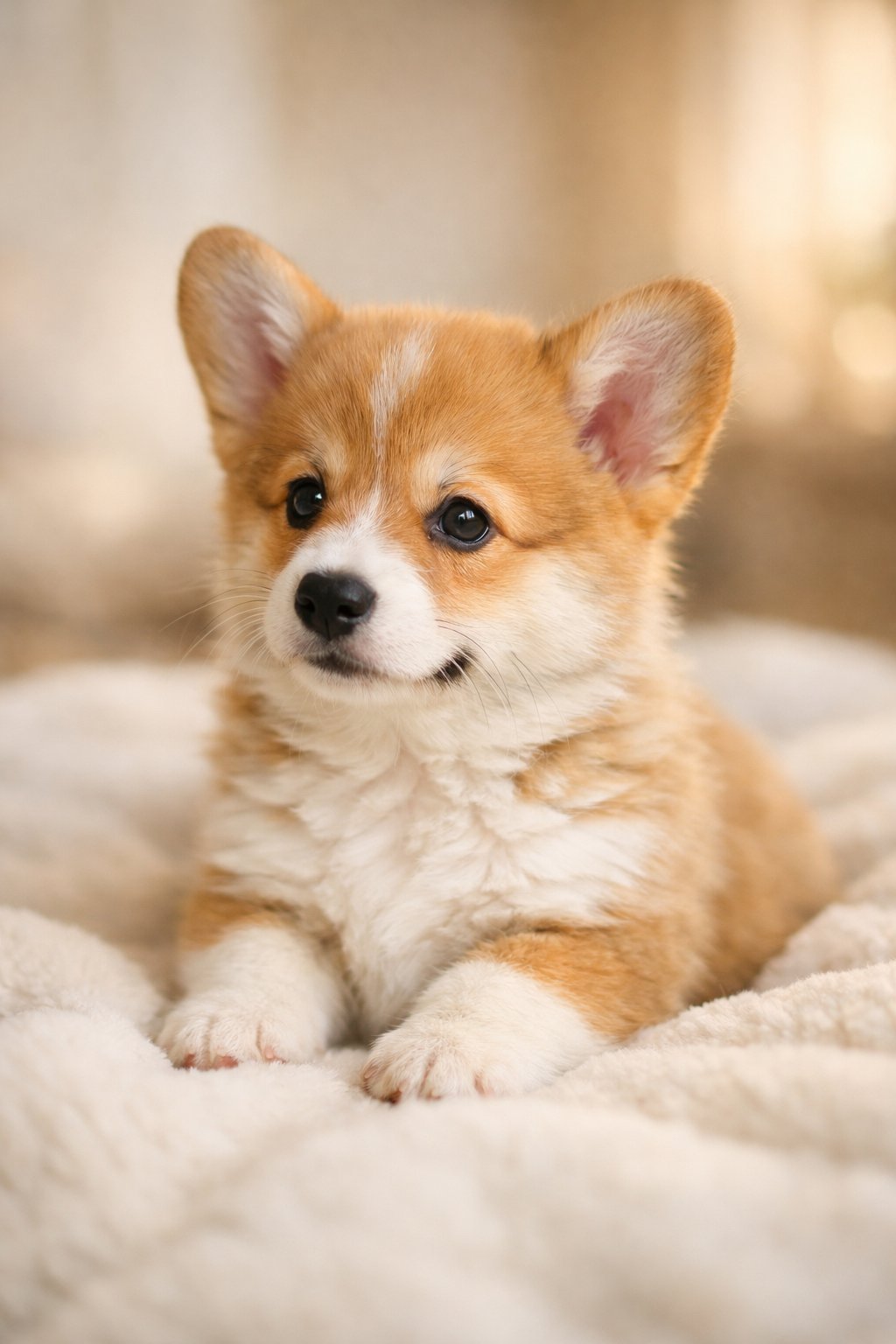
I’ve found that Corgi puppies require careful research before bringing one home. These dogs need proper training, regular exercise, and attention to their health needs.
Wait times for puppies can be several months long due to high demand. Getting a Corgi puppy means preparing for an active and loving companion.
You can find puppies through AKC-registered breeders, adoption centers, or rescue organizations. Understanding what these puppies need helps you decide if a Corgi is right for your home.
Key Takeaways
- Corgi puppies are intelligent herding dogs that need consistent training and daily exercise to stay happy and healthy
- Preparing your home with proper supplies, finding a good veterinarian, and understanding their nutrition needs are essential before bringing a puppy home
- Research reputable breeders or consider adoption to find a well-bred Corgi puppy that matches your lifestyle
Corgi Puppy Characteristics
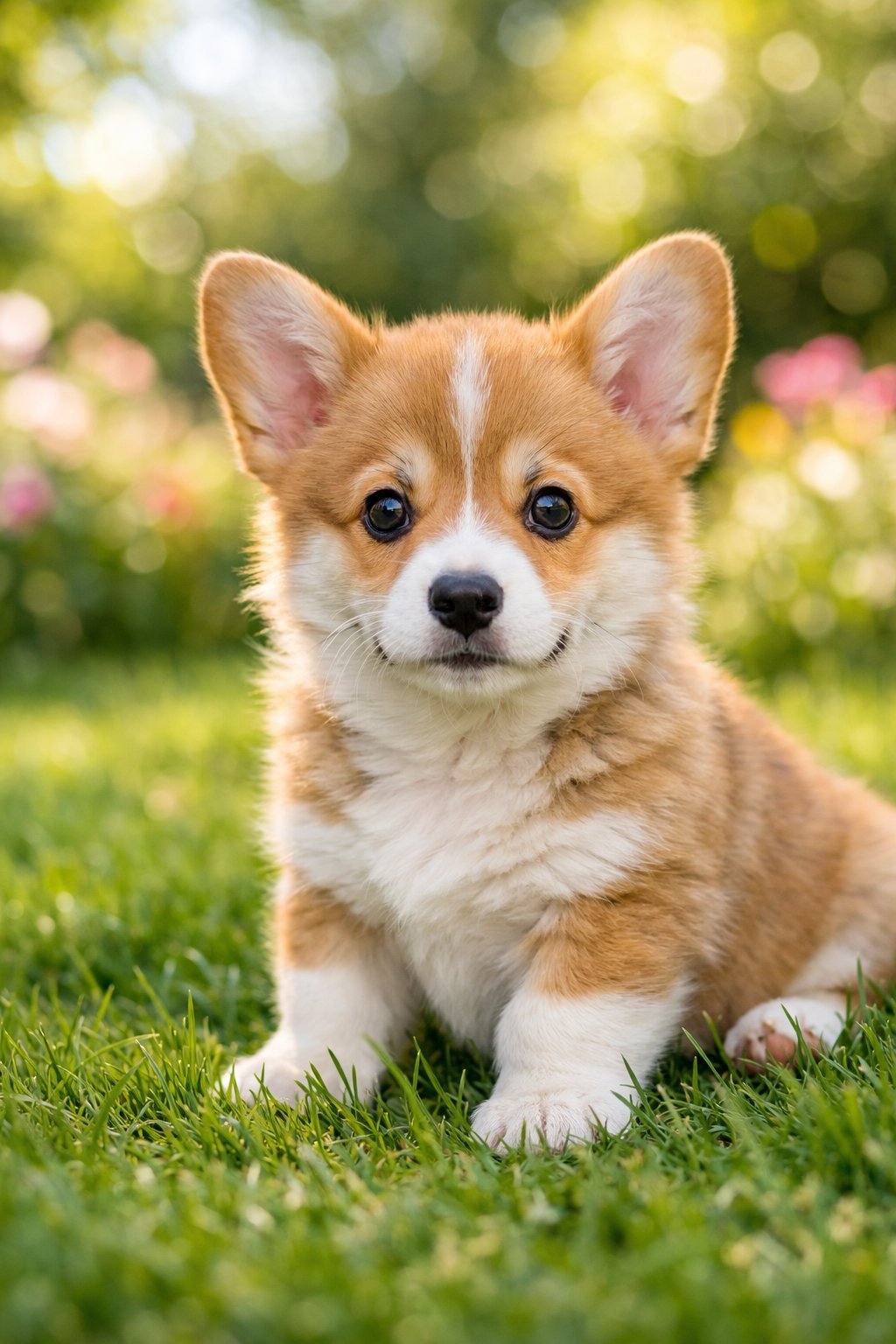
Corgi puppies have distinct features that set them apart from other breeds, from their short legs and long bodies to their smart and energetic personalities. Understanding these traits helps you know what to expect when bringing one of these adorable pups home.
Physical Appearance
I find that Corgi puppies have unique physical traits that make them instantly recognizable. Their most striking feature is their short, sturdy legs paired with a long body.
These pups have large, upright ears that sit proportionally big on their heads. Their eyes are round and expressive, usually in shades of brown that match their friendly personality.
Corgi puppies typically weigh between 8 to 10 pounds at eight weeks old. They grow quickly in their first few months.
Their double coat comes in various colors including red, sable, fawn, and tri-color combinations of black, tan, and white. Their tail varies depending on the type.
Some are born with naturally short tails while others have long, fluffy ones.
Temperament Traits
I’ve learned that Corgis rank 11th out of 138 breeds for intelligence, which makes training easier but also means they need mental stimulation. These puppies can learn new commands in just 5 to 15 repetitions.
Corgi puppies are naturally energetic and playful. They love to stay active and need regular exercise despite their small size.
Their herding background means they might try to herd family members, especially children. These pups are loyal and form strong bonds with their families.
They can be vocal and will bark to alert you of visitors or unusual sounds. Early socialization helps them become well-adjusted adults who get along with other pets and people.
Their clever nature means they need consistent training from an early age. Without proper guidance, they can develop stubborn behaviors.
Pembroke vs. Cardigan Differences
I notice several key differences between Pembroke and Cardigan Welsh Corgis that affect their appearance and personality. Cardigan Corgis are slightly larger and heavier than Pembrokes, with a longer overall body.
Tail differences:
- Pembroke: Usually docked or naturally bobbed
- Cardigan: Long, fluffy tail like a fox
Ear shape:
- Pembroke: Pointed ears with rounded tips
- Cardigan: Larger, more rounded ears
Cardigans have a wider range of coat colors, including brindle and blue merle patterns. Pembrokes typically come in red, sable, fawn, or tri-color.
Cardigan puppies tend to be more reserved around strangers, while Pembrokes are often more outgoing and social right away. Both types make excellent family pets, but Cardigans may be slightly calmer indoors while Pembrokes often show more excitable energy.
Preparing for a Corgi Puppy
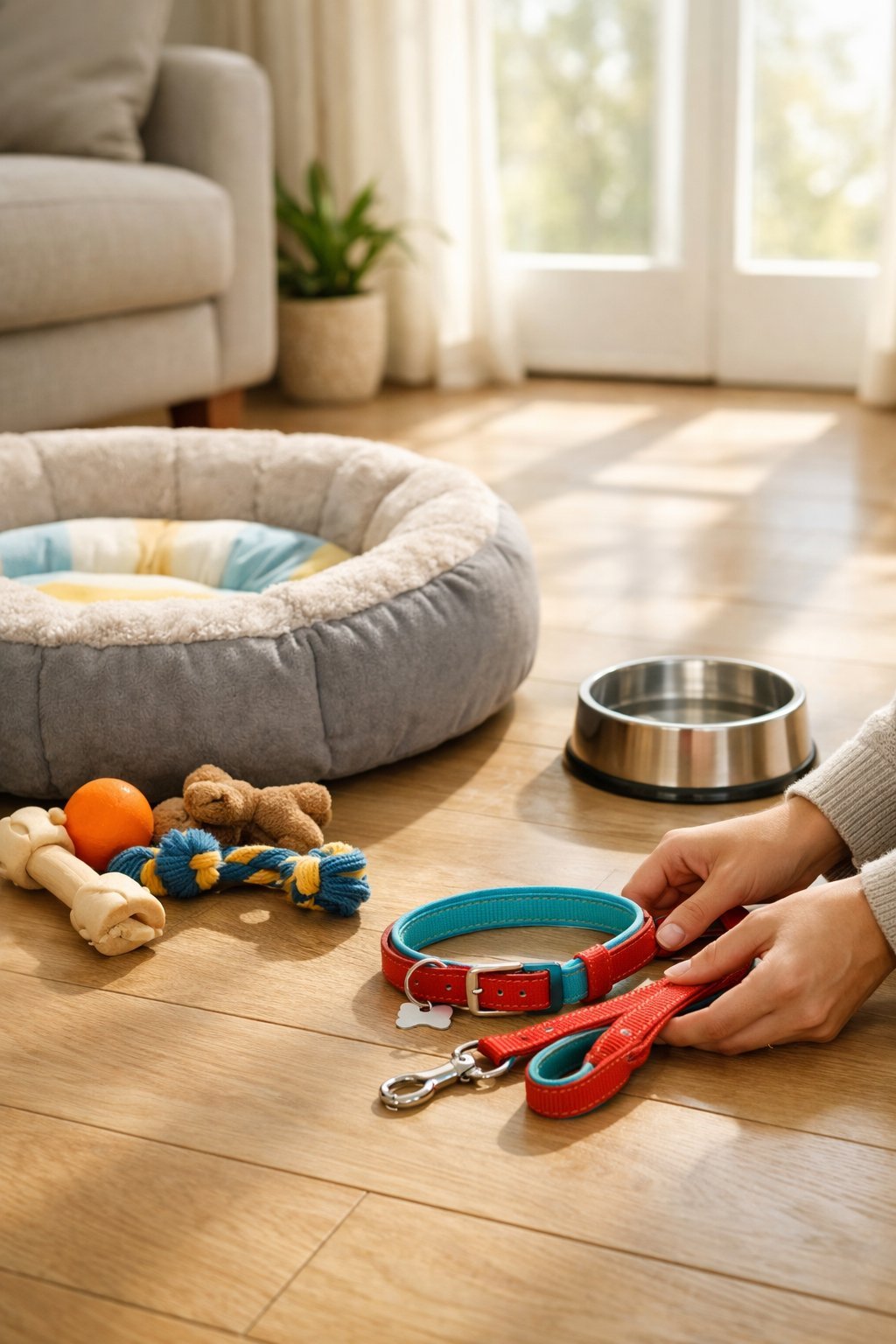
Getting ready for a corgi puppy means finding a trustworthy breeder, making your home safe, and gathering the right supplies. These steps help your new puppy settle in smoothly and stay healthy from day one.
Choosing a Reputable Breeder
I always recommend doing careful research before picking a breeder. A good breeder will show you health clearances for the puppy’s parents, including tests for hip dysplasia and eye problems that affect corgis.
Visit the breeder’s facility in person if possible. The puppies should be living in clean spaces with their mother.
Ask to meet the parent dogs to see their temperament and size. Good breeders ask you questions too.
They want to know about your home, schedule, and experience with dogs. This shows they care about where their puppies go.
Request references from previous buyers. A reputable breeder will happily provide contact information for families who got puppies from past litters.
They should also offer a health guarantee and be willing to take the puppy back if things don’t work out. Watch out for breeders who have multiple litters available at once or breed several different breeds.
These are red flags that suggest a puppy mill operation rather than a responsible breeder.
Puppy-Proofing Your Home
I need to remove potential hazards like cleaning supplies, medicines, electrical cords, fertilizers, and poisonous plants before bringing my corgi home. Move these items to high shelves or locked cabinets where curious puppies can’t reach them.
Corgis are low to the ground, so I check for dangers at their eye level. Secure loose wires and cables along baseboards.
Put away shoes, children’s toys, and anything small enough to swallow. I block off stairs with baby gates since corgi puppies shouldn’t climb stairs until their joints develop fully.
Close doors to rooms that are off-limits. Cover gaps under furniture where a small puppy might get stuck.
Check my yard for holes in the fence and toxic plants like azaleas or lilies. Remove sharp objects and make sure the gate latches securely.
Corgis are smart escape artists who will find any weakness in your barriers.
Essential Supplies
I stock up on supplies before my puppy arrives so everything is ready on day one. Here’s what I gather:
Food and Water Items:
- High-quality puppy food recommended by the breeder
- Stainless steel food and water bowls
- Slow-feeder bowl to prevent gulping
Training Supplies:
- Puppy pads for housebreaking
- Enzyme cleaner for accidents
- Small training treats
- Clicker for positive reinforcement
Comfort Items:
- Appropriately sized crate
- Soft bedding or blankets
- Toys for chewing and playing
Health and Grooming:
- Collar and leash
- ID tag with my contact information
- Brush for their thick coat
- Nail clippers
- Puppy-safe shampoo
I choose a crate that fits an adult corgi since they grow quickly. My puppy needs enough room to stand up and turn around comfortably.
Corgi Puppy Training Basics
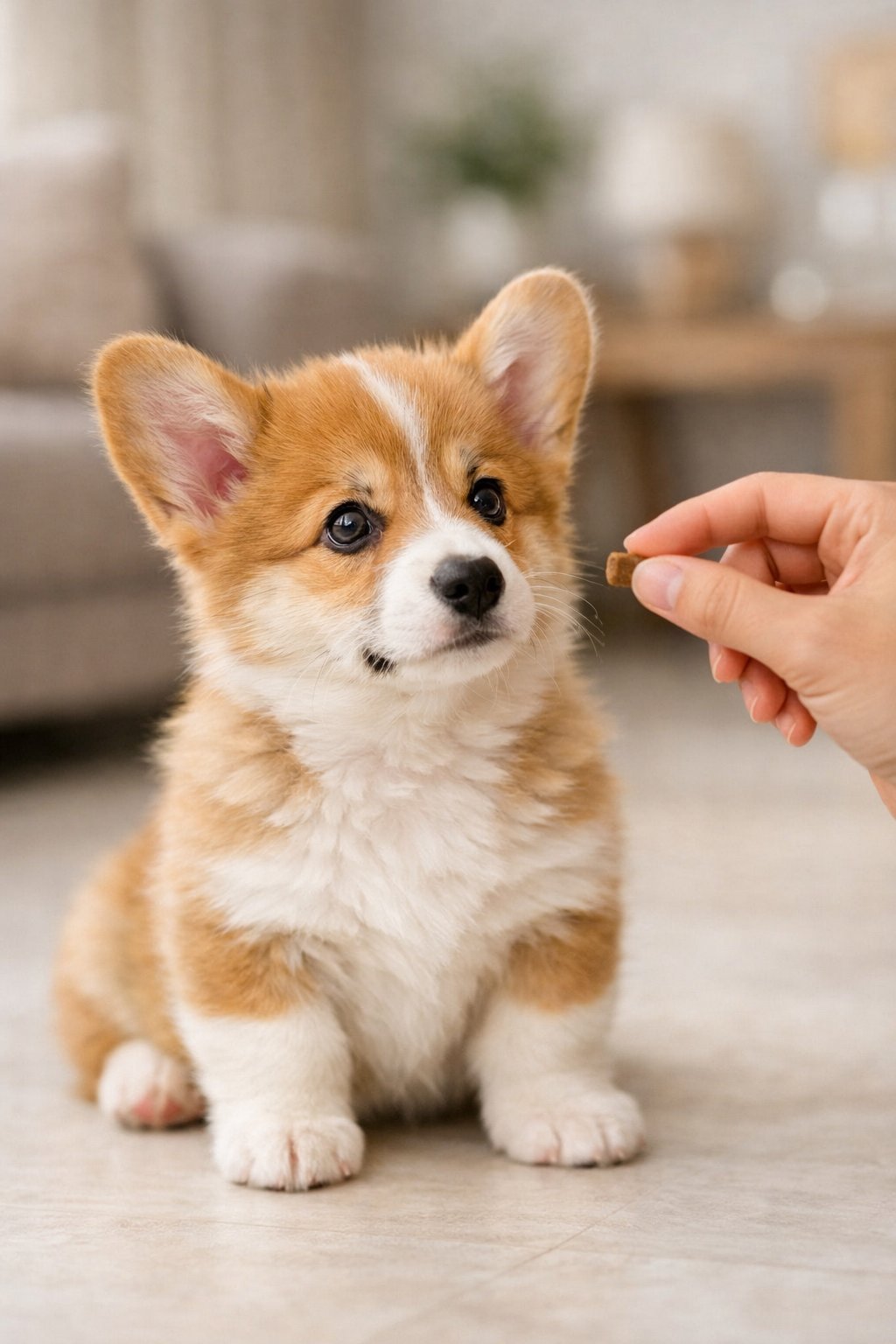
Training a corgi puppy requires consistency and patience from the very start. I’ll cover the essential methods for house training, helping your puppy feel comfortable around people and other animals, and teaching the core commands every corgi needs to know.
Housebreaking Techniques
I recommend starting housebreaking as soon as you bring your corgi puppy home. Take your puppy outside first thing in the morning, after meals, after naps, and before bedtime.
Crate training helps with housebreaking because puppies naturally avoid soiling their sleeping area. Choose a crate that’s just big enough for your puppy to stand, turn around, and lie down comfortably.
When your puppy goes potty outside, I praise them immediately with treats and excited words. This positive reward helps them understand what you want.
If accidents happen inside, I clean them up without scolding. Watch for signs your puppy needs to go out, like sniffing around, circling, or whining.
Take them to the same spot each time so they recognize the smell. Most corgi puppies can hold their bladder for one hour per month of age, plus one hour.
Early Socialization
The first week focuses on socialization and building confidence. I introduce my corgi puppy to different people, including children, adults, and seniors during their early months.
Expose your puppy to various sounds like vacuum cleaners, doorbells, and traffic noise. Let them experience different surfaces such as grass, concrete, carpet, and tile.
Take short trips in the car to help them get used to travel. I arrange playdates with other vaccinated, friendly dogs to teach proper dog behavior.
Puppy classes provide structured socialization opportunities with other puppies their age. Keep these experiences positive and never force your puppy into scary situations.
Corgis can be protective of their family, so early socialization prevents them from becoming overly wary of strangers. The critical socialization window closes around 16 weeks of age, making early exposure crucial.
Basic Obedience Commands
Positive reinforcement works best for training corgis. I start with these essential commands:
Sit – Hold a treat above your puppy’s nose and move it back over their head. Their bottom naturally drops as they look up.
Say “sit” and give the treat when they do it. Stay – Ask your puppy to sit, then hold your palm out and say “stay.”
Wait a few seconds before rewarding them. Gradually increase the time and distance.
Come – Use an excited voice and say “come” while backing away. Reward them when they reach you.
This command can save their life in dangerous situations. I keep training sessions short, around 5 to 10 minutes, because puppies have limited attention spans.
Practice commands throughout the day during regular activities. Corgis are highly intelligent and thrive on consistent training, so I incorporate training into their daily routine for the best results.
Nutrition and Health Care

Proper nutrition sets the foundation for your Corgi puppy’s growth, while regular vet care protects them from preventable diseases. I’ll walk you through feeding amounts, vaccination schedules, and health concerns specific to Corgis.
Feeding Guidelines
Corgi puppies need about 1 ¼ to 2 ¼ cups of food daily, split into multiple meals. The exact amount depends on your puppy’s age, weight, and activity level.
I recommend feeding puppies under six months old three to four times per day. This helps maintain their energy levels and supports steady growth.
Once your puppy reaches six months, you can switch to two meals per day. Choose a high-quality puppy food that lists meat as the first ingredient.
Puppies need more protein and fat than adult dogs to support their developing bodies.
Feeding Schedule by Age:
| Age | Meals Per Day | Total Daily Amount |
|---|---|---|
| 2-3 months | 4 meals | 1 ¼ – 1 ½ cups |
| 4-6 months | 3 meals | 1 ½ – 2 cups |
| 6-12 months | 2 meals | 2 – 2 ¼ cups |
Monitor your puppy’s body condition regularly. You should be able to feel their ribs without pressing hard, but they shouldn’t be visible.
Vaccinations and Vet Visits
Your Corgi puppy needs their first vet visit within a few days of bringing them home. This initial checkup confirms they’re healthy and establishes a medical baseline.
Core vaccines protect against serious diseases. Puppies get DHPP (distemper, hepatitis, parvovirus, and parainfluenza) starting at 6-8 weeks old.
They need boosters every 3-4 weeks until they’re 16 weeks old. Rabies vaccines are required by law in most places.
Puppies typically receive this shot at 12-16 weeks of age. Your vet may recommend additional vaccines based on your location and lifestyle.
These might include Bordetella (kennel cough), Lyme disease, or canine influenza. Deworming happens at regular intervals during puppyhood.
Most puppies have intestinal parasites and need treatment every 2-3 weeks until they’re 12 weeks old.
Preventing Common Health Issues
Corgis face specific health challenges due to their long backs and short legs. Hip dysplasia and intervertebral disc disease are two concerns to watch for carefully.
Keep your puppy at a healthy weight to reduce stress on their spine and joints. Avoid letting puppies jump from high surfaces or climb too many stairs.
Progressive retinal atrophy (PRA) and other eye problems occur in some Corgis. Schedule regular eye exams with your vet to catch issues early.
Dental care starts in puppyhood. Brush your puppy’s teeth several times per week using dog-specific toothpaste.
This helps prevent dental disease later in life. Watch for signs of illness like loss of appetite, lethargy, vomiting, or diarrhea.
Early detection makes treatment easier and more effective.
Corgi Puppy Exercise and Enrichment
Corgi puppies need careful exercise planning because their long backs and short legs require special attention. Young corgi puppies need both physical activity and brain games to grow into healthy adult dogs.
Daily Activity Needs
Start with short activity sessions for young corgi puppies. At 3 months old, corgi puppies only need 15 to 30 minutes of activity.
Short bursts of play work best for their developing bodies. Avoid long walks or intense exercise because corgi puppies have growing joints that can suffer long-term damage from overdoing it.
Age-Appropriate Activities:
- Gentle indoor play sessions
- Brief outdoor exploration in safe areas
- Low-impact games like hide and seek
- Supervised socialization with other puppies
Space out exercise throughout the day rather than doing it all at once. This protects your puppy’s back and hips while still burning off energy.
Mental Stimulation Games
I focus on mental stimulation alongside physical activity because corgi puppies are intelligent herding dogs.
Mental games tire them out just as much as running around.
My Favorite Brain Games:
- Puzzle feeders at mealtime
- Basic obedience training sessions (5-10 minutes)
- Scent games with hidden treats
- New toy rotation every few days
I teach simple commands like sit, stay, and come during play sessions.
These mental challenges keep my corgi puppy engaged and prevent boredom behaviors like excessive barking or chewing.