DIY Dog Costumes: Easy Homemade Ideas Your Pup Will Love

Dressing up your dog for Halloween or special events doesn’t have to break the bank or require advanced crafting skills. You can create adorable and comfortable costumes for your pup using simple materials you likely already have at home, like old clothes, cardboard, and fabric scraps.
Making your own dog costumes is more affordable than buying them. It also lets you design something unique that fits your dog’s personality and size perfectly.

The best part about DIY dog costumes is that they can be as simple or elaborate as you want. Whether you have hours to plan or need a last-minute costume idea, there are options for every skill level and time frame.
From classic looks like witches and mummies to playful ideas like cacti or baked potatoes, the possibilities are endless. Your dog’s comfort always comes first, so I’ll share tips to keep your pup happy in their costume.
Key Takeaways
- You can make creative dog costumes using household items and basic craft supplies.
- Always prioritize your dog’s comfort and safety when designing and fitting costumes.
- Simple DIY costumes can be made quickly and work well for photos or short events.
How To Make DIY Dog Costumes

Making a costume for your dog means gathering basic craft supplies, following some simple steps, and ensuring the final outfit fits comfortably without restricting movement.
Essential Materials and Tools
I always start by grabbing fabric pieces like felt, old t-shirts, or cotton material that won’t irritate my dog’s skin. Felt is awesome because it doesn’t fray and comes in lots of colors.
For fastening, I keep Velcro strips, elastic bands, and fabric glue on hand. Hot glue is quick, but fabric glue is safer for anything touching my dog’s fur.
Basic Supply List:
- Scissors (fabric scissors work best)
- Measuring tape
- Felt sheets or fabric scraps
- Velcro strips or elastic
- Fabric glue or hot glue gun
- Markers or fabric paint
- Ribbon or trim for decoration
I also grab cardboard for things like wings or signs. Sharp fabric scissors make cleaner cuts, but safety scissors work for most projects.
For budget-friendly DIY dog costume ideas, I raid my recycling bin for boxes, paper towel tubes, and old clothes before buying anything new.
Step-by-Step Costume Assembly
First, I measure my dog’s neck, chest, and length from collar to tail base before cutting any fabric. These measurements help make sure everything fits.
For simple costumes, I cut a rectangular piece of fabric that wraps around my dog’s chest and attach Velcro strips to both ends so it fastens under the belly. This creates a base for adding decorations.
I glue or sew on embellishments like felt shapes, ribbons, or painted designs once the base is secure. For superhero costumes for dogs, I cut a cape from an old t-shirt and attach it to a collar or harness.
For hats or wings, I use cardboard as a base, cover it with fabric or felt, and add elastic straps that go under the chin or around the chest. I always test the elastic to make sure it’s not too tight.
Fitting and Adjusting for Comfort
I do a fit test before adding final decorations. My dog should be able to walk, sit, and turn his head normally while wearing the costume.
I check that nothing covers his eyes, nose, or ears completely. I also make sure the costume doesn’t restrict leg movement or bathroom breaks.
Comfort Checklist:
- Two fingers fit under all straps
- No rubbing on armpits or neck
- Tail moves freely
- Dog can pant with mouth open
- No dangling pieces near paws
If my dog scratches at the costume or tries to remove it, I loosen straps or remove scratchy materials. I trim any loose threads that might get caught in his mouth.
For homemade dog costumes that actually stay on, I add extra Velcro points at the chest and behind the front legs.
Creative and Popular DIY Dog Costume Ideas

Making costumes at home lets you create something unique for your dog while saving money. You can turn everyday items into fun outfits that match your dog’s personality and size.
Animal-Inspired Costumes
Animal costumes are usually simple and work well for dogs of any size. A spider costume is one of the easiest—just attach four pipe cleaners or black socks stuffed with batting to each side of a black shirt or sweater.
For a butterfly look, create wings from cardboard or wire hangers covered with colorful fabric or tissue paper. Attach the wings to a harness or vest your dog already wears, and add pipe cleaner antennae to a headband.
A lion costume works great for dogs with longer fur around their necks. Make a mane using strips of brown and tan felt or yarn attached to a hood or elastic band that fits around the neck.
You can find creative animal costume ideas that include dinosaurs, sharks, and peacocks too.
Food-Themed Costumes
Food costumes are always a hit. I’ve made a hot dog costume by wrapping a long piece of tan felt around my dog’s body to look like a bun, then adding red and yellow felt strips for ketchup and mustard.
A taco costume is another favorite. Cut a large piece of tan or brown felt into a taco shell shape and drape it over your dog’s back, then glue or sew on green felt lettuce, orange felt cheese, and red felt tomatoes.
Pizza slice costumes are fun too. Cut a triangle from tan felt for the crust, add red fabric for sauce, and glue on yellow circles for cheese.
These budget-friendly costume ideas let you use materials you already have at home.
Movie and TV Character Costumes
Character costumes let your dog dress up as famous faces from the screen. I’ve created a Superman costume using a blue shirt and attaching a red felt cape with the “S” symbol cut from yellow felt.
For Star Wars fans, I love making an Ewok costume with brown fur fabric and a hood with small ears. A Yoda costume needs just a green shirt and pointed ears made from felt attached to a headband.
Disney characters work great too. I’ve made a simple Nemo costume using orange fabric with white stripes and a small dorsal fin.
You can explore more homemade character costume options that include everything from superheroes to classic cartoon characters.
Holiday and Seasonal Costumes
Halloween isn’t the only time your dog can wear a costume. I make Christmas elf outfits using green felt tunics with red trim and a pointed hat.
For Thanksgiving, I create a turkey costume with brown fabric for the body and colorful felt feathers fanned out at the back. A small orange felt beak completes the look.
Easter bunny costumes are simple—pink or white fabric ears attached to a headband and a cotton ball tail. Valentine’s Day works well with heart-shaped decorations attached to a red or pink shirt.
These last-minute seasonal costumes can be put together quickly with basic craft supplies.
Budget-Friendly DIY Dog Costumes

Making dog costumes at home doesn’t require expensive materials or special trips to craft stores. Most of the best costumes come from items already sitting in my closet or recycling bin.
Using Everyday Household Items
I always start by checking what I already have before buying anything new. Old t-shirts, towels, and cardboard boxes work great for quick costume bases.
A simple bandana tied around my dog’s neck can become a cowboy or pirate look in seconds. I keep safety pins, elastic bands, and Velcro strips handy since they help attach items without permanent changes.
My kitchen drawers have aluminum foil for robot costumes and plastic bags that work as rain gear. An old pillowcase with holes cut out makes an instant ghost costume.
Baby clothes from thrift stores fit small dogs perfectly and cost less than a dollar. I’ve turned baby onesies into bee costumes and pajamas into superhero outfits.
Socks work as leg warmers or ear covers depending on what look I’m going for.
Costume Ideas with Recycled Materials
Cardboard boxes are my favorite recycled material because they transform into anything. I’ve made taco shells, shark fins, and even tiny houses that sit on my dog’s back.
I just cut the cardboard to size and use string to secure it. Empty paper towel rolls become horns or unicorn cones when I paint them and attach them to a headband.
Plastic bottles cut in half make robot arms or dinosaur spikes along the spine. Old newspapers crumpled up create realistic mummy wrapping effects.
I save bubble wrap for astronaut suits and tin cans for robot accessories. Wine corks glued to a vest turn my dog into a creative and budget-friendly costume like a cactus or porcupine.
Even egg cartons cut apart become scales for dragon or fish costumes.
No-Sew Costume Solutions
I don’t know how to sew well, so I rely on fabric glue and iron-on adhesive tape for most projects. These supplies bond fabric pieces together permanently without needing a needle and thread.
Hot glue guns work for attaching decorations to existing dog sweaters or harnesses. Safety pins are my go-to for temporary costumes that need to come off quickly.
I pin felt pieces directly to my dog’s collar or existing clothing to create shapes like wings or capes. Elastic bands wrapped around the body hold lightweight props in place.
Double-sided tape sticks fabric to itself or to cardboard bases without mess. I’ve used this method for last-minute costume ideas that need to be ready in under 30 minutes.
Velcro strips let me adjust sizing and remove costumes easily after photos or events.
Safety Tips and Comfort Considerations
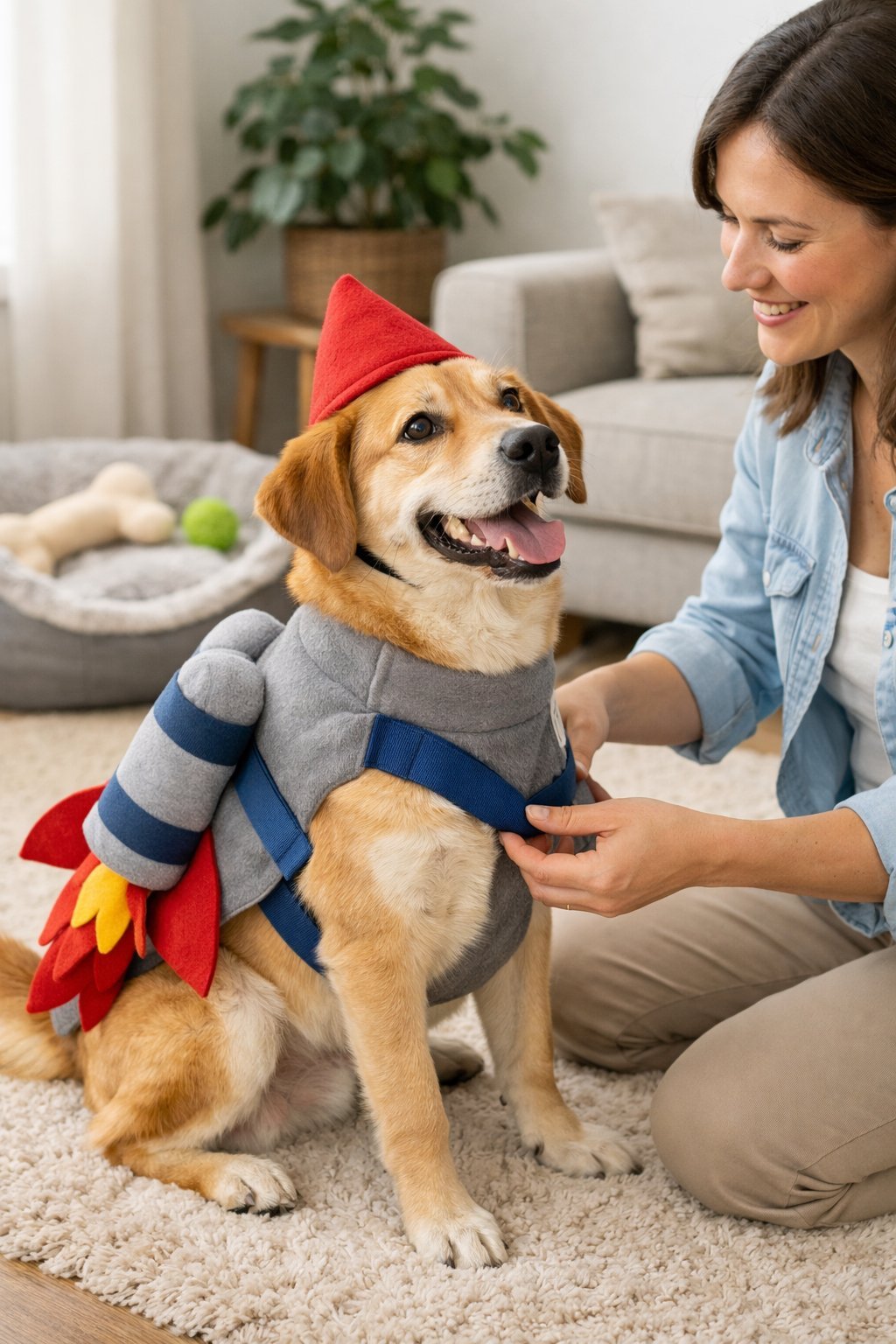
When I create costumes for my dog, I always put their safety and comfort first. The right materials, proper fit, and close supervision make the difference between a fun experience and a stressful one.
Choosing Safe Materials
I stick to breathable fabrics like cotton or fleece when making dog costumes. These materials don’t trap heat and allow air to flow, which helps prevent overheating.
I avoid anything with small parts that could fall off and become choking hazards. Buttons, beads, sequins, and loose threads can all end up in my dog’s mouth.
When I need decorations, I sew them on securely or use fabric glue designed for washable items. I also stay away from materials that restrict movement or breathing.
Tight elastic bands, stiff fabrics, and anything around the neck area need extra attention. DIY costumes let me design something perfectly suited to my dog’s size and comfort level with full control over materials.
I check for scratchy seams or rough edges that might irritate my dog’s skin. Turning seams inside out or adding soft lining helps prevent discomfort during wear.
Ensuring Proper Visibility and Movement
I always make sure my dog can see clearly in any costume I create. Covering their eyes with fabric or masks can stress them out and make things unsafe.
My dog needs full vision to get around people, furniture, and stairs. I test the costume’s fit by watching my dog walk, sit, and turn around.
Costumes should allow for easy movement, vision, hearing, and breathing to keep my pet comfy. If the costume bunches up between their legs or stops them from sitting naturally, I make adjustments.
I keep costumes lightweight and avoid anything that drags on the ground. Long capes or trailing fabric can get caught under my dog’s paws and cause tripping.
I also make sure my dog’s ears aren’t pinned down or completely covered. They rely on hearing to understand what’s going on, so blocking their ears can confuse them.
Costume Supervision and Removal
I never leave my dog alone while they’re wearing a costume. Even the safest design can shift or get tangled, and I need to be there to help.
I watch for signs that my dog is uncomfortable or stressed, like panting, trying to take off the costume, whining, or refusing to move. If I notice any of these, I take the costume off right away.
If my dog is going to play with other pets or kids, I remove the costume first. Active play can make costumes shift or tighten in ways that aren’t safe.
I also take the costume off during meal times and potty breaks. My dog needs freedom of movement for these activities, and leaving costumes on too long can cause stress or overheating.
Showcasing Your DIY Dog Costume

After putting in the effort to make a homemade costume, snapping some great photos is a fun way to show off your dog’s new look. Sharing your DIY dog costume can create awesome memories and inspire other pet owners.
Photographing Your Dog in Costume
I always start by finding good natural lighting for costume photos. Morning or late afternoon light is best because it’s soft and brings out the details.
I get down to my dog’s eye level for the most engaging shots. This angle captures their expressions and really shows off the costume.
I keep treats handy to grab my dog’s attention and reward them for staying still. The background matters too—I pick simple spots like a plain wall, grass, or a doorway so the costume stands out.
I take lots of photos from different angles. Since my dog won’t wear the costume forever, I snap at least 20-30 shots to make sure I get a few great ones.
I also like to catch some action shots of them walking or playing. It’s a fun way to show how the costume moves.
Participating in Costume Contests
Local pet stores, shelters, and community centers often host costume contests for dogs during Halloween and other holidays. I check community bulletin boards and social media groups to find out about these events.
Online contests are great if I can’t attend in person. Lots of pet brands and websites run photo contests where I can submit pictures of my dog’s costume.
I always read contest rules carefully before entering. Some contests want homemade costumes only, while others allow store-bought options.
When I enter, I write a short description explaining my costume idea and how I made it. Judges usually appreciate creativity and effort, so I like to point out any unique features or funny details.
Sharing on Social Media
I post my dog’s costume photos with hashtags like #DIYDogCostume or #DogCostume to connect with other pet lovers. These tags help my posts get noticed by people interested in creative pet costumes.
I usually add a quick description of how I made the costume. Other pet owners often ask about materials and construction, so I share those details right away.
Key posting tips:
- Tag the time of day when my followers are most active.
- Use 5-10 relevant hashtags per post.
I always try to respond to comments to build engagement. Sharing behind-the-scenes photos of the costume-making process is also a fun way to connect.
I join pet-focused Facebook groups where members share costume ideas. These communities are super supportive and often give helpful feedback for future projects.