
DIY Dog Couch Ideas That Look Better Than Human Furniture: Stylish Pet Beds Your Pup Will Love

Your dog deserves a spot that’s just as stylish as your own furniture. Building a DIY dog couch lets you design a piece that matches your home decor while giving your pup the perfect place to relax.
These projects range from simple cushion arrangements to elaborate wooden frames that look like they came from a high-end furniture store.

You might wonder if it’s really possible to make furniture for your dog that looks as good as your own. The cool part is, many DIY dog couch projects end up looking even more impressive than regular sofas because you get to pick every detail.
Choose premium fabrics, add custom features like built-in toy storage, and create shapes that fit your space perfectly.
You don’t need to be a woodworking pro to get started. There are projects for every skill level, from beginner-friendly designs using repurposed materials to stylish luxury options that will make your guests do a double-take.
Your dog will love having their own special spot, and you’ll love how good it looks in your home.
Key Takeaways
- You can build a stylish dog couch that matches your home decor using materials ranging from simple cushions to custom wood frames.
- Projects range from easy beginner options using repurposed items to advanced luxury designs with premium features.
- Proper planning for size, comfort materials, and maintenance will ensure your dog’s couch stays looking great for years.
Planning Your DIY Dog Couch
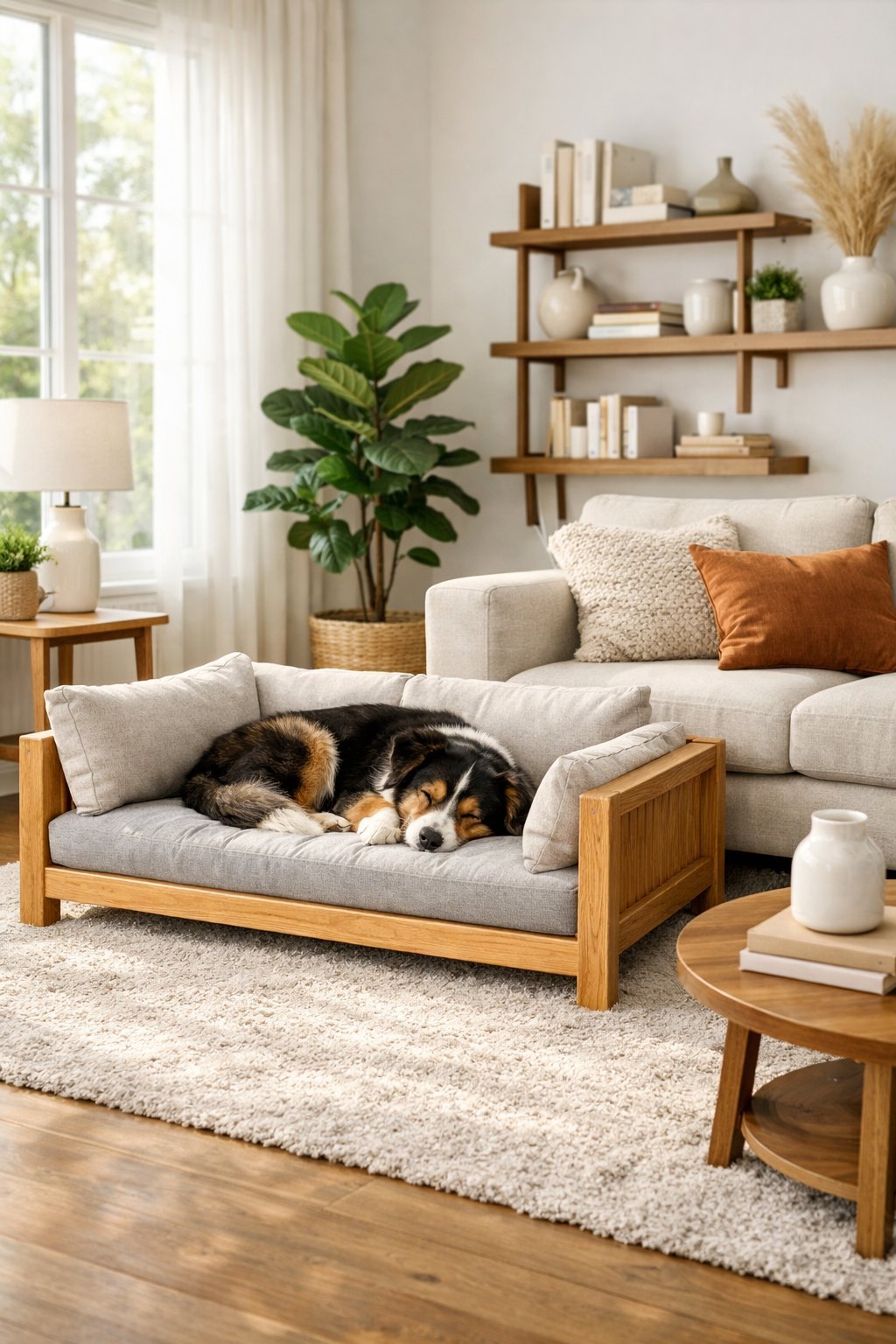
I always kick off dog furniture projects with some solid planning to avoid wasting time and materials. Getting the measurements right and picking durable materials makes all the difference.
Choosing the Right Size and Shape
I measure my dog from nose to tail while they’re stretched out, then add 6-8 inches to get the minimum couch length. For width, I make sure there’s at least 4 inches of space on each side when my dog lies down in their favorite position.
The shape depends on my dog’s sleeping style. If they curl up, I go for a square or round couch. For dogs that stretch out, a rectangular design works best.
I also think about where the couch will go in my home. A wooden frame dog couch measuring 5 feet long and 30 inches wide is great for bigger dogs, but I adjust these dimensions to fit my space.
For multiple dogs, I add 12-15 inches per additional pet.
Selecting Pet-Friendly Materials
I pick fabrics that can handle scratching, drool, and accidents. My top choices are:
- Canvas: Durable and machine washable
- Outdoor fabric: Water-resistant and easy to clean
- Microfiber: Resists stains and pet hair doesn’t stick
For cushioning, I use high-density foam that’s at least 4 inches thick. It keeps its shape way longer than the cheap stuff.
I avoid materials with strong chemical smells since they can bother my dog’s sensitive nose. Wood frames are a favorite of mine, especially when I sand them smooth to prevent splinters.
I seal the wood with pet-safe finishes that won’t harm my dog if they chew on it. For structural pieces, pine or plywood is affordable and easy to work with.
Design Inspirations from Modern Furniture
I check out human furniture styles to create stylish dog couches that match my home decor. Mid-century modern designs with tapered legs look classy and keep the couch off the floor for easy cleaning.
Tufted cushions add a fancy touch that makes the dog couch look high-end. I also copy color schemes from my own couch so everything coordinates.
Some dog couches include scratching posts built into wooden frames, adding function while keeping the modern vibe. I browse Pinterest and furniture stores for inspiration, paying attention to arm heights and back support that work for pets.
Gathering Essential Tools and Supplies
I make a complete list before starting so I don’t have to keep running to the hardware store. My basic toolkit includes:
- Drill and drill bits
- Saw (circular or hand saw)
- Measuring tape
- Sandpaper or electric sander
- Staple gun
- Wood screws and wood glue
For materials, I grab lumber for the frame, foam for cushions, fabric for upholstery, and batting to wrap around the foam. Wood stain or paint is nice if I want to finish the frame.
I keep extra screws and fabric around since I usually need more than I think. A good pair of scissors and a marker for measurements also come in handy.
Easy DIY Dog Couch Projects
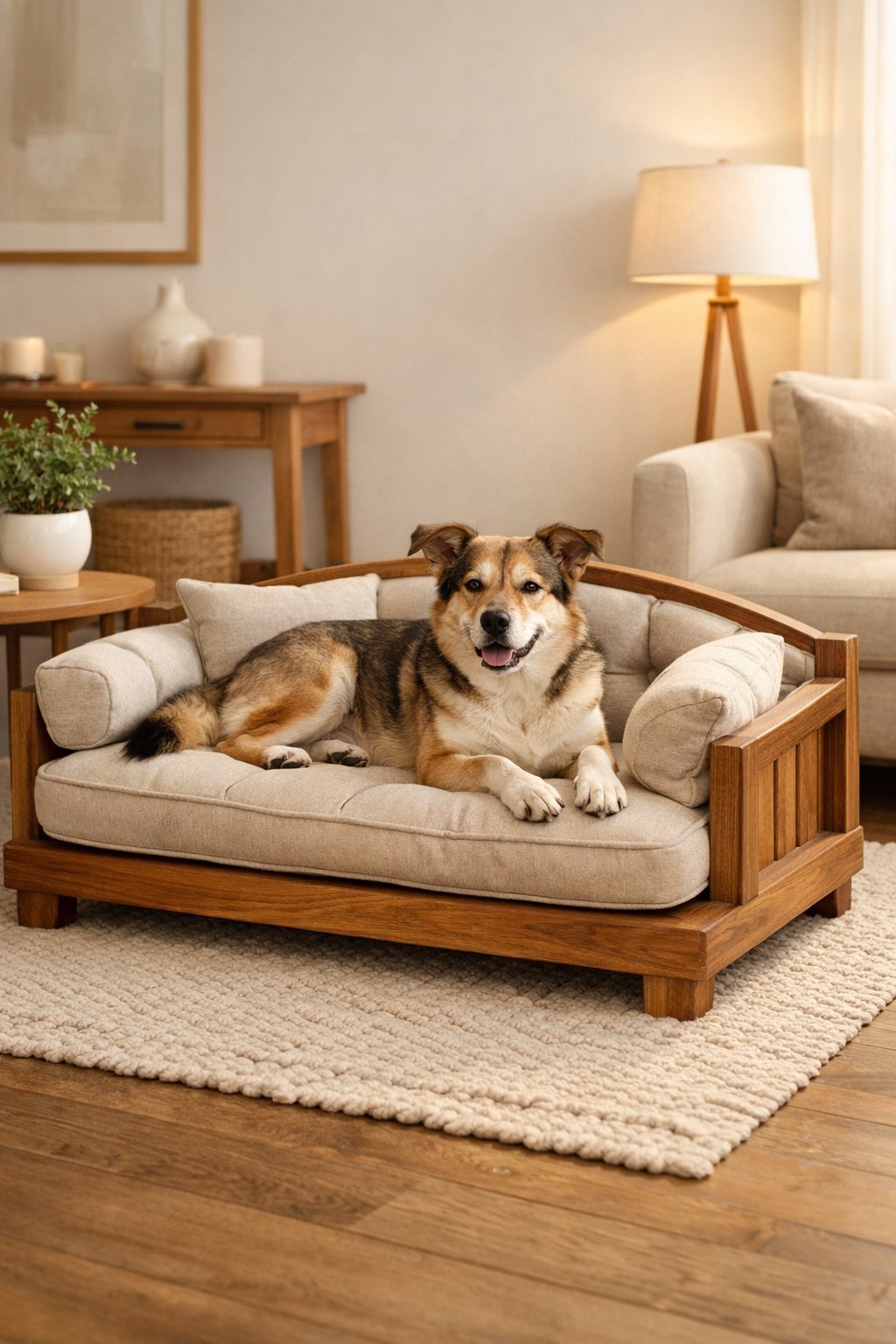
Building a dog couch can be simple and quick. Here are three beginner-friendly projects using materials you probably already have or can find cheaply.
Upcycling Old Furniture into Dog Sofas
Turning old furniture into dog couches is a great way to save money and keep items out of landfills. An old coffee table makes a perfect base—just add cushioning on top and around the edges.
Drawer units from dressers also work well. I remove the drawers, flip the unit on its back, and add foam padding inside.
The sides are already there, so I just focus on comfort. Converting discarded furniture frames with new cushioning gives my dog a custom piece without starting from scratch.
I look for sturdy pieces at thrift stores or garage sales. Old end tables, benches, and even wooden crates can be great starting points.
Simple Wooden Pallet Dog Couch
Shipping pallets are usually free or super cheap and make sturdy dog furniture. I stack two pallets for larger dogs or use just one for smaller breeds.
The wood is already assembled, so there’s no need to cut or join pieces together. I sand down the pallet to remove splinters and rough spots.
If the slats have wide gaps, I add a piece of plywood on top. A coat of pet-safe paint or stain makes it look finished.
For cushioning, I cut foam to fit and wrap it in washable fabric. I staple the fabric underneath so my dog can’t pull it off.
Adding foam along the back creates a more couch-like design with wood frame and supports my dog’s head and neck.
No-Sew Upholstered Dog Couch
For this project, I use fabric glue and staples instead of sewing. An old cushion or some cheap foam from the craft store forms the base.
I wrap the foam in fabric and secure it with a staple gun on the bottom where my dog can’t see it. For a raised couch, I place the cushion inside a wooden frame or even a sturdy cardboard box.
Pool noodles make great bolsters around the edges. I wrap them in fabric and glue them in place to create armrests.
This method takes about an hour and only requires a staple gun. When the fabric gets dirty, I just remove the staples and swap in fresh material.
Luxury Dog Couch Designs
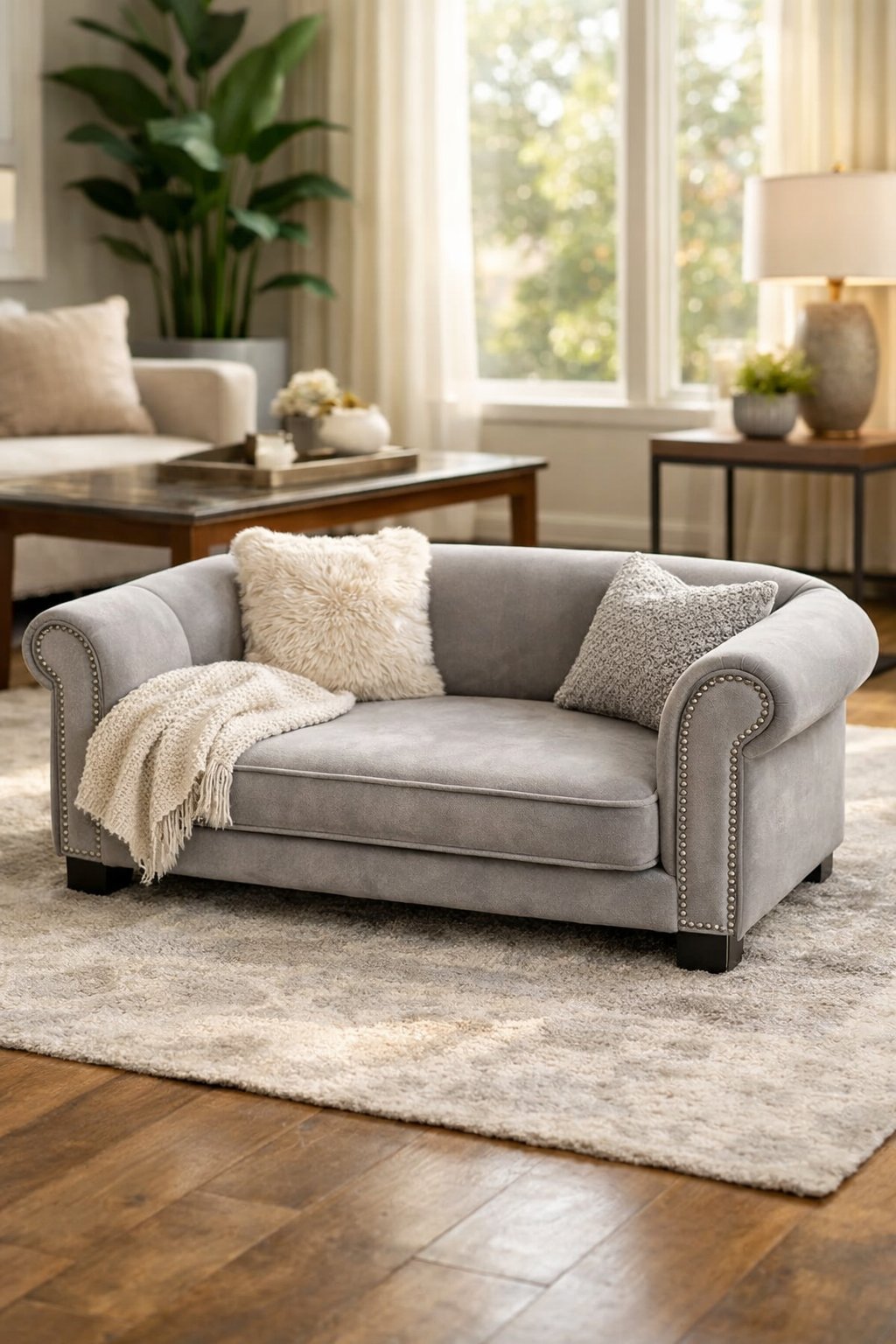
High-end dog furniture uses premium materials like velvet upholstery, solid wood frames, and orthopedic foam cushioning.
Creating a Mini Chesterfield Dog Sofa
The classic Chesterfield sofa, scaled down for dogs, looks incredibly elegant. Deep button tufting and rolled arms give this design its signature charm.
For the frame, I use hardwood like oak or pine cut to my dog’s size. Getting the proportions right makes it look like a true miniature.
The tufting process takes some patience but really makes the piece pop. I drill holes in the backrest and pull fabric-covered buttons through with upholstery thread.
Velvet or faux leather works best for that authentic Chesterfield vibe. Adding brass or silver nail head trim along the base is a nice extra detail.
Pink tufted back dog beds show how bold color choices can make these designs stand out, but I usually stick with neutrals to blend in with my decor.
Elevated Dog Couches with Storage
Space-saving designs are super handy. I build elevated dog couches with storage underneath to keep things organized.
The basic setup is four legs tall enough to fit bins or baskets below—usually 8-10 inches of clearance. This is perfect for storing dog toys, treats, grooming supplies, or extra blankets.
Key materials needed:
- Plywood or solid wood for the platform
- Four sturdy wooden legs
- Orthopedic foam cushioning for comfort
- Fabric for upholstery
- Storage baskets that fit underneath
I attach the legs with wood glue and corner brackets for stability. The cushion goes on top, and I either wrap it completely or use a removable cover with a zipper for easy washing.
Mid-Century Modern Dog Lounges
Clean lines and tapered wooden legs define this style. I make these lounges with simple rectangular frames and keep the look minimal.
The key is the angled legs—I cut them at about 15 degrees for that classic splayed look. Walnut or teak stain on the legs adds that vintage feel.
For the cushion, I use a single thick piece of foam covered in a solid color fabric. Mustard yellow, burnt orange, or olive green really capture that retro vibe.
I skip tufting or extra details on these. The appeal comes from the streamlined silhouette and quality materials.
Style Tips for Designer-Look Dog Furniture
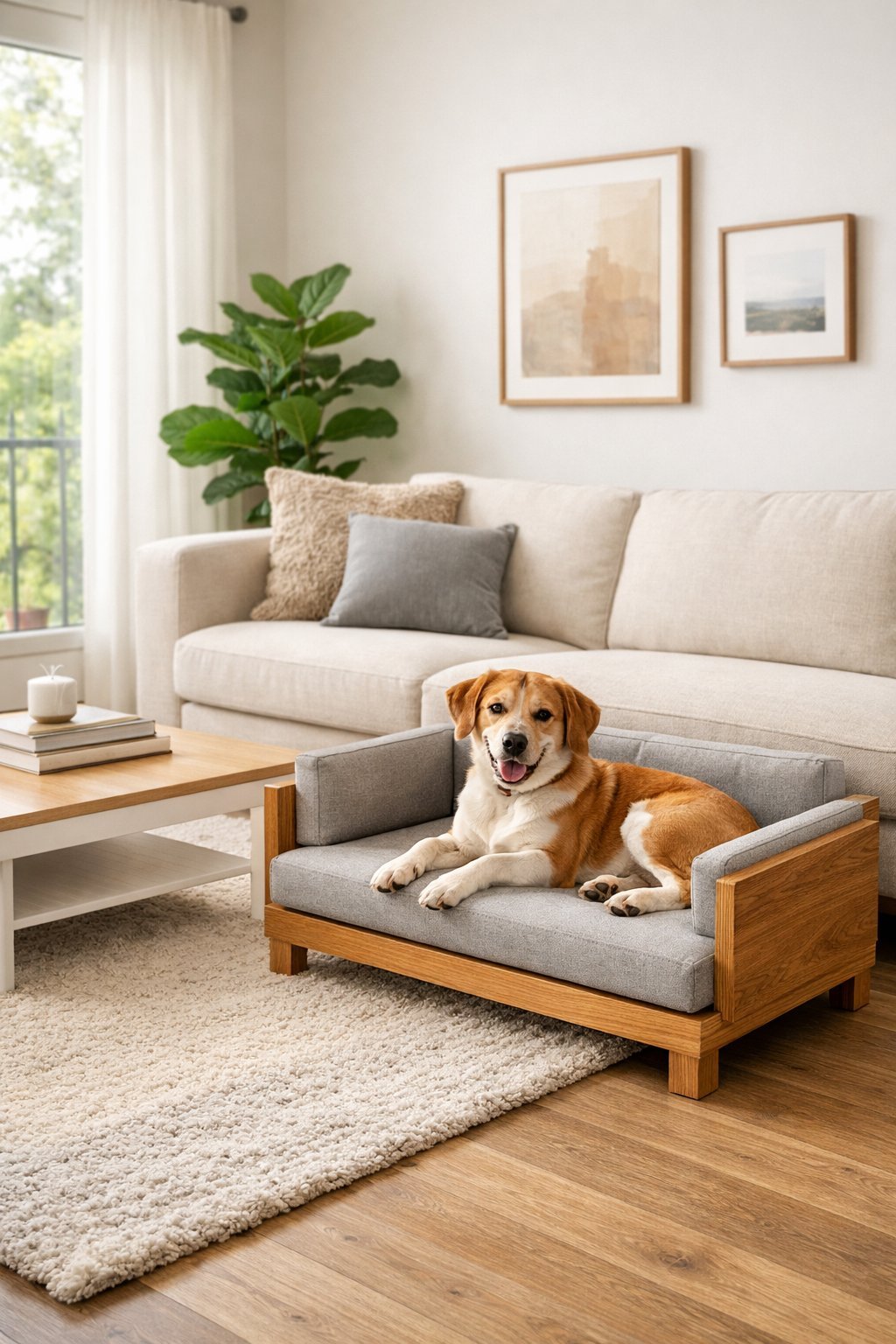
Making dog furniture look expensive comes down to three things: matching it to your decor, picking the right materials, and adding thoughtful details.
Coordinating With Your Home Decor
I always start by checking my room’s color scheme before building anything. If my living room is modern with gray and white tones, I make sure the dog couch matches.
For a rustic log style dog couch, I’d use it in a cabin or farmhouse setting. The wood finish should match my coffee table or other furniture.
I take photos of my room and keep them handy while shopping for materials. The shape matters too—sleek, low-profile furniture calls for clean lines and simple legs, while traditional spaces with curved furniture look better with rounded edges on the dog bed frame.
I always measure the space where the couch will go before building. This keeps the piece from looking too big or too small in the room.
Customizing Fabrics and Colors
The fabric choice has a huge impact on whether my dog furniture looks cheap or expensive. I avoid shiny, slippery materials that feel “pet store” and stick to the same fabrics I’d use on my own furniture.
Best fabric options:
- Velvet for a luxury feel
- Linen for a casual, coastal look
- Faux leather for modern spaces
- Tweed for traditional rooms
I pick colors that either match my couch or complement it. Neutral shades like gray, beige, and cream work almost anywhere.
Bold colors like navy or emerald can turn the dog couch into a statement piece. Performance fabrics are my secret weapon—they resist stains and fur but still look high-end.
I check fabric stores for upholstery-grade materials instead of craft store options.
Adding Decorative Details and Accents
Small touches make a big difference in DIY projects. I add furniture legs instead of leaving the base flat on the floor.
Wooden tapered legs give a mid-century look, while metal hairpin legs feel more industrial. Trim and piping along cushion edges add a polished finish.
I like using contrasting piping in a darker shade for definition. Nail head trim around the base adds texture with minimal effort.
Sewing or gluing decorative buttons onto cushions creates a tufted appearance. Even fake buttons from the craft store work just fine.
Throw pillows scaled down for dogs add personality and comfort. I also swap out basic screws for decorative wood plugs or brass brackets for a more finished look.
Care, Maintenance, and Dog Comfort
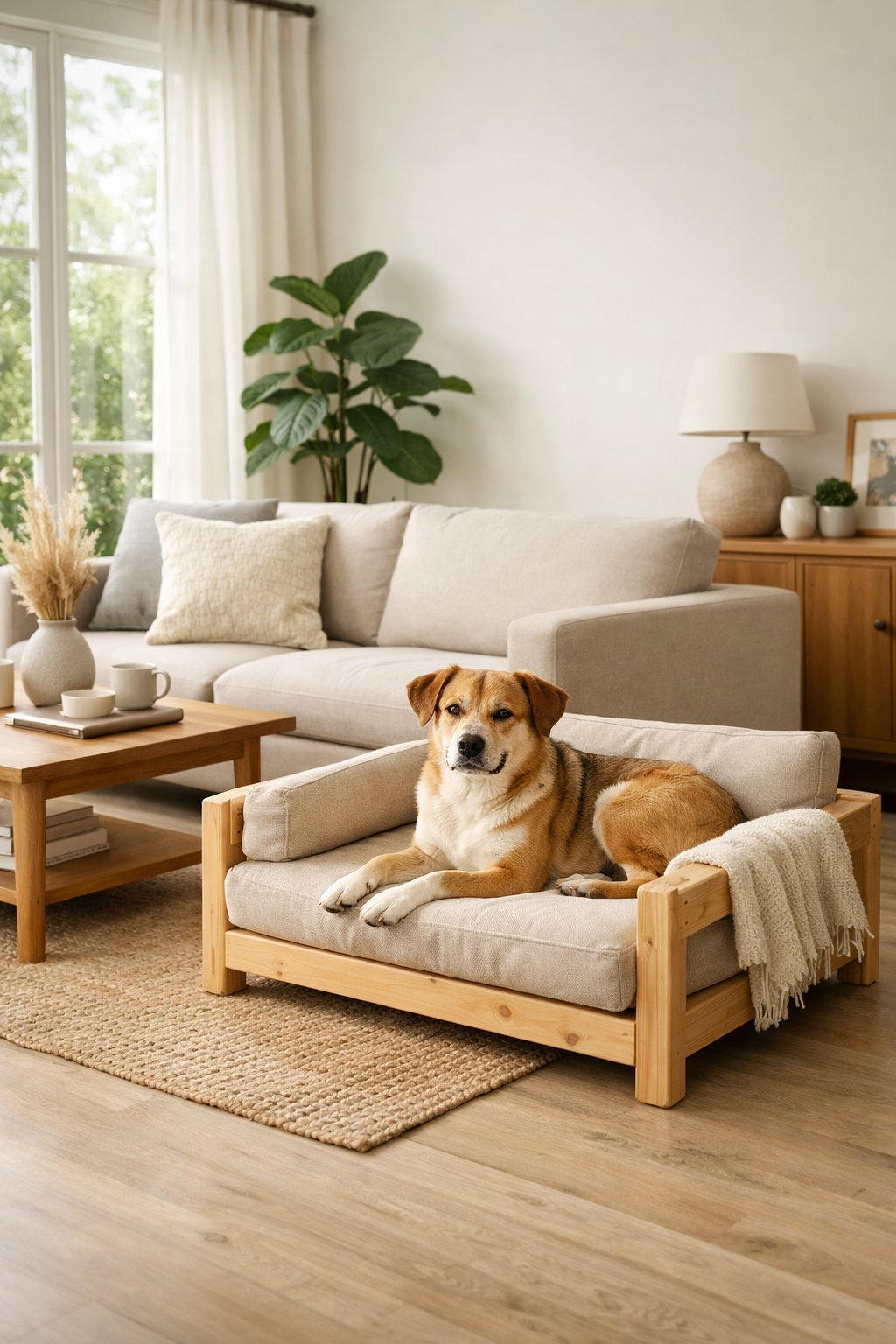
A well-built dog couch needs the right materials and regular upkeep. Fabric choice, cleaning routines, and safety features really matter for keeping your DIY project looking good and your pup happy.
Choosing Washable and Durable Fabrics
I always recommend outdoor fabrics like Sunbrella or marine-grade vinyl for dog couches. These materials handle stains, water, and scratching much better than regular upholstery fabric.
Canvas and denim are also great since they’re tough and machine washable. I steer clear of delicate fabrics like silk or linen.
A tight weave and high thread count help fabrics stand up to dog nails and constant use. Microfiber is another favorite because it repels liquids and cleans up easily with soap and water.
For cushion filling, I go with high-density foam wrapped in a waterproof cover. This keeps the foam dry, even if accidents happen.
Memory foam is nice for older dogs who need extra joint support, though it does cost more and can trap heat.
Keeping the Dog Couch Clean
I vacuum my dog’s couch at least twice a week to get rid of hair, dirt, and dander. A handheld vacuum with a brush attachment is perfect for tight spots.
For washable area rugs and removable covers, I toss them in the washing machine monthly. I use pet-safe detergent and skip fabric softener since it reduces water resistance.
Spot cleaning is a must for quick messes. I keep a spray bottle with equal parts water and white vinegar handy for most stains.
Every three to four months, I do a deep clean with an upholstery or steam cleaner. Everything needs to dry completely before my dog hops back on, so mold doesn’t become a problem.
Ensuring Comfort and Safety
I check the couch structure monthly for loose screws, splintered wood, or weak joints. Fixing these right away helps prevent injuries.
The couch height matters, especially for older dogs or puppies. I keep mine low to the ground so my dog can get on and off easily.
Rounded edges are safer than sharp corners, so I sand down all wood edges and cover any exposed hardware with caps or padding.
To keep the couch from sliding on hardwood or tile, I add rubber pads or grip tape to the bottom. That way, it stays put when my dog jumps on or off.
I also make sure the couch is away from heating vents and direct sunlight to avoid overheating. Good air circulation helps keep things fresh and comfortable.
Frequently Asked Questions
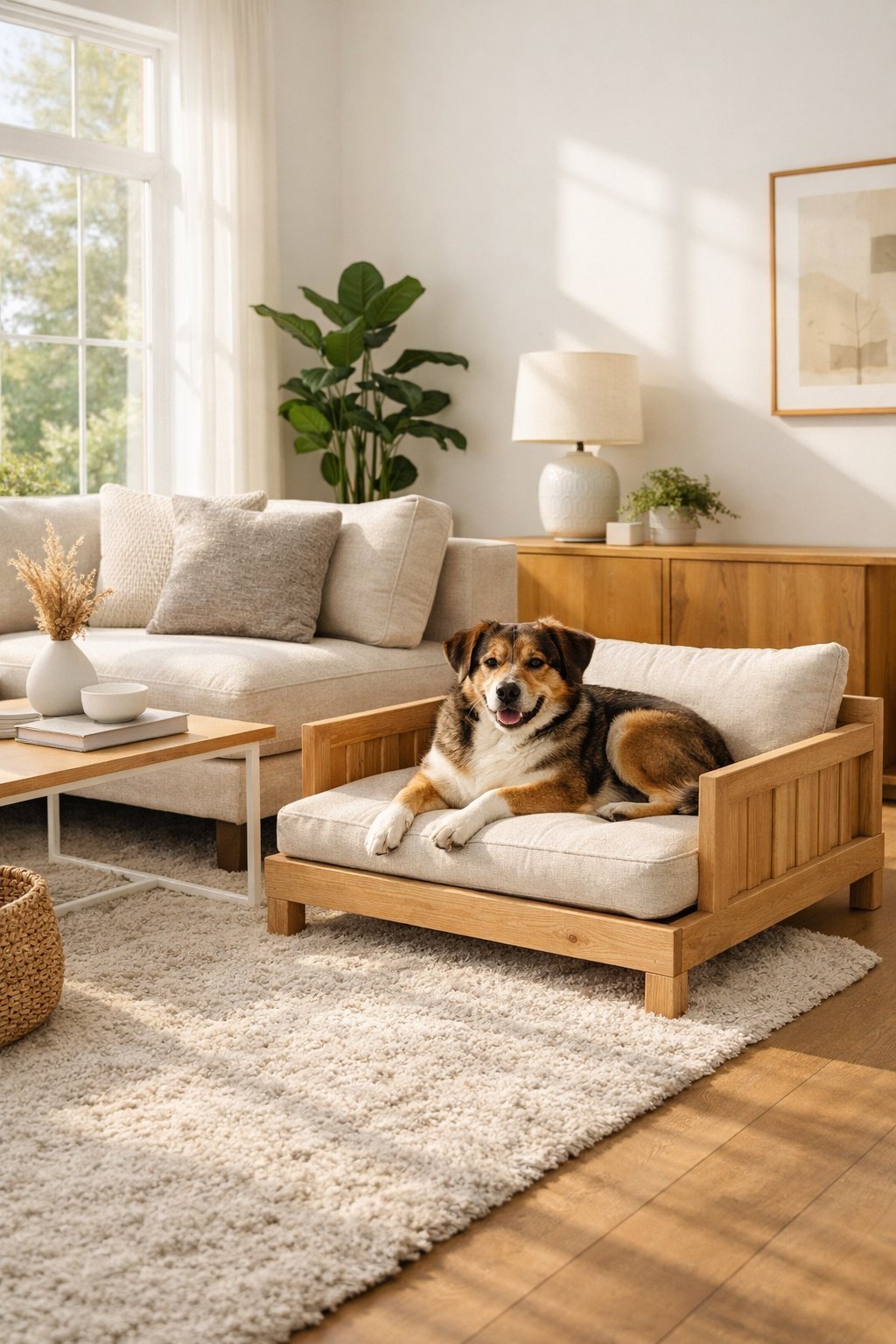
Building a custom couch for your dog means picking the right materials, designing something that fits your home, and making sure your pet is safe and comfy.
How can I build a dog couch that’s stylish and comfortable for my pet?
I start by measuring my dog to figure out the right size. My dog needs enough space to stretch out, so I add at least 6 inches to their full length.
For the frame, I use sturdy wood like pine or plywood. Orthopedic foam for the cushions is a great choice since it supports joints, and I make sure it’s at least 3 inches thick for medium to large dogs.
I cover the foam with removable, washable fabric to keep things clean. Making the couch look like a mini version of my own furniture helps it blend into my living room.
What materials are both durable and pet-friendly for a homemade dog sofa?
The best couch materials for dogs are leather, microfiber, and tightly woven fabrics that resist scratching and staining. Microfiber is affordable and easy to clean.
For the frame, hardwoods like oak or maple last longer than softwoods. I avoid particleboard because it breaks down quickly, especially if my dog jumps on and off a lot.
High-density foam holds its shape longer than regular foam. Outdoor fabric is a smart pick since it resists moisture and fading.
Are there any creative designs for dog couches that can complement home decor?
I’ve seen DIY dog couches that look like tiny mid-century modern sofas with wooden legs and sleek lines. These are perfect for contemporary homes.
For a farmhouse vibe, I use reclaimed wood and neutral linen fabrics. Adding tufted cushions or nailhead trim makes it look more intentional and less like a basic pet accessory.
A dog couch that doubles as a side table is another cool idea. I build a wooden frame with a cushioned top and open storage underneath, saving space and giving my dog a comfy spot to rest.
What are some important considerations when creating a raised dog bed?
I make sure the height works for my dog’s size and mobility. Older dogs or those with arthritis need lower platforms they can step onto easily.
The legs need to be sturdy and secure, so I use thick wooden posts or metal legs with wood glue and screws. I leave enough clearance underneath for air circulation, usually 4 to 6 inches.
How do I incorporate storage solutions into my DIY dog couch?
I build drawers into the base for dog toys, treats, and grooming supplies. Drawer slides make it easy to access everything.
Open cubbies on the sides or underneath work well for storing leashes, waste bags, and other essentials. I can also add a lift-up seat cushion with storage space inside the frame to keep supplies hidden but handy.
Can you suggest any pet-safe finishes or paints for a custom canine couch?
I use water-based polyurethane for sealing wood because it doesn’t have harsh chemicals that could harm my dog. It dries quickly and gives a durable finish.
For painted surfaces, I go with paints labeled as low-VOC or zero-VOC. These release fewer fumes and are safer once they’re fully cured.
I always let the finish cure completely before letting my dog use the couch. This usually takes at least 48 hours for paint and up to a week for some sealants.
Natural oils like coconut oil or beeswax can also be used for finishing wood. They need to be reapplied more often, but they’re a safe option.
