
DIY Dog Crate: Simple Plans to Build a Cozy Space for Your Pup

DIY Dog Crate – I love my dog, but finding the right crate can be tough. Store-bought options are often expensive and don’t always fit your home’s style or your dog’s specific needs.
That’s why I started looking into building my own.
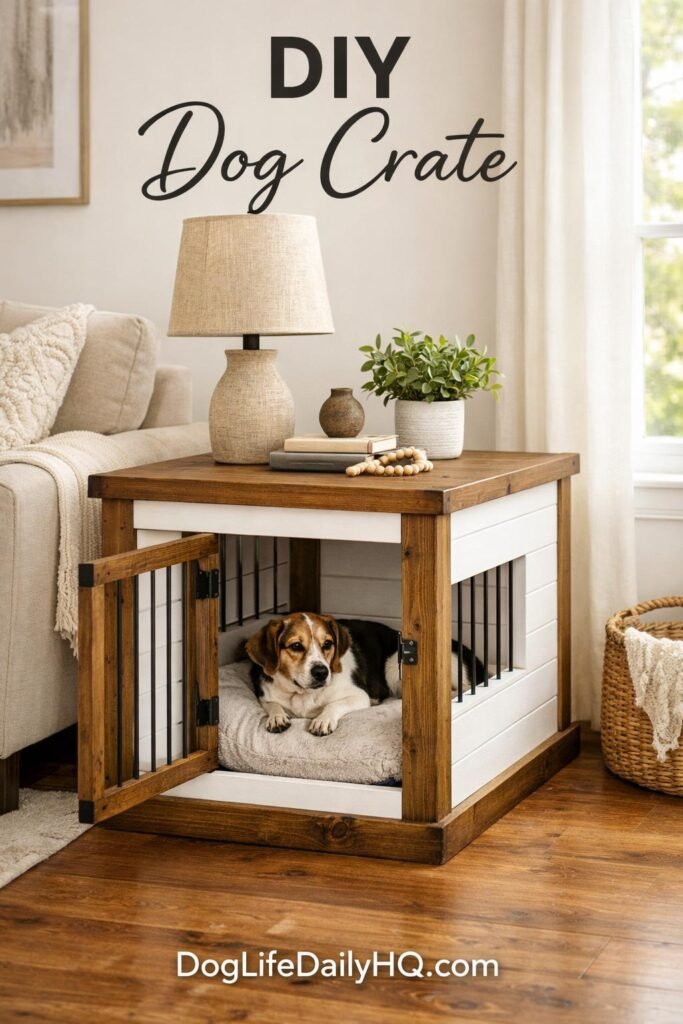
Making your own dog crate lets you save money, match your home décor, and create the perfect size for your pet. The process is easier than you might think.
Building a custom DIY dog crate works for beginners and experienced builders alike.
I’ve put together everything you need to know about creating a safe and comfortable space for your furry friend. From picking the right materials to adding cozy finishing touches, this guide walks through each step.
Whether you want a furniture-style nightstand crate or a simple training space, you’ll find ideas that work for your skill level and budget.
Key Takeaways
- Building your own dog crate saves money while allowing you to customize the size and style for your home
- You can complete most DIY dog crate projects in a weekend with basic tools and materials
- Proper planning and choosing the right design ensures your dog has a safe, comfortable space they’ll actually enjoy
Benefits of Building a DIY Dog Crate
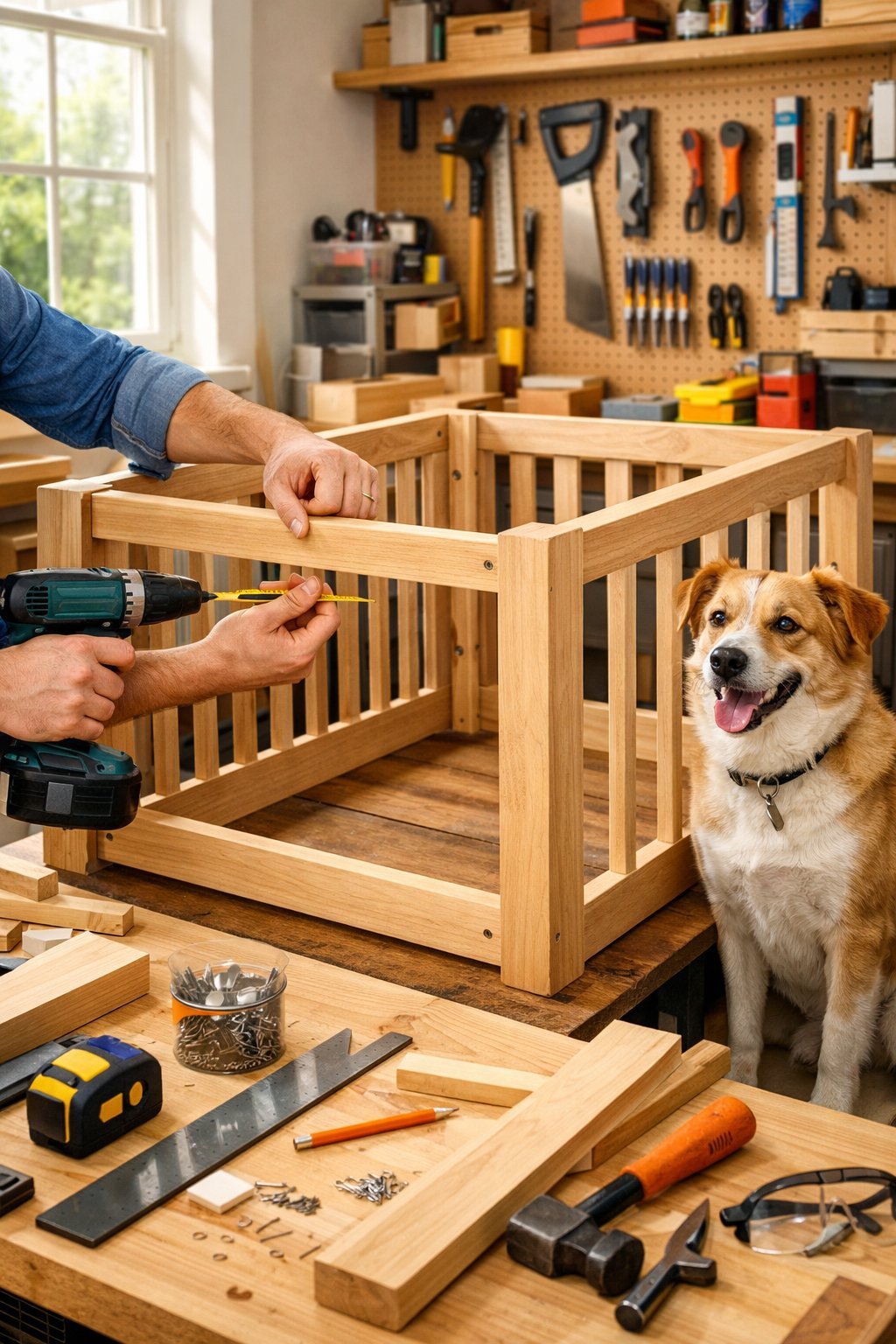
Building your own dog crate lets you create exactly what your pet needs while keeping more money in your wallet. You control every detail from size to materials, ensuring a safe and comfortable space for your furry friend.
Customization for Your Dog’s Needs
When I build my own crate, I can measure my dog and create the perfect fit. Store-bought crates come in standard sizes that might be too small or unnecessarily large for my specific pet.
I can add features that work for my dog’s personality and habits. Does my dog need extra ventilation because they get hot easily? I can add more openings.
Does my anxious pup need a cozier den-like space? I can adjust the design accordingly.
The customization options for DIY crates extend to my home’s layout too. I can build a crate that fits perfectly in that awkward corner or under my staircase.
I can choose colors and finishes that match my furniture instead of settling for plain wire or plastic options.
Cost Savings Compared to Store-Bought Crates
Building budget-friendly dog crates saves me a significant amount of money, especially for larger dogs. A store-bought large crate can cost $150 to $300 or more, while I can build one with basic materials for $50 to $100.
I can use materials I already have at home or find affordable options at hardware stores. Leftover wood from other projects, repurposed furniture, or clearance materials all work great.
This approach is particularly helpful when I need an extra-large crate, which typically costs the most at pet stores.
Quality and Material Control
I choose exactly what goes into my crate, which means I know it’s safe for my dog. I can avoid cheap materials that might splinter, break, or contain harmful chemicals.
When I select my own wood, metal, or other materials, I can pick sturdy options that will last for years. Many store-bought crates use thin wire or flimsy plastic that bends or breaks easily.
I also control the construction quality. I make sure all edges are smooth, all screws are properly secured, and there are no sharp points where my dog could get hurt.
I can reinforce weak spots and add extra support where needed based on my dog’s size and strength.
Choosing the Right Materials for Your DIY Dog Crate
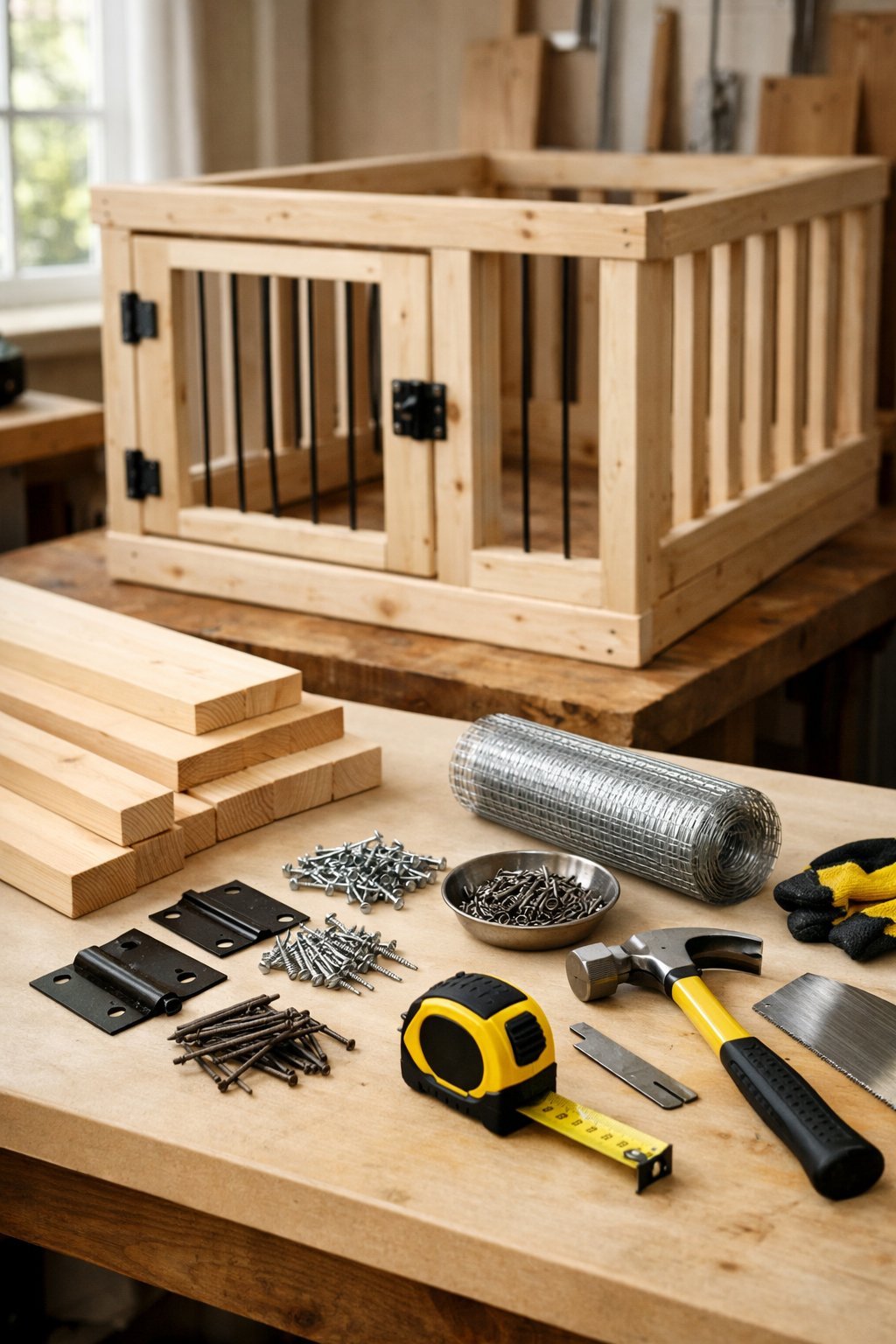
I’ve found that selecting the right materials makes all the difference between a flimsy crate and one that lasts for years. The material you pick affects your dog’s safety, your budget, and how well the crate fits into your home.
Wood, Metal, and Alternative Options
Wood is my top choice for building a custom dog crate because it’s easy to work with and looks great in any room. Pine and plywood are affordable options that cost between $10 and $20 for basic boards.
I recommend using 1×2 or 2×2 lumber for the frame because it’s strong enough to hold up but not too heavy. Metal options like hardware cloth or welded wire mesh work well for the door and side panels.
These materials let air flow through while keeping your dog secure. Chain link fencing is another metal choice, but it’s harder to cut and shape.
I’ve seen people use PVC pipes as a lightweight alternative. This material is cheap and easy to cut, making it perfect for smaller dogs or temporary crates.
You can also repurpose old furniture like end tables or cabinets to create dog crate furniture that doubles as home decor.
Safety Considerations in Material Selection
I always check that my materials have smooth edges because splinters and sharp metal can hurt your dog. Sand down all wood surfaces before assembly to remove rough spots.
Any wire mesh should have openings smaller than your dog’s paw to prevent injuries. Avoid treated lumber that contains harmful chemicals.
These toxins can make your dog sick if they chew on the wood. I stick with untreated pine or hardwoods instead.
Make sure your materials provide a sturdy structure that won’t collapse if your dog leans against it. Test the strength by pressing on the frame before adding your pet.
The door latch needs to be secure so your dog can’t escape, but easy enough for you to open quickly in an emergency.
Sourcing Eco-Friendly Supplies
I look for reclaimed wood at salvage yards or old pallets to reduce waste. These materials are often free or very cheap, which helps you save money on your budget-friendly project.
Just inspect reclaimed wood carefully for nails, rot, or chemical treatments. Bamboo is a renewable option that grows quickly and works well for crate construction.
It’s stronger than many hardwoods and naturally resistant to moisture. I buy hardware like screws and hinges from local stores instead of ordering online to cut down on shipping emissions.
You can also check if your area has a building material reuse center where people donate leftover supplies from their projects.
Design Ideas and Planning Your Dog Crate
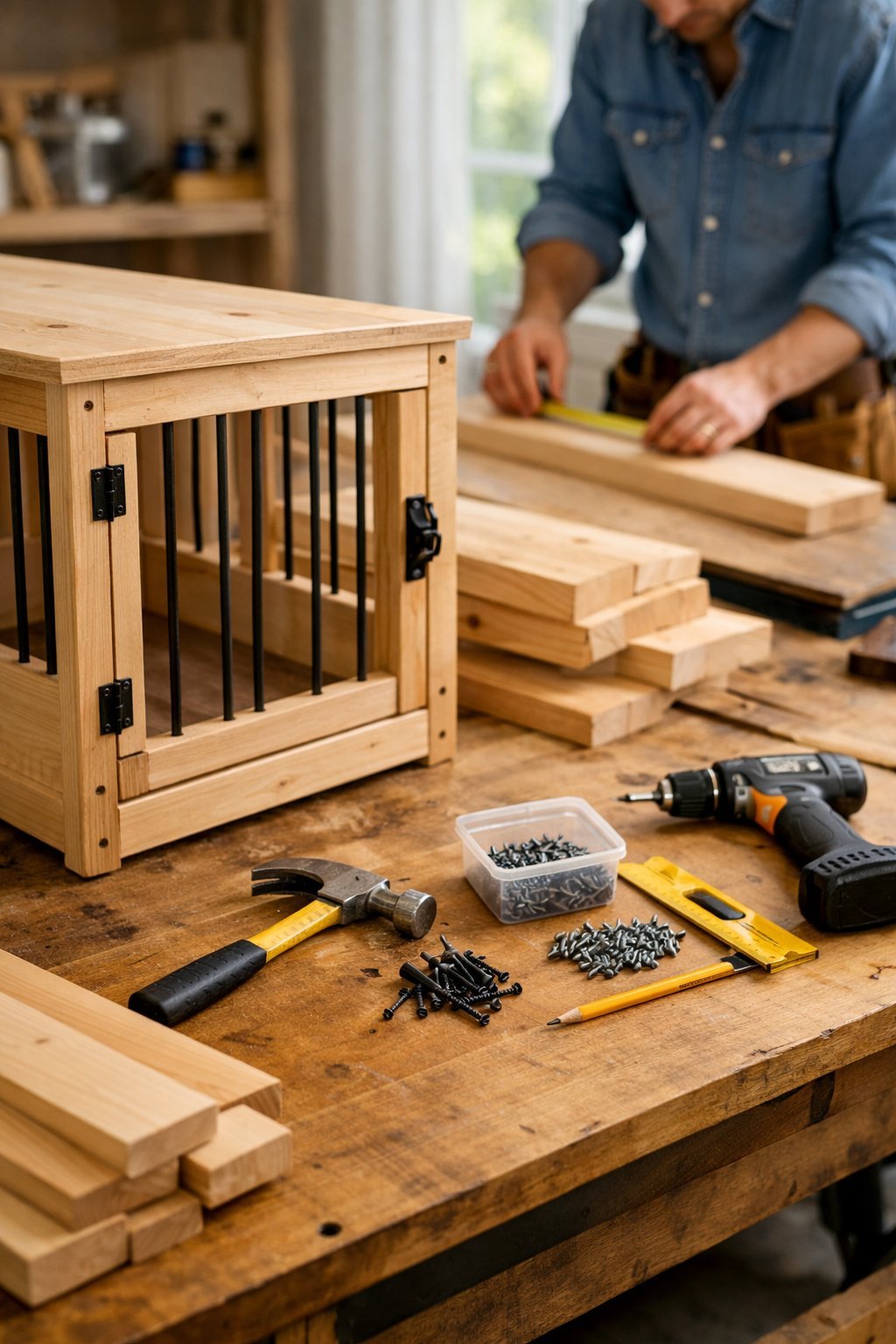
Getting the measurements right and picking a style that works with your space will make the building process much easier. I’ll walk you through finding the right size for your dog and choosing designs that blend into your home.
Measuring for the Perfect Fit
I always start by measuring my dog when they’re standing and lying down. Your dog needs enough room to stand up without hunching, turn around completely, and stretch out when resting.
Here’s what I measure:
- Length: From nose to tail base, then add 2-4 inches
- Height: From floor to top of head when standing, then add 2-4 inches
- Width: Should be wide enough for a full turn
I find that puppies need special planning. If you’re building for a growing puppy, I recommend measuring based on their expected adult size.
You can add a divider panel that moves as they grow instead of building multiple crates. For multiple dogs sharing one crate, I multiply the width requirement and make sure each dog has their own entry point.
The crate should never feel cramped or restrictive.
Popular DIY Styles and Inspirations
I’ve seen decorative and comfortable designs that go way beyond basic wire cages. The farmhouse style remains my favorite with distressed wood, X-panel sides, and a rustic finish.
Modern homes look great with contemporary geometric designs featuring clean lines and simple shapes. I often use metal frames with wood accents for this look.
The furniture-style crate serves double duty in my home. These creative builds work as end tables, console tables, or TV stands while housing your dog.
I love how they maximize space in smaller homes.
Other popular styles include:
- Rustic wooden crates with barn door fronts
- Industrial pipe frames with wood panels
- Built-in units that fit under stairs or into alcoves
- Repurposed furniture like old dressers or cabinets
Integrating the Crate into Home Decor
I always pick materials and finishes that match my existing furniture. If my living room has dark wood pieces, I stain the crate to match instead of fighting against my current style.
The crate’s location matters just as much as its design. I place mine in areas where my family spends time so my dog doesn’t feel isolated.
Corner placements work well and waste less floor space. I add a cushion or bed inside that coordinates with my throw pillows and blankets.
The top surface becomes useful space for lamps, plants, or picture frames when I build a table-style crate. Paint color makes a huge difference.
I either match my wall color so the crate blends in, or I use it as an accent piece with a bold contrasting shade. Hardware like handles and latches should match other fixtures in the room, whether that’s brushed nickel, oil-rubbed bronze, or matte black.
Step-By-Step Guide to Building a Dog Crate
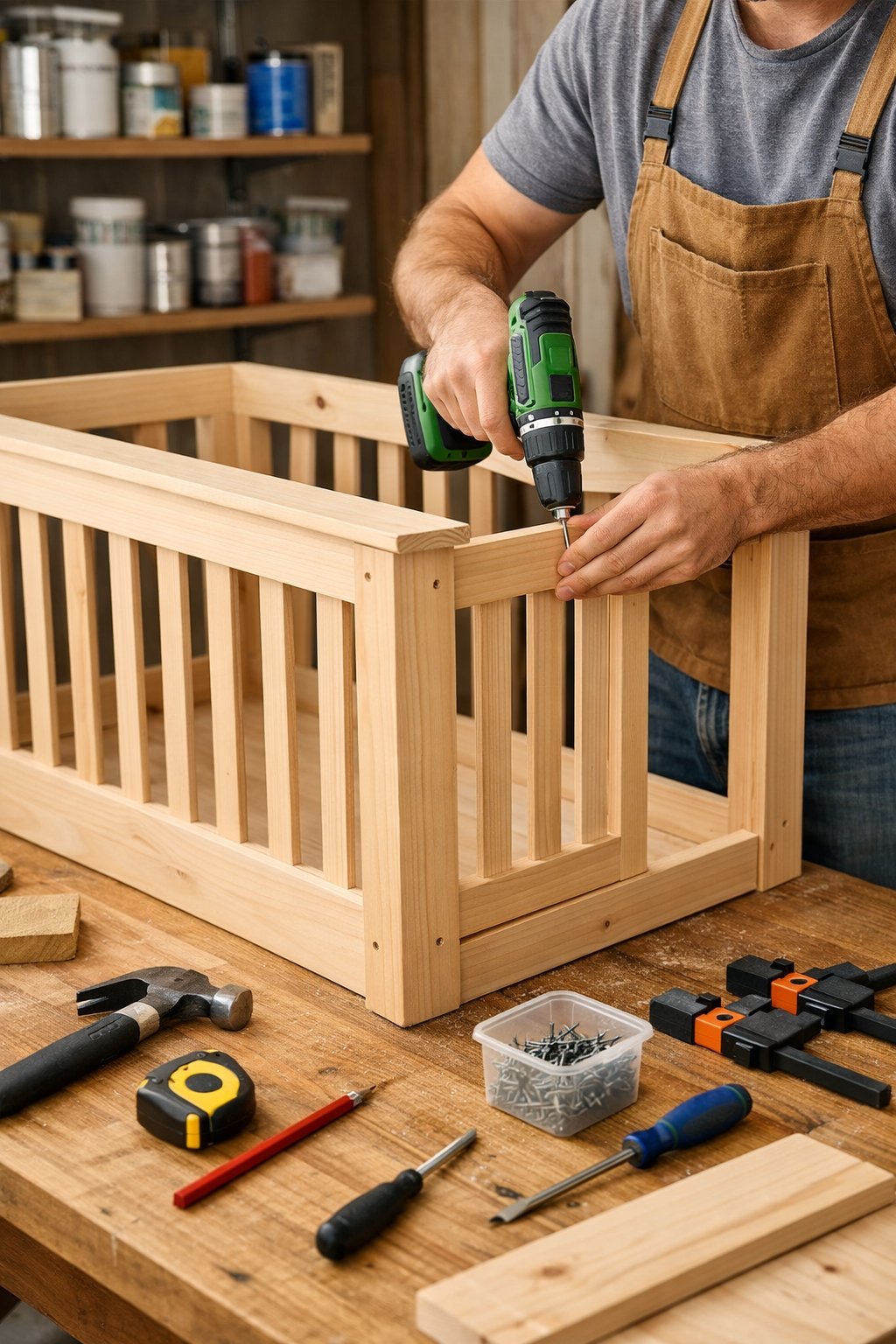
Building your own dog crate requires careful planning and the right materials to create a safe space for your pet. I’ll walk you through the tools you need, how to build the frame, and the final steps to complete your project.
Essential Tools and Preparation
Before I start building, I gather all my tools and materials in one place. I need a drill, saw, screws, sandpaper, measuring tape, and a pencil for marking cuts.
For materials, I use wooden boards for the frame, plywood for walls, hinges for the door, and a latch to keep it secure. Measuring my dog is the first real step.
I add four inches to both my dog’s length and height to find the right crate size. This extra space lets my dog stand up, turn around, and lie down comfortably.
I also need to decide what kind of wood to use. Most builders prefer pine or plywood because they’re affordable and easy to work with.
I cut the wooden boards for the frame, making sure each piece matches my measurements exactly. Taking time to prepare and measure twice saves me from mistakes later.
Constructing the Frame and Walls
I start by building the base of the crate using 2×4 boards cut to size. The corners need 45-degree angle cuts so they fit together cleanly.
I use wood screws to attach each corner securely, making sure the base is sturdy enough to support the entire structure. Next, I attach vertical posts at each corner of the base.
These posts form the frame for the walls and need to match the height I measured earlier. I secure them with screws driven at an angle through the base.
For the walls, I cut plywood panels to fit between the vertical posts. I attach three solid walls first, leaving one side open for the door.
Some people prefer using slats or bars instead of solid walls for better airflow, which is a good option depending on your needs.
Finishing Touches and Assembly
I sand all surfaces smooth to prevent splinters that could hurt my dog. I pay special attention to edges and corners where rough spots might hide.
After sanding, I can apply a pet-safe stain or paint if I want the crate to match my home decor.
For the door, I build a frame that fits the opening and attach wire mesh or bars to it. I install hinges on one side so the door swings open easily.
I add a secure latch on the opposite side to keep my dog safely inside.
I add a soft bed or blanket to the bottom of the crate to make it comfortable. Before letting my dog use it, I check all screws are tight and there are no sharp edges or loose parts.
Making Your DIY Dog Crate Comfortable
The right bedding, accessories, and airflow work together to create a cozy environment your dog will actually want to use.
Selecting the Right Bedding
I always start with bedding that matches my dog’s specific needs and sleeping habits. The material you choose makes a huge difference in how much your dog enjoys their crate.
For most dogs, I recommend orthopedic foam beds that provide joint support. These work especially well for older dogs or larger breeds that need extra cushioning.
Machine-washable covers are essential because accidents and dirt happen more often than you’d expect.
Size matters when picking bedding for your crate. I measure the crate floor and choose a bed that fits snugly without bunching up in the corners.
A bed that’s too small won’t provide enough comfort, while one that’s too large creates lumps and uneven surfaces.
Popular bedding options include:
- Memory foam pads with waterproof liners
- Fleece blankets (affordable and easy to wash)
- Elevated cot-style beds for hot climates
- Self-warming mats that reflect body heat
I avoid bedding with loose stuffing for dogs who like to chew. Shredded material can create choking hazards and costly messes.
Adding Functional Accessories
I’ve found that the right accessories turn a basic crate into a space my dog genuinely enjoys.
Water access is my top priority, especially for dogs who spend more than a few hours in their crate.
Attach-on water bowls that clip to the crate door prevent spills and keep water fresh. I position mine at a height where my dog can drink comfortably without straining their neck.
For food, I only add bowls during specific feeding times to avoid attracting pests.
Toys provide mental stimulation and help reduce anxiety. I rotate chew toys and puzzle feeders to keep things interesting.
Durable rubber toys work best because they withstand heavy chewing without breaking into dangerous pieces.
Essential accessories I use:
| Accessory | Purpose | Key Feature |
|---|---|---|
| Clip-on water bowl | Hydration | Spill-proof design |
| Crate mat | Extra comfort | Easy to clean |
| Chew toys | Entertainment | Durable material |
| Calming spray | Anxiety relief | Natural ingredients |
I also keep a blanket or towel partially draped over one section of the crate. This creates a den-like atmosphere that many dogs find soothing.
Ensuring Proper Ventilation
I make sure my DIY crate has enough airflow to keep my dog comfortable in all weather conditions. Poor ventilation leads to overheating, especially during warmer months.
When building a wooden dog crate, I leave open slats or add wire mesh panels on at least two sides. This cross-ventilation allows fresh air to circulate throughout the entire space.
Corner placement looks nice but restricts airflow. I position the crate away from walls when possible.
I check the temperature inside the crate regularly by placing my hand inside for 30 seconds. If it feels stuffy or warmer than the surrounding room, I need to improve ventilation.
Adding a small battery-operated fan nearby helps during hot days. I never point it directly at my dog.
Ventilation checklist:
- Open panels on two or more sides
- Space between crate and walls (at least 3 inches)
- Wire or mesh sections that allow airflow
- Position away from direct sunlight
- Regular temperature checks
I avoid solid wooden panels on all four sides because they trap heat and moisture. Even in winter, good airflow prevents condensation buildup that makes bedding damp and uncomfortable.
