
10 DIY Dog Enrichment Toys on a Budget to Keep Your Pup Happy and Engaged

Dogs need mental stimulation just as much as physical exercise to stay happy and healthy. When your pup gets bored, you might notice unwanted behaviors like chewing furniture or excessive barking.
You can create effective enrichment toys at home using items you already have, spending less than $5 on materials while keeping your dog’s mind active and engaged.
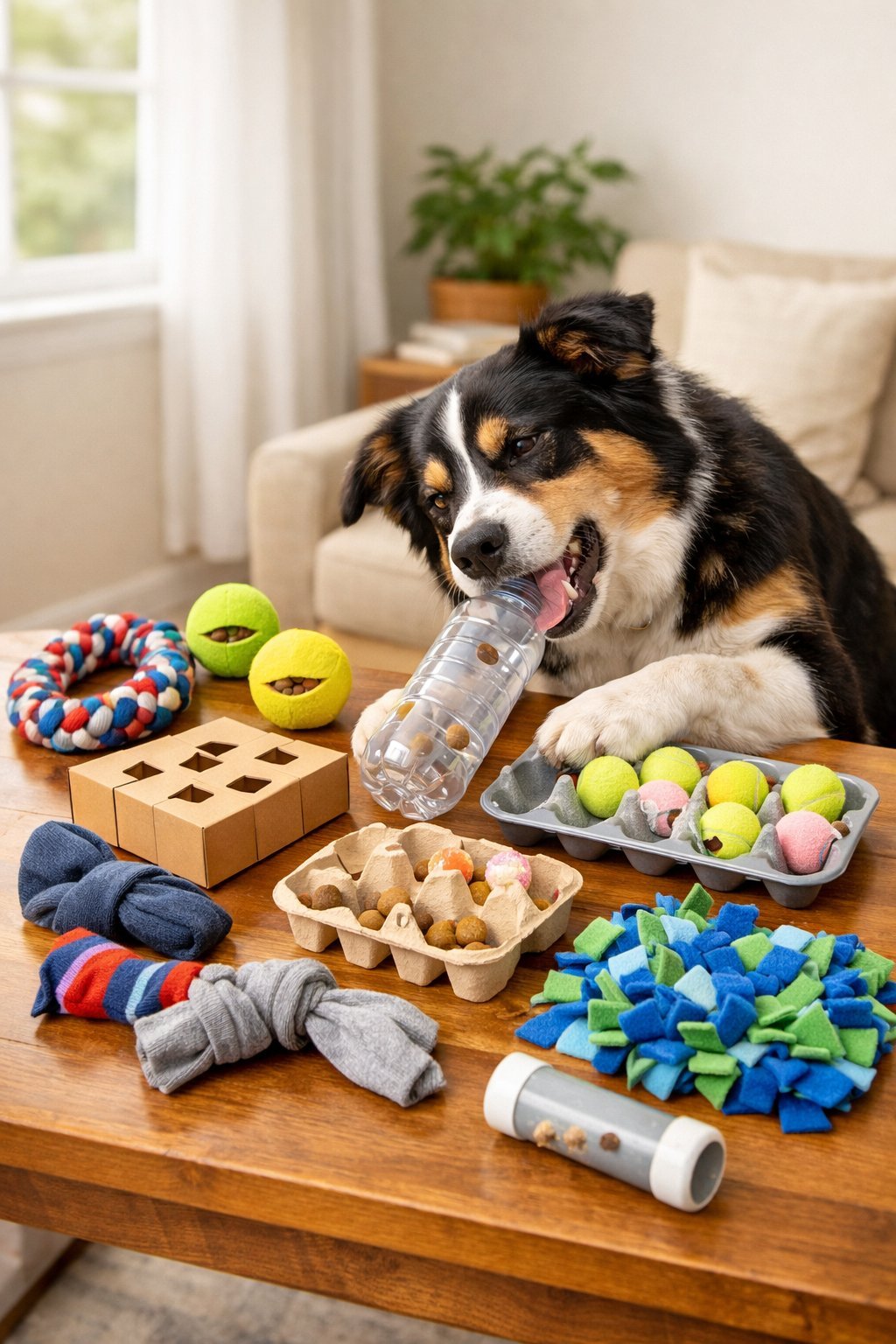
DIY dog enrichment activities tap into your dog’s natural instincts to sniff, hunt, and solve problems. Homemade toys often work just as well as expensive store-bought options.
Plus, making toys yourself lets you customize them for your dog’s size, age, and preferences. The best part about making your own enrichment toys is how simple it can be.
You don’t need special skills or fancy materials to create something your dog will love. Here are ten easy ideas that use everyday household items to keep your furry friend entertained and mentally sharp.
Key Takeaways
- Homemade enrichment toys cost under $5 and use common household items like cardboard boxes, towels, and plastic bottles
- Mental stimulation through enrichment activities helps prevent boredom and reduces unwanted behaviors in dogs
- Regular cleaning and rotation of DIY toys keeps them safe and maintains your dog’s interest over time
Benefits of DIY Dog Enrichment Toys

Dog enrichment toys help keep your pet healthy in body and mind. These toys give your dog positive ways to use their energy.
Physical and Mental Stimulation
Enrichment toys give dogs the kind of workout they need for both their bodies and brains. When my dog works on a puzzle toy or sniff game, I can see her mind working hard to solve the problem.
Physical activity helps your dog maintain a healthy weight and keeps muscles strong. Mental stimulation tires out your dog’s brain just like a long walk tires out their body.
Dogs that get regular mental exercise often sleep better and seem more relaxed. I notice my dog is calmer after just 15 minutes with an enrichment toy than after a basic walk around the block.
Reducing Boredom and Destructive Behaviors
Bored dogs often find their own entertainment, which usually means chewed furniture or torn-up shoes. I learned this the hard way when I left my dog alone without proper mental stimulation.
Enrichment toys keep dogs mentally and physically healthy by giving them appropriate outlets for natural behaviors like chewing and foraging. When I give my dog something productive to do, she doesn’t look for trouble.
Even simple activities like sniffing out treats in a towel can prevent problem behaviors. I’ve seen fewer accidents and less anxiety in my dog since I started using enrichment toys regularly.
Strengthening the Human-Dog Bond
Making enrichment toys together creates special time between you and your dog. I enjoy watching my dog figure out the toys I’ve made, and she seems proud when she solves them.
DIY enrichment activities boost your dog’s confidence and focus while you’re both having fun. When I sit with my dog during enrichment time, I learn more about how she thinks and what motivates her.
Your dog learns to trust you more when you provide interesting activities. I can see the excitement in my dog’s eyes when she knows it’s time for a new enrichment challenge.
Essential Materials for Budget-Friendly DIY Toys

Most DIY dog enrichment toys can be made with items you already have at home. The few supplies you might need to buy cost just a few dollars.
I’ll show you which everyday materials work best and what simple tools make assembly easier.
Common Household Items
Old t-shirts and fabric scraps are perfect for making braided tug toys and snuffle mats. You probably have several worn-out shirts sitting in your closet right now that your dog would love to play with.
Empty plastic bottles make excellent crinkly toys that dogs enjoy. Just remove the cap and any plastic ring to prevent choking hazards.
Cardboard boxes of any size work great for hide-and-seek games or simple puzzle feeders. Toilet paper rolls and paper towel tubes are ideal for quick treat dispensers.
Tennis balls that have lost their bounce can be cut and transformed into interactive puzzle toys. Old towels and blankets make wonderful bases for snuffle mats or can be tied into rope toys.
Muffin tins from your kitchen become instant puzzle games when paired with tennis balls. Empty egg cartons turn into treat-hiding challenges that keep dogs busy for minutes at a time.
Recommended Tools and Supplies
My go-to tools for making dog toys are basic items most people already own. Sharp scissors are essential for cutting fabric and cardboard safely.
I keep a roll of duct tape handy because it’s strong enough to reinforce toys but easy to work with. For fabric toys, I sometimes use a needle and thread to make seams more durable.
Hot glue guns work well for attaching pieces together quickly, though I always let the glue dry completely before giving toys to my dog. A ruler or measuring tape helps me create evenly sized pieces.
I also keep treats on hand while crafting to test whether they’ll fit through holes or openings I create. Basic materials like tennis balls or plastic bottles typically cost between $1 and $3 if you need to purchase them.
Safety Precautions
I always supervise my dog when introducing a new DIY toy for the first time. This lets me watch for any pieces that might break off or create choking hazards.
I check toys before each play session for signs of wear like loose threads or cracked plastic. Small pieces are my biggest concern, so I avoid using buttons, rubber bands, or anything my dog could swallow.
I never use materials treated with chemicals or those that might splinter. Fabric toys should have all loose strings trimmed short.
I throw away any toy that becomes damaged or starts falling apart. Sharp edges on plastic bottles or torn fabric can hurt my dog’s mouth.
If my dog is an aggressive chewer, I stick to more durable materials and avoid thin plastics that shred easily.
Step-by-Step Guides for 10 DIY Dog Enrichment Toys

I’ve put together simple instructions for making budget-friendly enrichment toys that keep dogs mentally stimulated. These projects use items you probably already have at home, like old tennis balls, socks, fabric scraps, and cardboard boxes.
Tennis Ball Treat Puzzle
I start by grabbing an old tennis ball and making a small cut across one side with a sharp knife. The cut should be about 1 to 1.5 inches long, creating a slot that opens when I squeeze the ball.
I make sure the cut isn’t too large or my dog will get the treats too easily. When I squeeze the sides of the ball, the slot opens up so I can drop in small treats or kibble.
My dog has to figure out how to squeeze and roll the ball to get the food out. This homemade puzzle toy works great for dogs who need mental challenges during mealtime.
I always supervise my dog with this toy since tennis ball material can tear. I throw it away when the hole gets too big or if I see any pieces coming off.
Sock and Bottle Crunch Toy
I take an empty plastic water bottle and remove the cap and plastic ring completely. These small pieces are choking hazards that I don’t want my dog to swallow.
I grab a clean old sock and slide the bottle inside. Then I tie a knot at the open end of the sock to keep everything secure.
The crunchy sound when my dog bites down on it keeps him entertained for a long time. I can also put a few treats inside the bottle before sealing it in the sock for extra interest.
This is one of my favorite DIY enrichment toys because it costs almost nothing to make. I replace it when the sock gets holes or the bottle gets too crushed.
Braided T-Shirt Tug Rope
I cut an old t-shirt into three long strips that are each about 3 inches wide. The strips should be roughly the same length, around 2 to 3 feet depending on my dog’s size.
I tie all three strips together in a knot at one end. Then I braid them tightly all the way down and tie another knot at the bottom.
For a thicker rope, I can use more strips or cut them wider. This makes a great tug toy that’s gentle on my dog’s teeth.
I wash it in the washing machine when it gets dirty. This interactive toy is perfect for playing tug-of-war or fetch games with my pup.
Cardboard Box Treasure Hunt
I gather several cardboard boxes in different sizes and some crumpled paper or newspaper. I hide treats and kibble throughout the boxes by placing them in different spots.
I can nest smaller boxes inside bigger ones or just scatter them around a room. I crumple up paper and stuff it in the boxes to make finding the treats more challenging.
My dog has to sniff out the treats, tear the cardboard, and problem-solve to get all the food. This canine enrichment activity taps into natural foraging instincts.
I clean up all the cardboard pieces afterward and only use plain boxes without staples or tape.
Creative Variations and Customizations

You can transform basic DIY enrichment toys into perfect matches for your dog by using items you already own and tweaking the challenge level. Small changes in materials and design make a big difference in keeping your pup interested.
Upcycling Everyday Objects
I love turning household items into engaging enrichment toys instead of throwing them away. Empty plastic bottles make excellent crinkle toys when you remove the cap and label.
Old t-shirts can be braided into tug ropes or used as wrapping material for treat puzzles. Cardboard boxes of any size work perfectly for hiding treats inside.
I cut holes in different spots so my dog has to figure out how to get the rewards. Toilet paper rolls become simple puzzle toys when you fold the ends and add kibble in the middle.
Worn-out socks stuffed with other fabric scraps create great soft toys for gentle chewers. Muffin tins paired with tennis balls turn into food puzzles when you hide treats under each ball.
Empty egg cartons also work well for this same concept.
Adjusting Difficulty Levels
I start with simple versions of toys and gradually make them harder as my dog learns. For a snuffle mat, I begin by placing treats on top of the fabric strips before hiding them deeper inside.
This helps build my dog’s confidence without causing frustration. Adding more layers increases the challenge in any puzzle toy.
I might wrap treats in one towel at first, then progress to multiple towels twisted together. The number of steps required to access the reward determines how hard your dog has to think.
Changing treat size and type also affects difficulty. Larger pieces are easier to find and remove from toys.
I use smellier treats like freeze-dried liver when introducing new puzzles to help my dog succeed quickly.
Personalizing for Dog Size and Breed
I choose materials based on my dog’s size to keep toys safe and functional. Small dogs need lighter bottles and narrow cardboard tubes they can actually manipulate.
Large dogs require sturdier containers like gallon milk jugs or thick shipping boxes. Breed characteristics guide my toy designs too.
My scent-driven hound loves DIY sniffing activities with lots of hiding spots. Terriers enjoy toys they can shake and “kill” like stuffed socks tied with knots.
Chewing strength matters when selecting materials. Heavy chewers need supervision with cardboard and fabric toys that might break apart.
I stick to frozen treats in thick rubber containers for these dogs instead.
Maintenance and Cleaning Tips for DIY Toys

Keeping homemade dog toys clean and safe requires regular attention to prevent bacteria buildup and potential hazards. A simple cleaning routine and quick safety checks can extend the life of DIY toys while protecting my dog’s health.
Safe Cleaning Methods
I always wash fabric-based toys like braided t-shirts or sock puzzles in hot water with unscented detergent. These items can go in the washing machine on a gentle cycle, then air dry completely before giving them back to my dog.
For plastic containers and bottles used in DIY enrichment toys, I use warm soapy water and a bottle brush to scrub away any food residue or slobber. I rinse these items thoroughly to remove all soap traces.
Cardboard toys like treat-filled boxes need different care since they can’t get wet. I shake out crumbs and wipe them down with a slightly damp cloth if needed.
Once cardboard gets too soggy or dirty, I just recycle it and make a fresh toy. I avoid harsh chemicals, bleach, or scented cleaners that could irritate my dog’s nose or skin.
Plain dish soap works perfectly for most cleaning jobs.
Inspecting Toys for Wear
I check each toy before every play session for signs of damage. I look for loose threads on fabric toys, cracks in plastic bottles, or sharp edges that might have developed.
Rope toys need special attention since frayed ends can become choking hazards if my dog swallows long strands. I trim any loose fibers with scissors and retire toys that have too much fraying.
I squeeze and bend plastic components to test their strength. If something feels brittle or starts to crack, I throw it away immediately.
Food puzzle toys made from muffin tins or ice cube trays should stay smooth without any chips or rough spots.
Replacing Damaged Parts
When I notice wear on a toy, I decide whether to fix it or toss it based on safety.
Small issues like a loose knot in a rope toy can be retied tighter.
Worn fabric can sometimes be patched with a simple stitch.
I replace water bottles in crinkle toys when they get dented or punctured.
Tennis balls inside sock toys should be swapped out when the felt wears down too much.
For homemade enrichment toys with multiple parts, I keep spare materials on hand so repairs are quick.
If a toy can’t be safely repaired, I recycle or dispose of it properly.
The low cost of DIY toys makes it easy to replace them often and keep my dog safe.

