DIY Dog Grooming Table: Simple Plans to Build Your Own at Home

Grooming your dog at home can save you a lot of money over time. Professional grooming appointments add up fast, especially if you have a large breed or a dog that needs frequent care.
Building your own dog grooming table gives you a stable workspace that makes grooming easier on your back and safer for your pet. You can customize it to fit your exact needs.

I’ve found that making a DIY dog grooming station doesn’t require expert carpentry skills. Most projects use basic materials you can find at any hardware store.
Some designs work great for big dogs like Newfoundlands and cost less than $80 to build. Whether you’re grooming a small poodle or a large retriever, having the right setup makes bath time and brushing much less stressful.
A grooming table can make life much easier for both you and your dog. I’ll walk you through everything you need to know to build your own table that fits your space and budget.
Key Takeaways
- Building your own grooming table saves money compared to buying one and lets you customize the size for your dog.
- You only need basic tools and materials from a hardware store to create a sturdy and safe grooming station.
- Adding features like a non-slip surface and proper restraints keeps your pet secure during grooming sessions.
Benefits of a DIY Dog Grooming Table

Building my own dog grooming table saves money and lets me create exactly what my dog needs. I get to groom at home whenever it’s convenient instead of scheduling appointments.
Cost Savings
Commercial grooming tables can cost hundreds of dollars depending on size and features. DIY tables can save up to 75% compared to buying ready-made options.
Professional grooming appointments add up quickly over time. Taking my dog to a groomer every 6-8 weeks costs between $50 to $100 per visit.
That means I spend $300 to $600 or more each year just on grooming services. When I build my own table, I only pay for basic materials like wood, screws, and non-slip surfaces.
Most DIY projects use simple supplies from hardware stores. The initial investment pays for itself after just a few grooming sessions at home.
Customization for Your Dog
I can tailor the table to my specific needs when I build it myself. The table size depends on my dog’s breed and weight.
Small dogs need tables around 30 inches long, while larger breeds require 48 inches or longer. I adjust the height so I don’t have to bend over and hurt my back during grooming.
The surface can be as simple or fancy as I want. I add features that work for my situation.
Some options include:
- Grooming arm with leash loop to keep my dog secure
- Non-slip rubber matting for better grip
- Storage shelves underneath for brushes and supplies
- Folding legs if I need to store the table between uses
Convenience at Home
Having a grooming table at home means I groom my dog on my schedule. I don’t need to book appointments weeks in advance or drive across town.
Grooming at home becomes easier and more comfortable for both me and my dog. My dog stays calmer in familiar surroundings instead of getting stressed at a grooming salon.
I take breaks whenever needed without rushing. I can do quick touch-ups between full grooming sessions.
Trimming nails, brushing out mats, or cleaning ears takes just minutes when my table is already set up. The table stays in one spot so all my grooming tools are organized and ready to use.
Choosing the Right Materials
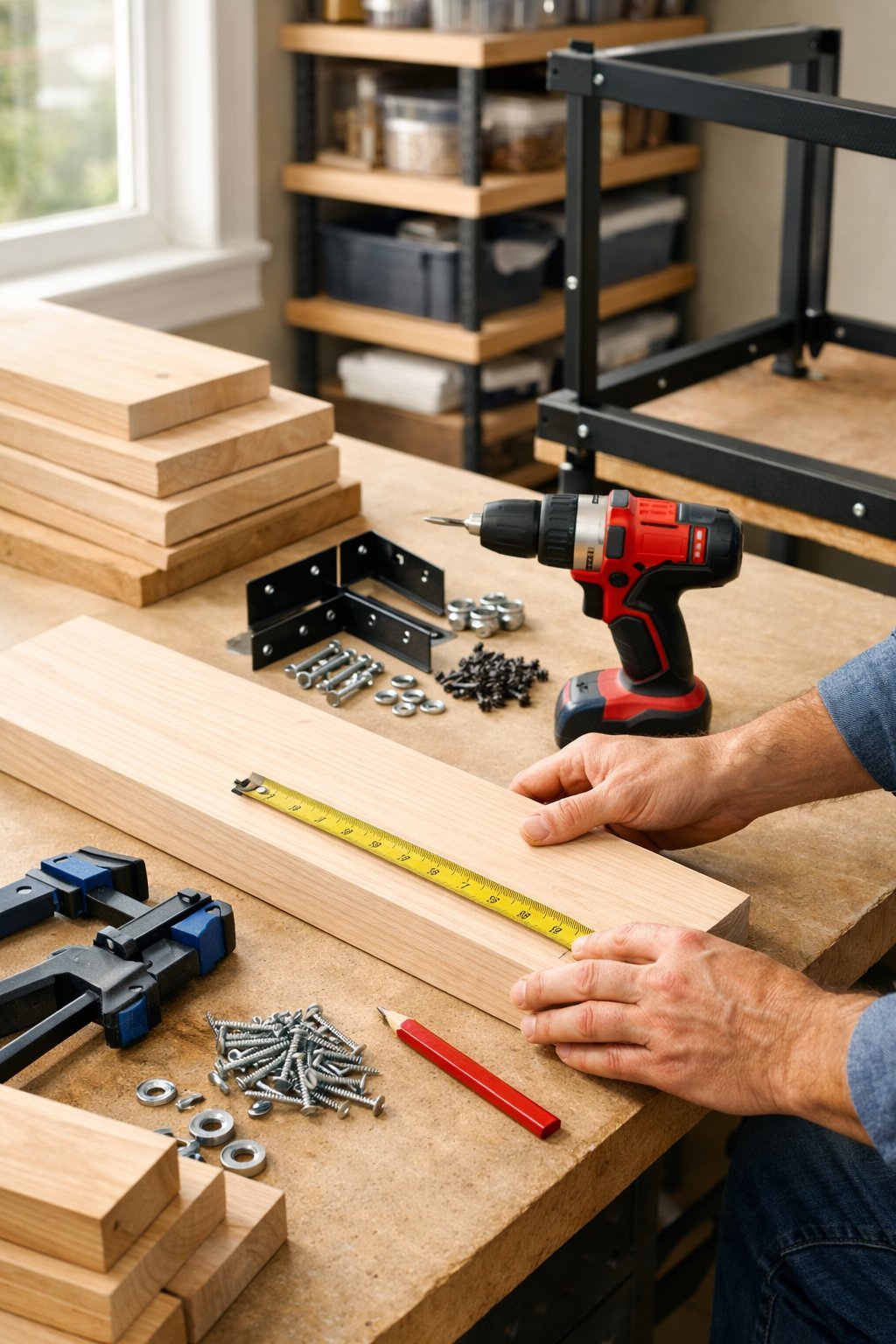
I’ve learned that picking strong materials that can handle weight and moisture while staying stable makes all the difference in building a functional grooming table.
Selecting Durable Surfaces
I always recommend using plywood or MDF board that’s at least 3/4 inch thick for the tabletop. These materials support dogs up to 100 pounds without bending or cracking over time.
Plywood works better if you plan to groom dogs outdoors or in damp areas. It resists water damage more than MDF.
I seal all wood surfaces with waterproof polyurethane to protect against slobber, bath water, and cleaning products. The surface should measure at least 24 by 36 inches for small dogs and 36 by 48 inches for larger breeds.
I make sure there are no rough edges or splinters that could scratch my dog’s paws.
Safe Support Structures
I build my table legs from 2×4 lumber or metal pipes because they provide solid support without wobbling. The legs need to hold steady when my dog shifts weight or moves around during grooming.
I set my table height between 30 and 36 inches. This keeps me from bending over too much and hurting my back.
Metal folding table legs work great if I want to create a portable grooming station that stores easily. I add cross braces between the legs to prevent sideways movement.
Corner brackets strengthen where the legs attach to the tabletop. These simple additions make the table much safer for both me and my dog.
Non-Slip Covers
I cover my grooming table with a rubber mat or textured vinyl that grips my dog’s paws. This prevents scary slips that make grooming stressful for nervous dogs.
Rubber mats with raised dots or grooves work best in my experience. I can remove them for cleaning after each grooming session.
They typically cost between $5 and $10 for basic options. I avoid smooth surfaces like bare wood or plastic.
My dog needs to feel secure standing still while I brush, trim, or bathe them. The mat should cover the entire tabletop with no gaps around the edges.
Step-by-Step Guide to Building a Grooming Table
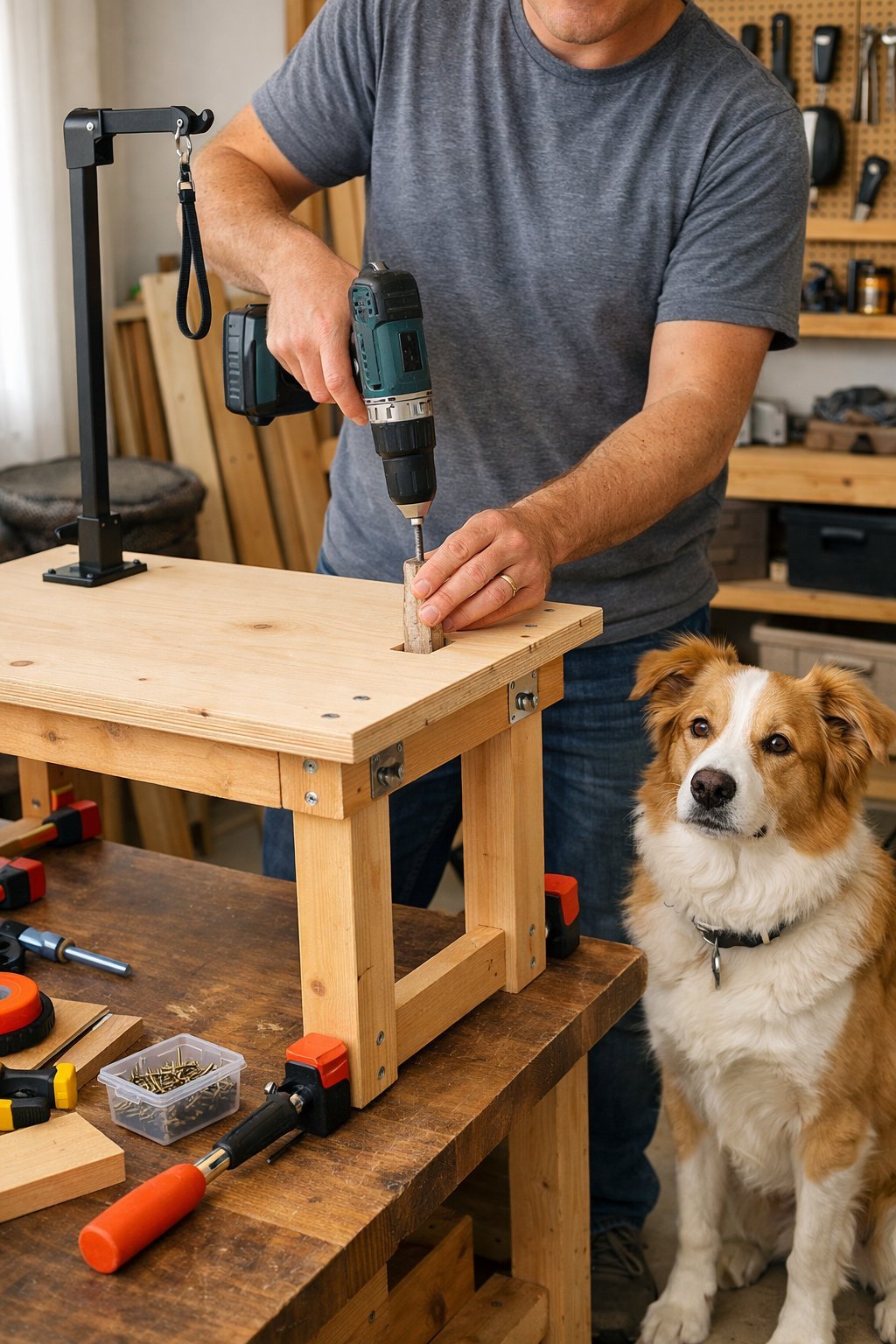
Building your own grooming table requires careful measurements, sturdy construction, and attention to detail. I’ll walk you through each phase of the building process to help you create a stable, functional table for your dog.
Measuring for the Perfect Size
I always start by measuring my dog from paw to shoulder while they’re standing. This height tells me how tall to make the table so I’m not bending over awkwardly during grooming sessions.
For the table surface, I measure my dog’s length from nose to tail and add 6-8 inches. I also consider their width and add extra space so they can turn around comfortably.
A small dog typically needs a 24×18 inch surface, while larger breeds work better with 36×24 inches or bigger. I make sure to measure the space where I’ll use the table too.
The area needs room for me to walk around all sides of the table. I account for at least 2-3 feet of clearance on each side.
The ideal working height sits at my waist level when I’m standing straight. This prevents back strain during longer grooming sessions.
I subtract the thickness of my tabletop material (usually 3/4 inch) from my waist height to get the correct leg length.
Cutting and Assembling the Base
I use 2×4 lumber for the legs and frame because it’s strong enough to support my dog’s weight plus movement. I cut four legs to my measured height using a circular saw or miter saw.
For the frame, I cut four pieces: two pieces matching the table length and two matching the width. I connect these pieces using 3-inch wood screws, drilling pilot holes first to prevent splitting.
The frame forms a rectangle that will support the tabletop. I attach the legs to each corner of the frame using corner braces or by cutting notches.
Metal corner brackets add extra stability. I apply wood glue to all joints before screwing them together for added strength.
Before moving forward, I place the base on a flat surface and check that all four legs touch the ground evenly. If one leg is shorter, I trim the others or add a rubber pad to level it out.
Securing the Tabletop
I choose 3/4-inch plywood or MDF board for the tabletop because it’s smooth and won’t splinter. I cut it to my exact measurements using a circular saw with a straight edge guide.
I sand all edges and the top surface with 120-grit sandpaper to remove rough spots. This protects both my hands and my dog’s paws from splinters.
I center the tabletop on the base frame and attach it using 1.5-inch wood screws every 6-8 inches around the perimeter. I drill from underneath through the frame into the tabletop so no screw heads stick up on the working surface.
I seal the wood with a waterproof finish like polyurethane or marine varnish. This protects against water damage from baths and makes cleanup easier.
I apply 2-3 thin coats, letting each one dry completely between applications. Once dry, I add a non-slip rubber mat on top to keep my dog from sliding around during grooming.
Essential Features to Include
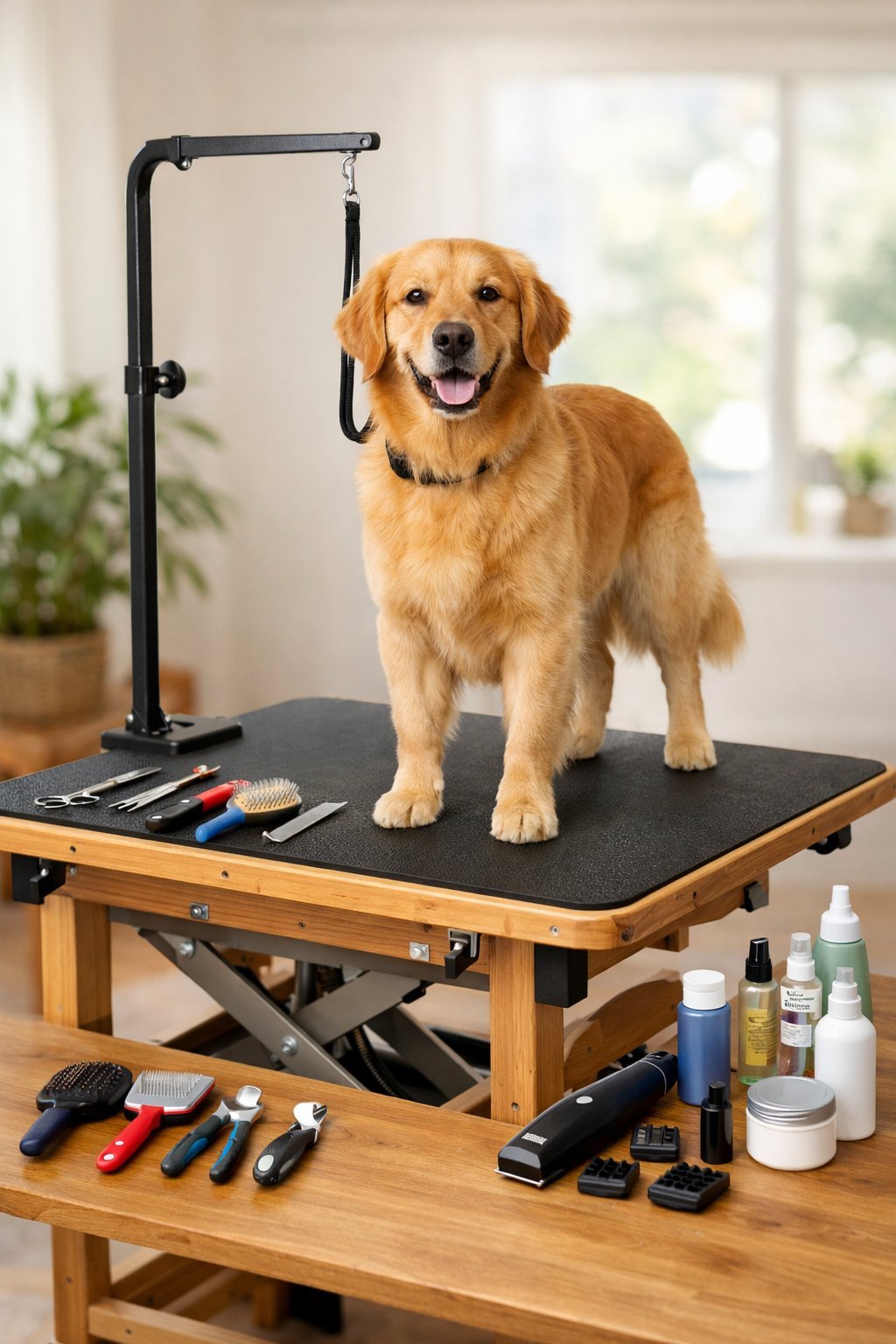
When I build a dog grooming table, I focus on three main features that make grooming easier and safer. The right height keeps my back from hurting, a secure arm holds my dog in place, and smart storage keeps all my tools within reach.
Height Adjustability
I’ve learned that getting the table height right makes a huge difference in how my back feels after grooming. A quality grooming table provides proper height to prevent injuries during use.
For my DIY table, I aim for a surface that sits between 30 to 36 inches high. This range works well for most people and dogs.
If I’m tall, I go closer to 36 inches. If I’m shorter, I stick to 30 inches.
I can build adjustability into my table using a few methods. One option is to add threaded leg levelers at the bottom of each table leg.
Another approach is to create legs with multiple height settings using pin-and-hole adjustments. The simplest method is to build the table at my ideal height from the start.
Grooming Arm Attachment
A grooming arm is the vertical post that holds my dog steady while I work. I attach it to the table with a clamp or permanent mount.
The arm needs to extend high enough to support my dog’s head comfortably without forcing them to stretch or slouch. Most grooming arms include a loop or noose that goes around my dog’s neck gently.
This keeps my dog from jumping off the table or moving too much during grooming. I never leave my dog unattended when they’re attached to the arm.
When building my own grooming table, I make sure the arm attachment point is solid and can handle my dog’s weight if they lean or pull.
I can buy a grooming arm separately and add a mounting bracket to my table, or I can build one from sturdy metal pipe. The arm should swing or adjust so I can position it where I need it.
Storage Solutions
I add storage to my grooming table to keep brushes, clippers, scissors, and other tools close by. This saves me from running back and forth to grab supplies.
Simple storage options include:
- Hanging baskets on the side of the table
- Shelves underneath the tabletop
- Magnetic strips for metal tools like scissors and clippers
- Hooks for leashes and towels
- Small drawers built into the table frame
I find that having a designated spot for each tool makes grooming sessions go faster. My clippers stay plugged in and ready on a shelf.
My brushes hang within easy reach. I keep treats in a small container attached to the table leg so I can reward my dog throughout the process.
When designing my grooming station, I think about which tools I use most often and place those in the easiest spots to access.
I also make sure storage doesn’t get in the way of my legs or my dog’s movement.
Safety Tips and Maintenance

A grooming table needs regular care to keep your dog safe during grooming. I focus on three main areas: making sure the table stays sturdy, keeping surfaces clean to prevent infections, and checking for damage before it becomes a problem.
Ensuring Table Stability
I always test my table’s stability before placing my dog on it. I push down on each corner and the center to make sure nothing wobbles.
The legs need to be level on the floor. If I notice any rocking, I adjust the leg heights or add rubber pads under the short legs.
Selecting the right materials helps ensure durability and safety from the start. I check that all screws and bolts are tight every few weeks.
Loose hardware can make the whole table unstable. The weight capacity matters too—I never exceed what my table was built to hold.
My table sits on a non-slip mat to keep it from sliding across the floor. I also make sure the grooming arm is securely attached and positioned correctly.
If my dog weighs more than 50 pounds, I double-check the arm’s mounting points before each use.
Cleaning and Disinfecting
I wipe down my grooming table after every session to remove hair, dirt, and oils. Pet-safe disinfectant works best for killing bacteria and preventing skin issues.
The table surface gets the most attention since my dog’s paws and body touch it directly. I use a damp cloth first to pick up loose hair, then spray disinfectant and let it sit for the recommended time.
I never use harsh chemicals that could irritate my dog’s skin or paws. I clean the grooming arm and any restraints with the same care.
These areas collect oils from my dog’s coat and need regular attention. The table legs and underneath surface need monthly cleaning to prevent dust buildup.
Inspecting for Wear
I look over my table carefully once a week for any signs of damage. Cracks in the wood or surface material can pinch my dog’s paws or create splinters.
The non-slip surface can wear down over time. When I notice smooth spots forming, I replace the mat or resurface the table.
I check all joints and connection points for stress marks or splitting. Metal parts can rust, especially if I wash my dog on the table.
Any rust spots get sanded and sealed right away. The grooming arm needs special attention too.
I test its clamp strength and look for bending or loosening where it attaches.