
DIY Dog Kennel Outdoor: Build a Cozy Backyard Haven for Your Furry Friend

Diy Dog Kennel – Building an outdoor kennel for your dog doesn’t have to be expensive or complicated. You can create a safe and comfortable outdoor space for your furry friend for under $200 using basic materials like chain link fencing, wood, and ready-made supplies.
Taking the DIY approach gives you total control over the size, design, and features of your dog’s outdoor space.

Many dog owners think they need to hire professionals or buy costly pre-made kennels. The truth is, building your own dog kennel lets you customize it to fit your exact needs and budget.
You can choose from simple chain link designs to more creative options that add style to your backyard. From planning and design to construction and finishing touches, you’ll learn how to build a secure kennel that keeps your dog happy and safe.
Key Takeaways
- You can build a functional outdoor dog kennel for less than $200 using affordable materials like chain link fencing and wood.
- Proper planning includes choosing the right size, location, and design features that match your dog’s needs and your yard space.
- Regular maintenance and safety features like shade, proper flooring, and secure fencing keep your dog comfortable and protected.
Planning Your DIY Dog Kennel Outdoor Project

The right location, proper sizing, and safe materials form the foundation of a successful outdoor kennel build. Getting these elements right from the start saves time and money while keeping your dog comfortable.
Choosing the Right Location
I always start by walking around my yard to find the best spot. The kennel needs level ground to prevent water pooling and make construction easier.
Look for an area with natural shade from trees or your house. This protects your dog from hot afternoon sun.
Avoid low spots where rainwater collects after storms. I position kennels where I can see them from inside my house so I can check on my dog throughout the day.
The spot should have good drainage and stay dry even after heavy rain. Keep the kennel away from property lines to maintain good relationships with neighbors.
Consider wind direction too. Placing the kennel behind a fence or building blocks cold winter winds.
Kennel Size and Space Requirements
Size matters more than most people think. I follow the rule that my dog needs enough room to stand, turn around, and lie down comfortably.
For small dogs under 25 pounds, I build kennels at least 6 feet by 8 feet. Medium dogs need 8 feet by 10 feet minimum.
Large breeds require 10 feet by 12 feet or bigger.
Minimum Kennel Sizes:
- Small dogs (under 25 lbs): 6′ x 8′
- Medium dogs (25-50 lbs): 8′ x 10′
- Large dogs (over 50 lbs): 10′ x 12′
Height matters too. I make sure the kennel is tall enough that my dog can’t jump out.
Most outdoor dog kennel designs use 6-foot-tall fencing for safety. Multiple dogs need even more space, so I add 50% more square footage for each additional dog sharing the kennel.
Selecting Safe Materials
Chain link fencing is my go-to material because it’s affordable and durable. It costs less than wood and lasts for years without rotting.
Safe Material Options:
- Chain link fence (budget-friendly)
- Welded wire panels
- Pressure-treated lumber (for frames)
- Concrete or gravel (for flooring)
I avoid treated wood with harmful chemicals near areas where dogs might chew. Never use chicken wire because dogs can break through it easily.
Choosing cheaper materials like chain link keeps costs down without sacrificing safety. For the floor, I use gravel or concrete.
Gravel drains well and stays cleaner than dirt. Concrete is easy to hose down but costs more upfront.
Check that all materials have smooth edges. Sharp metal or wood splinters can hurt your dog’s paws.
I file down any rough spots before my dog uses the kennel.
Designing Your Outdoor Dog Kennel

I focus on three main elements when planning a kennel: the layout that fits my space and dog’s needs, a roof that protects from weather, and proper airflow to keep my pet comfortable year-round.
Kennel Layout Options
I start by measuring my available space and considering my dog’s size and activity level. A basic rectangular layout works well for most yards, with at least 100 square feet for medium to large dogs.
Building an outdoor dog kennel becomes easier when I divide the space into zones. I create a covered rest area on one end and leave an open exercise zone on the other.
This gives my dog options throughout the day. For multiple dogs, I add dividers to create separate areas.
Chain link fencing panels make excellent interior dividers because they allow visibility while maintaining boundaries. I make sure each dog has enough room to turn around, stretch, and play comfortably.
I position the kennel entrance where I can easily access it from my house. A double-gate system prevents escapes when I enter to feed or clean.
Roofing and Shelter Solutions
I always include a roof over at least half of my kennel area. Full coverage protects my dog from rain, snow, and hot sun, but partial roofing works if I’m on a tight budget.
Metal roofing panels are my go-to choice because they’re affordable and last for years. I angle the roof at least 15 degrees so water runs off easily.
Corrugated plastic panels cost less and let some light through, which brightens the space. For the shelter portion, I build or buy a doghouse that fits under the covered area.
I make sure it’s raised a few inches off the ground to prevent moisture buildup. The house should be just big enough for my dog to stand, turn around, and lie down comfortably.
Ventilation and Shade Considerations
I prioritize proper ventilation to prevent heat buildup and maintain fresh air. Chain link fencing on all sides naturally provides excellent airflow compared to solid walls.
I position the kennel where it gets morning sun but afternoon shade. If natural shade isn’t available, I add shade cloth along the west-facing side.
This fabric blocks up to 70% of sunlight while allowing air to flow through. For hot climates, I install a small battery-powered fan in the covered section.
I also make sure water bowls stay in shaded areas so the water stays cool throughout the day. In winter, I add wind blocks on the north and west sides using plywood or tarps without completely closing off airflow.
Building the Kennel Structure

A solid kennel structure starts with proper groundwork and moves through wall assembly to finished flooring. Each step builds on the last to create a safe space your dog will enjoy.
Preparing the Foundation
I always start by clearing and leveling the ground where the kennel will sit. Remove grass, rocks, and debris from the area to create a flat surface.
For better drainage, I dig down about 4 inches and fill the space with gravel. This keeps water from pooling under the kennel.
Tamp down the gravel with a hand tamper or the back of a shovel. Some people pour a concrete slab for extra stability.
If you choose concrete, make sure it slopes slightly (about 1/4 inch per foot) toward a drain or the kennel edge. This helps water run off when you clean.
Mark the corners of your kennel with stakes and string. Double-check that the measurements match your plan and that corners form 90-degree angles.
Assembling Walls and Gates
Chain link fencing is one of the most popular options for outdoor kennels because it’s affordable and durable. I set corner posts first, sinking them at least 2 feet deep in concrete for stability.
Install line posts between corners, spacing them 8 to 10 feet apart. Let the concrete cure for 24 to 48 hours before attaching fencing.
Stretch the chain link fabric tight between posts and secure it with tension bands and wire ties. Work from one end to the other to avoid sagging.
For the gate, I use a pre-made chain link gate that matches my fence height. Mount it with heavy-duty hinges and add a secure latch that your dog can’t open.
The gate should swing freely without dragging on the ground.
Installing Secure Flooring
The right flooring keeps your dog comfortable and makes cleaning easier. I’ve found that concrete works best for large dogs or muddy climates because you can hose it down quickly.
For a softer option, place rubber mats or kennel decking over concrete or gravel. These materials drain well and give your dog’s joints some cushioning.
Gravel alone works as a budget-friendly floor. Use pea gravel instead of sharp stones.
Add a layer at least 3 inches deep. Avoid bare dirt because it turns muddy when wet and makes it hard to keep the kennel clean.
Whatever flooring I choose, I make sure it drains properly so water doesn’t stand after rain.
Enhancing Comfort and Safety
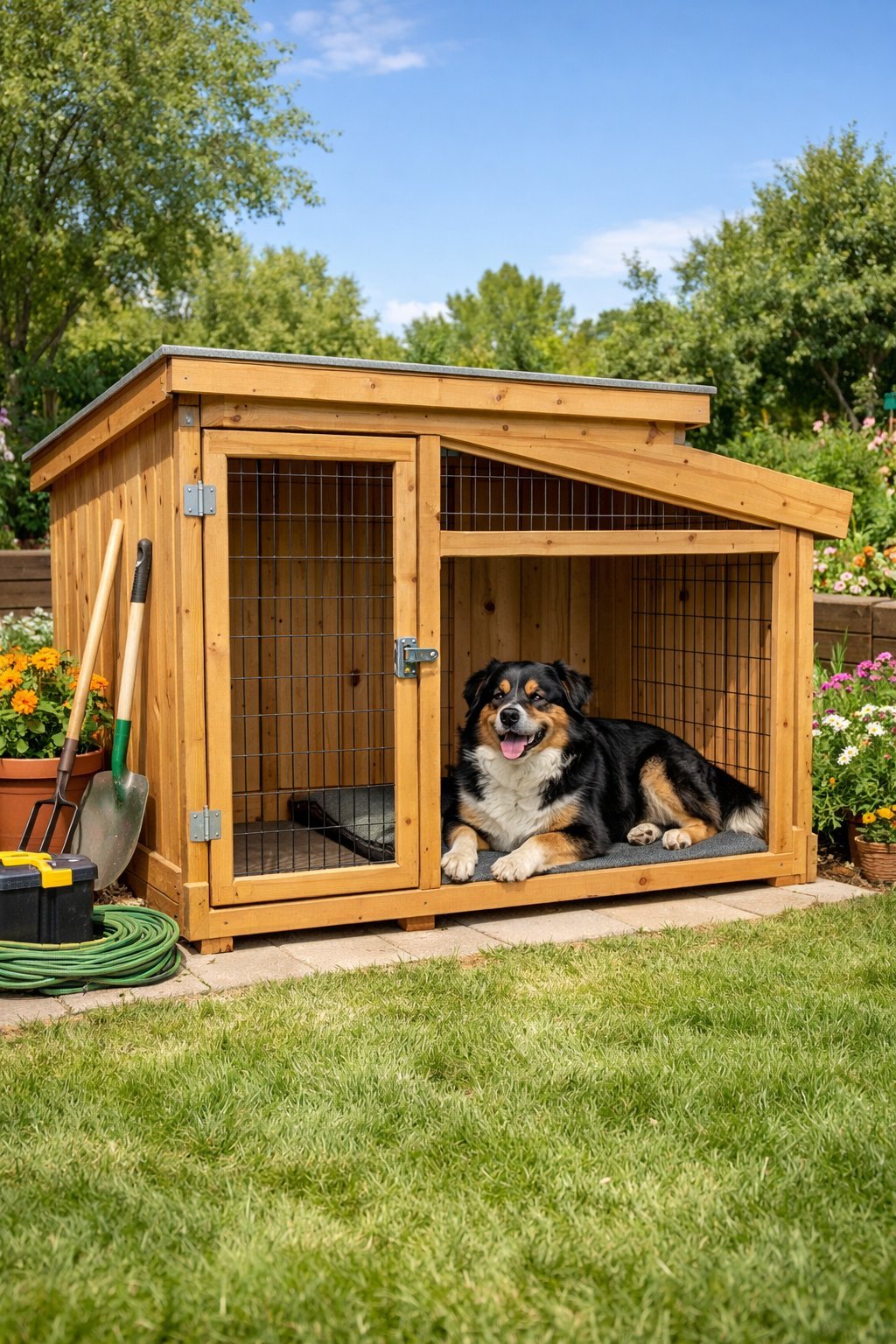
I always focus on protecting my dog from weather extremes and potential hazards when building an outdoor kennel. Proper drainage prevents water buildup that can make my dog sick, while weatherproofing keeps the space comfortable year-round.
Adding Weatherproof Features
I make sure to install a solid roof that extends past the kennel walls by at least 6 inches. This overhang keeps rain and snow from blowing into my dog’s space.
For the roof material, I use metal roofing or heavy-duty shingles. These materials last longer than tarps and don’t need constant replacement.
I also add insulation panels to the walls if I live in an area with cold winters.
Key weatherproof additions I recommend:
- Windbreaks on three sides using solid panels
- Elevated flooring raised 2-4 inches off the ground
- Weather-resistant bedding that dries quickly
- Shade cloth for summer heat protection
I seal any gaps between panels with weatherproof caulk. This stops cold drafts from getting through.
I always test the space during different weather conditions before letting my dog stay there overnight.
Ensuring Proper Drainage
I slope the kennel floor slightly toward one corner or side. A slope of just 1-2 inches across the floor is enough to move water away from where my dog rests.
I dig a shallow trench around the outside perimeter of my kennel. This trench should be 4-6 inches deep and filled with gravel.
It catches runoff water and prevents mud from forming around the entrance. For the flooring inside, I use materials that won’t hold moisture.
My top choices are:
- Pea gravel over landscaping fabric
- Concrete with a textured finish
- Rubber mats with drainage holes
- Pressure-treated wood slats with gaps
I avoid dirt floors because they turn into mud puddles. When considering important features for your pet’s health, drainage ranks at the top of my list.
Dog-Proofing the Kennel
I check every corner and edge for sharp points that could injure my dog. I sand down rough wood and cover any exposed screws with caps or extra boards.
The fence or wall height needs to be taller than my dog can jump. I measure my dog’s jump height and add at least 2 feet.
For diggers, I bury the fence panels 12-18 inches deep. Sometimes I lay wire mesh under the gravel for extra security.
Safety checklist I use:
| Hazard | My Solution |
|---|---|
| Chewing wire | Use coated or thick-gauge fencing |
| Escaping | Secure all latches with carabiners |
| Swallowing small objects | Remove rocks smaller than golf balls |
| Getting stuck | Keep gaps under 3 inches wide |
I remove any toxic plants within my dog’s reach. I also make sure there are no gaps where my dog’s collar could get caught.
Finishing Touches and Maintenance Tips

Once the basic structure is complete, I focus on making the kennel comfortable and attractive. I also set up a routine to keep it in good shape.
Proper weatherproofing helps the kennel last longer. Regular cleaning keeps my dog healthy.
Decorating and Personalizing
I start by applying a weatherproof sealant to all wood surfaces to protect against rain and moisture. This step is important before adding any paint or stain.
After sealing, I choose an outdoor paint or stain that matches my yard’s look. I make sure to use pet-safe products since my dog will spend time inside.
Some finishing touches include insulation and ventilation for year-round comfort. I add my dog’s name to the front using stencils or vinyl letters.
Inside, I place a raised bed or platform to keep my dog off cold or damp ground. Rubber mats provide extra cushioning and are easy to clean.
Personal touches I include:
- Weather-resistant outdoor curtains for shade
- Hooks for leashes and toys
- A water bowl holder to prevent spills
- Solar lights for nighttime visibility
I avoid decorations with small parts that my dog could chew off and swallow.
Ongoing Cleaning and Upkeep
I sweep or hose down the kennel floor weekly to get rid of dirt, hair, and debris. For a deeper clean, I mix a pet-safe disinfectant with water and scrub all the surfaces once a month.
Every few weeks, I check the kennel for loose screws, splintered wood, or any rust on metal parts. Tightening hardware and sanding down rough spots helps prevent injuries.
I reapply weatherproof sealant once a year, usually in spring before the rainy season starts.
My regular maintenance checklist:
- Wash bedding and mats every 1-2 weeks
- Inspect fencing for gaps or damage
- Clear leaves and standing water after storms
- Replace worn latches or hinges right away
I keep the area around the kennel trimmed and make sure there aren’t any toxic plants nearby. Regular upkeep keeps the kennel safe and comfortable for years.

