
DIY Dog Ramp for Bed: A Simple Guide to Help Your Furry Friend Reach New Heights

DIY Dog Ramp – Watching my dog struggle to jump onto the bed broke my heart. Small dogs, senior pups, and those with joint problems often face this daily challenge.
A dog ramp solves this problem while protecting your pet from injury.
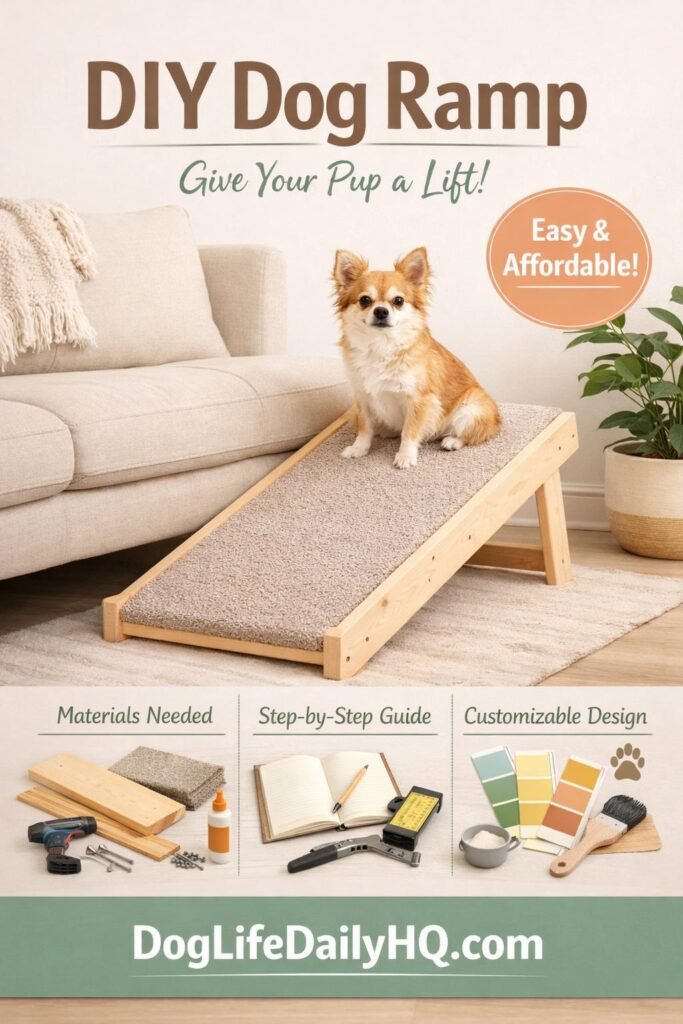
Building a DIY dog ramp for your bed gives your furry friend safe and easy access while saving money compared to store-bought options. Dog ramps prevent injuries and reduce joint strain in older or smaller dogs.
I discovered that making my own ramp let me customize it to match my home and fit my dog’s specific needs. The best part is that you don’t need advanced carpentry skills to create a sturdy ramp.
With basic tools, affordable materials, and a few hours of work, you can build something that will last for years. I’ll walk you through everything from choosing the right wood to training your pup to use their new ramp with confidence.
Key Takeaways
- Building a DIY dog ramp requires basic tools and affordable materials like pine or plywood.
- A properly built ramp should have a gentle slope and non-slip surface to keep your dog safe.
- Training your dog to use the ramp takes patience and positive reinforcement with treats.
Benefits of a DIY Dog Ramp for Bed
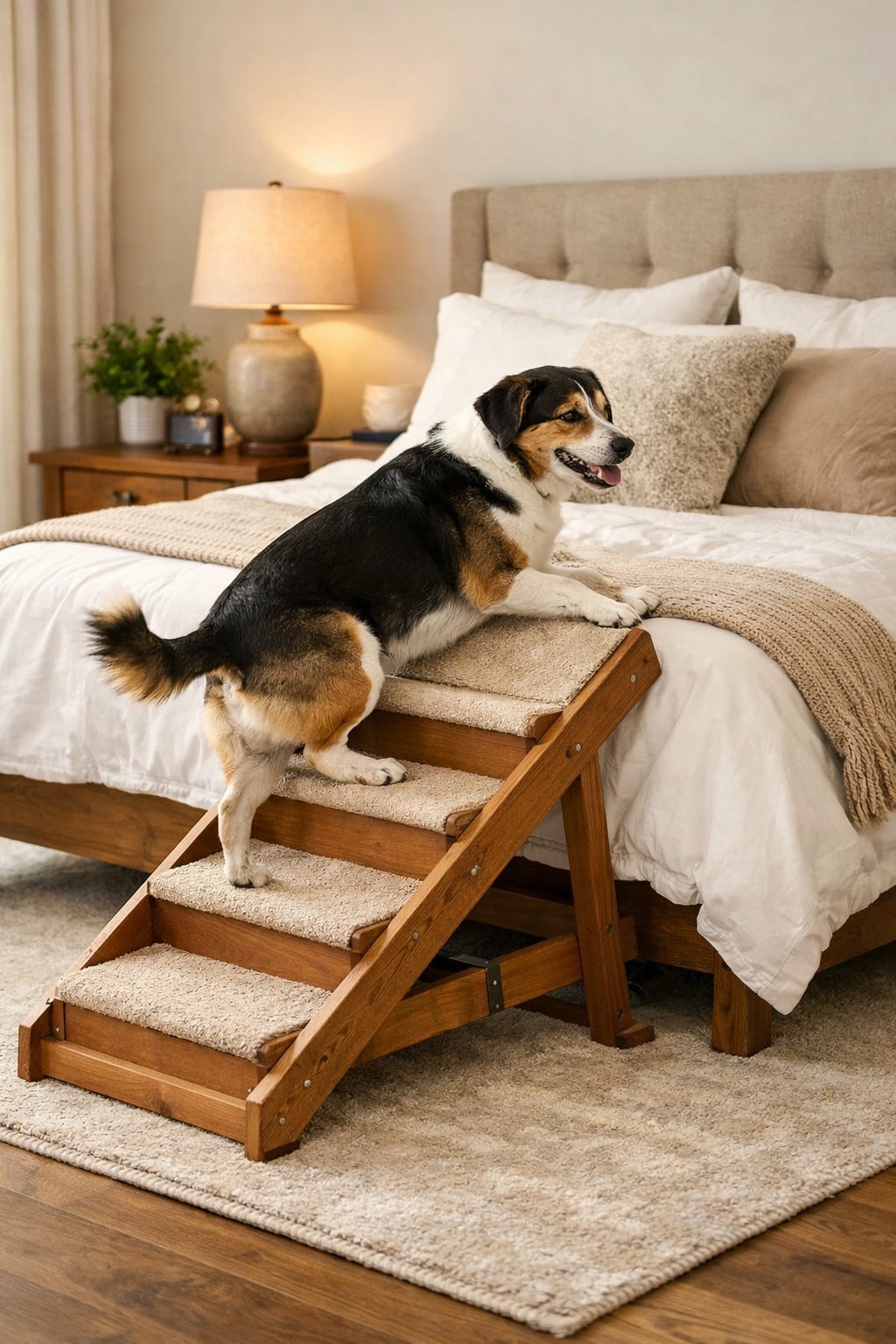
A dog ramp helps protect your pet’s joints while giving them safe access to your bed. Building one yourself saves money and lets you create something that fits your dog’s specific needs.
Improving Your Dog’s Health and Mobility
I’ve seen how dog ramps help pets with mobility issues maintain their independence. Dogs with arthritis, hip dysplasia, or back problems struggle with jumping.
A ramp gives them a gentler way to reach elevated surfaces. Older dogs especially benefit from having a ramp available.
Their joints become stiff and painful over time. Using a ramp instead of jumping reduces the daily wear on their bodies.
Small breeds face their own challenges. The distance from floor to bed can be several times their body height.
I find that a ramp makes this climb much easier on their tiny legs. Dogs recovering from surgery need time to heal.
A ramp lets them rest on your bed without risking their recovery. It keeps them comfortable while protecting their healing bodies.
Creating a Safe Sleeping Environment
Jumping down from high beds poses serious risks. I worry about dogs losing their footing or misjudging the distance.
A proper dog ramp provides safe access with a stable walking surface. The angle of your ramp matters for safety.
I recommend keeping it between 20-30 degrees for most dogs. Steeper ramps become difficult to climb and can cause slipping.
Adding non-slip material to your ramp prevents accidents. Carpet, rubber, or textured paint gives your dog better traction.
I always test the surface myself before letting my dog use it. Side rails add extra security for nervous dogs.
They create boundaries that help guide your pet up and down. Some dogs feel more confident with these visual guides in place.
Reducing Joint Stress and Injury Risks
Repeated jumping puts enormous pressure on your dog’s joints. Each landing sends shock waves through their legs, hips, and spine.
Common joint problems from jumping:
- Hip dysplasia complications
- ACL tears
- Arthritis development
- Spinal disc issues
- Shoulder injuries
A ramp spreads the effort of climbing across many steps. Your dog uses different muscles in a healthier way.
This gentle incline protects their joints from sudden impact forces. Prevention costs less than treatment.
Building a ramp now can save you thousands in vet bills later. I’d rather spend an afternoon building than watch my dog struggle with pain.
Choosing the Right Materials for Your Dog Ramp
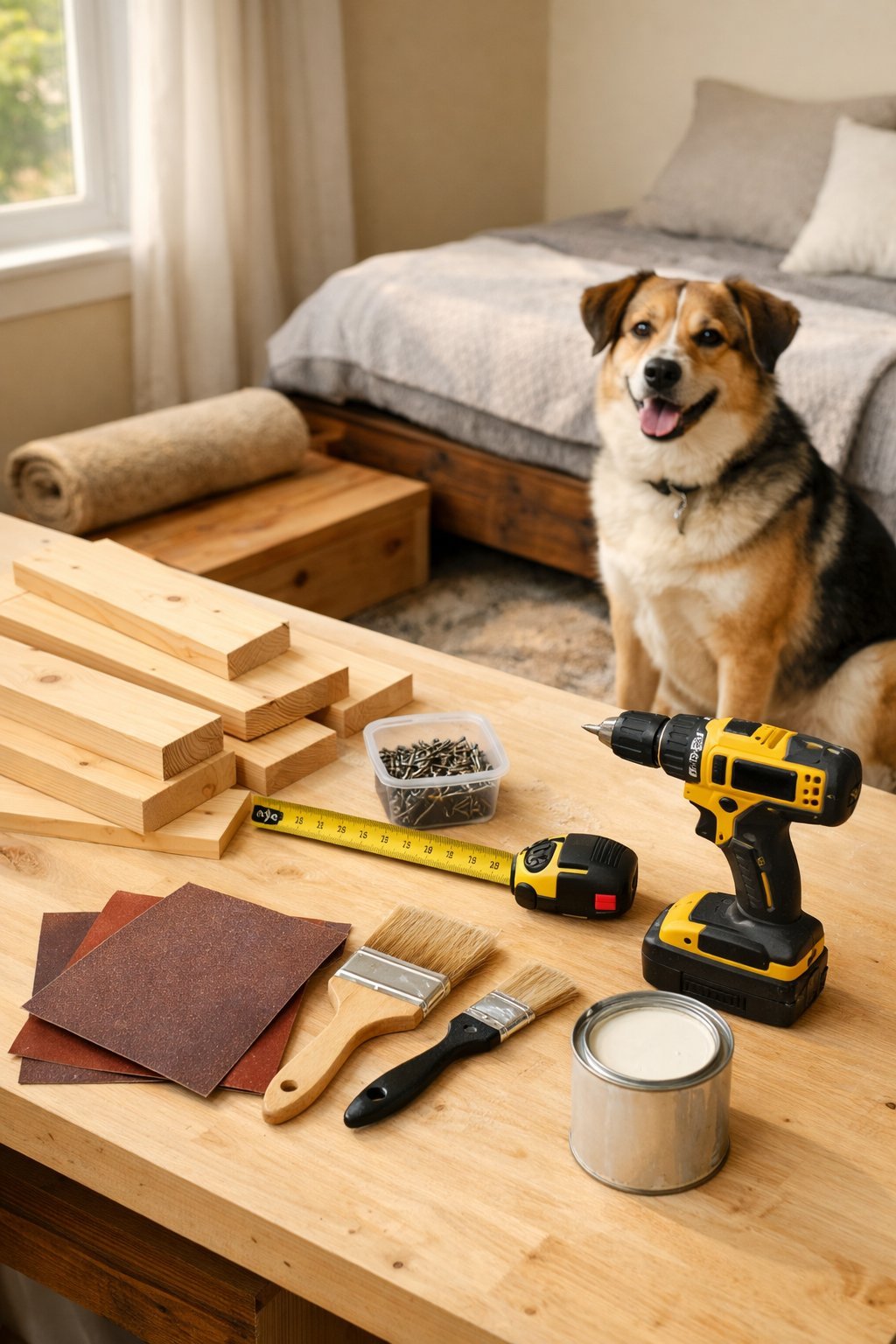
The materials you pick will affect how long your ramp lasts, how safe it is, and how much work it takes to build. I’ve found that wood works best for most projects, but plastic and metal have their place too depending on your needs.
Wood, Plastic, or Metal: Pros and Cons
Wood is my top choice for building a dog ramp for bed because it’s easy to work with and affordable. Pine costs around $20-30 for enough material to build a basic ramp.
It also looks nice in most bedrooms. The downside is that wood can warp if it gets wet.
I always seal mine with a pet-safe finish to prevent this problem. Plastic ramps are lightweight and weatherproof.
They’re perfect if you need to move the ramp between rooms or take it outside. But plastic can feel slippery and may crack under heavy dogs over 50 pounds.
Metal ramps are the strongest option and can hold any size dog. They last for years without bending or breaking.
However, metal is loud when your dog walks on it and can get cold in winter, which some dogs don’t like.
Selecting the Best Non-Slip Surface
The surface material keeps your dog from slipping and getting hurt. I always add a non-slip layer on top of whatever base material I use.
Carpet remnants work great and cost just $10-20 at most hardware stores. I staple or glue them down firmly so they don’t bunch up.
Outdoor carpet handles moisture better than indoor types. Rubber mats give excellent grip and clean up easily with soap and water.
You can find them at pet stores for $15-30. Some people use rubber stair treads, which attach with adhesive strips.
Grip tape is another option that works well on wood or metal. It’s the same stuff used on skateboard decks.
The rough texture provides good traction but might be too abrasive for dogs with sensitive paws.
Eco-Friendly and Pet-Safe Options
I make sure all my materials are safe if my dog licks or chews on them. Regular wood stains and paints contain chemicals that can make dogs sick.
Pet-safe finishes like water-based polyurethane or natural oils protect the wood without toxic fumes. I let everything dry for at least 48 hours before letting my dog use the ramp.
Reclaimed wood from old pallets or furniture saves money and reduces waste. Just sand it smooth to remove splinters and check for nails or staples first.
Natural fiber carpets made from jute or sisal are biodegradable and contain no synthetic chemicals. They cost a bit more but last longer than synthetic options.
Avoid carpets with mothball treatments or strong chemical smells.
Step-by-Step Guide to Building a Dog Ramp
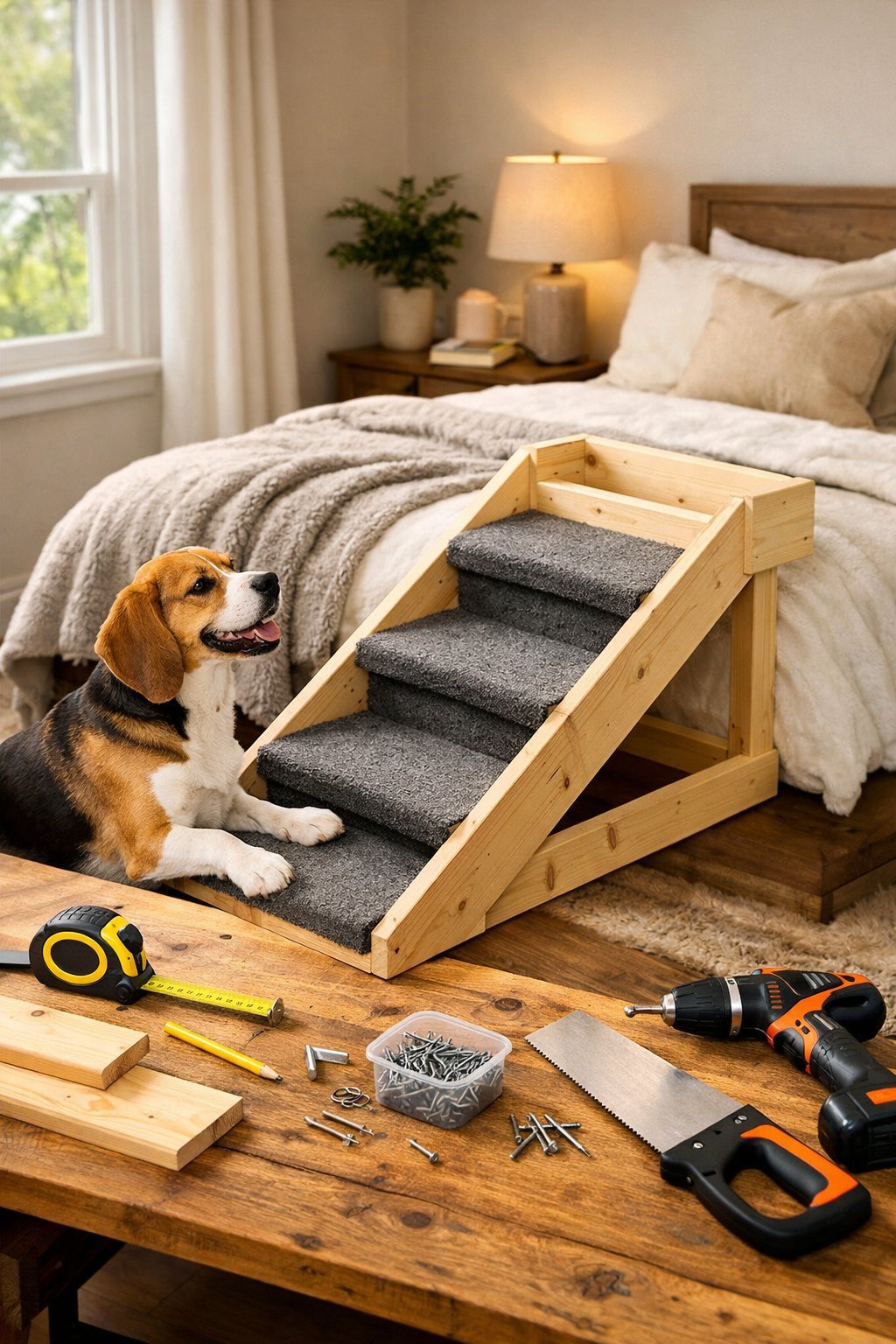
Building a dog ramp requires accurate measurements, a sturdy frame, and a safe walking surface. I’ll walk you through each step to create a ramp that helps your pup reach the bed safely.
Measuring the Bed Height and Ramp Angle
I always start by measuring the exact height from the floor to the top of my bed. This measurement determines how long the ramp needs to be.
For a safe slope, I aim for a ramp angle between 18 and 25 degrees. Most dogs feel comfortable with this gentle incline.
To calculate the ramp length, I divide the bed height by 0.4 for an approximately 22-degree angle. For example, if my bed is 24 inches tall, I need a ramp that’s about 60 inches long.
I write down these measurements before buying materials. It’s also helpful to measure the available floor space to make sure the ramp fits in the room without blocking walkways.
Cutting and Assembling the Frame
I cut two side rails from 1×4 lumber based on my calculated ramp length. These rails form the main support structure.
Next, I cut cross supports from the same lumber, spacing them 12 to 16 inches apart. I attach these supports between the side rails using wood screws or a drill.
The frame should look like a ladder when complete. I make sure all corners are square by measuring diagonally across the frame.
Both diagonal measurements should match. For extra stability, I can add corner braces at each joint.
Securing the Walking Surface
I attach a piece of plywood to the top of the frame using wood screws every 6 to 8 inches. The plywood should be at least ½ inch thick for durability.
To prevent slipping, I add traction to the surface. Outdoor carpeting works well because it provides grip and cushioning.
I can also use rubber stair treads, foam padding, or even glue-down sandpaper strips. I secure the traction material with construction adhesive or a staple gun.
For building a dog ramp that folds, I can add hinges at the midpoint. Finally, I sand any rough edges to protect my dog’s paws.
Customization Ideas to Let Your Pup Sleep Like Royalty
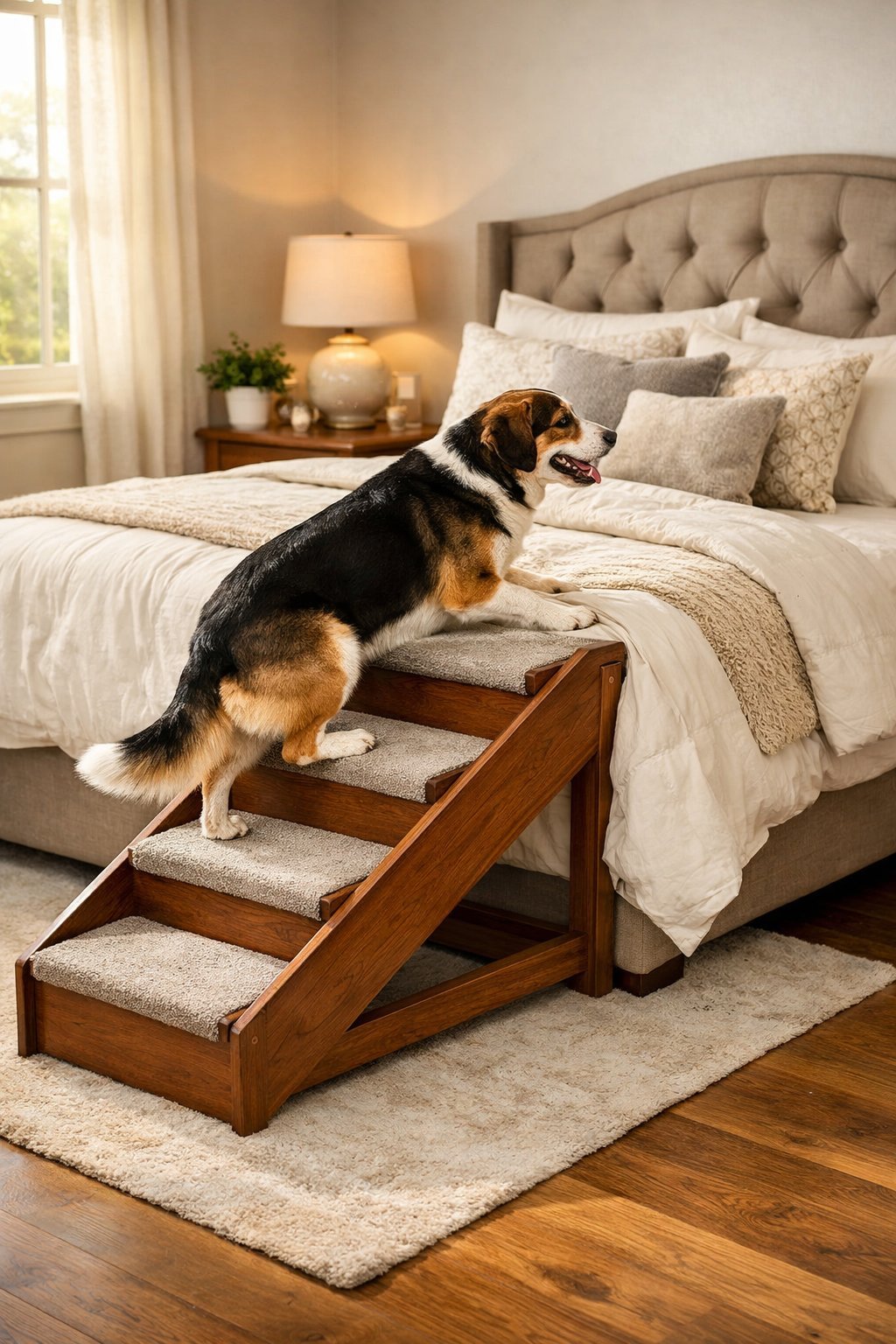
A basic ramp gets the job done, but adding personal touches transforms it into a special piece that matches your home and makes your dog feel extra loved. I’ve found that simple upgrades like paint, storage compartments, and name plaques make the ramp both prettier and more useful.
Adding Decorative Touches
I like to start with paint or stain that matches my bedroom furniture. You can choose colors that blend in with your decor or go bold with fun patterns like paw prints or bones.
Non-slip materials like carpet or textured paint work great as both safety features and decoration. I recommend picking carpet samples in colors or patterns you love since they’re cheap and easy to replace if they get dirty.
Fabric runners or adhesive treads add visual interest while keeping your pup safe. I’ve seen people use stair treads in fun designs or even outdoor rugs cut to size.
These give you tons of pattern options. You can add trim pieces along the edges using wood molding from hardware stores.
Paint them in accent colors or leave them natural for a finished look. Small details like decorative brackets or corner guards make the ramp look store-bought instead of homemade.
Incorporating Storage Features
Building storage into your ramp makes it work double duty. I created space underneath mine by adding a hinged top section that lifts up.
Inside, I store my dog’s toys, treats, and grooming supplies. This keeps everything organized and hidden from view.
You can line the storage area with fabric or paint it to protect items from dust. Side pockets made from fabric or wire baskets attach easily to the ramp frame.
I use mine for leashes, waste bags, and tennis balls. These keep daily essentials within reach right where I need them.
Drawer slides let you build pull-out compartments underneath the ramp. This works well for heavier items like food bags or extra blankets.
The drawers slide smoothly and make use of otherwise wasted space.
Personalizing with Your Dog’s Name
Adding your dog’s name makes the ramp uniquely theirs. I used vinyl letter stickers from craft stores because they’re easy to apply and come in many fonts and colors.
Wood burning tools let you carve names directly into the wood for a rustic look. This takes practice but creates a permanent, professional finish.
You can also add their birthday or a cute phrase like “Princess Bella’s Ramp.” Custom nameplates from online shops or hardware stores attach with small screws or adhesive.
Metal plates look sleek and modern while wooden ones feel cozy and traditional. Stencils and paint give you control over size and style.
I traced letters with a pencil first, then filled them in carefully with a small brush. This method costs almost nothing and lets you change the design whenever you want.
Maintaining and Training Your Dog to Use the Ramp
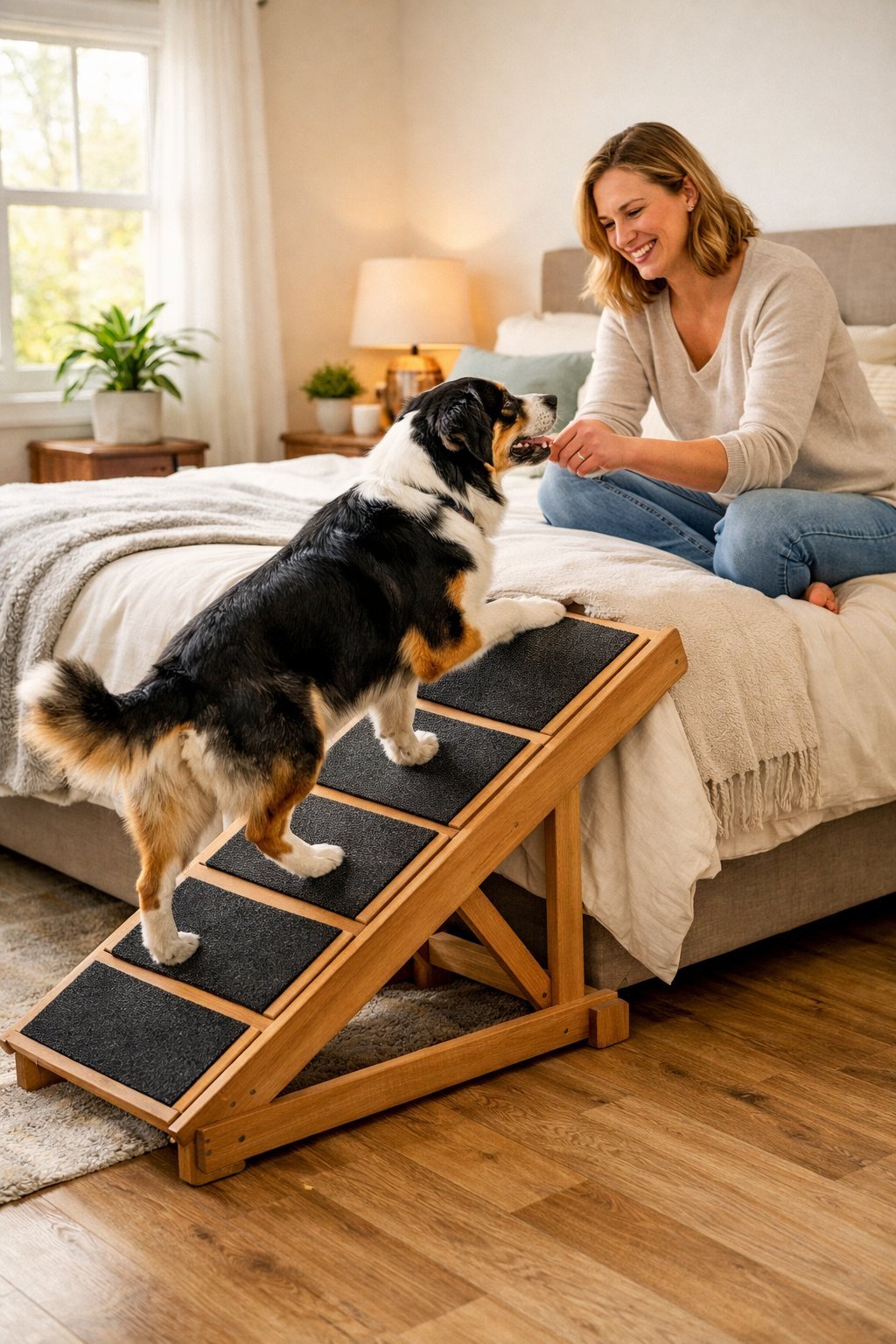
A ramp only works if your dog feels comfortable using it and the surface stays safe for their paws. Regular cleaning and patient training will help your pup make the transition from jumping to walking up their new ramp.
Keeping the Ramp Clean and Safe
I recommend wiping down the ramp surface at least once a week to remove dirt, fur, and oils from your dog’s paws. A damp cloth with mild soap works well for most materials.
For wooden ramps, I avoid soaking the surface since too much water can warp the wood. Check the ramp’s grip material monthly for wear and tear.
Carpet runners, rubber mats, or non-slip tape can lose their texture over time. When the surface feels smooth under my hand, I replace it right away.
I also inspect the ramp’s stability before each use during the first few weeks. Loose screws or wobbly legs can make your dog nervous about using it.
Tighten any hardware and make sure the ramp sits flat against both the floor and bed.
Weekly maintenance tasks:
- Wipe surface with damp cloth
- Remove stuck fur or debris
- Check for loose parts
- Test stability against bed
Helping Your Pup Adjust
I start training a dog to use a ramp by placing treats on each step up the incline. The key is letting them explore at their own pace without forcing them onto the ramp.
Some dogs walk right up, while others need several days to build confidence. Choose a quiet place away from distractions for the first few training sessions.
I place the ramp at its lowest angle initially, then gradually increase the incline as my dog gets comfortable. Praise and treats work better than pushing or pulling them up the ramp.
For nervous dogs, I walk up the ramp myself first to show it’s safe. I keep training sessions short—about 5 to 10 minutes—so my dog doesn’t get frustrated.
Most dogs learn within a few days, though older or anxious pups might need two weeks of practice.
Frequently Asked Questions
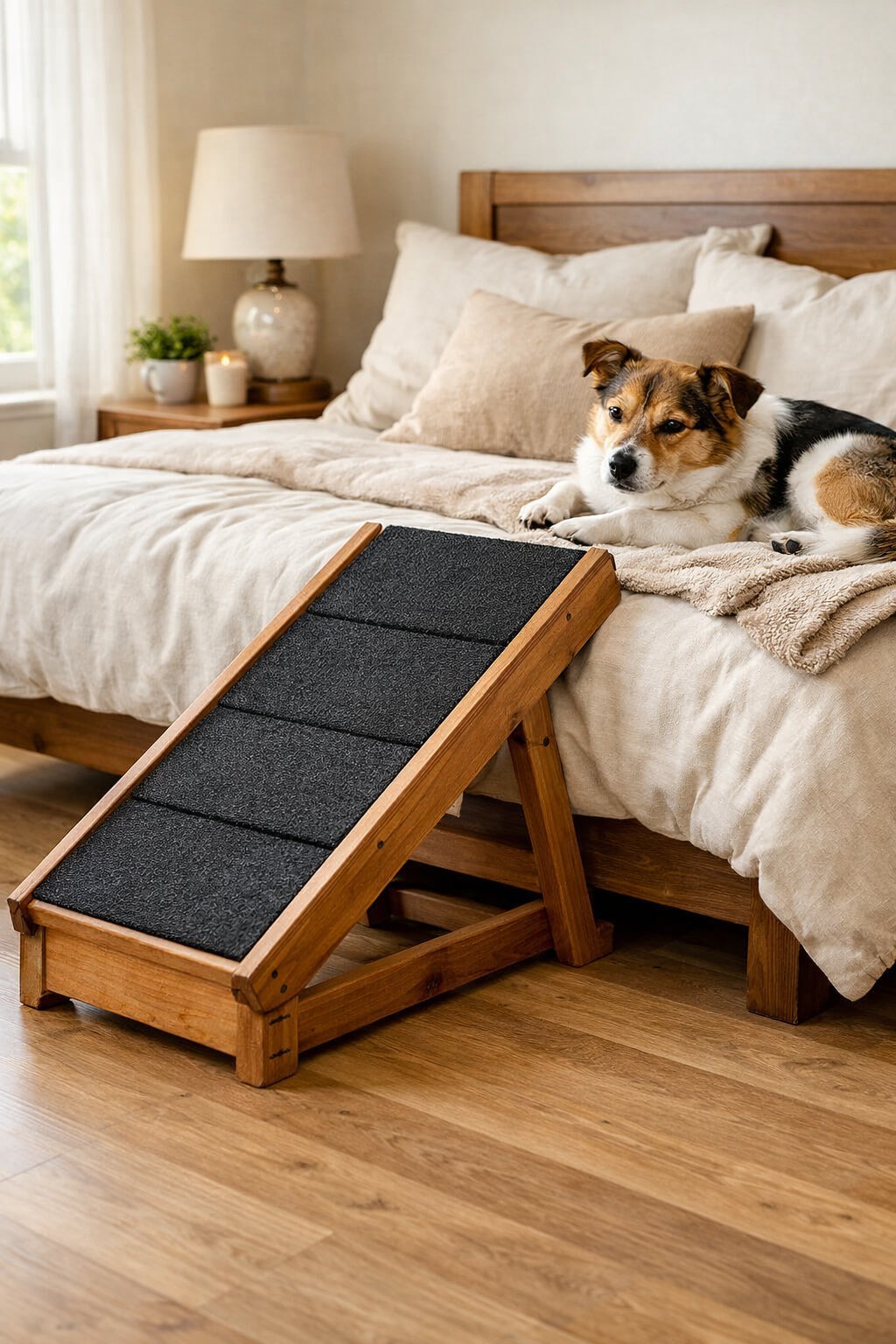
Building a dog ramp involves choosing the right materials like plywood and carpet. Keeping costs down with basic supplies and ensuring proper angles between 20-30 degrees makes climbing safe.
Safety features like non-slip surfaces and sturdy construction matter most for preventing injuries.
How can I build an affordable dog ramp for my pet’s bed?
I’ve found that building a budget-friendly dog ramp starts with simple materials from your local hardware store. You’ll need a piece of plywood (about 12-16 inches wide), some 2×4 lumber for support, carpet remnants or non-slip tape, and basic screws.
The total cost usually runs between $20-40 if you shop smart. I recommend checking for scrap wood at lumber yards or using leftover materials from other projects.
For the basic build, cut your plywood to the length you need based on your bed height. Attach 2×4 supports underneath for stability, then cover the walking surface with carpet using wood glue or staples.
What are some easy-to-follow plans for constructing a dog ramp for a bed?
I start by measuring the height of my bed and calculating the ramp length needed for a gentle slope. A good rule is to make the ramp about 4 times longer than your bed is tall.
Cut your plywood to size, then attach two or three 2×4 boards underneath as crossbeams for support. Space them evenly along the length of the ramp.
Add side rails using 1×4 boards to prevent your dog from walking off the edges. These rails should be about 3-4 inches tall.
Finally, attach your non-slip surface material and sand any rough edges. Test and refine your build to make sure everything feels solid before letting your pup use it.
Can I create a DIY dog ramp suitable for high beds?
I’ve successfully built ramps for beds up to 30 inches high by adjusting the length and angle. For higher beds, you’ll need a longer ramp to keep the incline gradual and safe.
The ideal angle sits between 20-30 degrees, which means a proper incline that prevents slips and wobbles. For a 30-inch bed, I recommend making your ramp at least 6-8 feet long.
You might need to add extra support beams underneath longer ramps. I usually add a third or fourth crossbeam to prevent sagging in the middle.
Consider adding a small platform at the top where the ramp meets your bed. This gives your dog a place to pause and feel secure before hopping onto the mattress.
What materials work best for making a sturdy dog ramp for large breeds?
I always use 3/4-inch plywood for large dogs because it won’t bend or crack under their weight. Thinner materials might work for small breeds, but bigger dogs need something more substantial.
The support structure matters just as much as the surface. I use 2×4 lumber for the frame and space the crossbeams closer together—about every 18-24 inches instead of every 36 inches.
For the walking surface, I prefer outdoor carpet or rubber matting. Both materials grip well and hold up to heavy use without wearing down quickly.
Non-slip materials like carpet or textured paint keep your dog stable while walking. I sometimes add adhesive tread strips for extra traction, especially near the top and bottom.
What safety features should I include in my homemade dog ramp?
I never skip the side rails because they prevent dogs from accidentally stepping off the edge. Rails should be at least 3 inches tall and run the full length of the ramp.
Non-slip surfaces are absolutely essential for preventing falls. I cover the entire walking surface with material that provides good traction, even if my dog’s paws are wet.
Proper weight distribution comes from having enough support beams underneath. I test my ramps by applying pressure at different points to make sure nothing flexes or wobbles.
The connection point where the ramp meets your bed needs to be secure. I use rubber feet on the bottom to prevent sliding and sometimes add a hook or bracket at the top for extra stability.
How do dog ramps benefit my pet’s health according to veterinarians?
I’ve learned that ramps reduce stress on joints and potentially prevent injuries by eliminating the need for repeated jumping. This is especially important for older dogs or breeds prone to hip problems.
Jumping down from beds puts a lot of force on a dog’s front legs and shoulders. Over time, this can lead to arthritis, joint damage, or ligament injuries.
Small dogs face extra risks because furniture is much taller compared to their size. For a 10-pound dog, a 24-inch bed can feel like jumping off a cliff.
Senior dogs and those with mobility issues find ramps help them stay independent. They can get to their favorite spots without pain or needing help from their owners.
