
DIY Dog Run Cheap: Budget-Friendly Ways to Build a Safe Space for Your Pup

DIY Dog Run Cheap – Your dog needs a safe space to run and play, but professional installations can cost thousands of dollars.
You can build a functional dog run for under $200 using simple materials like chain-link fencing, treated lumber, and gravel or mulch.
I’ve helped countless pet owners create affordable outdoor spaces for their dogs.
I’m excited to share these budget-friendly solutions with you.
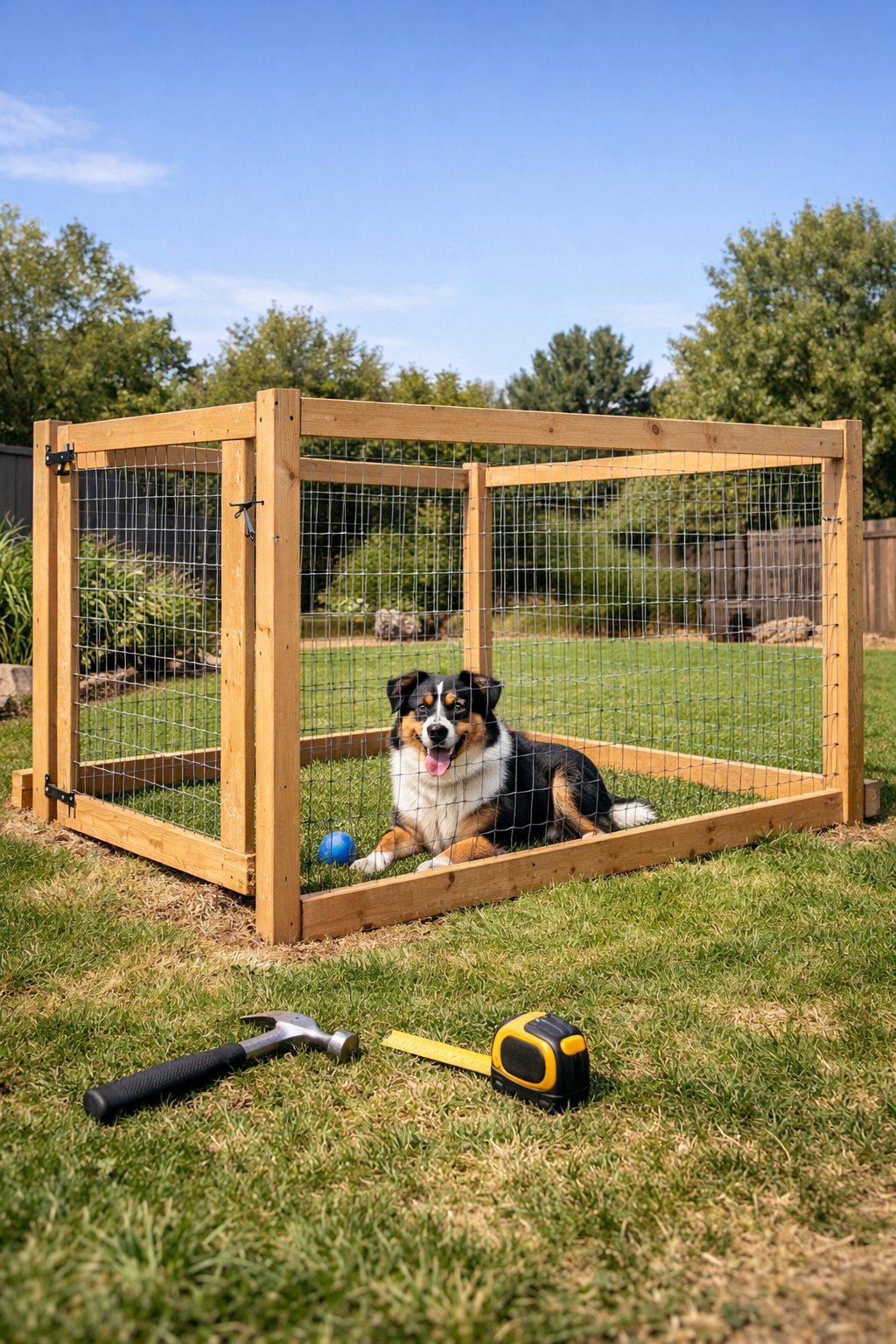
Building a dog run on a budget doesn’t require special skills or expensive tools.
With some basic planning and creativity, you can construct a secure area where your pup can exercise safely.
The key is choosing cost-effective materials and following a simple design that works for your yard size and your dog’s needs.
I’ll walk you through everything from selecting the right location to choosing affordable materials like pressure-treated wood and wire fencing.
Whether you have a small backyard or a larger space, these practical ideas will help you create a dog run that keeps your furry friend happy without breaking your budget.
Key Takeaways
- You can build a basic dog run for less than $200 using chain-link fencing, treated wood, and affordable ground cover
- Proper planning includes choosing a shaded location, measuring your space, and selecting materials that match your dog’s size and energy level
- Regular maintenance like checking fences for damage and refreshing ground cover keeps your dog run safe and functional for years
Planning Your Cheap DIY Dog Run
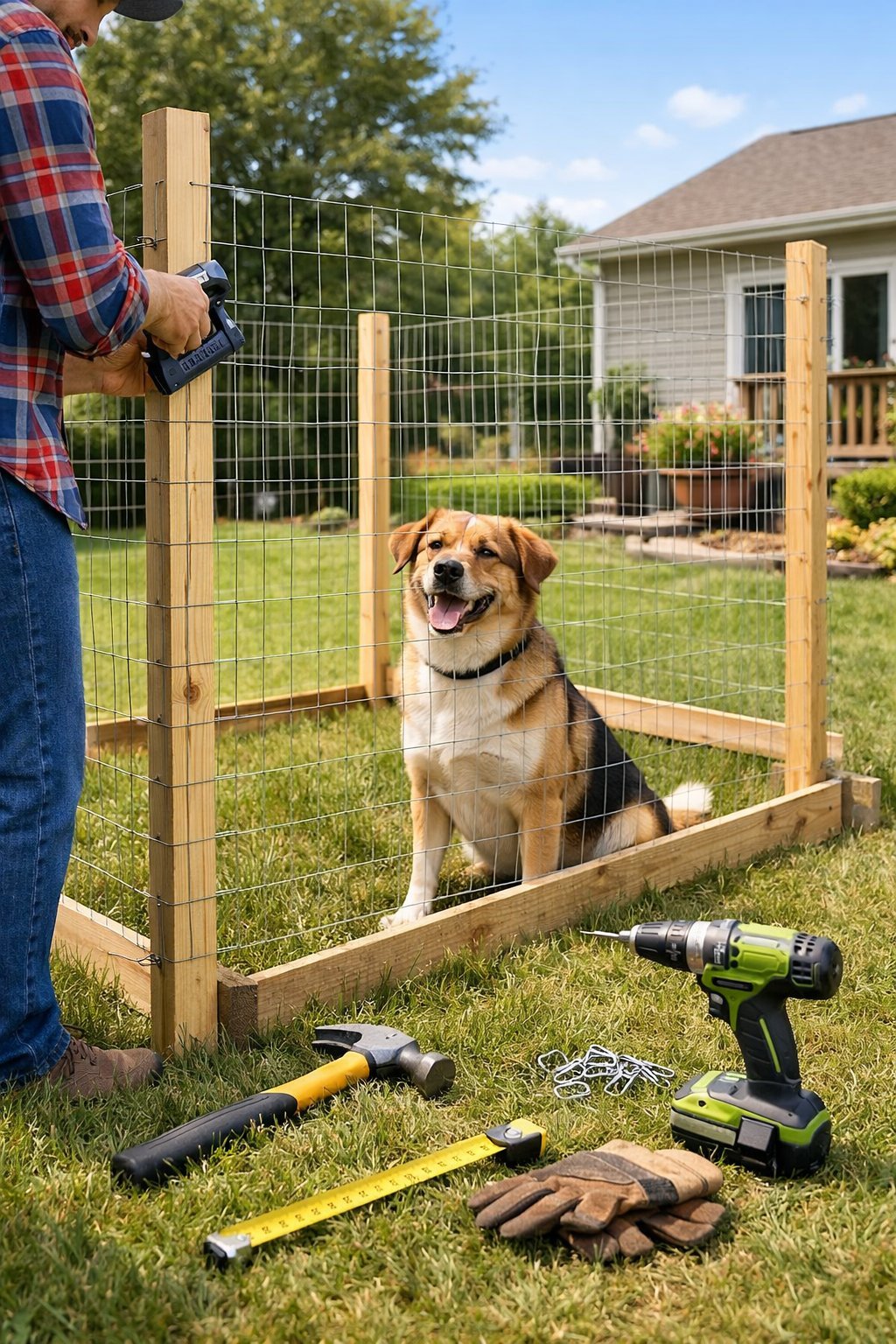
The right location, proper sizing, and safety features make the difference between a dog run that works and one that creates problems.
I’ll walk you through the essential planning steps to set up your budget-friendly dog run correctly from the start.
Choosing the Ideal Location
I always recommend picking a spot with natural shade from trees or your house.
This keeps your dog comfortable during hot days without spending money on shade structures.
Check the ground drainage before you commit to a location.
Low spots where water pools will turn into muddy messes after rain.
I look for slightly elevated areas or gentle slopes that let water run off naturally.
Keep the dog run away from property lines if possible.
Your neighbors will appreciate not hearing barking right next to their yard.
I also avoid placing runs near gardens or flower beds that dogs might dig under fences to reach.
Consider accessibility for yourself too.
You’ll need to walk to this area multiple times daily for feeding, cleaning, and playtime.
A location near a back door or side gate makes your routine much easier.
Deciding on Dog Run Size
I use this basic formula: minimum 3 feet wide by 10 feet long for small dogs, 5 feet by 15 feet for medium dogs, and 6 feet by 20 feet for large breeds.
These measurements give dogs enough room to run and play without feeling cramped.
Multiple dogs need even more space.
I add 50% to the total square footage for each additional dog sharing the run.
Your yard size might limit what you can build.
I’ve found that even a smaller run works well if I commit to giving my dog extra exercise time outside the enclosure each day.
A budget-friendly dog run doesn’t have to be huge to be effective.
Key Safety Considerations
I always dig fence posts at least 2 feet deep to prevent dogs from digging underneath.
Burying chicken wire or hardware cloth 6-12 inches underground along the fence line adds extra security for dedicated diggers.
Avoid these hazardous materials:
- Treated wood with toxic chemicals
- Sharp wire edges or exposed nails
- Small gravel that dogs might swallow
- Toxic plants within reach
I check fencing height based on my dog’s jumping ability.
Most medium dogs need 4-foot fencing, while large or athletic breeds require 6 feet or higher.
Secure latches are essential.
I use double-latch systems or carabiner clips because standard gate latches often pop open when dogs jump against them.
When building a backyard dog run, these small safety details prevent escape attempts and keep your dog protected.
Budget-Friendly Materials for Dog Runs
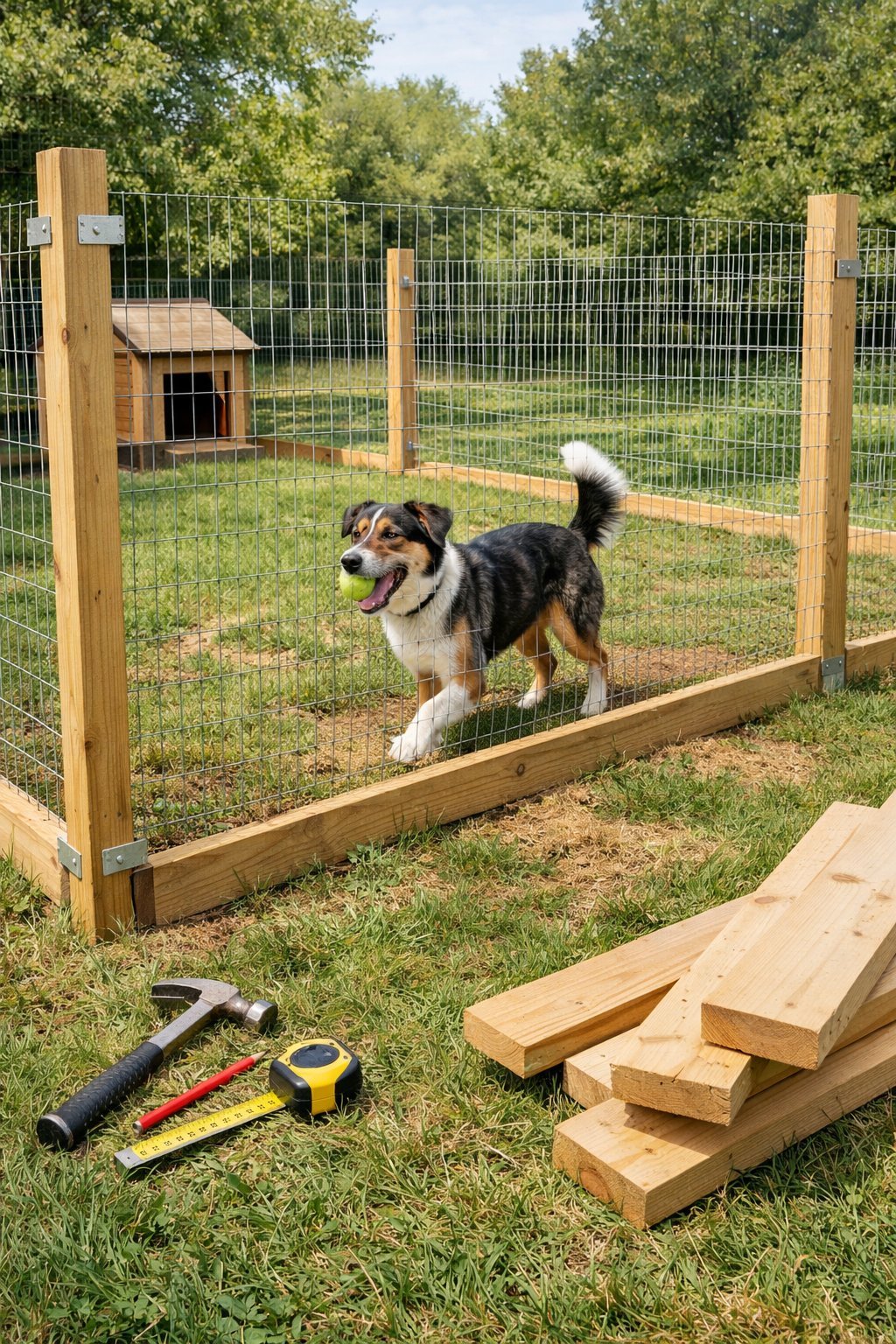
Building a dog run doesn’t require expensive materials when you know what to look for.
I’ve found that strategic choices in fencing, ground cover, and repurposed items can create a safe space for under $200.
Affordable Fencing Options
Chain link fencing remains one of the most cost-effective choices for dog runs, typically costing $8-12 per linear foot.
I recommend looking for 4-foot tall chain link at hardware stores during seasonal sales.
Welded wire panels offer another budget option at $30-50 per 16-foot section.
These work well when attached to wooden or metal posts.
Garden stakes driven into the ground create a simple framework that supports wire fencing or netting at minimal cost.
Chicken wire costs even less but only works for smaller dogs who won’t push through it.
For larger dogs, I suggest snow fencing, which costs around $1-2 per linear foot and handles more pressure.
Vinyl-coated wire mesh provides durability without the price tag of solid wood panels.
Low-Cost Ground Cover Choices
Pea gravel stands out as my top pick for ground cover because it drains well and costs $30-40 per cubic yard.
It prevents mud while staying cool in summer heat.
Mulch offers an even cheaper option at $20-30 per cubic yard and feels soft on dog paws.
Wood chips work similarly but break down faster than hardwood mulch.
Sand drains excellently and costs about $25 per cubic yard, though some dogs like to dig in it.
I’ve also used artificial turf remnants purchased at discount, which eliminates mud entirely.
For the most budget-friendly approach, leave natural grass and add a small gravel or mulch area near the entrance where dirt tracking occurs most.
Repurposing Materials for Savings
Recycled wood pallets provide free or cheap fencing material when heat-treated and safe for pets.
I’ve built entire enclosures using pallets stood vertically and secured together with brackets.
Leftover bricks from old projects make excellent border edging and gate posts without spending extra money.
Check with neighbors or online marketplaces for free materials people want removed from their properties.
Old fence panels, gates, and posts from home renovation projects work perfectly for dog runs.
Repurposed cattle panels, available from farm supply stores for $20-30 each, create sturdy 16-foot sections.
I’ve even used PVC pipes as corner posts and frame supports because they’re lightweight, affordable, and resist weather damage.
Step-By-Step Guide to Building a Dog Run
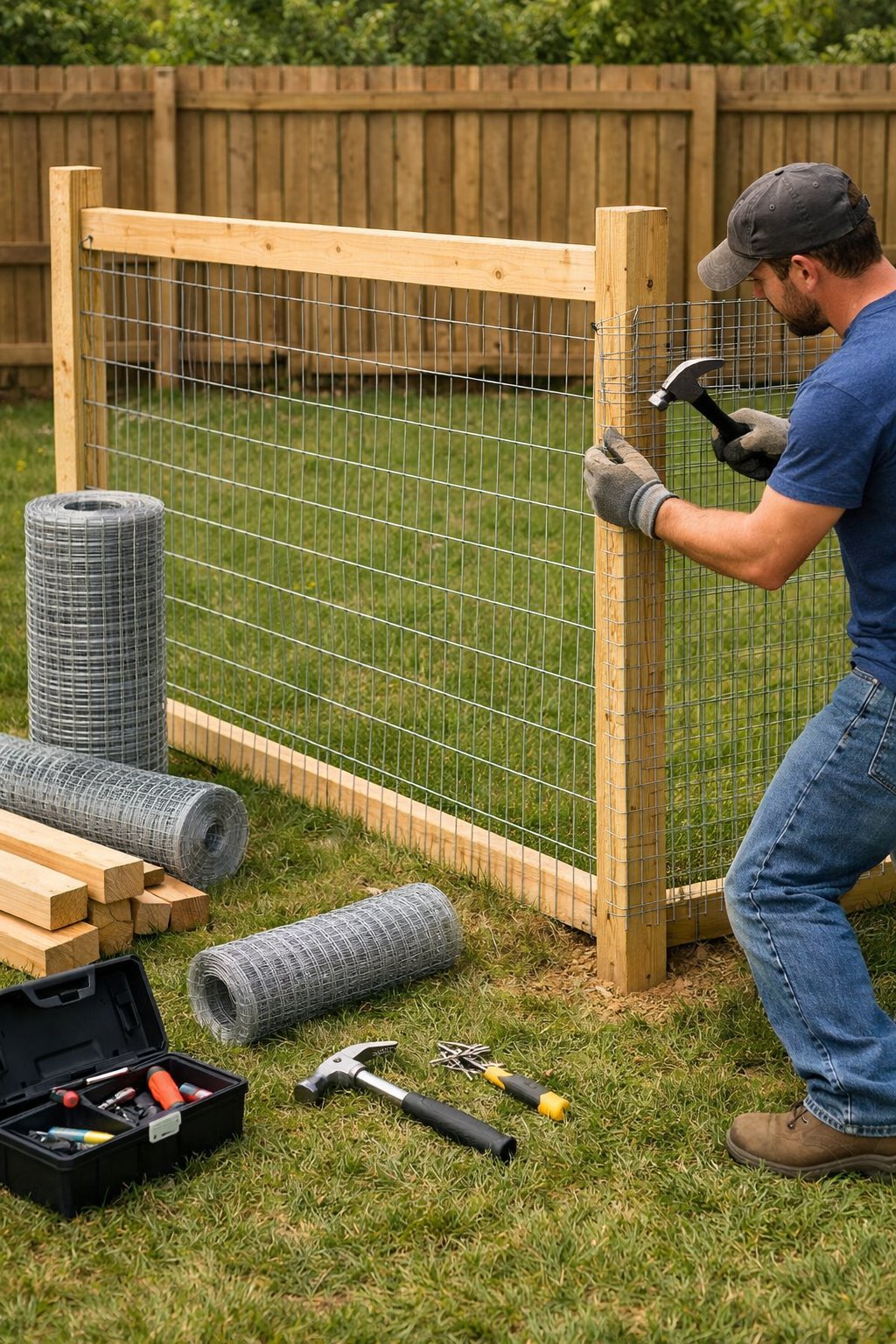
Building a dog run involves selecting and clearing the right spot, setting up sturdy fencing, installing functional gates, and reinforcing everything for long-term use.
Each step requires careful attention to create a safe space where your dog can exercise freely.
Preparing the Site
I start by choosing a flat area in my yard that has good drainage.
Standing water can create muddy conditions and health issues for my dog.
I measure out the space based on my dog’s size.
For small dogs, I aim for at least 3 feet wide by 10 feet long.
Medium dogs need 5 feet by 10 feet, and large dogs require 5 feet by 20 feet or more.
Next, I clear the area of rocks, sticks, and debris.
I remove any plants or roots that could cause problems later.
If grass is present, I can leave it or remove it depending on my flooring choice.
I mark the corners with stakes and string to visualize the final layout.
This helps me see if adjustments are needed before I start building.
I also check for underground utilities by calling 811 before digging any post holes.
Installing the Fencing
I choose chain-link fencing for affordability, though cattle panels or welded wire also work well.
The fence height depends on my dog’s jumping ability—4 feet works for most dogs, but I go 6 feet for strong jumpers.
I dig post holes at each corner and every 6-8 feet along the perimeter.
Each hole should be 2 feet deep and 8-10 inches wide.
I use pressure-treated 4×4 posts because they resist rot and last longer.
I set the posts in concrete, making sure they’re level and plumb.
I let the concrete cure for 24-48 hours before attaching fencing.
Once set, I stretch the fencing material tight between posts and secure it with fence ties or hog rings every 12 inches.
I attach the fencing to the posts starting at one corner and working my way around.
The bottom edge should sit close to the ground or be buried 2-3 inches deep to prevent digging escapes.
Adding Gates and Entry Points
I install a gate that’s at least 3 feet wide for easy access.
A wider gate makes it simpler to bring in supplies or clean the area with equipment.
I use heavy-duty hinges that can support the gate’s weight without sagging.
Spring-loaded hinges are helpful because they automatically close the gate behind me.
I position the hinges on the outside of the posts for better stability.
I add a reliable latch that my dog cannot open but I can operate with one hand.
A cane bolt or snap latch works well.
For added security, I install a second latch at the top of the gate.
I make sure the gate swings freely without dragging on the ground.
If needed, I adjust the height by trimming the bottom or raising the hinges slightly.
Ensuring Security and Durability
I inspect all fence connections to make sure there are no gaps or loose sections where my dog could escape.
I pay special attention to corners and the bottom edges where dogs often test boundaries.
I reinforce the bottom of the fence by burying chicken wire 6-12 inches deep along the perimeter.
This prevents diggers from tunneling out.
Another option is placing large rocks or pavers along the fence line.
I check that all posts are firmly set and won’t wobble over time.
I add cross-bracing between posts if the fence seems unstable.
Using galvanized hardware prevents rust and extends the life of my dog run structure.
I apply a protective coating to wooden posts above ground level.
This extra step helps them withstand weather conditions.
Finally, I walk the entire perimeter testing for sharp edges or protruding wires that could injure my dog.
Enhancing Comfort and Usability
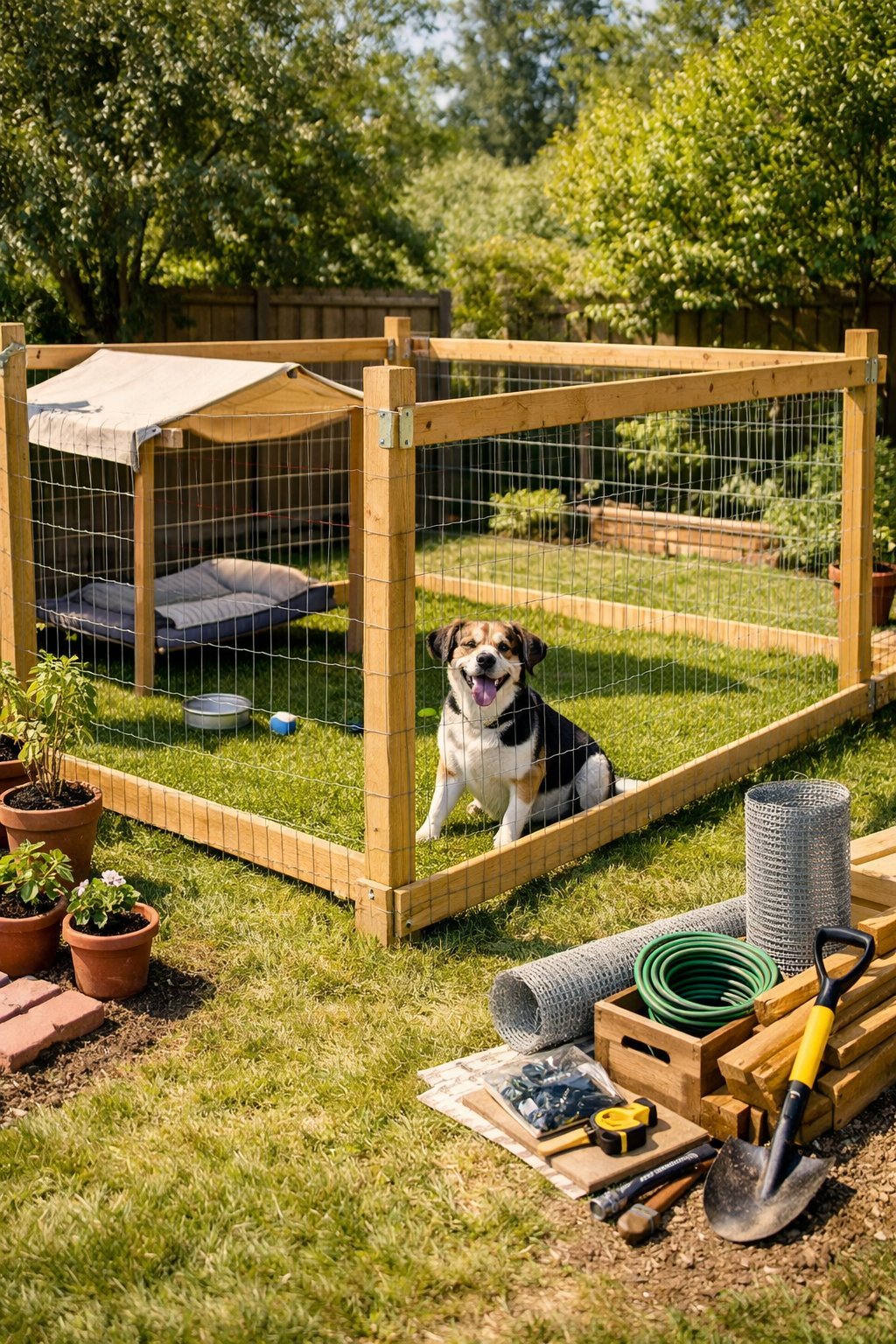
A comfortable dog run keeps your pet happy and willing to spend time in their space.
Proper weather protection, shade coverage, and access to fresh water make the area functional year-round.
Weather Protection Solutions
I always recommend adding some form of weather protection to shield your dog from rain, wind, and harsh sun.
A simple tarp secured over part of the run creates an instant shelter without much cost.
You can attach the tarp to existing fence posts using zip ties or bungee cords.
This gives your dog a dry spot during unexpected showers.
I’ve found that positioning the covered area in a corner provides the best wind protection.
For a more permanent solution, I suggest using corrugated plastic roofing panels.
These cost between $15-30 per sheet at most home improvement stores.
They’re lightweight and easy to cut to size with a utility knife.
Key materials for weather protection:
- Heavy-duty tarps ($10-25)
- Corrugated plastic panels ($15-30 each)
- Zip ties or bungee cords ($5-10)
- Basic wood frame (optional, $20-40)
DIY Shade Structures
I’ve built several budget-friendly shade structures that work incredibly well. The easiest option is stretching a shade sail between fence posts or trees.
Shade sails block 85-95% of UV rays and cost around $20-40 depending on size. I install mine at an angle so rain runs off instead of pooling.
The fabric breathes better than solid covers, which keeps the area cooler. Another approach I use involves repurposing old umbrellas or beach canopies.
These provide instant shade and you can move them as the sun shifts throughout the day. Planting fast-growing vines along one side of the fence creates natural shade within a season.
Morning glories and climbing beans work great and only cost a few dollars for seeds.
Adding Water Stations
I always place at least one water station in my dog run. Fresh water needs to be available at all times, especially during summer months.
The simplest setup uses a heavy ceramic bowl that won’t tip over easily. I prefer bowls that hold at least 2-3 quarts for medium to large dogs.
Position the bowl in a shaded area to keep water cooler longer. For a hands-free option, I install automatic waterers that connect to a garden hose.
These cost $15-30 and refill themselves as your dog drinks. Mount them at your dog’s chest height for comfortable access.
I also recommend adding gravel around water stations to improve drainage and prevent muddy spots. A small rubber mat under the bowl catches splashes and stays in place better than towels.
Maintenance and Upkeep Tips
Keeping your DIY dog run in good shape doesn’t require expensive products or hours of work. Regular cleaning, smart material choices, and quick fixes can extend the life of your budget-friendly setup while keeping your dog healthy and happy.
Routine Cleaning Steps
I recommend scooping waste from your dog run daily to prevent odors and bacteria buildup. This simple habit takes just five minutes but makes a huge difference in keeping the space fresh.
For budget-friendly dog runs using materials like gravel or wood chips, I rake the surface weekly to distribute material evenly and spot areas that need refreshing. These surfaces naturally drain well, which helps reduce mud and standing water.
I hose down fencing and hard surfaces every two weeks to remove dirt, urine, and debris. For artificial grass, I spray it with a mixture of equal parts water and white vinegar monthly to eliminate odors naturally.
Weekly cleaning checklist:
- Rake gravel or wood chip surfaces
- Check for and remove any trash or debris
- Inspect fence for damage or gaps
- Refill water bowls with fresh water
Long-Term Cost Savings
Choosing low-maintenance flooring from the start saves me money over time. Gravel costs about $30-50 for a small run and lasts for years with minimal upkeep, while wood chips need replacement every 6-12 months at $20-40 per refresh.
I apply a weatherproof sealant to wooden fence posts every two years. This $15-25 investment prevents rot and extends the wood’s life by 5-10 years compared to untreated posts.
Installing affordable materials like pressure-treated wood costs more initially but resists weather damage better than regular lumber.
| Material | Initial Cost | Lifespan | Annual Maintenance |
|---|---|---|---|
| Gravel | $30-50 | 5+ years | $0-10 |
| Wood chips | $20-40 | 6-12 months | $20-40 |
| Artificial turf | $100-200 | 8-15 years | $10-20 |
Easy Repair Solutions
I keep zip ties, wire, and extra fencing material on hand for quick fence repairs. When I spot a loose section, I secure it immediately before my dog finds the weak spot.
For wooden structures, I fill small cracks with outdoor wood filler ($5-8 per tube) to prevent water damage. I sand rough edges that could splinter and hurt paws using basic sandpaper.
When gravel or mulch gets thin in high-traffic areas, I add a fresh layer rather than replacing everything. A single bag costs $3-5 and covers bare spots quickly.
Simple repair kit essentials:
- Heavy-duty zip ties
- Wire cutters and pliers
- Extra fence wire or panels
- Outdoor wood filler
- Sandpaper
- Extra flooring material (gravel, chips, or turf patches)
I check gate hinges and latches monthly, tightening loose screws with a screwdriver. Replacing a worn latch costs $5-15 and takes five minutes.