DIY Snuffle Mat for Dogs: Simple No-Sew Projects Your Pup Will Love

Dogs need mental exercise just as much as physical activity. One of the best ways to engage their natural sniffing instincts is with a snuffle mat.
A snuffle mat is a puzzle toy made from fabric strips tied to a base where you hide treats. You can make one at home in about 30 minutes without any sewing skills.
I’ve helped lots of dog owners create these enrichment tools. They’re perfect for slowing down fast eaters, reducing anxiety, and keeping dogs entertained.
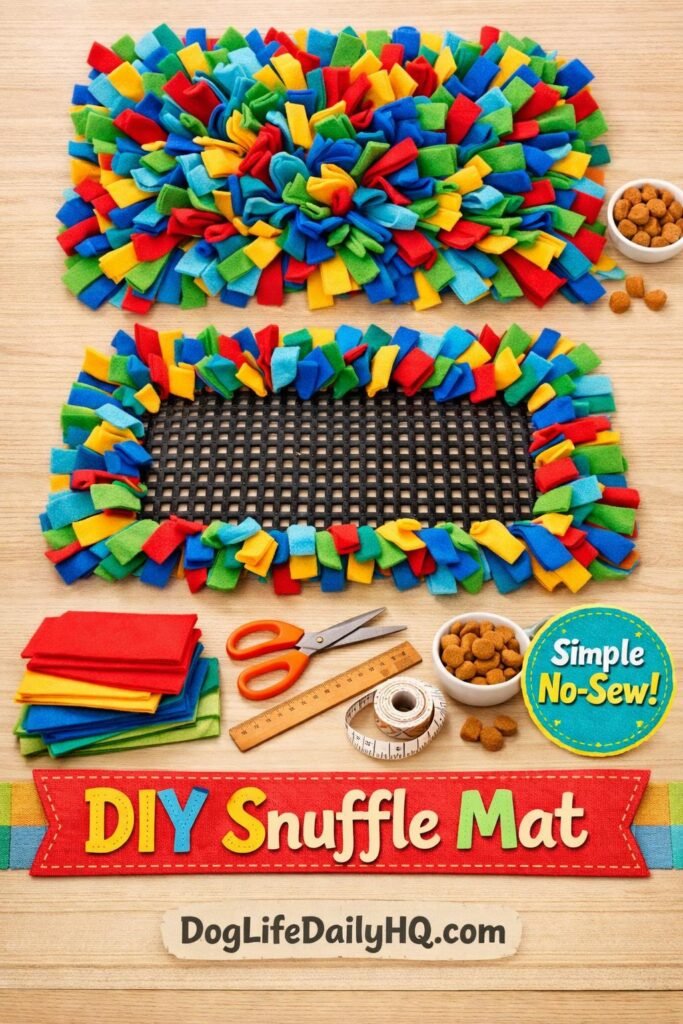
The beauty of making a no-sew snuffle mat is that it only takes fleece fabric and a rubber mat with holes. You don’t need expensive supplies or crafting experience.
I’ll show you several easy methods, including options that are machine washable and budget-friendly.
Whether your dog gobbles their food too quickly or just needs more mental stimulation, a DIY snuffle mat is a simple solution. Most pet owners can complete their first mat in under an hour.
Let me show you exactly how to create this enriching activity for under $10 using supplies you might already have at home.
Key Takeaways
- You can create a snuffle mat without sewing using fleece strips and a rubber mat in about 30 minutes.
- Snuffle mats provide mental stimulation, slow down eating, and reduce anxiety in dogs.
- Most DIY snuffle mats cost less than $10 to make and can be machine washed for easy cleaning.
Benefits of Snuffle Mats for Dogs

Snuffle mats tap into your dog’s natural instincts while solving common behavior problems. They keep your dog’s brain busy, help prevent gulping down food too fast, and create a calming activity for anxious pets.
Mental Stimulation and Enrichment
Dogs need to use their brains just as much as their bodies. A snuffle mat puts your dog’s strongest sense to work by making them search for hidden treats in fabric strips.
Just 10 to 15 minutes of sniffing can be as tiring as a 30-minute walk. Snuffle mats help keep your dog’s brain active throughout the day.
I’ve found they’re especially useful on rainy days when my dog can’t get outside as much. The mental workout helps prevent boredom and the destructive behaviors that come with it.
Using a snuffle mat regularly gives your dog a job to do. This satisfies their natural foraging instincts in a safe, controlled way.
Slowing Down Fast Eaters
Fast eaters face real health risks like bloating and upset stomachs. Snuffle mats slow down dogs that eat too quickly by making them work for each piece of food.
Instead of gulping kibble from a bowl in seconds, your dog has to sniff out each treat. This turns mealtime into a 10 to 20-minute activity.
The slower eating pace helps with digestion. Your dog’s stomach has time to process food properly, which reduces gas and discomfort.
I use my dog’s snuffle mat for part of her daily meals. She can’t inhale her food anymore, and she seems more satisfied after eating.
Reducing Anxiety and Stress
Sniffing activities naturally calm dogs down. When your dog focuses on finding treats in a snuffle mat, their heart rate slows and stress hormones decrease.
Snuffle mats provide stress relief during stressful situations. I bring out the snuffle mat during thunderstorms or when guests visit.
The repetitive sniffing motion works like meditation for dogs. It redirects their attention away from anxiety triggers and gives them something positive to focus on.
Dogs with separation anxiety benefit from snuffle mats too. Giving your dog a loaded snuffle mat before you leave keeps them occupied during those first anxious minutes.
Essential Materials for a DIY Snuffle Mat

The right materials make all the difference when building a snuffle mat that your dog will actually use. I focus on three main components: soft fabrics that won’t hurt your dog’s nose, a sturdy base that stays in place, and optional extras that boost the fun factor.
Choosing Safe and Durable Fabrics
Fleece is my top choice for creating a snuffle mat because it’s soft on sensitive noses and doesn’t fray when cut. I buy polar fleece in multiple colors so treats become harder to spot.
You’ll need about 1 to 2 yards of fleece depending on your mat size. I cut the fleece into strips that are roughly 1 inch wide and 6 to 8 inches long.
Safe fabric options include:
- Polar fleece (most popular)
- Anti-pill fleece
- Microfleece
- Cotton flannel
Avoid fabrics with loose threads or small pieces that dogs might swallow. I stay away from materials that can unravel easily or have a rough texture.
Old t-shirts work in a pinch, but fleece holds up better over time.
Sourcing a Non-Slip Base
A rubber sink mat with holes makes the perfect base for no-sew snuffle mat projects. I look for mats at dollar stores or home goods sections where they cost under $5.
The holes need to be large enough to thread fabric strips through but small enough to hold them securely. I prefer mats that are 12 by 18 inches for most dogs.
Good base options:
- Rubber sink mats with drainage holes
- Plastic craft canvas sheets
- Silicone trivets with grid patterns
- Bath mats with suction cups
The base should have a non-slip backing to prevent sliding during use. I test the grip by placing it on my floor and pushing it with my hand.
Optional Add-Ons and Accessories
I sometimes add extra pockets by folding and tying larger fleece pieces into the mat. These create deeper hiding spots for treats that make the game last longer.
Small fabric pouches sewn into corners give advanced sniffers an extra challenge. I also attach crinkly water bottle pieces between layers for dogs who love noise.
Fun additions include:
- Fabric tubes for tunnel-style hiding
- Different texture strips (corduroy, felt)
- Hanging loops for easy storage
- Washable toy attachments
Keep add-ons simple at first. I watch how my dog interacts with the basic mat before adding complex features.
Step-by-Step Guide: No-Sew Snuffle Mats

Making a no-sew snuffle mat requires cutting fleece into strips, securing them to a base like a rubber mat or plastic grid, and checking that all pieces stay firmly in place. I’ll walk you through each step so you can create a durable mat your dog will love.
Cutting and Preparing Fleece Strips
I recommend using fleece fabric because it doesn’t fray at the edges and works perfectly without sewing. You’ll need about 1 to 2 yards of fleece depending on how large you want your mat.
Cut the fleece into strips that are 1 inch wide and 6 to 8 inches long. I find that using a rotary cutter and ruler makes this job much faster than scissors.
You can also cut strips from an old fleece blanket if you want to save money. Make sure all your strips are roughly the same size so the mat looks even.
I usually cut between 100 and 150 strips for a medium-sized mat. Stack the cut strips in a pile so they’re ready to attach to your base.
Attaching Fabric Without Sewing
For the base, I use either a rubber sink mat with holes or a plastic craft canvas grid. Both work great and you can find them at dollar stores or craft shops.
Push each fleece strip through two adjacent holes in your base material. Tie the strip in a tight double knot on top of the mat.
The knot should sit flat against the surface. Start at one corner of the mat and work across each row systematically.
Pull knots tight to prevent them from coming loose. Fill every hole or space for maximum hiding spots.
I make sure to tie strips to a frame securely so they won’t pull out during use. Keep the strips close together so treats stay hidden in the fabric.
Ensuring a Secure and Tangle-Free Finish
After tying all the strips, I flip the mat over and check every knot. Any loose knots need to be retied immediately because dogs can pull them out while sniffing for treats.
Trim any strips that are much longer than others so they’re all about the same length. This prevents tangling and makes the mat easier for your dog to use.
I give the mat a good shake to fluff up all the fleece strips. Then I hide a few treats in it and test it myself by running my fingers through the fabric.
If any knots feel loose or strips come out easily, I go back and fix them.
Safety checks I always do:
- No loose threads that could be swallowed
- All knots are double-tied
- Base material has no sharp edges
- Strips are secure enough to withstand pulling
Customizing Sizes and Shapes
I’ve made snuffle mats in different sizes for various dogs. A small mat (12×12 inches) works well for little dogs or puppies.
Medium dogs do best with 18×18 inch mats. Large breeds need mats that are at least 24×24 inches.
You can also create different shapes by using different base materials. Round sink mats make circular snuffle mats.
Rectangular mats are great for long-nosed breeds that like to dig through the strips. For dogs that eat too fast, I make the mat extra thick by tying strips in every single hole.
This forces them to work harder to find their food and slows them down naturally.
I sometimes use multiple colors of fleece to make the mat more visually interesting. Mixing colors doesn’t change how it works, but it looks nice in your home.
Creative DIY Snuffle Mat Ideas

You can make snuffle mats from items you already have at home. Try creating versions that travel easily, or design festive mats for different holidays throughout the year.
Upcycling Household Items
I’ve found that old towels, worn-out t-shirts, and fleece blankets make excellent snuffle mat materials. You don’t need to buy anything new when you have fabric items sitting in your closet.
Cut old towels into strips about 1 inch wide and 6-8 inches long. Tie these strips through the holes of a rubber sink mat or dish drying rack.
The terry cloth texture holds treats well and stands up to washing. Old jeans work great too because the denim is durable.
I cut strips from the leg portions and tie them tightly to create thick hiding spots for kibble. You can also use scraps of fleece from old blankets since it’s soft on your dog’s nose.
A wire cooling rack from your kitchen makes a sturdy base. Just tie fabric strips through the grid pattern.
Rubber bathmats with suction cups on the bottom keep the mat in place while your dog snuffles.
Making Portable Travel Snuffle Mats
A portable snuffle mat keeps your dog busy during car rides or hotel stays. I make mine using a small placemat as the base instead of a full-size mat.
Cut your fleece strips shorter, about 4-5 inches long. This makes the mat more compact when you roll it up.
Tie the strips close together so treats don’t fall out during transport. I attach ties or ribbons to two opposite corners.
This lets me roll the mat tightly and secure it with the ribbons. The whole thing fits easily in my travel bag.
A silicone pot holder works as another great portable base. It’s flexible, lightweight, and won’t take up much space in your luggage.
Holiday-Themed Mats
I switch out my dog’s snuffle mat colors based on the season. Red and green fleece strips make a festive Christmas mat.
Orange and black work perfectly for Halloween. Use heart-patterned fabric for Valentine’s Day or red, white, and blue for summer holidays.
Your dog doesn’t care about the colors, but it makes photos more fun. I hide special holiday treats in themed mats.
Pumpkin-flavored treats go in the Halloween mat. Turkey-flavored ones work for Thanksgiving.
You can also add small bells or crinkle paper between fabric layers for Christmas mats. Just make sure these extras are secured well so your dog can’t swallow them.
The extra sounds make the snuffling experience more interesting for your pet.
Care and Maintenance Tips
I keep my dog’s snuffle mat clean and fresh by washing it regularly and storing it properly between play sessions. These simple steps help the mat last longer and stay safe for my pup to use.
Cleaning Your Snuffle Mat
I wash my snuffle mat every week or two, depending on how often my dog uses it. Food particles and drool can build up in the fleece strips, so regular cleaning prevents bacteria growth and bad odors.
For a quick clean, I shake the mat outdoors to remove loose crumbs and debris. Then I spot clean any dirty areas with mild soap and warm water.
When the mat needs a deep clean, I hand wash it in my bathtub or large sink. I use pet-safe detergent and warm water, working the soap through all the fleece strips.
I rinse thoroughly until the water runs clear. Machine washing works too, but I place the mat in a mesh laundry bag first to protect it.
I use cold water on a gentle cycle with mild detergent. I never use fabric softener because it can reduce the fleece’s ability to hide treats effectively.
I always air dry my snuffle mat completely before the next use. Damp fabric can grow mold or mildew.
I lay it flat on a towel or hang it outside in the sun.
Storing Between Uses
I store my snuffle mat in a clean, dry spot when my dog isn’t using it. This keeps it fresh and prevents my pup from getting bored with constant access.
I fold or roll the mat loosely and place it in a dedicated bin or basket. Tight folding can damage the fleece strips over time.
I make sure the mat is completely dry before storing to avoid musty smells. I keep the storage container in a closet or on a shelf away from my dog’s reach.
This makes the snuffle mat feel special when I bring it out for enrichment time. I inspect the mat each time I take it out.
I check for loose strips, damaged backing, or worn areas that might come apart. If I find any issues, I repair or replace the mat to keep my dog safe.
Frequently Asked Questions
Making a snuffle mat doesn’t require special skills or expensive materials. Most people have questions about what they need and how to adapt the project for their specific situation.
What materials do I need to create a no-sew snuffle mat for my dog?
I recommend starting with a rubber sink mat or drainage mat as your base. These mats have holes that make it easy to tie strips of fabric through them.
For the fabric strips, fleece works best because it doesn’t fray when cut. You’ll need about 1 to 2 yards of fleece depending on the size of your mat.
Cut the fleece into strips about 1 inch wide and 6 to 8 inches long. I like to use sharp fabric scissors to make clean cuts.
Can I use a towel to make an easy DIY snuffle mat for my pup?
Yes, a towel makes one of the simplest snuffle mat options for indoor dogs. I just lay a regular bath towel flat and sprinkle treats across it.
Then I roll or fold the towel in different ways to hide the treats inside. Your dog has to sniff and work to unroll or unfold the sections to find their rewards.
This method requires no cutting or tying. I can toss the towel in the washing machine when it gets dirty.
How can I make a snuffle mat if I don’t have a rubber base with holes?
I’ve used a rubber bath mat without holes by tying fabric strips directly to the textured surface. The raised bumps on these mats give you something to loop the fabric around.
Another option is to use a piece of wire shelf liner or chicken wire as your base. Just be careful to bend down any sharp edges so they don’t hurt your dog.
You can also braid or weave fabric strips together to create a mat without any base at all. This takes more time but works well.
Are there DIY snuffle mat options that are easily washable?
Most no-sew snuffle mats using fleece fabric can go right in the washing machine. I wash mine on a gentle cycle with cold water.
Air drying works best to keep the rubber base from warping. I hang mine over a shower rod or lay it flat on a drying rack.
The towel method I mentioned earlier is the easiest to clean. I just throw it in with my regular laundry.
What are some creative ideas for making a snuffle mat from items found at the Dollar Tree?
I love shopping at Dollar Tree for snuffle mat supplies. Rubber sink mats and dish drying mats make perfect bases for just a dollar or two.
You can find fleece blankets, fleece scarves, or even fleece socks to cut into strips. I usually buy 2 to 3 fleece items to have enough material.
Kitchen drawer organizers with grid patterns also work as bases. Silicone trivets with holes are another option I’ve used successfully.
How can I design a DIY snuffle mat suitable for larger dog breeds?
Larger dogs need bigger mats with more hiding spots. I use a mat that’s at least 18 by 24 inches for my bigger pups.
I make the fabric strips longer, around 8 to 10 inches. Tying them closer together creates a thicker pile that helps slow down dogs that eat too fast.
You can also connect multiple rubber mats together using zip ties. I’ve made extra-large mats this way for dogs over 60 pounds.