Dog and Baby Stroller: Finding the Perfect Ride for Your Little Ones

Taking your baby and dog out together can feel like a juggling act. You need to keep your little one safe and comfortable while making sure your furry friend gets exercise and attention. A dog and baby stroller combo lets you bring both your child and pet on walks without the stress of managing a regular stroller, a leash, and everything else at once.

I know how hard it can be to leave your dog at home when you head out with your baby. Dogs are part of the family too. Dog strollers provide a safe space for pets who get tired easily, have joint problems, or need protection from hot pavement.
The right stroller setup makes life easier for parents who want to include their pets in daily routines. Whether you’re looking for options that work for both babies and dogs or separate strollers you can push together, there are solutions that fit different needs and budgets.
Key Takeaways
- Dog and baby strollers help you take both your child and pet on outings without stress
- The best stroller choice depends on your dog’s size, mobility needs, and how you plan to use it
- Key features like sturdy wheels, good storage, and safety brakes make walks smoother and safer
Why Use a Dog and Baby Stroller?

A combined dog and baby stroller helps busy families keep everyone together during outings while meeting the unique needs of both pets and children. These specialized strollers solve practical problems like mobility limitations and safety concerns that come up when caring for multiple family members.
Key Benefits for Families
I’ve found that using a dog and baby stroller makes family outings much more manageable. Instead of juggling a regular baby stroller while trying to walk my dog on a leash, I can keep everyone in one place.
Dog strollers offer mental stimulation while strengthening the bond between pet and owner. My dog gets to experience new sights and smells without getting tired on long walks. This is especially helpful during hot weather when pavement can burn paw pads.
The convenience factor is huge. I can navigate crowded areas like farmers markets or outdoor events without worrying about my dog getting stepped on or my baby’s stroller wheels rolling over someone’s feet. Everything stays organized in one unit.
These strollers also help me include my dog in activities where pets might otherwise stay home. Whether I’m running errands or visiting pet-friendly cafes, having both my baby and dog with me means no one gets left behind.
Safety Considerations for Pets and Babies
Safety is my top priority when using a combined stroller. I always make sure there’s a physical barrier or separate compartment between my dog and baby. Most quality strollers designed for both have built-in dividers.
Key safety features I look for:
- Secure harness attachments for my dog
- Locking wheels to prevent rolling
- Sturdy frame construction
- Breathable mesh panels
- Separate compartments with solid barriers
I never leave my dog and baby unattended in the stroller together. Even the friendliest dogs can react unpredictably to sudden movements or sounds from babies.
Weight limits matter too. I check that the stroller can handle the combined weight of my baby and dog safely. Overloading can cause the frame to break or tip over.
When to Consider a Pet Stroller
I decided to get a pet stroller when my senior dog started struggling with longer walks but still wanted to be part of family activities. Dog strollers accommodate mobility concerns and enhance quality of life for aging pets.
Strollers benefit dogs recovering from injuries or surgery. My neighbor used one after her dog had hip surgery, allowing him to enjoy fresh air without putting weight on his healing joints.
Small breed owners often find strollers useful in crowded places. My tiny dog gets anxious around big crowds and heavy foot traffic. The stroller gives her a safe space while still experiencing the outdoors.
Vet and grooming visits become less stressful with a pet stroller. I can wheel my dog right into the waiting room without worrying about other animals or keeping her calm on a leash.
Choosing the Right Dog and Baby Stroller

Finding a stroller that works for both your baby and dog requires attention to weight limits, practical features, and how you plan to use it. The right choice depends on your dog’s size, the features that make daily use easier, and where you’ll be pushing the stroller.
Size and Weight Capacity Essentials
I always check the weight capacity first because it’s the most important safety factor. Most strollers designed for dogs and babies have separate compartments with their own weight limits.
For dogs under 20 pounds, a standard pet compartment works fine. But if I have a larger breed, I need to look for a heavy-duty dog stroller or a large dog stroller that can handle 50 to 75 pounds or more.
The baby compartment should meet standard infant safety requirements. I measure my dog before shopping to ensure they’ll fit comfortably in the pet section. Most strollers list interior dimensions, so I compare these with my dog’s length and height when sitting or lying down.
Some models have adjustable dividers between compartments. This feature helps me customize the space as my baby and dog grow.
Best Features to Look For
I prioritize features that make daily use easier and safer for everyone. A mesh window provides ventilation for my dog while letting me check on them easily.
An adjustable handle matters because my partner and I have different heights. Being able to change the handle position prevents back strain during longer walks.
Here are the features I consider essential:
- Locking wheels for stability when stationary
- Cup holders for bottles and water
- Storage basket underneath for diaper bags and dog supplies
- Easy-fold mechanism for quick storage
- Removable and washable liners for easy cleaning
- Safety tethers inside the dog compartment
I also look for strollers with separate entry points. This design keeps my baby’s area clean and makes it easier to get my dog in and out without disturbing naptime.
Types of Terrains and Stroller Design
The surfaces I travel on determine which wheel type I need. For smooth sidewalks and indoor spaces, smaller plastic wheels work fine.
Air-filled tires handle rough terrain, gravel paths, and grass much better. I choose these if I plan to walk in parks or on uneven surfaces. They provide better shock absorption for both my baby and dog.
Three-wheel designs offer better maneuverability in tight spaces. Four-wheel models provide more stability, especially when the stroller is fully loaded.
I consider a jogging-compatible stroller if I want to run with my family. These have a fixed front wheel and better suspension systems. The frame construction matters too—aluminum frames are lighter, while steel frames offer more durability for heavier loads.
Top-Rated Dog and Baby Stroller Models

Several standout options help families transport both their babies and dogs comfortably. The HPZ Pet Rover Premium leads the pack with its versatile design, while specialized strollers cater to different dog sizes and activity levels.
HPZ Pet Rover Premium Overview
The HPZ Pet Rover Premium stands out as one of the most versatile options I’ve found for families. It features a spacious cabin that can hold pets up to 50 pounds, making it suitable for small to medium-sized dogs. The stroller includes a reversible handlebar, adjustable canopy, and large all-terrain wheels that make navigating different surfaces much easier.
What makes this model special is its convertible design. I can use it as a pet stroller, jogger, or even detach the carrier for separate use. The premium version comes with extra features like a cup holder, storage basket, and multiple entry points with zippers.
The frame is made from lightweight aluminum but still feels sturdy enough for daily use. Pet owners particularly appreciate the mesh windows that provide good airflow while keeping their dogs secure inside.
Best Dog Strollers for Different Needs
Different situations call for different stroller types. Dog strollers designed for jogging have larger wheels and better suspension systems to handle bumpy paths at faster speeds.
For senior or injured dogs, I recommend strollers built for comfort and easy access. These models typically have lower entry points and extra padding. Small dogs need well-ventilated strollers with large mesh windows for airflow and visibility.
Large breed owners should look for heavy-duty frames that support more weight. Some strollers accommodate multiple pets, which works great for families with more than one small dog.
Popular Choices and Customer Favorites
Consumer testing reveals that pet parents value smooth maneuverability and durability above all else. Pet Gear and Ibiyaya consistently rank among top expert recommendations for their quality construction.
Many families choose strollers with additional storage space for baby supplies and dog essentials. Weather-resistant canopies protect pets from sun and rain during outdoor adventures.
The most popular models feature quick-fold mechanisms for easy storage in car trunks. Parents also favor strollers with locking brake systems and safety tethers that keep dogs secure during walks.
Features That Make Outings Easier
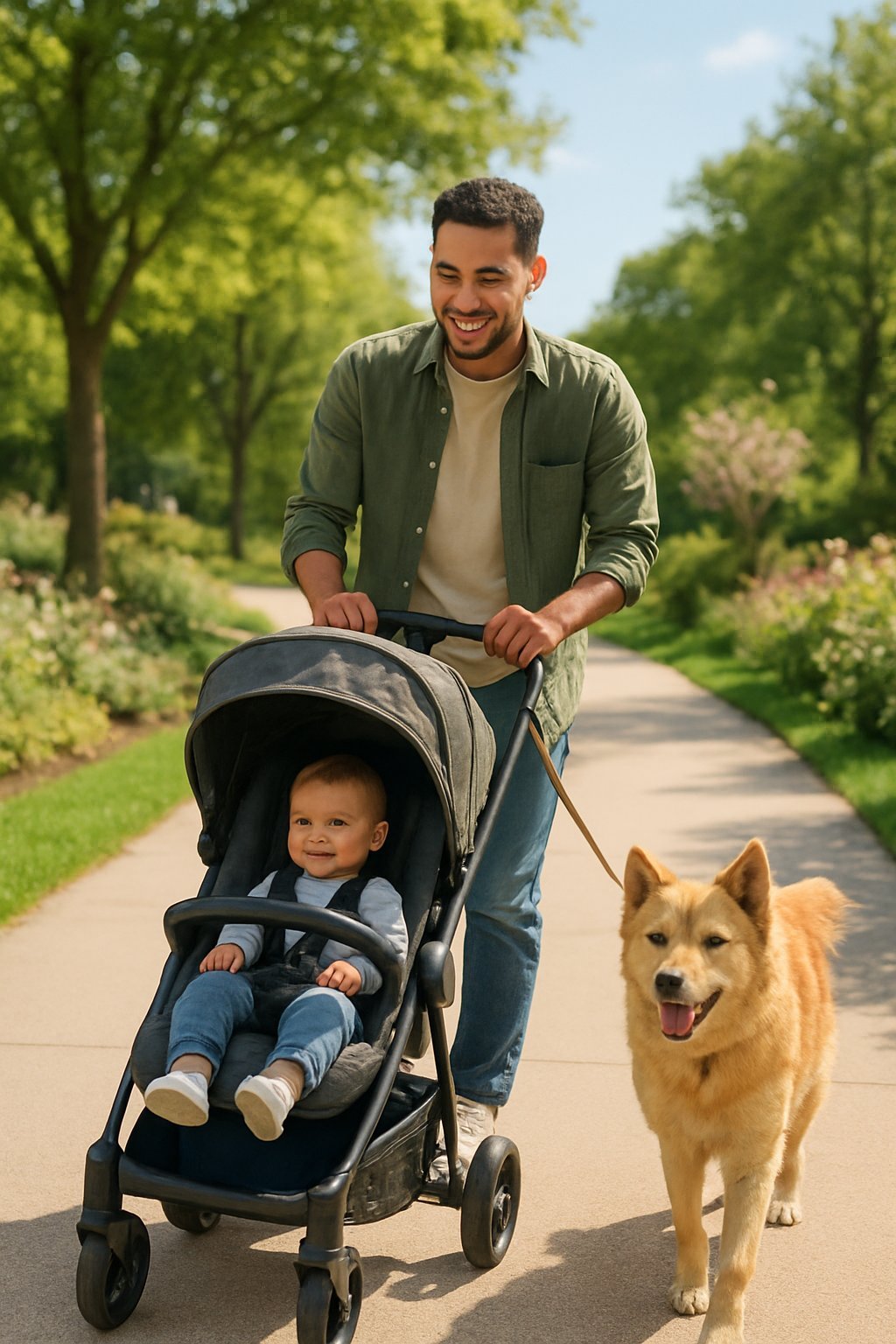
I’ve found that the right features can transform a stroller from basic transport into a tool that genuinely makes life simpler. Ventilation, storage, and safety elements work together to create stress-free trips with your dog or baby.
Ventilation and Comfort Elements
The mesh window panels I look for in quality strollers serve two critical purposes. They allow air to flow freely while keeping bugs and debris out.
Most strollers designed for pets and children include mesh on multiple sides. This creates cross-ventilation that prevents overheating on warm days. I always check that the mesh is durable enough to resist tears from curious paws or little fingers.
Padded interiors make a real difference in comfort levels. The cushioning should be thick enough to absorb bumps but not so soft that it loses shape quickly. Removable and washable padding is something I consider essential since accidents and spills happen regularly.
Weather protection features like canopies and rain covers extend the usability of strollers across different seasons. A canopy with UV protection shields passengers from harsh sun exposure during summer walks.
Ease of Use and Storage Solutions
An adjustable handle lets me customize the height to match my comfort level. This prevents back strain during longer outings. I can typically find handles that adjust anywhere from 36 to 42 inches in height.
The ability to fold a stroller quickly changes everything about transportation and storage. One-hand folding mechanisms are my preference because I often need to hold a leash or a diaper bag while collapsing the frame. Pet strollers with lightweight designs typically weigh between 15 and 25 pounds when folded.
Storage baskets underneath the main compartment hold essentials like water bottles, treats, toys, and changing supplies. I’ve noticed that baskets with a 10-pound capacity work well for most day trips. Cup holders and small pockets keep frequently needed items within easy reach without digging through bags.
Safety and Security for Pets and Babies
Interior tether attachments are non-negotiable for me when using a stroller with dogs. These leash clips prevent jumps or falls even if the main enclosure opens unexpectedly. Dog strollers include built-in leashes as backup safety measures that baby strollers don’t typically need.
Brake systems need to lock firmly on both rear wheels. I test brakes on inclines before each use to confirm they hold steady. Parking brakes should engage with a simple foot press and release just as easily.
Reflective strips or bright colors increase visibility during evening walks. Five-point harness systems distribute pressure evenly and prevent passengers from climbing out. The buckles should be sturdy enough to resist tampering but simple enough for me to operate quickly in emergencies.
Tips for Walking With Your Dog and Baby Together
I’ve found that successful walks require proper preparation of both your pet and child, consistent training techniques, and knowing how to adjust for different conditions you’ll encounter outdoors.
Preparing Pets and Infants for Stroller Rides
I always recommend introducing your dog to the stroller before the baby arrives. Let your dog sniff and investigate the empty stroller while it’s stationary. Push it around your home so your dog can hear the sounds it makes.
Once your dog seems comfortable, I suggest taking short walks with the empty stroller. Keep treats handy and reward calm behavior around the stroller.
When it’s time to add your baby, I start with very brief outings around the block. I watch my dog’s body language closely for signs of stress or overexcitement. Keeping treats in the stroller helps me reward good behavior right away.
Your infant needs preparation too. I make sure my baby is fed, changed, and content before heading out. I pick times when my baby is naturally alert and happy rather than fussy or due for a nap.
Training Tips for Dogs
I focus on reinforcing basic commands before adding stroller walks to our routine. My dog needs to know “heel,” “sit,” and “leave it” reliably.
I use a six-foot leash for better control during stroller walks. I never wrap the leash around my wrist or attach it to the stroller itself. If my dog pulls unexpectedly, I could lose control of the stroller or risk tipping it over.
I practice walking with the stroller in low-distraction areas first. My backyard or quiet street works well for initial training sessions. I gradually add more challenging environments as my dog improves.
When my dog walks calmly beside the stroller, I mark the behavior with “yes” and give a treat. I keep training sessions short and positive. If my dog gets too excited or pulls toward squirrels, I stop, ask for a sit, and wait for calm behavior before continuing.
Handling Different Weather and Environments
I adjust my walks based on temperature and conditions. In hot weather, I go out early morning or evening when pavement won’t burn my dog’s paws. I bring water for both of us.
Cold weather requires different preparations. I limit walk times and watch for signs my dog is too cold. I also make sure my baby is bundled appropriately.
I choose my routes carefully. Wide sidewalks with minimal obstacles work best. I avoid narrow paths where my dog might cut in front of the stroller.
When I encounter other dogs or distractions, I create distance by crossing the street or stepping aside. I ask my dog to sit and wait until the distraction passes. This prevents the tangled leash situations that can endanger everyone.