Dog Bed Ideas: Creative and Cozy Sleeping Spots Your Pup Will Love

Your dog spends a lot of time sleeping and resting throughout the day. They need a comfortable spot that supports their body and gives them a cozy place to call their own. From simple DIY projects to stylish store-bought options, there are countless dog bed ideas that fit any budget, home style, and dog size.

I’ve put together a collection of creative dog bed ideas for every home and budget that will help you find the perfect sleeping spot for your furry friend. Whether you want to build something yourself or just need inspiration for styling a bed you already have, I’ll show you options that work.
Making or choosing the right dog bed doesn’t have to be complicated. I’ll walk you through different materials, styles, and designs that keep your dog comfortable while fitting nicely into your home decor.
Key Takeaways
- Dog beds come in many styles and materials to match your home and your dog’s needs
- You can make affordable dog beds yourself using simple materials or buy ready-made options
- Consider your dog’s size, age, and sleeping habits when choosing the right bed design
Popular Types of Dog Beds
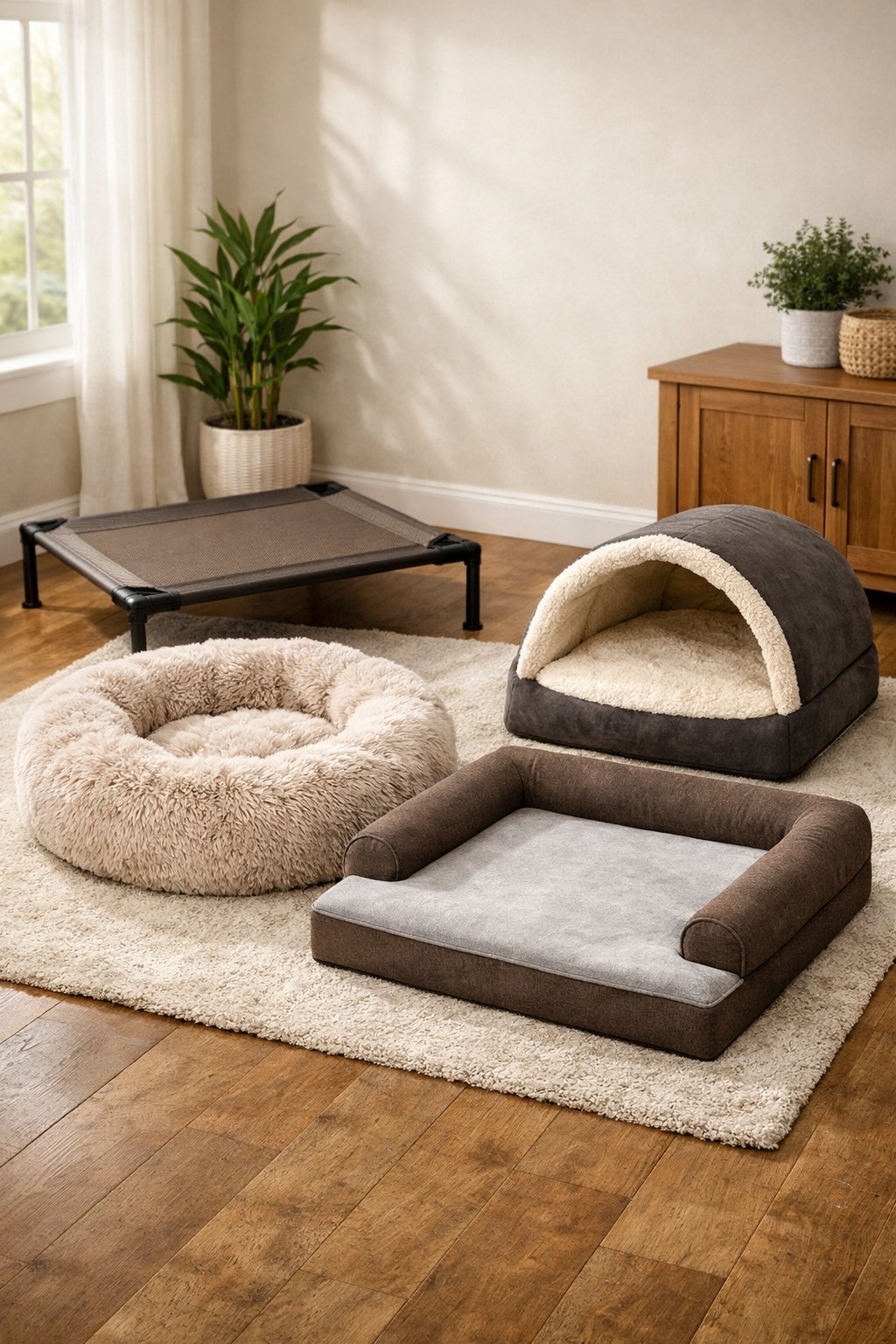
Different bed styles serve different needs, from joint support to security and comfort. The right choice depends on your dog’s sleeping habits, health needs, and personal preferences.
Orthopedic Dog Beds
I recommend orthopedic beds for dogs with joint issues, arthritis, or senior pups who need extra support. These beds use memory foam or high-density foam that molds to your dog’s body shape.
The foam helps distribute weight evenly across the surface. This reduces pressure on joints and hips while your dog sleeps.
Orthopedic beds work well for large breed dogs who are prone to hip dysplasia. They also benefit dogs recovering from surgery or injury.
Most orthopedic beds come with removable, washable covers. I find this makes cleaning much easier compared to other bed types.
The main downside is cost, as quality orthopedic beds typically run higher in price than standard options.
Donut Dog Beds
Donut beds feature raised edges that circle around the entire sleeping area. These cozy nest-style beds appeal to dogs who like to curl up when they sleep.
The bolstered sides give dogs a sense of security and something to rest their head on. I notice many dogs instinctively nestle into the center and lean against the cushioned rim.
Small to medium dogs tend to prefer donut beds the most. The circular shape matches their natural sleeping position.
These beds come in various materials including plush fleece, faux fur, and cotton. Some versions have a deeper center that creates more of a cave-like feel.
Donut beds usually work well in crates since they fit the rectangular space efficiently. Just measure your crate first to ensure a proper fit.
Elevated Dog Beds
Elevated beds lift your dog off the ground using a raised frame with a suspended fabric or mesh center. The lifted design allows air to circulate underneath, keeping dogs cooler in warm weather.
I find these beds particularly useful for outdoor use or in garages and basements. They keep dogs away from cold, damp floors.
The sturdy frame typically uses metal or heavy-duty plastic. The sleeping surface uses breathable mesh or canvas material.
These beds resist moisture, dirt, and pests better than cushioned beds. They’re also easy to clean with just a quick wipe down or hose off.
Some dogs take time to adjust to the elevated surface. Older dogs might struggle with climbing up, so consider your dog’s mobility before choosing this style.
Crate-Friendly Beds
Crate-friendly beds are designed to fit perfectly inside dog crates without bunching or sliding around. I look for beds with measurements that match standard crate sizes.
These beds typically have a flat, rectangular shape without raised sides. This design maximizes the usable space inside the crate.
Many crate beds are made from durable materials that can handle chewing and digging. Water-resistant covers help protect against accidents during crate training.
The padding thickness varies based on your needs. Thinner pads work for travel crates, while thicker cushions offer more comfort for extended crate time.
I suggest choosing a bed with a non-slip bottom to prevent movement. Some versions come with ties or clips that secure the bed to the crate.
Creative Dog Bed Ideas
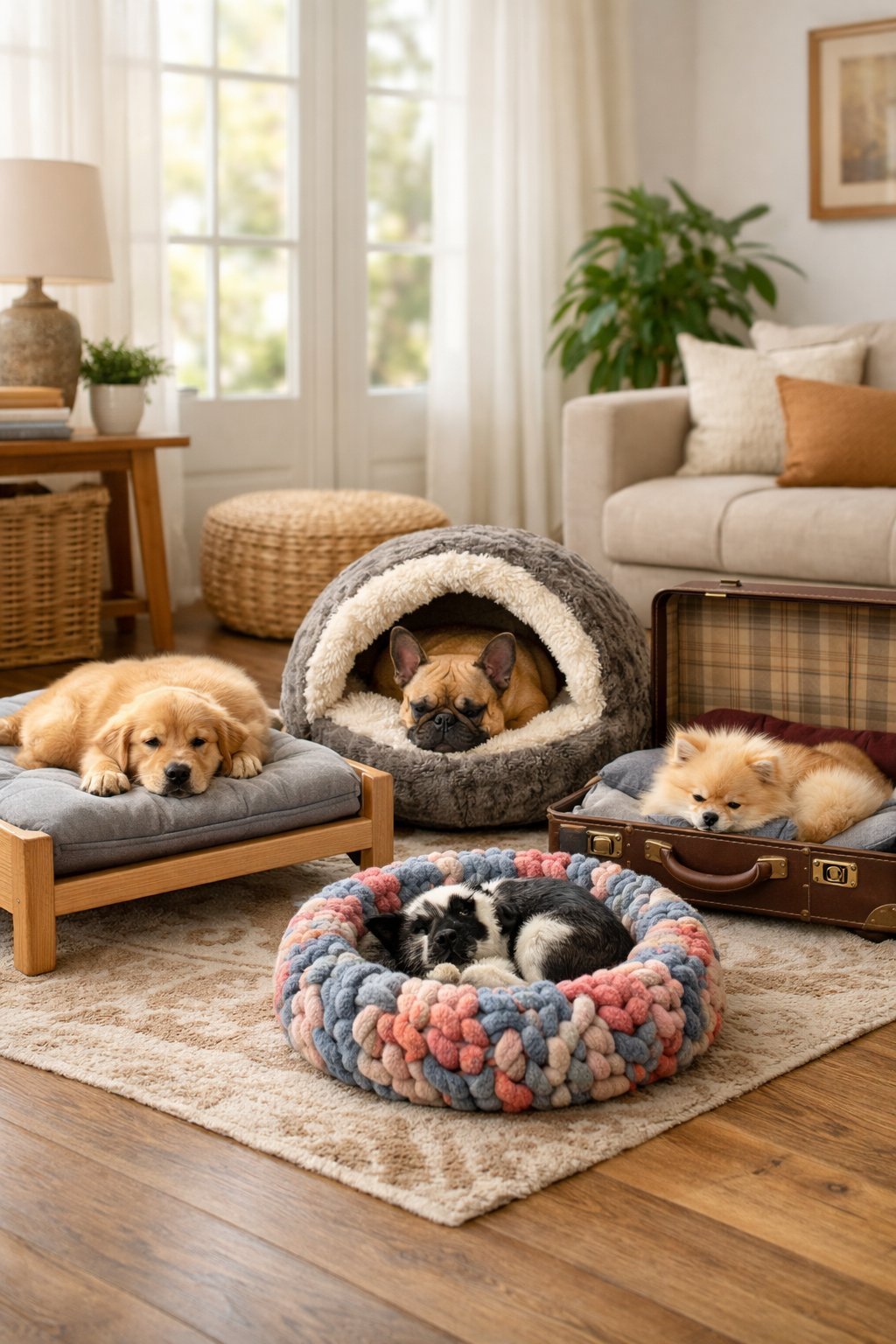
Making a custom bed for your dog doesn’t have to be complicated or expensive. From simple DIY projects to repurposing old furniture, there are plenty of ways to create a cozy sleeping spot that matches your home’s style.
DIY Dog Bed Projects
I’ve found that making your own dog bed is easier than most people think. You can start with basic materials like old pillows, blankets, and fabric to create a comfortable sleeping area.
One simple option is a no-sew bed. I just fold a large fleece blanket into layers and stuff it inside a pillowcase. You can also use old sweaters stuffed with filling to make a cozy cushion.
For those who enjoy sewing, a basic cushion cover with a zipper makes cleaning much easier. I measure my dog’s length and add a few inches on each side. Then I cut two pieces of fabric and sew them together with a removable cover.
Cozy DIY dog bed designs can include elevated options for better air circulation. I’ve seen people build simple wooden frames with canvas stretched across the middle. This style keeps dogs cool in summer and works well for larger breeds.
Upcycled Furniture Beds
Old furniture makes excellent dog beds with a little creativity. I’ve turned dresser drawers, side tables, and even suitcases into comfortable sleeping spots.
An old wooden drawer just needs some paint and a cushion inside. I sand it down first, then add a fresh coat of pet-safe paint that matches my home. The raised sides help dogs feel secure.
Side tables with the bottom shelf work perfectly too. I remove the top and add a cushion to the lower shelf. This creates a den-like space that many dogs love.
Wooden dog bed ideas include converting wine barrels, crates, and end tables. I’ve even seen people turn old TV consoles into dog beds by removing the electronics and adding cushions.
Personalized Dog Beds
Adding personal touches makes a dog bed special. I embroider my dog’s name on the cover or add decorative trim that matches my home decor.
Custom fabrics let you choose patterns and colors that fit your style. I pick washable materials that can handle wear and tear. Waterproof liners underneath protect against accidents.
You can add features based on your dog’s needs. Older dogs benefit from memory foam padding, while anxious dogs like bolsters around the edges. I’ve added built-in toy pockets and blanket storage to keep everything organized.
Monogramming, appliqué designs, or fabric paint all work well for decoration. Just make sure any additions are securely attached and safe for your dog.
Styling Dog Beds for Your Home
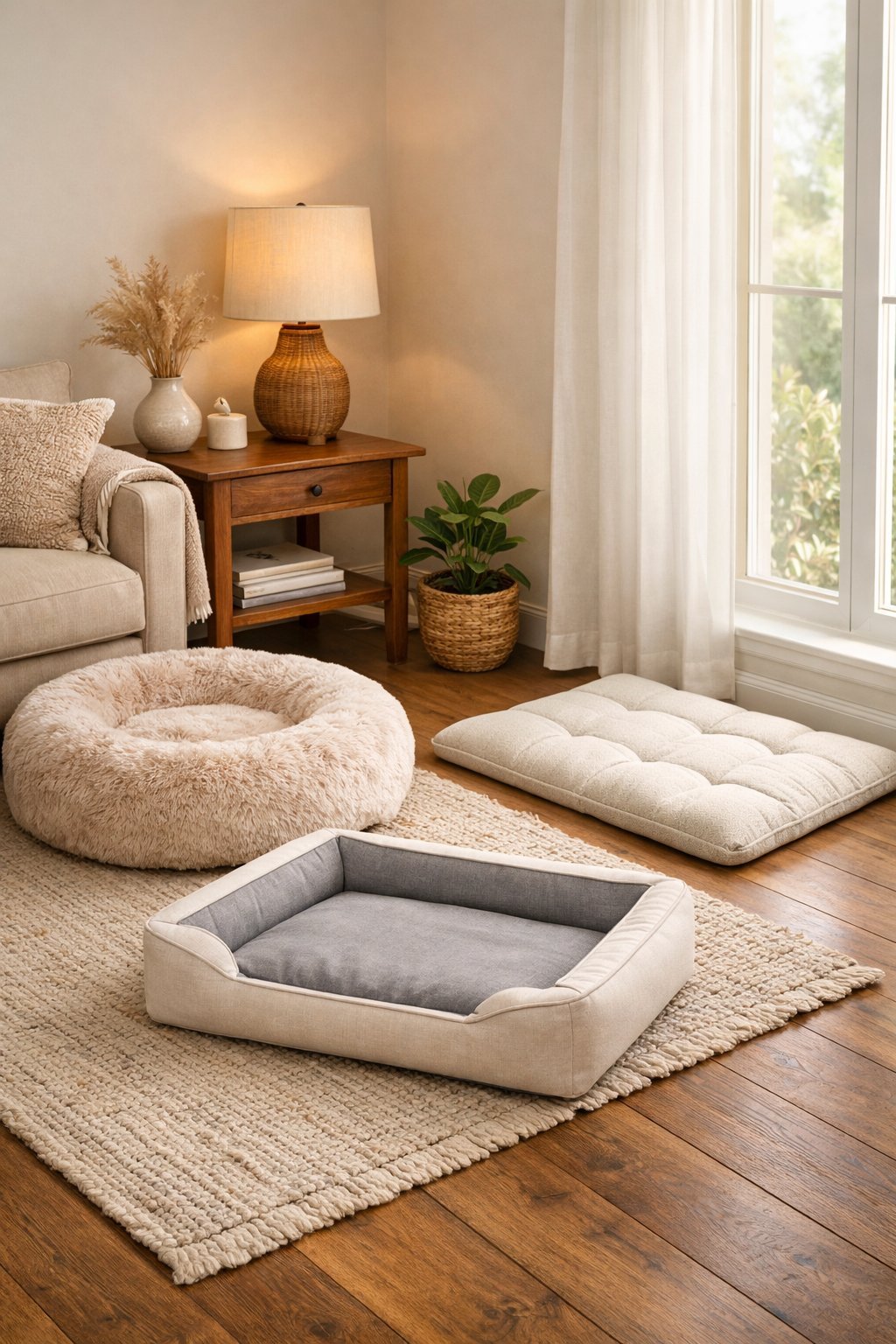
Your dog’s bed doesn’t have to clash with your carefully chosen furniture and color schemes. With smart choices in materials, placement, and design, you can create a comfortable spot for your pet that looks like it belongs in your space.
Matching Dog Beds with Décor
I’ve found that choosing a dog bed in neutral colors like gray, beige, or cream makes it easy to blend with most room styles. These shades work well whether you have modern minimalist furniture or a cozy farmhouse aesthetic.
For a cohesive look, I pick bed fabrics that match my existing textiles. If I have linen curtains, a linen dog bed cover creates a unified feel. Velvet or faux fur beds work beautifully in rooms with plush throws and soft textures.
Wood-framed elevated beds are another option I love. They complement hardwood floors and wooden furniture pieces naturally. I can find DIY wooden dog bed designs in styles ranging from rustic to modern that fit different décor themes.
Pattern mixing also works if done thoughtfully. I stick to one patterned element and keep the rest solid, or I use patterns in the same color family for visual harmony.
Hidden Dog Bed Solutions
Built-in dog beds maximize floor space while keeping pet areas discreet. I’ve seen nightstands, console tables, and credenzas with bottom drawers converted into cozy sleeping nooks.
Under-stair spaces make perfect hidden dog beds. The enclosed area feels den-like and secure for dogs who prefer privacy. I add a cushion and some ventilation to make it comfortable.
Crate furniture is another clever solution I recommend. These pieces look like end tables or benches from the outside but contain a crate interior. They serve double duty as functional furniture and pet beds.
Cabinet-style dog beds with doors that close completely hide the sleeping area when guests visit. This keeps the room looking tidy without sacrificing your dog’s comfort.
Space-Saving Dog Beds
Wall-mounted fold-down beds are ideal for small apartments. I can flip them up against the wall during the day to free up floor space for activities.
Corner beds utilize often-wasted triangular spaces. They tuck neatly into room corners without blocking pathways or taking up prime real estate.
Elevated beds with storage underneath give me extra room for dog toys, grooming supplies, or seasonal items. The raised design also improves airflow around the bed.
Nesting beds work well for multi-dog households. I stack them when not in use and spread them out at bedtime. Space-saving designs help me accommodate all my pets without overcrowding my living areas.
Choosing the Right Material
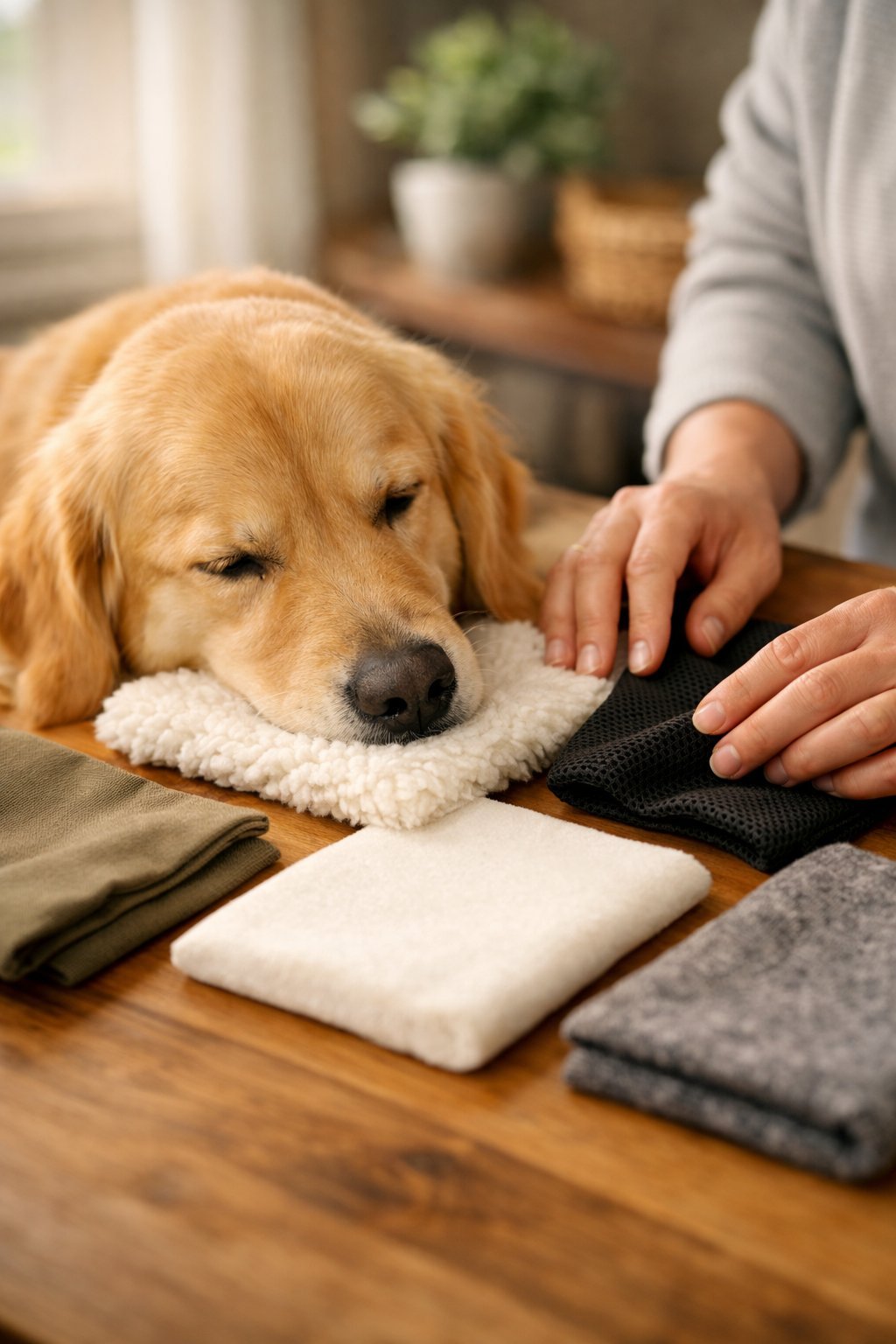
The material you pick for your dog’s bed affects how long it lasts, how easy it is to clean, and how comfortable your dog feels. I focus on fabrics that can handle daily use, materials that are better for the planet, and options that won’t trigger allergies.
Washable and Durable Fabrics
I always look for durable and easy-to-clean materials when choosing dog bed fabrics. Canvas and denim stand up well to scratching and chewing. These tough fabrics can go through multiple wash cycles without falling apart.
Microfiber is another great choice I recommend. It resists stains and dries quickly after washing. Polyester blends also work well because they hold their shape and clean up easily.
I prefer beds with removable, machine-washable covers. This makes it simple to keep the bed fresh and clean. Look for fabrics with tight weaves that resist fur and dirt buildup.
Key fabric features to consider:
- Machine washable at high temperatures
- Scratch-resistant surfaces
- Quick-drying materials
- Stain-resistant treatments
Eco-Friendly Options
I choose eco-friendly materials when I want to reduce environmental impact. Natural fibers like hemp and organic cotton make excellent bed materials. Hemp is naturally antimicrobial and gets softer with each wash.
Recycled polyester gives plastic bottles a second life as comfortable bedding. This material performs just as well as new polyester but uses fewer resources. Wool is another natural option that regulates temperature and resists odors.
I look for beds made without harsh chemicals or synthetic dyes. Many eco-friendly beds use plant-based foam instead of petroleum-based products. These natural fiber options provide comfort while being kinder to the environment.
Hypoallergenic Materials
I select hypoallergenic materials for dogs with sensitive skin or allergies. These fabrics resist dust mites, mold, and bacteria that can cause reactions.
Memory foam and orthopedic foam fillings are naturally resistant to allergens. I pair these with covers made from tightly woven fabrics that create a barrier against irritants. Bamboo fabric is naturally hypoallergenic and has antimicrobial properties.
Avoid beds with feather fillings if your dog has allergies. I stick with synthetic fills that are less likely to harbor allergens. Look for beds labeled as hypoallergenic or allergy-friendly. Regular washing in hot water helps eliminate any allergens that do build up over time.
Seasonal and Outdoor Dog Bed Ideas
Dogs need different sleeping solutions depending on the weather and where they spend their time. The right bed can keep your pup comfortable whether it’s hot summer days, cold winter nights, or time spent outside.
Cool Beds for Summer
Summer heat can be tough on dogs. I recommend elevated beds that allow air to flow underneath and keep your dog off the hot ground.
Cooling gel mats work well for dogs who overheat easily. These mats absorb body heat and provide a refreshing surface. You can place them on top of existing beds or use them alone on the floor.
Water-filled beds are another great option. They stay naturally cool and provide cushioned support. Just make sure to get one made from puncture-resistant material if you have a dog with sharp nails.
Elevated outdoor dog beds help protect against moisture and dirt while keeping air flowing. These beds lift your dog off hot surfaces like concrete or asphalt. Look for ones with breathable mesh fabric that dries quickly.
I also suggest placing any summer bed in a shaded area. Even cooling beds work better when they’re not in direct sunlight.
Cozy Winter Dog Beds
Cold weather requires beds that trap heat and provide insulation. I prefer beds with raised sides that let dogs curl up and stay warm.
Self-warming beds use reflective material to bounce your dog’s body heat back to them. These don’t need electricity and work well for mild to moderate cold. They’re safer than heated beds since there’s no risk of overheating or electrical issues.
For extra warmth, I add blankets or fleece liners that dogs can burrow into. Memory foam bases provide insulation from cold floors while supporting joints.
Key features for winter beds:
- Plush fabrics like faux fur or fleece
- Deep bolsters or high sides
- Water-resistant bottoms
- Machine washable covers
Cave-style beds work perfectly for dogs who like to feel enclosed. The covered design traps warm air and creates a cozy den.
Outdoor Dog Bed Solutions
Outdoor dog beds need to withstand weather and stay clean. Oxford cloth and canvas are top materials because they resist water and dry quickly.
I look for beds with these outdoor-friendly features:
- Waterproof or water-resistant covers that repel rain and morning dew
- UV-resistant fabric that won’t fade in sunlight
- Mildew-resistant materials that handle humidity
- Removable, washable covers for easy cleaning
Elevated designs keep dogs off wet grass and muddy ground. The raised platform also discourages bugs and pests. Metal or PVC frames hold up better than wood outdoors.
For patios and decks, I recommend beds with non-slip bottoms. This prevents the bed from sliding around when your dog gets on and off.
Portable options work well if you take your dog camping or to the beach. Look for lightweight beds that fold or roll up for transport. Many outdoor-friendly designs combine durability with easy portability.
More Dog Bed Ideas
I’ve found that creating a special dog bed area in your home makes pets feel more secure and comfortable. You can set up a cozy corner in any room where your pup likes to spend time.
For those who enjoy crafting, dog beds homemade projects offer endless possibilities. I love how these let you customize everything from size to fabric choice. You can match your home’s style while giving your dog exactly what they need.
Puppy bed ideas work best when they’re washable and sized for growth. I recommend using softer materials since young dogs need extra cushioning for their developing joints.
If you want cute dog beds that look great in your living space, consider these options:
- Beds shaped like donuts or clouds
- Beds with fun patterns or bright colors
- Beds with decorative trim or piping
- Beds that look like small sofas
Building a DIY dog bed frame gives you more control over height and style. I’ve seen people use wooden pallets, old dresser drawers, and even repurposed furniture to create unique frames.
Cool dog beds include elevated designs that keep dogs off cold floors and improve air circulation. These work especially well in warmer climates.
For larger breeds, DIY dog beds for large dogs need extra support and durability. I suggest using memory foam or multiple layers of cushioning to handle the weight.
My favorite creative dog bed designs include upcycled suitcases, wine barrels, and built-in furniture pieces. These turn functional items into stylish sleeping spots your dog will love.