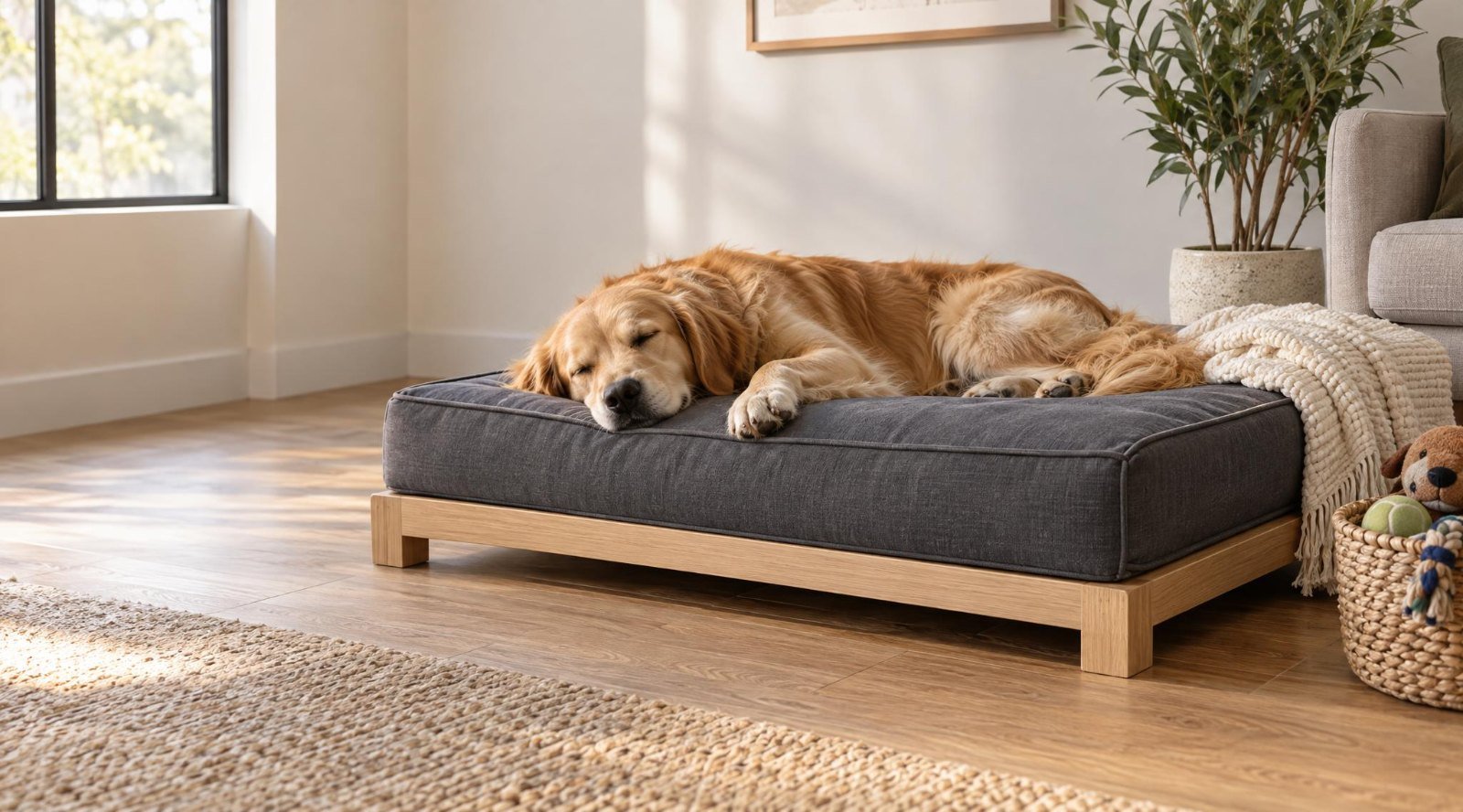
DIY Dog Bed: How to Make a Dog Bed (Sizes, Foam and Cut List)

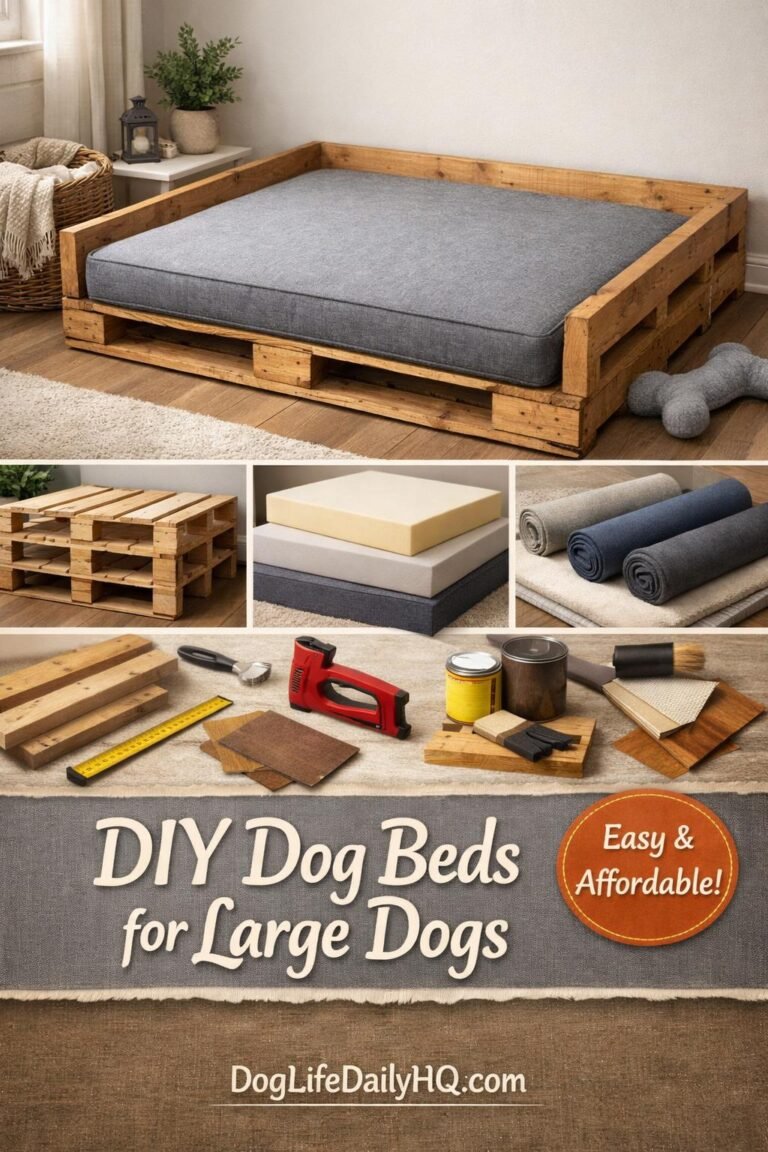
A good dog bed is mostly the right size and the right foam. This guide shows you how to size a bed to your dog and pick foam by weight. Then it walks through two builds: a no-sew fleece bed you can make in an hour, and a sewn foam bed with a removable zippered cover, with a full cut list for four sizes. If you’d rather skip the work, there are ready-made picks below too.
This post contains affiliate links. As an Amazon Associate I earn from qualifying purchases.
Short on time? Buy a ready-made dog bed instead:
- Orthopedic dog bed – support for joints
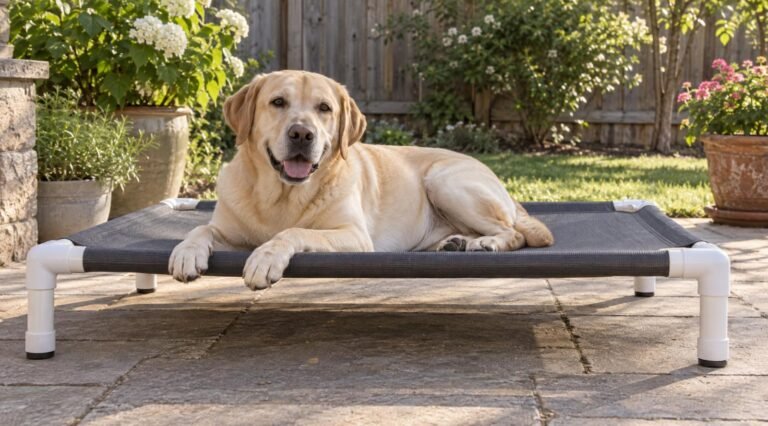
- Elevated dog bed – cool and easy to clean
- Dog sofa bed – a couch of their own
- Calming donut bed – for dogs that like to curl up
What you’ll need to build one:
Upholstery foam, Waterproof bed liner, Durable upholstery fabric, Staple gun.
Quick Answer
- Size: measure your dog lying stretched out, nose to base of tail, and add 6 to 12 inches. That’s the bed length.
- Foam: 2 to 3 inches for dogs under 30 lb, 3 to 4 inches for 30 to 70 lb, 4 to 5 inches for 70 lb and up. Use high-density support foam, with a memory foam top layer for seniors.
- Cover: canvas, duck cloth or denim with a zipper so you can wash it, plus a waterproof liner over the foam.
- Easiest build: no-sew tied fleece bed, about 1 hour.
- Best build: foam slab with a sewn zippered box cover, about 3 to 4 hours.
Step 1: Size the Bed
- Wait until your dog is lying stretched out on its side.
- Measure from the nose to the base of the tail. Add 6 to 12 inches. That’s your length.
- Measure from the top of the shoulders to the tip of the front paws. Add 6 to 12 inches. That’s your width.
- Dogs that curl up can go on the small end. Sprawlers need the large end.
| Dog weight | Typical bed size | Foam thickness |
|---|---|---|
| Up to 20 lb | 24 x 18 in | 2 to 3 in |
| 20 to 50 lb | 36 x 24 in | 3 to 4 in |
| 50 to 80 lb | 42 x 30 in | 4 in |
| 80 lb and up | 48 x 36 in | 4 to 5 in |
Your own measurement beats the chart. Breeds vary a lot in length for the same weight.
Step 2: Pick the Filling
| Filling | Support | Best for | Downside |
|---|---|---|---|
| High-density support foam | Firm, even | Most dogs, large dogs | Costs more than fiberfill |
| Memory foam (as a 1 to 2 in top layer) | Contours, spreads pressure | Seniors, dogs with sore joints | Can trap heat. Don’t use it alone, dogs sink through. |
| Polyester fiberfill | Soft, flattens over time | Small dogs, curl-up pillow beds | Needs refluffing and topping up |
| Old blankets and pillows | Soft | Free, quick beds | Lumpy, flattens fast |
A simple test for foam: press your fist into it with your weight. If you can feel the floor, it’s too soft or too thin for a big dog.
🛒 Shop Fillings & Foam
Memory Foam Dog Bed Insert
Best for senior dogs and large breeds with joint issues
High-Density Foam Sheets
Cut to any shape — firm support for all dog sizes
Polyester Fiberfill Stuffing
Budget-friendly fill — great for pillow-style and small dog beds
Build 1: No-Sew Fleece Dog Bed (About 1 Hour)
Good for small and medium dogs, crates and car rides.
Materials: two pieces of fleece, each 10 inches bigger than your cushion on every side (so a 24 x 18 inch cushion needs two 44 x 38 inch pieces), and a pillow, folded blanket or 2 to 3 inch foam pad for the inside.
- Lay the two fleece pieces on top of each other, right sides out, edges lined up.
- Cut a 5 x 5 inch square out of each corner, through both layers.
- Cut fringe strips 1 inch wide and 5 inches deep along all four sides, through both layers.
- Tie each top strip to the bottom strip under it with a double knot. Do three sides.
- Slide in the pillow or foam pad.
- Tie the fourth side closed. To wash, untie one side and remove the insert.
Not for chewers. Dogs that chew can pull off and swallow the fringe.
Build 2: Foam Dog Bed With a Zippered Cover (About 3 to 4 Hours)
This is the sturdy, washable bed that holds up for years. You need a sewing machine and basic straight-stitch skills.
Materials
- High-density foam cut to the finished size (many foam shops and online sellers will cut it for you)
- Optional 1 to 2 inch memory foam topper, same length and width
- Durable cover fabric: canvas, duck cloth, denim or upholstery fabric, 54 inches wide (see cut list)
- A zipper about 2 inches shorter than the bed’s width
- A waterproof liner or a cheap twin-size waterproof mattress protector to wrap the foam
- Heavy-duty thread, a size 16 or 18 denim needle, pins or clips, fabric chalk
Cut List
All measurements include 1/2 inch seams.
| Finished bed (L x W x H) | Top panel (cut 1) | Bottom panel (cut 2) | Side strip | Fabric (54 in wide) |
|---|---|---|---|---|
| 24 x 18 x 3 in | 25 x 19 in | 19 x 13 in | 4 in wide, 85 in long | 1 yard |
| 36 x 24 x 4 in | 37 x 25 in | 25 x 19 in | 5 in wide, 121 in long | 2 yards |
| 42 x 30 x 4 in | 43 x 31 in | 31 x 22 in | 5 in wide, 145 in long | 2.5 yards |
| 48 x 36 x 5 in | 49 x 37 in | 37 x 25 in | 6 in wide, 169 in long | 3 yards |
The bottom is cut in two halves so the zipper can run across the middle. The side strip can be pieced from several shorter strips sewn end to end.
Steps
- Prewash the fabric so the cover doesn’t shrink later.
- Install the zipper. Place the two bottom halves right sides together and sew them along one long edge with a 1/2 inch seam, leaving an opening in the middle the length of your zipper. Press the seam open, center the zipper face down over the opening and stitch it in on both sides.
- Join the side strip into one long loop with a 1/2 inch seam. Check it fits snugly around the top panel.
- Sew the side strip to the top panel, right sides together. At each corner, clip the strip’s seam allowance almost to the stitch line so it turns cleanly.
- Open the zipper halfway. This is important, or you can’t turn the cover right side out.
- Sew the bottom panel to the other edge of the side strip the same way.
- Finish the seams with a zigzag stitch to stop fraying, then turn the cover right side out through the zipper.
- Wrap the foam in the waterproof liner, stack the memory foam topper on top if using one, and work it into the cover corner by corner.
Want a non-slip bottom? Cut the bottom panels from vinyl-backed or rubber-dotted fabric, or set the bed on a piece of rug pad.
✂️ Recommended Sewing Supplies
Pet-Safe Fabric Scissors
Sharp and precise — makes cutting foam and thick fabric easy
Zippers for Removable Covers
Makes washing so much easier — worth the extra step
Build 3: Raised or Elevated Bed
A raised cot-style bed keeps dogs cooler and off cold floors. It’s a good fit for healthy dogs and outdoor use, and less suited to seniors who struggle to step up. We cover it step by step in our DIY raised dog bed guide.
🐕 Shop Bed Frames & Bases
Raised Elevated Dog Bed Frame
Great starter frame — skip the build and add your own cushion
Prefer to Buy? What to Look For
- Orthopedic bed: at least 3 to 4 inches of solid foam (not shredded) for large and senior dogs.
- Elevated bed: for hot climates, outdoor use and dogs that run warm.
- Bolster or donut bed: for dogs that curl up and like something to lean on.
- Every bed: a removable, machine-washable cover. It matters more than anything else for keeping a bed fresh.

Care and Cleaning
- Vacuum weekly to remove hair and dirt.
- Wash the cover every 1 to 2 weeks in warm water with a mild detergent. Dry on low or air dry to limit shrinking.
- Don’t machine wash the foam. Spot clean with mild soap and water and let it air dry completely. The waterproof liner is what keeps it clean.
- Check seams and the zipper monthly and fix small tears before they grow.
- Replace fiberfill when it flattens. Good high-density foam lasts years.
🐾 Finishing Touches Worth Having
Non-Slip Shelf Liner
Cut to size — stops the bed from sliding on hard floors
Waterproof Fabric Liner
Sits between foam and cover — protects from accidents and moisture
Frequently Asked Questions
What is the best filling for a homemade dog bed?
High-density foam for support, with an optional 1 to 2 inch memory foam topper for older dogs. Fiberfill is fine for small dogs and pillow-style beds.
How thick should foam be for a large dog bed?
At least 4 inches of high-density foam for dogs over 50 pounds, and 4 to 5 inches for dogs over 80 pounds.
What fabric is best for a dog bed cover?
Tightly woven, durable fabrics like canvas, duck cloth, denim or upholstery fabric. They hold up to claws and frequent washing.
Can I make a dog bed without sewing?
Yes. The tied fleece bed above takes about an hour. You can also slip a foam pad into a zippered duvet or pillow cover in a matching size.
How big should a dog bed be?
Your dog’s length from nose to base of tail, plus 6 to 12 inches. Use the larger end for dogs that sleep stretched out.
The Short Version
- Measure your dog stretched out and add 6 to 12 inches.
- Match foam thickness to weight. High-density foam for support.
- No-sew fleece bed for a fast win, zippered foam bed for the long run.
- Always use a washable cover and a waterproof liner.