15 Dog Chew Toys That Are Vet-Approved for Safe and Happy Play in 2026

Dogs need safe dog chew toys to keep their teeth healthy and their minds busy. Not all toys on store shelves are good choices for your pet.
Some can break apart and cause choking, while others contain harmful materials that could make your dog sick.

I’ve put together a list of 15 vet-approved chew toys that meet strict safety standards and work well for different types of chewers. Veterinarian-approved chew toys must be made from non-toxic, BPA-free, phthalate-free materials to keep your dog safe during playtime.
These toys can help prevent dental problems and give your dog a healthy outlet for their natural urge to chew. I’ll show you which toys work best for aggressive chewers, which ones help with dental health, and how to pick the right size and material for your specific dog.
Whether you have a puppy with sore gums or an adult dog who destroys everything, you’ll find options that can stand up to serious chewing while keeping your pet safe.
Key Takeaways
- Vet-approved chew toys are made from safe, non-toxic materials that won’t harm your dog if swallowed in small pieces.
- Different dogs have different chewing styles, so matching the right toy to your pet’s habits helps prevent damage and keeps them interested.
- Introducing new chew toys gradually and supervising your dog during play ensures they use the toys safely and correctly.
Why Choose Vet-Approved Dog Chew Toys?

I always recommend vet-approved chew toys because they protect your dog’s teeth and gums while keeping them safe from harmful materials. These toys also help redirect destructive chewing habits and keep your dog’s mind active.
Benefits for Dental Health
Vet-approved chew toys help clean your dog’s teeth as they chew. The chewing action scrapes away plaque and tartar buildup that can lead to gum disease and tooth decay.
Many vet-recommended chew toys promote dental health by massaging the gums and strengthening jaw muscles. Regular chewing on safe toys can reduce bad breath and lower the risk of expensive dental procedures.
I’ve seen dogs with healthier mouths when their owners provide appropriate chew toys. The texture and design of vet-approved options work better than random household items that might damage teeth.
Ensuring Safety and Quality
Vet-approved toys meet strict safety standards that protect your dog from choking hazards and toxic materials. These toys are tested for durability and won’t break into sharp pieces or small chunks that dogs could swallow.
Kong dog toys are safe and durable and come in different sizes for various chewing strengths. I trust these products because vets have reviewed the materials and construction methods.
Cheap toys from unknown brands can contain harmful chemicals or break apart easily. Vet-approved options use non-toxic materials that won’t harm your dog if they swallow small pieces.
Reducing Destructive Chewing
Dogs need to chew, and providing approved toys gives them a safe outlet for this natural behavior. Without proper chew toys, dogs often destroy furniture, shoes, and other household items.
I’ve noticed that dogs with access to engaging chew toys are less likely to chew inappropriate objects. The right toy satisfies their instinct to gnaw and keeps them occupied for hours.
Rotating chews provides mental stimulation and reduces boredom that leads to destructive behavior. When I give my dog approved chew toys, they focus their energy on the toy instead of my couch cushions.
Supporting Mental Stimulation
Chew toys keep dogs mentally engaged and prevent boredom-related problems. The challenge of working on a durable toy exercises their brain and helps reduce anxiety.
Interactive chew toys require problem-solving skills as dogs figure out how to hold and manipulate them. This mental workout tires them out just as much as physical exercise.
I use chew toys to keep my dog busy when I’m working or need them to settle down. Durable toy options for heavy chewers provide longer-lasting entertainment that holds their attention.
The mental stimulation from chewing releases feel-good hormones that calm anxious dogs and improve their mood.
Top 15 Vet-Approved Dog Chew Toys
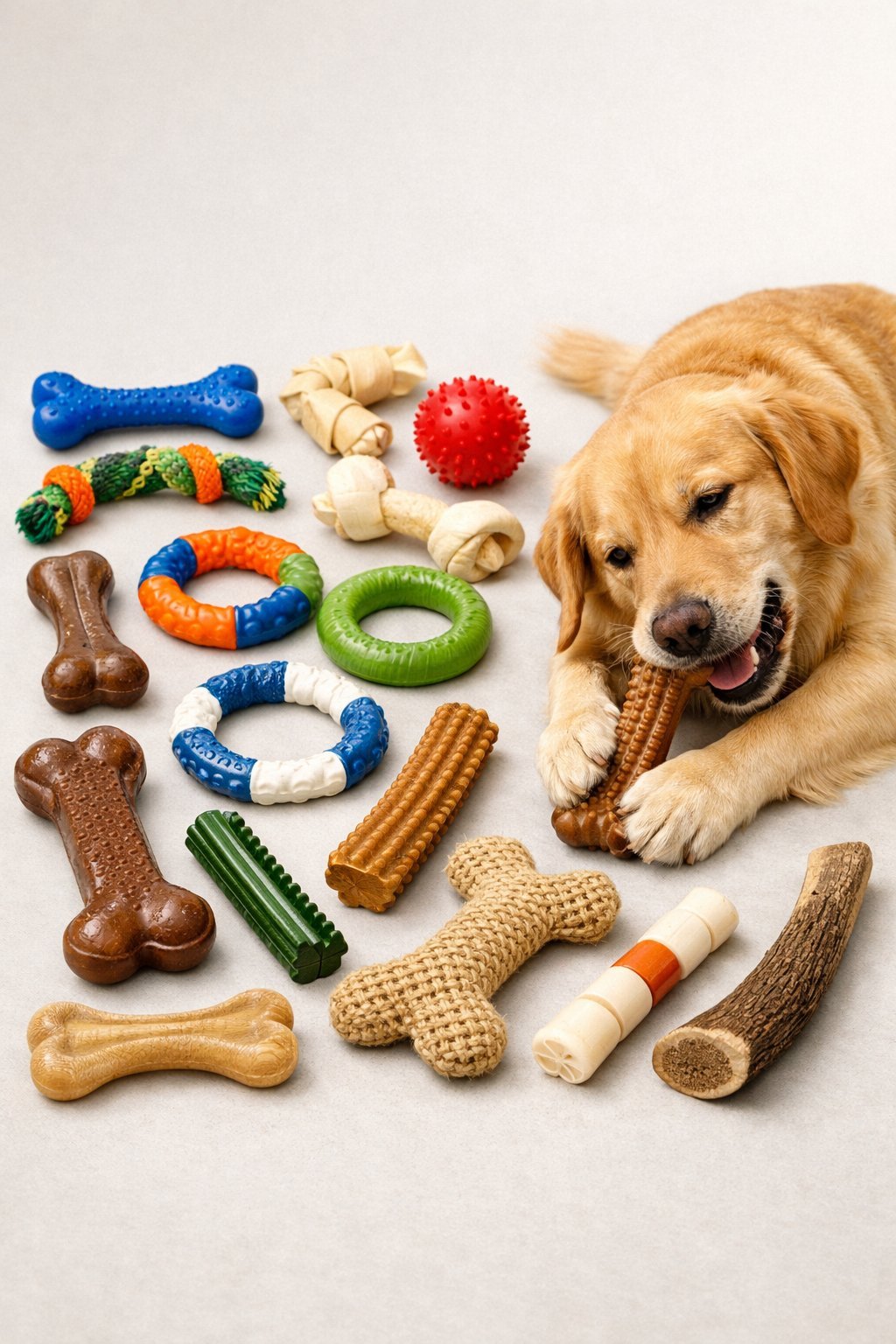
I’ve put together a list of chew toys that vets actually recommend for dogs. These options range from durable rubber toys for heavy chewers to softer choices for puppies, with specific picks that help with anxiety and dental health.
Best Overall Choices
Kong toys are my top recommendation because they’re safe and durable for dogs. They come in different sizes and strengths to match your dog’s chewing power.
I like that Kongs can be stuffed with treats or peanut butter. This keeps my dog busy for hours and gives them mental stimulation.
The classic red Kong works well for most adult dogs with average chewing habits. Nylabone products are another reliable choice I recommend often.
They’re designed to promote dental health while satisfying the natural urge to chew. I suggest picking the right size and hardness level based on your dog’s breed and age.
West Paw Zogoflex toys are made from non-toxic materials that are safe if your dog swallows small pieces. These toys are dishwasher safe, which makes cleanup easy for me.
They also come with a guarantee if your dog damages them.
Toys for Aggressive Chewers
Power chewers need toys that can stand up to heavy use. I always look for the toughest materials available when shopping for aggressive chewers.
The black Kong Extreme is specifically made for powerful jaws. It’s thicker and more durable than the regular red version.
I’ve seen these last for years with dogs who destroy other toys in minutes. Goughnuts rings have a safety indicator built in.
If your dog chews through to the red layer, it’s time to replace the toy. This feature gives me peace of mind about my dog’s safety.
Benebone products are made from real food ingredients like bacon and chicken. Dogs love the taste and smell.
These wishbone-shaped chews are easy for dogs to grip and hold while chewing.
Calming Chew Toys
Some chew toys help reduce anxiety and stress in dogs. I find these especially useful during thunderstorms or when I leave the house.
Lick mats are great for calming anxious dogs. I spread peanut butter or yogurt on them, and the repetitive licking action helps my dog relax.
They’re perfect for crate training or vet visits. Snuffle mats engage your dog’s natural foraging instincts.
I hide treats in the fabric folds, and my dog spends time searching for them. This activity tires out their brain and reduces nervous energy.
Puzzle toys that dispense treats slowly keep dogs focused and calm. I use these when I need my dog to settle down.
The mental challenge helps redirect anxious behaviors into productive activity.
Puppy-Friendly Options
Puppies need appropriate toys that comfort sore gums during teething. I choose softer materials that won’t damage developing teeth.
The puppy Kong (available in pink or blue) is softer than adult versions. I freeze it with treats inside to soothe my puppy’s gums.
The cold temperature provides extra relief during teething. Rope toys are good for gentle tugging and cleaning puppy teeth.
I supervise play sessions to make sure my puppy doesn’t swallow loose strings. These toys also work well for interactive play between us.
Rubber teething rings designed for puppies are gentler on young mouths. I look for toys without small parts that could break off.
Soft rubber satisfies the need to chew without causing injury to tender gums.
Materials and Safety Considerations

When I’m choosing chew toys for dogs, I focus on three main factors: the materials must be free from harmful chemicals, the toy needs to hold up against aggressive chewing, and the size and design should prevent choking accidents.
Non-Toxic Materials
I always look for toys made from non-toxic, BPA-free, and phthalate-free materials. These chemicals can harm your dog’s health over time.
Safe materials include natural rubber, nylon, and FDA-approved food-grade plastics. Natural rubber is my top choice because it’s durable and safe if your dog swallows small pieces.
Some toys are made from multiple bonded layers of FDA-approved materials. I avoid toys with toxic dyes, lead, or unknown plastics that could release harmful substances when chewed.
Durability Factors
I test durability using the thumbnail indentation test. If I can make a dent with my thumbnail, the toy might be too soft for aggressive chewers.
The toy material should match your dog’s chewing style. Light chewers can use softer materials, while heavy chewers need reinforced rubber or thick nylon.
I watch for signs of wear like fraying, cracking, or pieces breaking off. Once a toy shows damage, I remove it right away because broken toys become dangerous.
Choking Hazards and Precautions
Size matters more than most people realize. I choose toys that are too large for my dog to swallow whole.
Key size guidelines:
- Small dogs: toys at least 2 inches across
- Medium dogs: toys at least 3 inches across
- Large dogs: toys at least 4 inches across
I remove toys immediately when I notice fraying or breakage. Small pieces can block airways or cause internal damage if swallowed.
I also supervise play sessions, especially with new toys, to catch problems early.
Matching Chew Toys to Your Dog’s Needs

Different dogs need different toys based on their size, age, and how they like to chew. I’ll help you pick the right toy by looking at what makes your dog unique.
Considering Breed and Size
Size matters when picking chew toys. A toy that works for a Chihuahua could be a choking hazard for a German Shepherd.
I always check that toys match my dog’s jaw size and strength. Large breeds need bigger, thicker toys they can’t break apart or swallow.
Small dogs do better with toys sized for their mouths so they can actually grip and enjoy them. Breed also affects chewing power.
Terriers and pit bulls have stronger jaws than many other breeds. Retrievers tend to be gentler chewers even when they’re big dogs.
Kong toys come in different sizes to match your dog’s weight and chewing strength. They range from extra small for puppies and toy breeds up to extra large for powerful chewers over 60 pounds.
Age-Specific Chew Toys
Puppies have different needs than adult dogs. Between three to 14 weeks, puppies need toys that comfort their sore gums while teeth come in.
I give puppies softer rubber toys that are gentle on developing teeth. Hard toys can damage baby teeth or hurt tender gums.
Puppy-specific toys are usually smaller and easier to hold. Adult dogs can handle tougher materials.
Their permanent teeth are fully formed and stronger. Senior dogs might need softer options again if they have dental problems or missing teeth.
Age also affects how long a dog chews. Puppies have shorter attention spans but chew more often throughout the day.
Chewing Styles and Preferences
I watch how my dog uses toys to pick the right ones. Some dogs are aggressive chewers who destroy everything.
Others just like to carry toys around or lick them.
Chewing styles include:
- Aggressive chewers – bite hard and rip apart toys quickly.
- Moderate chewers – gnaw steadily but don’t destroy things fast.
- Gentle chewers – mouth toys softly and are more interested in comfort.
Aggressive chewers need the toughest materials like solid rubber or nylon. Gentle chewers can enjoy softer plush toys safely.
I also rotate toys to keep my dog interested. Even the best toy gets boring if it’s the only option.
Tips for Introducing New Chew Toys

When I bring home a new chew toy, I always watch my dog closely during the first few sessions. Switching out toys regularly helps keep things interesting.
These two habits help prevent accidents and keep my dog engaged.
Supervision and Training
I never leave my dog alone with a new chew toy until I know it’s safe for them. I watch how my dog interacts with it for at least the first few sessions.
I pay attention to whether my dog tries to swallow large pieces or if the toy breaks apart easily. If I see any sharp edges or chunks coming off, I take it away immediately.
Some dogs are gentle chewers while others are aggressive, so what works for one might not work for another.
I also teach my dog the “drop it” command before giving them any new chew. This way, I can quickly get the toy back if something goes wrong.
During the first week, I limit chew sessions to 10-15 minutes while I’m actively watching.
Rotating Toys for Engagement
I keep about 4-5 chew toys in rotation and only leave out 2-3 at a time. When my dog gets bored with their current toys, I swap them out for ones they haven’t seen in a week or two.
This way, old toys feel new again. Rotating toys also helps me spot wear and tear more easily.
I inspect each toy before putting it back into rotation and throw away anything that looks damaged. Different textures and shapes keep my dog interested, so I mix rubber toys with rope toys and dental chews.
It also prevents them from becoming fixated on just one chew toy, which can lead to overuse and potential safety issues.