
Dog Enrichment Ideas That Prevent Boredom: Simple Activities to Keep Your Pup Happy and Engaged

Dog Enrichment Ideas – Dogs need more than just food and walks to stay happy. When pets spend too much time indoors without proper mental and physical activity, they can develop unwanted behaviors like chewing furniture, excessive barking, or digging.
Enrichment activities help keep your dog’s mind sharp, allow them to burn off excess energy, reduce stress and anxiety, and prevent problem behaviors.
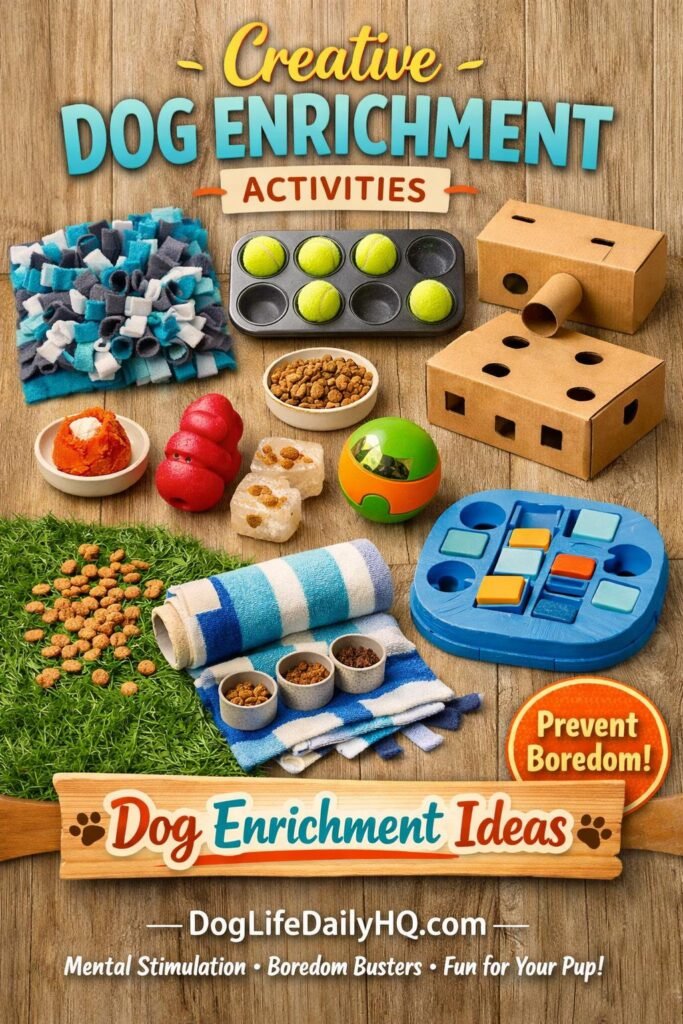
I’ve learned that the best way to keep my dog content is through a mix of engaging activities that tap into their natural instincts. Simple games, puzzles, and interactive toys can make a huge difference in your pet’s overall well-being.
Enrichment is especially important for dogs that spend long hours indoors or can’t do intense exercise due to age or health issues. The good news is that keeping your dog entertained doesn’t require expensive toys or complicated setups.
Many effective enrichment ideas use items you already have at home and take just a few minutes to prepare. From food puzzles to scent games, there are countless ways to prevent boredom and keep your furry friend engaged throughout the day.
Key Takeaways
- Dogs need regular mental and physical stimulation to prevent destructive behaviors and reduce anxiety
- Simple homemade activities and games can provide effective enrichment without spending much money
- Building enrichment into your daily routine helps keep your dog happy, healthy, and mentally sharp
Why Enrichment Is Essential for Dogs

Dogs need more than just food and shelter to live happy lives. Without proper mental and physical outlets, they can develop serious behavioral problems that affect both their wellbeing and your home environment.
The Impact of Boredom on Canine Behavior
I’ve seen firsthand how boredom causes dogs to develop destructive behaviors like chewing furniture, excessive digging, and constant whining. When dogs don’t have appropriate ways to use their energy and intelligence, they create their own entertainment.
These behaviors aren’t just annoying. They signal that your dog is struggling mentally and emotionally.
Bored dogs may also become more aggressive or anxious. They might bark excessively at every sound or movement outside.
Some dogs will pace back and forth for hours, unable to settle down or relax. The longer a dog experiences chronic boredom, the harder these patterns become to change.
What starts as occasional mischief can turn into ingrained habits that require significant training to reverse.
Benefits of Mental and Physical Stimulation
Enrichment activities help dogs maintain cognitive function, especially as they age. I recommend regular mental challenges because they keep your dog’s brain sharp and engaged.
Physical and mental stimulation allows dogs to express natural behaviors like sniffing, chewing, and problem-solving. These outlets give dogs a sense of purpose and satisfaction in their daily lives.
Dogs who receive proper enrichment typically show:
- Better behavior at home and in public
- Reduced anxiety during stressful situations
- Improved confidence when facing new experiences
- Stronger bonds with their owners
- Better sleep patterns and rest quality
Enrichment activities build problem-solving skills that help dogs navigate their environment more successfully. When I work with dogs on enrichment, I notice they become calmer and more focused overall.
Recognizing Signs of Boredom in Dogs
I watch for specific behaviors that tell me a dog needs more mental stimulation. Excessive licking of paws or furniture often indicates a bored dog looking for something to do.
Common signs of boredom include:
Dogs might also show their boredom through destructive chewing and digging. If your dog suddenly starts destroying things they normally ignore, boredom is likely the culprit.
Some dogs become unusually vocal when they’re understimulated. They may whine, bark, or howl more than usual, especially when left alone.
Pay attention to changes in your dog’s normal behavior patterns, as these shifts often reveal unmet enrichment needs.
Mental Enrichment Ideas for Dogs

I’ve found that mental stimulation keeps dogs just as tired and satisfied as physical exercise. Dogs need activities that challenge their brains to stay happy and prevent problem behaviors like excessive chewing or barking.
Interactive Toys and Puzzles
I recommend starting with food puzzle toys that make your dog work for their meals. These toys have hidden compartments or sliding pieces that release treats when solved correctly.
Puzzle toys come in different difficulty levels. I suggest beginning with easier puzzles and gradually increasing the challenge as your dog learns.
A muffin tin with tennis balls covering treats in some cups works great as a homemade option. Interactive training sessions can turn learning into playtime.
I like to hide treats around the house and let my dog search for them. This simple game keeps dogs mentally engaged for 15-20 minutes.
Rotate your puzzle toys every few days. I’ve noticed dogs stay more interested when they don’t see the same toys daily.
Mental enrichment activities increase happiness and help reduce destructive chewing and separation anxiety.
Scent Games and Nose Work
I love teaching “find it” games because they tap into a dog’s natural sniffing abilities. Start by showing your dog a treat, then hide it in an easy spot while they watch.
Once your dog understands the game, hide treats in harder locations. I place them under cups, inside cardboard boxes, or behind furniture.
Dogs rely on their nose more than their eyes for these games. Sniffari walks give dogs time to explore smells at their own pace.
I let my dog stop and sniff whatever interests them instead of rushing through the walk. This type of walk provides more mental stimulation than a fast-paced jog.
Create a scent box by putting different safe items in a cardboard box. I use things like old socks, toys, or herbs.
My dog loves investigating new smells each time I change the items.
Training New Tricks and Commands
Teaching new tricks keeps a dog’s mind active and strengthens our bond. I work on one or two new commands each week using positive reinforcement with treats or praise.
Basic tricks like “spin,” “shake,” or “play dead” take only 10-15 minutes per training session. I keep sessions short because dogs learn better in small chunks.
Science-backed enrichment activities help reduce anxiety and unwanted behaviors. Chain multiple commands together for an extra challenge.
I might ask my dog to sit, then lay down, then roll over in sequence. This requires more focus and problem-solving than single commands.
I practice commands in different locations and situations. A dog who sits perfectly at home might struggle in a park with distractions.
Training in new places builds confidence and mental flexibility.
Physical Activities to Keep Dogs Entertained

Dogs need regular movement to stay healthy and burn off extra energy. I’ve found that mixing up physical activities keeps my dog interested and tired in the best way possible.
Agility Exercises at Home
I set up simple obstacle courses using items I already have around the house. Couch cushions work great as jumps, while chairs can create weaving poles when lined up in a row.
I even use broomsticks balanced on books for my dog to jump over. Indoor enrichment activities don’t need fancy equipment to be effective.
I teach my dog to go through a cardboard box tunnel or jump through a hula hoop I hold at different heights. These exercises help build my dog’s confidence and coordination.
I start with easy obstacles and slowly make them harder as my dog gets better. The key is to keep training sessions short, around 10 to 15 minutes, so my dog doesn’t get frustrated or tired.
I always use treats and praise to reward my dog for trying new challenges.
Creative Fetch Variations
Regular fetch gets boring fast, so I switch things up to keep my dog engaged. I throw toys up the stairs instead of across the room, which makes my dog work harder with each retrieve.
I also hide the toy behind furniture and send my dog to find it before bringing it back. I use different types of toys during each game to add variety.
Soft plush toys, rubber balls, and rope toys all feel different in my dog’s mouth. Sometimes I throw two toys in different directions to make my dog choose which one to chase first.
Another trick I use is having my dog sit and stay while I hide the toy in another room. This combines mental focus with physical activity.
I also practice “drop it” and “take it” commands during fetch to add training into playtime.
Hide and Seek with Toys
I make my dog sit in one room while I hide favorite toys around the house. I start with easy spots like behind a door or under a blanket so my dog can build confidence.
Once my dog understands the game, I pick harder hiding spots. This activity uses my dog’s natural hunting instincts while providing exercise.
I watch my dog sniff around furniture, check under tables, and search through rooms. The mental and physical stimulation from this game tires my dog out faster than plain fetch.
I sometimes put treats inside the toys before hiding them to make the reward even better. I can also play this game with myself as the hidden object, calling my dog’s name from my hiding spot.
My dog loves finding me and gets excited every time we play.
DIY Dog Enrichment Projects

I’ve found that making your own enrichment projects saves money while giving my dog exciting new challenges. These simple crafts use everyday items to create engaging activities that tap into natural dog behaviors.
Homemade Treat Dispensers
I love making treat dispensers because they’re easy and keep my dog busy for a long time. The simplest version uses a plastic water bottle with holes cut in the sides.
I fill it with kibble or small treats, and my dog has to roll it around to get the food out. Another option I use is taking an old tennis ball and cutting a small slit in it.
I stuff treats inside, and my dog has to figure out how to squeeze the ball to release them. Tennis balls with treats inside work great for dogs who like to chew and play fetch.
I also make muffin tin puzzles by placing treats in the cups and covering them with tennis balls. My dog has to remove each ball to find the hidden rewards underneath.
Cardboard Box Challenges
I save cardboard boxes because they’re perfect for scavenging activities. I crumple up paper or use packing materials to hide treats inside a box, then let my dog dig through it.
This taps into their natural scavenging instincts. Stacking boxes of different sizes creates an even bigger challenge.
I put treats in some boxes but not others, so my dog has to search through multiple levels. My dog can rip and tear the boxes apart, which many dogs find super satisfying.
For a harder version, I nest boxes inside each other with treats scattered throughout. This takes longer for my dog to work through and gives them more mental stimulation.
Upcycled Household Items for Play
Old t-shirts make excellent braided tug toys that cost nothing to make. I cut shirts into strips and braid them together tightly.
These work well for interactive play or solo chewing. Empty toilet paper rolls become quick puzzle toys.
I fold the ends closed with treats inside, and my dog tears them apart to get the reward. I use paper towel rolls the same way for bigger dogs.
An old towel can become a snuffle mat by tying fabric strips through a rubber mat. I hide kibble in the folds, and my dog has to use their nose to find each piece.
This activity calms anxious dogs while engaging their sense of smell.
Incorporating Enrichment Into Daily Routines
Making enrichment part of everyday life doesn’t require hours of extra work. Simple planning and smart rotation keep dogs mentally sharp without overwhelming your schedule.
Rotating Toys and Activities
I recommend switching out your dog’s toys every few days to keep things fresh and exciting. Dogs get bored seeing the same toys scattered around, so I divide toys into groups and only keep one set out at a time.
Weekly rotation schedule:
- Week 1: Puzzle toys and treat dispensers
- Week 2: Chew toys and rope toys
- Week 3: Squeaky toys and balls
- Week 4: Snuffle mats and interactive games
When I bring back toys my dog hasn’t seen in a while, they act like brand-new items. Novelty captures their attention better than familiar objects.
I also mix up activities throughout the week. Monday might focus on scent work, while Wednesday centers on puzzle solving.
This variety taps into different instincts and prevents my dog from getting stuck in a boring routine.
Setting Up Enrichment Schedules
I’ve learned that consistency matters when incorporating enrichment daily for the best results. I set specific times for enrichment activities so my dog knows what to expect.
My typical daily schedule includes:
- Morning (7 AM): 10-minute puzzle feeder during breakfast
- Midday (12 PM): 15-minute training session or hide-and-seek game
- Evening (5 PM): 20-minute outdoor sniffing walk
- Before bed (9 PM): Frozen treat toy or calm chewing activity
I balance high-energy activities with relaxing ones throughout the day. After an intense game, I offer quiet activities like lick mats or gentle chewing.
These simple activities can prevent anxiety, boredom, and destructive behavior without requiring massive time commitments. I keep enrichment sessions short, usually 10-20 minutes each.
This prevents my dog from getting frustrated or losing interest.
Frequently Asked Questions
Dogs need mental and physical activities every day to stay happy and healthy. Simple activities like hiding treats, creating puzzle games from household items, and rotating toys can keep your dog busy without spending much money.
What are some cost-effective ways to keep my dog entertained?
You don’t need expensive toys to keep your dog happy. A cardboard box filled with crumpled paper and treats creates a fun digging game that costs almost nothing.
You can also play hide-and-seek with your dog using toys they already have. DIY dog enrichment activities like towel treat rolls work great because you just need an old towel and some kibble.
Rotating your dog’s toys every few days makes old toys feel new again without buying anything extra.
How can I entertain my dog indoors to help alleviate boredom?
Indoor activities are important for keeping your dog’s mind active when you can’t go outside. I like setting up scent games where I hide treats around the house for my dog to find.
Indoor enrichment activities like puzzle toys and obstacle courses work well in any weather. You can create an obstacle course using pillows, chairs, and blankets that your dog crawls under or jumps over.
I also teach my dog new tricks indoors. Training sessions give my dog something to think about and strengthen our bond at the same time.
What are some do-it-yourself projects for dog enrichment?
A muffin tin game is one of my favorite DIY projects. I place treats in the cups and cover them with tennis balls so my dog has to figure out how to remove the balls.
You can make a snuffle mat by tying strips of fleece fabric to a rubber mat. I hide kibble in the fabric strips and let my dog sniff it out.
Another easy project is freezing treats in ice cube trays with water or low-sodium broth. My dog loves working to lick out the frozen treats on hot days.
What kind of enrichment can I provide for my dog while I’m at work?
I leave puzzle toys filled with my dog’s breakfast when I go to work. This gives my dog something to do for the first hour or two after I leave.
Frozen Kong toys stuffed with peanut butter or wet dog food keep dogs busy for a long time. I make several and rotate them throughout the week.
I also leave the radio or TV on for background noise. Some dogs feel less lonely when they hear voices while their owners are away.
How can I stimulate my dog mentally without using food?
Playing scent games with toys instead of treats works really well. I rub a toy with a strong smell and hide it for my dog to find using their nose.
Teaching new tricks or commands gives dogs a mental workout without food rewards. I use praise, petting, and play as rewards instead.
Interactive toys that make noise or move on their own catch my dog’s attention. Tug toys and fetch games also provide mental stimulation through play and problem-solving.
What activities can I offer my dog to help with boredom?
Engaging enrichment activities that tap into natural instincts work best for preventing boredom.
I like to take my dog on different walking routes so they can sniff new scents and check out new places.
Playing fetch or tug-of-war gives my dog both physical exercise and some mental engagement.
These games let my dog use their natural prey drive in a healthy way.
I also set up play dates with other dogs when possible.
Social time with other pups gives my dog enrichment that toys and games just can’t match.
