12 Dog Enrichment Toys to Reduce Boredom & Anxiety: Keep Your Pup Happy and Engaged

Dogs need more than food and walks to feel their best. Just like people, they need things to do that keep their minds busy and their bodies active.
When dogs get bored or anxious, they might chew furniture, bark too much, or act out in other ways.
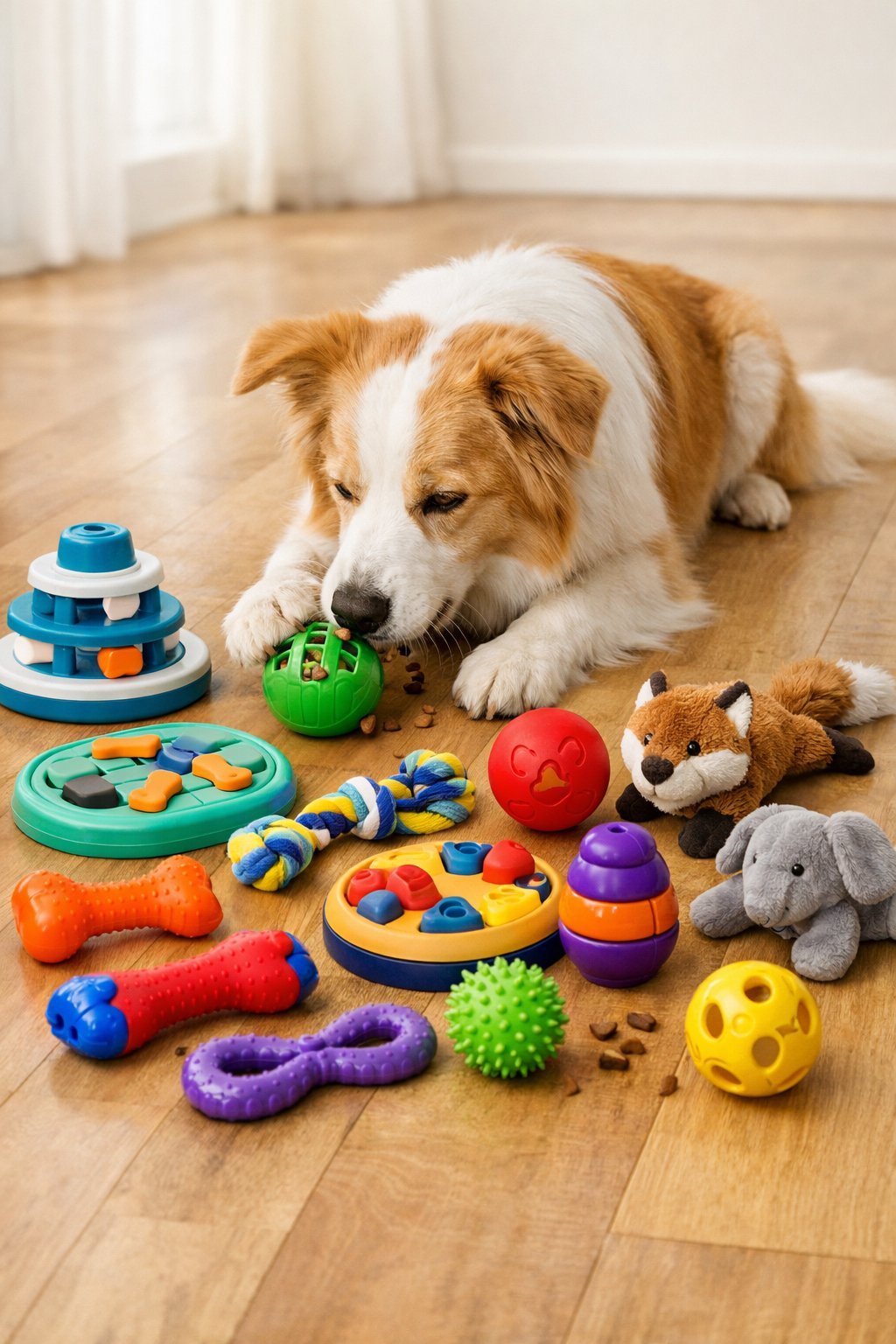
Enrichment toys help dogs stay mentally sharp and emotionally calm by giving them natural activities like sniffing, problem-solving, and hunting for treats. I’ve seen how enrichment toys reduce boredom and anxiety in dogs of all ages and breeds.
These toys are different from regular toys because they make dogs think and work for rewards.
In this guide, I’ll share 12 enrichment toys that can help your dog feel happier and less stressed. Whether your dog is a puppy or a senior, there’s something here that will work for them.
These puzzle toys and interactive enrichment picks work by keeping dogs engaged in healthy ways.
Key Takeaways
- Enrichment toys provide mental stimulation that helps reduce anxiety and destructive behaviors in dogs
- Choosing the right toy depends on your dog’s size, age, and skill level
- Regular use of enrichment toys combined with safety monitoring keeps dogs mentally sharp and emotionally balanced
Benefits Of Enrichment Toys For Dogs
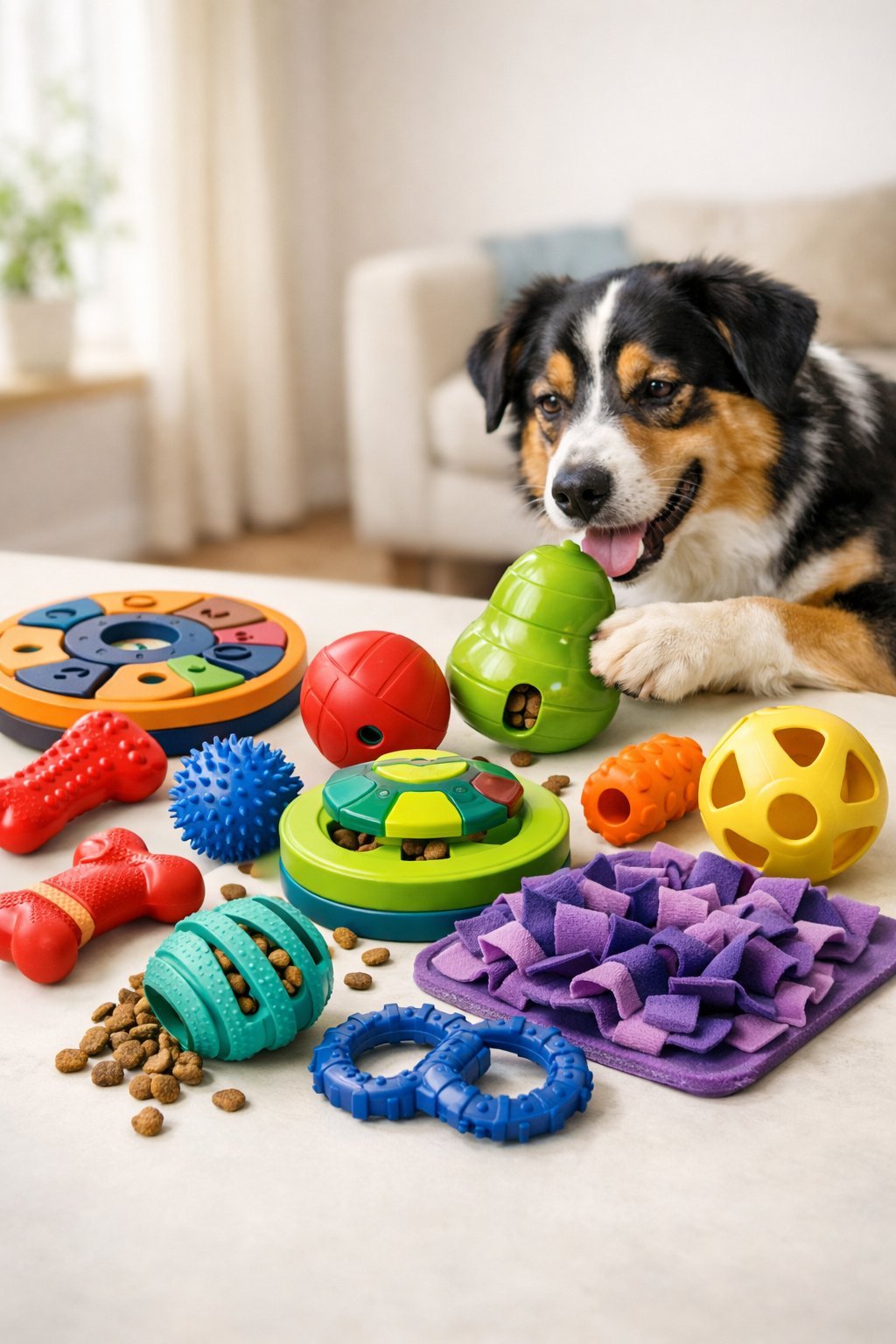
Enrichment toys do more than just keep your dog busy. They work on both mental and physical levels to reduce stress, stop unwanted behaviors, and support your dog’s overall health.
Reducing Canine Anxiety Naturally
I’ve seen how enrichment toys can calm anxious dogs without medication. These toys work like brain games that help dogs focus their energy on solving puzzles instead of worrying.
When your dog works on getting treats out of a toy, their mind shifts away from stressful triggers like being alone or hearing loud noises.
Research shows that shelter dogs given enrichment activities twice a day spent 65% more time resting quietly after just three days. That’s a big difference in a short time.
The mental work tires dogs out more than you might expect. A dog that spends 15 minutes working on a puzzle toy often feels as tired as one that took a 30-minute walk.
This mental exhaustion helps reduce nervous behaviors like pacing, whining, or excessive barking. I recommend using enrichment toys before stressful events.
Give your dog a treat-dispensing toy before you leave for work or during thunderstorms to help them stay calm.
Preventing Boredom and Destructive Behavior
Bored dogs find their own entertainment, and that usually means chewed furniture or torn pillows. Enrichment toys help curb destructive behaviors by giving dogs an appropriate outlet for their natural instincts.
Dogs are wired to hunt, chew, and problem-solve. When they don’t get these activities in healthy ways, they create their own versions.
A puzzle toy lets them “hunt” for treats the same way their ancestors searched for food.
Common destructive behaviors that enrichment toys prevent:
- Chewing shoes and furniture
- Digging holes in the yard
- Tearing up papers or trash
- Excessive barking at nothing
Dogs who get daily enrichment activities are much less likely to get into trouble. They’re too busy and satisfied to look for mischief.
Promoting Physical and Mental Health
Enrichment toys support both mental stimulation and physical exercise that keeps dogs healthy and happy. Mental exercise through puzzle toys builds confidence as dogs learn they can solve problems on their own.
This confidence carries over into other parts of their lives. The physical benefits come from the active play many enrichment toys require.
Interactive toys that dispense treats make dogs move around, paw at objects, and use their mouths in controlled ways. This gentle activity is perfect for dogs who can’t do intense exercise.
Dogs who use enrichment toys regularly show better problem-solving skills. They become more patient and focused because they’ve learned that working through challenges brings rewards.
These mental skills help them adapt to new situations more easily. The combination of mental and physical activity also helps maintain a healthy weight and keeps aging dogs sharp.
How To Select The Best Dog Enrichment Toys
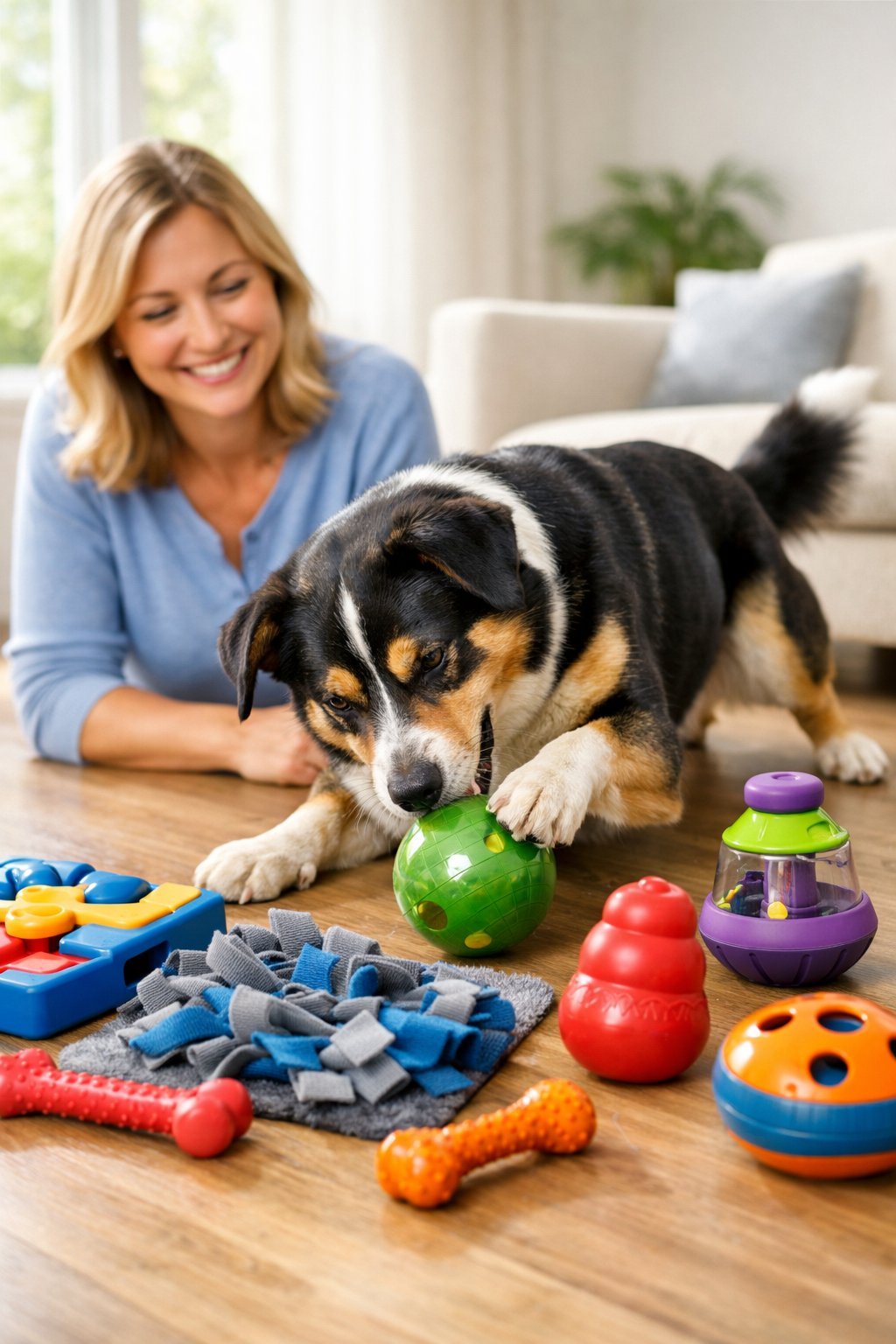
Picking the right enrichment toy depends on your dog’s specific traits, the materials used in the toy, and whether the size and difficulty level match your dog’s abilities.
Matching Toys To Your Dog’s Needs
I always start by thinking about my dog’s age, breed, and energy level. Puppies need softer toys that are gentle on developing teeth, while adult dogs can handle tougher challenges.
High-energy breeds like Border Collies or Australian Shepherds need mentally stimulating toys that keep their active minds busy. My dog’s interests matter too.
If your dog loves to sniff and forage, snuffle mats work great. For dogs who like to chew, durable treat-dispensing toys satisfy that natural urge.
I pay attention to behavior issues as well. Dogs with anxiety do better with calming activities like lick mats, while dogs who destroy furniture need toys that redirect that energy into something positive.
Choosing Safe And Durable Materials
I check every toy for non-toxic materials before giving it to my dog. Toys should be free from harmful chemicals and made from food-safe plastics or natural rubber.
Sharp edges or small parts that could break off are dangerous because they can cause choking or stomach blockages. Durability is key, especially for power chewers.
I look for toys labeled as “indestructible” or “heavy-duty” that can withstand aggressive chewing. Weak toys fall apart quickly and create safety hazards.
I inspect toys regularly for wear and tear. Even the toughest toys eventually show damage, and I replace them before they become unsafe.
Understanding Size And Complexity
The toy needs to match my dog’s mouth size. Too small and it becomes a choking hazard.
Too large and my dog can’t engage with it properly. I follow manufacturer guidelines for weight and breed recommendations.
Difficulty level matters just as much. I start with easier puzzles for dogs new to enrichment toys, then gradually increase the challenge.
A toy that’s too hard causes frustration, while one that’s too easy gets boring fast. I rotate toys to keep things interesting.
Instead of giving my dog access to everything at once, I swap toys every few days to maintain novelty and excitement.
12 Dog Enrichment Toys To Reduce Boredom & Anxiety
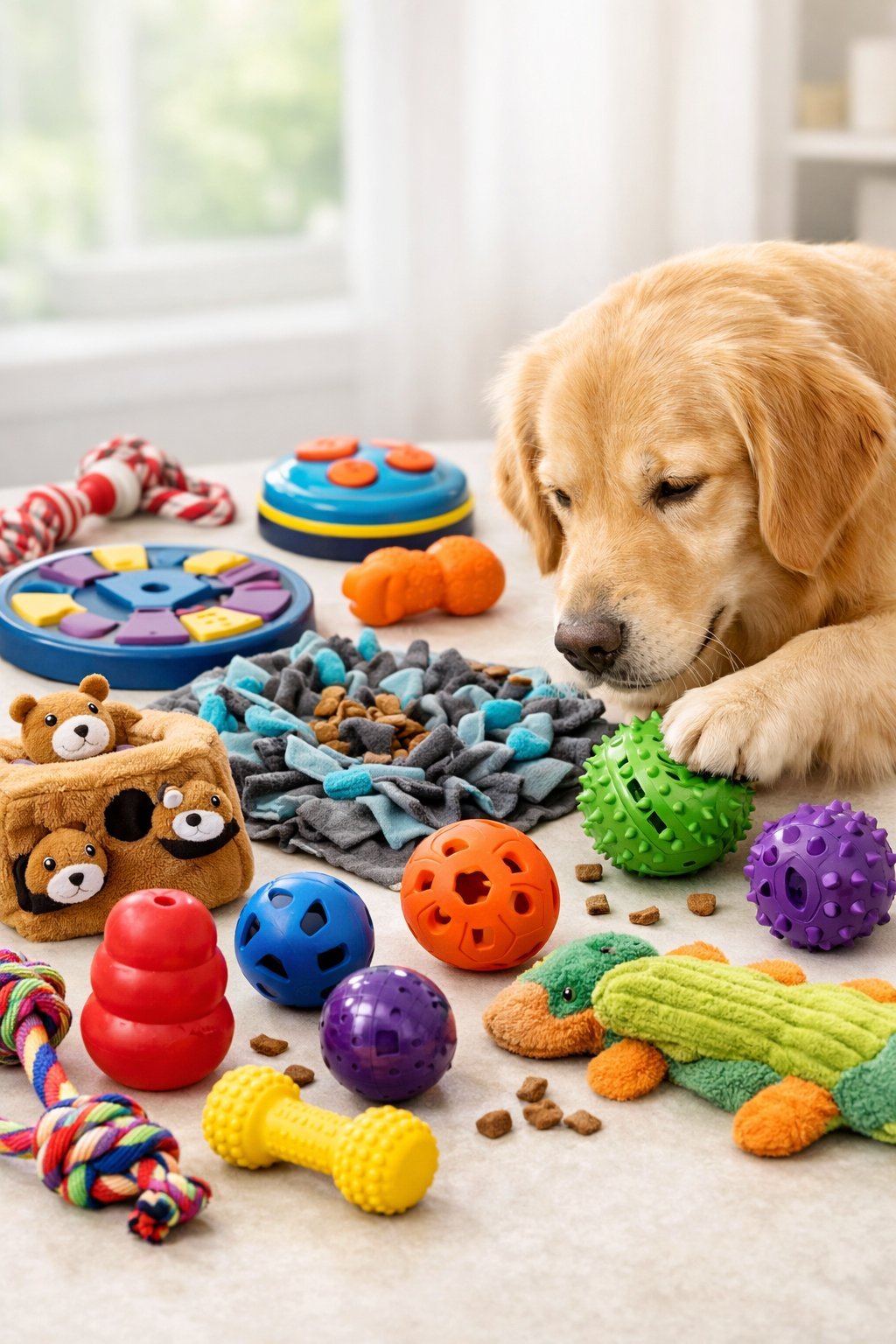
Dogs need activities that challenge their minds and tap into their natural instincts like sniffing, chewing, and problem-solving. Enrichment toys provide mental stimulation that keeps dogs calm and may help reduce anxiety.
Interactive Puzzle Feeders
Puzzle feeders turn mealtime into a game that makes your dog work for their food. These toys have hidden compartments or sliding pieces that reveal treats when your dog figures out the right moves.
I recommend starting with simple puzzles if your dog has never used one before. You can gradually increase the difficulty as they learn how to solve them.
Benefits of puzzle feeders:
- Slow down dogs who eat too fast
- Keep your dog busy for 15-30 minutes
- Build problem-solving skills
- Reduce destructive behavior from boredom
Puzzle feeders work well for dogs of all ages. Puppies develop cognitive skills while older dogs keep their minds sharp.
Treat-Dispensing Balls
Treat-dispensing balls roll around unpredictably and drop small treats as your dog plays with them. The KONG Classic and Tug-A-Jug are great options for interactive playtime that keep dogs busy and make them think.
I like these toys because they combine physical activity with mental challenge. Your dog has to figure out how to move the ball in certain ways to get the treats out.
You can adjust the difficulty by changing the treat size or the opening settings. Most dispensing balls work on hard floors and carpet, though they roll better on smooth surfaces.
Fill them with your dog’s regular kibble to make daily feeding more engaging. This helps prevent boredom without adding extra calories to their diet.
Chew Toys For Mental Stimulation
Chewing is a natural stress-relief activity for dogs. The right chew toys keep your dog focused for long periods while satisfying their instinct to gnaw and work their jaws.
Durable rubber toys filled with frozen treats or peanut butter provide the longest-lasting engagement. The cold temperature adds extra soothing benefits for anxious dogs.
What to look for:
- Non-toxic, durable materials
- Size appropriate for your dog’s mouth
- Textured surfaces for dental health
- Hollow centers for stuffing with treats
Rotate different chew toys throughout the week to maintain your dog’s interest. Some dogs prefer harder textures while others like softer rubber, so I suggest trying a few types.
Scent-Based Activity Toys
Snuffle mats and scent games tap into your dog’s powerful nose and natural hunting instincts. These toys turn sniffing into a rewarding activity that provides valuable mental stimulation and can reduce anxiety.
I scatter small treats or kibble throughout a snuffle mat’s fabric strips. My dog then uses their nose to search and find each piece, which mimics foraging behavior from their wild ancestors.
The ZippyPaws Burrow line offers plush toys with squeaky animals hidden inside that dogs can dig out and retrieve. This type of toy gets your pup moving and helps them feel less stressed.
Scent work calms dogs because it requires focus and concentration. Just 10-15 minutes of sniffing activities can tire out a dog as much as a 30-minute walk.
Creative Ways To Use Enrichment Toys
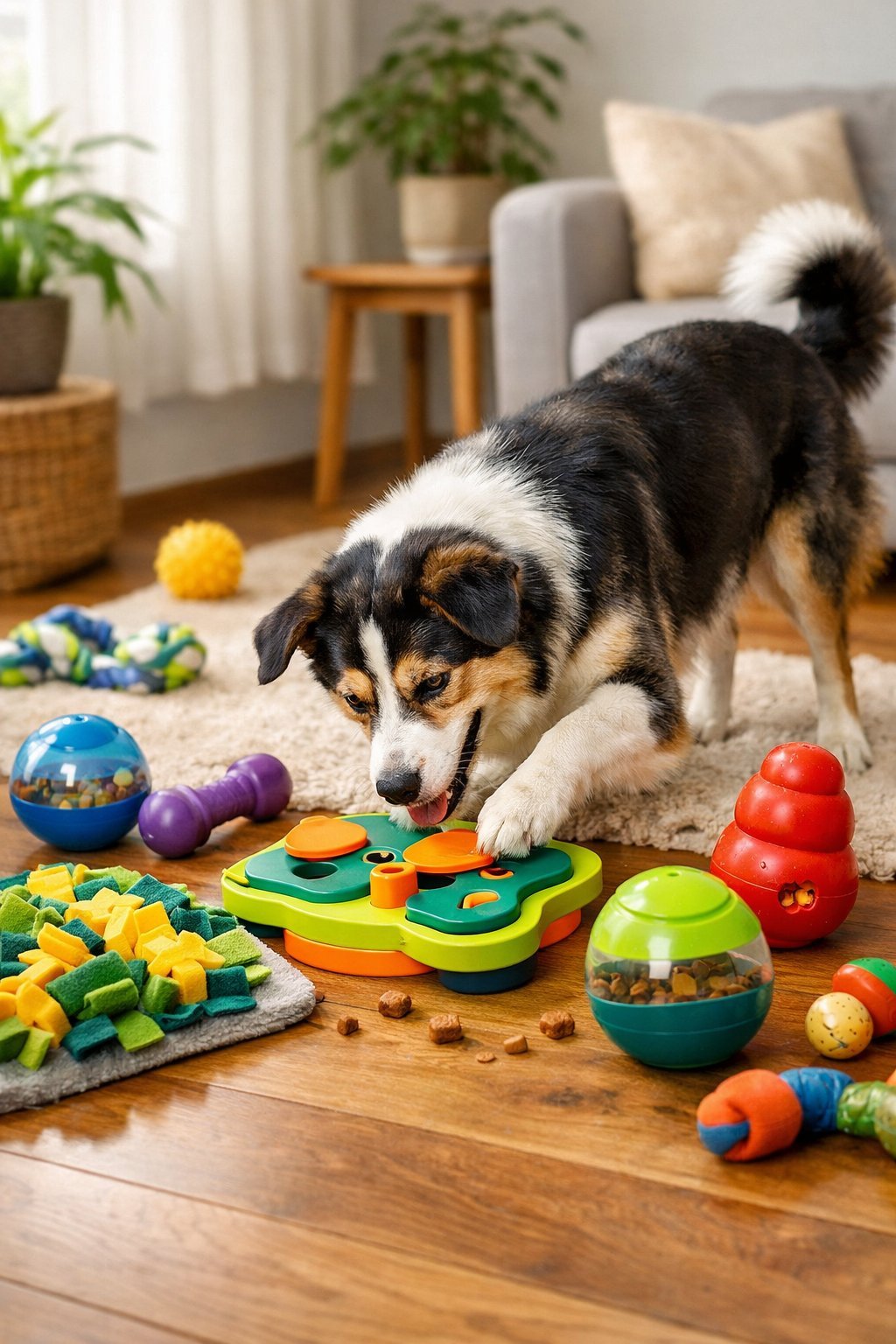
Making the most of enrichment toys means thinking beyond simple play sessions. Timing, variety, and the right level of supervision can transform these toys from basic distractions into powerful tools for your dog’s mental health.
Incorporating Toys Into Daily Routines
I like to use enrichment toys during key moments throughout my day when my dog needs mental stimulation most. Mealtimes are perfect for puzzle feeders and treat-dispensing toys instead of regular bowls.
This approach slows down fast eaters and turns eating into a rewarding challenge. I also bring out food puzzles when I need my dog to settle down, like during work calls or when guests arrive.
Best times to use enrichment toys:
- Before leaving the house to reduce separation anxiety
- After walks to help my dog wind down mentally
- During crate training to create positive associations
- When I’m cooking dinner and need my dog occupied
Starting the day with a quick puzzle toy session helps burn mental energy early. My dog stays calmer throughout the morning this way.
Rotating Toys For Ongoing Interest
I keep about 12 different enrichment toys but only offer 3-4 at a time. Rotating toys keeps each one feeling new and exciting when it comes back.
Every few days, I swap out the current toys for others from my storage bin. Dogs can get bored with the same toys, so this simple change keeps things interesting.
I group toys by difficulty level and rotate through easy, medium, and hard options. On busy days, I pick simpler toys my dog can solve quickly.
On lazy weekends, I bring out the challenging puzzles that take 20-30 minutes. I also notice which toys my dog ignores and sometimes add a new scent or treat to revive their interest.
Washing fabric toys regularly helps them seem fresh again.
Supervised Versus Solo Play
Some enrichment toys need my attention, while others are perfect for independent play. I always supervise when introducing a new toy to make sure my dog uses it safely and doesn’t get frustrated.
Toys with small parts, ropes, or anything my dog could destroy require my watchful eye. I check for wear and tear during these sessions and throw away damaged toys right away.
Safe for solo play:
- Rubber treat-dispensing toys like Kongs
- Hard plastic puzzle feeders
- Snuffle mats with secure fabric
Require supervision:
- Toys with removable pieces
- Cardboard or fabric items my dog might shred and eat
- New puzzle types my dog hasn’t mastered yet
Supervised play is great bonding time where I can encourage my dog and adjust the difficulty. Once my dog masters a toy and I trust they won’t destroy it, I add it to the solo play rotation.
This gives me safe options for times when I can’t watch closely.
Monitoring Your Dog’s Progress And Safety
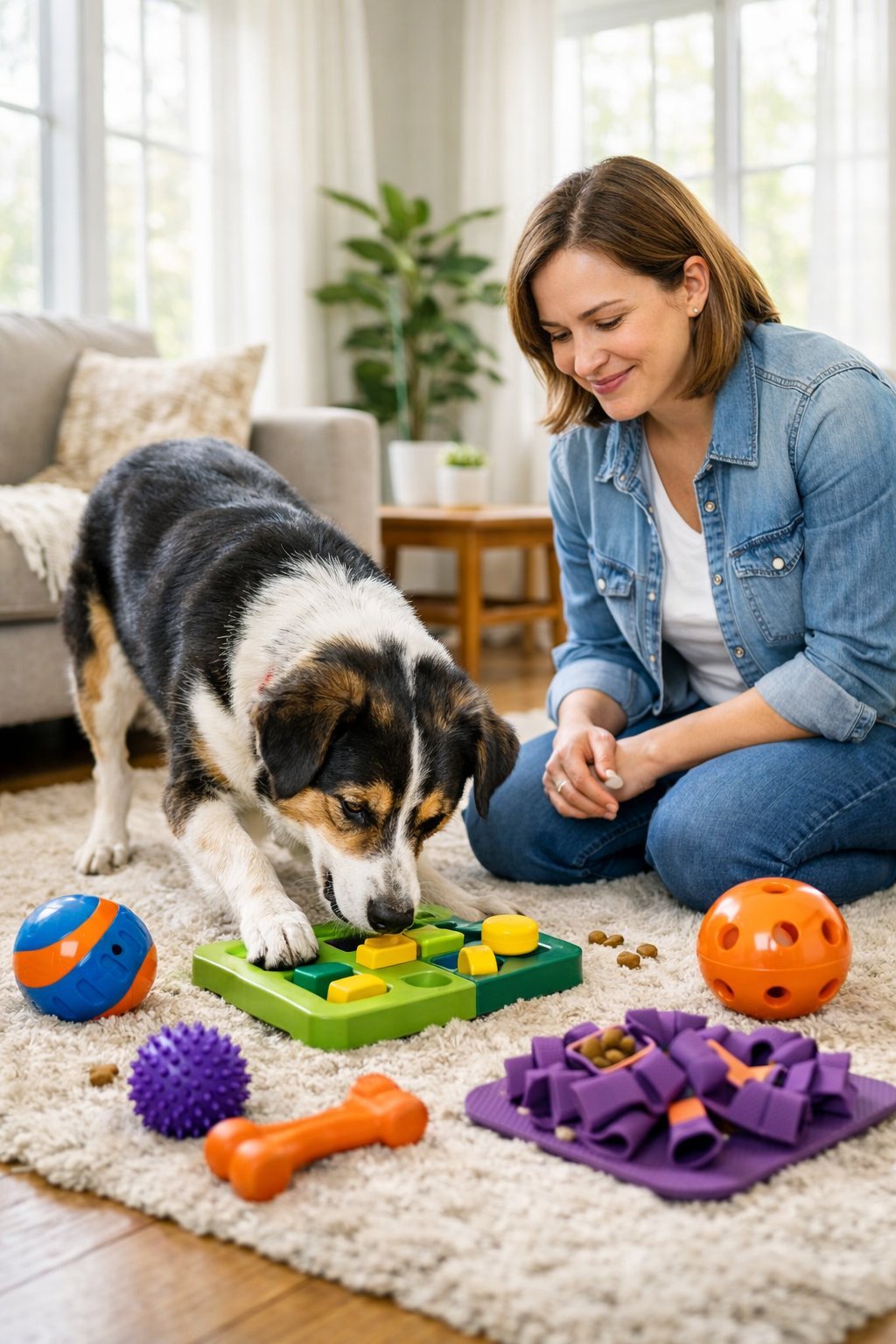
Watching how your dog responds to enrichment toys helps you know if they’re working and staying safe. It’s important to check for positive behavior changes and make sure toys are still in good shape.
Signs Of Reduced Anxiety And Boredom
I look for calmer behavior when my dog has access to enrichment toys. Dogs who feel less anxious usually stop chewing on furniture or shoes.
They sleep better and seem more relaxed throughout the day. My dog might greet me more calmly when I come home instead of jumping frantically.
Less whining or barking during the day is another good sign. I also pay attention to my dog’s energy levels.
A properly stimulated dog seems tired but content after play sessions. They settle down easier and don’t pace around looking for things to do.
Key improvements I watch for:
- Less destructive behavior
- Reduced barking or whining
- Better sleep patterns
- Calmer greetings
- More focus during training
Identifying And Addressing Toy Wear
I check enrichment toys every few days for damage. Cracks, tears, or loose parts can become choking hazards.
Rubber toys might develop sharp edges that could cut my dog’s mouth. I throw away toys when they show serious wear.
Small pieces that break off can cause blockages if swallowed. Plush toys with exposed stuffing go in the trash right away.
When watching my dog’s use of enrichment items, I notice how they interact with each toy. Aggressive chewers destroy toys faster than gentle players.
I buy more durable options for dogs who chew hard. I also clean toys regularly to prevent bacteria buildup.
Food-dispensing toys need washing after each use. Hard plastic or rubber toys can go in the dishwasher for easy cleaning.
When To Introduce New Toys
I rotate toys every few days to keep my dog interested. Having too many toys out at once can be overwhelming, so I keep most stored away and swap them out regularly.
I usually introduce one new toy at a time to see how my dog reacts. Some dogs need a little supervision with new toys until I know they won’t destroy them right away.
I add new toys when my dog seems bored with the current ones. Ignoring toys or playing for shorter periods are signs it’s time for something fresh.
I try to match new toys to my dog’s changing abilities. Puppies need different challenges than adult dogs, and senior dogs might do better with gentler options that require less effort.