
Dog Grooming Room Ideas to Create the Perfect Space for Your Pup

A dog grooming room gives you a dedicated space to keep your pet clean and well-groomed. You don’t have to worry about booking appointments or paying high salon prices.
Whether you have a spare bathroom, a corner of your garage, or an unused closet, you can turn it into a functional grooming area. Setting up your own dog grooming room at home saves money and makes regular grooming sessions much easier to manage.

Creating stylish dog grooming room setups doesn’t require a huge budget or a lot of professional skills. The right mix of practical equipment and thoughtful design makes grooming your dog faster and more enjoyable.
The key is picking features that work for your specific needs and your dog’s size and temperament. From choosing the right grooming table to making sure you have good ventilation and storage, there are a few basics to cover.
You’ll learn how to maximize your space, pick out essential tools, and create a safe spot where your dog feels at ease. Let’s check out how to transform your grooming space into a place that makes bath time and trimming sessions a breeze.
Key Takeaways
- A dedicated grooming room saves money and makes it easier to keep your dog clean on your own schedule.
- Essential features include a non-slip surface, proper lighting, good ventilation, and organized storage for tools.
- Safety measures like secure restraints, proper drainage, and easy-to-clean surfaces protect both you and your pet.
Essential Features of a Dog Grooming Room

A proper grooming room needs features that keep dogs safe and make the grooming process easier. The right setup includes a washing station, good air flow, safe floors, and smart storage options.
Dedicated Washing Area
Set up a separate wet zone away from your styling area. This helps keep water from spreading and creating slip hazards.
Your washing station should have a raised tub or sink at a comfortable height. Waist-high tubs are great because they save your back.
The tub needs a non-slip bottom so dogs feel secure during bath time. A handheld spray nozzle with adjustable water pressure is super helpful.
Make sure you have hot and cold water hookups to adjust the temperature. Install a drain that can handle dog hair without clogging, and add a hair trap for easy cleanup.
Proper Ventilation
Good air flow keeps the room from getting too humid or stuffy. Make sure your grooming space has windows that open or an exhaust fan that runs during grooming sessions.
Moisture from wet dogs and dryers can cause mold and mildew if you don’t have enough ventilation. Proper air flow also helps clear out pet dander and hair, making it easier to breathe.
An exhaust fan that vents directly outside is best. For small rooms, look for fans with at least 50 CFM, and go higher for bigger spaces.
Fresh air circulation helps control odors from wet fur and grooming products. I like to keep the air moving, especially when working with more than one dog.
Slip-Resistant Flooring
Non-slip flooring is a must for safety. Dogs get anxious on slippery surfaces, which makes grooming tougher.
Rubber flooring or textured vinyl provide good traction even when wet. They’re also easy to clean and don’t absorb water or odors.
Best flooring options:
- Rubber mats or tiles
- Textured vinyl
- Epoxy coating with non-slip additives
- Cork flooring (sealed properly)
Go for seamless floors or ones with minimal grout lines so hair and water don’t collect. Avoid smooth tile or laminate, since they get dangerously slippery when wet.
Good flooring also cushions your feet during long grooming sessions. I always feel less tired standing on rubber versus hard tile or concrete.
Accessible Storage Solutions
Well-organized storage keeps grooming tools within reach and the workspace clutter-free. I use a mix of wall-mounted shelves, rolling carts, and drawers.
Wall storage is great for daily items like brushes and scissors. Hooks and magnetic strips mounted at arm level make it easy to grab what you need.
Rolling carts let you move supplies between the washing area and grooming table. I keep one cart with bathing supplies near the tub and another with clippers and styling tools by my main work area.
Closed cabinets protect products from moisture and keep sharp or hazardous items away from curious pups. Chemicals, meds, and sharp tools go in locked drawers.
Clear containers help you see when supplies are running low. I label everything so I can find what I need fast during busy grooming sessions.
Design and Layout Tips
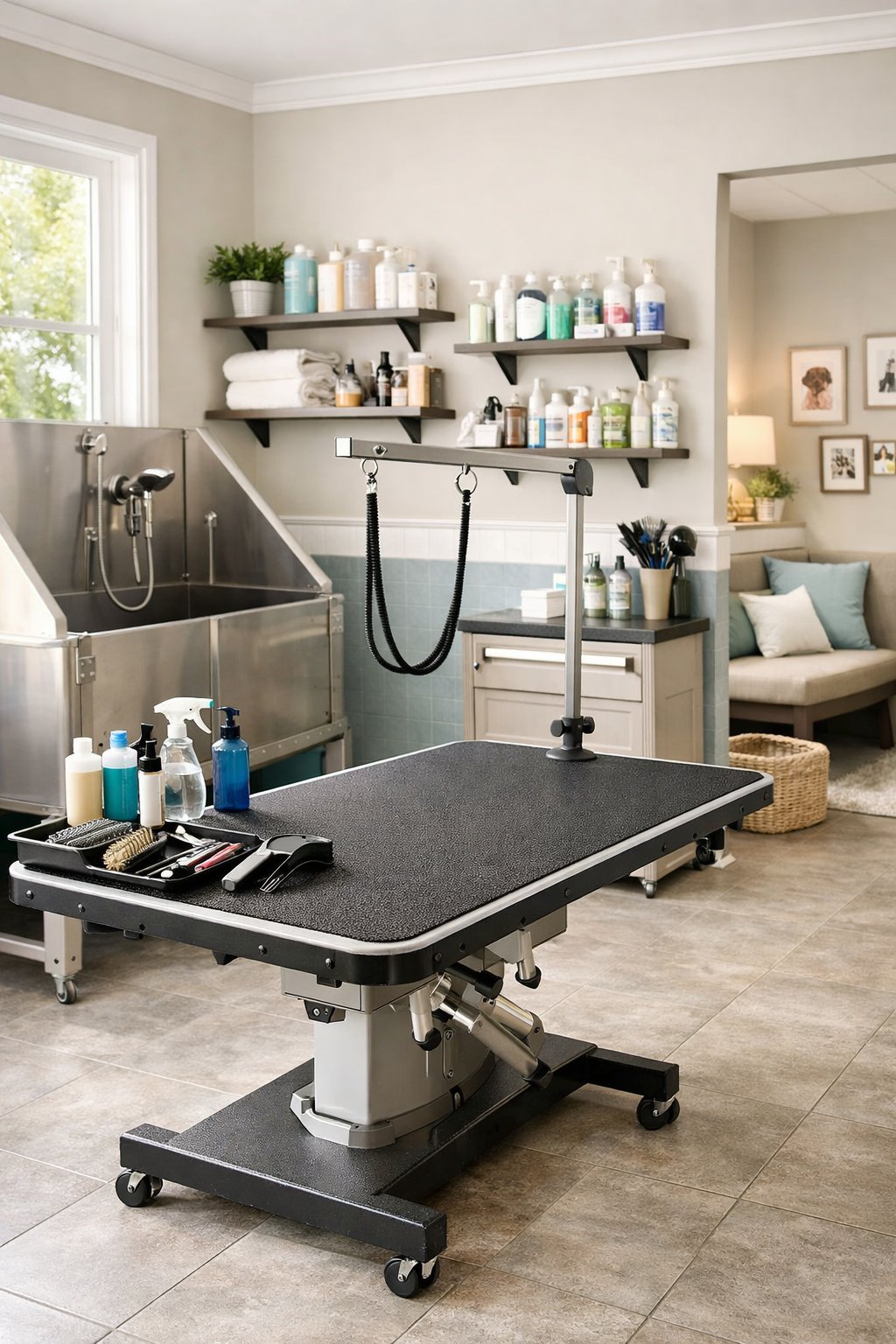
A well-planned grooming room needs enough space, plenty of light, and work areas that won’t hurt your back. These details make grooming safer and more comfortable for you and your furry clients.
Space Planning Considerations
Start by measuring your available space and mapping out where each zone will go. The bathing area needs at least 6 by 8 feet so you can move around comfortably with bigger dogs.
Your grooming table should have about 4 feet of clearance on all sides. That way, you can walk around without bumping into walls or equipment.
Keep your most-used tools within arm’s reach of the grooming table. Shampoos, dryers, and grooming supplies each need their own storage spots.
Floor space matters more than you’d think. Make sure there’s room for fur to fall without creating slip hazards, and use a comfortable mat where you stand.
Install multiple electrical outlets so you don’t need extension cords that pets could trip over.
Maximizing Natural Light
Natural light creates a cheerful atmosphere that helps anxious dogs relax. Position your grooming table near windows if you can—sunlight makes it easier to spot mats, skin issues, and uneven cuts.
Large windows or skylights brighten up the room all day. If you don’t have natural light, use full-spectrum LED bulbs that mimic daylight.
These lights reduce eye strain during detailed work. Avoid putting your grooming station directly in harsh afternoon sun, since too much direct light can cause glare and make the room hot for dogs with thick coats.
Ergonomic Workstations
Your grooming table should adjust between 30 and 38 inches so you can work without bending or reaching. The right height depends on your own height and whether you’re sitting or standing.
An anti-fatigue mat is a game changer for your knees and back during long sessions. The bathing station should have a ramp or steps so dogs can walk up themselves—your back will thank you.
Mount your dryer on an adjustable arm so you can direct airflow without holding it the whole time. Keep storage shelves at waist height so you can grab supplies without stretching.
Everything you use daily should stay within a three-foot radius of where you work most.
Choosing Equipment and Tools

The right equipment makes grooming safer and easier for both you and your dogs. Focus on durable items that handle daily use and keep pets comfortable.
Selecting Dog Tubs and Sinks
Pick a tub that sits at a comfortable height to protect your back. Elevated tubs reduce bending and strain, which is important if you’re bathing multiple dogs each day.
Look for tubs with non-slip surfaces on the bottom. Dogs feel safer when they can grip the surface, and they’re less likely to panic or try to jump out.
Tubs with built-in restraint attachments are a big plus so you can safely secure dogs during bath time. The drain system should handle pet hair without clogging.
Removable drain covers or hair catchers save time and prevent plumbing headaches. Some tubs come with sprayer attachments that have adjustable pressure, which really helps with thick coats.
Pick a tub size that matches the dogs you groom most often. Larger breeds need bigger tubs, but compact tubs work great for smaller spaces or mobile grooming.
High-Quality Grooming Tables
A professional grooming table gives you a stable, safe surface at the right height. Adjustable height tables let you customize the setup for different dog sizes and grooming tasks.
Non-slip table tops are a must for safety. Rubber or textured surfaces keep dogs from sliding around, which helps keep everyone calm.
Look for tables that support at least 300 pounds. Even if you groom mostly small dogs, a sturdy base is important.
Tables with H-frame or electric lift designs are super stable. The grooming arm and loop system helps keep dogs in place—choose arms that clamp securely and adjust to different heights.
Loops should have quick-release features in case a dog gets nervous. Portable folding tables are fine for mobile grooming, but stationary hydraulic tables last longer for busy salons.
Safe Dryers and Towels
I use forced-air dryers because they remove water quickly without too much heat. These dryers push air through the coat, which works better than cage dryers for thick or double coats.
Temperature control is super important. Avoid dryers that only blow hot air—they can burn sensitive skin or overheat dogs.
Variable speed and heat settings let you adjust for each dog. Stand dryers with flexible hoses let you use both hands for brushing while drying.
Handheld dryers are cheaper but tie up one hand. For essential grooming equipment, start with at least one quality forced-air dryer.
Microfiber towels soak up more water than regular cotton towels. Keep several sizes on hand—big ones for drying large dogs and small ones for faces and paws.
Chamois towels are also great for removing extra water before using the dryer. Always have clean, dry towels ready for each dog.
Wash grooming towels separately from your regular laundry with unscented detergent, since some dogs are sensitive to fragrances.
Safety and Hygiene Best Practices

I always make sure my grooming room stays clean and safe. Using the right products and following proper cleaning steps helps prevent illness and keeps everyone comfortable.
Non-Toxic Cleaning Products
I choose cleaning products that are safe for dogs because they lick surfaces and breathe in whatever chemicals I use. Many standard cleaners contain ammonia, bleach, or other harsh ingredients that can irritate a dog’s nose, skin, or lungs.
I look for pet-safe disinfectants that kill germs without toxic fumes. Products labeled as non-toxic or veterinary-approved work best in my grooming room.
I always read labels carefully before buying anything new. I clean my grooming tables, floors, and countertops with these safe products between each appointment.
This keeps my space sanitary without putting dogs at risk. I also make sure to rinse surfaces well after cleaning so no residue remains.
For daily maintenance, I use simple solutions like diluted vinegar or pet-safe enzymatic cleaners. These break down organic matter like hair and skin cells effectively.
I keep all cleaning supplies stored away from where I groom dogs.
Efficient Waste Management
I deal with a lot of hair, nail clippings, and other waste every day in my grooming room. Having a good system keeps my space clean and prevents health hazards.
I place covered trash bins near my grooming station so I can quickly dispose of hair and debris. I empty these bins at least twice daily or more during busy periods.
This stops bad odors from building up and keeps pests away. I use separate containers for different types of waste.
Sharp items like nail clippers and scissors go in designated storage. Hair gets swept up immediately after each groom and bagged properly.
I never let waste pile up on floors or surfaces because it creates slip hazards and looks unprofessional. I also wash mats and towels after every use to prevent bacteria growth.
Preventing Cross-Contamination
I take steps to stop germs from spreading between dogs in my grooming room. Each dog deserves a clean environment without exposure to another pet’s bacteria or parasites.
I sanitize all my tools between appointments using proper disinfectants. Clippers, brushes, combs, and scissors get cleaned thoroughly after touching each dog.
I never use the same towel or grooming smock for multiple dogs without washing. My grooming table gets wiped down and disinfected completely before the next appointment starts.
I pay special attention to areas where dogs stand or lie down. I wash my hands between each dog and wear fresh gloves when needed.
If I notice any signs of skin issues or parasites on a dog, I schedule that appointment last and do extra deep cleaning afterward. I also keep sick or injured dogs separate from my regular grooming schedule when possible.
Personalization and Comfort Enhancements

Creating a grooming space that feels welcoming means paying attention to things like temperature and sound. Design choices that reflect your personal style help too.
These elements work together to keep dogs calm and make the grooming experience more pleasant for everyone involved.
Temperature Control Solutions
I always make sure my grooming room maintains a comfortable temperature between 68-72°F. Dogs can overheat quickly during grooming, especially thick-coated breeds or nervous pups who pant more.
I installed a programmable thermostat that lets me adjust settings throughout the day. During bathing sessions, I bump up the heat a few degrees since wet dogs get cold fast.
A ceiling fan helps circulate air without creating drafts that might chill freshly bathed pets. For my setup, I added a portable heater near the drying station.
This gives me control over the warmest spot in the room. I also keep the AC unit serviced regularly because proper ventilation prevents humidity buildup from baths and dryers.
Window treatments help too. I use insulated curtains to block extreme outdoor temperatures while still allowing natural light in during the morning hours.
Soundproofing for Noise Reduction
Reducing noise levels in my grooming room has made a big difference in keeping anxious dogs relaxed. Barking, dryers, and clippers can reach stress-inducing volumes without proper sound management.
I added acoustic foam panels to my walls, focusing on areas behind the drying station where noise bounces the most. These panels absorb sound waves and cut down on echo.
I also installed a solid-core door with weather stripping around the frame to block sounds from other parts of my home. Soft materials throughout the room help dampen noise naturally.
I chose rubber flooring instead of tile because it’s quieter when tools drop. Area rugs in the waiting space absorb sound too.
My white noise machine plays gentle nature sounds that mask sudden noises like the clipper motor starting up. Some groomers prefer soft classical music, which also works well for creating a calming atmosphere in grooming spaces.
Aesthetic Design Ideas
I decorated my grooming room with colors and elements that create a spa-like feel while staying practical.
Soft blues and greens on the walls promote calmness without showing dirt as easily as white.
My storage solutions double as decor. I use wicker baskets for towels and wire baskets for grooming tools, keeping everything visible but organized.
Open shelving displays my shampoo bottles like a retail display, which looks professional and helps me grab products quickly.
I hung framed photos of dogs I’ve groomed on one wall. This personal touch makes pet owners smile and shows my experience.
Good lighting matters just as much as color choices. I installed bright LED overhead lights plus an adjustable desk lamp at my grooming table for detail work.
Plants add life to the space, though I stick with pet-safe varieties like spider plants.
I also added a small bench with cushions where owners can sit and watch if they prefer to stay during grooming sessions.
