
Dog Grooming Shed Salon: Transform Your Backyard into a Professional Pet Spa

Running a dog grooming shed salon business from your backyard is becoming more popular for groomers everywhere.
A dog grooming shed salon is a dedicated outdoor structure that gives you a professional workspace to groom dogs away from your main home.
These compact salons usually handle about 15 dogs per day, which helps keep things calm for both pets and groomers.

I’ve seen more groomers convert sheds into mini grooming salons after working in traditional shops.
The setup gives you control over your schedule and workspace, plus it keeps overhead costs lower than renting a commercial space.
Whether you’re just starting out or looking to run your own business, a shed salon could be a great fit.
I’ll walk you through everything from picking the best spot in your yard to making sure your salon is comfy and up to code.
Key Takeaways
- A dog grooming shed gives you a separate, professional workspace in your backyard that helps reduce stress for pets.
- Good ventilation and enough space are essential for a safe, comfortable grooming environment.
- Limiting daily capacity helps you deliver quality service as your business grows.
What Is a Dog Grooming Shed Salon?

A dog grooming shed salon is an outdoor structure set up as a professional grooming space for pets.
These converted sheds let groomers and pet owners bathe, trim, and care for dogs without using indoor home spaces.
Definition and Purpose
A dog grooming shed salon is basically a storage shed turned into a grooming business or personal grooming area.
It’s a small building in your yard with everything you need to groom dogs properly.
The main goal is to create a dedicated workspace away from your main home.
These sheds give dogs a sense of comfort and save you time and money compared to building something new from scratch.
Most grooming shed conversions come with water hookups, electricity for your tools and lights, and heating or cooling.
Having these basics makes your space work year-round.
How Shed Salons Differ From Traditional Grooming
Traditional salons operate in commercial storefronts with several stations and staff members.
My shed salon is different in a few key ways.
Location: Shed salons are in residential backyards, not commercial districts. That means no commercial rent or leases.
Size: Most shed grooming spaces are between 8×10 feet and 12×16 feet—much smaller than a typical salon.
Overhead costs: Utility bills and maintenance are lower. Converting a shed is way more affordable than building a new commercial spot.
Client experience: Dogs are usually more relaxed in a quiet backyard compared to a busy salon.
Benefits for Dogs and Owners
For dogs, shed salons offer a calmer environment.
Pets seem less stressed without the noise and hustle of traditional salons.
The separate structure keeps pet hair, water, and grooming mess out of your house, which makes cleanup easier.
Key owner benefits:
- Lower startup and operating costs
- Flexible scheduling from home
- No commute
- Customizable layout and design
- Private, one-on-one appointments
You can customize your shed’s layout, colors, and size to fit your needs.
This kind of personalization isn’t possible when you’re renting commercial space.
Setting Up a Dog Grooming Shed Salon

The key to a successful shed salon comes down to three things: picking the right spot in your yard, getting the right tools, and making sure everyone feels safe and comfortable.
Choosing the Right Location
Start by choosing which corner of the garden to put your shed.
The spot needs to be easy for clients to get to with their dogs.
Look for flat, level ground that won’t get soggy when it rains.
Make sure there’s enough room for clients to park and walk their dogs safely to the door.
Think about your neighbors too.
Pick a spot that won’t cause noise or parking issues.
How far the shed is from your house matters since you’ll be going back and forth all day.
You’ll want access to utilities nearby, since running water or power over long distances can get pricey.
Essential Equipment and Tools
I always hire professionals for utilities because setting up water and power is a must for a real grooming space.
A licensed plumber and electrician will make sure everything is safe and up to code.
Here’s my basic equipment list:
- Grooming table with adjustable height and a non-slip surface
- Hydraulic or electric bathing tub
- Professional clippers and shears
- High-velocity dryer
- Storage cabinets for tools and supplies
- Sink with hot and cold water
Good lighting is a must so you can see what you’re doing.
Ventilation keeps the air fresh and stops moisture from wrecking your equipment.
Creating a Safe and Comfortable Environment
Make sure the shed has enough space to move around with dogs of all sizes.
A cramped workspace is stressful for both you and the dogs.
Non-slip flooring is super important.
I use rubber mats or textured vinyl that’s easy to clean and keeps dogs from sliding.
The floor should handle water without getting slippery.
Temperature control matters too.
A small AC unit for summer and a space heater for winter keeps things comfy.
I keep cleaning supplies close by and disinfect all surfaces between clients.
Good drainage in the bathing area stops standing water and bad smells.
Dog Grooming Services Offered
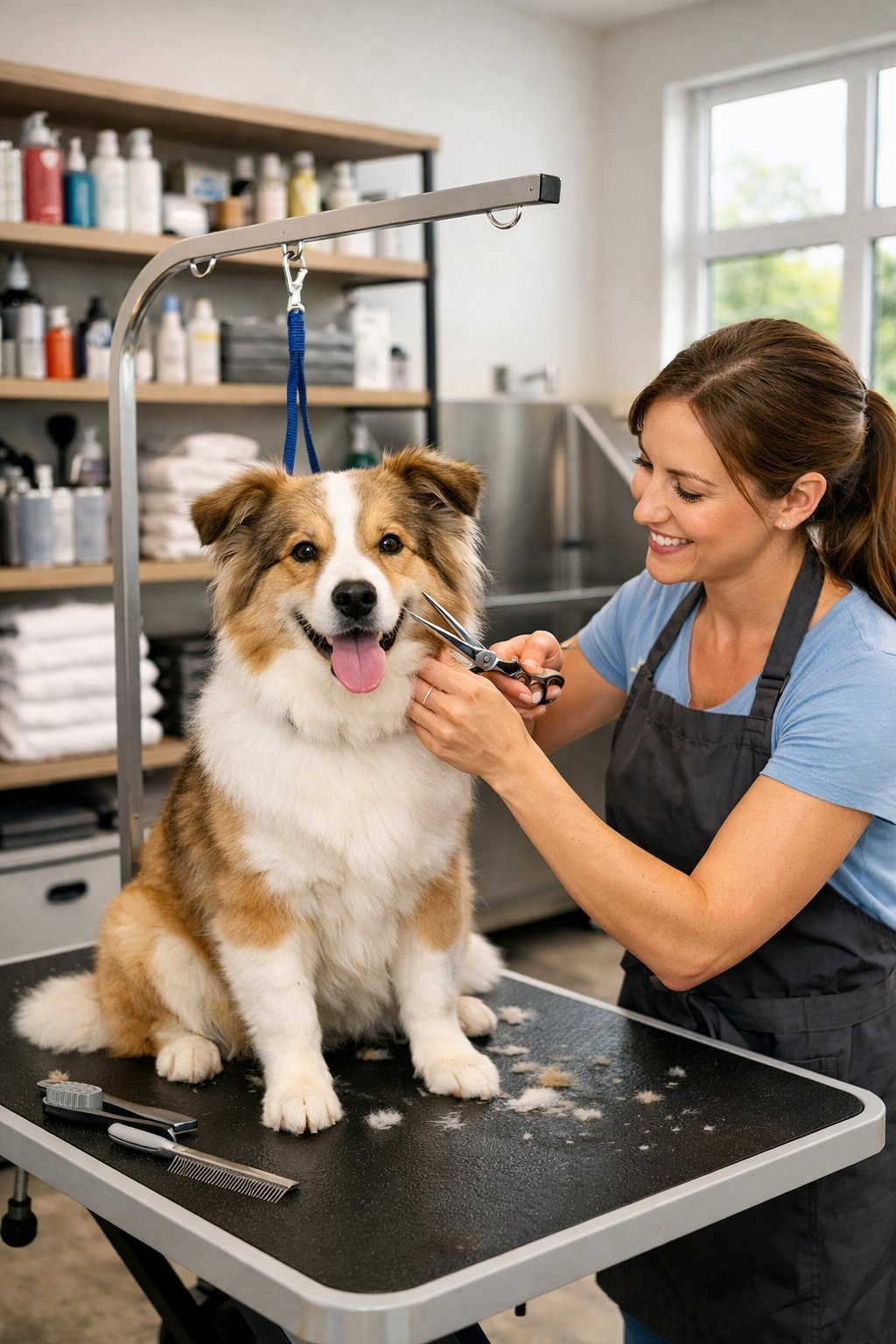
Professional grooming sheds usually offer three main services to keep dogs looking and feeling their best.
These range from basic cleaning to special treatments for different coat needs.
Bathing and Drying
I always start with a good bath using products that match each dog’s skin and coat.
Full service grooming facilities wash dogs from head to tail, getting rid of dirt, oils, and odors.
The bathing process usually goes like this:
- Pre-bath brushing to get rid of loose fur and tangles
- Warm water rinse with the right shampoo
- Gentle scrubbing to reach the skin
- Rinse well to avoid residue
- Conditioner if needed
After the bath, I dry dogs based on their size and coat type.
Small dogs often air dry or get towel dried, while bigger breeds need high-velocity dryers.
These tools blow water out of thick coats fast without too much heat.
Proper drying keeps skin healthy and makes the next steps easier.
I always check ears, paws, and spots where moisture can hide.
Coat Trimming and Styling
I offer breed-specific cuts and custom styles based on what owners want.
Professional groomers handle everything from simple trims to show-quality cuts.
Some dogs need full haircuts; others just need a tidy-up.
I use clippers, scissors, and thinning shears to shape the coat.
Popular services include face trims, paw pad shaving, and sanitary cuts.
Different breeds need different approaches.
Poodles get precise clip patterns, while terriers often need hand-stripping.
Shedding Control Treatments
I offer treatments that help cut down on loose fur at home.
De-shedding packages use special shampoos, conditioners, and extra brushing with pro tools.
The FURminator and similar tools pull out dead undercoat without hurting healthy fur.
I usually spend 15-20 minutes on this during shed-control appointments.
These treatments are especially helpful during spring and fall shedding seasons.
Low-shed shampoos help loosen fur before I brush it out, so more hair comes out during grooming instead of ending up in your house.
Techniques for Managing Shedding

Controlling shedding is all about having the right tools and using the best approach for each breed.
Professional groomers use special equipment and change up their methods based on coat type.
De-shedding Tools and Products
I always start with a good de-shedding brush or rake that reaches the undercoat.
These tools help keep loose hair off your floors and furniture.
The best de-shedding tools include undercoat rakes, slicker brushes, and de-shedding blades.
Undercoat rakes are great for double-coated breeds like Huskies and German Shepherds.
Slicker brushes work for medium-length coats and help remove tangles.
I also use:
- De-shedding shampoos to loosen dead hair
- High-velocity dryers to blow out undercoat
- Grooming gloves for short coats
- Metal combs for finishing touches
Using a de-shedding treatment or conditioner makes a big difference.
These products help release trapped hair and make brushing easier.
Best Practices for Different Breeds
I change my grooming approach depending on the dog’s coat.
Different breeds need different techniques to manage shedding.
For double-coated breeds like Golden Retrievers and Collies, I brush really well before bathing.
I work in sections from the skin out to get all the loose undercoat.
These dogs need more frequent grooming during shedding season.
Short-haired breeds like Beagles and Boxers do well with rubber curry brushes or grooming mitts.
I use circular motions to lift dead hair.
Wire-haired breeds need hand-stripping or special stripping tools, not standard brushes.
I never shave these coats since it ruins the texture and can make shedding worse.
Hygiene, Safety, and Maintenance

A dog grooming shed salon needs regular cleaning and proper safety steps to protect both dogs and groomers.
I focus on keeping my workspace clean between each appointment and making sure every dog stays healthy and comfortable during their visit.
Sanitizing the Shed Salon
I clean and disinfect all my grooming tools after each dog leaves. This includes clippers, scissors, brushes, combs, and nail trimmers.
I use pet-safe disinfectants that kill bacteria and viruses without leaving harmful residue. My grooming table gets wiped down between appointments.
I also mop the floor at least once per day, or more often if needed. Hair can build up quickly, so I sweep after every dog to prevent slipping hazards.
Proper pet salon hygiene standards help prevent cross-contamination between animals. I wash all towels, blankets, and grooming loops in hot water with detergent.
My bathing area gets a thorough scrub daily to remove soap buildup and hair. I keep separate tools for dogs with skin conditions when possible.
Air circulation is important too, so I run a fan or open windows to control odors and keep the space fresh.
Health and Wellbeing of Dogs
I check each dog for signs of illness before starting any grooming work. This includes looking at their skin, eyes, ears, and overall behavior.
If I notice anything concerning like rashes, lumps, or excessive scratching, I let the owner know right away.
Health and safety protocols are essential in my grooming business. I make sure my shed stays at a comfortable temperature, especially during hot summer days or cold winter months.
Dogs can overheat quickly, so I watch for signs of stress like heavy panting or drooling.
I use non-slip mats on my grooming table and in the bathing area. This helps nervous dogs feel more secure and prevents accidents.
I also keep a first aid kit stocked with supplies for minor cuts or scrapes.
