
Dog Grooming Station: Essential Features and Setup Guide for Your Home

Giving your dog a bath at home doesn’t have to mean a flooded bathroom and a stressed-out pup.
A dog grooming station is a dedicated space with the right tools and setup that makes washing, brushing, and trimming your dog easier and more comfortable for both of you.
I’ve learned that having the right setup can turn grooming from a dreaded chore into something manageable.
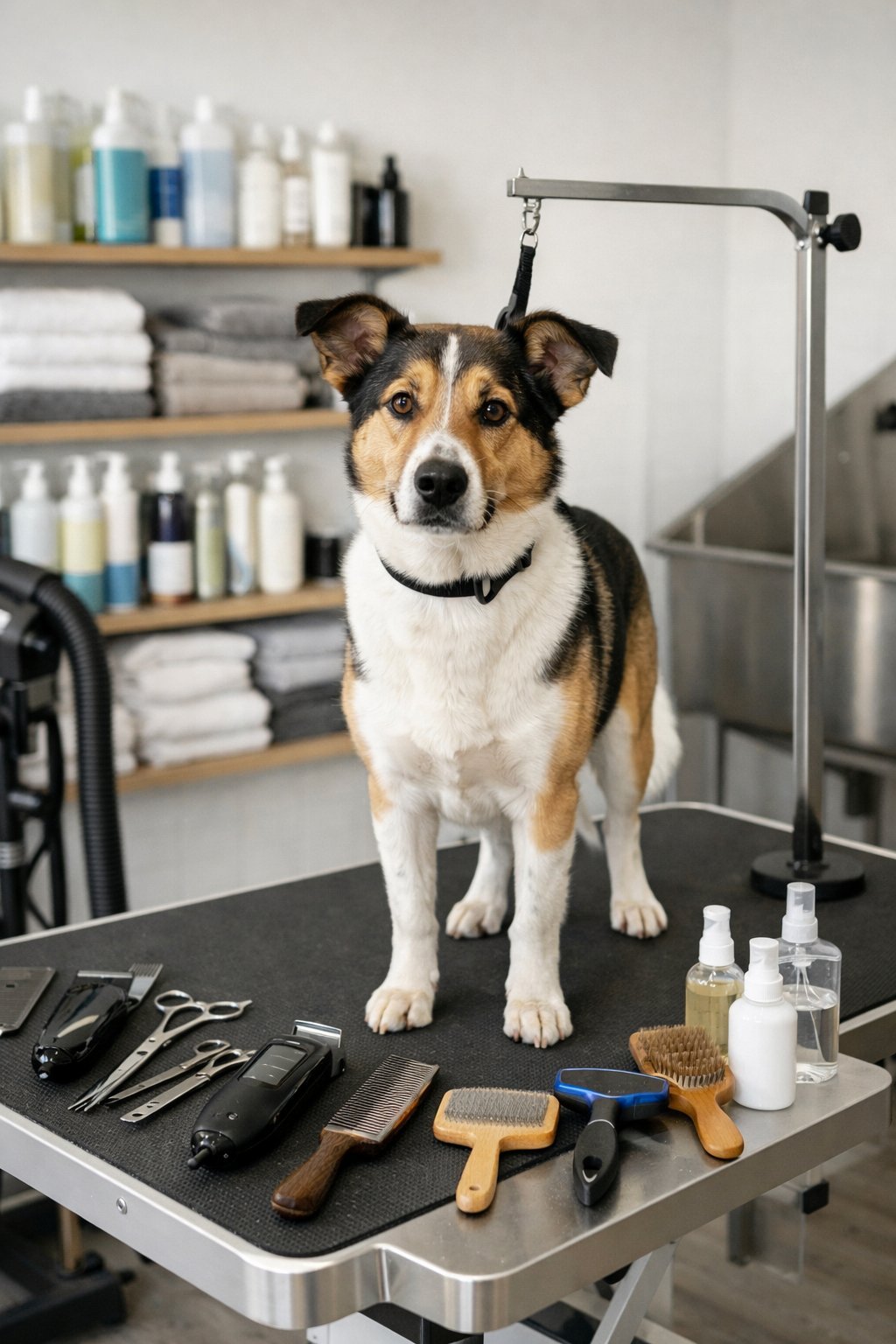
You might be wondering if a grooming station is worth the investment or if you can just keep using your bathtub.
The truth is that dog grooming stations come in many forms, from simple folding tables to full washing tubs with built-in features.
The right choice depends on your dog’s size, your available space, and how often you groom at home.
I’ll walk you through everything you need to know about dog grooming stations.
You’ll learn what features matter most, how to pick the right one for your situation, and how to set it up so grooming goes smoothly every time.
Key Takeaways
- Dog grooming stations provide a dedicated space that makes at-home grooming easier and less stressful for you and your pet.
- The right station depends on your dog’s size, your available space, and whether you need a simple table or a full washing tub.
- Proper setup with the right tools and regular cleaning helps your grooming station last longer and work better.
What Is a Dog Grooming Station?
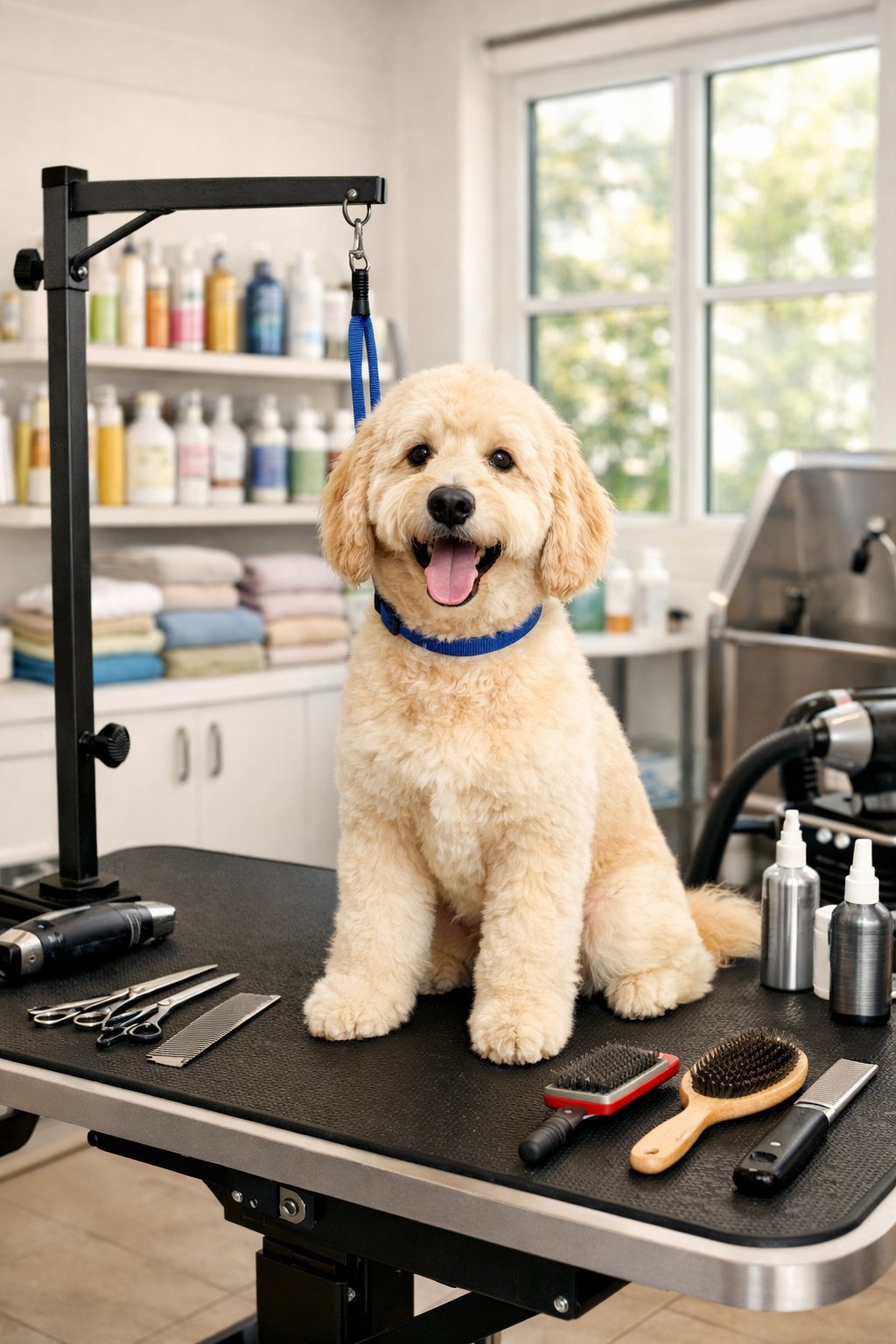
A dog grooming station is a dedicated space where you can bathe, brush, trim, and care for your dog’s coat and nails.
It keeps all your grooming tools in one spot and makes the process easier for both you and your pet.
Purpose and Benefits
The main purpose of a grooming station is to create a safe and organized area for taking care of your dog’s hygiene needs.
Instead of spreading supplies across your bathroom or kitchen, everything stays in one place.
A home grooming station helps dogs feel secure because grooming happens in the same calm setting every time.
When your dog knows what to expect, they stay more relaxed during brushing, nail trims, or baths.
This routine builds trust over time.
Having a well-organized grooming space saves you money on professional grooming appointments.
You can handle basic maintenance at home and only visit a groomer for specialized services.
Plus, you’ll have better control over the products you use on your dog’s skin and coat.
Types of Dog Grooming Stations
I’ve seen several different types of grooming stations that work for different needs and budgets.
A basic setup might just be a corner of your bathroom or laundry room with a storage bin for supplies.
Portable stations include folding grooming tables with adjustable arms and noose restraints.
These work well if you need to move your setup around or have limited space.
Permanent stations are built into a specific room or area.
They might include a raised platform or tub, wall-mounted storage, and dedicated lighting.
Some pet owners use self-serve pet wash stations at stores like Tractor Supply, which provide professional equipment without the home setup.
These include shampoos, brushes, towels, grooming tables, and dryers.
You can also find complete dog grooming station products that combine a table, restraint system, and storage in one unit.
Who Should Have One
Any dog owner who wants to maintain their pet’s hygiene at home can benefit from a grooming station.
I especially recommend one if you have a breed that needs regular brushing or trimming.
Owners of large dogs find grooming stations particularly helpful.
Lifting a big dog into a regular bathtub can hurt your back, but a proper station puts your pet at a comfortable working height.
If you have multiple dogs, a dedicated grooming area makes sense.
You’ll use it frequently enough to justify the space and investment.
Dogs with long coats, thick undercoats, or special grooming needs also benefit from having consistent access to proper tools and space.
Essential Features of a Dog Grooming Station
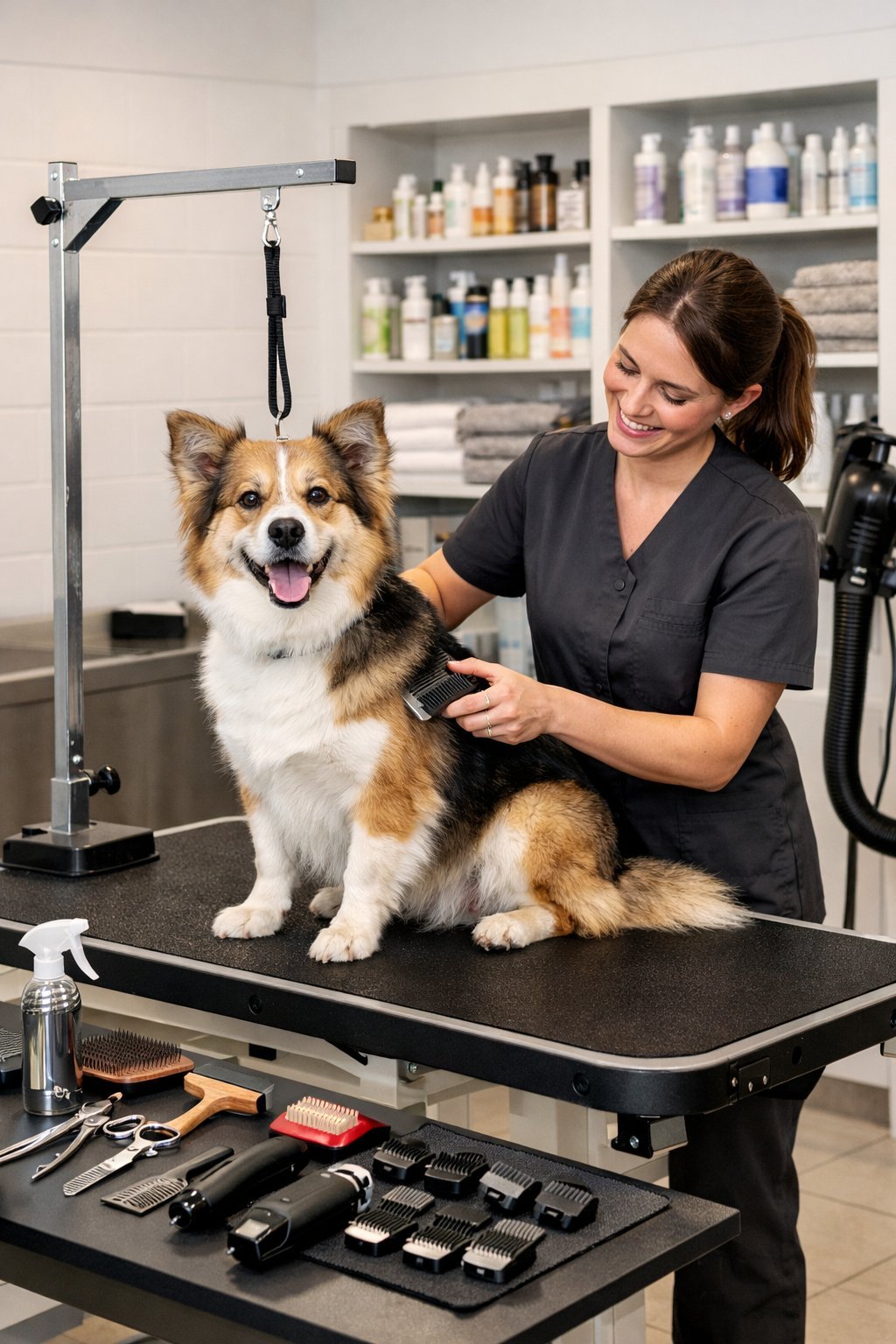
A well-designed grooming station needs the right features to make the job easier and keep your dog safe.
The best setups combine comfort, safety, and practical elements that work together.
Ergonomic Design
I can’t stress enough how important ergonomic design is for a grooming station.
The grooming table should be at a height that lets me work without bending over or reaching up too much.
Most professional tables adjust between 24 and 42 inches high.
This range works for different dog sizes and my own comfort level.
The table surface needs to be non-slip and sturdy enough to hold my dog’s weight without wobbling.
I look for tables with rubber-coated tops or textured surfaces that give dogs good traction.
A grooming arm with a loop attachment helps position my dog at the right height and keeps them steady during grooming.
The station should have good lighting so I can see what I’m doing.
Natural light works best, but if that’s not possible, I use bright LED lights positioned to avoid shadows on my dog’s coat.
Safety Considerations
Safety features protect both me and my dog during grooming sessions.
I always make sure the table has a non-slip surface and secure legs that won’t collapse or tip over.
The grooming loop or restraint should attach firmly to the grooming arm but have a quick-release feature in case of emergencies.
I never leave my dog unattended when they’re restrained on the table.
Electrical outlets need to be positioned away from water sources and at a safe height.
I use GFCI outlets to prevent electrical shocks if water gets near the power source.
All my grooming tools with cords stay organized and out of the way to prevent tripping hazards.
The floor around my grooming station needs good traction too.
I use rubber mats or non-slip flooring to prevent slips when the area gets wet.
Water Supply and Drainage
Access to water makes grooming much easier.
I set up my station near a sink or install a small utility sink nearby for bathing and rinsing tools.
A handheld spray nozzle gives me better control when washing my dog.
The water temperature should be easy to adjust so I can get it just right before turning it on my pet.
Good drainage is just as important as water access.
If I’m bathing my dog at the station, I need a way for water to drain away quickly without pooling on the floor.
Some people install raised tubs with built-in drainage, while others use portable bathing systems.
I always keep towels nearby to wipe up spills right away.
This prevents water from spreading to areas with electrical equipment.
Storage Solutions
I organize all my grooming tools and supplies within arm’s reach of the station.
Wall-mounted shelves or a rolling cart keep everything accessible without cluttering the workspace.
I use clear containers or labeled bins to store different types of supplies.
Brushes, combs, and clippers go in one area, while shampoos and conditioners stay in another.
This system helps me find what I need quickly.
Hooks on the wall hold leashes, towels, and aprons.
A magnetic strip can hold metal grooming tools like scissors and nail clippers.
I make sure sharp tools have protective covers when stored.
Storage should be easy to clean since grooming areas collect hair and moisture.
I avoid fabric storage bins in favor of plastic or metal options that wipe down easily.
A small trash can with a lid sits next to my station for immediate cleanup of hair and used supplies.
Choosing the Right Dog Grooming Station
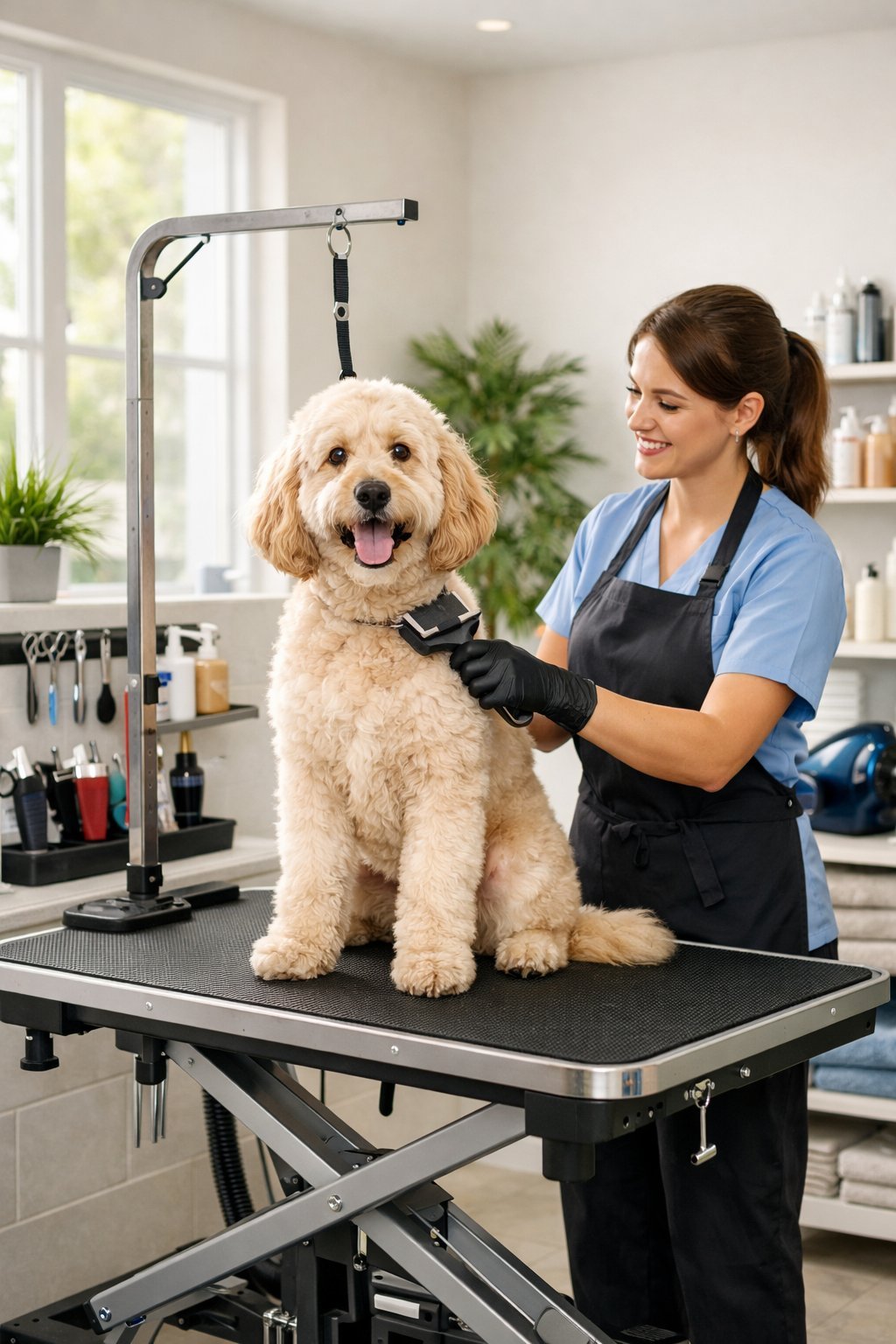
When I’m looking for a dog grooming station, I focus on three main factors: making sure it fits my dog’s size, picking materials that last, and deciding if I need something I can move around easily.
Size and Breed Compatibility
The size of the grooming station I choose depends entirely on my dog’s weight and height.
Small breed dogs under 25 pounds work well with compact stations that measure around 24 to 30 inches long.
Medium dogs between 25 and 50 pounds need tables about 36 inches in length.
Large and extra-large breeds require stations that are at least 42 to 48 inches long with weight capacities of 150 pounds or more.
I always check the weight limits before making a purchase to avoid safety issues.
The height of the table matters too.
I look for stations with adjustable height features so I can work comfortably without straining my back.
Most adjustable models range from 30 to 36 inches high.
Material Options
I’ve found that stainless steel stations offer the best durability and are the easiest to clean after messy grooming sessions.
They resist rust and handle moisture well, which is important when I’m bathing my dog.
Plastic-topped tables cost less but can crack or warp over time.
I avoid these unless I’m on a tight budget.
Wood stations look nice but require more maintenance to prevent water damage.
The table surface should have a non-slip coating or rubber mat.
This keeps my dog stable and comfortable during grooming.
I also prefer tables with rounded edges to prevent injuries.
Portability and Mobility
If I groom in different locations or have limited space, a folding grooming station makes sense.
These models collapse flat for storage and typically weigh between 15 and 30 pounds.
Stations with wheels let me move the setup from room to room without lifting.
I make sure the wheels have locks so the table stays put during grooming.
Some mobile grooming carts work well in small spaces and provide storage for tools.
Permanent stations are heavier and more stable but can’t be moved easily.
I only choose these if I have a dedicated grooming area in my home.
Setting Up Your Dog Grooming Station
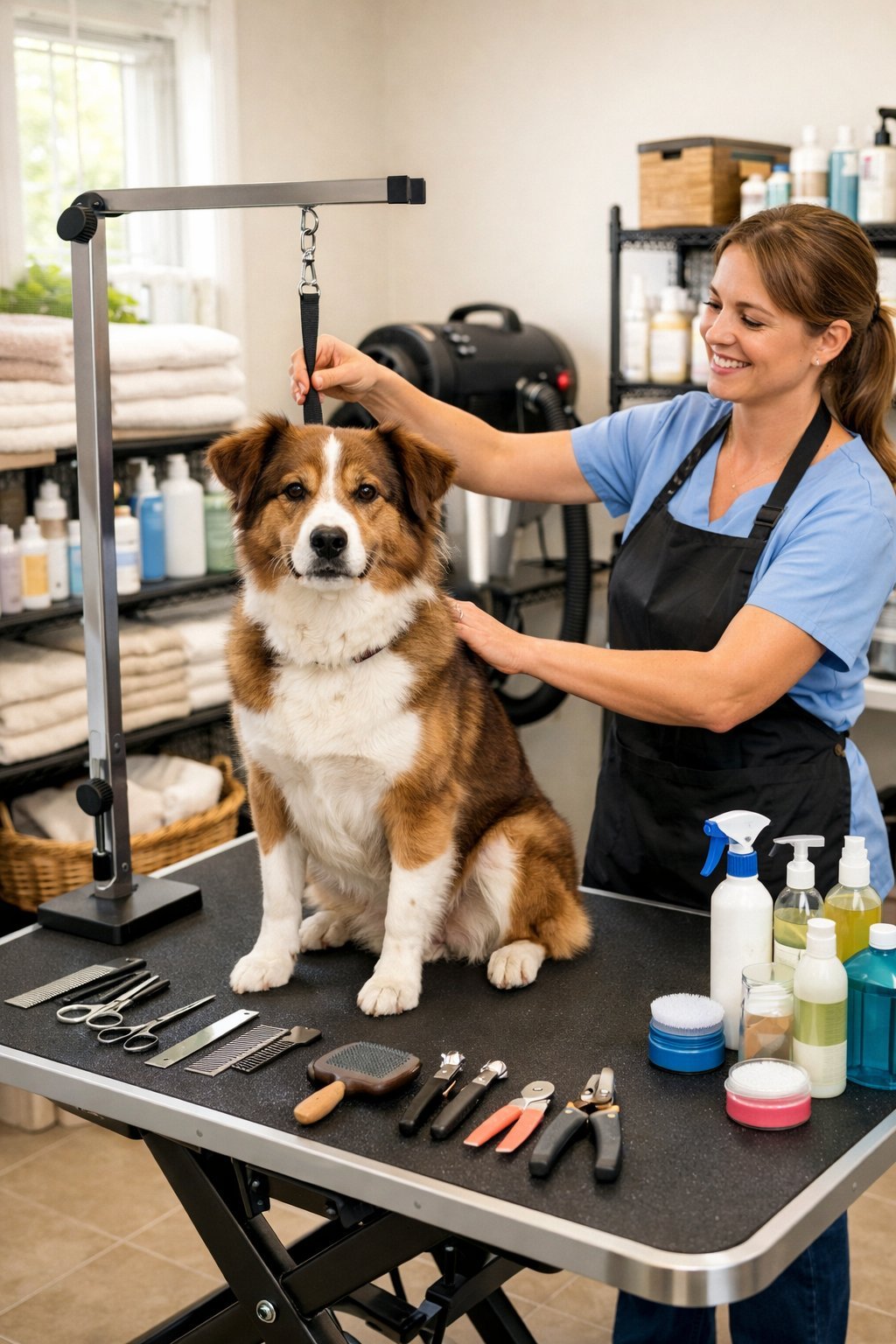
The right setup makes grooming easier and keeps your dog calm during each session.
I focus on picking a spot with enough room, installing equipment safely, and making sure there’s good light and fresh air.
Space and Location Selection
I always recommend choosing a location that gives you at least 4 to 6 feet of clear space to move around your dog comfortably.
You need room to walk around all sides without bumping into walls or furniture.
The best spots are usually easily accessible areas with good lighting and ventilation like a laundry room, bathroom, or garage.
I prefer rooms with tile or vinyl floors because they’re waterproof and easy to clean after messy baths or hair trimmings.
Keep your grooming area away from high-traffic spaces where people walk through constantly.
Dogs stay calmer in familiar, consistent settings where they won’t get distracted or anxious.
I also look for spots near a water source if I plan to give baths.
Having a sink or tub nearby saves me from carrying heavy water buckets back and forth.
Installation Guidelines
I start by setting up a sturdy grooming table at a comfortable height. The table needs to support your dog’s weight without wobbling or tipping.
Essential installation steps:
- Anchor any wall-mounted equipment like tool holders or dryer arms into wall studs.
- Use non-slip mats on your grooming table and floor to prevent sliding.
- Position electrical outlets at least 3 feet away from water sources.
- Store sharp tools like scissors and clippers in secured drawers or containers.
I always test the stability of my setup before bringing my dog over. Push on the table and pull on any mounted equipment to make sure nothing moves or falls.
Keep cords organized and taped down so neither you nor your dog trips over them during grooming sessions.
Lighting and Ventilation
I need bright, even lighting to see what I’m doing without harsh shadows on my dog. Overhead lights plus a desk lamp or portable LED light work best for spotting mats, ticks, or skin issues.
Good air circulation keeps the room from getting too hot and helps remove loose hair floating around. I open a window or run a fan to keep fresh air moving through the space.
Ventilation checklist:
| Need | Solution |
|---|---|
| Remove hair and dander | Exhaust fan or open window |
| Prevent overheating | Ceiling fan or portable fan |
| Reduce odors | Air purifier with HEPA filter |
I avoid grooming in windowless rooms without fans because the air gets stuffy fast. My dog gets uncomfortable when it’s too warm, which makes grooming sessions longer and more stressful.
Maintenance and Cleaning Tips
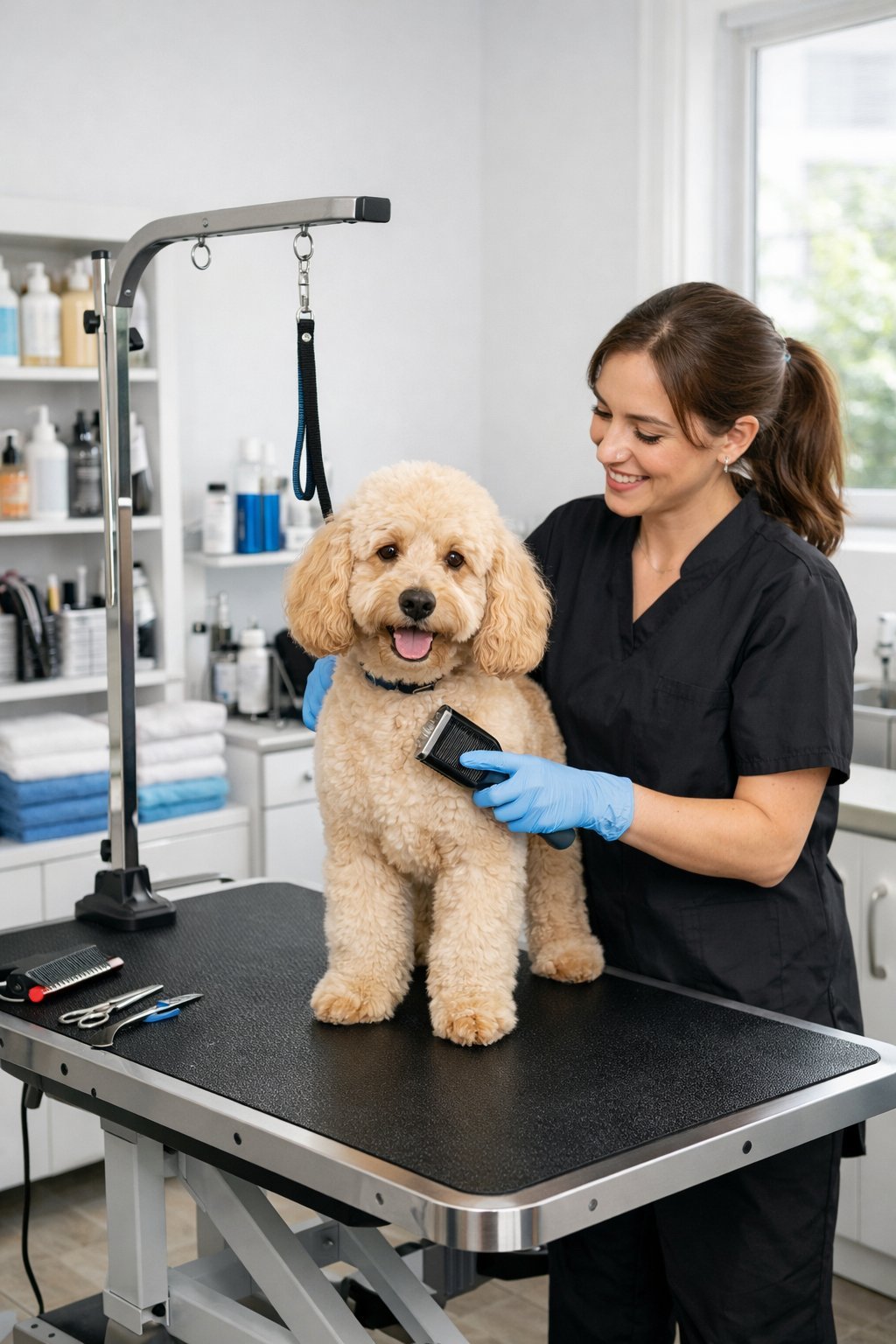
I’ve found that keeping my grooming station clean and well-maintained protects my investment and keeps my dog healthy. Regular cleaning prevents bacteria buildup, while proper equipment care ensures everything works smoothly when I need it.
Daily Cleaning Routine
I make it a habit to wipe down all surfaces after each grooming session. This includes the grooming table, tub, and any countertops where I place my tools.
I remove all loose hair from the area using a vacuum or lint roller. Hair can build up quickly and create a messy workspace if I don’t stay on top of it.
I also empty my clipper blades of hair after every use. For my grooming tools like brushes and clippers, I clean them right after I finish grooming.
I use a small brush to remove hair from between bristles and clipper teeth. I wipe metal surfaces with a damp cloth to prevent rust.
I drain the tub completely and rinse it with clean water. Standing water can lead to mold and unpleasant odors.
I also check that the drain is clear of any trapped hair.
Sanitizing Equipment
I sanitize my grooming tools at least once a week to kill bacteria and prevent skin infections. I use pet-safe disinfectants or a simple solution of water and vinegar for cleaning and disinfecting.
My sanitizing process includes:
- Clippers and blades: I spray with disinfectant and let them air dry.
- Brushes and combs: I soak them in warm soapy water for 10 minutes.
- Grooming table: I wipe it down with disinfectant spray.
- Tub: I scrub with pet-safe cleaner and rinse thoroughly.
I always let my equipment dry completely before storing it. Moisture can damage tools and create breeding grounds for bacteria.
I store my cleaned tools in labeled containers to keep them organized and ready for the next session.
Troubleshooting Common Issues
When my clippers start pulling hair instead of cutting smoothly, I know the blades need sharpening or replacing. Dull blades make grooming uncomfortable for my dog.
If I notice my tub draining slowly, I remove the drain cover and clear out any hair clogs. I’ll use a drain snake or a bent wire hanger to reach deeper blockages.
Strange noises from my clippers usually mean they need oil. I apply clipper oil to the blades before and after each use to keep them running smoothly.
If the noise continues, I check for loose screws or damaged parts.
Persistent odors mean I need to deep clean my station. I wash all fabric items like towels and check hidden areas where hair might accumulate.
