10 Popular Dog Grooming Styles by Breed: A Complete Guide for Pet Parents

Choosing the right grooming style for your dog can feel overwhelming with so many options out there. Different breeds have different coat types, so what works for a Poodle might not be right for a Golden Retriever.
The best grooming style depends on your dog’s breed, coat type, lifestyle, and how much time you want to spend on maintenance between appointments.
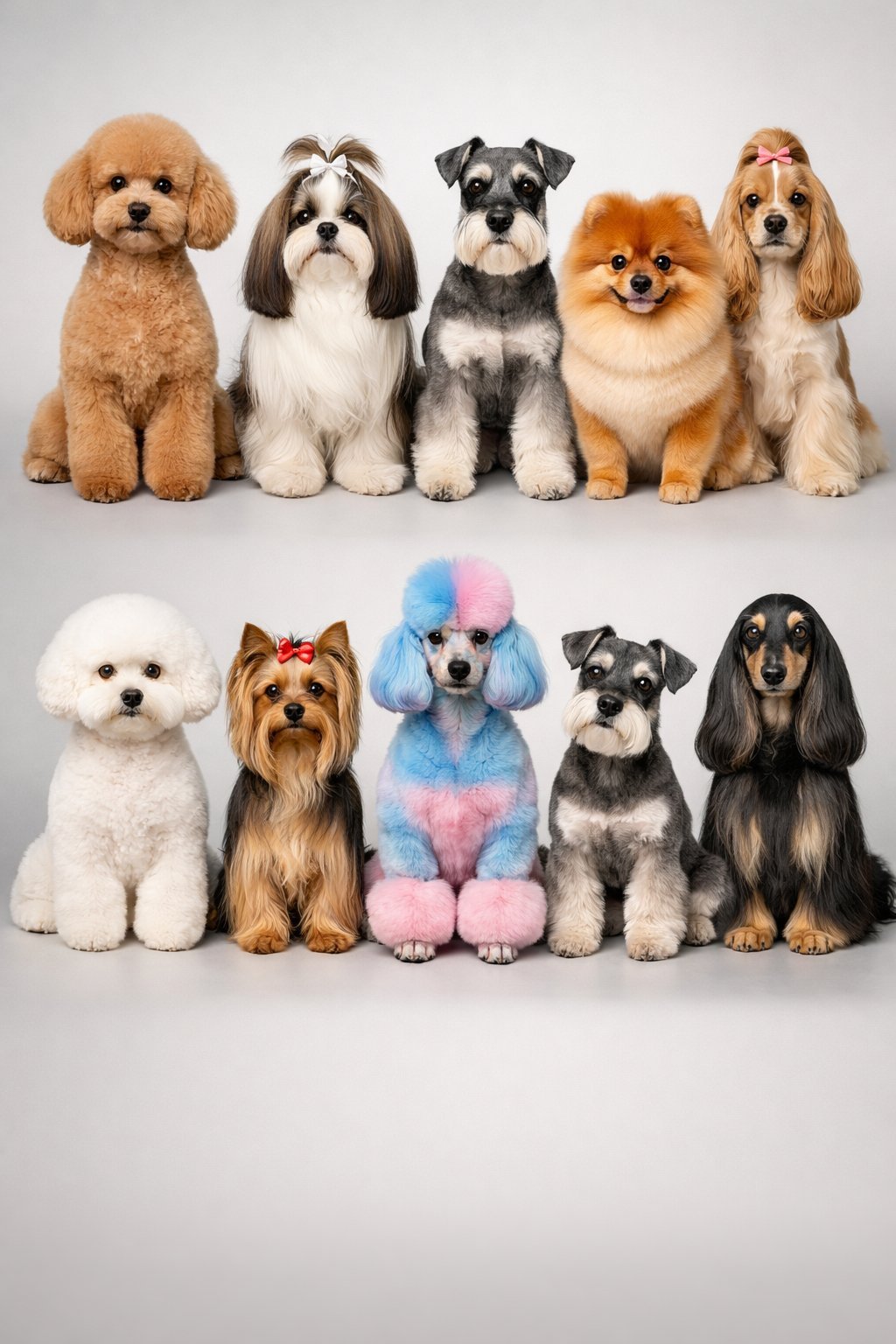
I’ve put together this guide to help you figure out which grooming styles work best for different breeds. Some dogs need regular trims to keep their coats healthy, while others do just fine with minimal grooming.
Whether you want a low-maintenance cut or something more stylish, there’s a grooming option that fits your needs. Understanding the right cut for your dog makes grooming easier and keeps your pet comfortable.
Different breeds require specific grooming approaches based on whether they have curly, straight, or wire-haired coats. Let’s walk through the most popular grooming styles so you can find the perfect match for your furry friend.
Key Takeaways
- Each dog breed needs a specific grooming style based on its coat type and texture.
- Some grooming cuts require more maintenance and brushing than others between appointments.
- The right grooming style keeps your dog comfortable while matching your lifestyle and budget.
Understanding Dog Grooming Styles
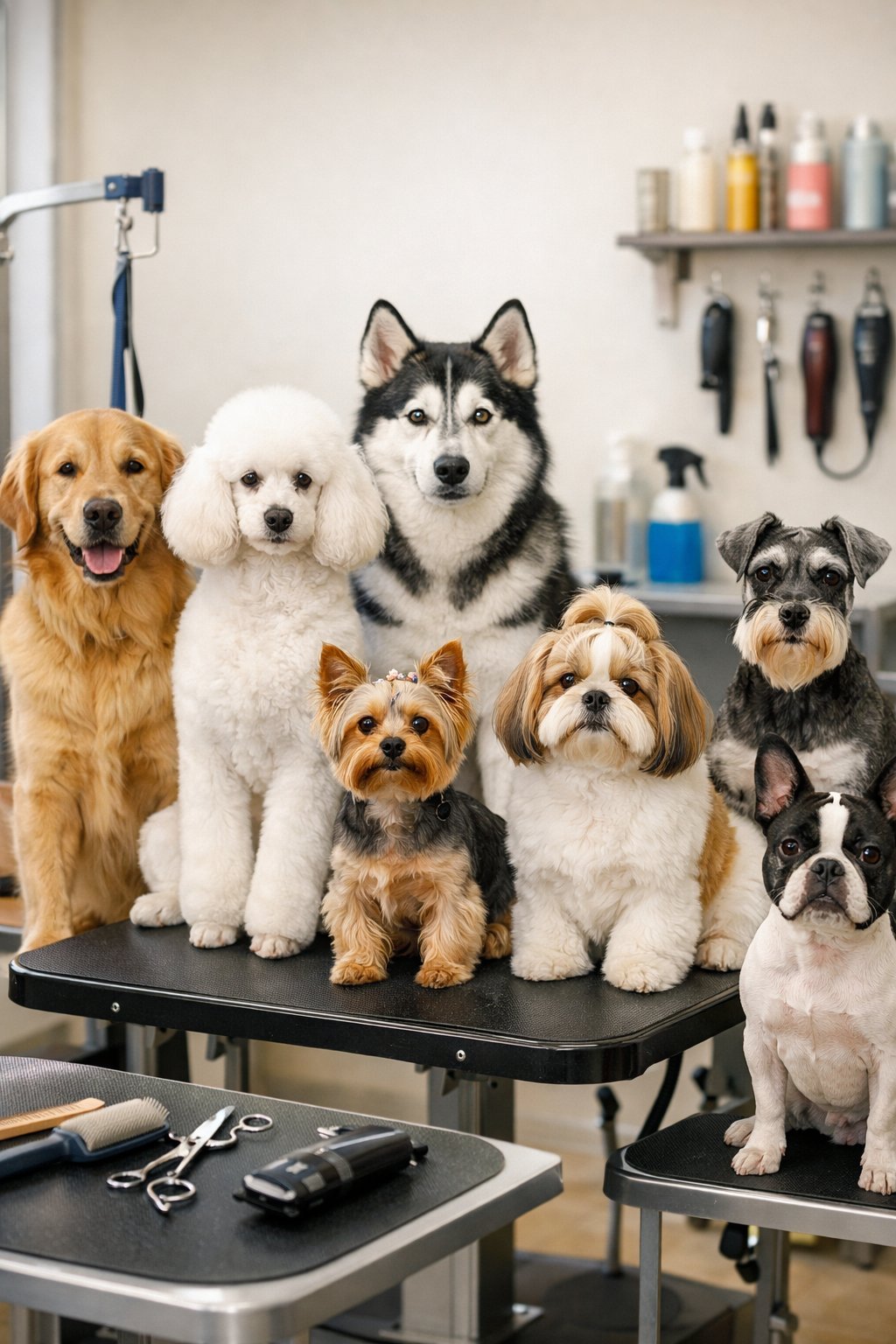
Different breeds need different grooming approaches based on their coat type. The right tools make all the difference whether you’re visiting a professional or grooming at home.
Why Breed Matters in Grooming
Each dog breed has unique coat characteristics that determine the best grooming style. Poodles, Labradoodles, and Goldendoodles require specific grooming approaches because of their curly, straight, or wire-haired coats.
A dog’s coat type affects how often they need grooming and which styles work best. Double-coated breeds like Golden Retrievers need different cuts than single-coated breeds like Poodles.
Some breeds have hair that grows continuously and needs regular trimming, while others have fur that sheds naturally. Breed-specific grooming isn’t just about looks—it helps maintain skin health, prevents matting, and keeps your dog comfortable.
A Shih Tzu needs face trimming to keep hair out of their eyes, while a Schnauzer’s wiry coat requires hand-stripping to maintain texture. Understanding your dog’s breed helps you choose cuts that work with their natural coat pattern.
Common Tools Used in Breed Grooming
I use different tools depending on the breed and desired style. Slicker brushes are great for removing tangles in long-haired breeds, while pin brushes are better for dogs with silky coats.
Essential grooming tools include:
- Clippers with various blade sizes
- Scissors (straight, curved, and thinning)
- Metal combs with wide and narrow teeth
- Nail clippers or grinders
- Brushes specific to coat type
Clippers are my go-to for kennel cuts and other short styles that keep hair uniform. Different blade sizes create different lengths, from very short (#10 blade) to longer (#4 blade).
Thinning shears help blend areas without creating harsh lines. They’re especially useful around the face and paws where precision matters most.
Differences Between Professional and At-Home Grooming
Professional groomers have specialized training and commercial-grade equipment that most pet parents don’t have at home. They know breed-specific styles and techniques that maintain proper coat structure.
I recommend professional grooming for complex cuts, show styles, or breeds with difficult coats. Groomers can handle anxious dogs safely and know how to avoid cutting mistakes.
At-home grooming works well for maintenance between professional appointments. You can do basic tasks like brushing, nail trimming, and simple trims around the face and paws.
The main difference is expertise and equipment quality. Professional grooming tables, high-velocity dryers, and sharp tools make the job faster and produce better results than basic home setups.
Popular Grooming Styles for Small Breeds
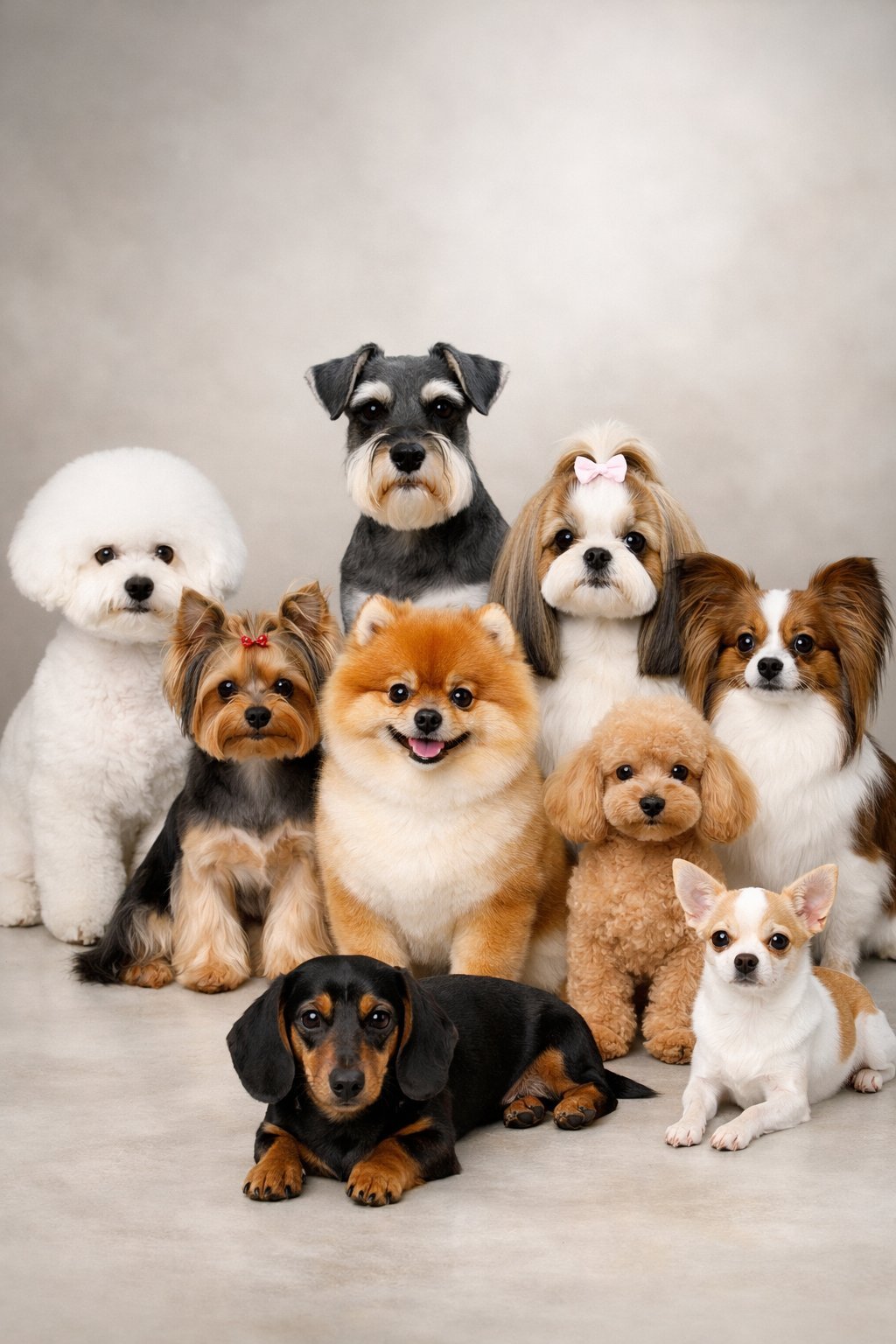
Small breeds like Yorkies, Poodles, and Schnauzers need regular grooming to keep their coats healthy and manageable. The right cut can make brushing easier while showing off your dog’s adorable features.
The Teddy Bear Cut
The teddy bear cut is a favorite for small fluffy breeds. This cut leaves the hair around 1-2 inches long all over the body, creating a soft, rounded look that makes your dog look like a stuffed animal.
It’s great for breeds like Shih Tzus, Bichon Frises, and Poodles. The groomer trims the face into a round shape and keeps the ears fluffy but neat.
The legs are scissored to look full but tidy. This cut is cute and doesn’t require too much daily maintenance.
You’ll need to brush your pup a few times per week to prevent matting. Most dogs need a trim every 6-8 weeks to keep that teddy bear shape.
The Puppy Cut
The puppy cut is a simple, uniform trim that keeps hair short all over the body. It’s perfect for busy pet parents who want their dogs looking neat without constant brushing.
The groomer typically cuts the hair to about 1-2 inches long across the entire body, including the face, legs, and tail. This creates an even, clean appearance that’s easy to care for at home.
Small breeds like Maltese, Yorkies, and toy Poodles look great with this cut. The style makes adult dogs look like puppies again with their shorter, fluffier coat.
You’ll only need to brush your dog once or twice a week with this trim. Most dogs can go 8-10 weeks between grooming appointments, making it budget-friendly too.
The Schnauzer Trim
The Schnauzer trim is a distinctive style originally designed for the Schnauzer breed but can work for other terrier-type small dogs. This cut features short hair on the body with longer, fuller hair on the legs and a characteristic beard and eyebrows.
The body is clipped short with clippers, usually down to about 1/2 inch. The leg hair is left longer and shaped to look like columns or furnishings.
The groomer shapes the eyebrows to stand out and trims the beard into a rectangular shape under the chin. The ears are kept neat and close to the head.
This style needs more frequent brushing of the leg furnishings and beard to prevent tangles. Plan for grooming appointments every 6-8 weeks to maintain the distinct Schnauzer look.
Grooming Styles for Long-Haired Breeds
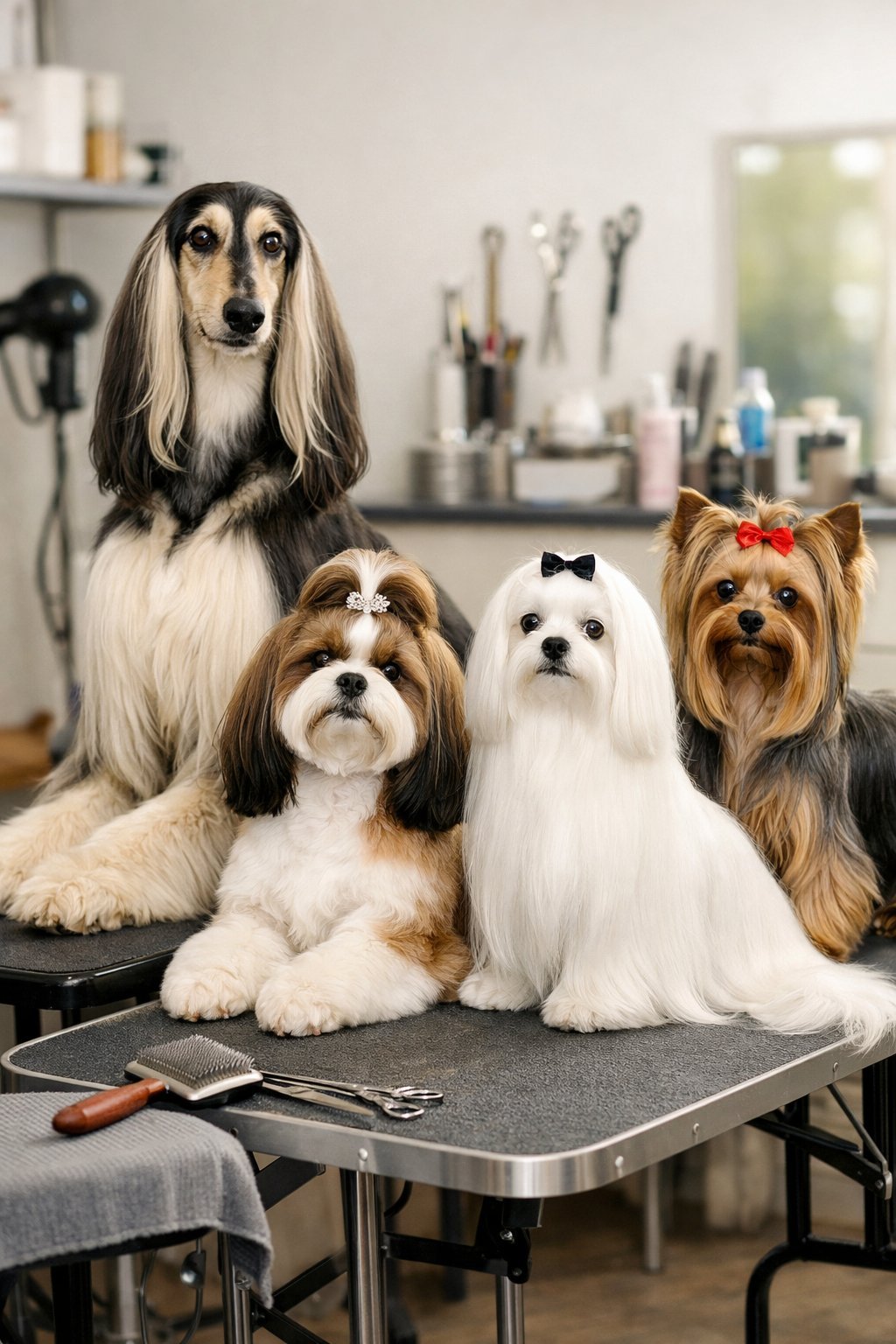
Long-haired breeds need specific grooming styles that keep their coats healthy while showing off their natural beauty. The Shih Tzu and Poodle are two breeds where grooming styles vary based on coat type and the owner’s preferences.
The Show Cut for Shih Tzu
The Show Cut is the most elegant style for a Shih Tzu. This cut keeps the hair long and flowing, reaching all the way to the floor.
The coat needs daily brushing to prevent tangles and mats. Focus on the facial hair, which gets tied up in a topknot to keep it out of the dog’s eyes.
This style works best for Shih Tzus that participate in dog shows or for owners who have time for regular maintenance. The hair on the body stays at full length, creating that signature luxurious look.
Trim the hair around the paws to keep them clean and prevent slipping.
Key maintenance tasks include:
- Brushing the coat daily with a pin brush
- Bathing every 1-2 weeks
- Maintaining the topknot with special bands
- Trimming the bottom of the feet
The Continental Clip for Poodles
The Continental Clip is one of the most recognized grooming styles for Poodles. This cut features pompoms of hair on the legs, hips, and tail tip, while the face, feet, and base of the tail are shaved close.
The chest and rib cage area are covered in a full coat of hair. The rear legs get shaved except for pompoms at the ankle and hip areas.
This style originally helped Poodles swim better while protecting their joints and vital organs in cold water. Today, it’s mainly used in show rings.
The style takes skill to create and maintain properly. I recommend professional grooming every 4-6 weeks to keep the Continental Clip looking sharp.
Between visits, brush the longer sections daily to prevent matting.
Short-Haired and Low-Maintenance Styles
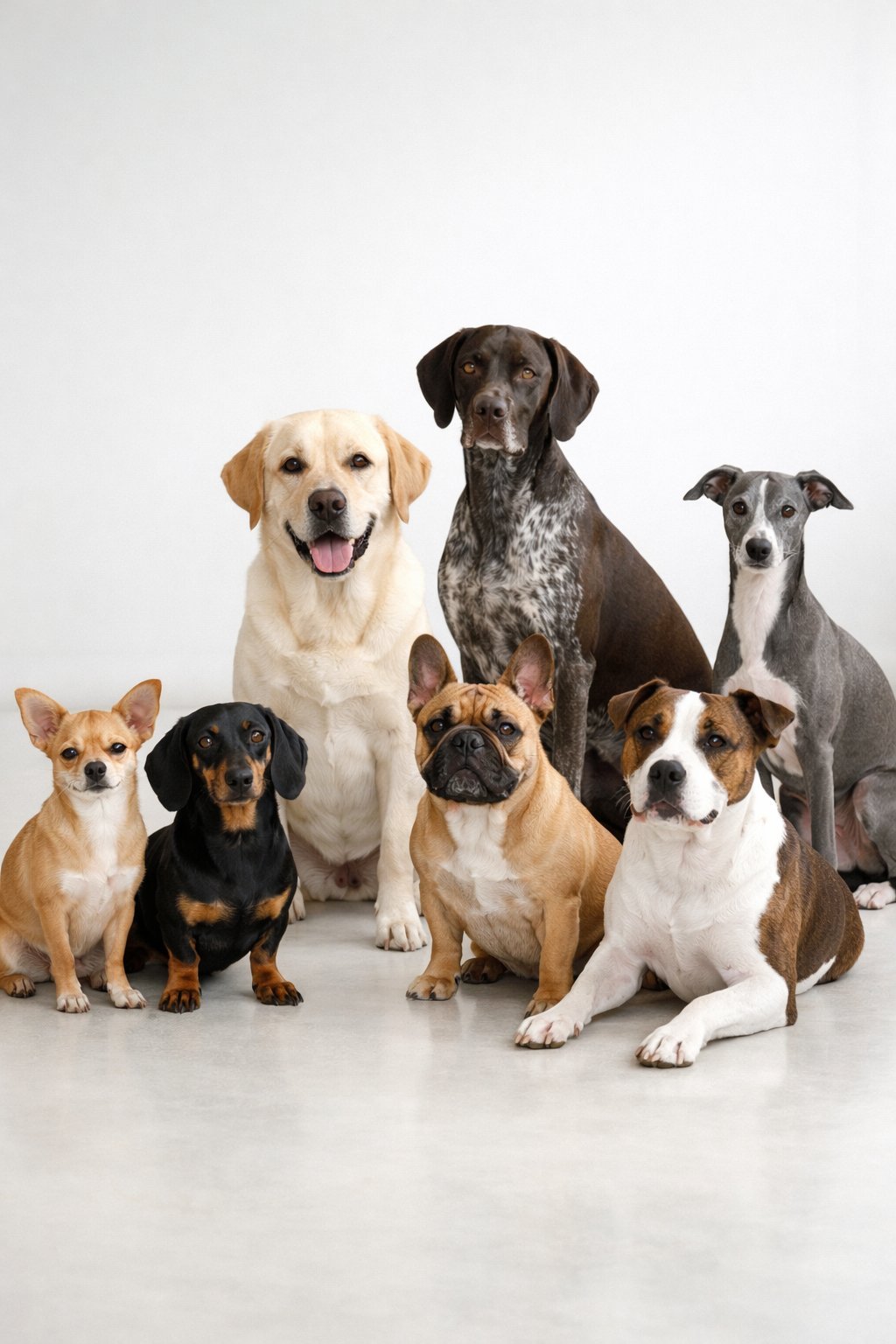
Some breeds naturally need less grooming work because of their short coats. Labradors and Beagles both have smooth fur that stays neat with basic care and simple cleaning routines.
The Labrador Wash and Wear Look
Labradors are super easy to keep looking great. Their short, dense double coat naturally repels water and dirt.
A quick bath every 6-8 weeks keeps them fresh and clean. Use a rubber curry brush or grooming mitt once a week to remove loose hair and distribute natural oils.
This takes about 5-10 minutes. During shedding season in spring and fall, brush more often to control the extra fur.
Weekly nail trims and regular ear cleaning complete the routine. Short-haired breeds like Labs need much less work than dogs with longer fur.
The best part is their coat looks polished without professional grooming. A simple wash, brush, and go approach works perfectly for their active lifestyle.
The Beagle Smooth Coat Routine
Beagles have one of the easiest coats to maintain among all dog breeds. Their short, smooth fur rarely tangles or mats.
Brush your Beagle once or twice a week with a soft bristle brush or hound glove. This removes dead hair and keeps the coat shiny.
The whole process takes less than 5 minutes. Beagles are low-shedding dogs that need minimal grooming despite their active nature.
Bathe them only when they get dirty or start to smell, usually every 4-6 weeks. Too much bathing strips away protective oils from their skin.
Their floppy ears need weekly checks and cleaning to prevent infections. Trim nails monthly and wipe their face after meals.
This simple routine keeps them looking and feeling their best without trips to professional groomers.
Specialty Grooming for Distinctive Breeds
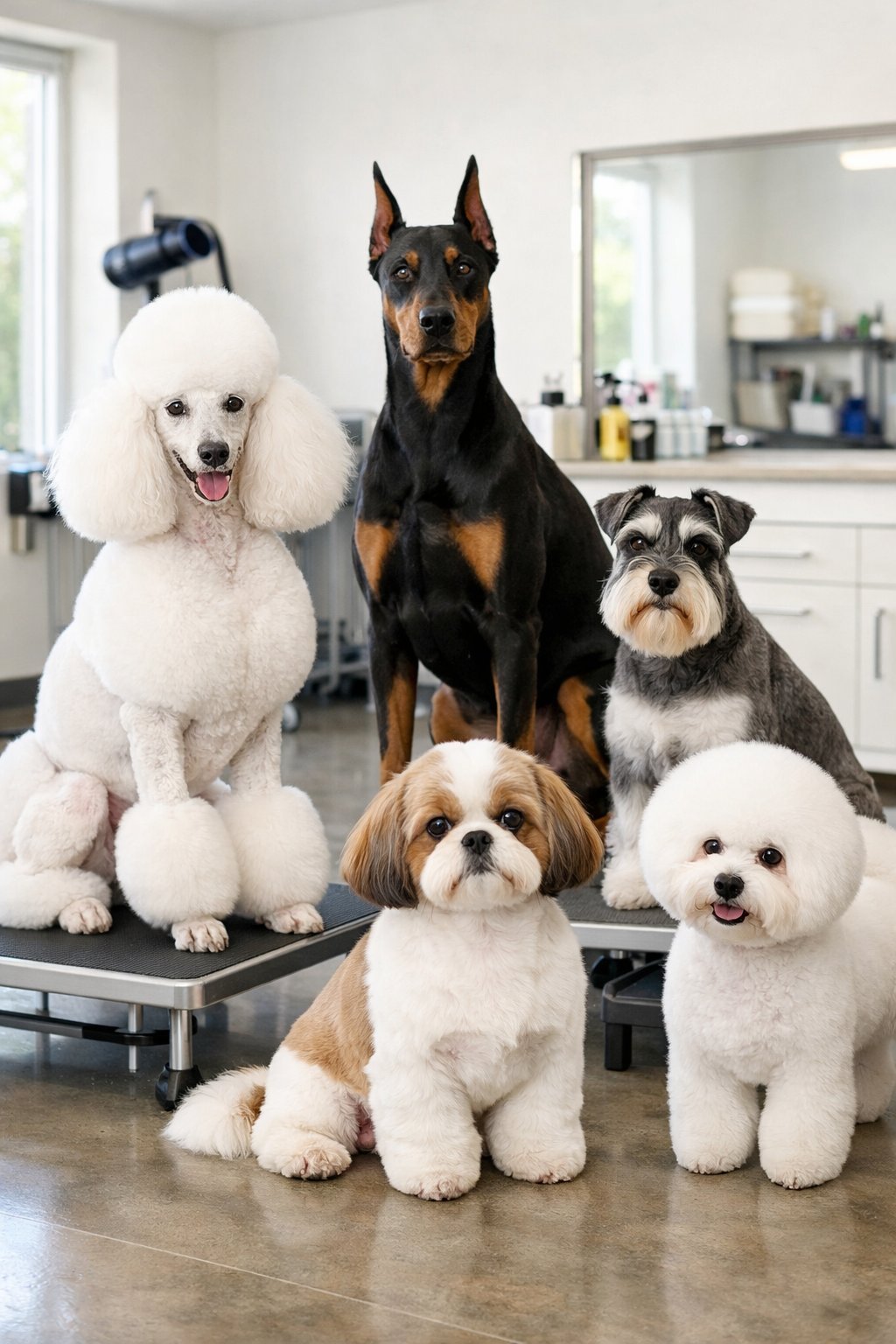
Some breeds have signature cuts that really show off their unique features and heritage. The Westie’s crisp white coat gets a structured trim, while the Chow Chow can rock a dramatic lion-style look.
The Westie Cut for West Highland White Terrier
I love how the classic Westie cut highlights this terrier’s bright personality and snow-white coat. The style features a rounded head with carefully shaped furnishings around the face that create a signature chrysanthemum look.
The body gets hand-stripped or clipped to about one to two inches in length. This keeps the coat neat while maintaining its harsh texture.
The legs stay fuller with rounded feet that look like little pillows. The skirt around the body blends smoothly into the leg furnishings.
I always pay special attention to the ears, which should be trimmed short and pointed to frame the face properly. The tail stays fairly short and carrot-shaped, standing upright without feathering.
Regular maintenance every six to eight weeks keeps a Westie looking sharp. Between grooming appointments, brushing two to three times per week helps prevent matting in the longer furnishings.
The Lion Cut for Chow Chow
The lion cut gives a Chow Chow a bold, majestic look with a full mane and a shaved body. This breed-specific trim is great for Chows who live in warmer places or have trouble keeping their coat tidy.
The mane stays thick around the head, neck, and chest, creating that classic lion vibe. The rest of the body is clipped short, usually down to about half an inch or less.
On the front legs, the hair stays longer from the elbow up to blend into the mane. The back legs are trimmed short, except for some fluffy puffs around the hocks.
A pompom is left at the end of the tail to finish off the lion look. Since Chow Chows have really dense double coats, this style needs a careful touch.
The cut usually lasts two to three months before it needs to be redone. Just remember, this isn’t a traditional show cut—it’s a fun, practical style for pet owners.
